
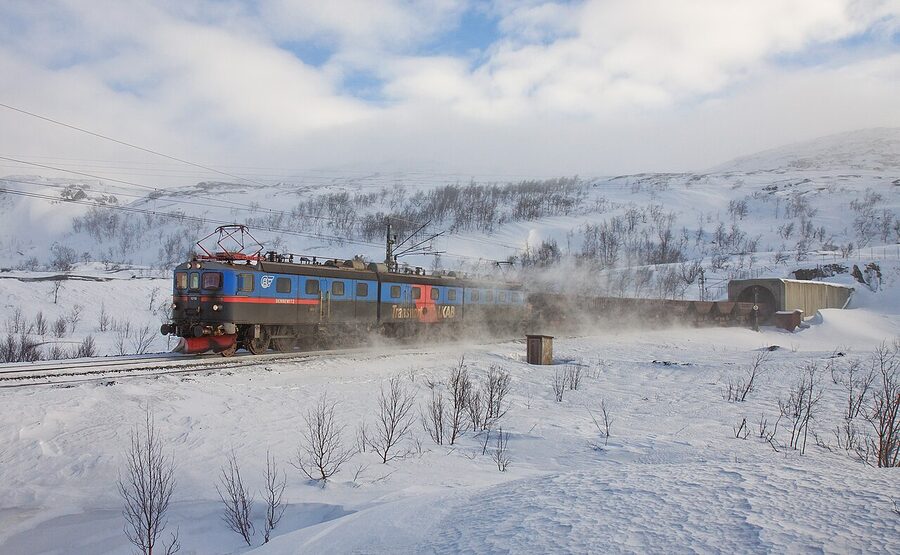
On 14 July 1903, King Oscar II rode a special train across the new border tunnel at Riksgränsen, drove a silver spike into a sleeper, and declared the world’s northernmost mainline railway open. The line had taken the better part of five years to build through 473 kilometres of bog, granite and Arctic winter. Eighteen of the twenty tunnels had been hand-cut. The point of the railway was iron. The unintended consequence, more than a century later, is that you can board a train at Stockholm Central at 18:01, eat dinner south of Sundsvall, fall asleep north of Östersund, wake up in the snow at Boden, and step off at Abisko or Narvik in time for breakfast under the Arctic sky.
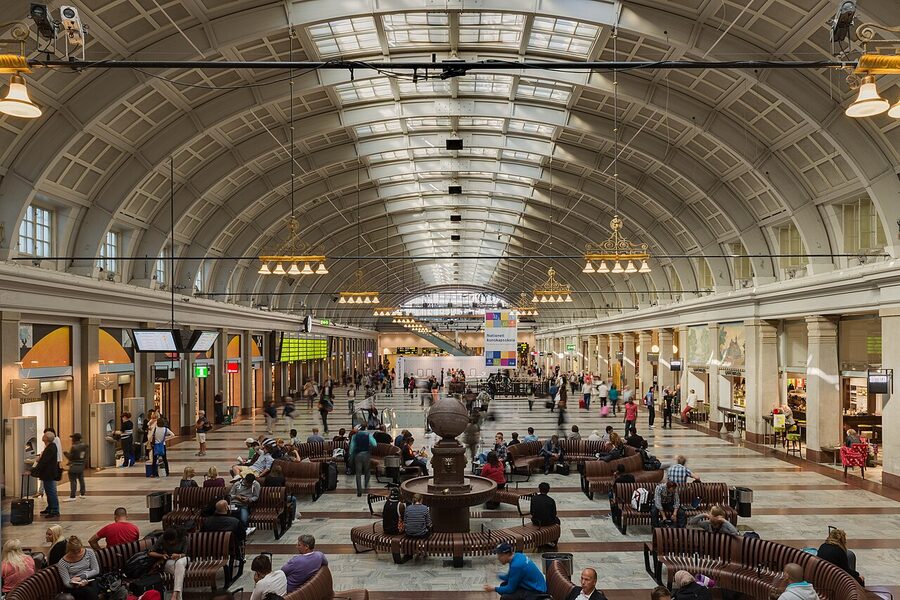
This is the Norrlandståg. SJ runs two pairs of overnight services every day: one from Stockholm Central up the eastern coast to Luleå on the Bothnian Bay, and one that branches at Boden and continues through Kiruna and Abisko to Narvik on Norway’s Atlantic coast. The Narvik run is the one rail romantics fly to Sweden for, and the one with the cabins that sell out three months ahead in February. It is also the only practical way to reach Abisko without renting a car or flying to Kiruna and then taking a 100 SEK shuttle bus another hour west.
I have done both routes in different cabin classes across two seasons. This is the guide I wish I had read the first time, with the prices that change every quarter, the booking traps that catch out first-timers, the cross-Nordic comparison nobody on the open web seems willing to write, and a straight verdict on whether the train is worth the time when SAS will fly you Stockholm to Kiruna in 90 minutes for not much more money.
In This Article
- What you actually book, and how the route works
- Cabin classes, what they actually cost, and which one is right for you
- Which class is actually right for you
- When to book, and the seasonal-demand calendar nobody warns you about
- The route, hour by hour
- 18:00 to 22:00, Stockholm to Sundsvall
- 22:00 to 23:30, Sundsvall to Umeå
- 06:30 to 07:30, the dawn at Boden
- 07:30 to 11:30, Boden to Kiruna through Sápmi
- 11:21, Kiruna
- 12:47, Abisko Östra and Abisko Turiststation
- 14:27, Narvik
- The bistro car and what to expect on board
- What you actually want to bring
- The Iron Ore Line: how the railway got built and why it crosses into Norway
- The Second World War and why Narvik was fought over
- Sami country and the line that ran through it
- Tickets, where and how to book
- Stockholm-Lapland by train versus by air, and the Nordic comparison
- How this train compares to the other Nordic overnighters
- The dawn approach, and why the train wins anyway
- Where to stop along the way, if you have a few extra days
- Hotels at each end
- Verdicts and what to skip
What you actually book, and how the route works
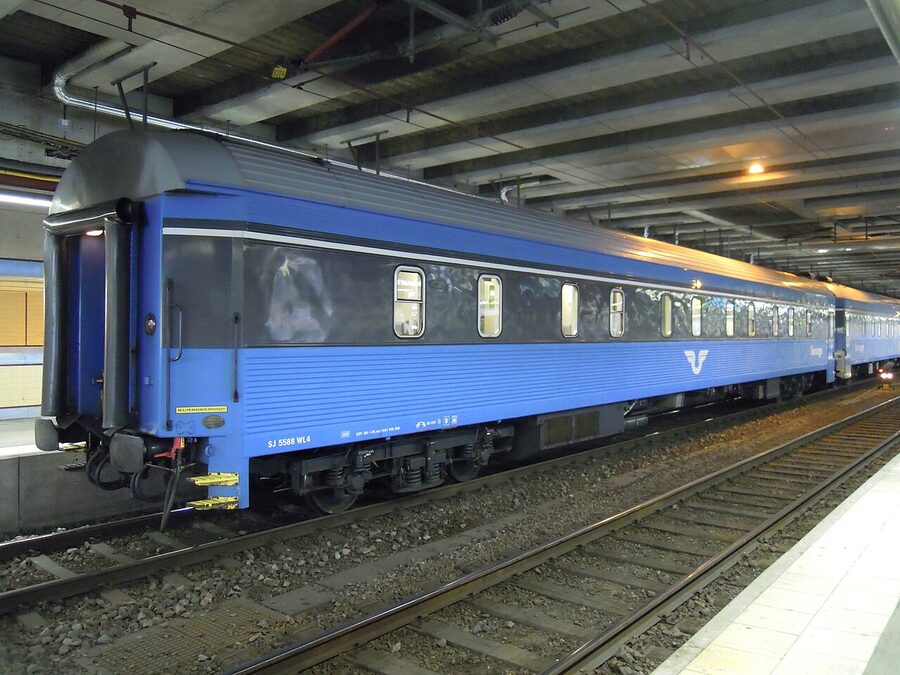
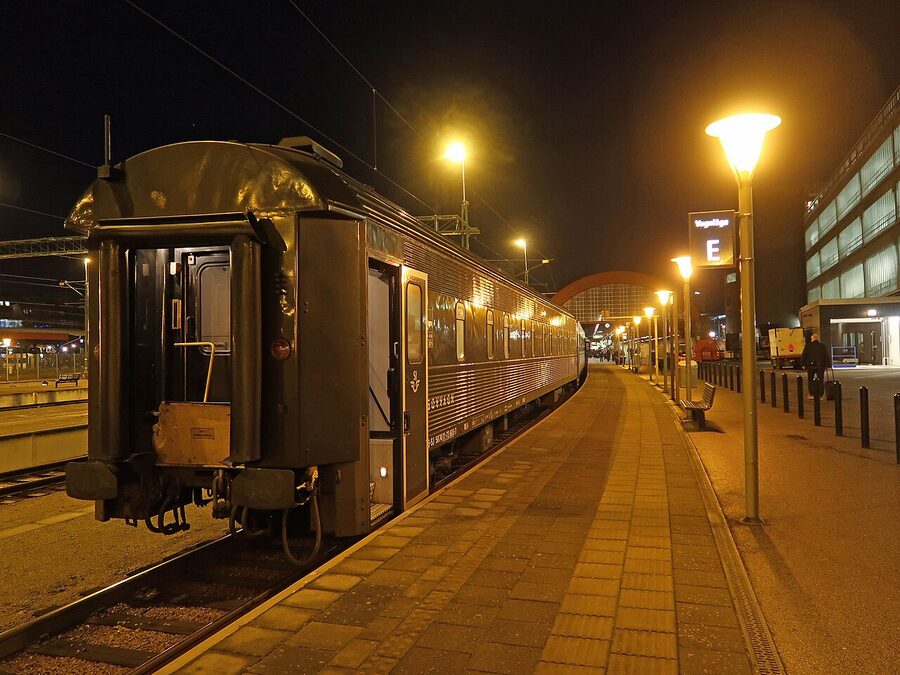
SJ sells the service as SJ Nattåg (literally, SJ Night Train). What you book on sj.se is one of two trains, both leaving Stockholm Central in the early evening:
- Train 94 to Luleå via the Bothnian coast (Uppsala, Gävle, Sundsvall, Umeå, Boden, Luleå), 14 hours overnight. Departs Stockholm C around 18:00, arrives Luleå around 08:48.
- Train 92 to Narvik, splitting from Train 94 at Boden (or running independently in some seasons), continuing to Kiruna, Abisko Östra, Abisko Turiststation, Riksgränsen, Vassijaure, and across the Norwegian border to Narvik. About 18 hours end-to-end. Departs Stockholm C around 18:01, arrives Kiruna around 11:21, Abisko around 12:47, Narvik around 14:27 the next day.
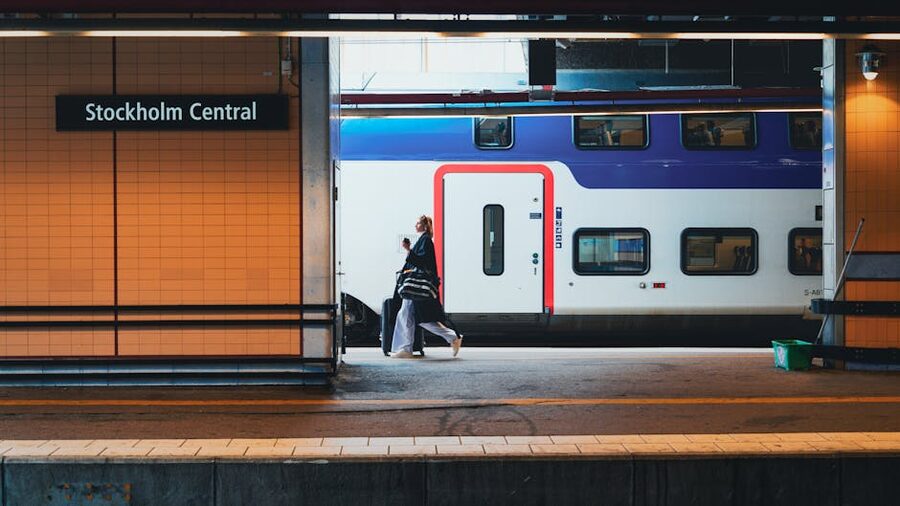
There is also a later train at 21:08 to Luleå that arrives at 11:00, useful if you want a Stockholm afternoon before you go and don’t mind a longer journey. Outside of summer the schedules shift slightly. SJ publishes the timetable for the season three months ahead, and the times below are correct as of the 2026 winter timetable.
The trains stop at Stockholm Arlanda Norra about 25 minutes after Stockholm Central. If your flight lands at 17:00 and you can clear bags by 17:30, you can step from arrivals onto the night train at the airport without ever going into the city. It costs the same. I would still recommend an afternoon in Stockholm if you have one to spare, but if you don’t, the Arlanda boarding option is the most under-rated logistical hack on this route. Buy a ticket from Stockholm C, board at Arlanda, nobody minds.
Cabin classes, what they actually cost, and which one is right for you
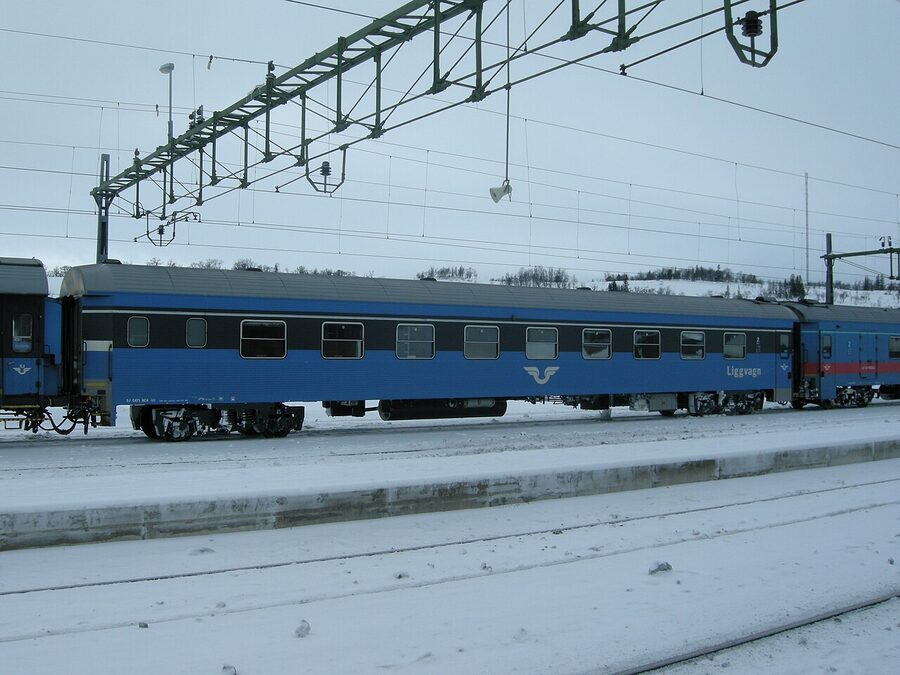
SJ sells the train in five classes, plus a stripped-down sixth that nobody on the route to Lapland actually wants. The pricing below is for a Stockholm to Kiruna ticket booked 30 days out in mid-February 2026, which is the busiest week on the line. Off-season the same cabins drop by 30 to 40 percent.
- Sittvagn (seat). A reclining seat in a 70-seat coach. Around 595 SEK (~€53). On a 17-hour overnight you will not sleep in this seat. Nobody recommends it. Skip.
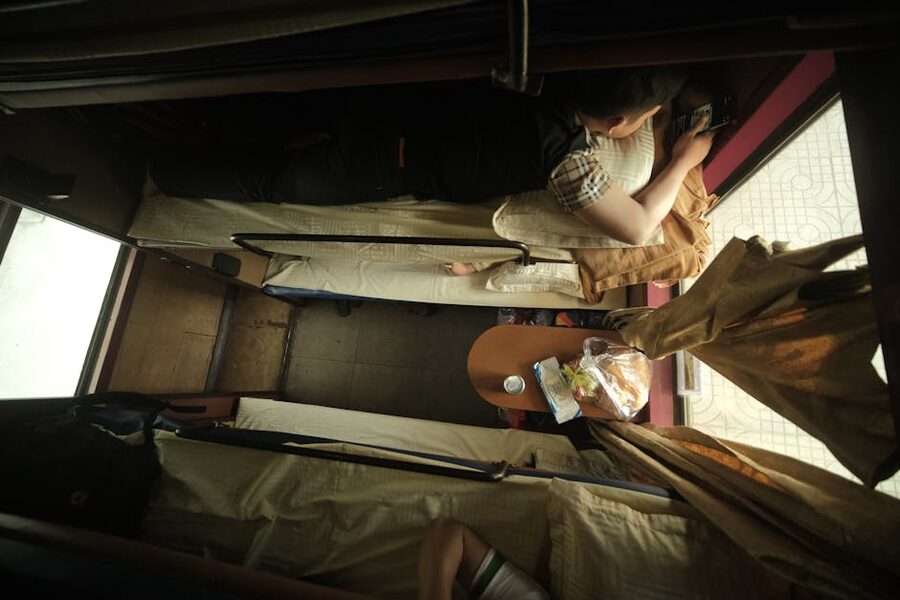
- 6-bed couchette (liggvagn). The cheapest bunk option. Six bunks in a compartment, three on each side, you make your own bed with the blanket and sheet provided. From around 845 SEK (~€75) per bunk. You can choose ladies-only, men-only, or mixed. Compartments are not pre-sorted by group, so you may share with five strangers. There are two narrow toilets at the end of the corridor.
- 3-bed sleeper (sovvagn 3-bädd). The middle option. Three bunks in a compartment with a small wash basin, towels, slippers and a turned-down bed. Same single-sex rule applies. From around 1,395 SEK (~€124) per bunk. The 3-bed is the cabin most rail enthusiasts default to, because it has the privacy bump without the price jump.
- 2-bed sleeper (sovvagn 2-bädd). Two bunks, your own wash basin, locking door, breakfast included. From around 1,795 SEK (~€160) per bunk if you book the whole compartment as a couple. If you book a single bunk in a 2-bed they pair you with a stranger of the same gender, but you can pay a small premium to lock it as a single. This is the smart-traveller default for couples and the verdict you want if your budget is around 1,800 SEK per night each.
- 1-bed sleeper (sovvagn 1-bädd). A private cabin to yourself, locking door, basin, slippers, breakfast. From around 2,295 SEK (~€204). The cabin is small, the bed is single-sized, the trade for the privacy is real, and at this price you are within sight of the rare premium 2-bed-with-shower cabin a few carriages down.
- 2-bed sleeper with private shower and toilet. The unicorn cabin. SJ run a small number of these on the Narvik service in winter. Around 2,895 SEK (~€258) per bunk if you book the whole cabin as a couple. There is no commercial reason for it to exist, which is exactly why it does. If you can book one and want to, do.
Which class is actually right for you
Sleep matters more on this train than on most overnighters because the journey is so long. If you arrive in Kiruna at 11:21 wrecked, you have lost the day to a sofa in the hotel lobby, and you have given back the time advantage that justified taking the train. So:
- Solo, budget tight, sleep travels well: 6-bed couchette. You will share with five strangers, the bunk is narrow, and you will sleep in your clothes. That’s the deal.
- Solo, want privacy and a real sleep: 3-bed sleeper. The price-to-comfort ratio is the best on the train.
- Couple, mid-budget: 2-bed sleeper, locked as a couple. The breakfast is included and the cabin is properly private.
- Couple, premium, winter: 2-bed with shower if you can find one. Otherwise two adjacent 1-beds.
- Family of four: book a whole 6-bed couchette as a private group. SJ allows this, the price drops sharply per bunk, and the kids think the bunk-bed compartment is a fort.
When to book, and the seasonal-demand calendar nobody warns you about
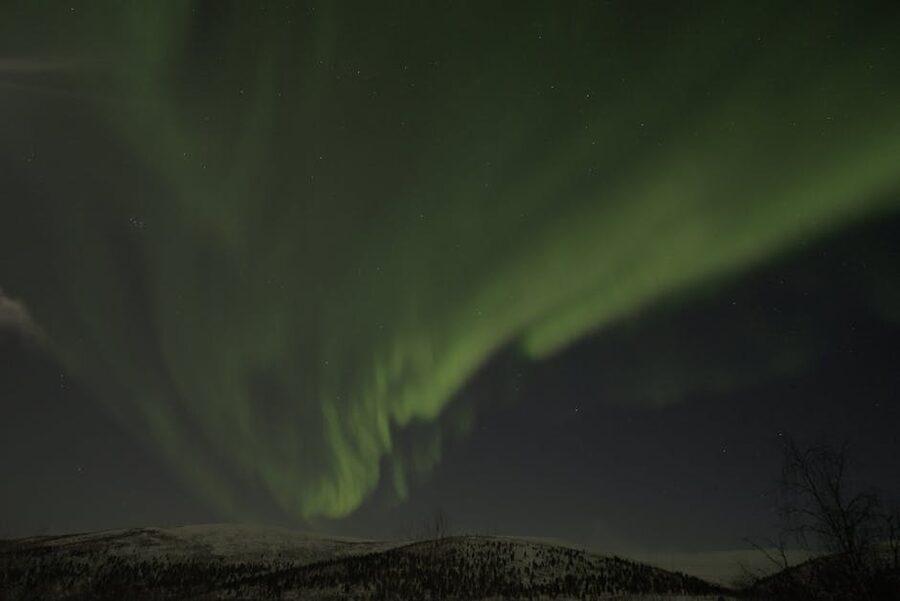
The Norrlandståg has three demand peaks and one trough. You need to know which one your trip falls in before you start price-checking, because cabin availability moves before the price does.
- Christmas and New Year (15 December to 5 January). The hardest week to book. Cabins on the Narvik run sell out 90 days ahead. Book the day SJ opens that travel date, which is roughly 90 days before departure.
- February half-term and Easter. The aurora-chase peak, plus Swedish school holidays. Cabins go 60 to 75 days ahead. The Kiruna and Abisko stops are the bottleneck, not Luleå.
- Midsummer and the polar-day weeks (mid-June to mid-July). Trekkers heading for Abisko and the Kungsleden trail. Less aggressive than winter but still a 30-day-ahead booking window.
- The trough: October to mid-November, late August. Off-season. Cabins available 7 days out. Prices drop. Aurora is technically possible from late August, but the dark hours in October are when it actually starts to be reliable. October on the night train is my favourite shoulder window.
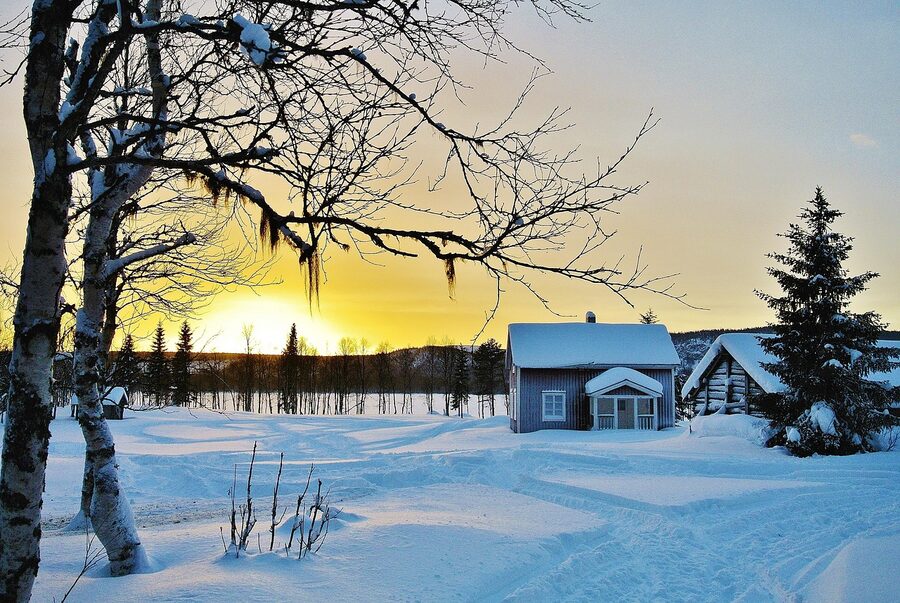
SJ opens bookings 90 days before departure on a rolling basis at midnight Swedish time. If you want a 2-bed cabin on the Narvik run for the week of 18 February, mark the first week of November in your calendar and book at 00:01 Stockholm time on the day. This is not paranoia. There are roughly 80 sleeper bunks on the Narvik service per night and demand from Swedish school-holiday families easily outstrips that without any tourist demand on top.
The route, hour by hour
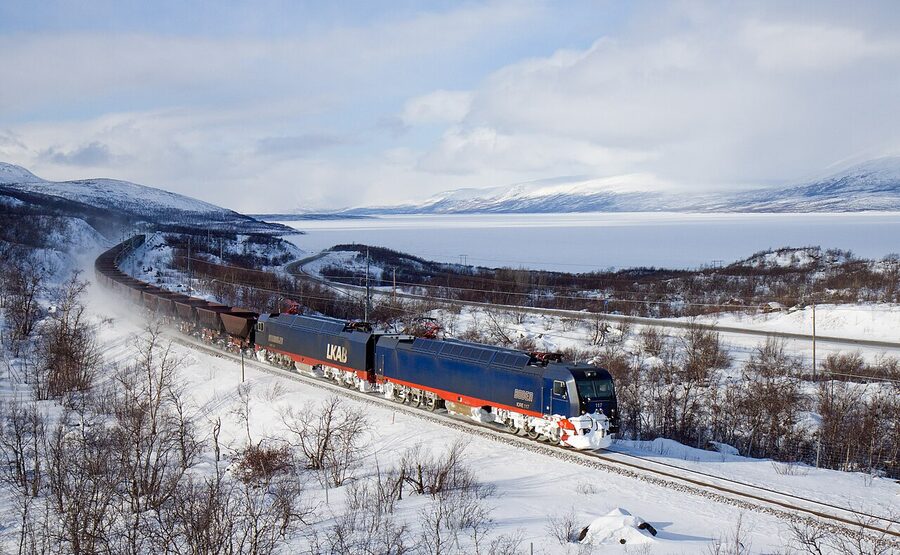
The Stockholm-Narvik run is 1,548 kilometres. The train averages 87 km/h with stops, which is brisk for a sleeper on a single-track 19th-century alignment. Here is what you actually see and when, in winter, on the standard 18:01 departure.
18:00 to 22:00, Stockholm to Sundsvall
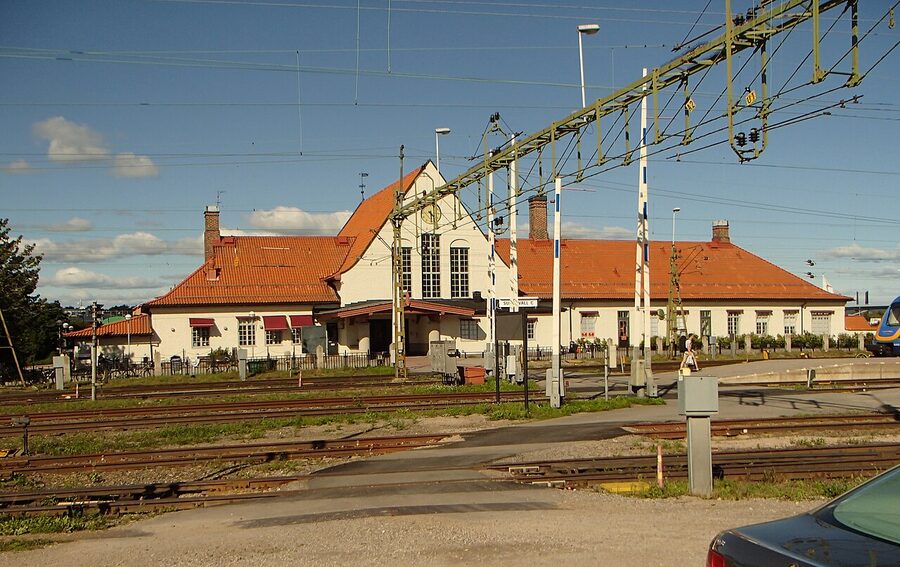
The first four hours go through Uppsala, Gävle and Söderhamn, then up the Bothnian coast. In winter it’s dark from departure. The bistro car opens at 18:30 and serves until around 22:30. The window seat is wasted on this stretch unless you actively enjoy looking at industrial sidings, so this is when you want to eat dinner, watch the carriage clear out as people head back to their cabins, and let the rhythm of the train do its work.
22:00 to 23:30, Sundsvall to Umeå
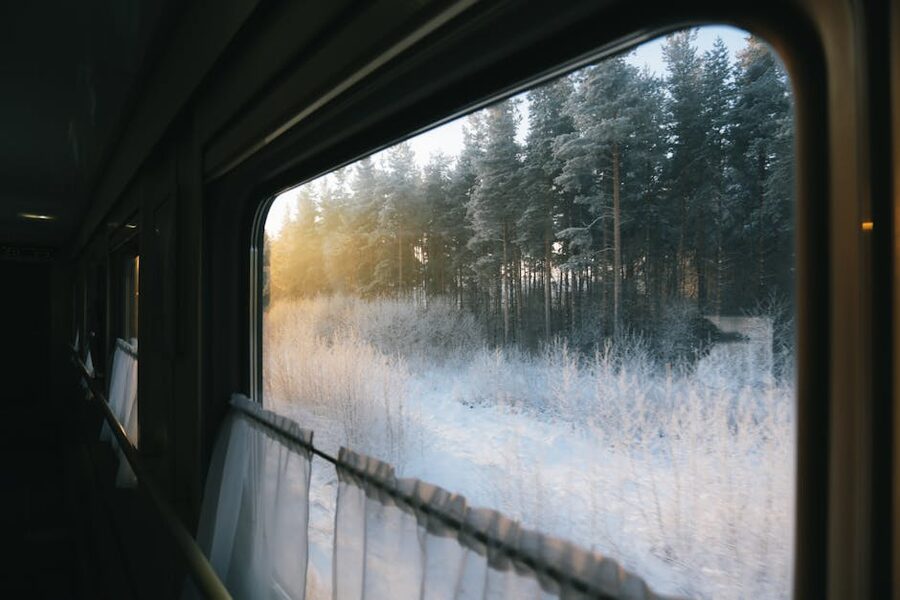
The line crosses into the boreal-forest belt north of Sundsvall. The cabin lights dim around 23:00. If you’re going to sleep at all you sleep through Umeå (which the train hits around 02:30) and the long dark stretch up the inland route to Boden. The trick most rail-experienced travellers use: melatonin, eye mask, ear plugs, and a thermos of decaf because the cabin heating is unreliable.
06:30 to 07:30, the dawn at Boden
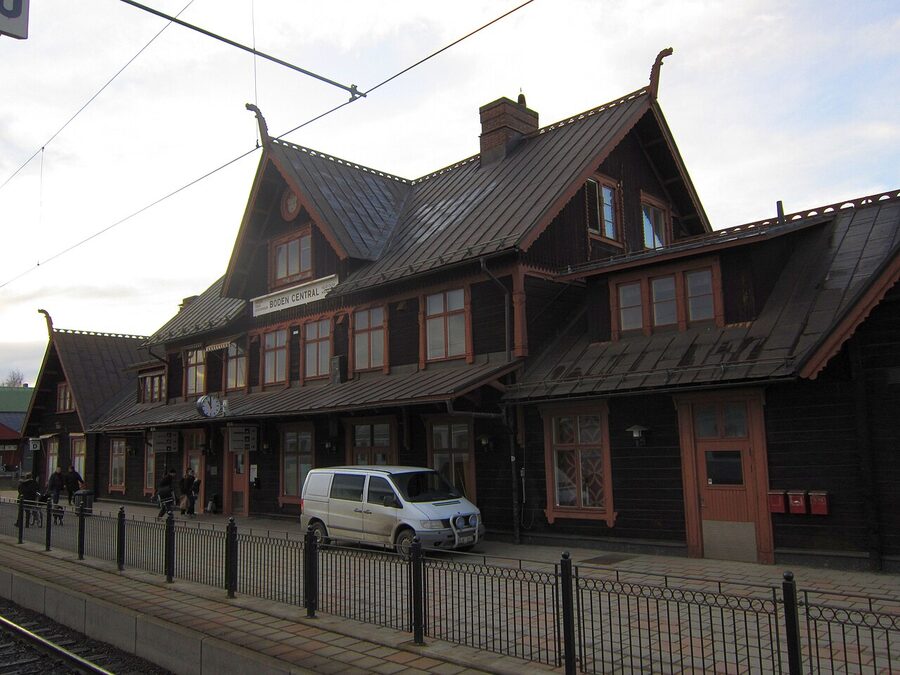
Wake up for Boden. This is the most underrated moment on the trip, especially in February when the sky is just starting to turn pink at 06:30 and the marshalling-yard mist sits over the lake-ice. The Luleå-bound passengers get off here and continue 35 km east on Train 94 to the Bothnian coast. The Narvik-bound carriages are uncoupled and re-coupled to a fresh locomotive that will haul you west. Step out onto the platform if you can. The cafe in the station building isn’t open at 06:30, but there’s a vending machine on platform 1 that sells the hot chocolate you didn’t know you needed.
07:30 to 11:30, Boden to Kiruna through Sápmi
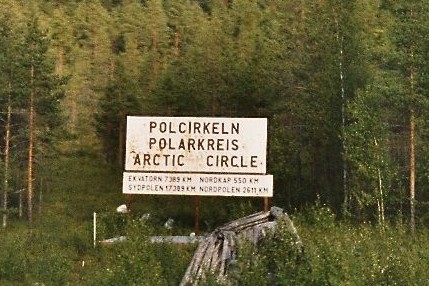
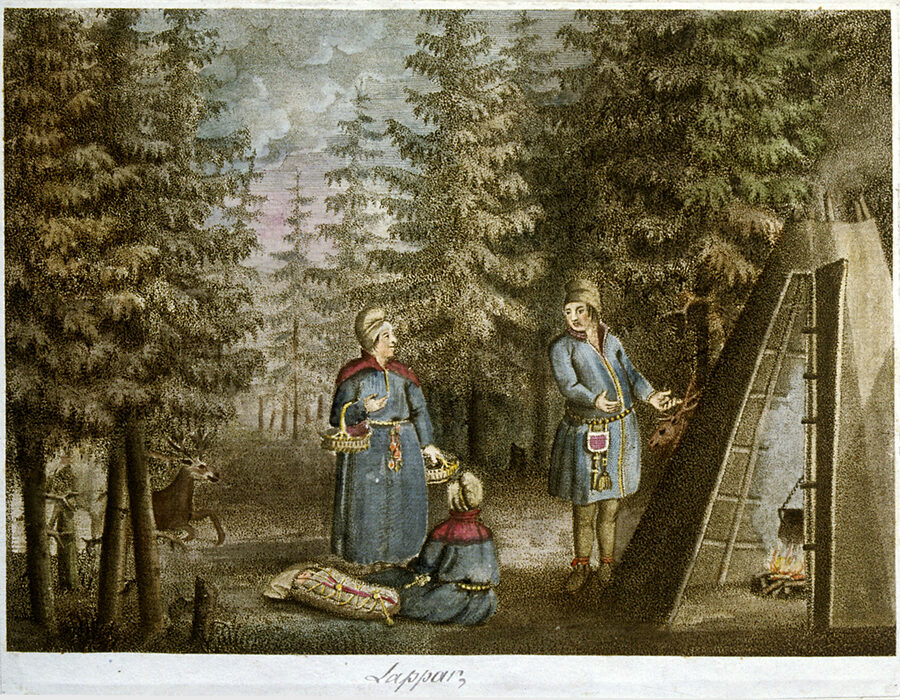
The four hours from Boden to Kiruna are why people pay for the cabin. You climb gradually, the forest thins, and somewhere around Jokkmokk you cross into Sápmi proper, the territory of the Sami people that runs across northern Norway, Sweden, Finland and the Russian Kola Peninsula. The line itself was built straight through Sami reindeer-grazing land in the 1890s without consent, a fact that doesn’t make it onto the SJ marketing page but is worth holding in mind as you watch the country pass.
The breakfast service starts in the bistro car around 06:30 and runs until 09:30. If you booked a 1-bed or 2-bed sleeper your breakfast is included as a paper-bag handed to you by the carriage attendant: bread, cheese, ham, yoghurt, juice, coffee voucher. It’s adequate. It is not the breakfast you’d want if you’d just paid 2,300 SEK for a private cabin.
11:21, Kiruna
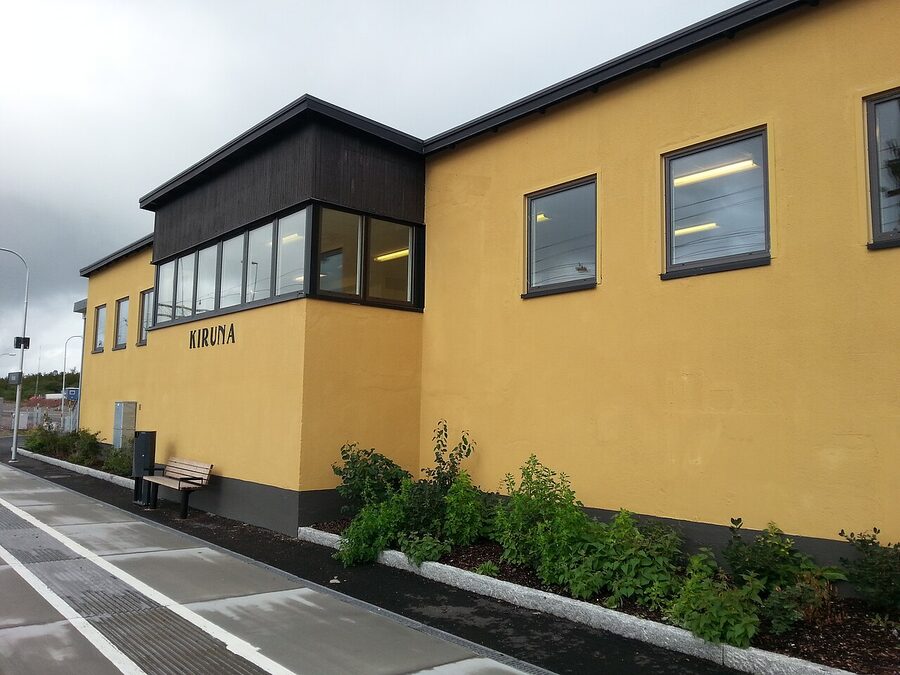
Most passengers on the Narvik service get off at Kiruna. The town is the launchpad for the Icehotel at Jukkasjärvi (17 km east, taxi or shuttle), the Esrange Space Center tour, and the network of dog-sledding outfits that pick you up from the station. Kiruna’s station moved in 2022. The new one is east of the centre. If you booked a hotel for “Kiruna town” before 2022 the address may be 3 km from the station. Check.
12:47, Abisko Östra and Abisko Turiststation
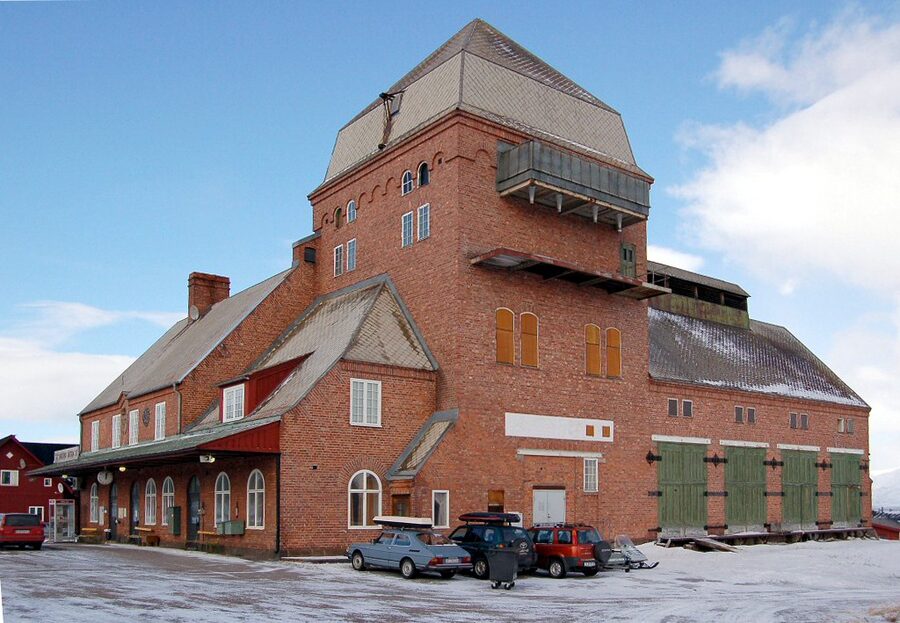
For the aurora chase the stop you want is Abisko Turiststation, two kilometres west of Abisko Östra and a five-minute walk from the Abisko Mountain Lodge and Aurora Sky Station base. The train spends 90 seconds on the platform. Don’t wait until the train stops to get your bag down from the rack. If you want a deeper read on whether to base in Abisko or in Tromsø, my Tromsø vs Abisko comparison walks through the trade-offs; if you’re weighing Sweden against Iceland for the same trip, the Iceland aurora guide sets out what’s actually different about the Icelandic sky.
14:27, Narvik
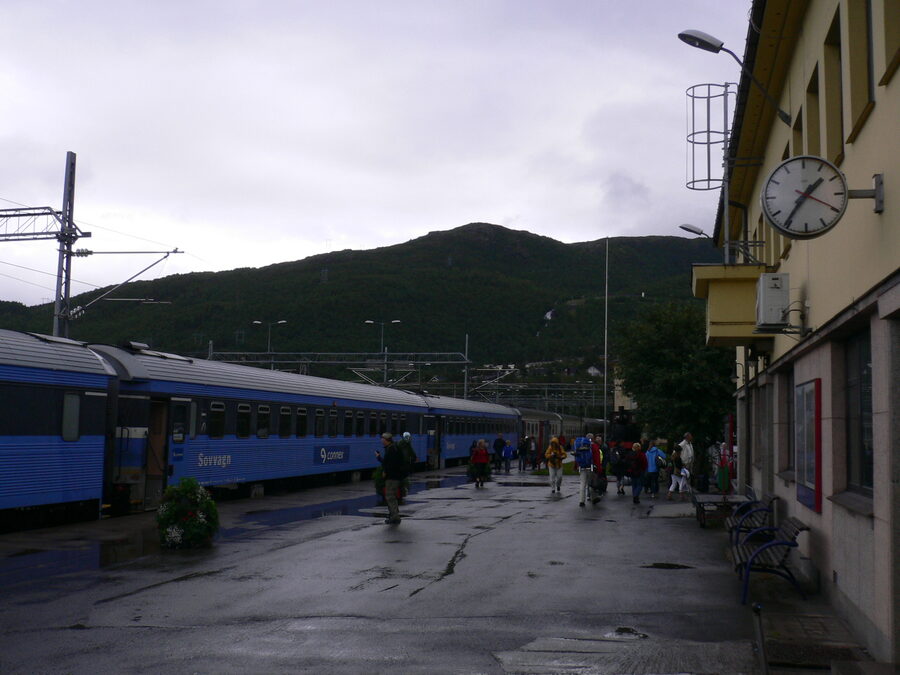
If you stay on past Abisko, the train crosses the Sweden-Norway border at Riksgränsen, threads down the Ofotbanen alongside the Rombak fjord, and arrives at Narvik 90 minutes after Abisko. Narvik has the only ice-free deepwater port in northern Norway, which is why the line was built here in the first place, and why the Wehrmacht fought one of the bloodiest naval battles of the Second World War for the place in April 1940. There’s a war museum (the Narvik Krigsmuseum on Kongens gate) that runs through it well.
The bistro car and what to expect on board
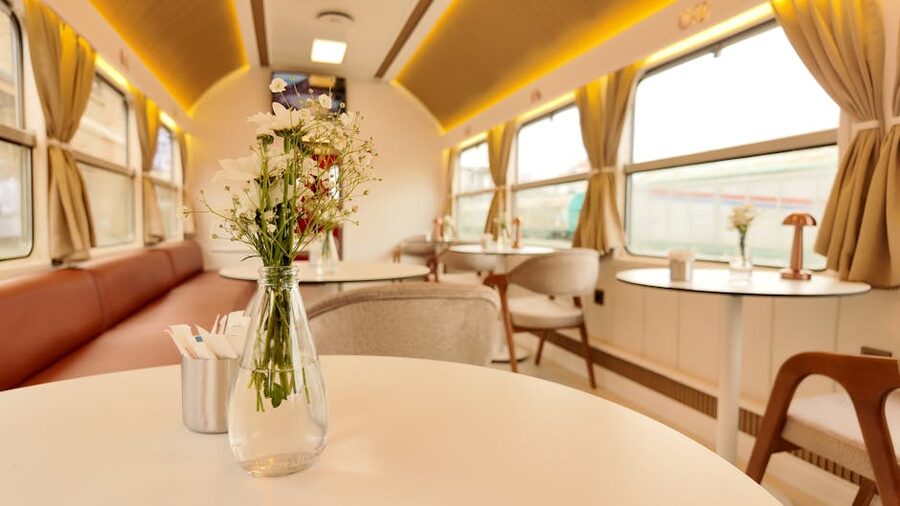
One thing the SJ marketing page admits up front: the bistro car is a microwave-and-counter operation, not a restaurant. The menu is 5 or 6 hot items at any time. A 95 SEK Caesar salad. A 109 SEK pasta bolognese. A 119 SEK Swedish meatball plate with mashed potato and lingonberry. Beer at 75 SEK, coffee at 35 SEK, hot chocolate at 39 SEK. It’s perfectly fine for what it is. It is not the experience the line’s old reputation suggests, when the train had a proper dining car with table service.
The bistro is open from departure until about 22:30, then closes for the night, then reopens at 06:30 for breakfast service until 09:30 or so. If you want a second meal between Boden and Kiruna and you didn’t book a class with breakfast included, the bistro is your only option.
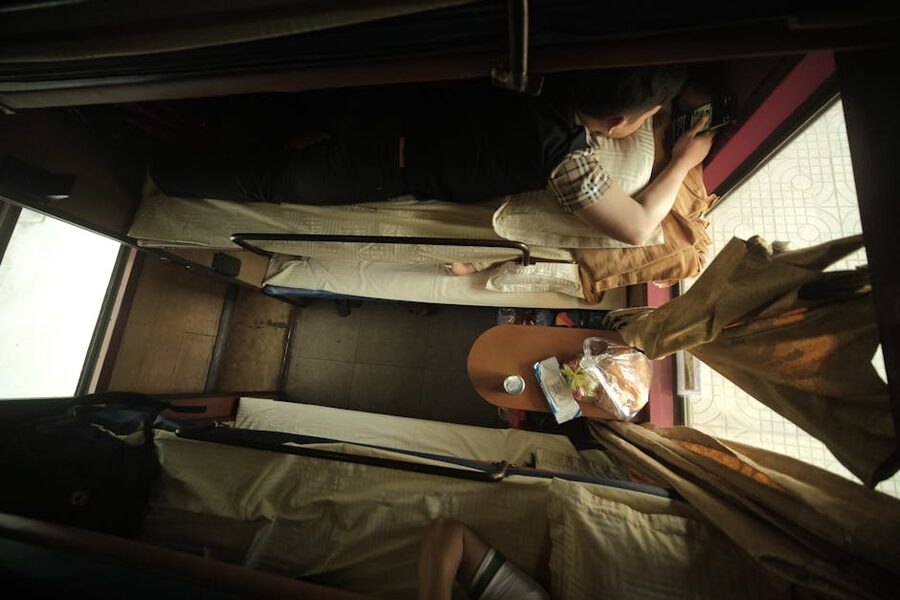
The two essential bits of practical advice nobody puts on the SJ page:
- Board with your own dinner. The supermarket on the lower concourse at Stockholm Central (the Hemköp on the eastern end) does a 100 SEK sandwich-and-drink combo that’s better than what you’ll get on the train. If you’re boarding at Arlanda Norra there’s a Pressbyrån on the platform.
- Bring water and snacks for the morning. The bistro car is at one end of the train and your cabin may be six carriages away. At 07:00 the corridor is full of half-dressed people queuing for the toilet. You don’t want to add coffee-run to that.
What you actually want to bring
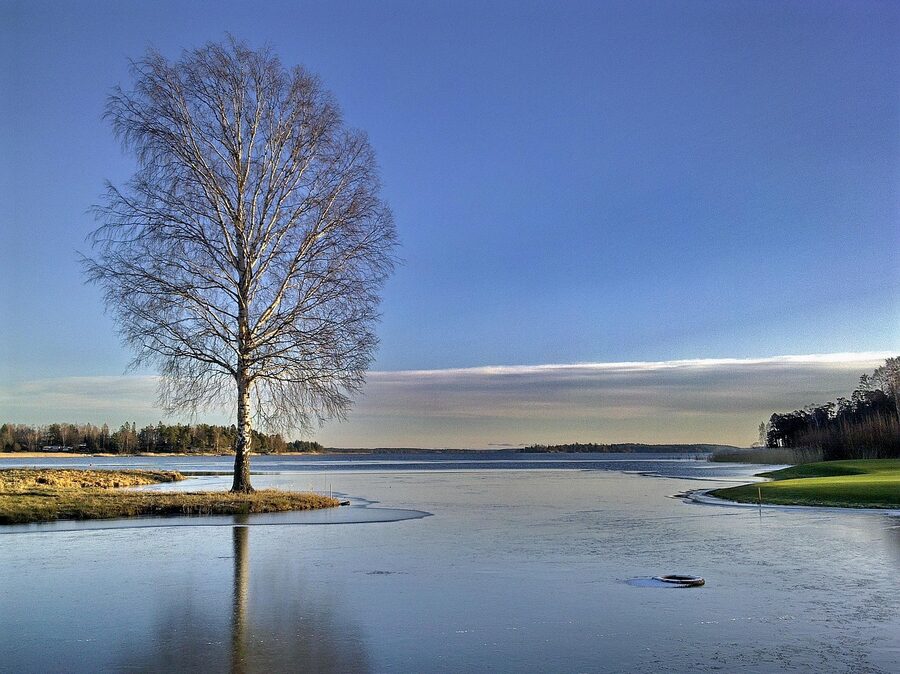
The packing list that genuinely matters, from someone who has now tested it on three trips:
- Eye mask, even if you think you don’t need one. The cabin lights flicker on at every station stop.
- Ear plugs. The wheel-set on the WL4 carriages clatters. Foam ones from any chemist work fine.
- One thin extra layer to sleep in. The blanket SJ provides is single-thickness polyester.
- A reusable water bottle. There’s a tap at the end of each carriage but no cups.
- Slippers if you’re in a 2-bed or 6-bed without them included. The carriage floor is dirty by 22:00.
- A power bank. Not every cabin has a working socket. The 1-bed and 2-bed reliably do; the 6-bed couchette is hit and miss.
- Phone-mount or stuff-sack for the bunk. There’s nowhere to put a phone safely while you sleep on the upper bunk of a 6-bed.
- Cash in SEK is unnecessary. The bistro and station vending machines all take card. Apple Pay works on the bistro card reader.
The Iron Ore Line: how the railway got built and why it crosses into Norway
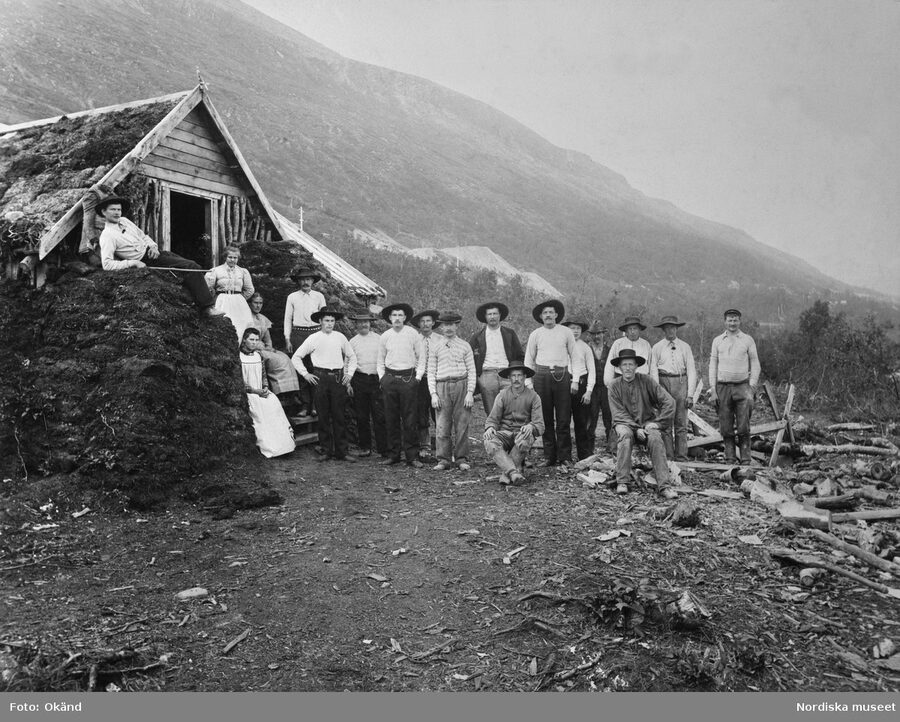
The line you ride was not built for tourists. The Malmbanan, on the Swedish side, and the Ofotbanen, on the Norwegian side, were built to move iron ore from the mines at Kiirunavaara and Malmberget to a port that wouldn’t freeze in winter. Luleå on the Bothnian Bay freezes from January to April. Narvik, on the Atlantic, doesn’t freeze at all because the Gulf Stream pushes warm water that far north. So in the 1880s the Swedish state did the obvious thing: build a railway through 473 km of nothing, across an international border, to get the ore to a port that worked all year.
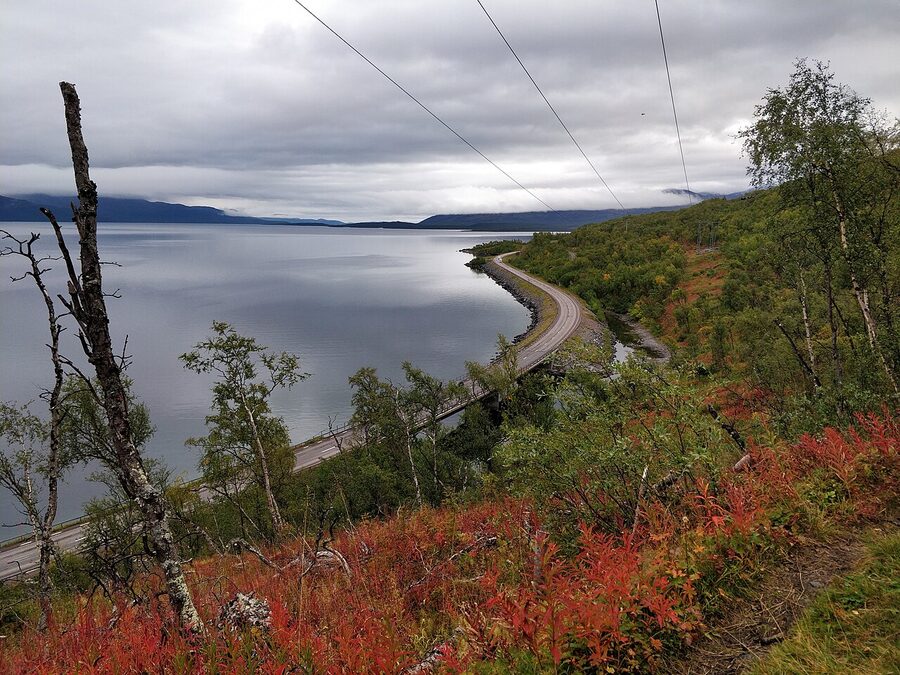
The first section, Luleå to Gällivare, opened in 1888. The hard part, Gällivare to Kiruna to Riksgränsen and across the border, took until 1899 on the Swedish side. The Norwegian section from the border to Narvik was built between 1898 and 1902 by the contractor Skanska on a brutal hand-cut alignment that crossed glaciers and bog. King Oscar II travelled north in his royal carriage in July 1903 to officially open the through line. He used a silver hammer.
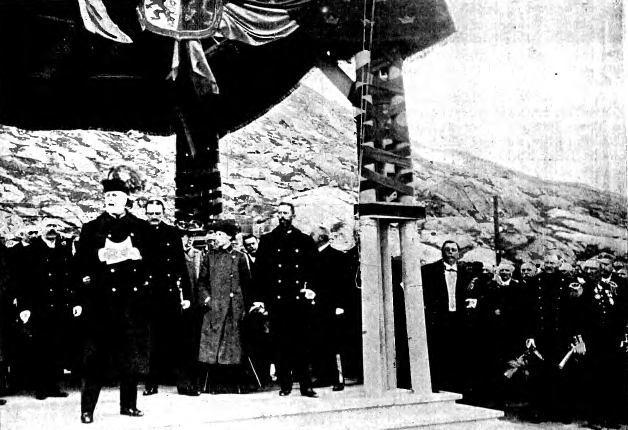
The men who built it lived in the camps you can still see traces of along the modern alignment. The ones at Nuolja, Vassijaure and Riksgränsen are well-documented in the Norrbottens Museum archive. Mortality from cold and accident was high in the 1898 to 1902 winters. The Swedish word for these labourers is rallare. The walking trail that follows the original construction route, the Rallarvägen, runs from Abisko to Riksgränsen and is a 50 km hike that takes three to four days. People who do it stay in cabins, not the original barracks.
The Second World War and why Narvik was fought over
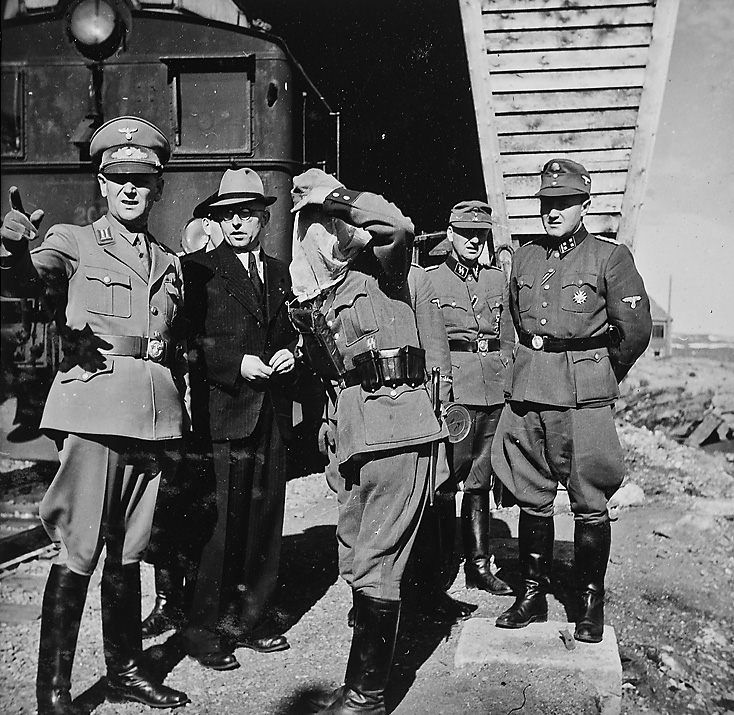
By the late 1930s the Swedish iron-ore exported through Narvik was supplying roughly 40 percent of Germany’s wartime steel needs. Sweden stayed officially neutral throughout the war but never stopped the trade. The British understood the strategic weight of the port and tried to deny it to Germany. The Battles of Narvik in April and May 1940 were the result. Three German destroyer flotillas were sunk in Ofotfjord, the British and Free French briefly retook the town, and the Wehrmacht held the iron-ore route for the rest of the war.
The piece of history this raises that nobody on the SJ marketing page wants to discuss: the line you are riding is, in part, the reason 50 million tons of Swedish neutrality was complicated. If you do the trip, the Narvik War Museum (Narvik Krigsmuseum, 150 NOK adult entry) is the right place to read the rest of the story.
Sami country and the line that ran through it
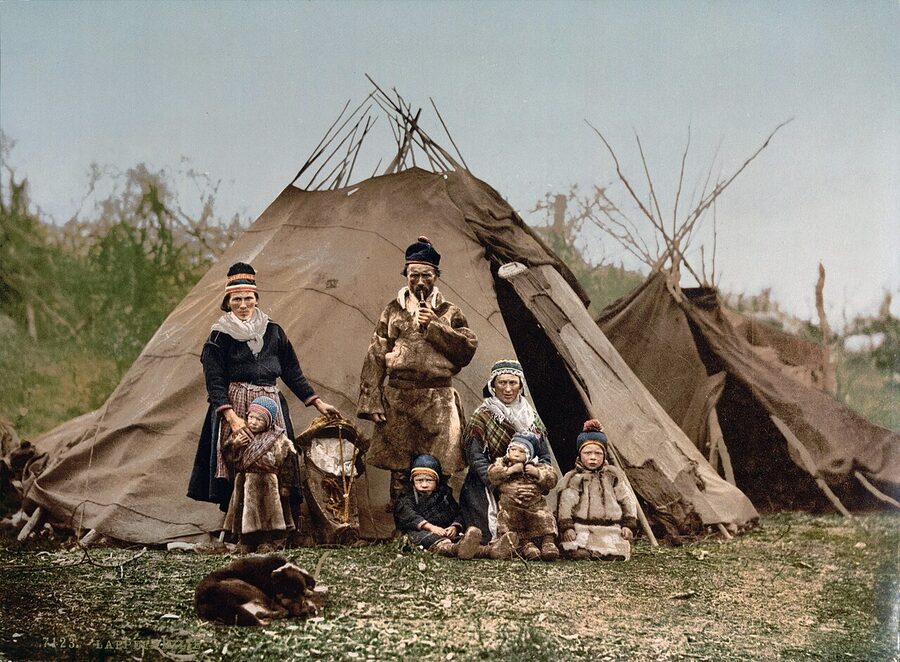
The land the railway crosses from Boden onwards is Sápmi, the homeland of the Sami people, who number about 80,000 today across northern Norway, Sweden, Finland and Russia. The line was built straight through traditional reindeer-grazing pastures without consultation. Some of the original survey routes were redrawn after Sami protest, but the broad consequence is that the Malmbanan still cuts across the seasonal migration patterns of the herding cooperatives.
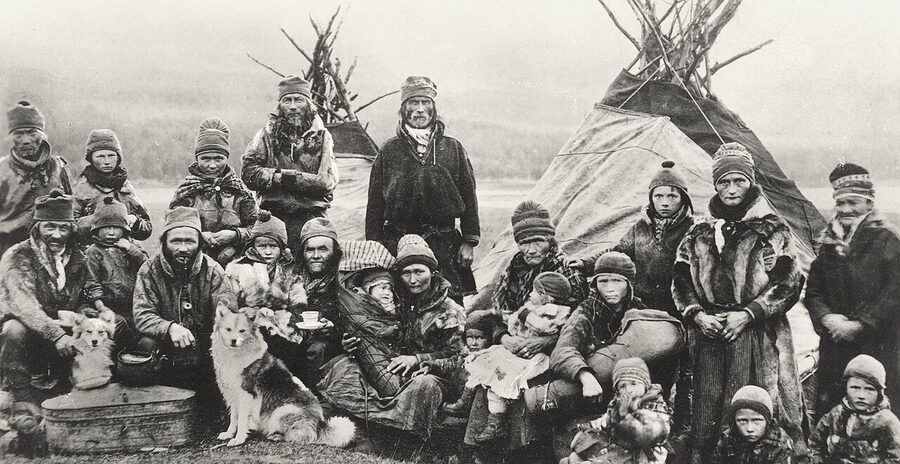
If you stop in Jokkmokk (the train doesn’t, but a connecting bus from Boden does) the Ájtte museum is the substantial Sami cultural centre and worth two hours of anyone’s time. Jokkmokk also hosts the Sami winter market in the first week of February each year, older than the railway, dating from 1605, the kind of fixture the Norrlandståg’s modern timetable doesn’t acknowledge but does, accidentally, deliver you to.
Tickets, where and how to book
The clean answer: book direct on sj.se, in English, with any major credit card. SJ has the entire inventory. Don’t book through Eurail unless you have a Eurail Pass already, in which case you still pay an SJ supplement of around 200 to 850 SEK (~€18 to €76) for the bunk, which is most of the cost. Pass-holders save the seat fare, not the sleeper supplement. Worth knowing before you build the trip around a pass.
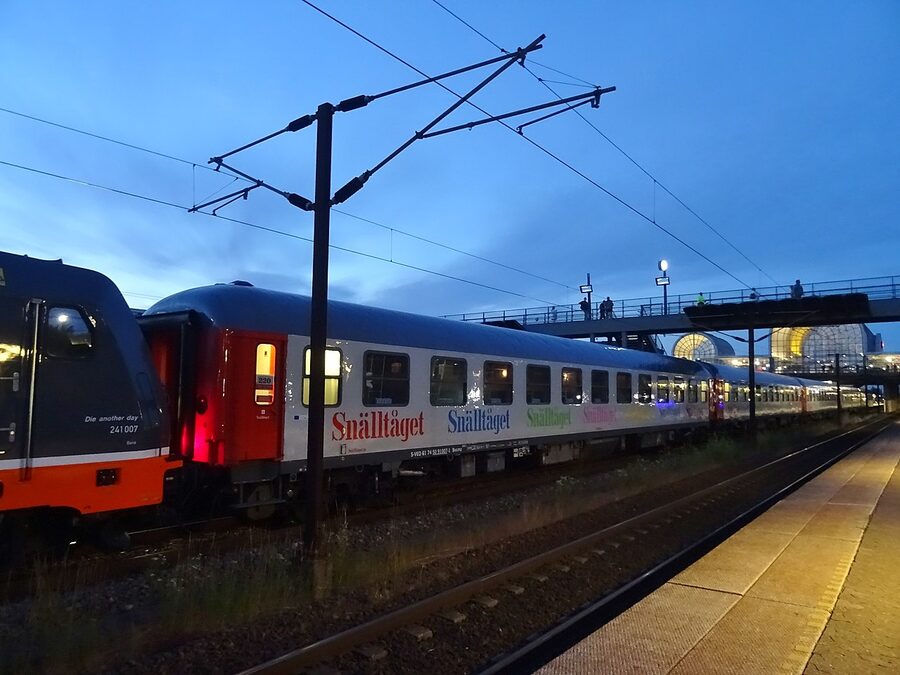
The other operator on the Stockholm-Lapland axis is Snälltåget, an open-access private train. Snälltåget runs to Åre (a ski resort halfway up the country, not Lapland), not Kiruna or Narvik. If your destination is Åre, Snälltåget is often cheaper and the carriages are nicer. If your destination is Lapland, SJ is the only game on the rails.
One booking trap: when you go to sj.se and search “Stockholm to Abisko” the engine will sometimes route you via SAS to Kiruna and a connecting bus, presented as a single ticket. That’s a faster journey on paper but not the train you’re trying to book. Make sure the result is a “Nattåg” (night train) and not a “Resa via flyg” (journey via flight).
Stockholm-Lapland by train versus by air, and the Nordic comparison
SAS will fly you from Stockholm Arlanda to Kiruna in 90 minutes for around 1,200 to 1,890 SEK (~€107 to €169) one-way in winter, on roughly five daily rotations. Norwegian and BRA fly the same route at slightly lower fares. The Kiruna airport bus is 100 SEK and gets you to Kiruna town in 25 minutes. So the time difference is roughly: night train, 17 hours; flight plus connection, around 4 hours door-to-door.
The case for the train, even with that gap:
- You skip a hotel night. A 2-bed sleeper at 1,795 SEK includes the bed. A Stockholm hotel is 1,500 SEK. You arrive in Kiruna midday, unpack, ski/dogsled/aurora-chase that afternoon. The flight at 17:00 puts you in Kiruna at 18:30 with the day gone.
- The route is part of the trip. If you fly, you have an airport experience and an aerial view of cloud. If you take the train, you wake up in the snow at Boden, you watch the dawn over the Bothnian forest, and you cross the Arctic Circle while drinking tea in your bunk. The train is the only way to actually see Sápmi from the ground.
- Carbon. The flight emits roughly 220 kg CO2 per passenger. The train, on Sweden’s mostly-hydroelectric grid, emits about 4 kg per passenger. If you care about that, and many readers of this site do, it’s an easy decision.
The case for the flight:
- You’re going to a Sunday dinner in Stockholm and a Monday morning meeting in Kiruna. The flight is your only option.
- You can’t sleep on trains. Some people genuinely can’t. If 17 hours of broken sleep on a moving bunk will wreck your week, take the flight.
- You’re bringing more than 23 kg of gear. The train allows 25 kg per bag and there’s room in the cabin. The flight charges for excess.
How this train compares to the other Nordic overnighters
The Norrlandståg is one of three serious sleepers in the Nordic countries. Worth knowing about the other two before you choose:
- The VR Santa Claus Express, Helsinki-Rovaniemi. A 12-hour Finnish double-decker overnight that runs Helsinki Central to Rovaniemi via Tampere and Oulu. Newer carriages than the SJ stock. Two-bed cabins with private shower available from around €99 per bunk. The car-train option (you put your car on the train) makes this the better choice if you’re driving onwards in Lapland. Doesn’t go as far north as the Norrlandståg. For more on Finnish Lapland generally, see the Finnish Lapland aurora guide; if you’re chaining the trip with a Stockholm-Helsinki crossing first, the Silja or Viking Line overnight ferry is the natural southbound leg.
- The Bergen Line + Nordlandsbanen chain, Oslo-Bodø. Norway’s eastern equivalent. Oslo to Trondheim is a 6-hour day train, then the overnight Nordlandsbanen from Trondheim to Bodø is another 10 hours. Different trip, more daylight scenery, no through service, change at Trondheim. The Bergen Line itself, west from Oslo, is a separate trip; my Bergen Line guide covers that.
- The Norrlandståg. The longest of the three by distance, the most northerly, the only one that crosses an international border, and the only one that drops you at Abisko. Older rolling stock than VR. Better route.
The dawn approach, and why the train wins anyway
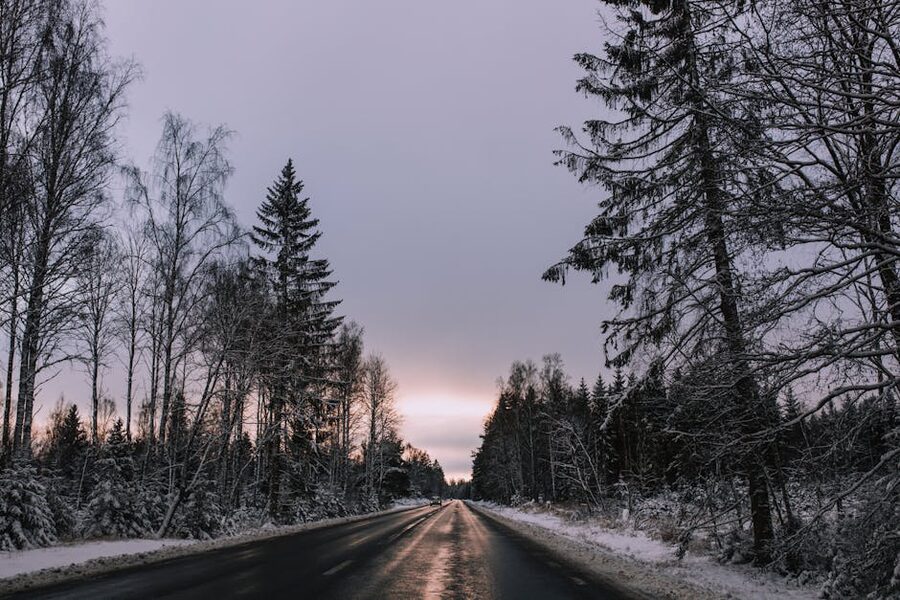
The thing about the Norrlandståg that nobody who hasn’t done it can fully describe is the first 30 minutes after Boden, in February, when you’ve just woken up, the heating in the cabin is too high, and the world outside the window is going from dark blue to pink to gold to white over a ten-minute arc as the train climbs north toward the Arctic Circle. The light comes up slowly because the sun is still below the horizon and will not properly rise for another hour. The forest is buried in snow and the lakes are flat plates of ice. Occasionally you’ll see a tiny red wooden cottage with a single lit window in the middle distance, and you can’t tell if anyone is home.
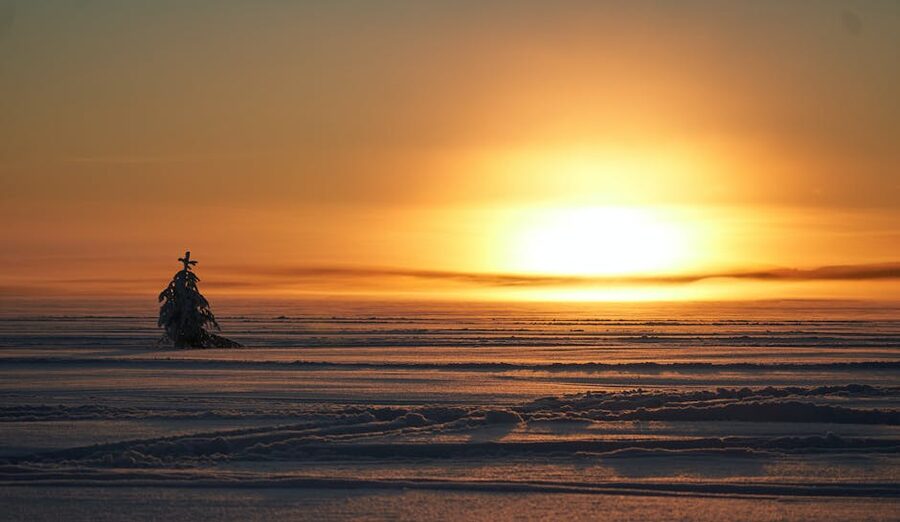
This is the moment people remember from the train, more than the cabin or the bistro car or the price they paid. Whether the trade is worth the time depends on whether you weight that moment more than the four hours the flight saves you. If you’re reading a 6,000-word guide to a sleeper train you probably already know your answer.
Where to stop along the way, if you have a few extra days
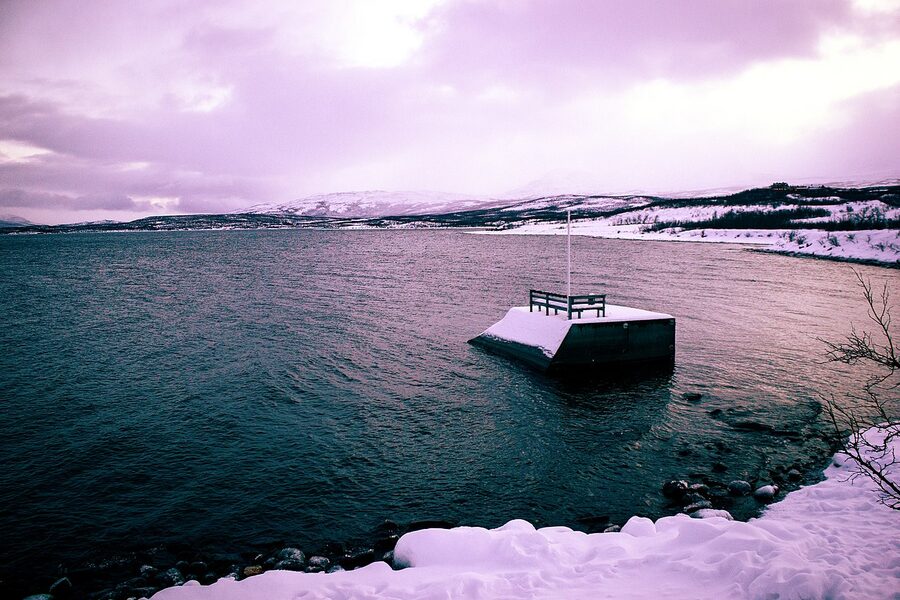
The Norrlandståg is one of the few sleeper trains where stopping en route makes sense, because the line itself is the trip and the towns along it are real places, not just stops. The four worth considering:
- Sundsvall. A working coastal city at the mouth of the Selånger river, rebuilt in stone after the 1888 fire and now a quiet UNESCO-adjacent stone-town centre. One full day is enough.
- Umeå. The biggest city on the inland route. University town, Bildmuseet contemporary art museum (free entry), the only properly walkable centre between Stockholm and Luleå. Two days.
- Boden. The fortress town. The Boden Fortress system of five forts dug into the hillsides above the town was Sweden’s frontier defence against Russia from 1900 onwards. Tours of the Rödbergsfortet run summer-only. One day, summer only.
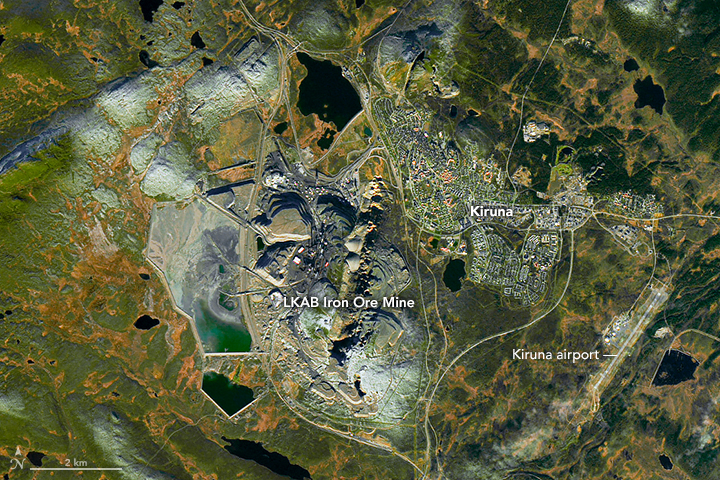
- Kiruna. The town that’s literally being moved. The relocation programme is moving 6,000 residents and 21 listed buildings 3 km east, because the iron-ore mine has hollowed out the bedrock under the original centre. The new town hall, Kristallen, opened in 2018. The old church is scheduled to be moved on rollers in 2026. This is the most interesting urban-planning experiment in Europe right now and worth two days even if you’re not interested in mining.
Booking strategy if you want to stop: buy each leg as a separate ticket. The Stockholm-Sundsvall, Sundsvall-Umeå, Umeå-Kiruna segments work fine as separate fares. SJ does not sell a hop-on-hop-off pass on this route. The Eurail Pass technically allows it but you’ll pay a sleeper supplement on each overnight segment, which makes the pass uneconomical for most riders unless you’re combining several countries.
Hotels at each end
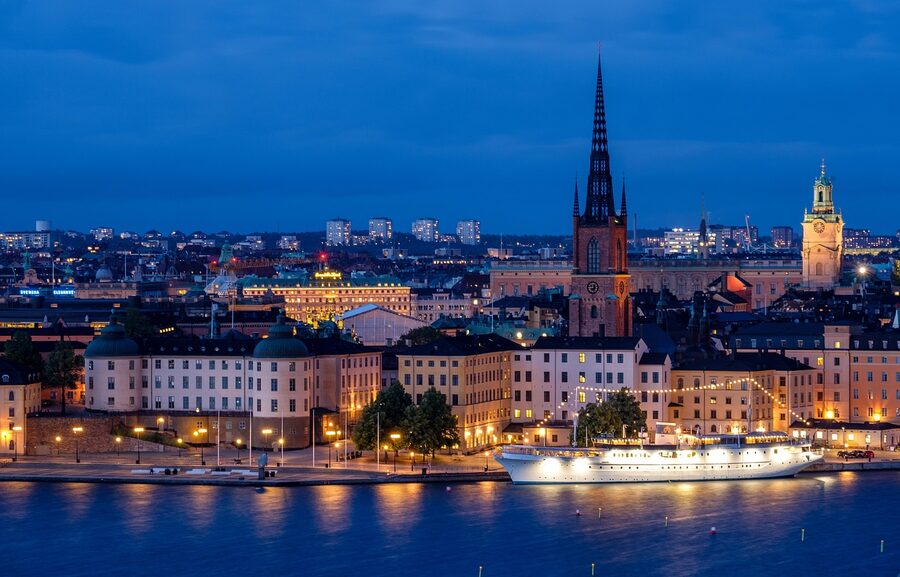
For the Stockholm side, my Stockholm 3-day guide covers the city in detail. If you’re just there for an afternoon-and-evening before the train, the smart thing is to book a left-luggage locker at Stockholm Central (60 SEK for 24 hours), keep your hands free, and walk to Gamla Stan. Don’t bother with a hotel for half a day; the night train is your hotel.
For Kiruna and the aurora end:
- Hotel Arctic Eden Kiruna, 5 minutes’ walk from the new station, two-star, around 1,150 SEK (~€103) per double, no aurora views but reliable. Check rates on Booking.com
- Scandic Kiruna, central tower hotel with the Bishops Arms pub on the ground floor, around 1,395 SEK (~€124), useful if you want a beer after a 17-hour train. Check rates on Booking.com
- Camp Ripan, eastern edge of Kiruna, the cabin-and-restaurant outfit that runs the most reliable aurora-watching package, around 2,200 SEK (~€196) per cabin. Check rates on Booking.com
- Abisko Mountain Lodge, five minutes from Abisko Östra, base for the Aurora Sky Station chairlift, around 2,400 SEK (~€214). Books out for the season by November. Check rates on Booking.com
- STF Abisko Turiststation, the Swedish Tourist Association’s hostel-and-hotel at Abisko Turiststation halt, around 1,650 SEK (~€147) per double room. Walk-on at the station. Check rates on Booking.com
If you carry on to Narvik:
- Scandic Narvik, 12 minutes’ walk from the station, around 1,395 NOK (~€118), proper Norwegian hotel breakfast. Check rates on Booking.com
- Quality Hotel Grand Royal Narvik, overlooks the Ofotfjord, around 1,650 NOK (~€140). Check rates on Booking.com
Verdicts and what to skip
What’s worth it on this trip:
- Booking 90 days out for winter. The price barely moves. The cabin availability does.
- The 2-bed sleeper for couples. Best price-to-comfort ratio.
- Boarding at Arlanda Norra after a flight. Saves you a hotel and 75 SEK in airport-train fares.
- Stopping at Abisko, not Kiruna. Abisko has a clearer microclimate (Torneträsk creates a rain shadow); Kiruna gets cloud off the iron-ore mine. For aurora hit-rate, Abisko wins.
- The Narvik run over the Luleå run. Same price for most cabins, longer journey, infinitely better landscape.
What to skip:
- The seat (sittvagn). 14 hours upright is not a good value-per-hour for the 250 SEK saving over the cheapest couchette.
- The Eurail-Pass route. If you’re only doing this train, buy the SJ ticket direct.
- The bistro-car breakfast on a 6-bed couchette. Buy a Hemköp pastry at Stockholm Central for half the price.
- Booking through aggregator sites. Trainline, Omio, Rail Europe all add a 5-10% margin and have worse cancellation terms than sj.se direct.
- The 1-bed cabin if you have travelled with a partner. The 2-bed locked-as-a-couple is cheaper per person and substantially nicer.
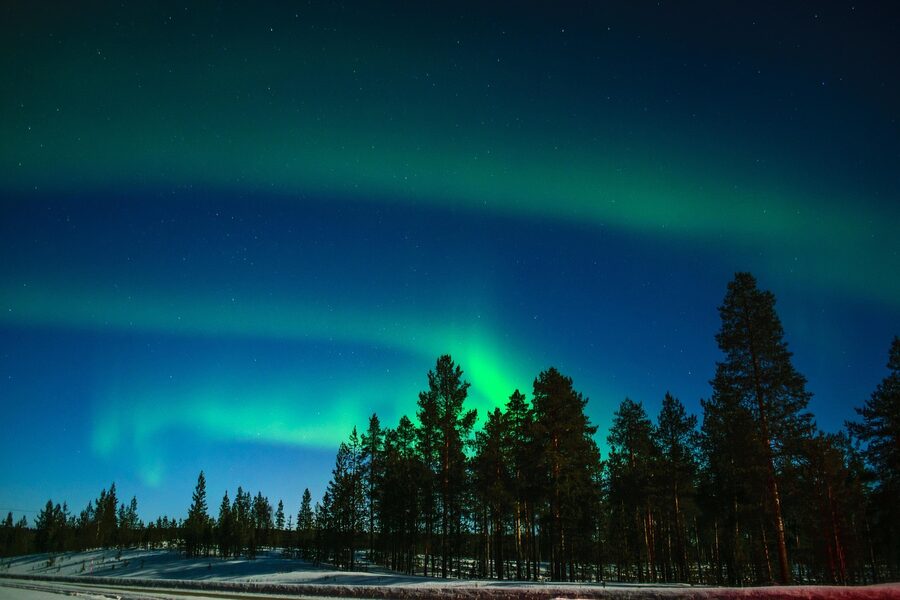
If you build the trip well, the Norrlandståg gives you Sweden vertically: dinner in Stockholm, sleep through the boreal forest, breakfast at Boden in the snow, midday in Sápmi, and an Arctic afternoon with the aurora forecast on your phone. The line was built for ore in 1903 and it still moves more iron than passengers, but the side effect of the original investment is that you can sleep your way north for the price of a hotel night and wake up somewhere it would otherwise have taken you a day to reach. That trade has held for 120 years. It’s still the best one.


.jpg)


