Most travellers I talk to assume Tromsø is the safer bet for the northern lights. It has the airport, the harbour shots, the Hurtigruten dock, the bigger Instagram footprint. The reality is the opposite. Tromsø sits on a rainy coast where the cloud cover decides everything, and Abisko, a four-house village on the Swedish side of the same latitude, has a microclimate that statistically gives you more clear nights than nearly anywhere else under the aurora oval. If your one priority is seeing the lights, you almost certainly want Abisko. If you want a real city around the chase, with whales and restaurants and dog tours and a thirty-minute walk to your hotel, you want Tromsø. This is not a “both are great, pick what fits your vibe” piece. The two places fail in completely different ways, and which failure is worse depends entirely on what you actually want from the trip.
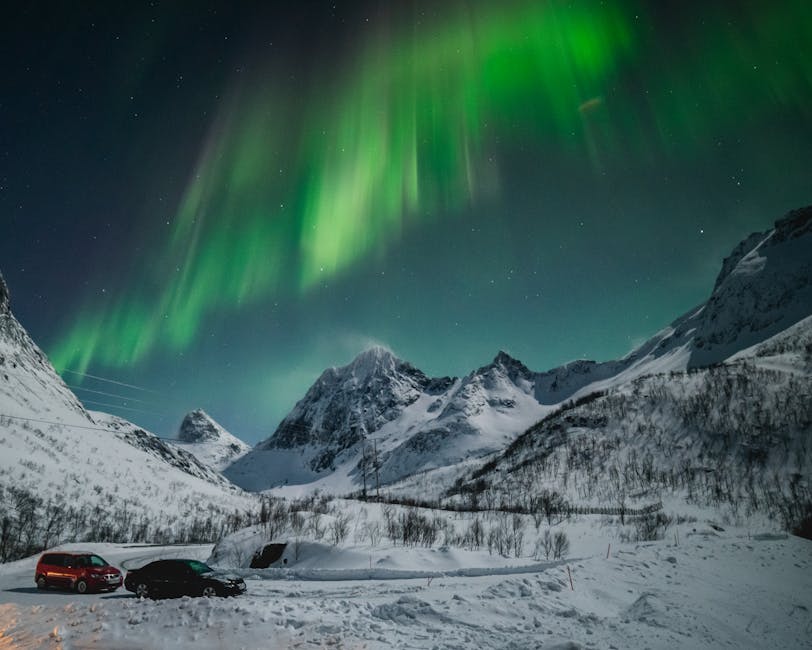
I’m writing this from the perspective of someone who has chased the aurora on both sides of the border in three different winters, talked to guides who run six tours a week from each town, and watched plenty of friends come back from one or the other with the wrong story to tell. The piece is structured to give you the call up front, then the evidence, then the booking specifics so you can plan in an evening.
In This Article
- The short answer first
- Why the cloud cover is the only number that really matters
- Side by side, the numbers I actually care about
- Getting to each, with real numbers
- Tromsø by air
- Abisko by air, then train
- Abisko by sleeper train (the option I actually like best)
- The combined Tromsø-and-Abisko route
- What you actually do during the day, in each
- Tromsø has a city built into the chase
- Abisko has Abisko, and that is enough or it isn’t
- Where you actually sleep
- Abisko: there is essentially one place
- Tromsø: pick by walking time to dark sky
- The tour question, both towns
- Should you book a tour at all?
- What “guarantee” actually means in tour marketing
- The history nobody tells you, briefly
- The things people don’t post about
- Cold matters more than you think
- Aurora photos are not what you’ll see
- You need at least three nights, ideally five
- Solar cycle matters at the margins
- Cost compared, fairly
- Comparing to the alternatives
- So which one should you actually book
The short answer first
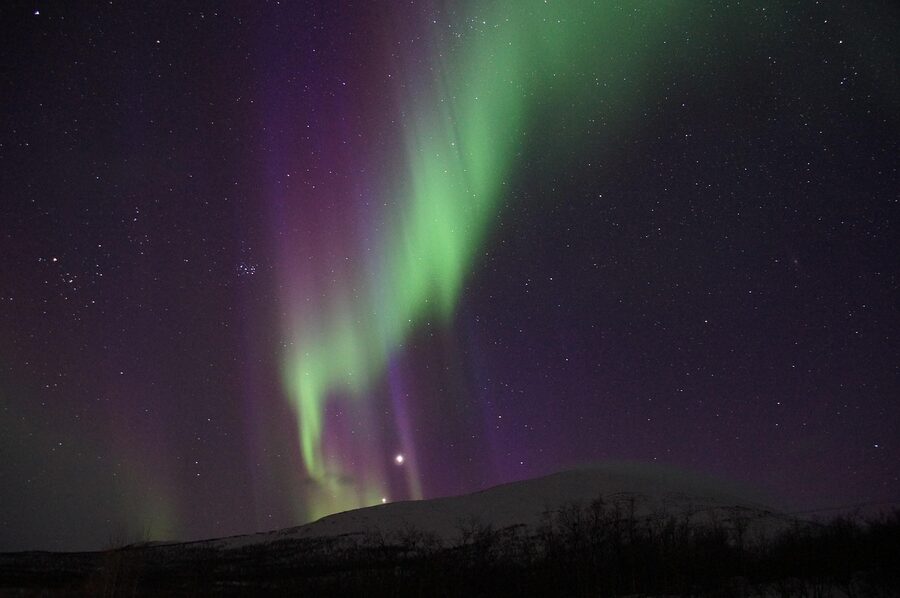
Pick Abisko if the lights are the entire reason you’re going, you have at least three nights, and you don’t mind a small village with one hotel of any size, two pizza-and-burger places, and ice and dark for company.
Pick Tromsø if you want a proper Arctic city around the chase, whale-watching, sea kayaking, multiple restaurants you’d actually rebook, and the option to fly in and out without a connection.
Pick neither if you have only two nights total. Two nights is not enough on either side of the border. The lights are weather-dependent and the weather laughs at you.
Why the cloud cover is the only number that really matters
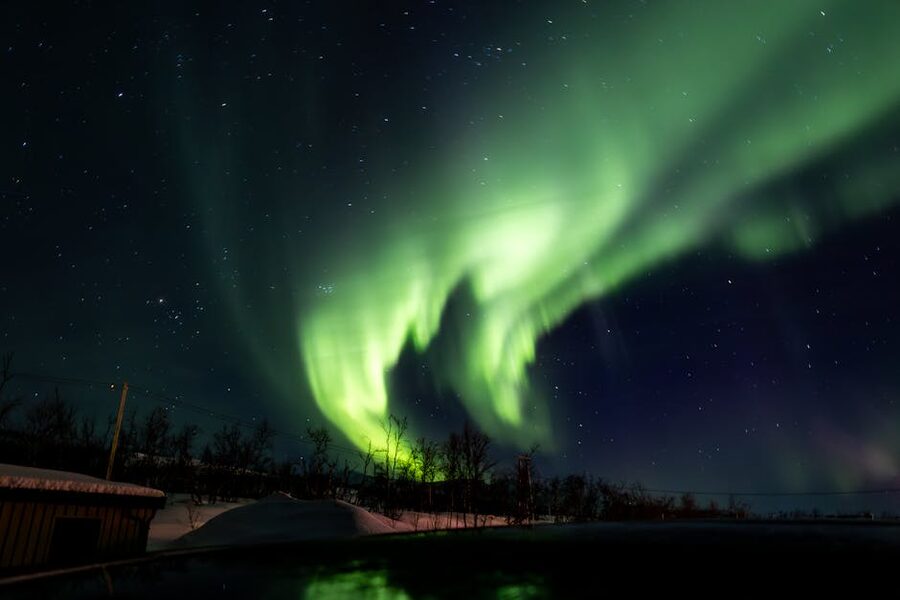
Both towns are at the right latitude. Tromsø sits at 69° N, Abisko at 68° N. The auroral oval, the band where the lights actually appear, runs through both, and a one-degree difference in latitude makes essentially no difference to whether the aurora is overhead. People obsess about latitude. It’s a red herring.
What matters is whether you can see through the sky to the aurora, and that comes down to cloud cover. Tromsø is on the coast, on the side of mountains that catches every weather front rolling in off the North Atlantic. Abisko sits inland, in a rain shadow created by the mountains of the Norwegian fjord coast. Those mountains drop their water as snow on the Norwegian side and leave the Swedish side with the lowest precipitation of anywhere in Sweden. Locals call the resulting clear-sky window the Blue Hole of Abisko, and it has the kind of reputation that sounds like marketing until you spend a week there in February and watch it actually happen.
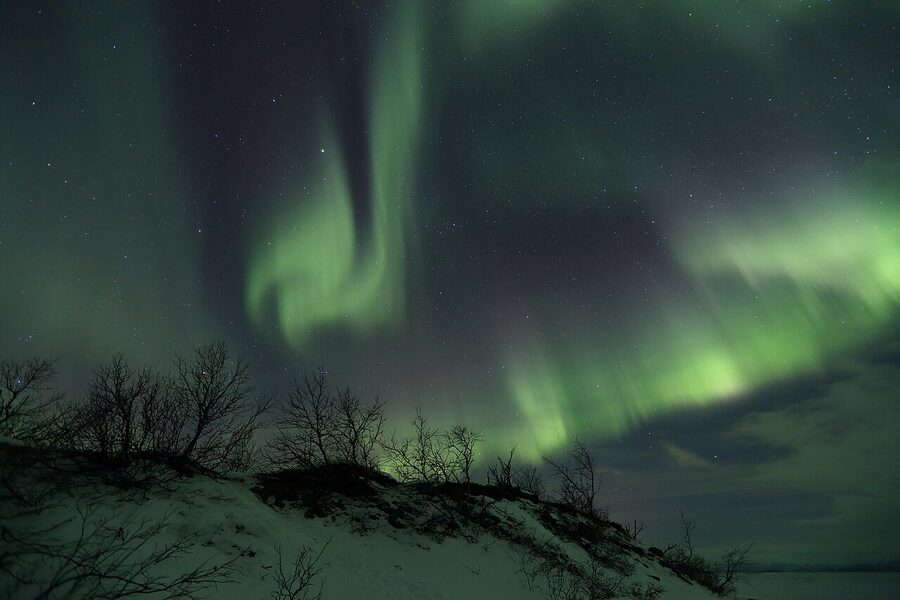
The numbers researchers cite for Abisko: roughly 159 of the 212 nights between September and March are clear enough for aurora viewing. That’s about 75%. Tromsø has no equivalent published number because the answer would embarrass them, but every guide I’ve spoken to in Tromsø quietly admits that around half their nightly hunts involve driving for hours to find a hole in the clouds. One Tromsø operator told me, on the record, “we plan every tour assuming we’ll have to drive to Finland.” That’s not hyperbole. The Finnish border is 90 minutes east of Tromsø by minibus, and on a heavy cloud night that’s where the tours go.
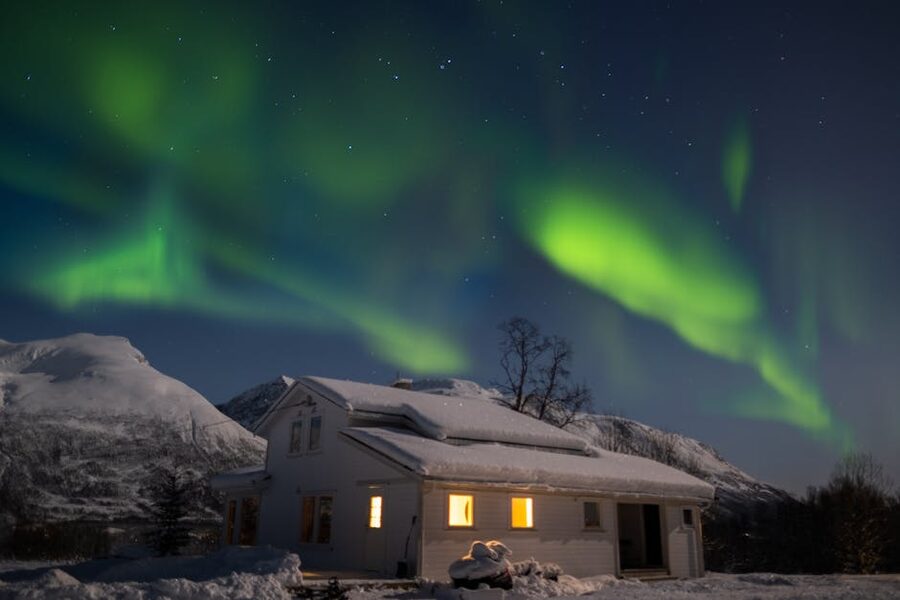
None of this means Tromsø is bad. It means the chase in Tromsø is a chase. You pay for a tour, the guide reads forecasts in three time zones, and you spend three to seven hours in a minibus until you find a gap. When it works, the show is as good as anywhere on earth. When it doesn’t, you’ve spent NOK 1,400 (~€120) and nine hours and seen nothing. In Abisko, by contrast, you can walk five minutes from your hotel, lie down on a frozen lake, and have the same odds you’d get on a tour. That’s the structural difference.
Side by side, the numbers I actually care about
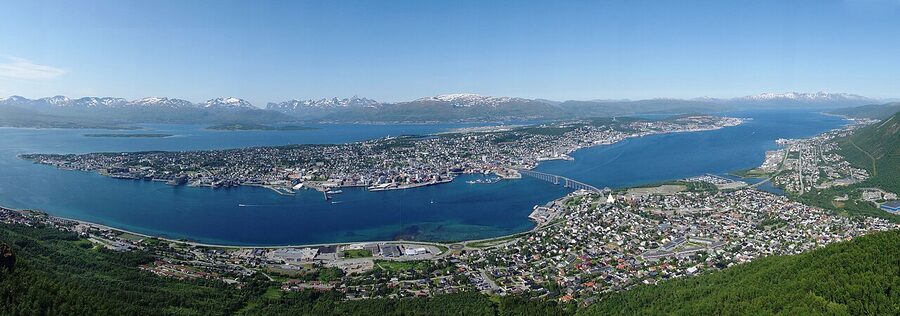
| Tromsø, Norway | Abisko, Sweden | |
|---|---|---|
| Latitude | 69.6° N | 68.4° N |
| Population | about 78,000 | about 85 year-round |
| Climate | coastal, cloudy, milder | inland, dry, colder |
| Clear-night rate (peak season) | roughly 30% to 40% | roughly 70% to 75% |
| Typical Jan-Feb low | around -5°C | around -15°C, often colder |
| Direct flights from Europe | yes, daily from many capitals | no (via Kiruna, then 90 min) |
| Walk from hotel to dark sky | 15 to 30 minutes plus a bridge | 30 seconds out the door |
| Standard hunt-tour price | NOK 1,400 to 2,200 (~€120-€190) | SEK 1,200 to 1,800 (~€105-€155) |
| Mid-range hotel double | NOK 1,800 to 2,800 (~€155-€240) | SEK 1,400 to 2,500 (~€120-€215) |
| Restaurants you’d rebook | 20+ | 2 if you’re being generous |
| Daytime activities | whales, fjords, cable car, museums, sauna | snowshoe, dog sled, ski lift, that’s it |
| How you get there | fly direct | fly to Kiruna or sleeper from Stockholm |
The clear-night percentages are the one figure I’d trust over almost anything else when you’re choosing between these two towns. Everything else is preference. That number is structural.
Getting to each, with real numbers
Tromsø by air
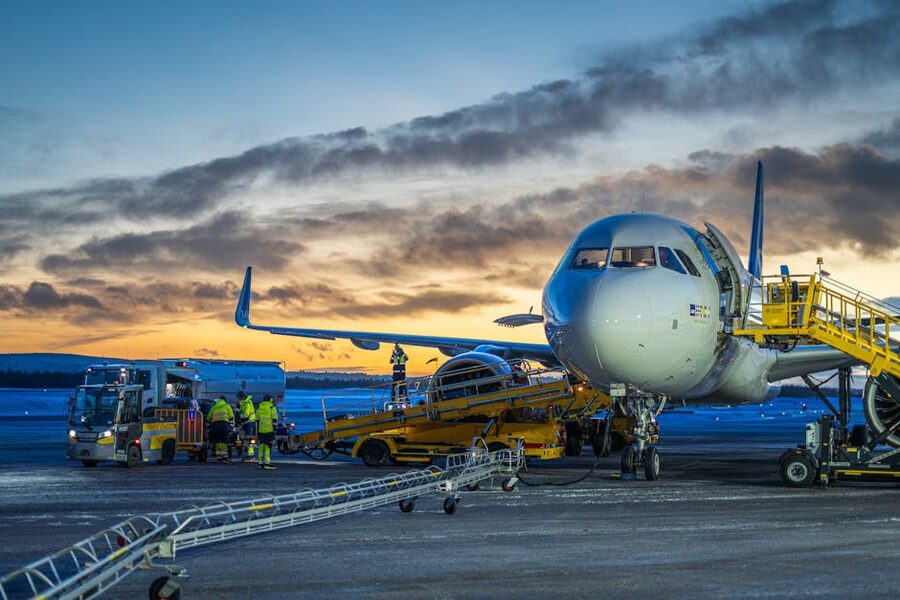
Tromsø’s airport (TOS) is on the same island as the city centre. The Flybussen is NOK 130 one way (~€11) and runs every 20 minutes. A taxi is around NOK 250-350 (~€22-€30). Direct winter flights from Oslo are routine on SAS, Norwegian and Widerøe and run from NOK 800 (~€69) one way if you book a few weeks out. Direct flights from London, Copenhagen, Stockholm, Helsinki, Frankfurt and a handful of other European capitals also run, especially November through March. If you’re chaining Tromsø with the Norwegian capital, our Oslo city guide covers what to do with a half-day or two before flying north.
Abisko by air, then train
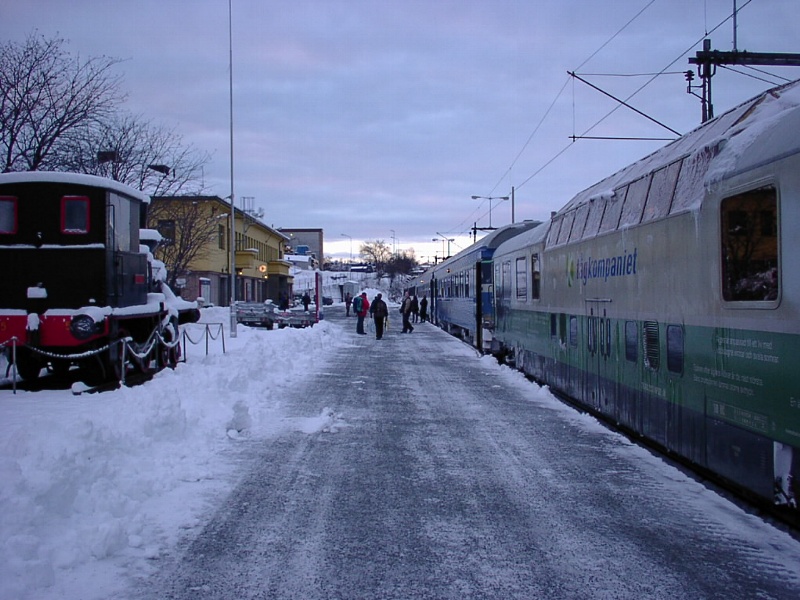
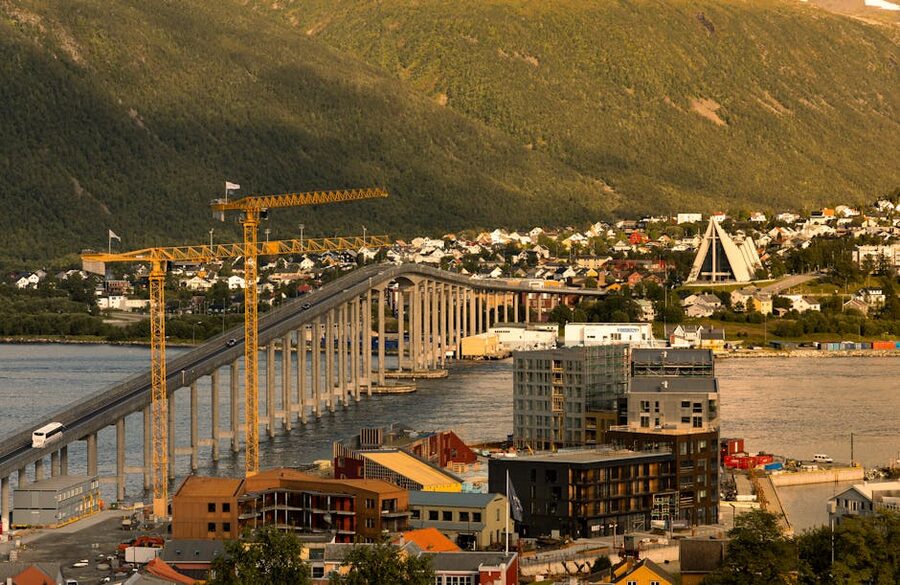
Kiruna Airport (KRN) is the main gateway. Direct flights from Stockholm Arlanda run six to eight times a day on SAS and Norwegian and start around SEK 800 (~€70) one way if you book early, more like SEK 1,500-2,000 (~€130-€175) at short notice in peak season. From Kiruna airport, you take a transfer or taxi into Kiruna town (SEK 450, ~€39, or local bus 91), then the train to Abisko Östra or Abisko Turist station, which is the stop you actually want for the STF hostel. The whole trip airport-to-Abisko takes about 90 minutes if the train timetable cooperates and three hours if it doesn’t. The train alone is about 90 minutes from Kiruna and runs three to four times a day.
Abisko by sleeper train (the option I actually like best)
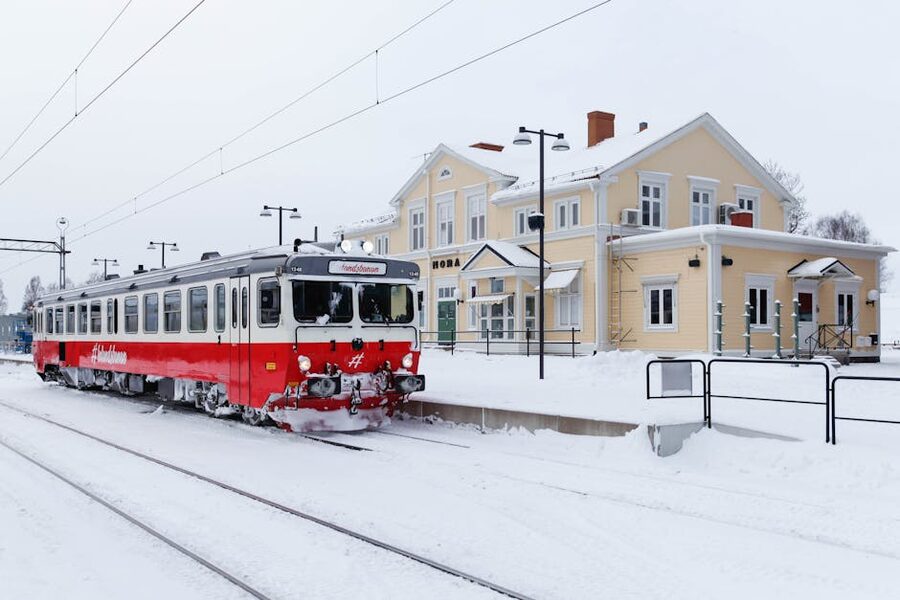
If you have an extra half-day in your schedule, the SJ overnight train from Stockholm to Abisko is a much better story than the flight. You board at Stockholm Central around 18:00 the previous evening, sleep through Sundsvall and Umeå, wake up north of the Arctic Circle, and roll into Abisko Östra around 11:00 the next morning. The train runs six days a week in winter. A bunk in a six-berth couchette is about SEK 700-1,100 (~€60-€95) booked early; a private double sleeper is SEK 1,800-2,800 (~€155-€240). For the same price as a flight you’ve added a small adventure, a saved hotel night, and a window seat through the snow forests of Norrland. The route also fits naturally if you’re starting the trip in Stockholm: see the Stockholm 3-day guide for what to do with the days before you board.
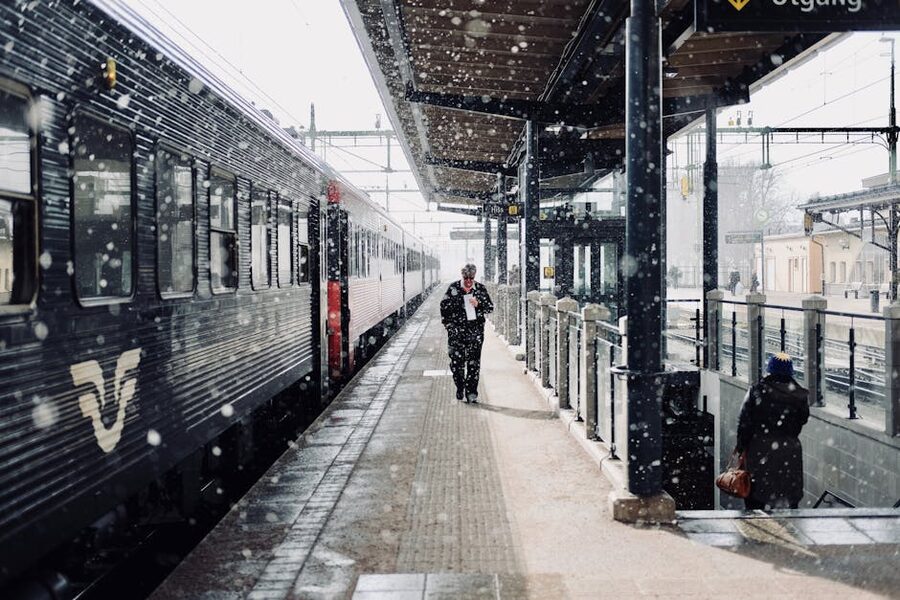
The combined Tromsø-and-Abisko route
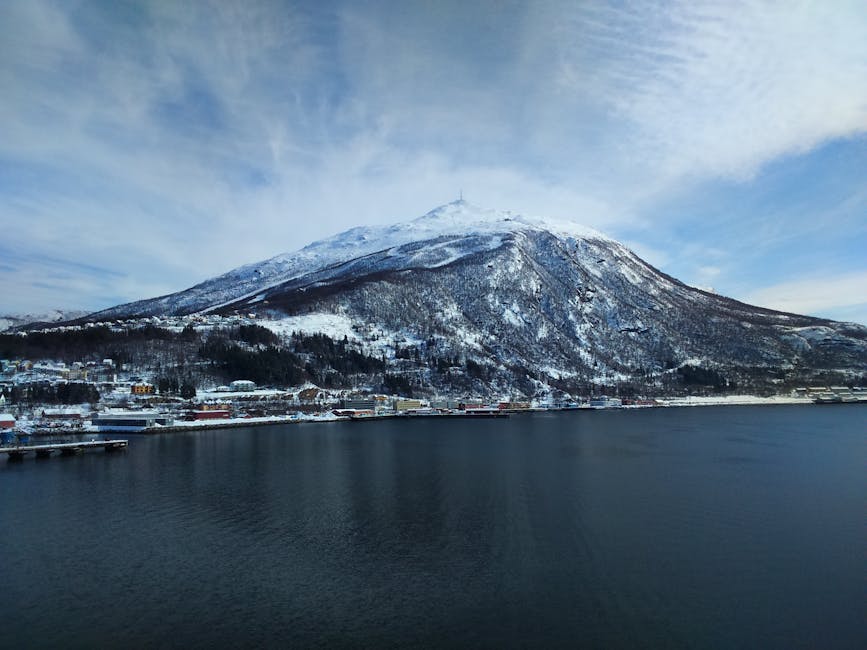
You can combine the two without much pain. From Tromsø, take the Arctic Route or Bus 100 coach to Narvik (about 4 hours, NOK 700, ~€60), then the cross-border train from Narvik to Abisko (1 hour 45 minutes, SEK 250, ~€22). It’s a long travel day but the route runs along Ofotfjord and through the mountains the Iron Ore Line has been crossing since 1903. If you only have a week and you want to see whether either suits you, my recommendation is two nights in Tromsø, then this transfer, then four nights in Abisko, then fly out of Kiruna. You’ll have your aurora minutes in Abisko and your Arctic city in Tromsø, and you won’t double back.
What you actually do during the day, in each
Tromsø has a city built into the chase
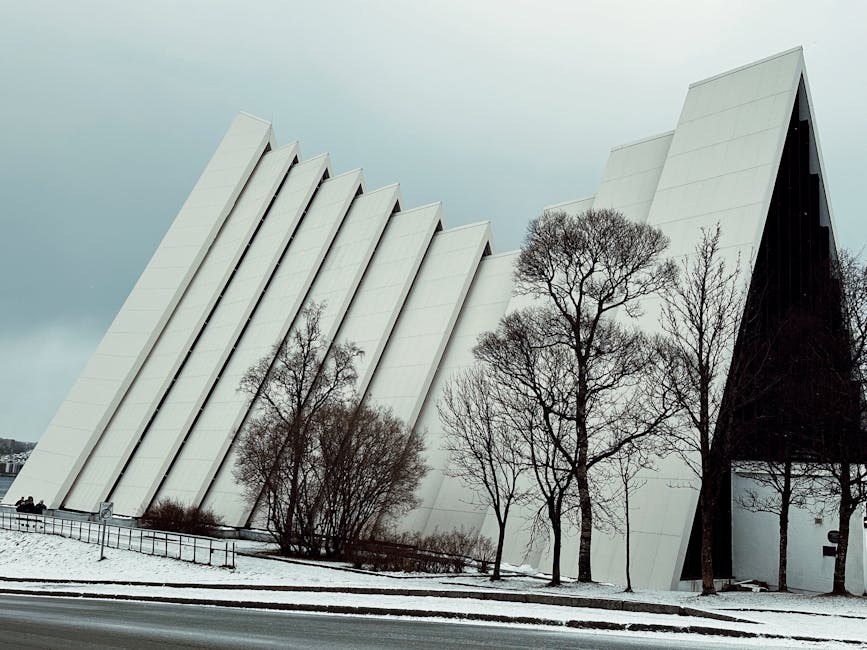
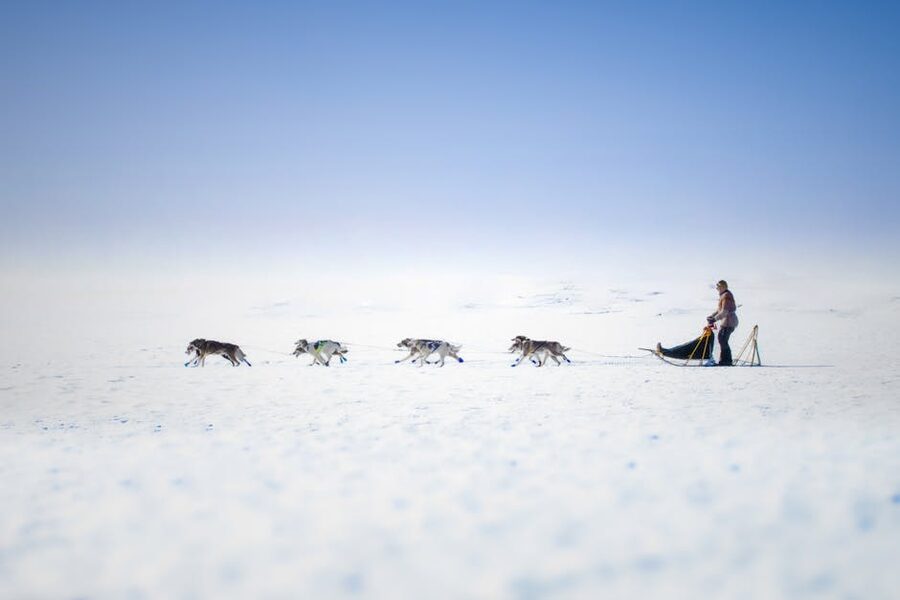
The thing Tromsø does that Abisko cannot is the day. Walk Storgata when the polar twilight throws a pink light over the wooden buildings. Take the Fjellheisen cable car (NOK 295, ~€26) up Storsteinen for a panorama I’d happily call earned, even in cloud. Cross the bridge to the Arctic Cathedral for the concert series in winter. Visit the Polar Museum for an hour on Roald Amundsen and the explorers Tromsø sent to both poles. Go to a public sauna, have whale-watching booked from the harbour for an October-to-January morning (orcas and humpbacks chase the herring south through the fjords every winter), and have a long, slow dinner at a place that knows what it’s doing with king crab.
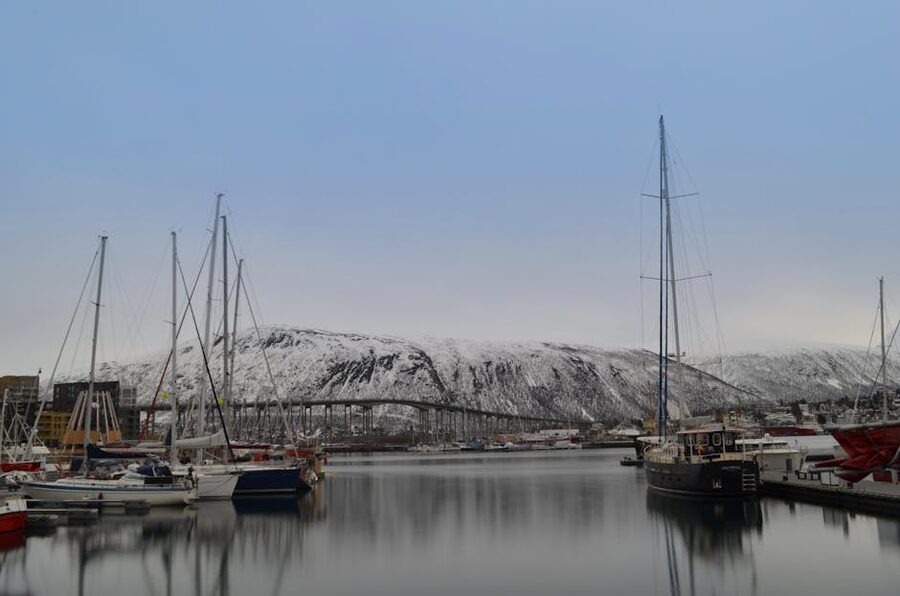
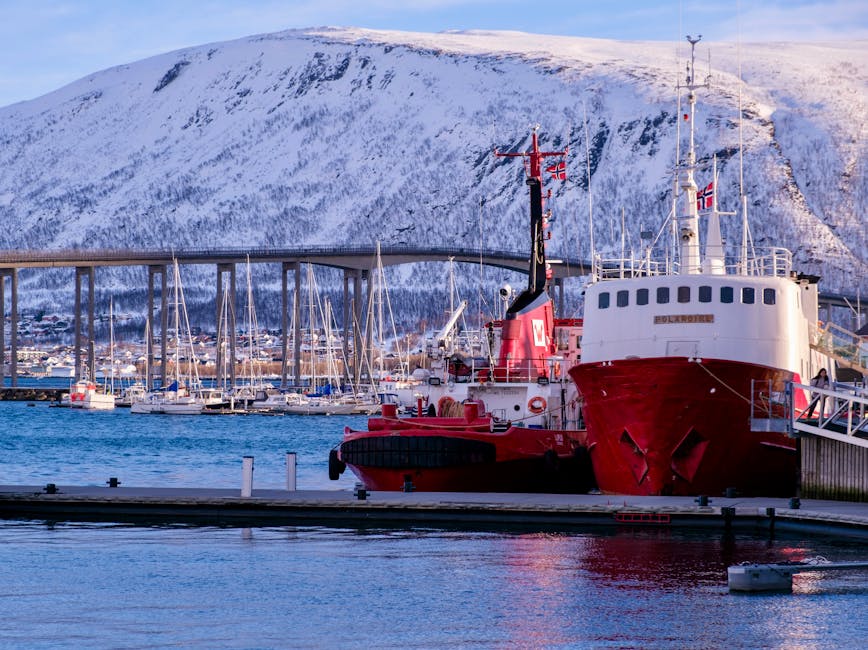
Add to that: dog sledding day tours an hour out of town (NOK 1,800-2,400, ~€155-€210), reindeer sledding with Sami guides (NOK 1,600, ~€140), snowmobile day trips, sea kayaking when the fjord isn’t iced over, and a food scene that has lifted itself sharply in the last decade. Smørtorget for cinnamon buns. Mathallen for fish soup. Bardus and Fiskekompaniet for proper sit-downs. Risø for coffee.
Abisko has Abisko, and that is enough or it isn’t
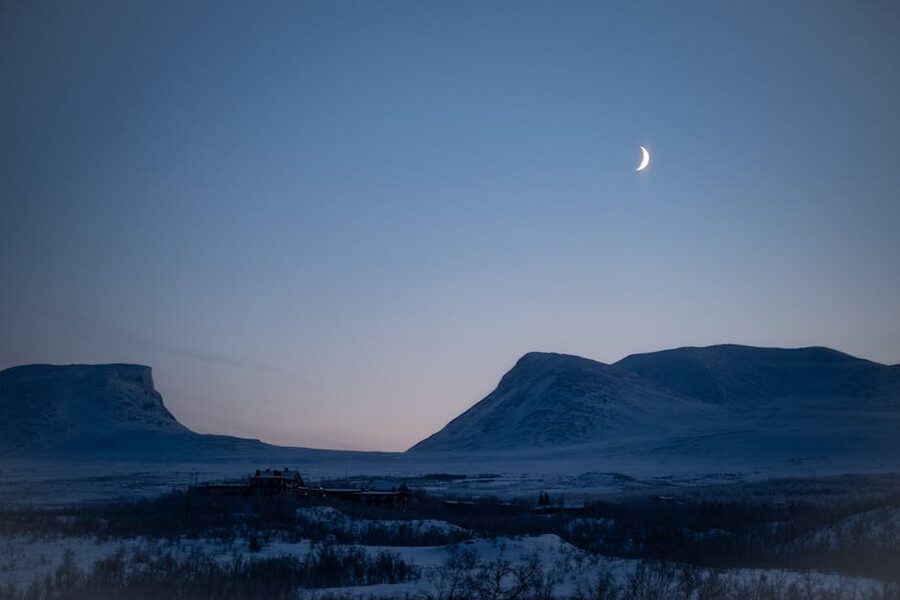
Abisko has 85 permanent residents and one main hotel-and-hostel complex. There is a small ski lift across the road from the STF station with a single chair, a marked snowshoe trail through the national park, a guided ice-climbing operator, and the chairlift that runs you up to the Aurora Sky Station 900 metres above sea level. That’s the daytime offer. If you wanted aerial yoga, a rotating sushi bar or a craft cocktail menu, you should not have come here.
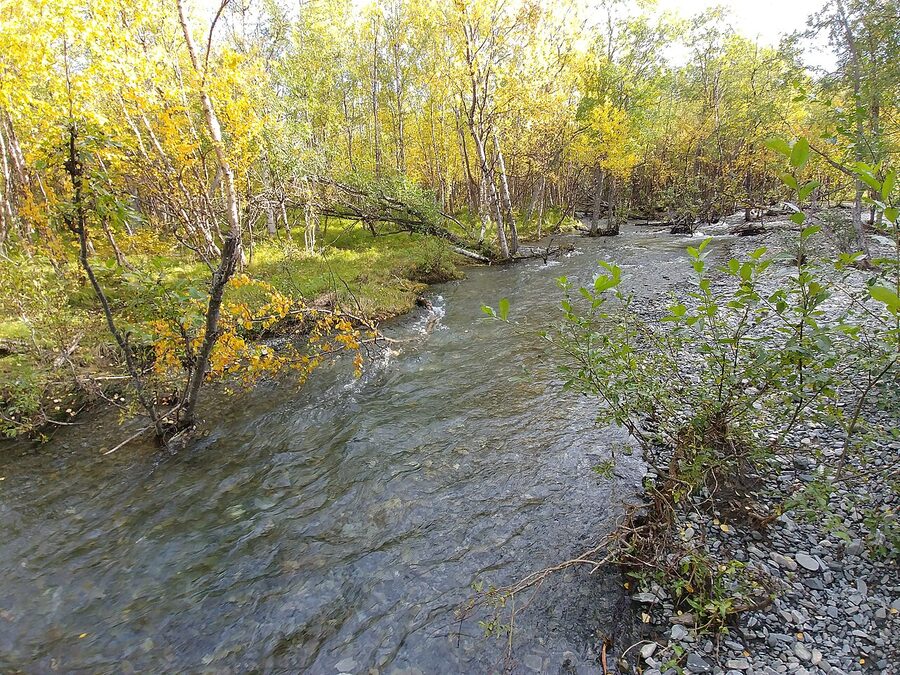
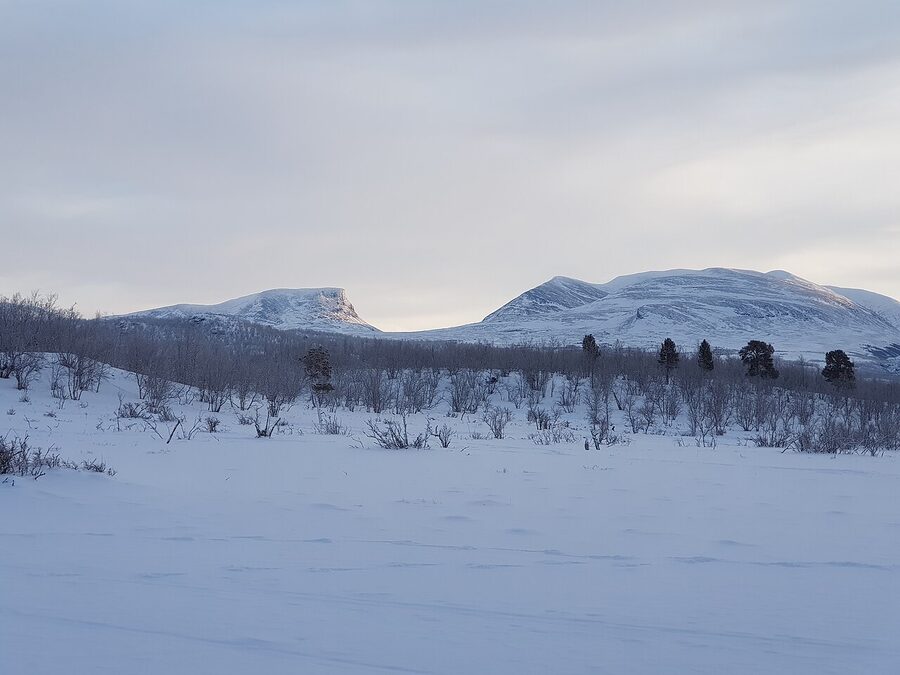
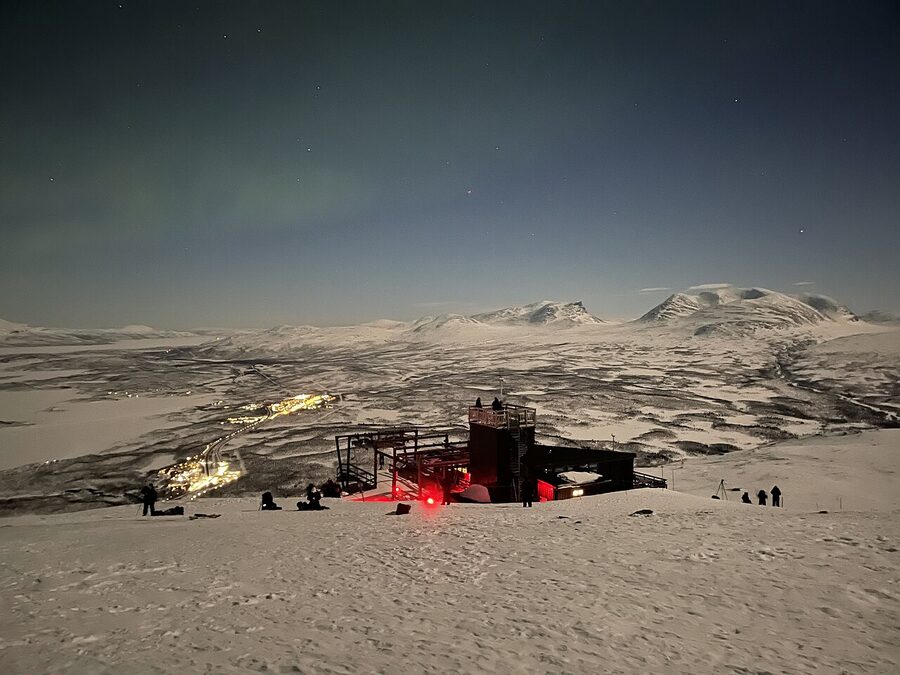
The chairlift to the Aurora Sky Station deserves a separate paragraph. It costs SEK 695 (~€60), runs in two-hour evening windows, and gets you 900 metres up onto a ridge above Lake Torneträsk. The marketing is strong; the reality is mixed. On a clear night with strong activity, the Sky Station is genuinely something. On a marginal night, you’ve paid SEK 695 to sit in a small concrete cabin staring at the same ceiling of cloud you would have stared at for free from the lake. Locals I trust mostly pick the lake. The Sky Station is a one-off for a strong forecast night, not your default.
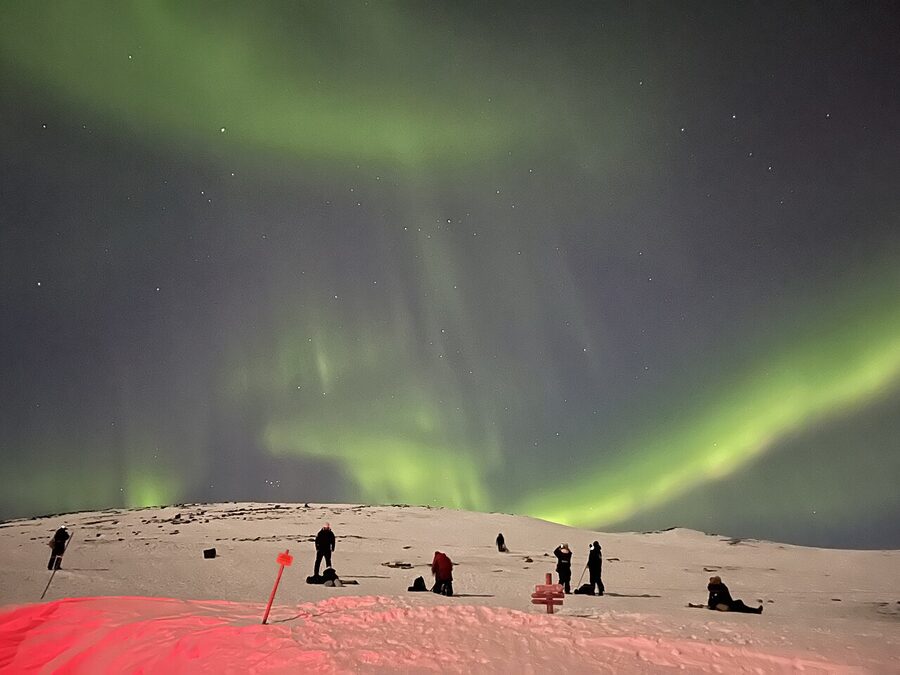
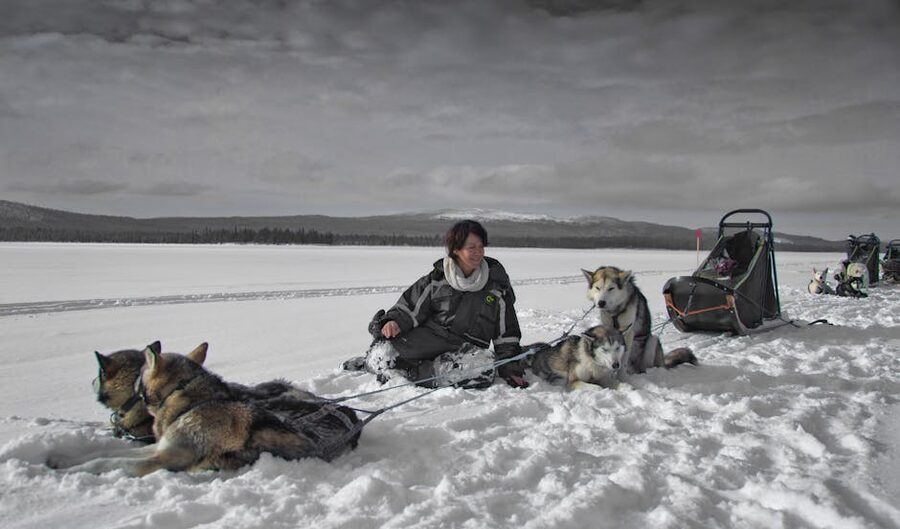
Snowshoe tours from STF run SEK 600-900 (~€52-€78), include the kit, and take you onto Lake Torneträsk’s shore where there is no source of light pollution for a long way. Dog-sled half-days are SEK 1,800-2,400 (~€155-€210). Both are worth doing once. Beyond that, Abisko is for the night sky, the trail, and the wood-fired sauna with its window onto the lake. If that sounds wonderful, you’ve found your place. If it sounds boring, that’s accurate, and you should be in Tromsø.
Where you actually sleep
Abisko: there is essentially one place
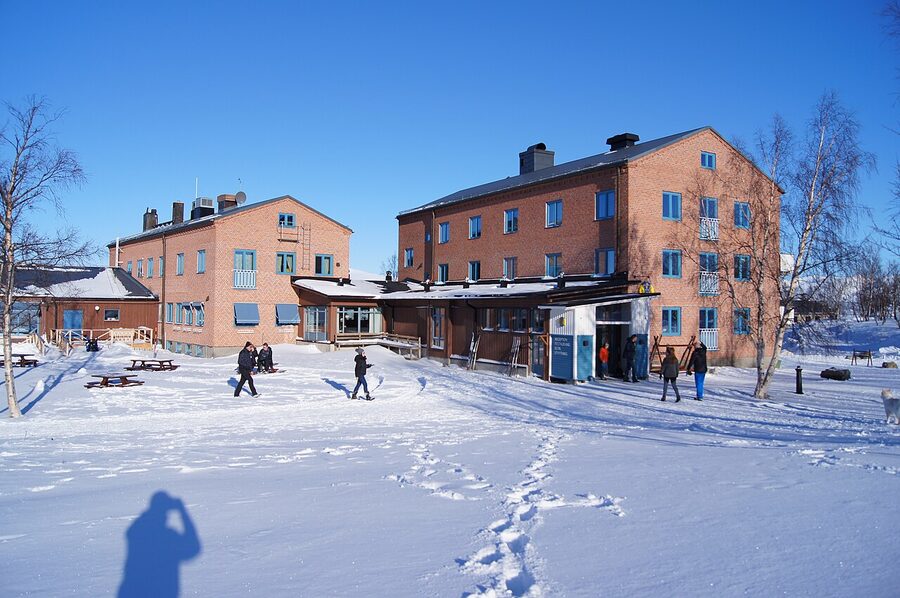
The STF Abisko Turiststation is the main hotel inside the national park, sitting at the foot of the chairlift to the Sky Station. STF is the Swedish Tourist Association, so this is essentially the country’s flagship mountain station, with hotel rooms, hostel rooms, cabins of every size, a buffet restaurant and a sauna. Hotel doubles run SEK 1,800-2,800 (~€155-€240) in peak season, hostel beds SEK 350-550 (~€30-€48). It books out in November for January-March, sometimes earlier. The STF restaurant has Swedish pancakes at its Thursday lunch buffet, and that is the kind of detail that becomes important after four days here. Verify availability at Booking.com.
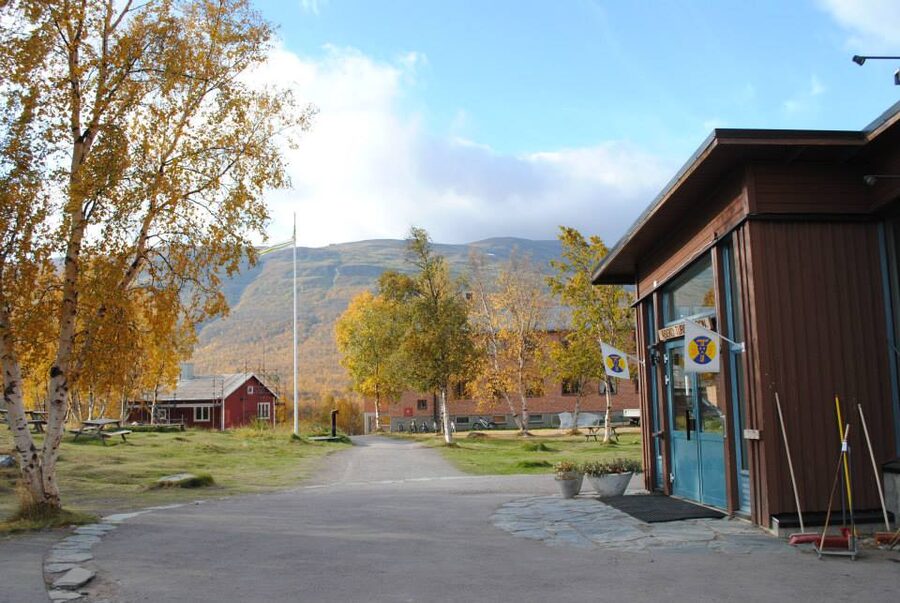
The other practical option is Abisko Mountain Lodge in the village (about 1km east of the STF), smaller and family-run, with a good restaurant called Mountain Bistro that I genuinely look forward to. Doubles SEK 1,600-2,400 (~€140-€210). They run their own aurora tours and a photography programme that books a season ahead. Compare on Booking.com.
If both are full, look at Abisko Guesthouse for a cheaper bed in the village or, in Björkliden 8km west, the Hotel Fjället ski hotel which has more rooms and the same Blue Hole skies. The Fjället has its own ski lift and is genuinely cheaper midweek. See Hotel Fjället on Booking.com.
Tromsø: pick by walking time to dark sky
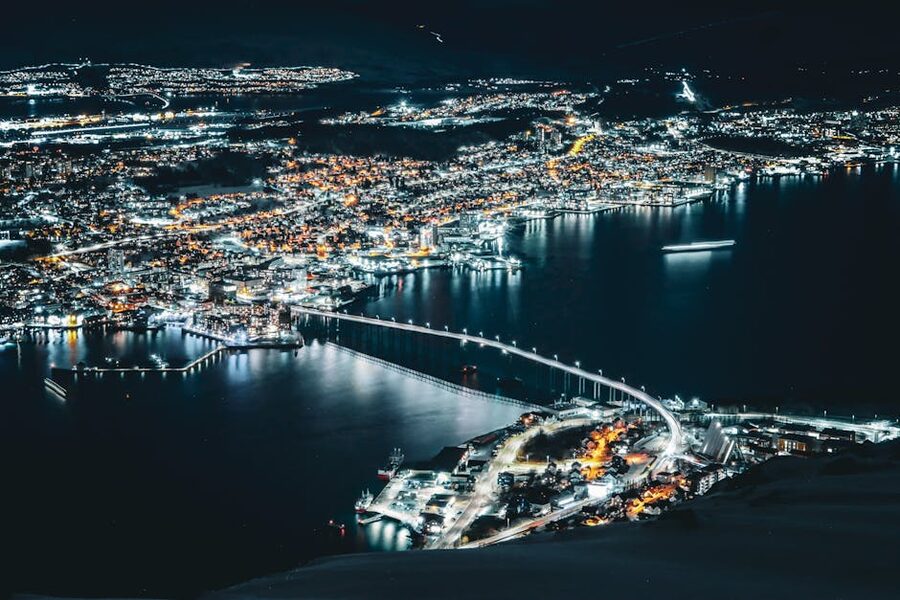
Tromsø has dozens of central hotels and the prices reflect demand. The bracket I’d plan around for January and February is NOK 1,800-2,800 (~€155-€240) for a clean mid-range double, more for anything with a sea view in the harbour. Three I’d go back to:
- Clarion Hotel The Edge on the harbour, the architecturally striking glass tower with a top-floor sky bar. Worth the price difference for the harbour-side rooms. Check on Booking.com.
- Radisson Blu Hotel Tromsø, blocky 1980s building, but central and almost every aurora minibus picks up here, which saves you waiting in -10° C at a corner. Compare on Booking.com.
- Scandic Ishavshotel, by the dock and the Polar Museum, with sea-view rooms. Their breakfast spread is the best of any chain hotel I’ve used in Norway. Check on Booking.com.
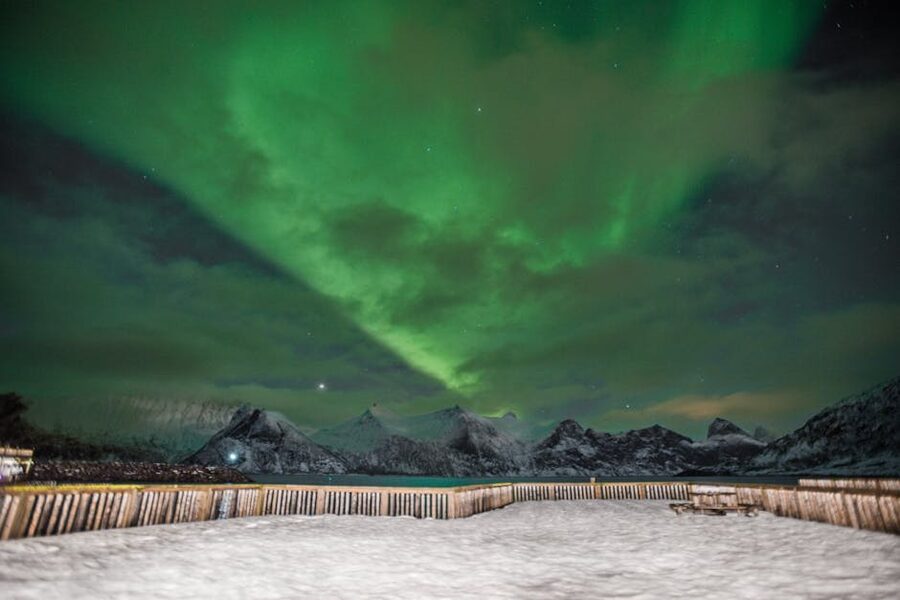
If you want the one with a glass roof, you’ll have to leave Tromsø; there are aurora cabins in Kvaløya across the second bridge but they require a car. Within Tromsø proper, no glass-roof rooms exist that I’d recommend, and the marketing photos you’ve seen of glass-roof igloos are almost always Finnish Lapland, which we cover separately in the Finnish Lapland aurora guide.
The tour question, both towns
Should you book a tour at all?
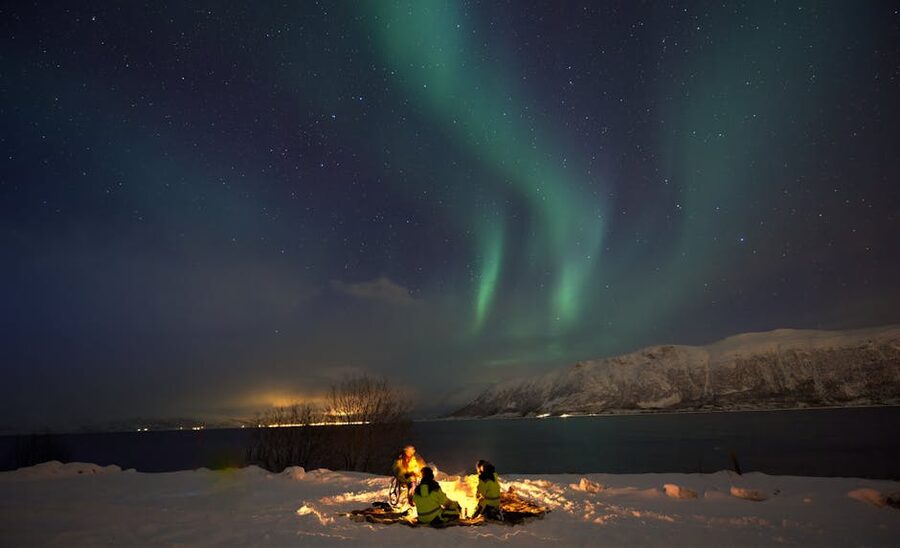
In Abisko, no. You don’t need one. Walk to the lake, wait, and you have the same odds as a tour bus. Spend the money on a fourth or fifth night in the village instead. The exception is if you want a photographer-led tour where the guide sets up your tripod and dials in your camera; Lights Over Lapland runs the gold-standard version of that and has, by their own published numbers, around a 98% sighting rate across multi-night packages. Worth it once if you’ve never photographed the lights, not necessary on every night.
In Tromsø, yes, you almost certainly need one, for the cloud reason above. A small-group hunt with a guide who has a network of other guides cross-checking forecasts is worth the NOK 1,400-2,200 (~€120-€190). Avoid the giant 50-person bus tours; the experience is mediocre and they can’t react fast enough to a clearing window. Look at outfits like Chasing Lights, Tromsø Friluftsenter, Wandering Owl, and Aurora Borealis Observatory. Each runs minibuses with 8-12 guests. Most include a hot drink, pickup at central hotels, and will rebook you free if it’s a no-show evening on the first attempt.
What “guarantee” actually means in tour marketing
Most tours offering a “money-back guarantee” will simply rebook you the next night, not refund you. That works fine if you’re staying four nights and the tour is on night one. It does not work if you only have two nights total. Read the small print. Multi-day photo packages from operators like Lights Over Lapland in Abisko genuinely guarantee in dollars and cents (you get money back if no sighting across the package), but those start at SEK 11,000-15,000 (~€950-€1,300) for four nights of guided shooting. They are worth it for serious photographers, not for a casual first-time chase.
The history nobody tells you, briefly
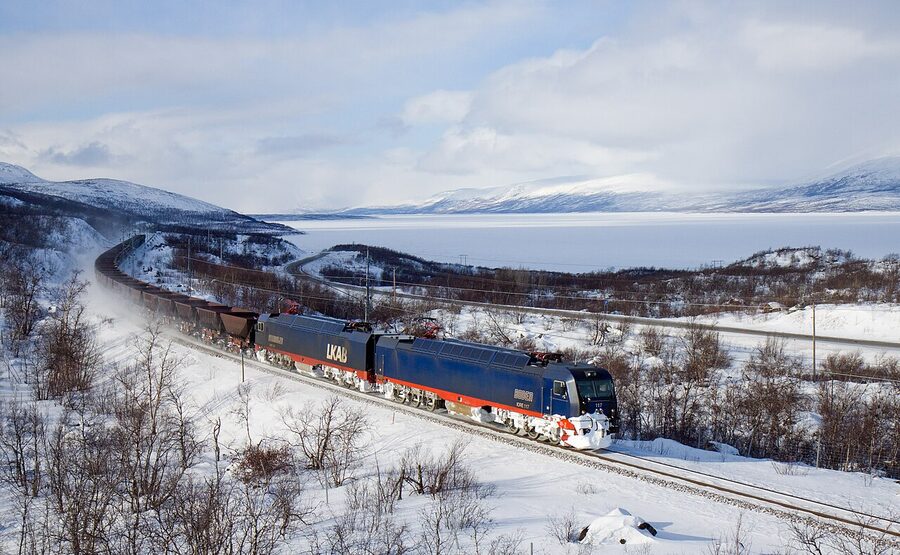
Abisko exists as a destination because of iron ore. The Malmbanan, or Iron Ore Line, was built between 1898 and 1903 to carry ore from the Kiruna and Gällivare mines to Narvik’s ice-free Atlantic harbour, and Abisko was a construction camp on that line. The railway company built the original Turiststation in 1910 to give the workers’ families and visiting scientists somewhere to stay, and the national park was declared in 1909. The aurora research station that operates today on the lakeshore was founded in the 1910s, and Sweden’s longest run of continuous aurora observation comes from there. So the entire reason you can step off a train in the middle of the wilderness and find a buffet of Swedish pancakes is that this used to be a mining-logistics village. The clear-sky climate is what made the scientists stay.
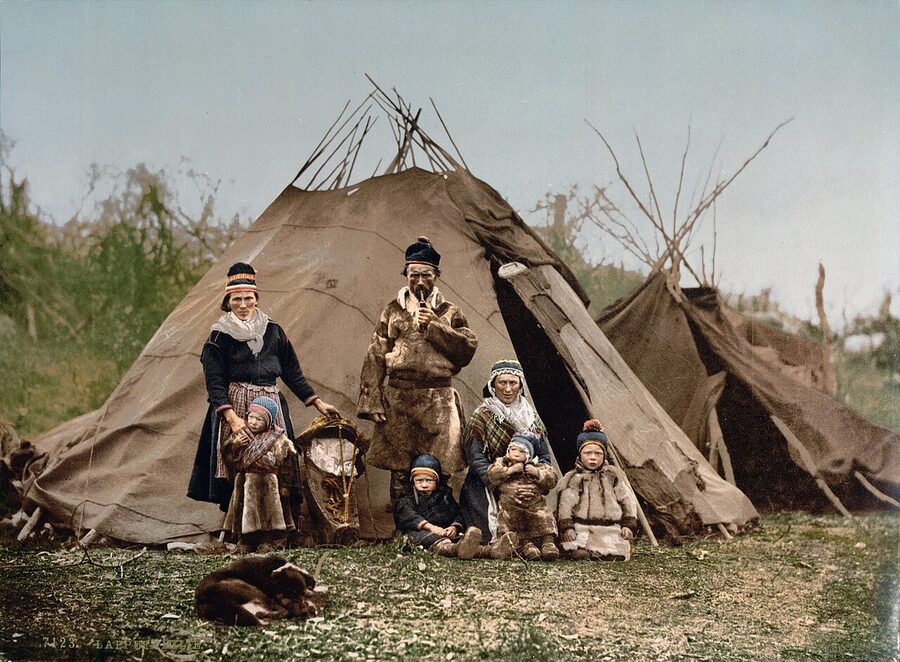
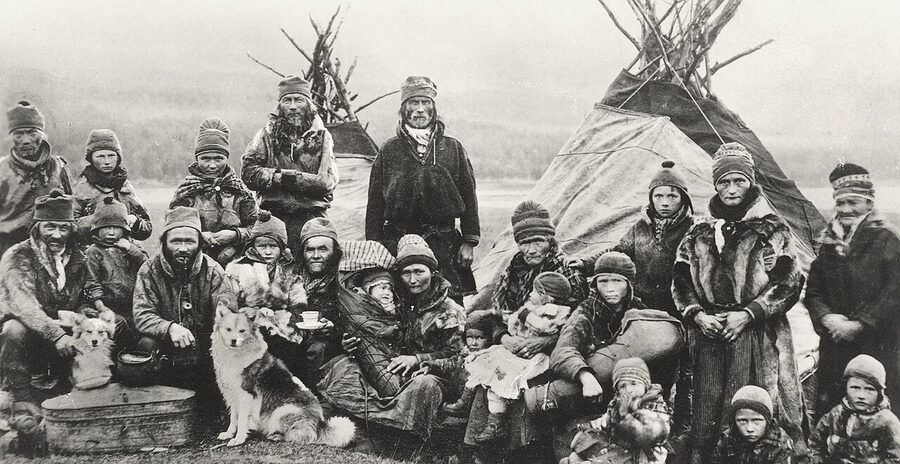
Tromsø has a longer story. The town was a Pomor trading port in the 18th century, became Norway’s launchpad for polar exploration in the 19th (Roald Amundsen’s last flight, in search of Umberto Nobile, took off from here in 1928 and never returned), and was central enough in the Second World War that the German battleship Tirpitz was sunk just outside the harbour in 1944. The Polar Museum on the dock tells most of this in three rooms; an hour is plenty.
The things people don’t post about
Cold matters more than you think
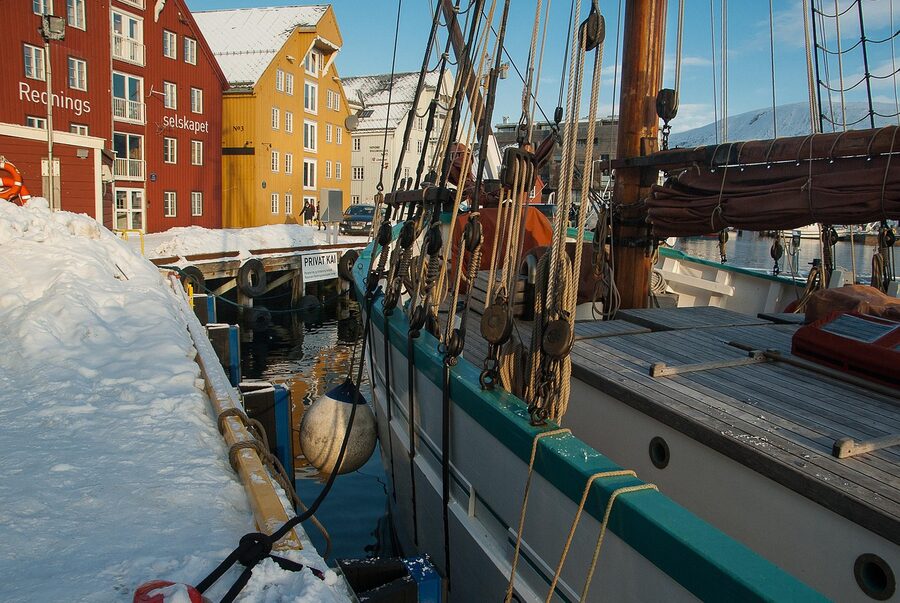
Abisko is colder than Tromsø. By a lot. A typical January night in Tromsø is around -5°C, sometimes warmer with a coastal wet wind. A typical Abisko night is -15°C and -25°C is a regular January feature. If you have not stood outside in -25°C for three hours, you do not know how that feels. It feels like your face is being slapped continuously by something flat and frozen. STF rents thermal layers and proper boots for SEK 350 a day (~€30) and you should rent them. Tromsø is cold but rarely brutal. If you fight cold easily, that nudges you towards Tromsø.
Aurora photos are not what you’ll see
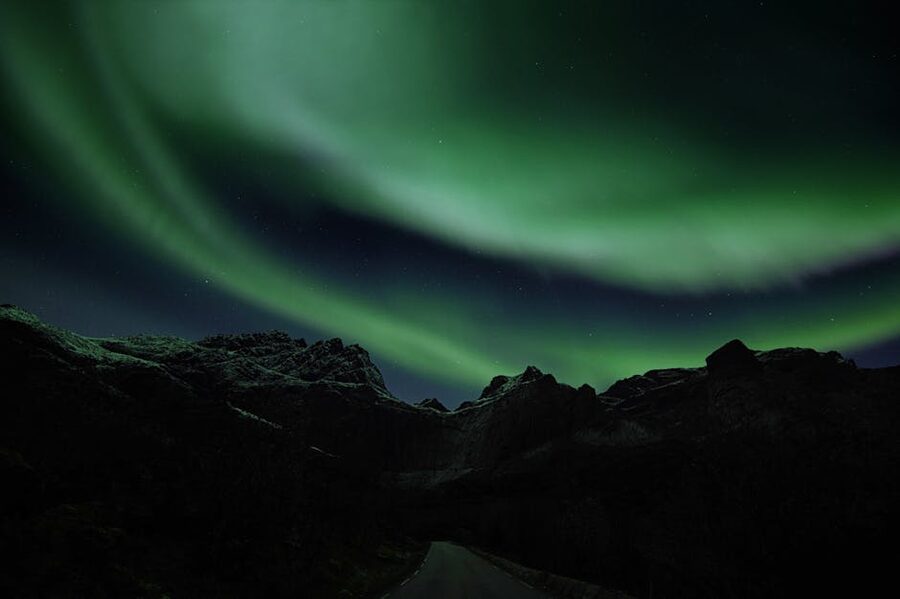
Cameras with long exposures pick up colour and intensity human eyes don’t. A casual aurora often looks like a faint grey-green smudge to the eye and a vivid neon ribbon to the camera. The strong displays do match the photos, but those are maybe a third of nights you actually see anything. Going in expecting every sighting to look like an Instagram reel sets you up for disappointment. The eye-version is still beautiful; it just isn’t pink.
You need at least three nights, ideally five
Both towns are weather-dependent and aurora-activity-dependent. Three nights gives you something around a 70% chance in Tromsø and a 90% chance in Abisko. Five nights and you’re at 90+% in Tromsø and effectively certain in Abisko. Two nights anywhere is a coin flip. One night is a lottery ticket. If your schedule is two nights and you can’t extend it, consider that you might be paying a lot to come away with nothing, and possibly skip the trip until you have more time. The lights will still be there next year.
Solar cycle matters at the margins
The 11-year solar maximum runs roughly 2024-2026, which means activity is well above the long-term average right now. By 2027-2028 the cycle will be on the way down and quieter nights will become more common. Now is genuinely a better time to come than it will be in 2030. Don’t take that as urgency; take it as one more vote for booking sooner.
Cost compared, fairly
For four nights aurora-focused, with one tour each in Tromsø vs. four self-organised lake walks in Abisko:
| Tromsø, 4 nights | Abisko, 4 nights | |
|---|---|---|
| Flights from London | ~£280 return direct | ~£220 return via Stockholm + £80 Stockholm-Kiruna |
| Hotel (mid-range, 4 nights) | ~NOK 9,500 (~€820) | ~SEK 8,400 (~€725) |
| Aurora tour(s) | 2 hunt tours: ~NOK 3,400 (~€295) | 1 photo tour, 3 self-walk: ~SEK 800 (~€70) |
| Daytime activity (1 day) | Whale or dog tour: ~NOK 1,800 (~€155) | Snowshoe + chairlift: ~SEK 1,400 (~€120) |
| Food, 4 days, mid-range | ~NOK 4,800 (~€415) | ~SEK 3,200 (~€275, mostly STF buffet) |
| Local transport | ~NOK 600 (~€50) | ~SEK 500 (~€43) |
| Per person, ex flights | ~€1,735 | ~€1,235 |
Abisko is cheaper because you don’t need the tours. That cost differential roughly funds an extra two nights, which is the real argument for it. If you have the same budget, you get more aurora exposure in Abisko.
Comparing to the alternatives
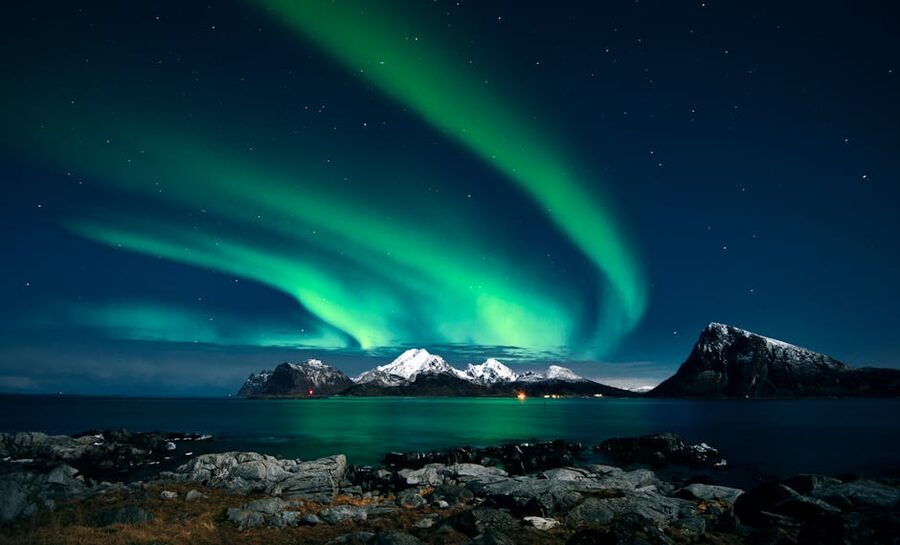
If neither town fits, the obvious cousins are Finnish Lapland (Levi, Saariselkä, Ylläs, Kakslauttanen) for glass igloos and a slightly more developed family-resort feel; we have a dedicated breakdown in the Finnish Lapland northern lights guide. Iceland is the wildest of the four for landscapes but the most weather-cursed for actually seeing aurora; see our Iceland aurora guide for the realistic odds. Lofoten in Norway has insane scenery and decent dark skies but is a four-hour drive from any airport and feels remote in a different way to Abisko. Alta is Tromsø’s quieter sibling, two hours by air to the east, and has the original ice hotel, but the experience is essentially “Tromsø with fewer restaurants and the same cloud”.
So which one should you actually book
Run through this. It’s faster than another listicle.
- Three nights or more, lights are the priority, you can handle -20°C, you don’t need restaurants. Abisko.
- Three nights or more, you want a real Arctic city around the chase, whales sound great, you’d like a sushi option. Tromsø.
- One week, want both. Two nights Tromsø, four nights Abisko. Bus to Narvik, train to Abisko. Fly out of Kiruna.
- Travelling with non-aurora-obsessed partner or kids who’ll get bored. Tromsø. Or actually Finnish Lapland with the glass igloos.
- Photographer, want to come back with the shot. Abisko, with one Lights Over Lapland night, and pre-buy the Sky Station ticket for the strongest forecast night.
- Two nights total. Probably skip. Save it for next year.
The lights have been on the same nightly cycle for three billion years. You can come back. The question this season is which fail mode you’d rather risk: a Tromsø trip where the city is delightful and the cloud beats you, or an Abisko trip where the sky is open and the village offers nothing beyond a sauna and a buffet. Pick the failure you can live with. The success on either side looks the same.