
The first thing you hear in Copenhagen, before you’ve even left the airport train at Nørreport, is a bicycle bell. Not aggressive. Just a single small ping at a green light, then a second, then a soft river of them as fifty cyclists peel off toward Nørrebrogade. You realise, quickly, that this is the actual public transport of the city. The metro is a clever extra. The bike is the spine.
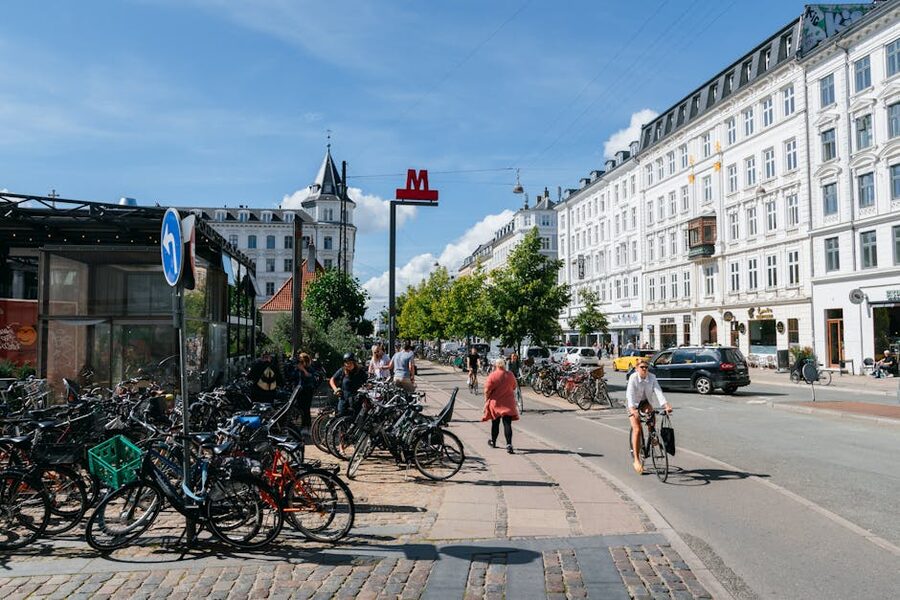
I’ve been to Copenhagen four times across three seasons, and the city rearranges itself every visit. In May the Lakes thaw and joggers reappear. In October the harbour bath at Islands Brygge empties and the swimmers who stay in are the ones who really live here. In December, Tivoli puts on its second life and the Strøget actually feels Danish for a few hours. This is a guide for two to four days as a Nordic-curious traveller. Not a Copenhagener’s list of 41 favourites. Not a first-timer’s hour-by-hour. Something in between, which is what I needed and never quite found.
In This Article
- Get the cycling thing right first
- Where to stay, neighbourhood by neighbourhood
- Indre By, the medieval centre
- Vesterbro, the former meat district
- Nørrebro, the immigrant quarter
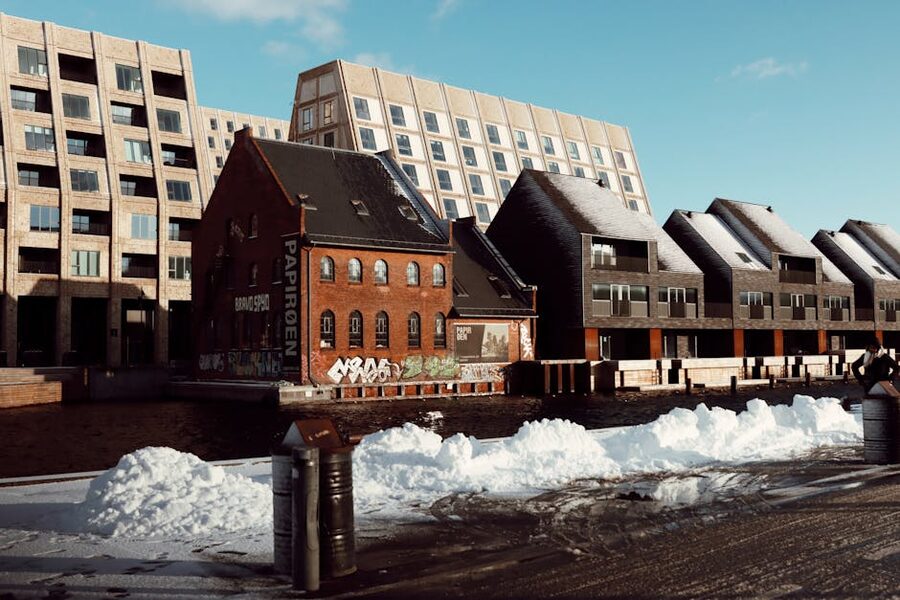
- Christianshavn and Holmen, the canal islands
- Nyhavn vs Christianshavn, and what’s actually going on
- Christiania, the unannexed bit
- Tivoli: the year-round vs Christmas reality
- Strøget, and the trick of being there at six
- Where to actually eat
- The Torvehallerne lunch
- The noma legacy in the harbour places
- Reffen on Refshaleøen, the harbour street-food yard
- Castles, towers, and the four museums worth your time
- A short, useful history
- Outside the centre, but worth a tram ride
- The skip list
- How long do you actually need
- Practical bits, in one place
Get the cycling thing right first
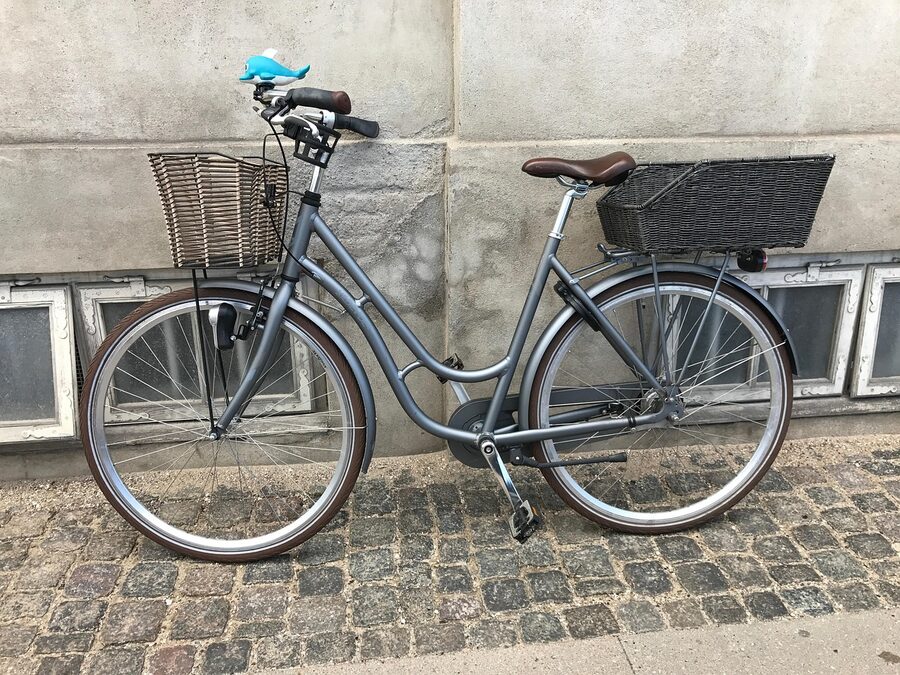
Roughly 49 per cent of Copenhageners commute by bike daily, and you can see that statistic on every dedicated cycle lane in the city. Donkey Republic is the easiest hire system for visitors, app-based, with prices around 50 DKK (~€7) for an hour and 145 DKK (~€19) for a day. Bycyklen, the older municipal share scheme with the white electric bikes, still works at docking stations and runs around 30 DKK (~€4) per hour. Both let you skip almost every museum-to-restaurant taxi.
Three rules that will save you a fine and an angry shout:
- Hand signal before stopping (left arm up) and before turning (left or right arm out). Drivers and cyclists behind you will check.
- Lights at night are mandatory. Hire bikes have them; check before you ride. The fine is 700 DKK (~€94).
- You do not lock a bike to a railing here. There’s a rear-wheel ring lock built into every bike. Use that.
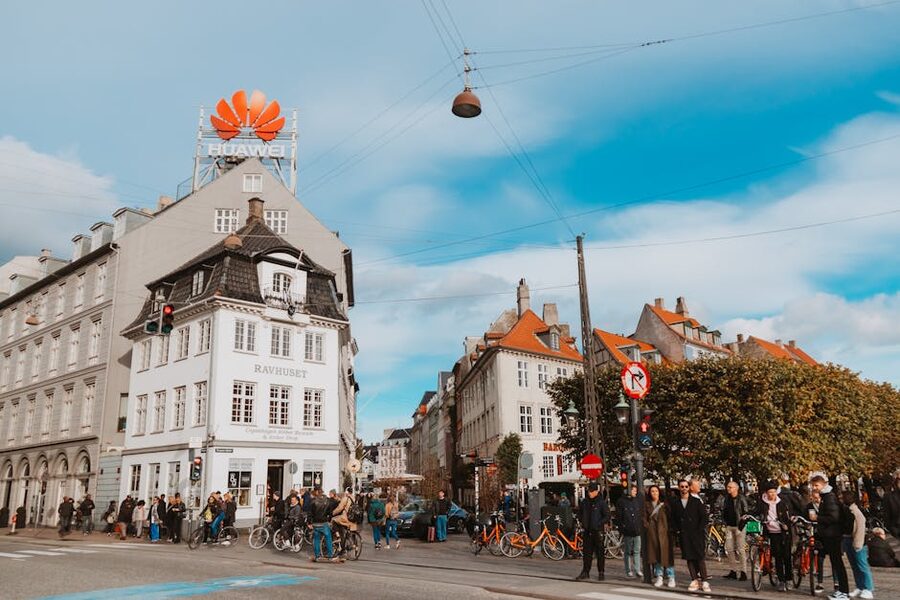
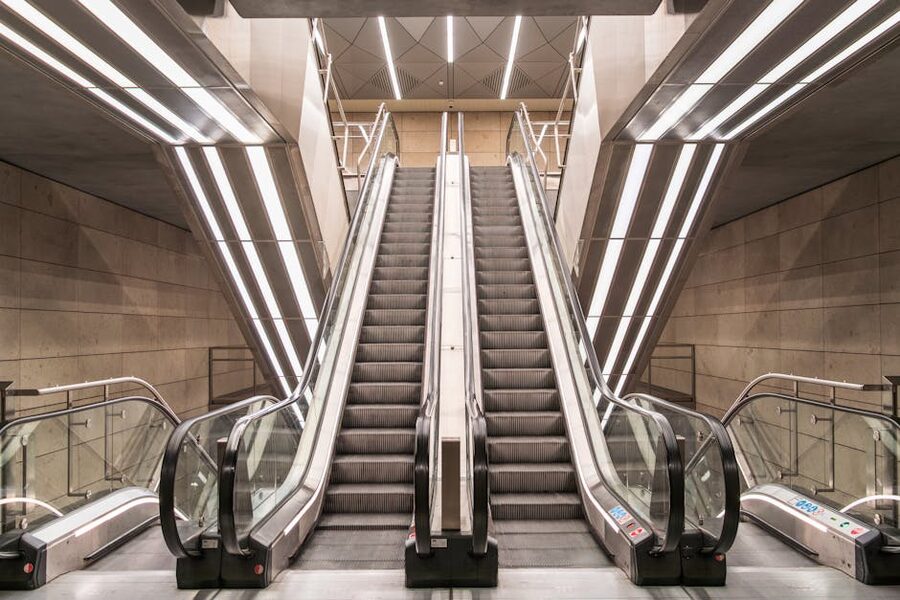
If cycling really isn’t your thing, the metro runs 24 hours, every 2 to 4 minutes on the new M3 Cityringen ring line. A 24-hour City Pass Small (zones 1 to 4) is 90 DKK (~€12). Two children under 12 ride free with each adult. The contactless card reader on every platform pole takes Apple Pay, Google Pay, or any tap card, so you can ignore the ticket machines entirely. Compare that to Stockholm or Oslo, both more painful for a tap-and-go visitor.
Where to stay, neighbourhood by neighbourhood
Copenhagen’s centre is small. Anywhere within a 25-minute cycle of the Town Hall is fine. The choice is more about which version of the city you wake up to.
Indre By, the medieval centre
The grid of streets bounded by the harbour, Nørreport, Vesterport, and Christiansborg. You’re closest to the Round Tower, the Strøget, the Royal Library, and a hundred restaurants. The trade-off: it’s the loudest at night and the most touristy by day. SP34, Hotel SKT Petri, and Hotel d’Angleterre are all here at three different price points. Compare hotels in Indre By on Booking.com.
Vesterbro, the former meat district
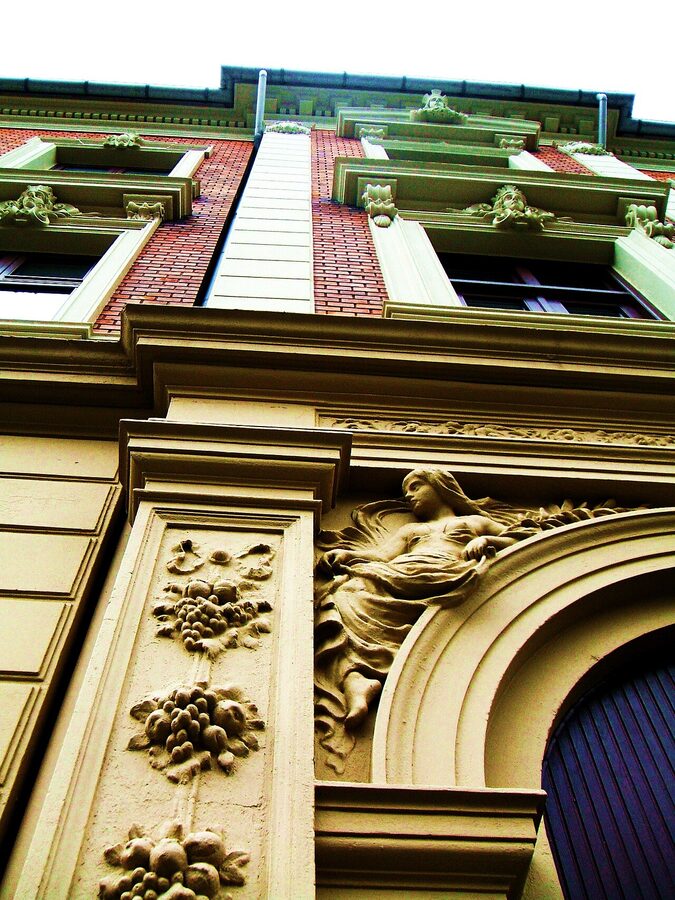
West of the central station. Twenty years ago you wouldn’t walk down Istedgade after dark; now Vesterbro is the bit of Copenhagen that feels closest to a working district that has decided to also be cool. The Kødbyen meatpacking complex is at its heart, with Mother (proper Neapolitan pizza), Warpigs (BBQ and Mikkeller beer), and Kul (open-fire cooking) all sharing the white tiled buildings. Andersen Boutique Hotel and Hotel Astoria put you 4 minutes from the trains. Vesterbro hotels on Booking.com.
Nørrebro, the immigrant quarter
North of the Lakes, across Dronning Louises Bro. Twenty-something Copenhagen with a big Middle Eastern community, the cemetery where Hans Christian Andersen and Søren Kierkegaard are buried (a public park with picnickers in summer), and the food street Jægersborggade where you find Manfreds, Mirabelle bakery, and the original Grød. Stay here if you want to feel less like a guest and more like you live a bit out from the centre. Hotel Nora and Babette Guldsmeden are both in the area.
Christianshavn and Holmen, the canal islands
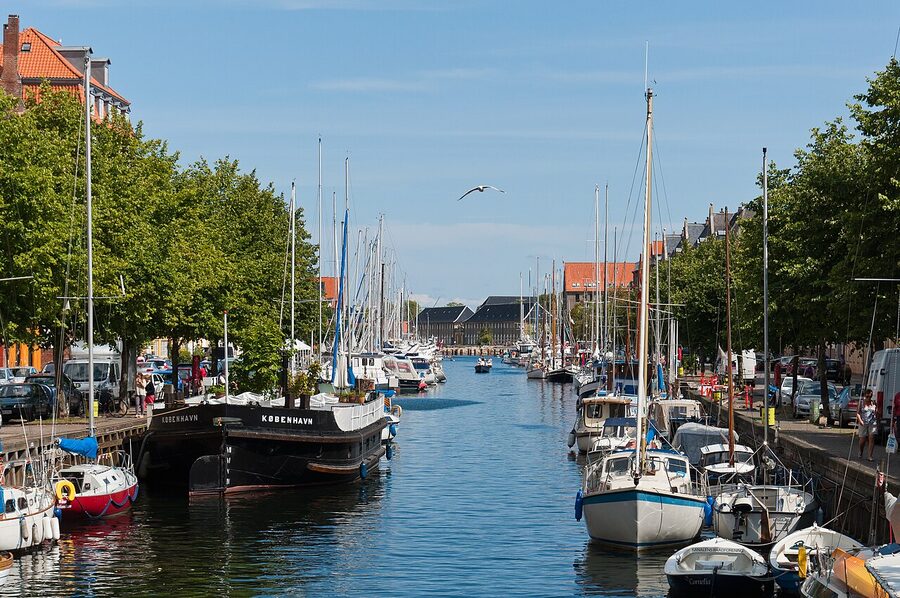
Across the Inderhavnsbroen pedestrian-and-cycle bridge from Nyhavn. A 17th-century planned district that Christian IV laid out for his navy and Dutch settlers, and you can still feel that grid: long straight canals, low-rise warehouses, the Vor Frelsers Kirke spire poking up at the south end. Stay here if you want to walk over the bridge into Indre By in 10 minutes but sleep next to water with no club noise. Hotel CPH Living is literally a hotel boat.
Nyhavn vs Christianshavn, and what’s actually going on
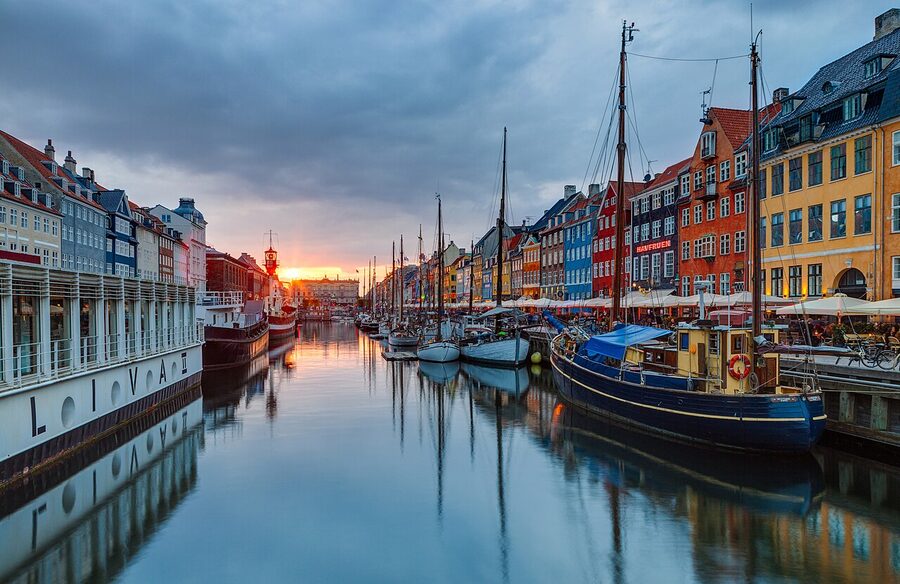
Nyhavn is the postcard. A 17th-century commercial canal lined with the candy-coloured townhouses everyone has on the front of their guidebook. Hans Christian Andersen lived at numbers 18, 20, and 67 at different points; the third floor of number 20 has a small plaque. The boats moored along the south side are real working sailing ships maintained by the National Museum.
It’s worth the visit. It is also a tourist canal now. The restaurant prices on the south quay run 40 to 70 per cent higher than identical food two blocks inland. Order a beer there and you’re paying 90 DKK (~€12). The buildings are real; the experience is partly theatre.
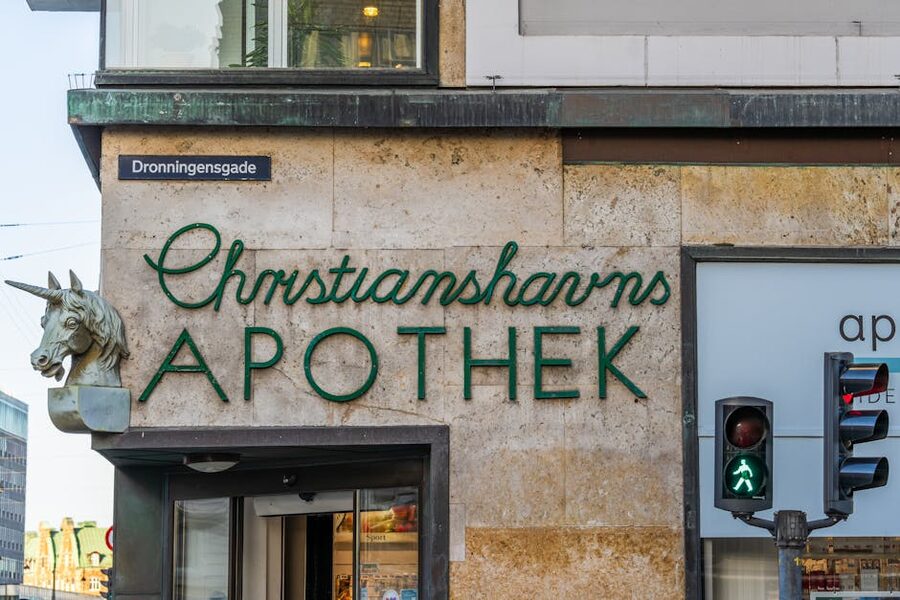
Cross the new Inderhavnsbroen bridge on a bike, ten minutes north-east, and you reach Christianshavn. Same century, same architecture, completely different temperature. Houseboats with tomato plants. A canal you can sit beside without queueing for the seat. Christianshavns Færgecafé still does proper Danish smørrebrød lunches. The Apothek with the unicorn over the door has been there since 1866. This is what Nyhavn was a hundred years ago, and it’s still here.
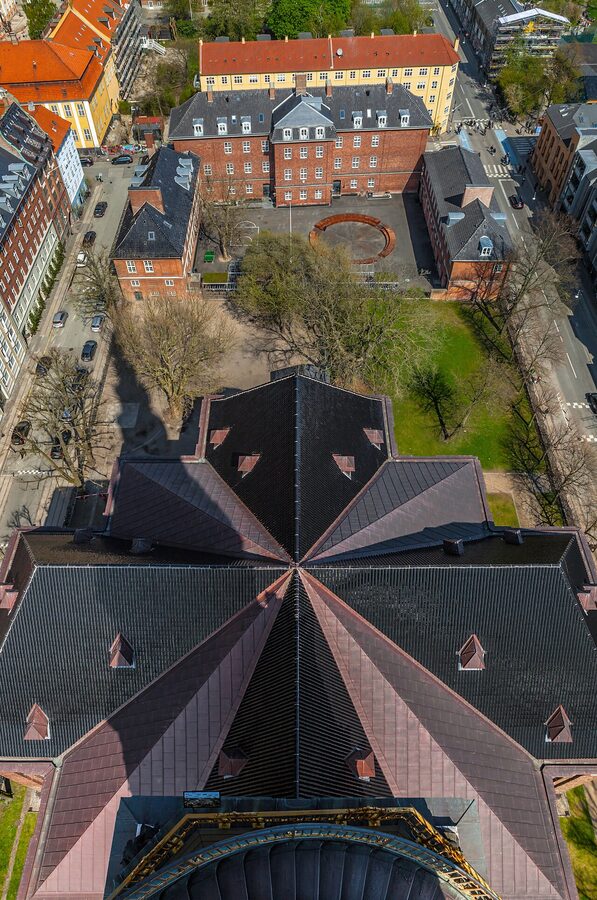
While you’re in Christianshavn: climb the Vor Frelsers Kirke spire. The last hundred metres are an external spiral that gets narrower the higher you go, with the golden orb and the figure of Christ on top. On a clear day, you can see the Øresund and the Swedish coast. Open Tuesday to Sunday roughly 11:00 to 16:00, closed in strong wind. Check tickets in advance via the church’s own website; the slot sometimes sells out by mid-morning in July and August.
Christiania, the unannexed bit
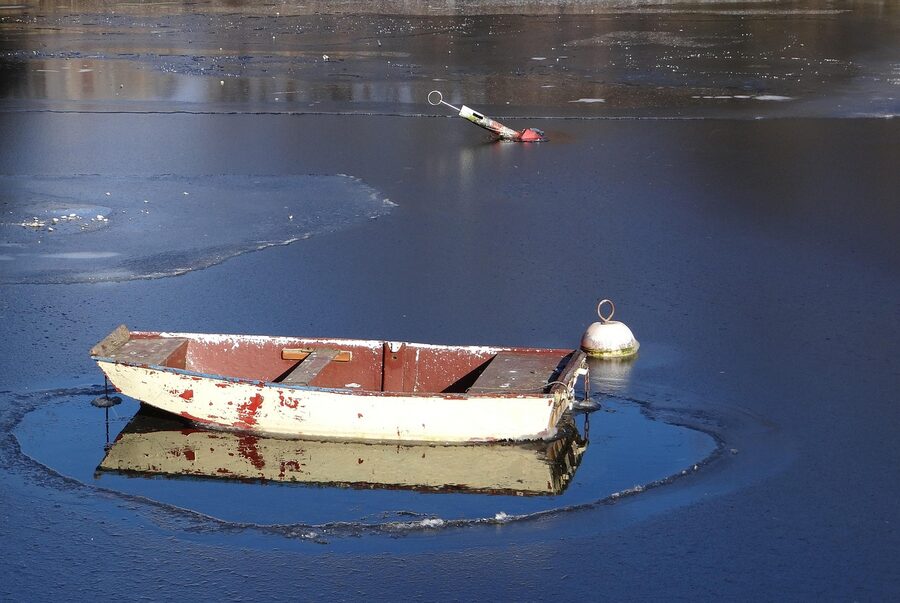
South-east of Christianshavn, behind a low wooden gate, is Freetown Christiania. A self-governing district that has been here since 1971, when squatters occupied an abandoned military base. Around 850 people still live here. There are rules at the gate: no photographs in the inner streets, no running. The community closed Pusher Street in April 2024 after years of cannabis-trade violence; the bulldozers came in and the cobblestones came up. What you’ll find now is the wider commune: workshops, vegetarian cafés, the small Christiania Stupa, the Loppen music venue. Walk through, don’t gawp, leave a few krone at the small art stalls if you find something you like.
Tivoli: the year-round vs Christmas reality
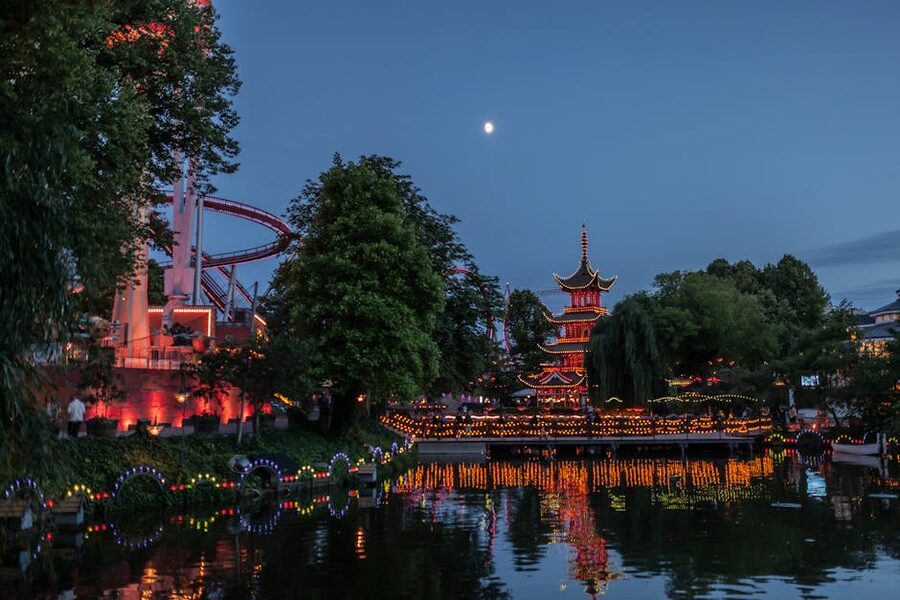
Tivoli opened on 15 August 1843, two and a bit centuries before Disneyland, and Walt Disney came to study it before designing his own park. It’s one of the oldest amusement parks in the world still running on its original site. The trick is knowing what season you’re in.
The summer season runs roughly early April to late September. Standard adult entry is around 175 DKK (~€23) on weekdays, 195 DKK (~€26) at weekends and in peak summer. Rides cost extra unless you pay 280 DKK (~€38) for an unlimited rides pass. Most evenings in July and August have free concerts on the Plænen open-air stage at 22:00. Friday Rock features a different name each week; it’s how Danes who say they “don’t really like Tivoli” still end up at Tivoli.
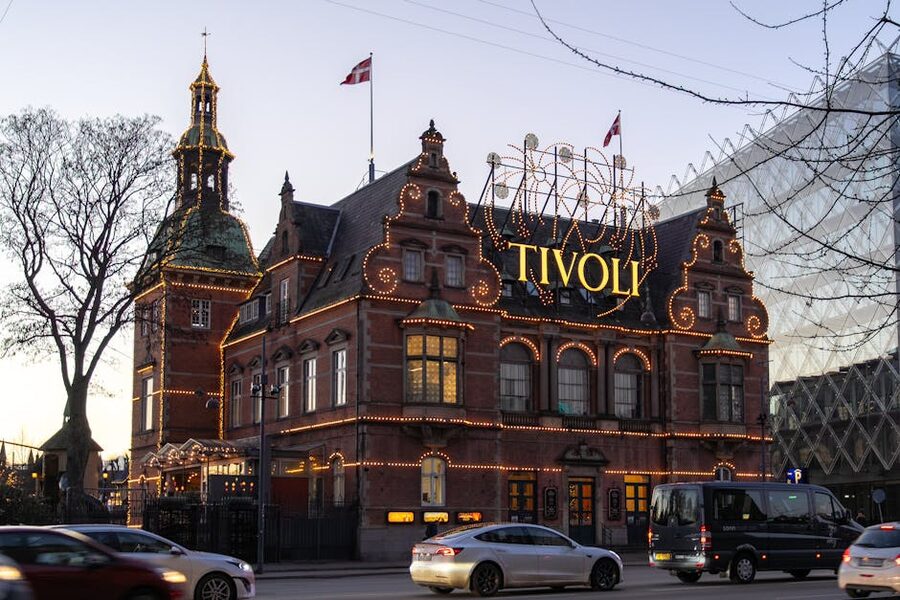
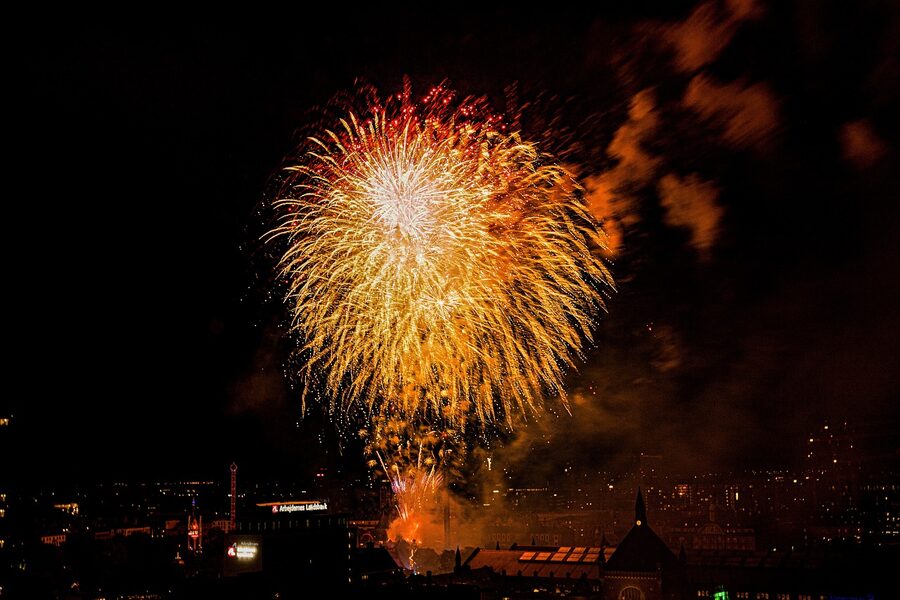
The Christmas season runs mid-November to early January, separate ticket. This is the version that Danes actually return to year after year: the wooden chalets selling glogg (mulled wine) and aebleskiver (round pancake balls), the lights threaded through every tree, the Nutcracker performed at Tivoli’s own concert hall. It’s worth planning a city break around if you can. There is also a Halloween season (early October to early November) and a winter season (January to February) called Vinter i Tivoli which is the quietest of the year, the only time you’ll get the rides without queues.
If you’re chaining Copenhagen’s December with Stockholm’s, the Stockholm Christmas markets and the Stena Line ferry piece covers what you’ll miss in the Swedish capital and how the overnight ferry actually works.
Strøget, and the trick of being there at six
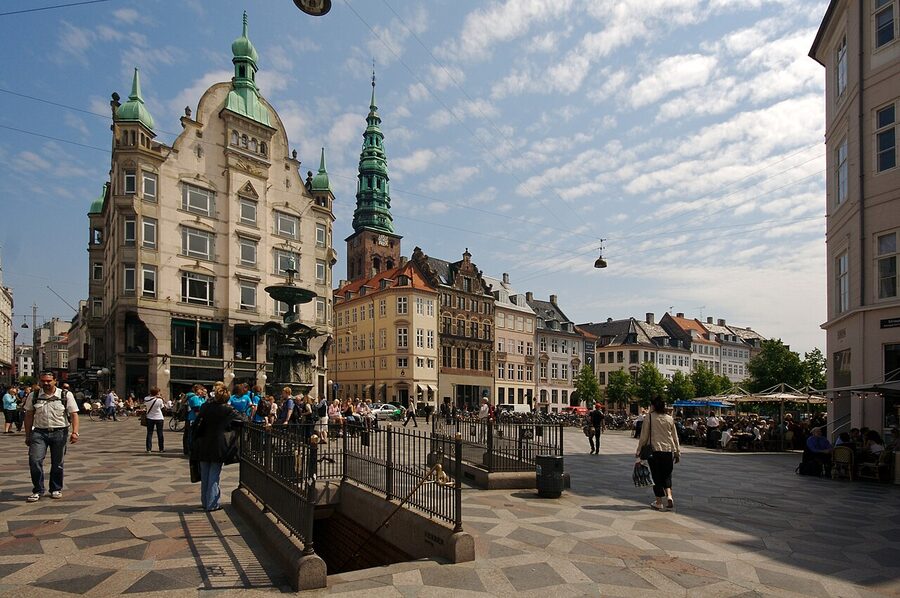
The Strøget is Copenhagen’s main pedestrian shopping street, running about 1.1 km from Rådhuspladsen east to Kongens Nytorv. It was pedestrianised in November 1962, an experiment that quietly turned out to be one of the more influential pieces of urban planning of the last century (Janette Sadik-Khan still cites it). Big chains at the western end, smaller Danish brands as you go east, the side streets do most of the actual shopping work.
Here’s the thing the guidebooks miss. Around 18:00, almost on the dot, the chain stores close and the entire street empties of tourists. By 18:30 it has refilled with Copenhageners walking home from work. The shop windows are still lit, but the pace is half what it was. You can hear conversations. This is the only window when the Strøget feels like a real street and not a shopping mall, and it lasts about an hour.
If you only do the Strøget once, do it at 18:00. If you only shop once, skip the chains and go to:
- HAY House on Østergade, 2nd floor. The Danish design label’s flagship, with a café that has the best mid-morning view of Amagertorv square.
- Stine Goya, also Østergade. The Copenhagen designer with the colour palette no other capital does.
- Ganni’s outlet on Kronprinsensgade. Actual discounts, not the airport version.
- Wood Wood on Grønnegade. Danish menswear and unisex labels.
- Time’s Up vintage on Krystalgade, where I bought a 1970s silk shirt for 280 DKK (~€38) and have worn it to two weddings since.
Where to actually eat

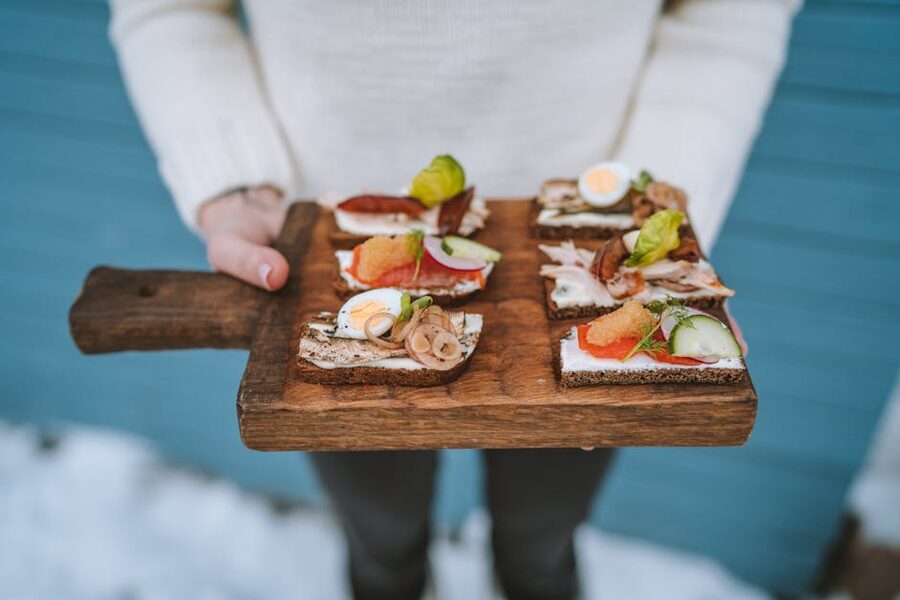
Smørrebrød first. Open-faced rye sandwiches, eaten cold, structured by tradition: herring with red onion and capers, then a fish round (gravad lax, smoked plaice), then meat (roast pork with red cabbage, beef tatar, the spiced pork-liver pâté called leverpostej). Aamanns 1921 inside Christiansborg Slotsplads is the upmarket version, around 110 DKK (~€15) per piece, full lunch around 350 DKK (~€47). Schønnemann on Hauser Plads is the older institution, oak-panelled, snaps menu, about the same price. For half the money and almost the same quality, head to Selma in Nørrebro.
The Torvehallerne lunch
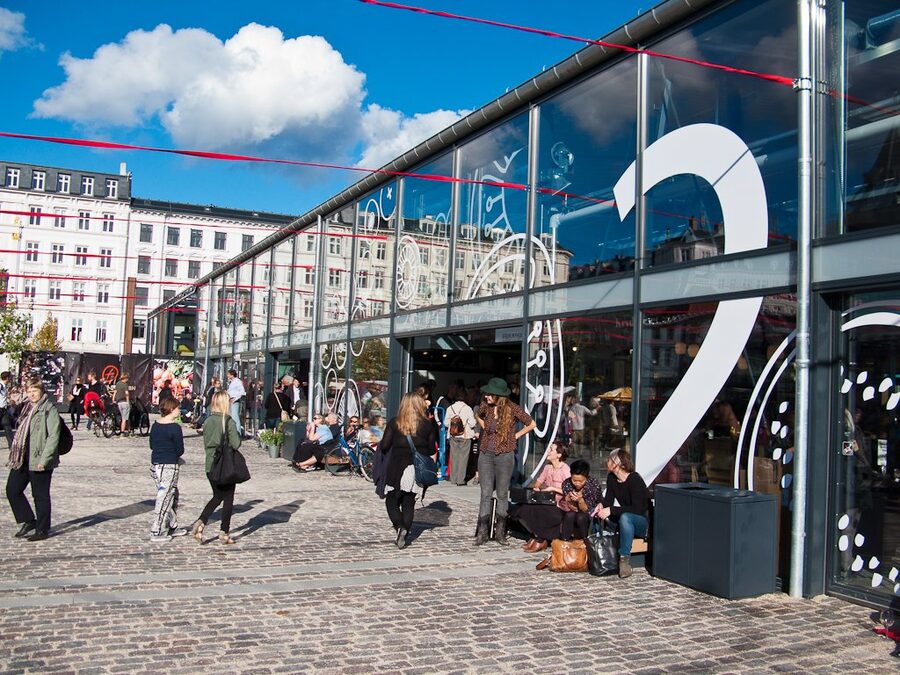
Torvehallerne, two minutes from Nørreport station, is the covered market that Danes actually use. About 60 stalls between two glass halls, opened in 2011 on the site of the old Israels Plads vegetable market. Coffee Collective does single-origin filter, Grød does porridge in 12 varieties, Hallernes Smørrebrød makes a six-piece tasting plate for 195 DKK (~€26), and Hav fishmonger has the best lunch tray of cured and smoked fish in the building. Open Tuesday to Sunday, generally 10:00 to 19:00, closed Monday.
The noma legacy in the harbour places
Noma closed its old form at the end of 2024 and reopened as a food laboratory and seasonal restaurant. The reservation list is what it always was: about 12 weeks ahead, 4,500 DKK (~€603) for the tasting menu, 7,500 DKK (~€1,005) with wine pairings. Fine. What’s actually changed Copenhagen is the spread of ex-noma chefs across the new harbour. Geranium (three Michelin stars, in Parken stadium of all places) is a different argument: a tasting menu without animal protein, run by Rasmus Kofoed. Hart Bageri (Trine Hahnemann’s bakery, Vesterbro) is where every chef in town buys their morning sourdough. 108 closed, but Pony, Manfreds, Apollo Bar, and Bæst all carry the bloodline forward, and most charge a quarter of the noma bill.
Reffen on Refshaleøen, the harbour street-food yard
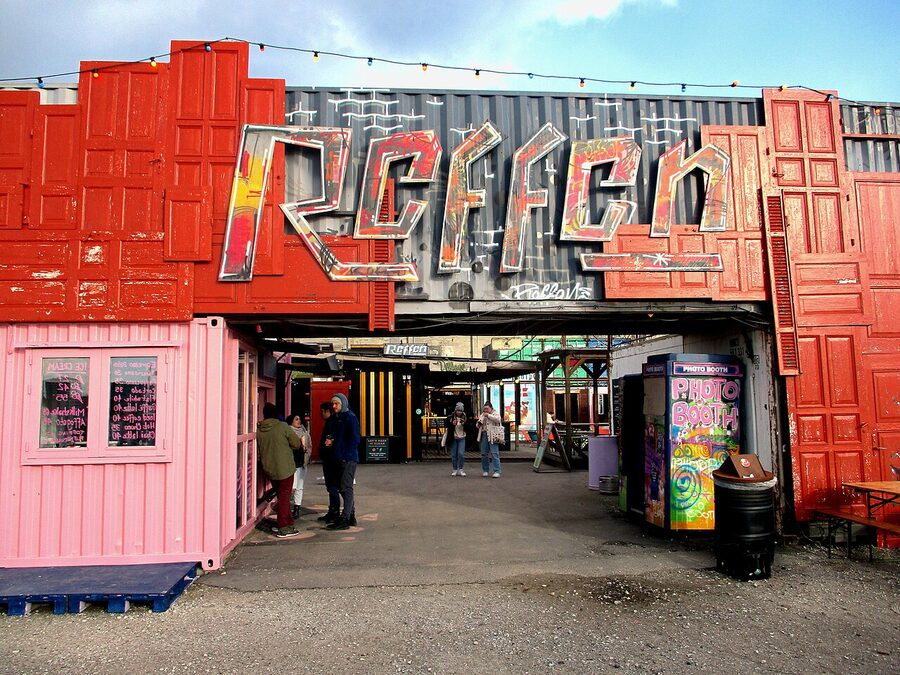
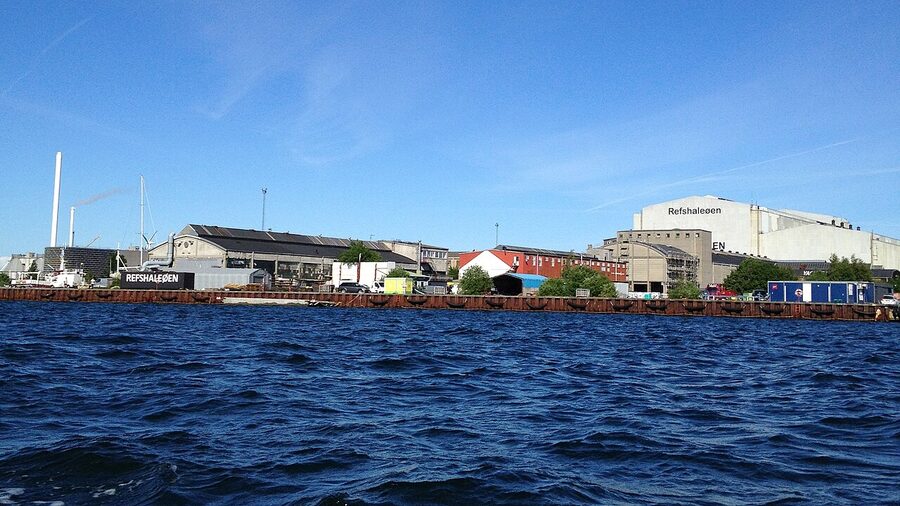
Take the harbour bus 991 or 992 from Nyhavn out toward Refshaleøen. The bus is part of the metro system, costs the same as any zone-1-2 ticket, and runs every 30 minutes. Refshaleøen used to be Copenhagen’s shipyard, the place that built the world’s first ocean-going diesel ship in 1912. The yard closed in 1996 and the island sat empty for two decades. Now it’s the Reffen street-food market, the Copenhagen Contemporary art space, the Mikkeller Baghaven sour-beer brewery, the all-electric La Banchina restaurant, and Amass, the chef Matt Orlando’s seasonal kitchen with a vegetable garden out the back. Go for sunset; cycle back along the inner harbour quay. Best when the wind isn’t off the sea.
Castles, towers, and the four museums worth your time
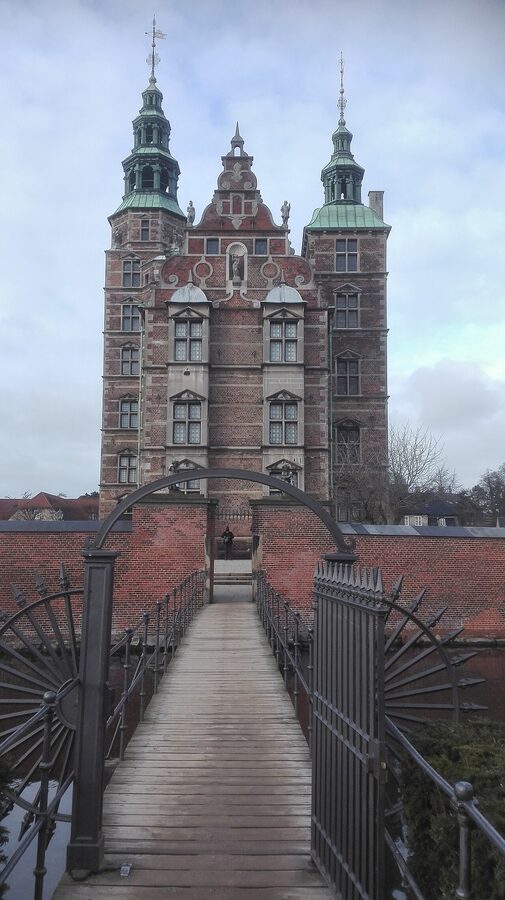
Rosenborg Castle, in the King’s Garden ten minutes north-east of Nørreport, is a Renaissance fortress that became a royal warehouse and is now a museum. Christian IV built it in 1606 as a summer house and ended up with most of his life there. The crown jewels are still in the basement vault. Tickets around 130 DKK (~€18); the King’s Garden itself is free, and on a sunny May lunchtime you’ll see half of central Copenhagen on the grass.
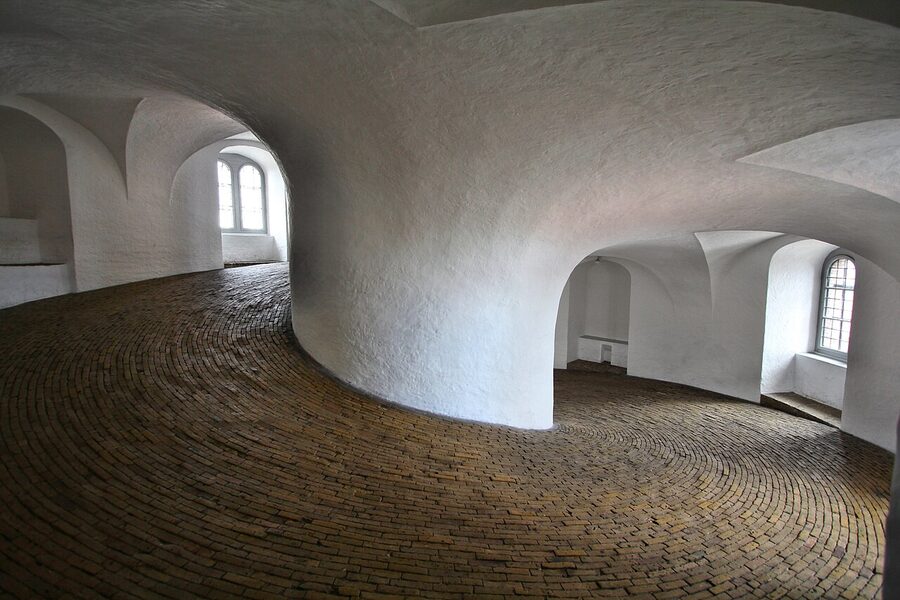
Rundetårn (the Round Tower) is the strangest building on the Strøget. It has no stairs. Instead, a 209-metre cobbled spiral ramp winds up to the observatory at the top, built wide enough that the king could ride a horse to the platform. Christian IV finished it in 1642 as Europe’s oldest surviving observatory. Tickets are 50 DKK (~€7), open 10:00 to 18:00 most of the year. From the platform you see the whole of Indre By; on a clear winter morning you can see the Øresund Bridge. It takes about 15 minutes if you walk it. The Library Hall halfway up runs free art exhibitions worth the small detour.
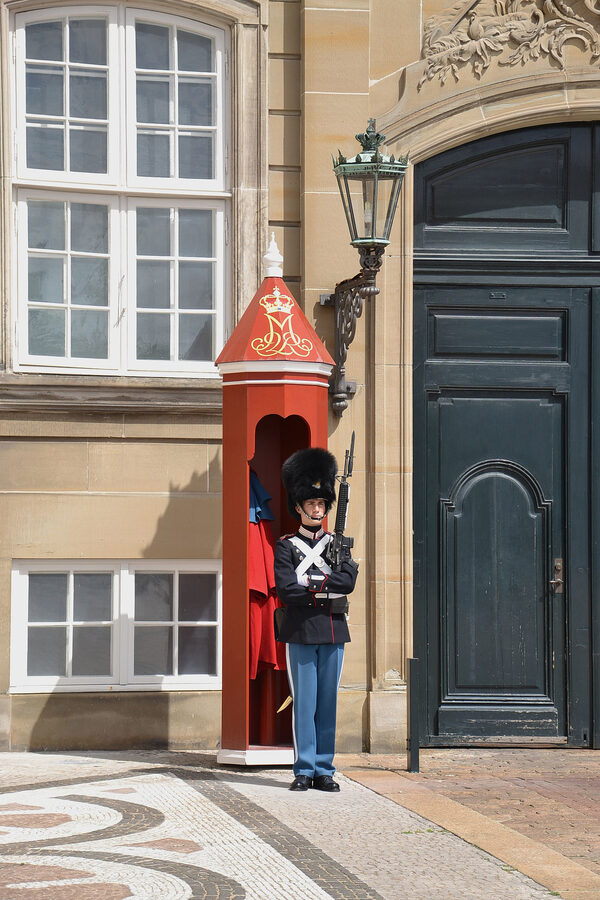
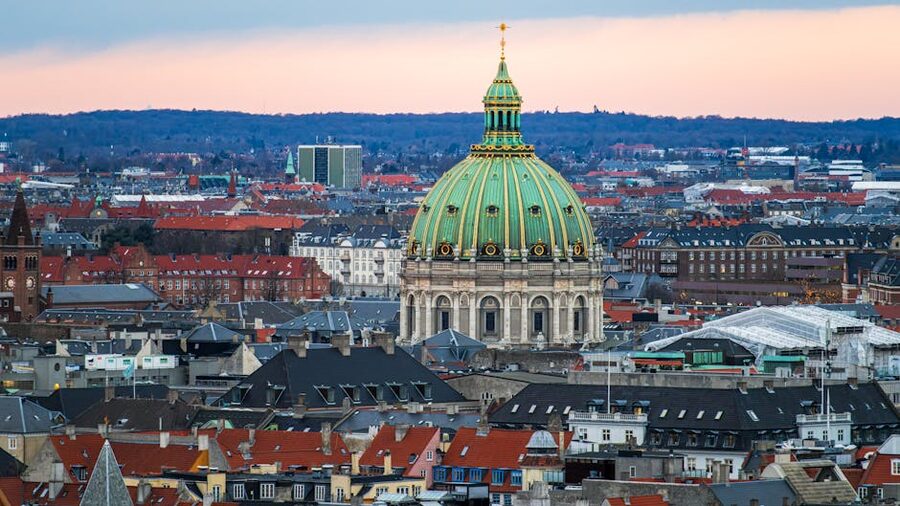
Amalienborg is the royal residence: four identical rococo palaces around an octagonal square, the dome of the Marble Church framing the western view. Margrethe II abdicated on 14 January 2024 in favour of Frederik X; the family lives in the Frederik VIII palace, the right-hand block as you face the harbour. The Amalienborg Museum (Christian VIII palace) shows the inside of one of the four blocks, including a study set up exactly as Christian IX left it. Tickets 110 DKK (~€15). Skip the Royal Life Guards march at noon if it’s raining; in good weather the route from Rosenborg through the inner city is more interesting than the actual changing.
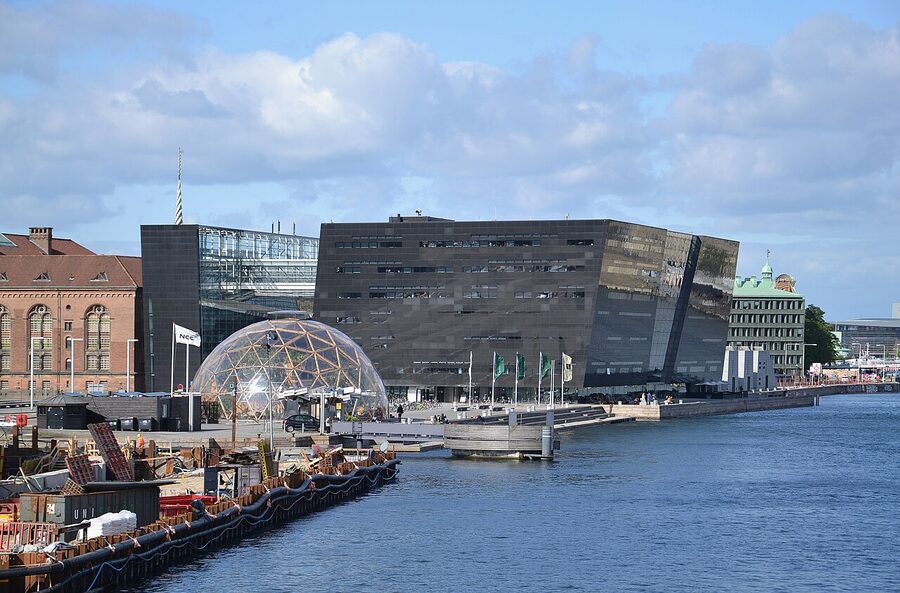
And four museums I’d actually pay for, in order:
- Designmuseum Danmark on Bredgade. Mid-century chairs in a 200-metre corridor (the Klint, Wegner, Jacobsen progression you’ve seen photos of), porcelain, posters. Reopened in 2022 after a long renovation. 130 DKK (~€18).
- Ny Carlsberg Glyptotek behind Tivoli. Carl Jacobsen’s brewer-money antiquities collection, with a 19th-century palm-courtyard winter garden in the centre. The Etruscan rooms are quiet on a Wednesday afternoon. 125 DKK (~€17), free on Tuesdays.
- Statens Museum for Kunst (SMK) next to Rosenborg’s gardens. The Danish Golden Age painters are the draw (Eckersberg’s The Russian Ship of the Line “Asow”, the same Eckersberg who painted the 1807 fire); the Asger Jorn rooms upstairs are the sleeper hit. 130 DKK (~€18), free first Wednesday.
- The Cisterns in Frederiksberg Have. A 19th-century underground reservoir, dripping, half-flooded, with a single contemporary art installation each year. You walk in on a wooden boardwalk and the temperature drops 8 degrees. 95 DKK (~€13), seasonal hours.
The famous Louisiana Museum of Modern Art is 35 minutes north by S-tog (regional rail) at Humlebæk station. If you have a half-day spare and the weather is good, go. The sculpture garden runs out to a cliff over the Øresund and you can see Sweden across the strait. If you don’t have the time, don’t sweat it; you’ve got plenty in the city itself.
A short, useful history
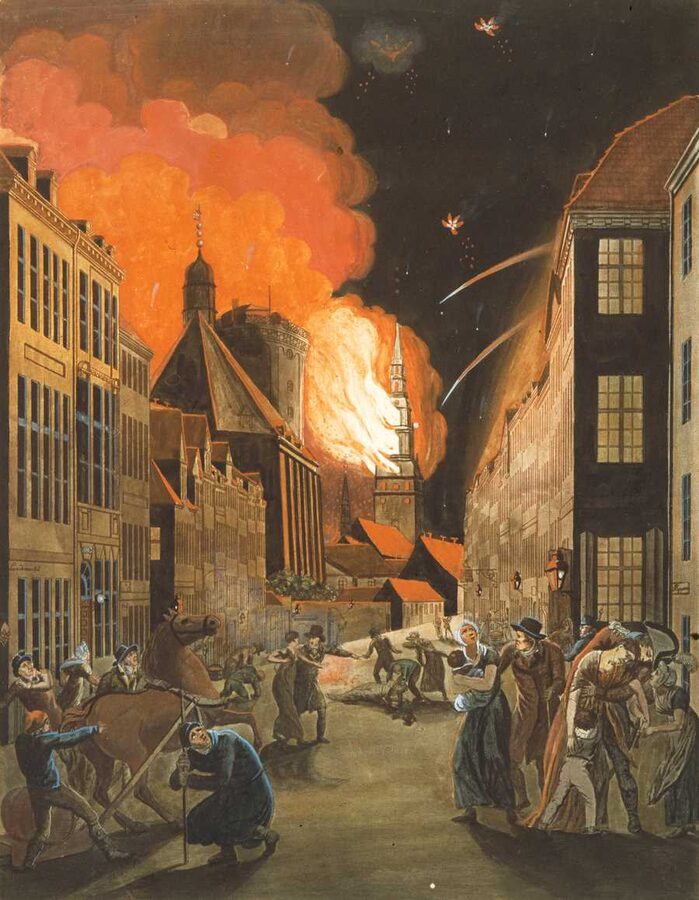
You don’t need a long history to enjoy Copenhagen, but two events explain a lot of what you’re looking at.
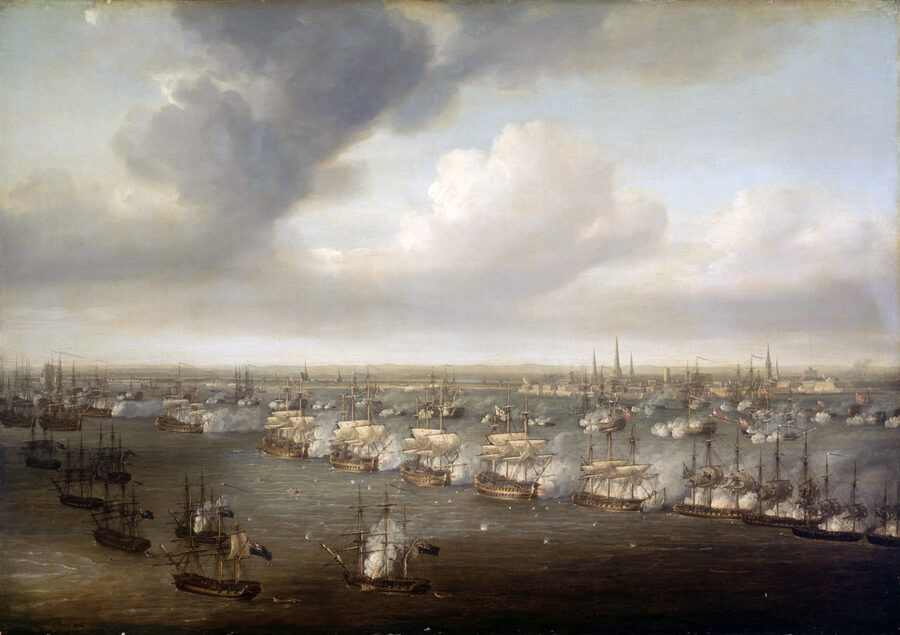
In April 1801 and again in September 1807, the British navy attacked Copenhagen. The first time was a sea battle in the harbour entrance (Nelson commanded the inshore squadron). The second time, three years into the Napoleonic wars, was a three-night bombardment of the civilian city to capture the Danish fleet before Napoleon could. About 1,600 Copenhageners died in the 1807 attack and a third of the medieval city burned. Vor Frue Kirke (the cathedral) lost its spire. The Round Tower somehow stood. C.W. Eckersberg, then a young art student, sketched the burning city from Christianshavn, and his paintings are now in the SMK.
The second event is what didn’t happen. Through the 1850s the medieval city walls came down, the suburbs of Vesterbro, Nørrebro, and Østerbro absorbed the working population, and the lakes that you see in central Copenhagen today (Sankt Jørgens, Peblinge, Sortedams) are the old western moats, kept as reservoirs and now ringed with running paths. The grand 1850s housing blocks of Vesterbro and Frederiksberg are the same generation. If a building looks fancier than its neighbours and runs five storeys with stucco columns, it was probably built between 1855 and 1900 by speculators on land sold by the army. The Marble Church (consecrated 1894 after a 145-year construction pause) is the most extreme example.
If you’re chaining Copenhagen with another European city, Hamburg is a 4.5-hour direct train south on the new Femern fast line; the Hamburg UNESCO sites guide covers what to do at the other end. Stockholm is overnight by train (or by Stena Line ferry from a different angle); the Stockholm 3-day guide is a sister piece.
Outside the centre, but worth a tram ride
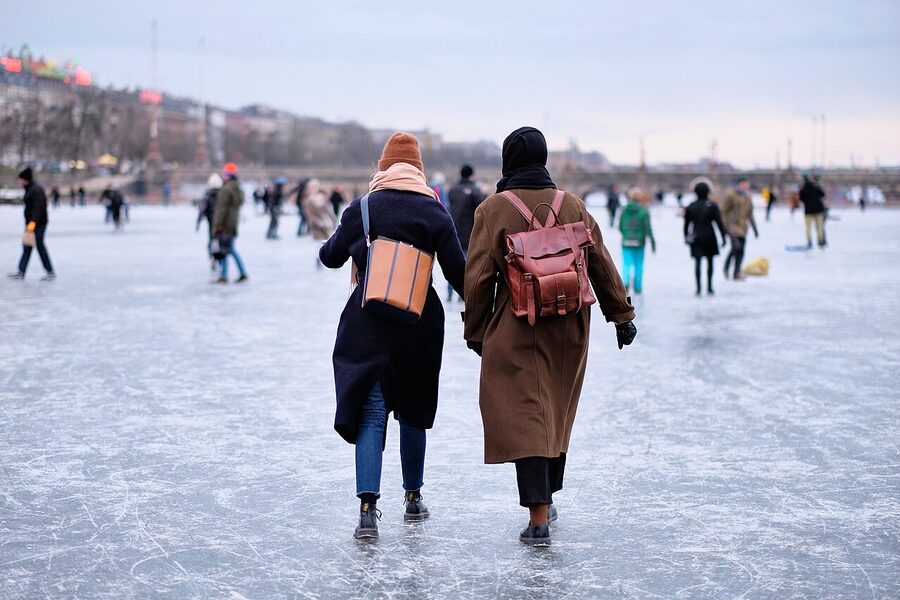
Søerne, the Lakes, are not a single lake but three artificial reservoirs running 2.3 km from Østerbro to Vesterbro. Walk or run the entire ring (about 6.5 km) on a clear morning, ideally before 09:00, and you’ll see roughly the most Copenhagener-version of Copenhagen. Cyclists, joggers, parents, the old swans the city is reluctant to remove. The Søpavillonen restaurant on the south side does a good summer terrace if you want to make a thing of it.
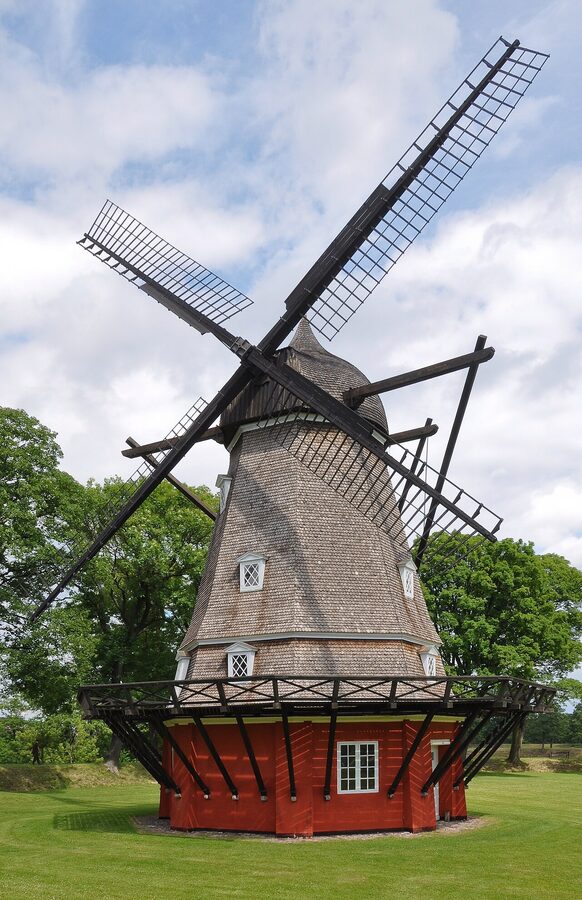
Kastellet, north of Amalienborg, is a 17th-century star fortress that’s still an active military barracks. You can walk the bastions for free, see the windmill, and exit by the small bronze Little Mermaid on the seafront. The Mermaid statue itself is small, often crowded, and almost universally underwhelming; treat it as a 30-second photo and walk on.
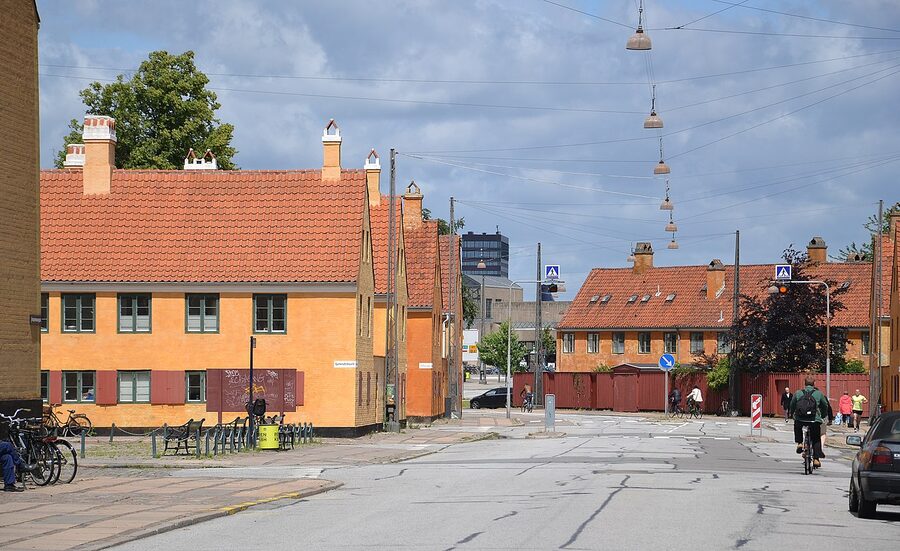
Nyboder, the orange-yellow terraced rows two streets east of Rosenborg, is Christian IV’s other big housing project: small naval cottages built between 1631 and 1641 for the sailors of the Danish fleet. Most of the surviving rows are still navy-owned and lived in. There’s a small museum at Sankt Pauls Gade 24 (50 DKK / ~€7) if you want to see the inside; otherwise just walk through. It’s two minutes from the metro at Marmorkirken and very few visitors find their way over.
The skip list
I get the same questions every time someone asks me about Copenhagen, and the answer to most of them is no.
- Hop-on, hop-off bus. The city is too small. You’ll spend more time in traffic than at the stops. A 24-hour metro pass plus a Donkey Republic day rental is half the cost and twice as fast.
- The Little Mermaid. Tiny statue, big crowd, four minutes from Kastellet on the seafront. Walk past, take the photo, do not detour.
- Lagkagehuset chain at the airport. Better Danish bakeries are everywhere. Andersen Bakery, Hart, Juno the Bakery in Østerbro. Lagkagehuset is fine; you have not eaten Copenhagen if you only ate this.
- The CopenHill rooftop ski slope. Architecturally interesting, genuinely a working incinerator, but the actual ski slope is short and the bus out is long. Worth it for architecture nerds, skip it for a 48-hour visit.
- Tivoli on a wet Tuesday in November. It’s closed. Check the season calendar before you commit a hotel night to a Tivoli evening. The Halloween, Christmas, and summer seasons are the only ones that consistently run.
- The Copenhagen Card. The 24-hour card at 569 DKK (~€76) covers metros, S-tog, the harbour bus, and most attractions. Run the maths on what you actually plan to enter; for two museums and unlimited transport, it’s cheaper to buy a City Pass and individual tickets.
- Sleeping in the airport district. Kastrup is a fast 14-minute metro ride from Nørreport but the area itself is a business park. Sleep central, ride the metro out for your flight.
How long do you actually need
Two days is enough for the centre, both Nyhavn and Christianshavn, Tivoli, one castle, one museum, a Reffen sunset, and the Strøget at six. Three days adds Refshaleøen properly, a longer lunch in Nørrebro, the Cisterns or SMK, and time to actually slow down on a canal seat. Four days lets you do Louisiana, a long ride to Klampenborg’s Bakken (the world’s oldest amusement park, 1583, even older than Tivoli), and a half-day in Frederiksberg or Carlsberg City. Anything longer and you’re either chaining Malmö across the bridge (35 minutes by train) or starting to commute, which is fine but is no longer this trip.
If Copenhagen is your first Nordic city, the obvious sister piece is the Aarhus city guide: Denmark’s second city, three hours north on the train, very different temperature. If you’re working through the capitals, the Helsinki guide, Oslo guide, and Reykjavík guide are the matching pieces in this set.
Practical bits, in one place
- Currency: Danish krone (DKK). Denmark is in the EU but not the euro. ATMs everywhere; cards accepted everywhere; tipping is built into prices.
- Airport to centre: M2 metro from Kastrup direct to Nørreport, 14 minutes, every 4 minutes day and night, 36 DKK (~€5).
- Best months: May, June, late August, December (Tivoli Christmas). July is busy and warm. February is cold and quiet, which has its own appeal.
- Daylight: 17 hours in late June, 7 hours in late December. Plan your light accordingly.
- Plug: Type E and F (continental European, two round pins).
- Tap water: Drink it. Some of the cleanest in Europe; bottled water is unnecessary.
- Tap card on transport: Yes, on every metro, S-tog, and harbour bus station. No need to download the DOT app for short trips.
- Hygge: Often translated as “cosiness”, more accurately a Danish habit of making rooms small and warm at the dark end of the year. Candles, low lights, soft chairs, no rushing. You’ll notice it most in cafés in November. It is not, despite a decade of marketing books, a brand or a buyable object.
Last note. The version of Copenhagen the tourism board sells is real but partial: the colourful canal, the well-designed lamp, the smiling cyclist. The version I keep coming back for is what’s underneath that: the planning culture that decided in 1962 to pedestrianise its high street and was right; the city that puts a swimming bath at the end of every harbour; the engineers’ decision in the 1850s to keep the moats as lakes; the second-floor flat in Vesterbro that’s still 70 square metres and still affordable for a teacher. You won’t see any of that on a hop-on bus. You will see it from a borrowed bike at 18:00 on a Tuesday, on the Strøget, when nobody else is looking.




.jpg)
.jpg)

_spiral_ramp.jpg)
,_Copenhagen_05.JPG)
,_Copenhagen.JPG)


,_Copenhagen_(50999373847).jpg)
.jpg)
