Iceland is the most famous place on the planet to chase the aurora and statistically one of the worst. Reykjavík sits at 64°N, latitude-wise it’s lower than Tromsø (69°N), Abisko (68°N), Saariselkä (68°N), Levi (67°N) and pretty much every Lapland town with a tour operator. But Reykjavík has cloud cover north of 70% on the average winter day, while Abisko’s “blue hole” microclimate runs cloud-free more than half the time. So you’ll likely pay more in Iceland and see less aurora than the friend who flew to Tromsø. The reason to come anyway is everything else: the south coast, the glacier lagoons, the hot springs, the Ring Road. The lights are a bonus, not a plan.
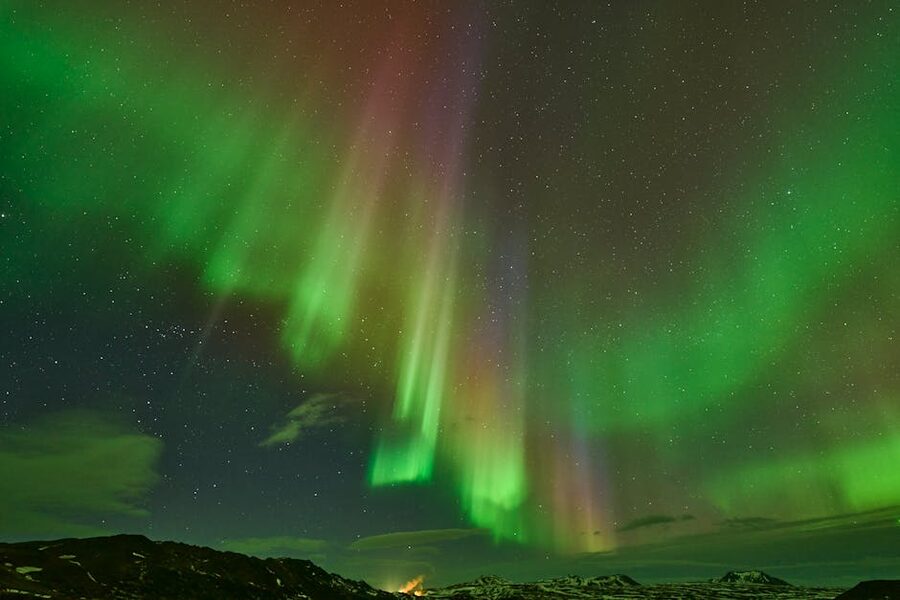
What follows is the realistic guide. When the aurora season actually starts and ends, why November and December are a trap, where to go that isn’t Reykjavík, how to read the forecast (it’s two forecasts), what tour vs. self-drive actually buys you, and a straight comparison against the Lapland alternatives. Specific places, specific numbers, specific call-outs of stuff that doesn’t work.
In This Article
- The reality, before any of the romance
- When the season actually starts and ends
- September and October: the contrarian’s pick
- November to early January: the trap
- Late January, February, March: the sweet spot
- April: the underrated one
- How to read the forecast (it’s two forecasts)
- Where to go (it’s not Reykjavík)
- Þingvellir National Park
- Vík and the south coast
- Jökulsárlón and Stokksnes
- Snæfellsnes peninsula and Kirkjufell
- Hvammstangi and the north coast
- Mývatn and the north
- Westfjords (the contrarian’s contrarian pick)
- Reykjavík: the spots if you absolutely can’t leave town
- Tour vs self-drive: when each is the right call
- Photography reality (the part that hurts)
- How Iceland stacks against Tromsø, Abisko and Lapland
- The five-night minimum (and why two nights almost never works)
- What it actually costs (rough numbers)
- What to wear (the part where most people undercook)
- The mistakes I see people make
- If you’re combining the aurora with the rest of Iceland
- One last thing
The reality, before any of the romance
Three things have to line up for you to see the aurora in Iceland: it has to be dark, the sky has to be clear, and there has to be enough geomagnetic activity. Iceland scores well on the first one (deep winter has fewer than four hours of daylight). It scores fine on the third because the country sits roughly under the auroral oval. It scores badly on the second.
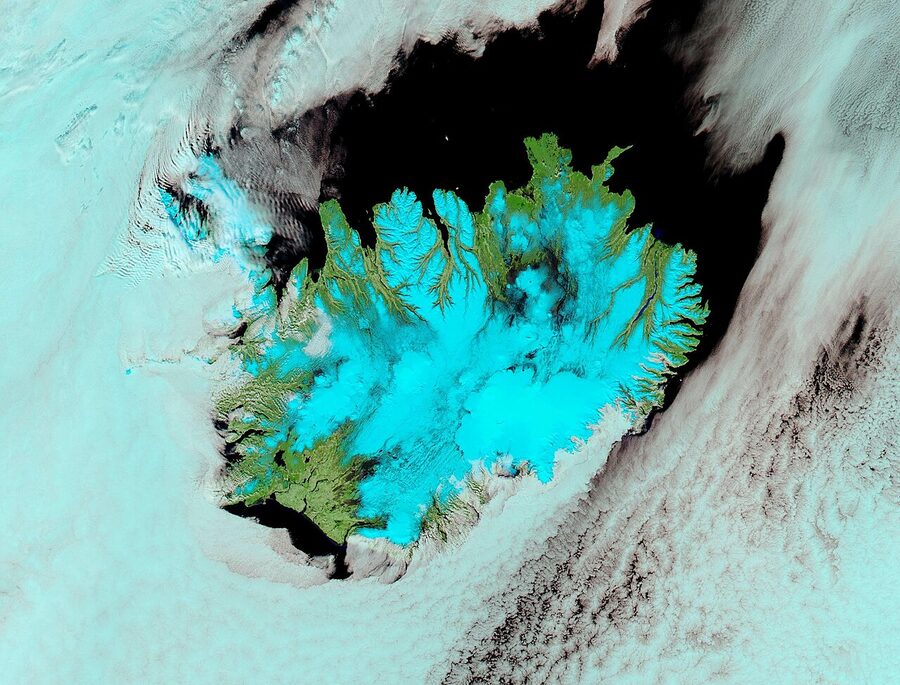
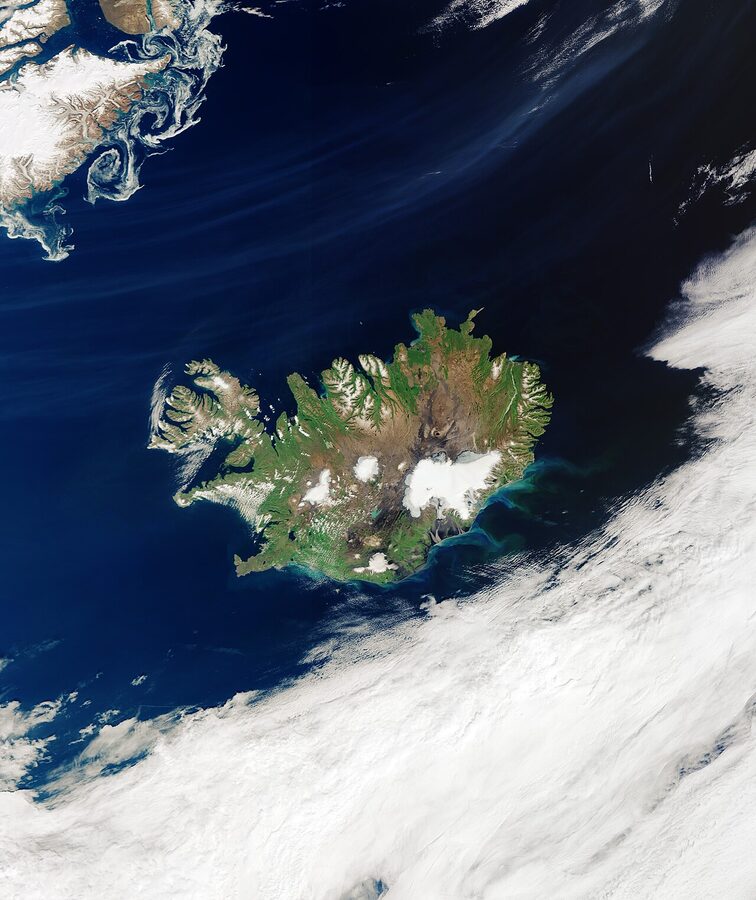
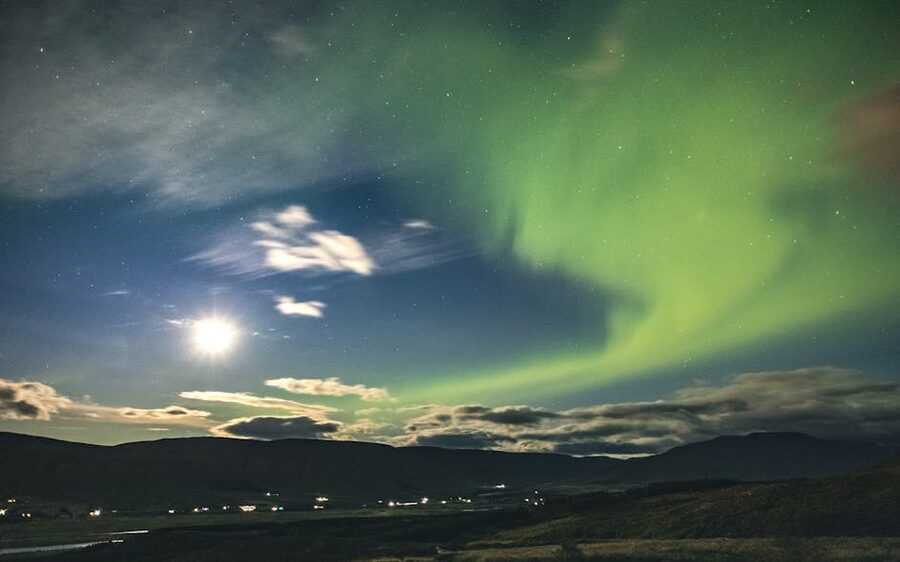
The North Atlantic and the Gulf Stream conspire to keep Iceland under cloud most of the winter. Reykjavík averages 70 to 80% cloud cover from November through February. Akureyri in the north gets a little more clear sky on average, but not by much. The forecast tool you’ll learn to obsess over isn’t the Kp index, it’s the cloud-cover map at en.vedur.is/weather/forecasts/aurora. White patches mean clear sky. Green means cloud, and green is the enemy.
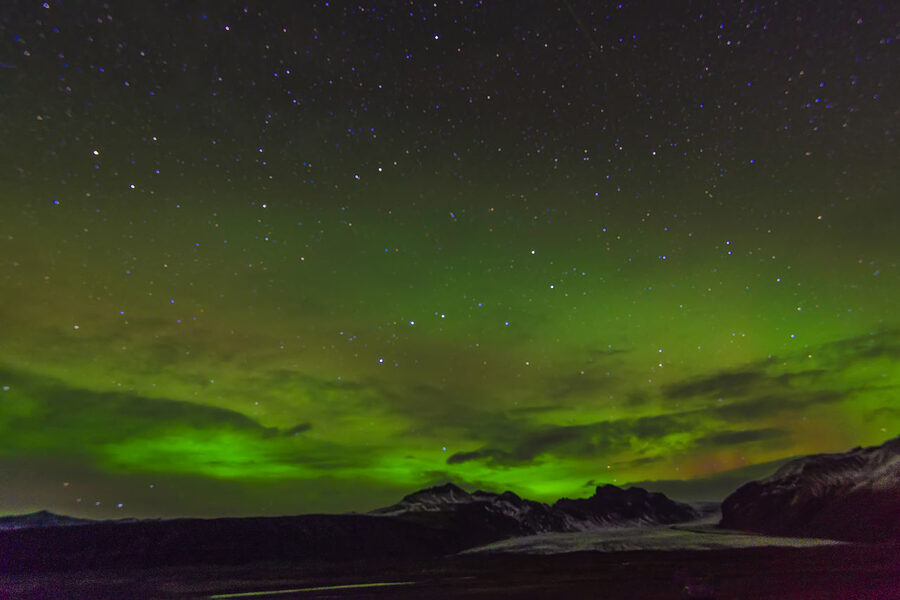
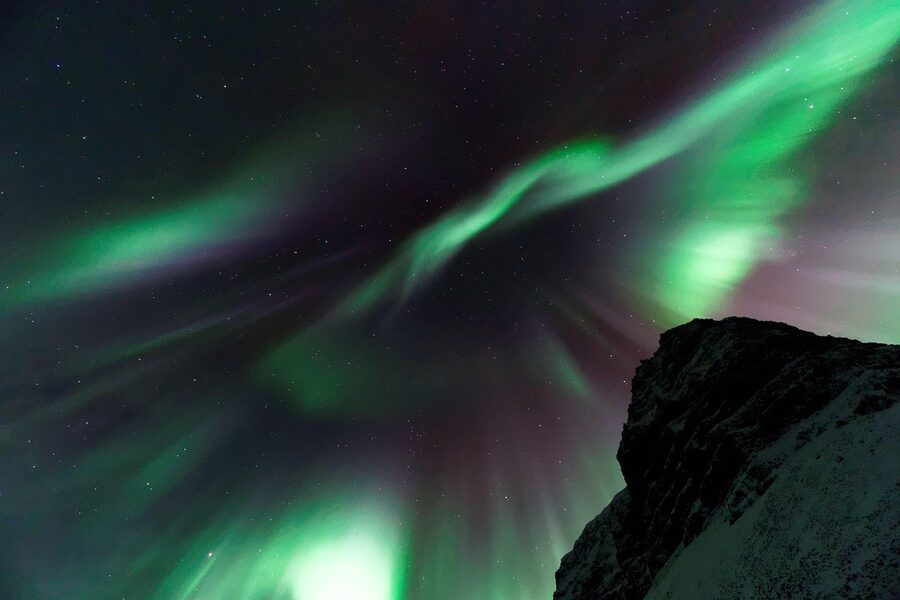
The second reality check: your phone won’t capture what your eyes see, and your eyes won’t see what an editorial photo captures. The greens you see online are almost always processed: long-exposure shots stacked and pushed in Lightroom. To the naked eye, even a strong aurora often looks like a faint grey ribbon, the green only obvious after your eyes have adjusted for ten or fifteen minutes. A weak Kp 2 or 3 display, which is most displays, can be missed entirely if you walk outside, glance up, and walk back in.
When the season actually starts and ends
The realistic answer: late September to early April. The marketing answer: mid-August to late April. Both have a basis. The aurora is a year-round phenomenon, but you can only see it when the sky is dark enough, and Iceland has near-24-hour daylight from late May to mid-July. The first really dark nights arrive around the autumn equinox (22-23 September), and the last useful nights are in early to mid-April before the white-night period starts again.
Within that window the weeks aren’t equal. Here’s how the months actually behave, from someone who’s spent winter trips on this island.
September and October: the contrarian’s pick
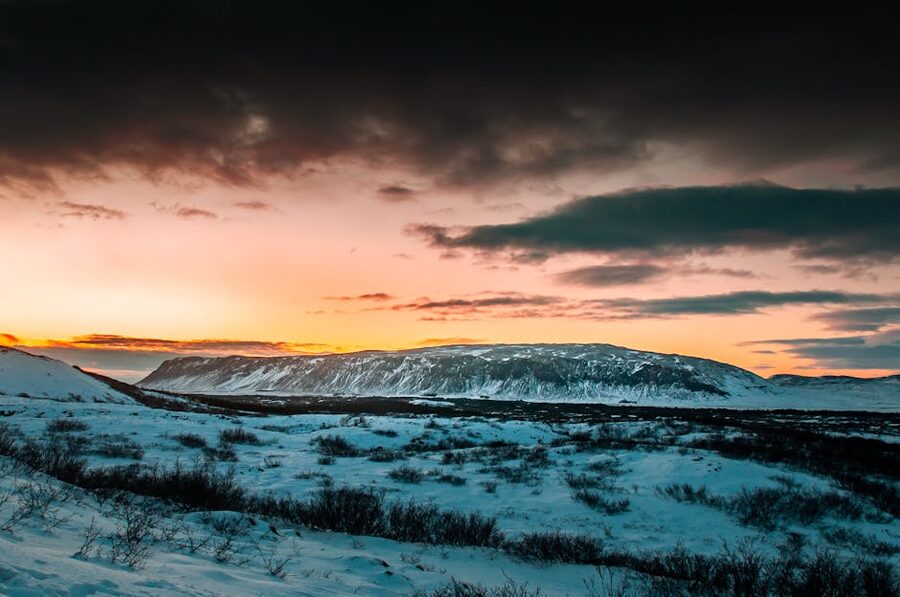
If you can pick the dates, pick these. By the equinox the nights are properly dark from around 9pm. The roads aren’t snowed in yet. Storms exist but aren’t constant. Crucially, the autumn equinox itself is one of two annual peaks for aurora activity (a quirk of how Earth’s magnetic axis aligns with the solar wind in March and September). And shoulder-season prices on hotels and rental cars are roughly 30-40% lower than December peak. The downside: shorter nights than midwinter, so each night gives you fewer hours to play with.
November to early January: the trap
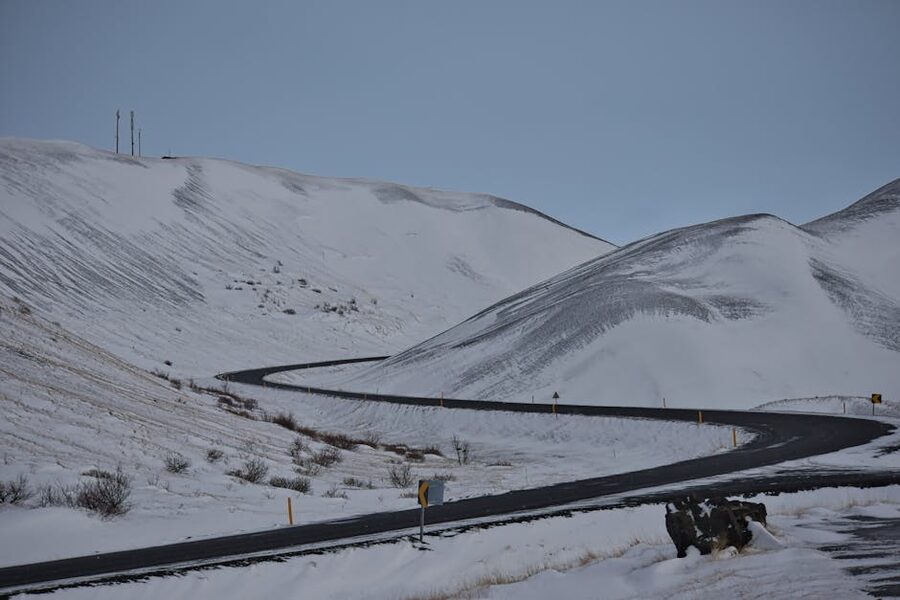
This is when most people book, because they think “longest nights = most aurora”. The longer-nights logic is true. The “most aurora” conclusion is false, because December is also the cloudiest, stormiest, most road-closed month of the year. Reykjavík’s December cloud-cover average is about 80%. You’ll have whole four-day stretches where the sky is grey from horizon to horizon. If your trip is short and weather-locked, you can fly home having seen nothing but rain.
If you do come in deep winter, plan for at least five nights and prefer the south or east coasts over Reykjavík. Two-night Christmas-market trips to Reykjavík with “northern lights tour included” are the worst-value version of this trip you can buy.
Late January, February, March: the sweet spot
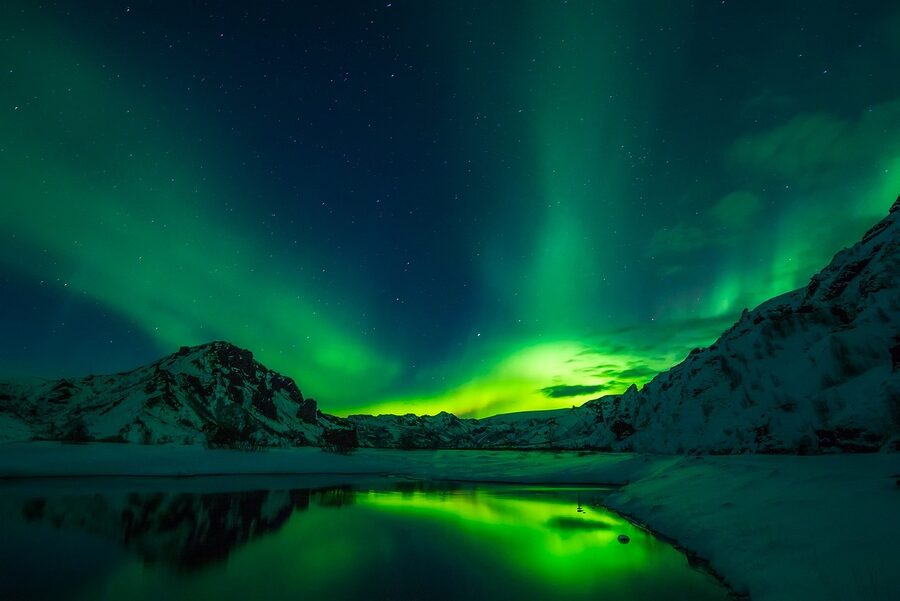
Once you clear mid-January the worst of the storms ease. February has shorter nights than December but a better clear-sky ratio. March is genuinely good: clear nights are more frequent, the spring equinox (20 March) is the second annual aurora peak, and you have proper daylight (8am to 7pm by the end of the month) to do glacier hikes, ice caves and the Golden Circle. If I had to pick one month for an Iceland-aurora-plus-everything-else trip, it would be late February into early March.
April: the underrated one
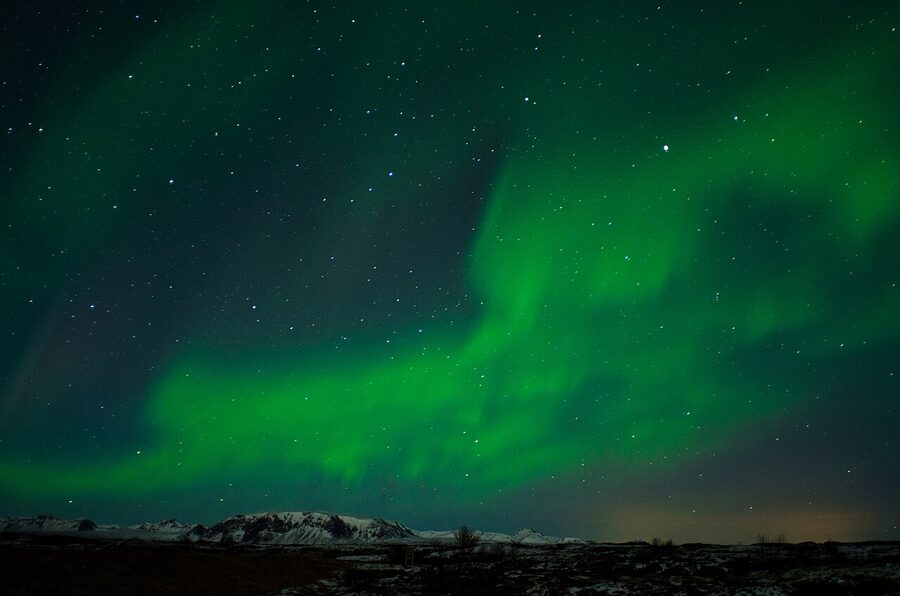
By April the season is theoretically winding down, but the weather is at its best, prices have dropped, and the equinox bump is still in effect. You only get a window from roughly 10pm to 1am, but those hours can produce the cleanest, sharpest aurora of the year because the air is drier and clearer. The trade-off is fewer total hours of darkness per night.
How to read the forecast (it’s two forecasts)
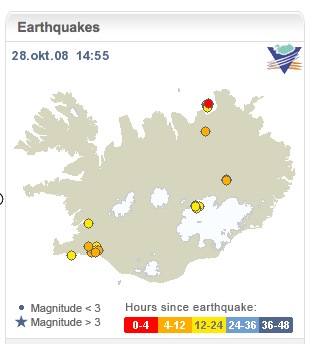
The single most useful page on the Icelandic internet is en.vedur.is/weather/forecasts/aurora/. It combines two things people often get confused.
The first is the Kp index, a 0-9 scale of geomagnetic activity. Most nights in Iceland are Kp 2 or 3. That’s enough to see something at this latitude. Kp 4 is a good night. Kp 5+ is a storm and the aurora becomes visible across the entire country. The Met Office shows the Kp number in the box on the right of the forecast.
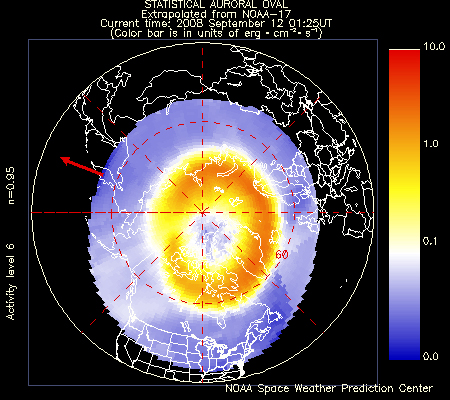
The second, and more important for Iceland, is the cloud-cover map. White patches show clear sky, green shows cloud. The map updates every three hours and forecasts roughly three days out. A typical winter day will show solid green over most of the country with occasional white pockets. Your job, if you’ve rented a car, is to drive to a white pocket. If the whole map is green, you stay in.
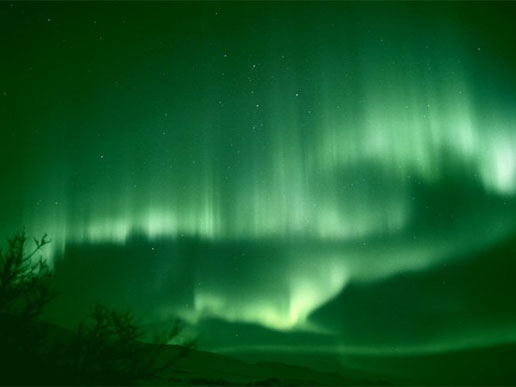
A few extra signals worth checking once you’re properly into it. The Bz component of the solar wind, which says whether the magnetic field of the incoming wind is pointing south (good, lights up the aurora) or north (less good). Negative Bz is the value to wait for. The solar wind speed, which sits around 300-400 km/s on quiet days; above 500 km/s the chance of an active aurora goes up. Both numbers live on NOAA’s Real-Time Solar Wind dashboard and on the better aurora apps.
For phones, the Iceland-built Hello Aurora app is the best because it shows real-time user reports. People tag a sighting where they are, and you can see the white-patch information shifted from “the cloud forecast says it’s clear here” to “someone two valleys over just took a photo”. On a busy night that’s gold.
Where to go (it’s not Reykjavík)
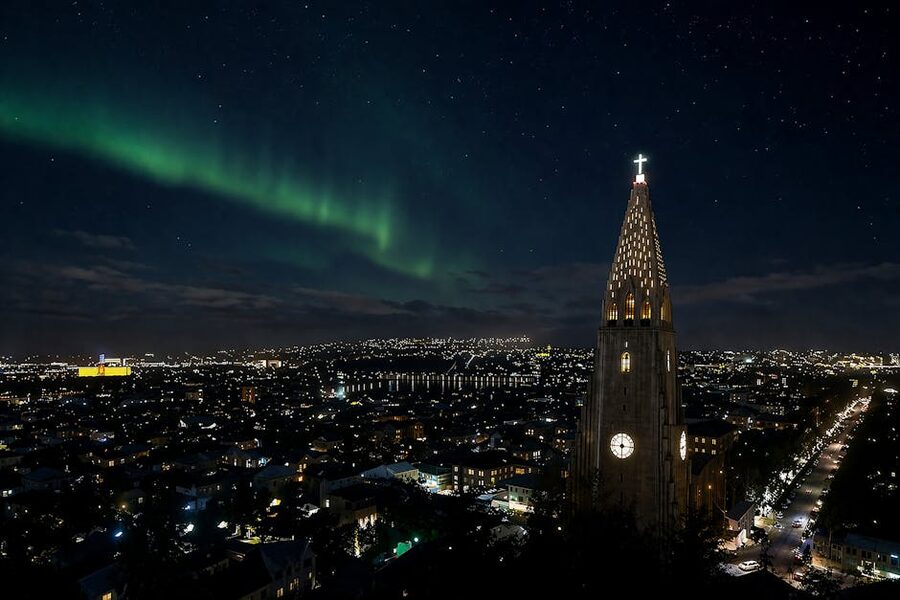
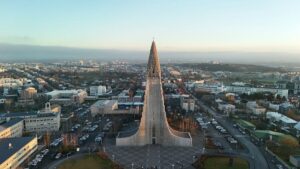
Iceland has roughly 400,000 people and 230,000 of them live in the Reykjavík capital region. From the city itself you can technically see strong displays, the Hallgrímskirkja shot above gets posted to Instagram every few weeks. But the bar is much higher: you need a Kp 4+ night and clear sky directly overhead, and any colour intensity is dimmed by light pollution. On a normal Kp 2-3 night, which is most nights, you have to leave the city to see anything.
The good news: leaving Reykjavík is fast. The country is sparse. Twenty minutes from downtown puts you in genuine darkness. The bad news: leaving in winter requires a car, the patience to drive on icy roads, and willingness to do this at 11pm. If that’s not your trip, take a tour, which I’ll get to.
Þingvellir National Park
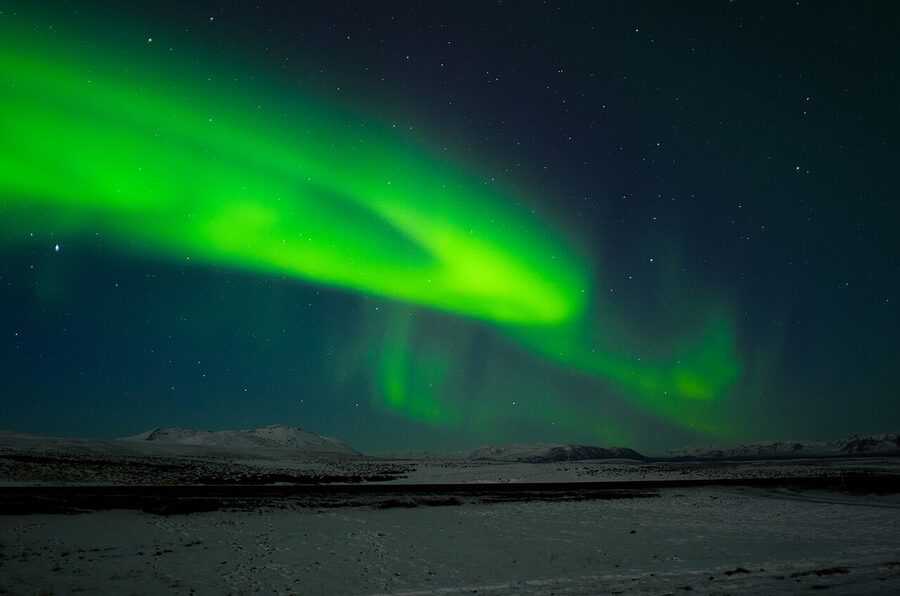
The closest serious dark-sky site to Reykjavík. About 50km, an hour’s drive on Route 36. Park at the main visitor centre lot or, better, the Almannagjá lookout above it. The rift valley provides a foreground that elevates an average display into a memorable photo. Crucially, you can build it into a Golden Circle day (Þingvellir-Geysir-Gullfoss) and end the day looking up. Hot tub at the Laugarvatn Fontana spa on the way back if you want to make a thing of it.
Vík and the south coast
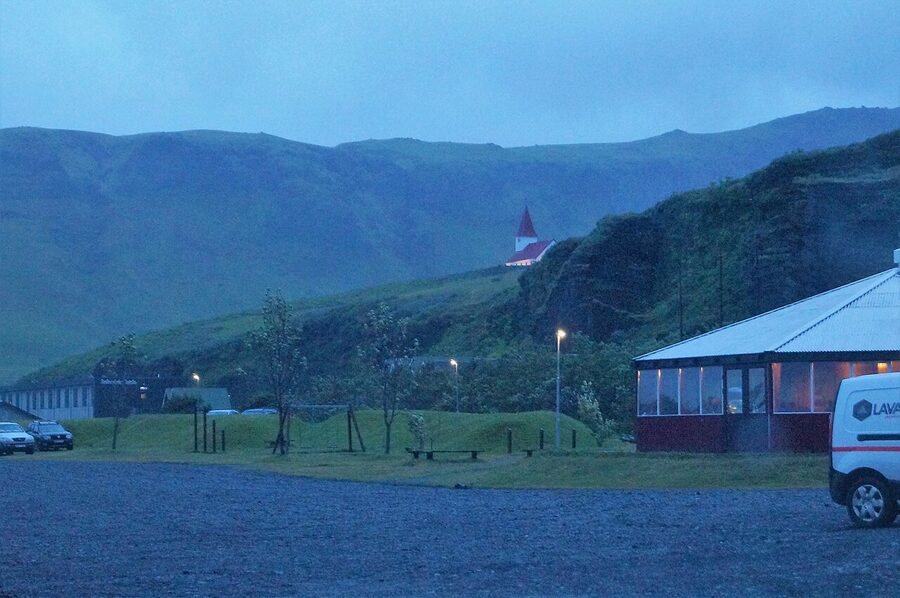
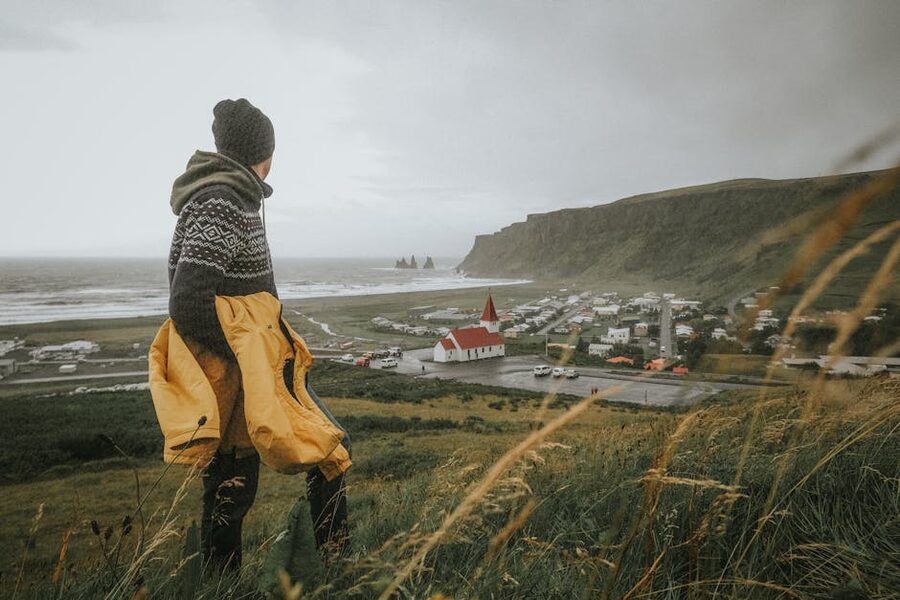
Vík í Mýrdal sits at the southern tip of Iceland, about 180km southeast of Reykjavík (a 2.5-hour drive in good conditions). Population: 750. Light pollution: minimal. Dramatic foregrounds: yes. The Reynisfjara basalt columns, the Reynisdrangar sea stacks, the Víkurkirkja church on the hill above town, the long black sand beach. If the cloud-cover forecast shows a clear pocket over the south coast and you’ve already got accommodation in the area, you stay up.
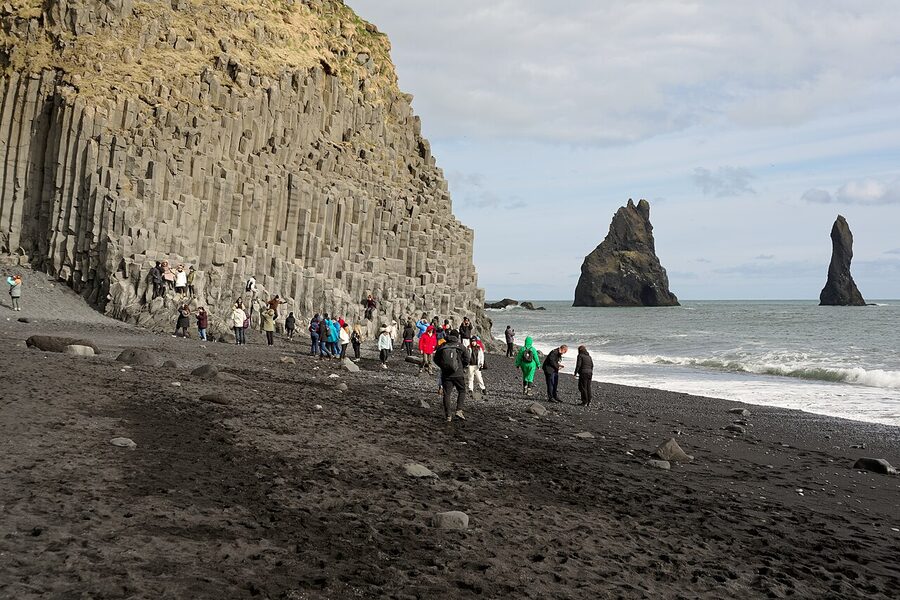
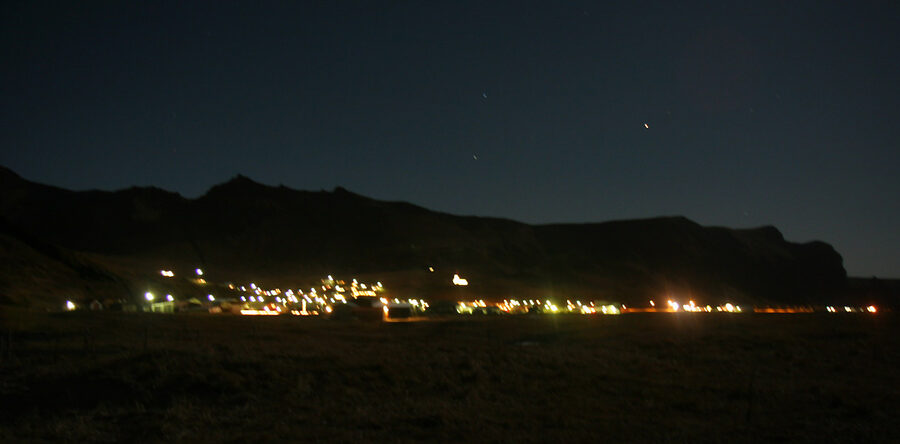
I’d stay two nights in Vík at minimum. Hotels in Vík include Hotel Kría, Hótel Vík í Mýrdal and Puffin Hotel; all walking distance from the church viewpoint. Don’t try to make Vík a day trip from Reykjavík: 360km round trip, dark by 4pm in winter, you’ll have driven five hours to look at one foreground for forty minutes.
Jökulsárlón and Stokksnes
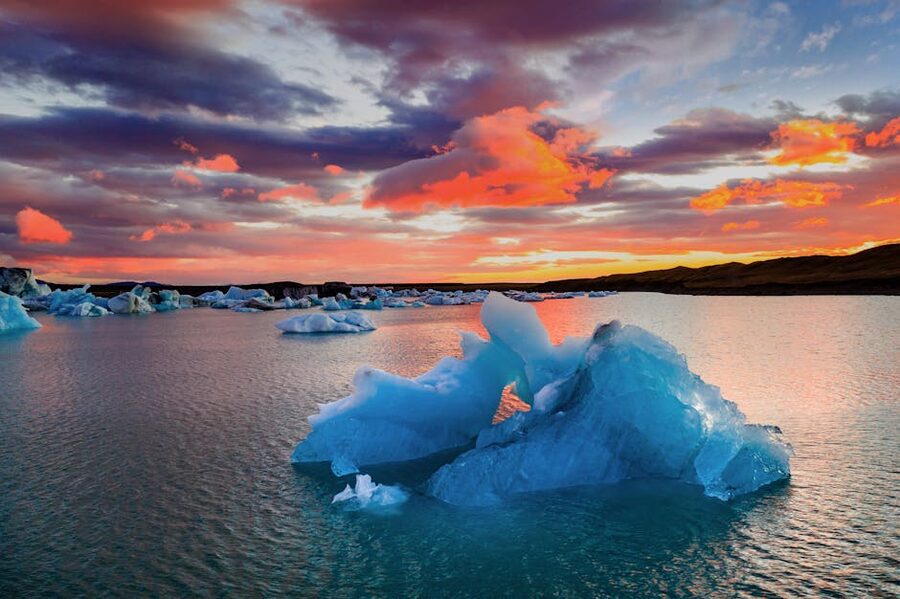
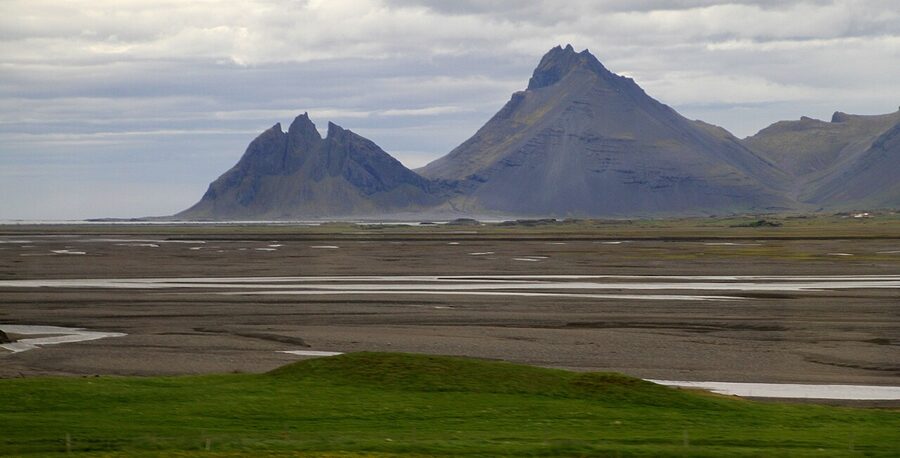
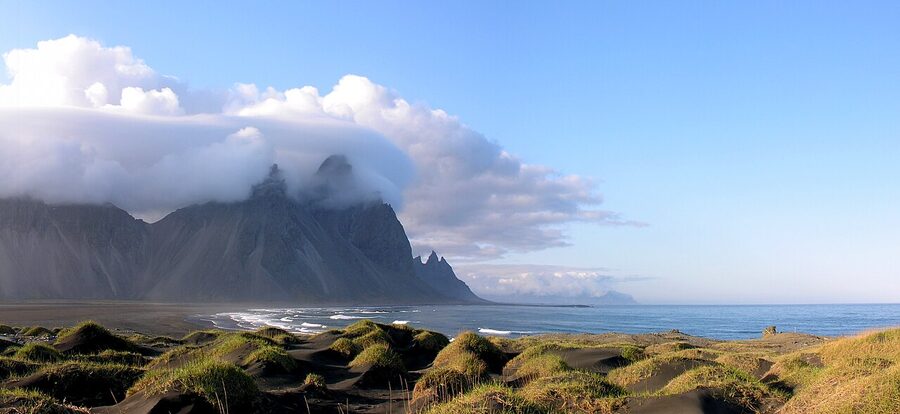
Another two hours east of Vík along the Ring Road. Jökulsárlón is the glacier lagoon, full of icebergs that calve off Breiðamerkurjökull and drift to sea. The aurora reflected in still lagoon water is the postcard shot, and it does happen, but you need a windless night and a clear sky and ideally a moonless one. Stay at Höfn, an hour further east, where Hotel Höfn or the Fosshotel Glacier Lagoon get you within striking distance.
Snæfellsnes peninsula and Kirkjufell
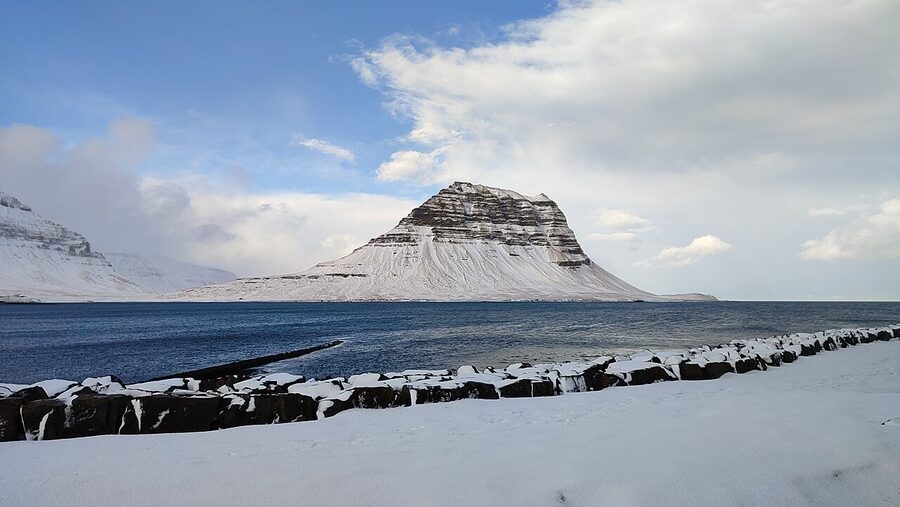
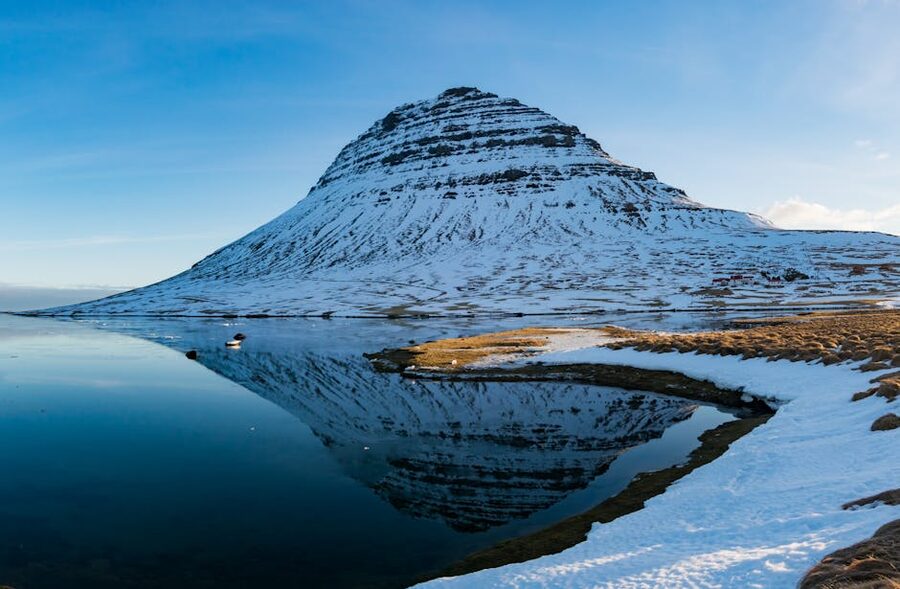
Two hours north of Reykjavík on the western Snæfellsnes peninsula. Kirkjufell (“Church Mountain”) is the cone-shaped peak with the small waterfall in front of it. It is the single most photographed mountain in Iceland and the small parking lot at Kirkjufellsfoss is consequently the busiest aurora viewing spot in the country in peak season. If you don’t want to share your foreground with thirty other tripods, drive ten minutes further along Route 54 to Berserkjahraun lava field; equally dark, no crowd.
Hvammstangi and the north coast
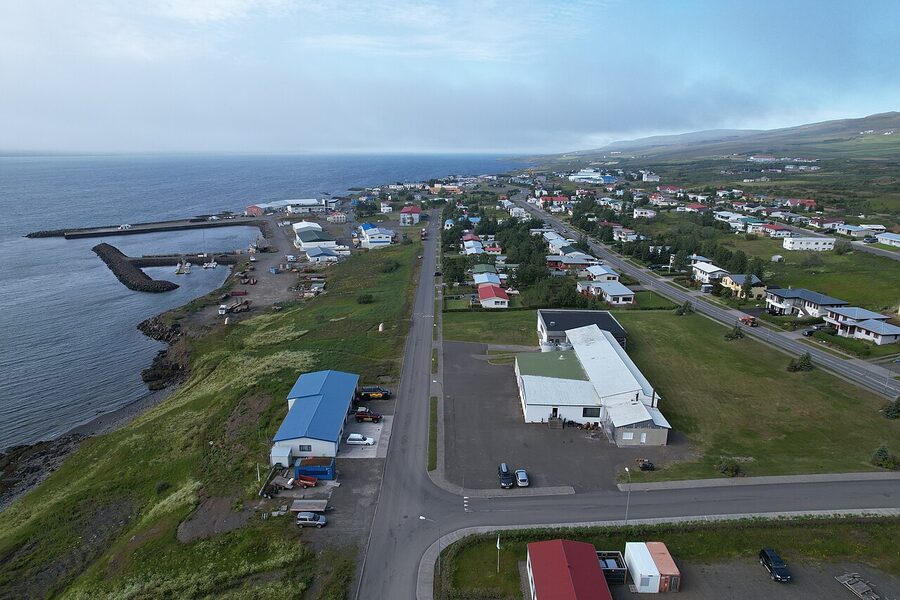
Hvammstangi is the small fishing town on the Vatnsnes peninsula in north-west Iceland, about four hours’ drive from Reykjavík along Route 1. Most people skip it on the way to Akureyri. They shouldn’t. The peninsula has Hvítserkur (the basalt sea stack that looks like a dragon drinking), the country’s main seal-watching centre at Selasetur Íslands, and the kind of dark sky you only get when there are 580 people in the entire municipality. This is the place to come if you’ve already done the south coast and want a quieter alternative without driving all the way to Akureyri.
Mývatn and the north
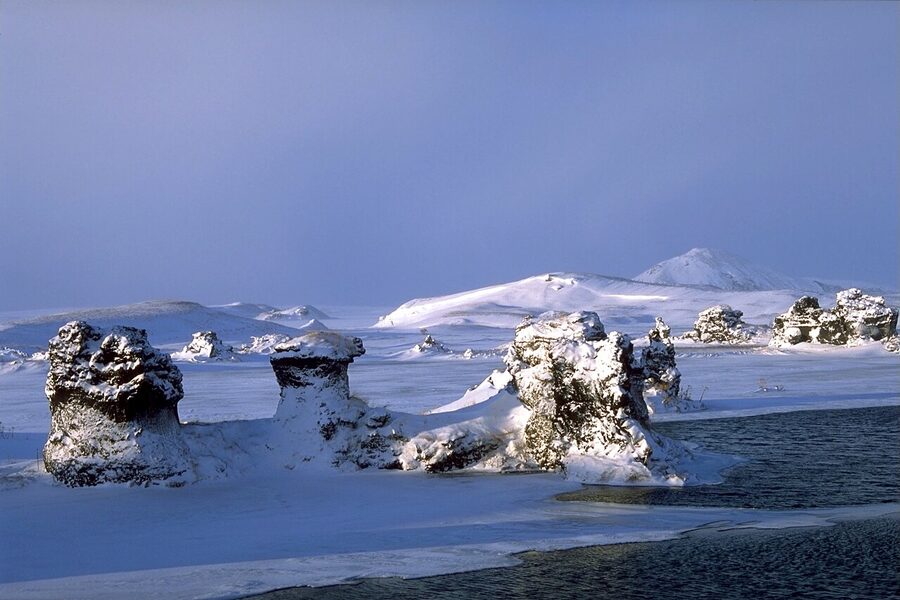
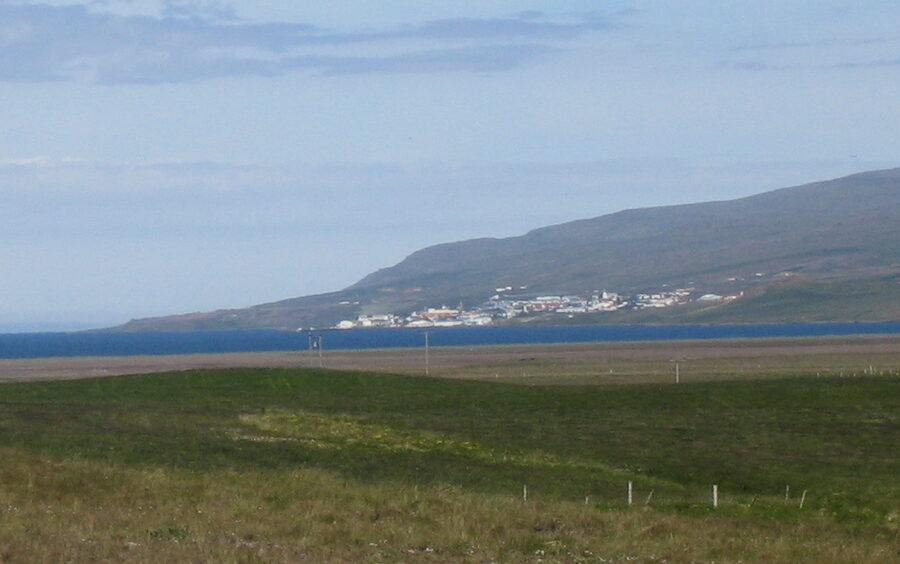
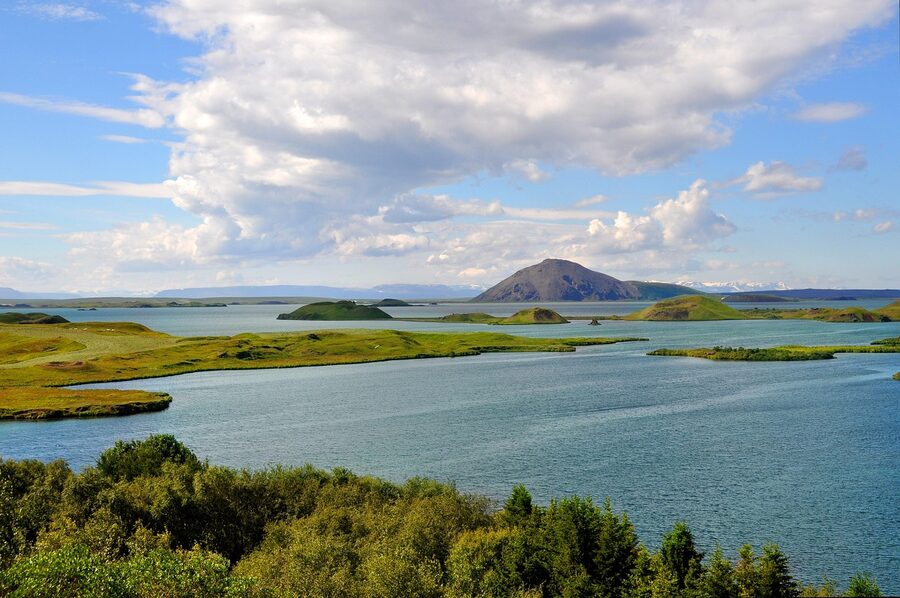
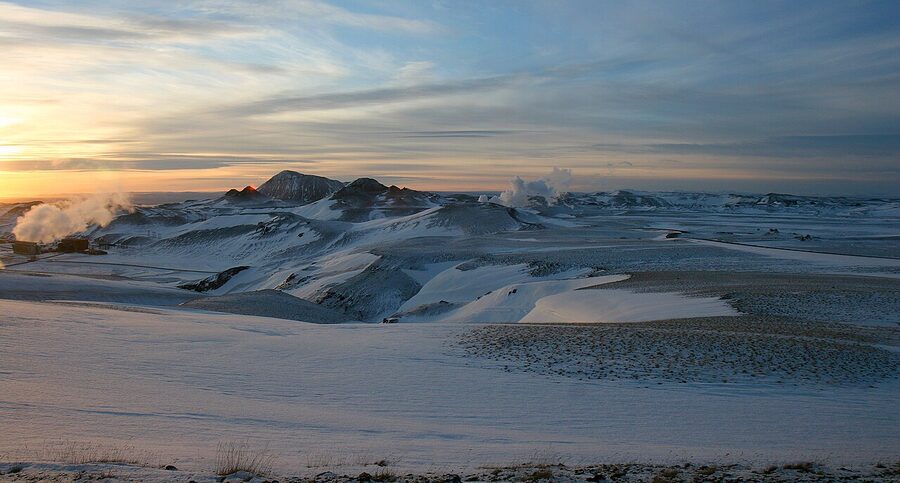
Mývatn is a six-hour drive from Reykjavík on the Ring Road, or a one-hour onward drive from Akureyri (the de facto capital of the north). At 65.5°N it sits a notch closer to the auroral oval than Reykjavík. More importantly, the local microclimate is drier than the south coast: cloud-cover stats here are noticeably better than Reykjavík’s, often more than 10 percentage points lower in midwinter. If you’re flying into Akureyri Airport directly (Icelandair runs domestic flights from Reykjavík; sometimes there are seasonal international flights from London or Copenhagen), Mývatn is your obvious base.
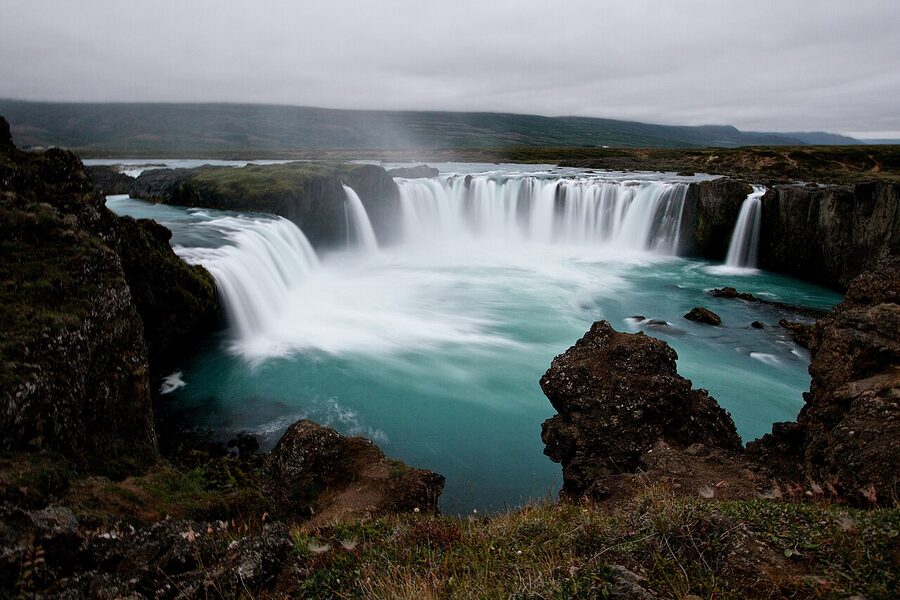
From Mývatn it’s a 50km onward drive to Goðafoss, the “waterfall of the gods”, which is also a perfectly legitimate aurora foreground if you can be bothered to be there at midnight. Most people aren’t.
Westfjords (the contrarian’s contrarian pick)
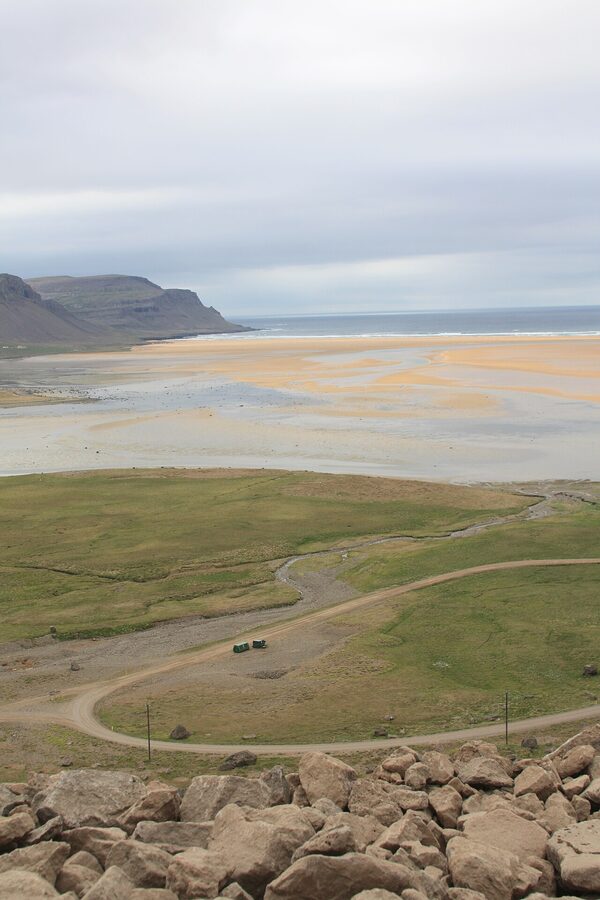
The Westfjords are theoretically the best place in Iceland to chase the aurora: barely any people, barely any settlements, latitude pushing past 66°N which is the highest in the country. In practice they’re hard. Several Westfjords roads are closed November to April, the route in from Route 60 is mountain-passes and weather-dependent, and a self-drive trip up here in deep winter is a serious undertaking, not a “rent a Yaris from Keflavík” trip. If you’re an experienced winter driver with a 4×4 and the patience to be weathered in for a day or two, the Westfjords are extraordinary. If you’re not, give them a miss and come back in summer.
Reykjavík: the spots if you absolutely can’t leave town
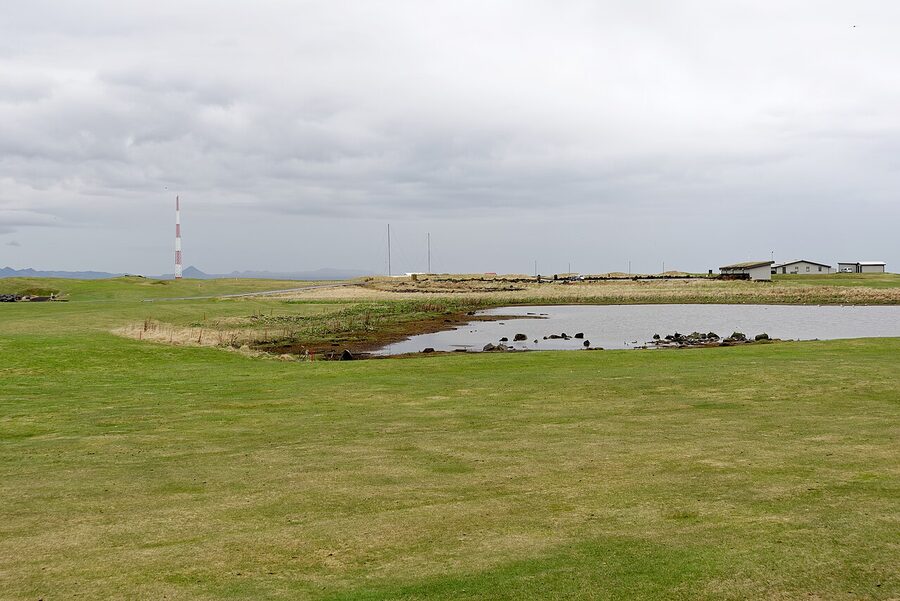
If you genuinely have one night, no rental car, and the forecast suddenly looks promising, here’s the priority list inside the city limits.
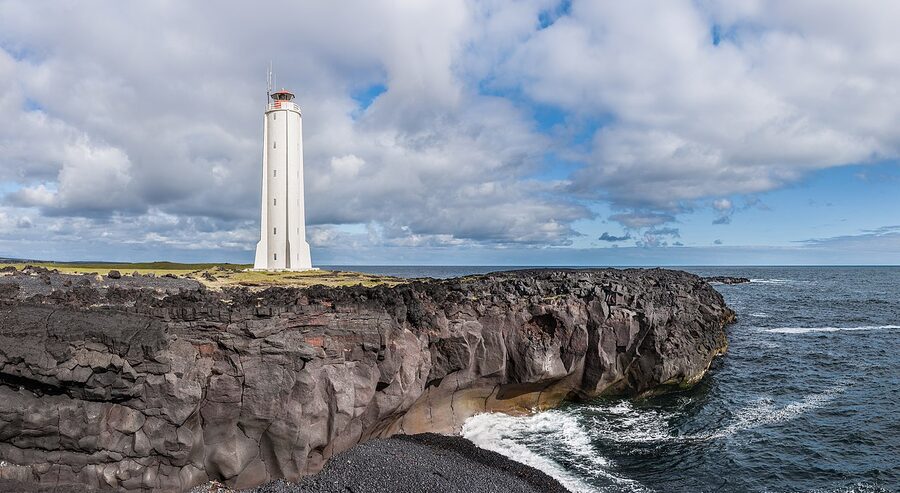
Grótta lighthouse on the Seltjarnarnes peninsula. The far north-western tip of the capital region. About 15 minutes by taxi from downtown, or 25 minutes on bus 11 to the last stop. Light pollution is half what it is in the city centre. The Kvika foot bath is a stone-walled circular pool where you can dip your feet in geothermal water, free, no reservation needed. This is the closest thing the city has to a proper aurora viewing spot.
Öskjuhlíð hill (the wooded hill behind the Perlan museum). Drive or walk into the forest and the light drops fast. Less scenic foreground than Grótta but closer to downtown and surprisingly dark once you’re under the trees and looking up.
Klambratún and Hljómskálagarður parks. Walking distance from most central hotels. Useful only on a Kp 5+ storm night. On a normal night the city light kills the colour.
The plain call: a city-stay aurora trip is luck-of-the-draw. If you’re committed to seeing the lights, you need to leave the city, and to leave the city you need to either rent a car or take a tour.
Tour vs self-drive: when each is the right call
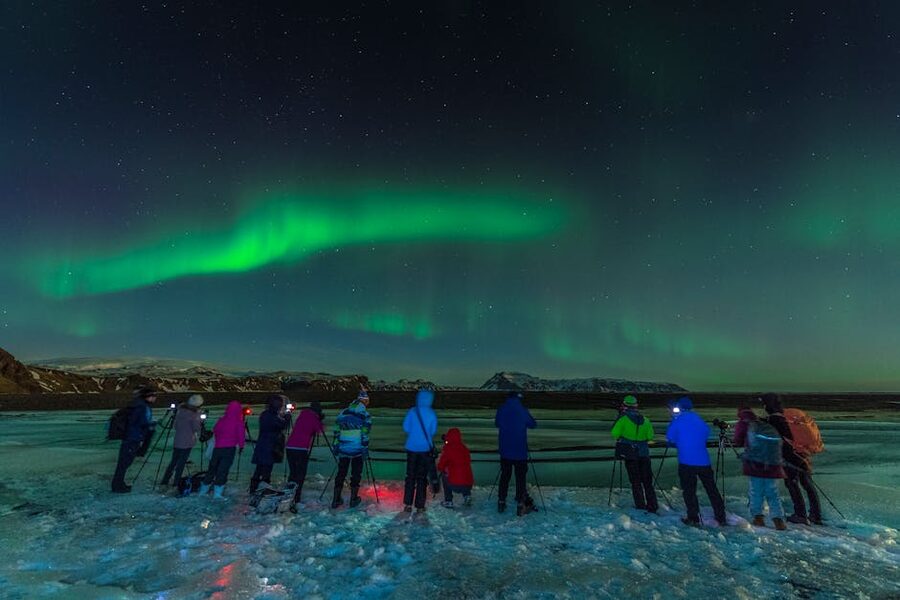
The Reykjavík aurora bus tour costs around 8,500-10,000 ISK (~€57-€68) per person. Most operators (Reykjavík Excursions, Gray Line, Bus Travel) run them nightly from September to April, departing around 20:30 from BSÍ terminal. The pitch is: a guide who reads the forecast for you, transport that goes wherever the cloud-cover map looks promising, and a free re-do if the lights don’t show up.
The reality is mixed. The free re-do is genuine and worth knowing about. The “expert guide” is usually a driver-guide, not a meteorologist. The “we go wherever the sky is clear” sometimes means twenty buses converging on the same lookout because that’s where the clear patch is, and you stand in a crowd. And in mid-winter you can use up your re-do tickets on consecutive cloudy nights and end the trip having taken five tours and seen nothing.
Tour is the right call if: you don’t want to drive in winter (legitimate, the roads are tough), you’re staying only in Reykjavík, you’re alone or in a group of two, or you prioritise the experience of being driven over the photographic outcome. Klook, Viator and GetYourGuide are all reasonable for booking.
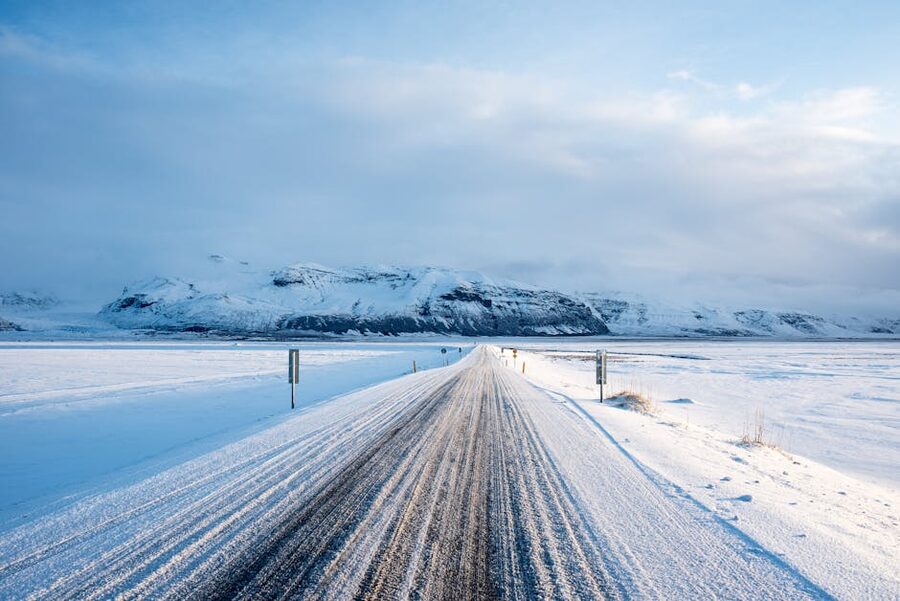
Self-drive is the right call if: you’ve got more than three nights, you’re comfortable with snow driving (or willing to learn fast), you want to actually base yourself outside Reykjavík, or you have a group large enough that a rental car works out cheaper than four people on a bus. A 4×4 in winter from Keflavík is roughly 12,000-18,000 ISK (~€80-€120) a day depending on operator and timing. Practical guide for the basics in our Iceland car rental guide.
And the unspoken third option: combine a self-drive with one tour night on a particularly forecast-bad evening when you don’t fancy driving anyway. Use the tour’s free-retry if it’s a wash; saves you a drive in poor weather; gives you a fallback that locals don’t always mention.
Photography reality (the part that hurts)
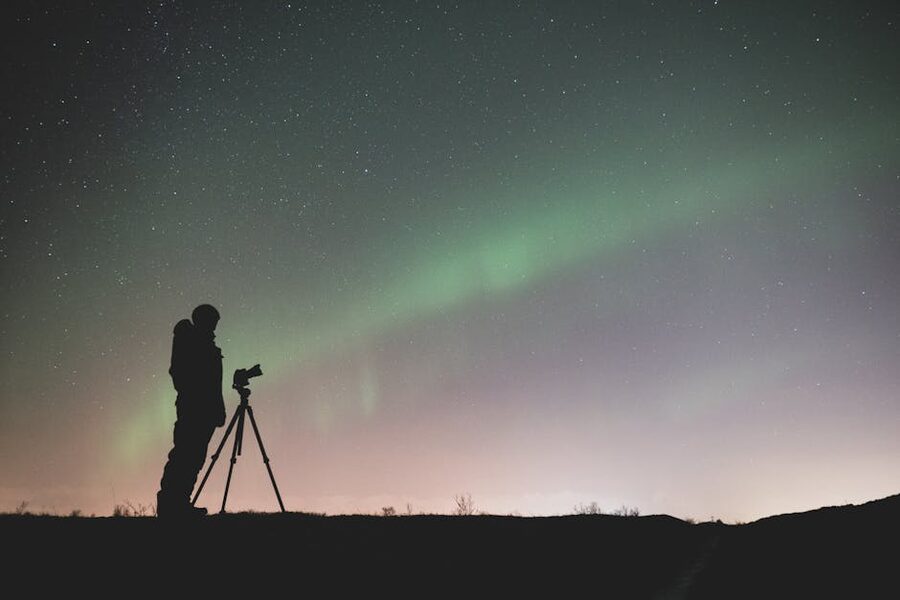
I’ll be blunt: your iPhone will not produce the aurora photos you’re seeing on Instagram. The newest iPhones (15+ Pro, 16 Pro) with Night Mode can produce something on a strong display, but the colours will be subdued and the stars will be smeared by hand-shake. Even the best phone shot looks flat next to a five-second f/2.8 ISO 1600 exposure on a proper camera with a tripod.
If you care about the photo, here’s the realistic kit:
- A camera with manual mode: any DSLR or mirrorless, ideally with a full-frame or APS-C sensor
- A wide-angle lens: 14-24mm full-frame equivalent, fast (f/2.8 or wider)
- A real tripod: not a tabletop, not a Joby. Iceland is windy and you need stability for a 5-15 second exposure
- A two-second self-timer or remote trigger (camera shake from pressing the shutter ruins long exposures)
- Spare batteries kept warm: cold halves their life
- A head torch with red-light mode: red preserves your night vision while you adjust settings
Starting settings: ISO 1600, aperture f/2.8 (or as wide as your lens goes), shutter 8-15 seconds, focus set manually to infinity (autofocus won’t lock at night). Adjust shutter down for fast-moving displays, up for faint ones. Format: RAW, always; the lights have huge dynamic range and JPEGs blow out the bright bands.
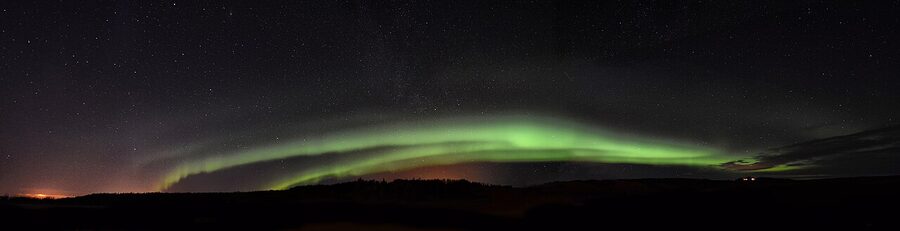
The part the captions don’t admit: most viral Iceland aurora shots are processed. Several frames stacked for noise, the colour pushed in Lightroom, sometimes the foreground shot separately at golden hour and composited. None of that is wrong in itself, photography is an art, but the photo you saw on Instagram and the experience standing in the cold with a tripod aren’t the same thing. Go in expecting the second.
How Iceland stacks against Tromsø, Abisko and Lapland
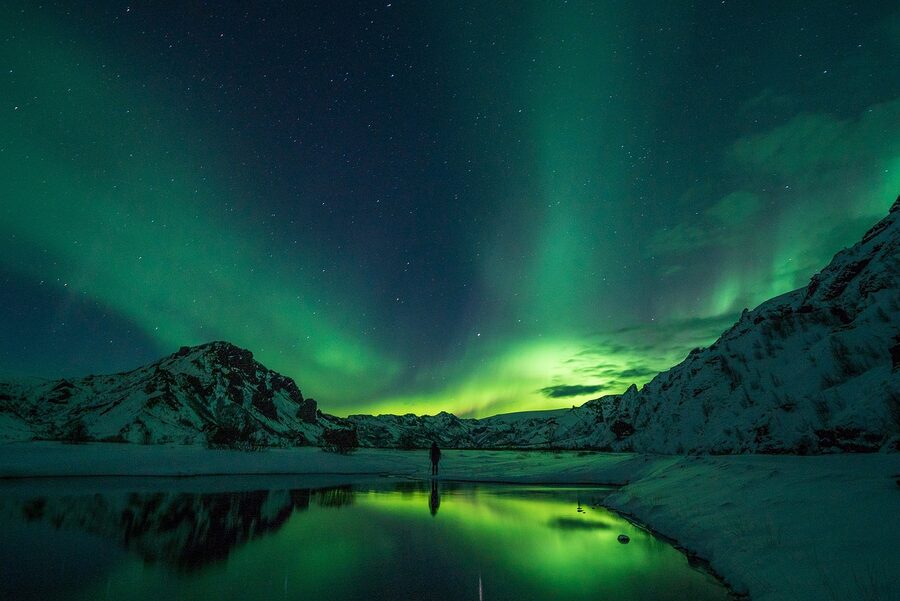
This is the comparison the brochures don’t make. Iceland is at 64°N. Tromsø is at 69°N, five degrees of latitude further inside the auroral zone. Abisko (in Swedish Lapland, near the Norwegian border) is at 68°N and sits in a rain-shadow microclimate that the locals call blå hålet, “the blue hole”, which delivers an unusually high frequency of clear-sky nights. Saariselkä, Levi and Kakslauttanen in Finnish Lapland are all at 67-68°N.
What that means in practice:
- At a given Kp value, the aurora is brighter and more overhead in Tromsø/Abisko/Lapland than in Iceland. A Kp 2 night in Iceland produces a faint band on the horizon; the same Kp 2 in Abisko fills the sky.
- The Lapland sites also score better on cloud cover, especially Abisko (around 30-40% cloud in midwinter compared to Reykjavík’s 70-80%).
- Statistically you’ll see the aurora on more nights in Lapland than in Iceland for an equivalent stay.
So why come to Iceland at all? Because Iceland gives you a different trip. Lapland in winter is mainly the lights plus reindeer, husky tours, glass-igloo hotels and snow activities. Iceland gives you glaciers you can walk on, lagoons you can boat through, ice caves you can crawl into, the Ring Road, the Golden Circle, geothermal pools in every village, and a south-coast drive that holds up against any in Europe. The aurora is the bonus.
The right framing, from someone who’s been to all of these: if your one and only goal is to see the lights as reliably as possible, fly to Tromsø or take the train to Abisko. Both are explicitly covered in our Tromsø vs Abisko comparison. If you want lights plus a Finnish-Lapland snow holiday with reindeer and saunas, go to Levi, Saariselkä or Kakslauttanen in Finnish Lapland. Come to Iceland if you want the lights as a side dish to a proper Iceland trip; the south coast, the glaciers, the Blue Lagoon, the works. Don’t pick Iceland because you think it’s the most reliable place to see the aurora. It isn’t.
The five-night minimum (and why two nights almost never works)
Aurora-visibility cycles run roughly two to three “active” nights followed by four to five “quiet” nights, repeating across a roughly 27-day solar rotation. Layer the cloud cover on top: even if it’s an active period, you might be under cloud for it. Layer your trip dates on top of that: you might fly in for the quiet phase.
The maths: on a two-night Reykjavík trip in December, you have a real but small chance of clear skies aligning with active aurora. Statistically people who book three nights or fewer report seeing nothing about half the time. People who stay seven nights report seeing the lights at least once well above 90% of trips. Five nights is the floor I’d recommend for a trip where the aurora is a serious goal. Three nights is the floor for a trip where it’d be nice but isn’t the headline.
This also affects where you stay. A weekend in Reykjavík with one bus tour is the worst-value version. A week with three nights in Reykjavík and four nights between Vík, Höfn and one of the northern bases is far better; you triple your chances of being under a clear-sky pocket somewhere on the island.
What it actually costs (rough numbers)
Real pricing for a 6-night winter aurora trip for two adults, late February 2026, no flights:
- 4×4 rental from Keflavík (Hyundai Tucson class, 6 days): roughly 95,000-130,000 ISK (~€640-€880), more in late December
- Mid-range hotels (e.g. Reykjavík, Vík, Höfn): around 22,000-32,000 ISK (~€150-€220) per night, so 130,000-190,000 ISK total (~€880-€1,290) for six nights
- Petrol for a south-coast loop and back: roughly 15,000 ISK (~€100); fuel in Iceland runs around 320 ISK (~€2.20) per litre
- Eating out: budget 6,000-12,000 ISK (~€40-€80) per person per main course; supermarket lunches at Bónus or Krónan halve this
- One ice cave or glacier hike day: 25,000-30,000 ISK (~€170-€200) per person
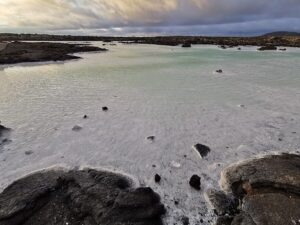
- One Blue Lagoon or Sky Lagoon entry: 10,000-15,000 ISK (~€70-€100) per person
Realistic total for two: around 480,000-680,000 ISK (~€3,200-€4,600) excluding flights. That’s before any guided aurora tour. Iceland is genuinely expensive; budgeting low and being surprised by the bill is the main complaint of every traveller I know who’s done this.
What to wear (the part where most people undercook)
The worst predictable failure on aurora nights is undercooked layers. The temperature isn’t the problem (Iceland’s coastal winter rarely drops below -8°C), the wind is. A 25 mph wind on a -3°C night gives you a wind-chill in the -15 to -20°C range. Standing still next to a tripod for two hours, you’ll freeze through any city jacket.
The layering that works:
- Base: merino wool, top and bottom. No cotton.
- Mid: a fleece or thin down jacket.
- Outer: a proper waterproof, windproof shell. The “weather-resistant” label on a city jacket is not enough.
- Trousers: insulated waterproof trousers over your base layer, or proper ski salopettes.
- Boots: waterproof, insulated, with grippy soles. Slipping on icy car parks at night while carrying a tripod is the actual common Iceland injury, not the cold.
- Hat, neck buff, two pairs of gloves: a thin liner pair you can keep on while operating the camera, and a thicker outer pair you put on when you stop fiddling.
- Hand warmers: cheap chemical ones from any supermarket. Game-changers when the night drags.
If you’re flying without proper kit, you can hire it from Icewear or 66°North‘s outlets in Reykjavík; daily rates are reasonable for a single trip.
The mistakes I see people make
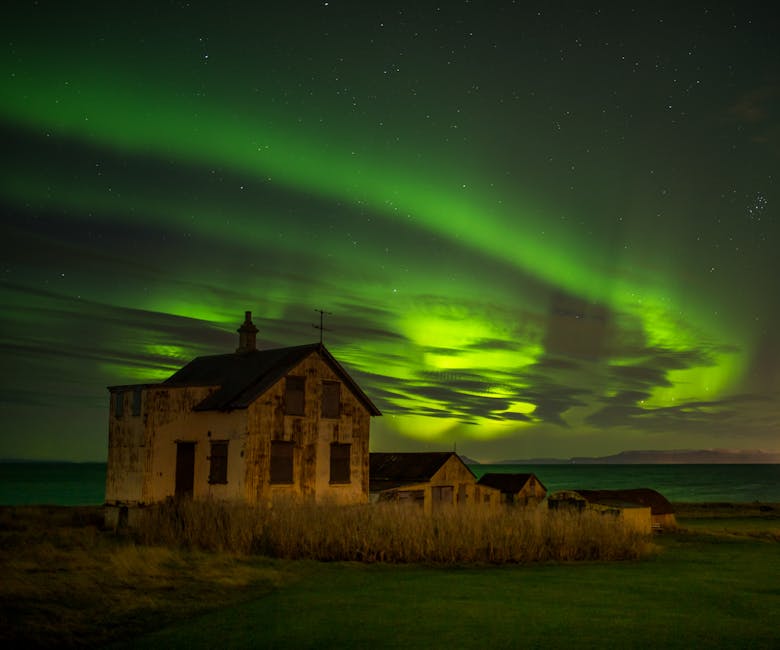
A short list, in order of how often people regret each one.
Booking only two or three nights and then being shocked at zero sightings. The maths doesn’t allow for short trips in deep winter. If your trip is short, come in February or March or accept it.
Doing aurora-only without seeing daytime Iceland. The country is ridiculous-good in daylight too. Skipping the south coast, the Golden Circle, the glaciers and the Blue Lagoon to fixate on three hours after dark is bad value.
Not learning the cloud forecast. The Kp number gets all the marketing attention. The cloud-cover map is what determines whether you see anything tonight. Spend ten minutes with the Met Office tool the day you land.
Trusting iPhone Night Mode. It’ll capture something on a strong night. It won’t capture what your eye sees, and it definitely won’t capture what your friend who borrowed a real camera sees. Bring a proper camera or accept you’re going for the experience, not the photo.
Booking one of the “northern lights bus” tours and treating it as the main event. The tour is a fallback, not a strategy. The strategy is: rent a car, base outside Reykjavík for at least half the trip, watch the Met Office forecast obsessively, drive when it’s clear.
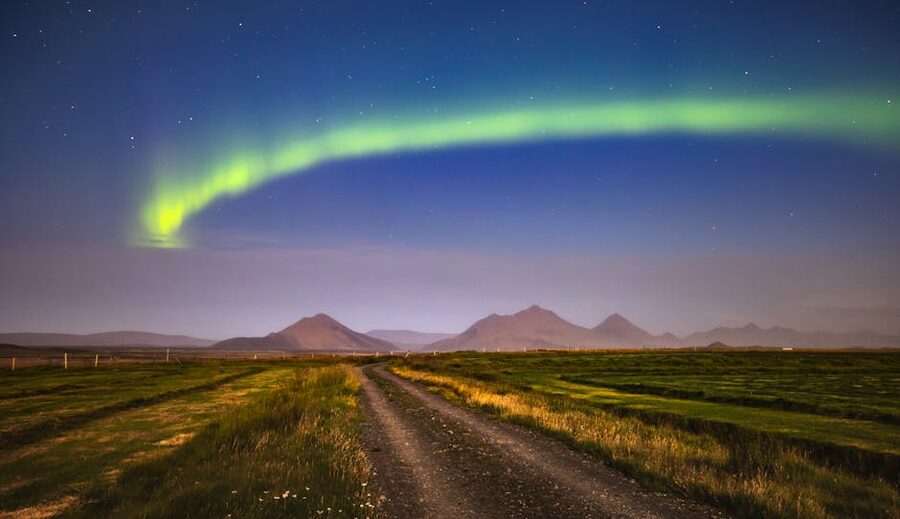
If you’re combining the aurora with the rest of Iceland
This is the assumption most people should default to. Iceland is a destination you visit for many reasons; the aurora is one. The classic combination is aurora chasing plus the south-coast drive plus an ice cave plus one geothermal lagoon. Spread across six or seven nights, that gives you the best statistical chance of seeing the lights and a trip that’s worth taking even if you don’t.
For the longer version, our 7-day Ring Road itinerary goes the whole way around the island. For the city base, our Reykjavík guide covers what to do during the daylight half of an aurora trip. For the practical mechanics of self-driving in winter, our Iceland car rental guide gets into the gritty bits about studded tyres, gravel insurance and Icelandic road numbering.
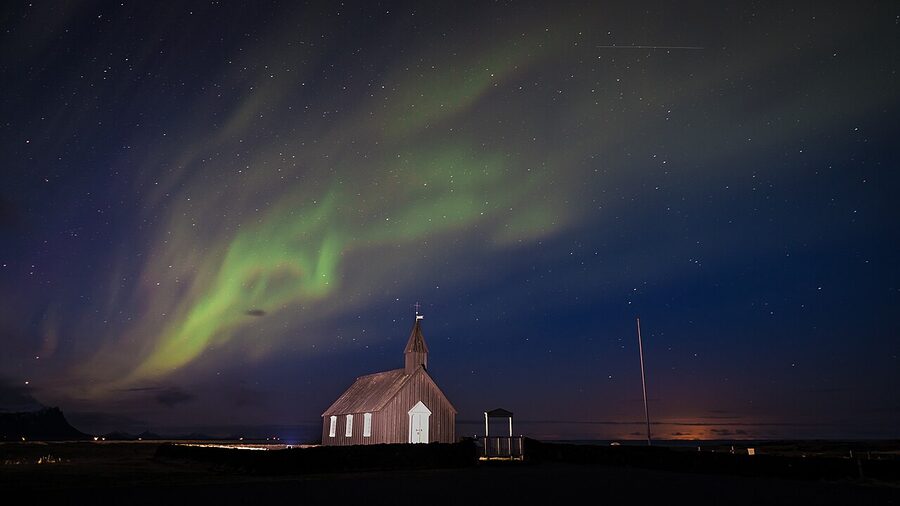
One last thing
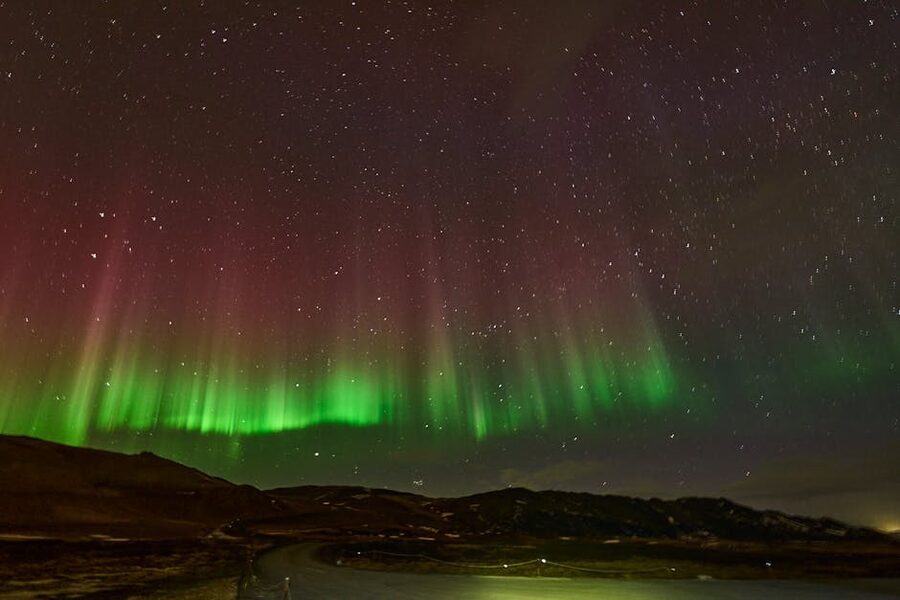
The first time I saw a real aurora it was in northern Sweden, not Iceland. It was a Kp 5 storm and it filled the sky for forty minutes. It was nothing like the Instagram pictures and somehow better. The greens were paler than I expected, the movement was slower and stranger, like ribbon untying in slow motion. Nobody around me said anything for the whole forty minutes, which sounds dramatic but happened.
Two years later I saw a faint Kp 2 from a parking lot near Mývatn after three cloudy nights of nothing in Iceland. It was a thin grey-green band, low on the horizon, gone in twenty minutes. I stood with three other people who’d driven up from a hotel in Akureyri, all of us silent again. It was, somehow, also worth the trip.
That’s the thing the brochures get wrong. The aurora isn’t a transaction where you pay for a ticket and receive a guaranteed light show. It’s a probability against patience and a clear-sky window. Come for Iceland and stay for a week, and the lights, when they show, will land harder than they would have if you’d guaranteed them.