
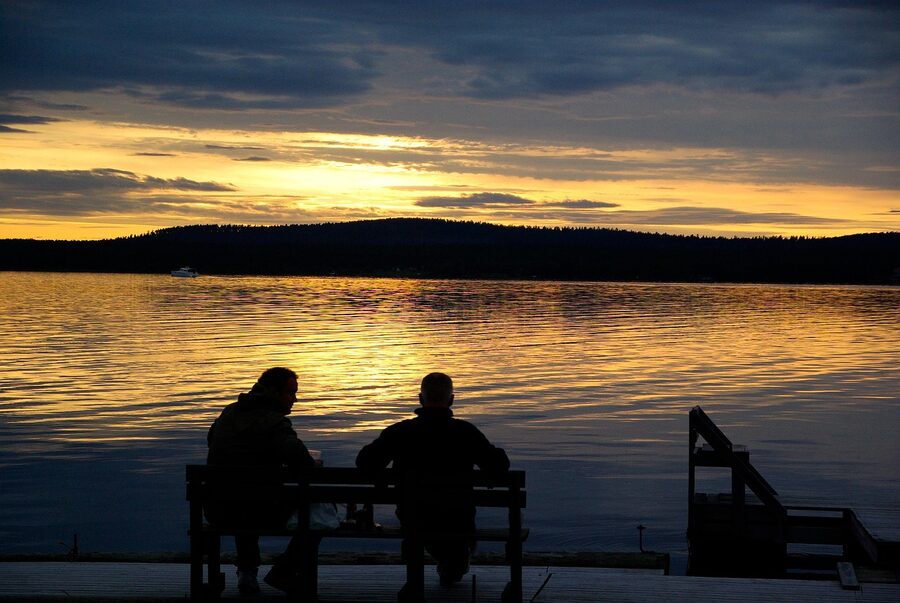
It is 00:30 in late June and I am on a fell above Saariselkä with the sun about a hand’s width above the horizon, refusing to set. There is no dusk. There is no twilight. The light goes flat and slightly orange, the same colour for hours, and a reindeer drifts past me on the slope eating crowberries with the unhurried air of an animal that has stopped paying attention to clocks. The river behind me is loud. The mosquitoes are loud. The sky is silent.
Most people who book Finnish Lapland book it for snow. The Santa Claus run, the husky sled, the aurora night under glass, all the winter postcards. And those are real, and the catalogue has a Lapland in winter piece for that trip. This is the other one. Above the Arctic Circle the sun does not set for somewhere between 50 and 73 days a year depending on how far north you are, the fells turn green, the bears come out of their dens, the rivers above Kuusamo open into rapids you can raft, and the four anchor towns the winter brochures sell as separate worlds (Rovaniemi, Levi-Ylläs, Saariselkä-Inari, Ruka-Kuusamo) link up by road into the most under-booked summer trip in the Nordics.
In This Article
- The midnight sun, by latitude
- Skip Rovaniemi (mostly), and what to do there if you do not
- The four routes north
- Saariselkä, Inari and the road to Utsjoki
- Tankavaara: gold panning, and why it isn’t a gimmick
- Inari, the Siida museum, and the Sami cultural anchor
- The boat to Pielpajärvi and Ukonsaari
- Lemmenjoki: the largest national park
- Ruka-Kuusamo and the Karhunkierros
- Rafting the Kitkajoki
- The Hossa rock paintings
- Pallas-Yllästunturi: the country’s largest national park
- Levi vs Ylläs
- Pyhä-Luosto and Korouoma
- Korouoma canyon
- The reindeer truth, the mosquito truth, and the Sami line
- Wild berries and what to do with them
- The lupines, and a small ecological aside
- The midnight-sun sauna
- How long, and when
- Getting there and getting around
- One Lapland summer day, in plain order
- Comparing it to the Nordic alternatives
- What to pack that you wouldn’t pack elsewhere
- The short version
The midnight sun, by latitude
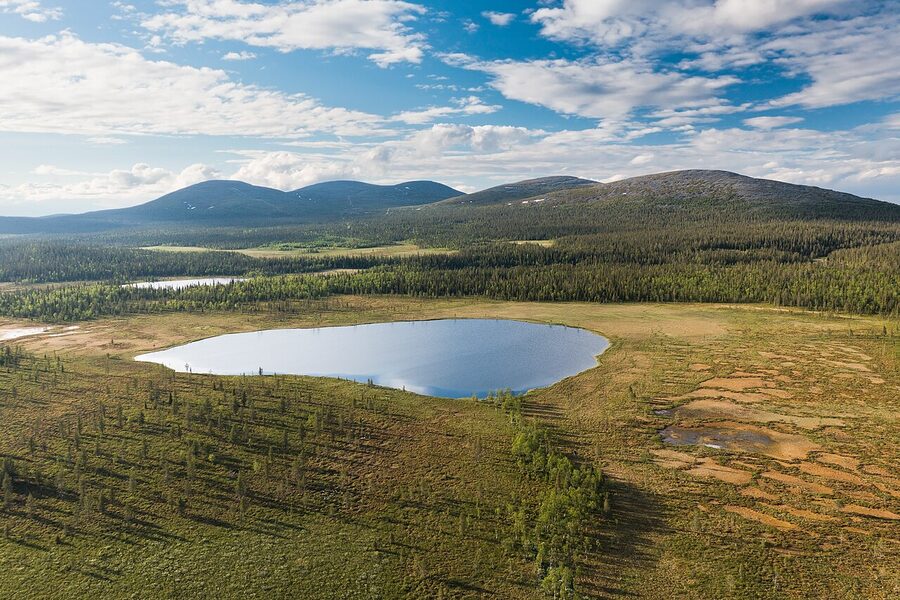
The midnight sun is not metaphor and it is not “long evenings”. It is a specific astronomical fact that depends on where you stand. Above the Arctic Circle (66°33′ N) the sun does not set at all on at least one day a year. Move north of that line and the polar-day window opens up.
The four numbers that matter:
- Rovaniemi sits almost exactly on the Arctic Circle. The official polar-day window is short, the sun technically dips below the horizon by a few degrees most nights, but from roughly 6 June to 7 July the night never gets darker than civil twilight. You can read a paperback outside at 1am.
- Sodankylä, 130km further north, has true midnight sun from around 30 May to 14 July: 46 days of sun that does not set.
- Inari, deeper into the north, gets the sun from around 22 May to 22 July.
- Utsjoki, the northernmost municipality in Finland, has the longest polar day in the country: from around 17 May to 26 July, 71 days. Two and a half months without dark.
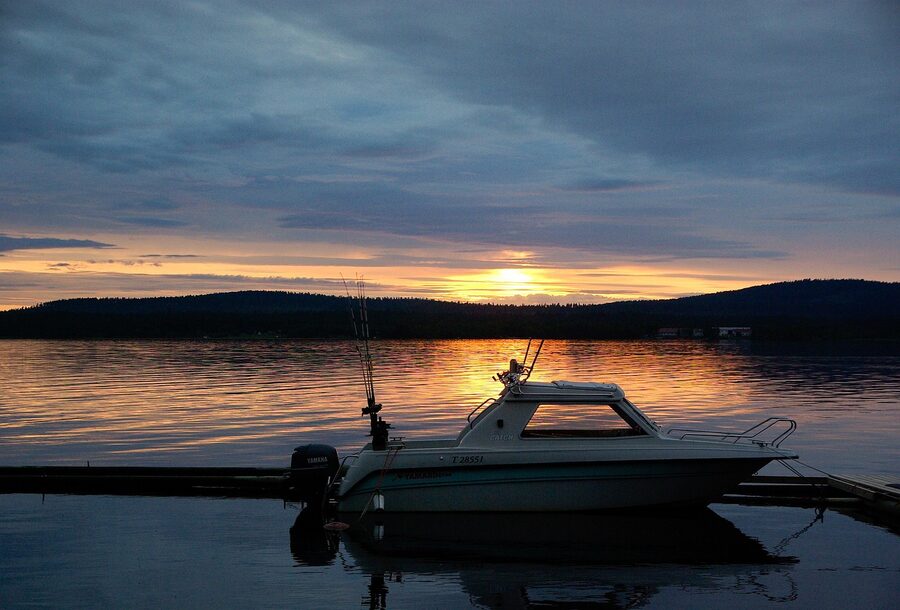
What this does to you in practice: you sleep on a 23-hour schedule for a week and feel fine, and on the eighth day you are bone-tired and cannot understand why. Every Finn I know who summers in the cottage above Sodankylä uses an eye mask. The locals also do not pretend the polar day is easy. Bedrooms in newer cabins come with blackout-curtain budgets that would embarrass a London hotel. Plan two early nights in your week and treat them as logistics, not weakness.
The other thing it does is dissolve the schedule. People eat dinner at 22:00. Children play outside at 23:30. The supermarket in Inari is open until 21:00, the petrol station 24/7, and the hiking trailheads do not get busy in the morning the way they do in the rest of Europe. If you start a four-hour fell walk at 18:00 you will finish it under exactly the same light you started in. I have done the Saana fell at Kilpisjärvi at 22:00 in late June with a thermos of coffee, and met four other walkers, all locals, none in a hurry.
Skip Rovaniemi (mostly), and what to do there if you do not
I have written this twice now and I am going to keep it short the third time: Rovaniemi in summer is the easiest Lapland town to fly into and the least interesting one to spend time in. Santa Claus Village, eight kilometres north of the centre, is the city’s signature attraction and it works in winter for one specific reason (kids meeting Santa in snow). In July it is a strip of log-cabin shops on either side of the Arctic Circle line with a bored reindeer in a paddock and Christmas music piped through outdoor speakers in 23°C heat. Adults find it bleak. Use Rovaniemi as the airport stop and the train hub it is, give it half a day, and drive on.
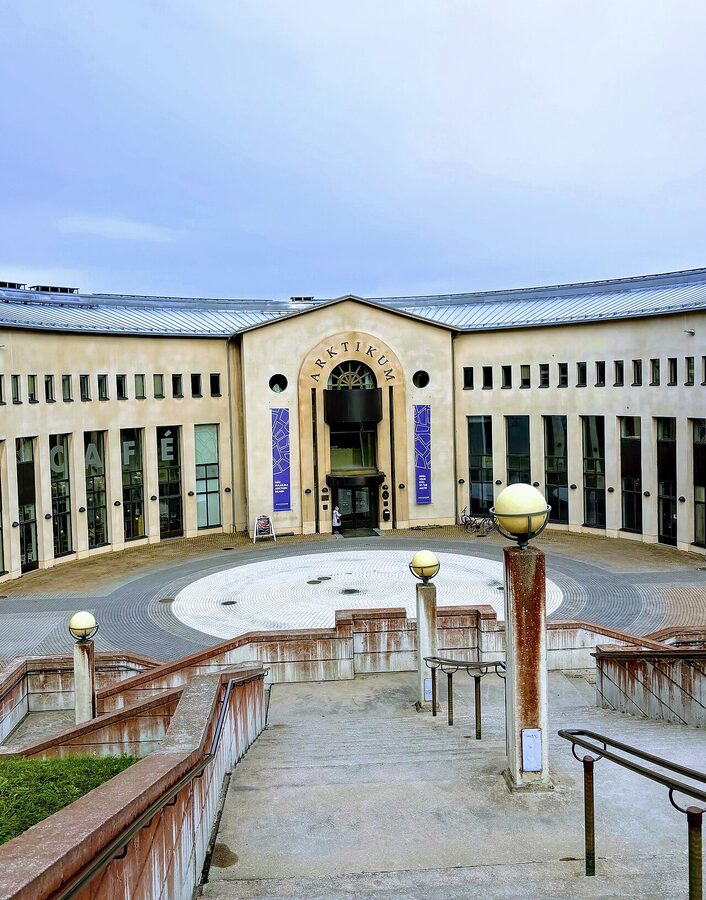
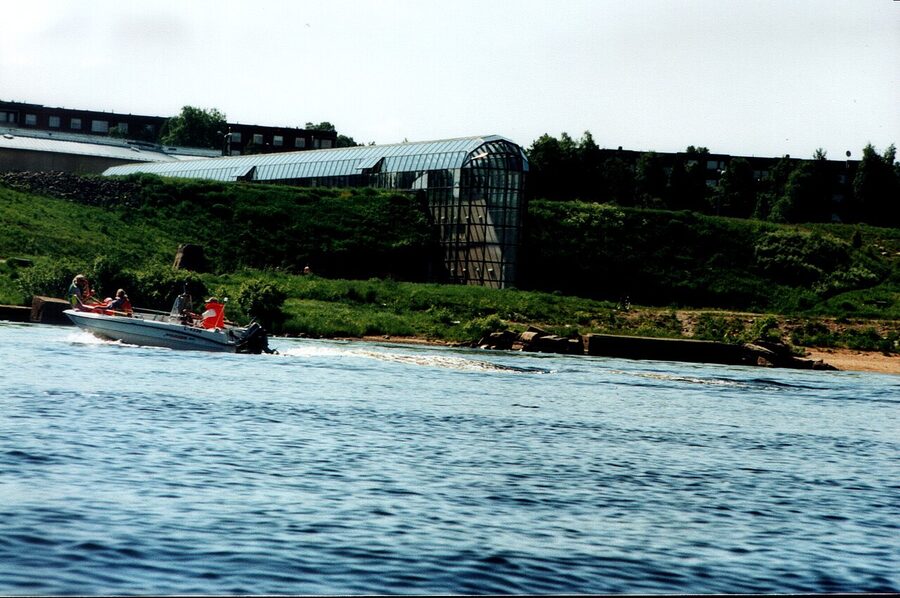
The half day breaks down like this. Spend the morning at Arktikum, a glass-tunnelled museum of Arctic science and Sami history that runs on a single ticket with the Pilke Science Centre next door (combined €17, open 09:00 to 18:00 in summer, last entry an hour before close). Arktikum is the best museum in town and one of the better Arctic-themed museums anywhere. The permanent exhibition on the Sami peoples is careful and unsentimental, the science section explains the polar regions in a way that does not patronise, and the building itself is a thin glass barrel pointing at the river.
Lunch at Restaurant Nili on Valtakatu (the Lapland-tasting menu starts at €52, sautéed reindeer and lingonberry around €28, open from 17:00, so this is a dinner choice if you are staying the night). Cheaper and just as good for daytime: Roka Kitchen & Wine, where a salmon soup runs around €16. Then if you have time, walk the riverbank west from the Jätkänkynttilä bridge for the better afternoon light, and skip the Santa Claus Village entirely unless you have small children for whom this is a once-in-a-decade trip.
Where to stay if you do overnight: Arctic Light Hotel on Valtakatu (boutique, 57 rooms in a 1950s council building, summer rates from around €165), or the Original Sokos Hotel Vaakuna Rovaniemi if you want central and reliable for €130-ish.
Half-day add if you have kids and won’t get to a real wildlife park further north: Ranua Wildlife Park, an hour south of Rovaniemi, is the closest you will reasonably come to seeing a polar bear, brown bears, lynx and wolverines without a 12-hour expedition. €20.50 for adults, open 10:00 to 18:00 in summer, indoor cafés mean it works in rain.
The four routes north
From Rovaniemi the road forks. There are four destinations worth a few days each, and which one you pick depends on what you came for. Pick one or stitch two together over a longer trip; do not try to do all four in seven days because the driving is enormous and you will spend the holiday in the car.
The choice in plain English:
- Levi or Ylläs if you want fells and ski-resort comfort with chairlifts that run all summer. 170km / 2h 30min from Rovaniemi. Best paired with Pallas-Yllästunturi National Park, which is the largest in Finland.
- Saariselkä-Inari if you want the longest polar day, the Sami cultural anchor at Inari, and access to Urho Kekkonen National Park. 260km / 3h 30min from Rovaniemi.
- Ruka-Kuusamo if you want hiking, white-water rafting, the Kitkajoki rapids and the Karhunkierros (Bear’s Ring) trail. 200km / 2h 45min from Rovaniemi (or fly direct to Kuusamo).
- Pyhä-Luosto if you want the quietest of the four, an old amethyst mine you can dig in, and a fell-walk over a 220-million-year-old ridge. 110km / 1h 30min from Rovaniemi.
If forced to one, I would pick Saariselkä-Inari. The light is the most extreme, the Sami cultural depth is real and not packaged, and the road north of Inari to Utsjoki is one of the best driving days in Northern Europe.
Saariselkä, Inari and the road to Utsjoki
Saariselkä is a small ski village (population about 350 in winter, half that in summer) that sits at the gateway to Urho Kekkonen National Park, the country’s third-largest at 2,550 km². The village itself is plain, a single road of hotels and a couple of restaurants and an irreplaceable supermarket. People do not come here for the village. They come because UKK (the park’s standard abbreviation) is the most accessible serious wilderness in Finland.
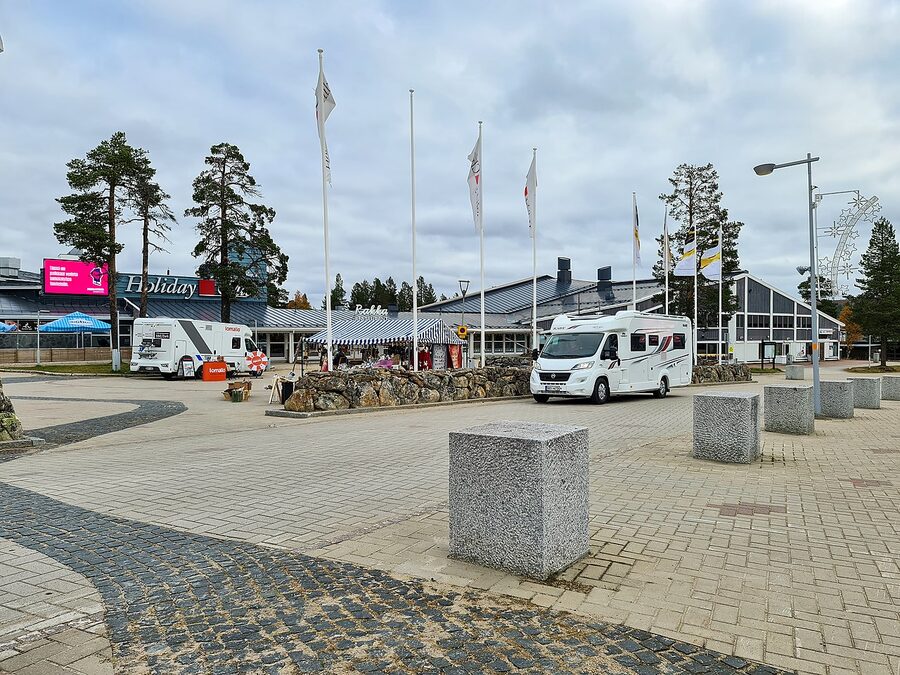
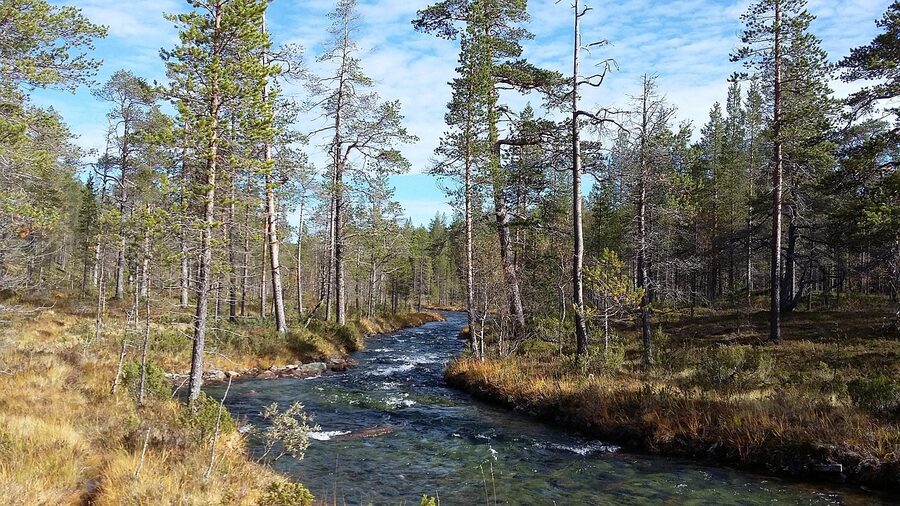
The standard summer day from Saariselkä: drive 7km up the road to Kiilopää, park at the Tunturikeskus visitor centre (free, daily 09:00 to 17:00 from June, the rangers will sell you a 1:50,000 trail map for €15), and walk a fell-loop. The Kiilopää fell-top loop is 4km return and takes a couple of hours including time on the summit; the longer Niilanpää loop is 11km and a full day. The trails are signed, the going is rocky on top, the views are 360° on a clear day, and the water from the streams is drinkable straight without filtering (one of the things this country still gives you that most don’t).
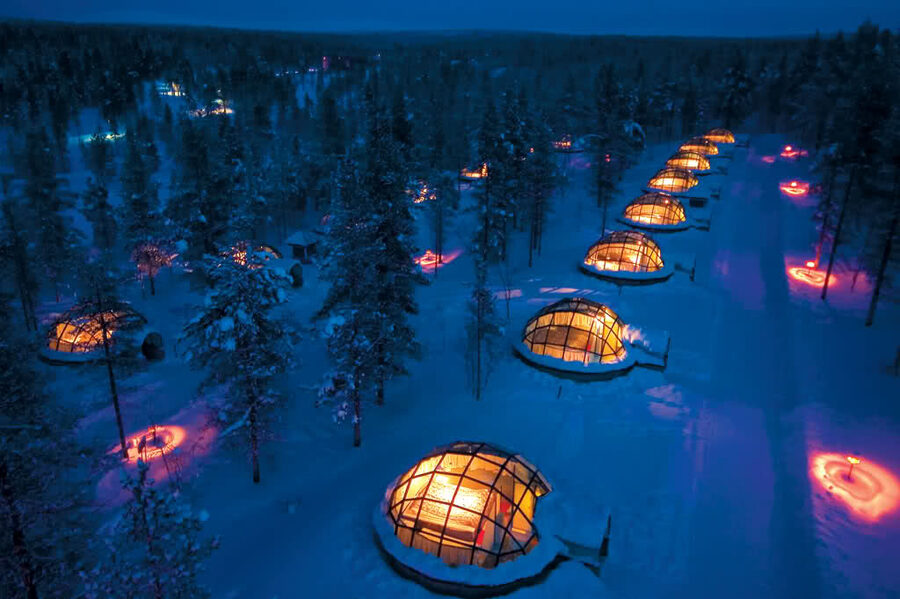
Where to stay: Santa’s Hotel Tunturi (the village’s mainstay, summer doubles around €145), Saariselkä Inn (cheaper, central, around €110), or the famous Kakslauttanen Arctic Resort, 35km north on the road to Inari. Kakslauttanen is the glass-igloo place that gets photographed in winter. In summer the glass igloos are not the right product (no aurora, no snow, just a hot greenhouse) but the log cabins and “kelo” suites are genuinely good if your budget will take it. Summer log-cabin rates start around €310 a night including breakfast.
Tankavaara: gold panning, and why it isn’t a gimmick
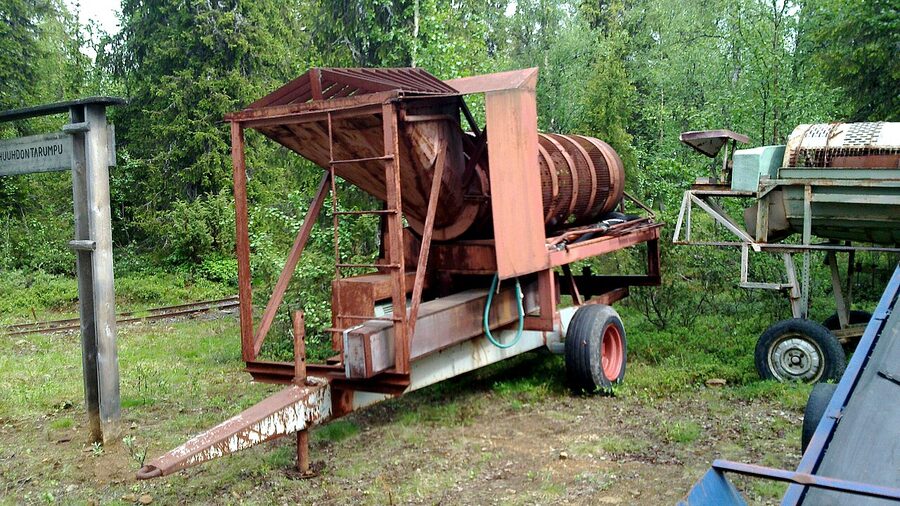
Halfway between Saariselkä and Sodankylä, on the E75, sits Tankavaara. The first gold rush in this part of Finland was 1868, the second was 1934, and Tankavaara’s Kultamuseo (Gold Museum) is the national museum on the topic. €15 gets you the museum, a panning licence, and an instructor showing you how to swirl gravel out of the riffles in a flat black pan. You will probably find a flake. The water is freezing. It is actively fun. The site also runs the World Gold Panning Championships every August.
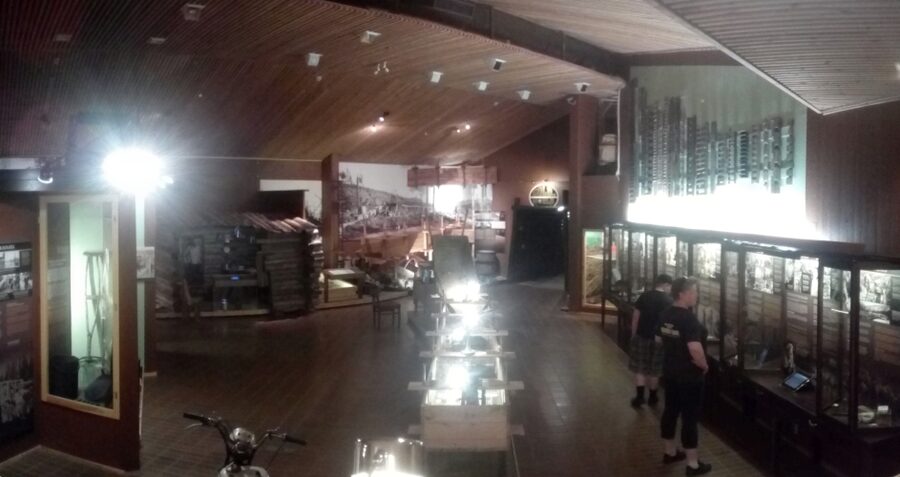
This isn’t a kids’ attraction with a token mine theme. People still pan the rivers around here for actual income. The museum’s “find” rate is rigged for visitors (the panning streams are seeded), but the technique it teaches you is real.
Inari, the Siida museum, and the Sami cultural anchor
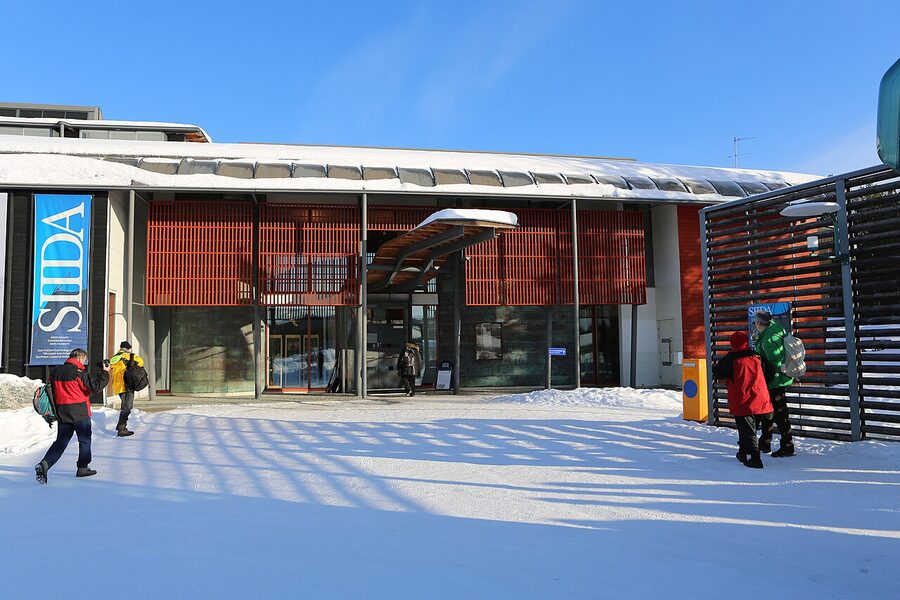
Inari, 40 minutes north of Saariselkä, is the cultural and administrative centre of the Finnish Sami. The village population is small (about 550) but the institutions here are not. The Sami parliament of Finland (Sámediggi) sits in Inari. The Sami radio and TV studios are here. The Siida museum is the national museum of the Sami in Finland and one of the better small museums in Europe.
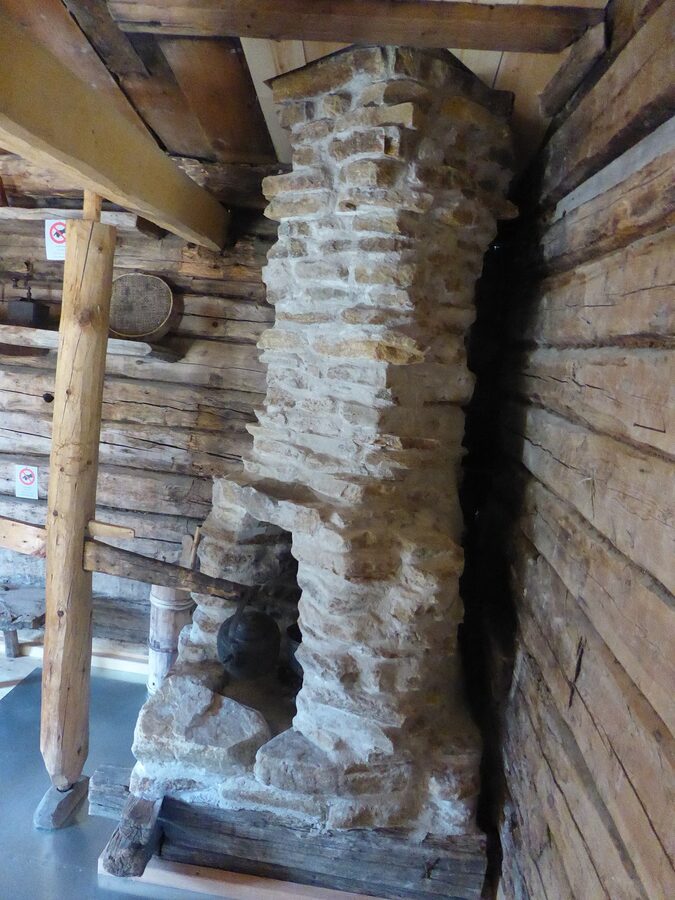
What you should take from Siida if nothing else: the Sami are the only indigenous people in the European Union, the area called Sápmi crosses Finland, Norway, Sweden and northwestern Russia, and the language has at least nine living branches (Northern Sami is the largest, with around 25,000 speakers). The Skolt Sami section in particular is good. The Skolts were displaced from their lands east of what is now the Russian border in 1944 and resettled in the Inari area; the museum’s treatment of that history is unsentimental and very specific. There is a separate open-air section behind the main building with reconstructed Sami buildings; allow another 45 minutes for that.
Eat at Aanaar at Hotel Inari (the Sami-tasting menu does smoked reindeer and arctic char in a way you will not find done as well anywhere south of here, around €58). Or for cheaper, the cafe at Siida itself does a salmon soup for €15.
The boat to Pielpajärvi and Ukonsaari
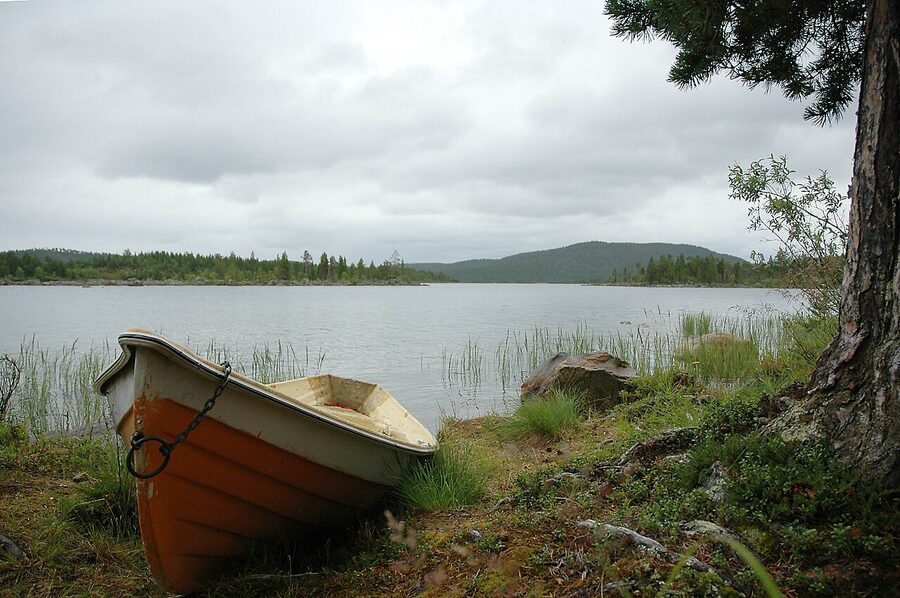
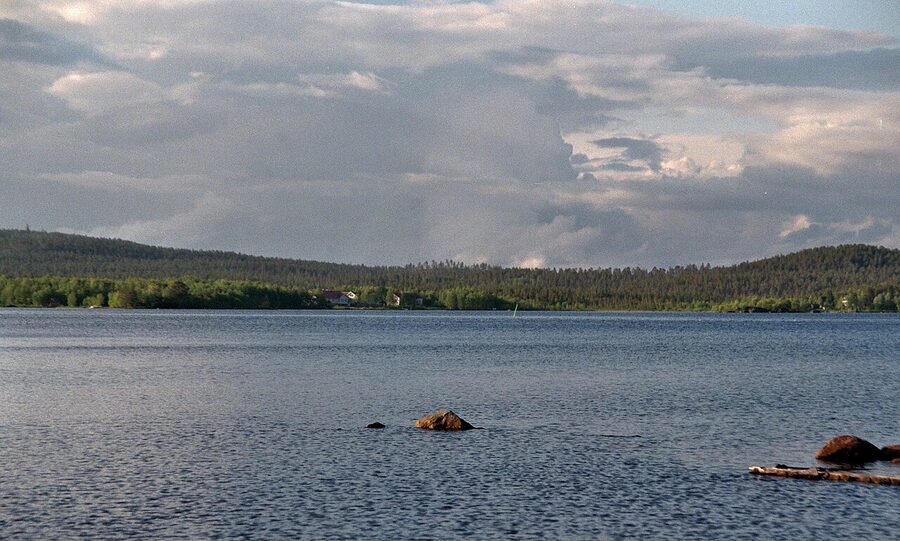
Lake Inari (Inarijärvi in Finnish, Aanaarjávri in Northern Sami) is the third-largest lake in Finland, the largest in Lapland, and contains over 3,300 islands. Two are sacred to the Inari Sami: Ukonsaari (sometimes Ukonkivi, “Ukko’s stone”), a small humpbacked rock about 11km north of the village, and the much larger Hautuumaasaari, the burial island. There is a daily summer boat from Inari village to Ukonsaari, runs from mid-June, two hours return for €40; ask at the harbour.
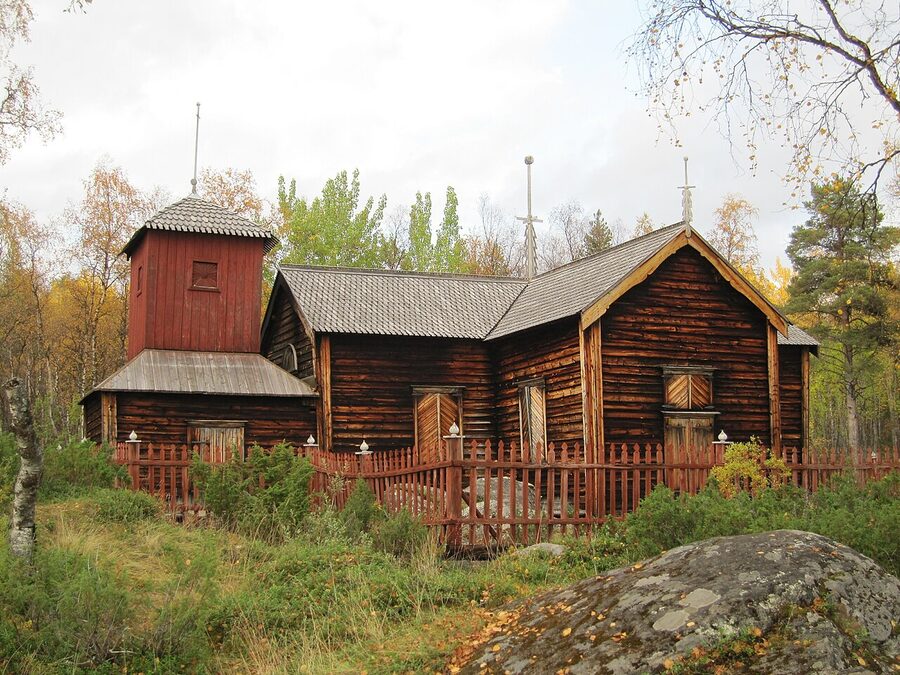
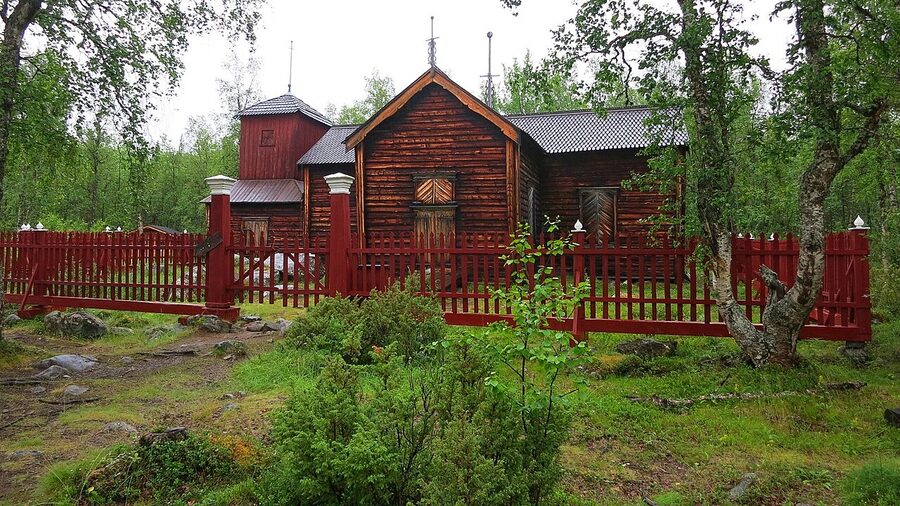
The other essential trip is to Pielpajärvi Wilderness Church, 7km on foot from Inari village along a marked forest track, or by water-taxi if you can arrange it. The church was built in 1760 and is the oldest standing wooden church above the Arctic Circle in Finland; it is the parish church of the Inari Sami. The interior, which is open in summer (no fixed hours, but generally 09:00 to 18:00 from late June to August), holds about 200 people on plain wooden benches and has the acoustics of a barn.
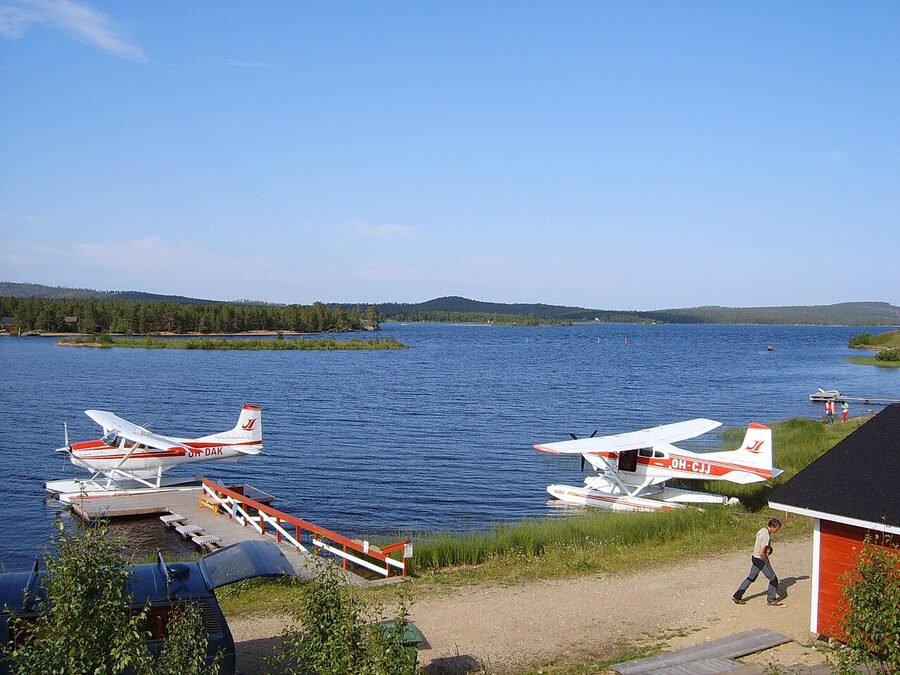
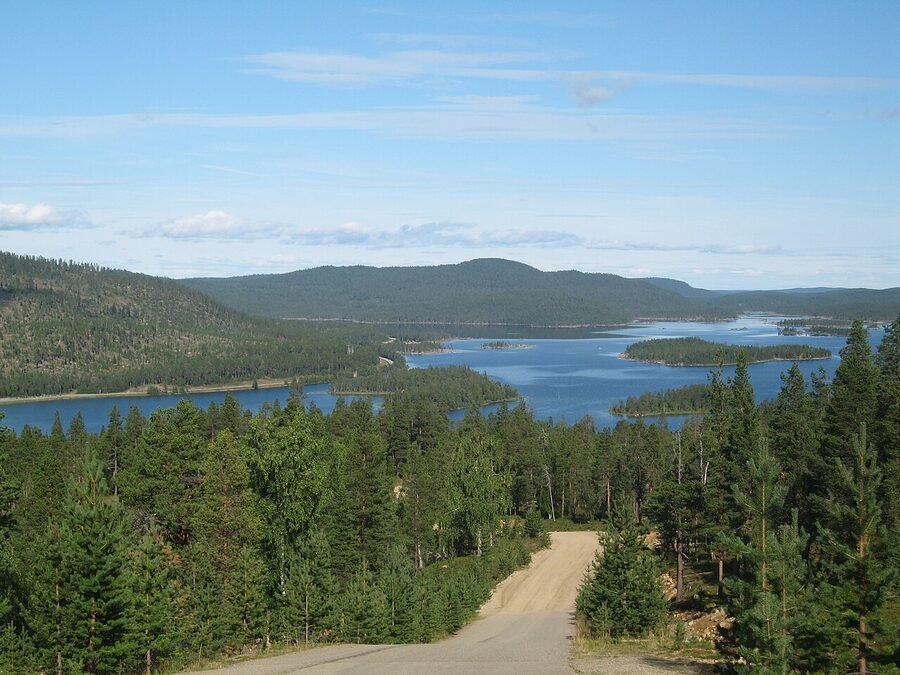
Where to stay in Inari: Wilderness Hotel Inari (log cabins on the lake, summer doubles from around €175, the bar overlooks the water and is the best evening spot in the village) or Hotel Inari in the village itself (€140 typical).
Lemmenjoki: the largest national park
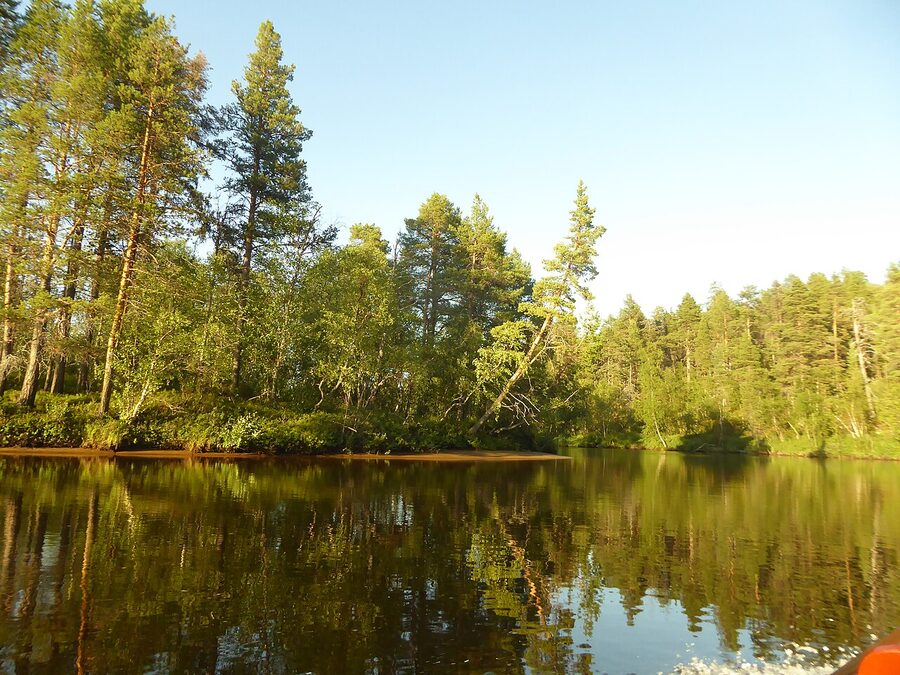
Forty kilometres west of Inari sits Lemmenjoki, Finland’s largest national park at 2,860 km², and the country’s most active gold-panning area. Visitors do one of two things: take the summer river-boat (Ahkun Tupa runs the trip, two hours each way, around €60 return, June to August only) up the Lemmenjoki river to the Kultahamina pan-streams, or hike the Joenkielinen-Ravadasköngäs day-loop from Njurkulahti (about 8km, marked, ends at a 15-metre waterfall). If you came here for the deep-wilderness feeling Finland sells in its tourism brochures, this is where you find it.
Ruka-Kuusamo and the Karhunkierros

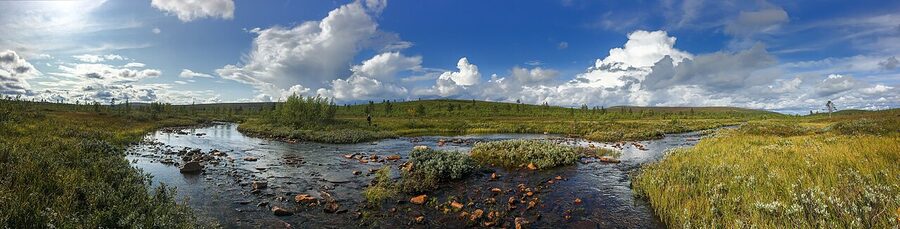
If your trip is a hiking trip, the case for Ruka-Kuusamo gets stronger than the case for any of the other three. Oulanka National Park contains the Karhunkierros (the “Bear’s Ring”) trail, the most famous walking route in Finland and one of the longer marked trails in Northern Europe. Full ring: 82km, four days for a fit walker, three days if you push it, five if you do not. Sleep in the trail huts (free, first-come at the unmanned ones, bookable at €13 a night for the manned ones at Juuma and Taivalköngäs).
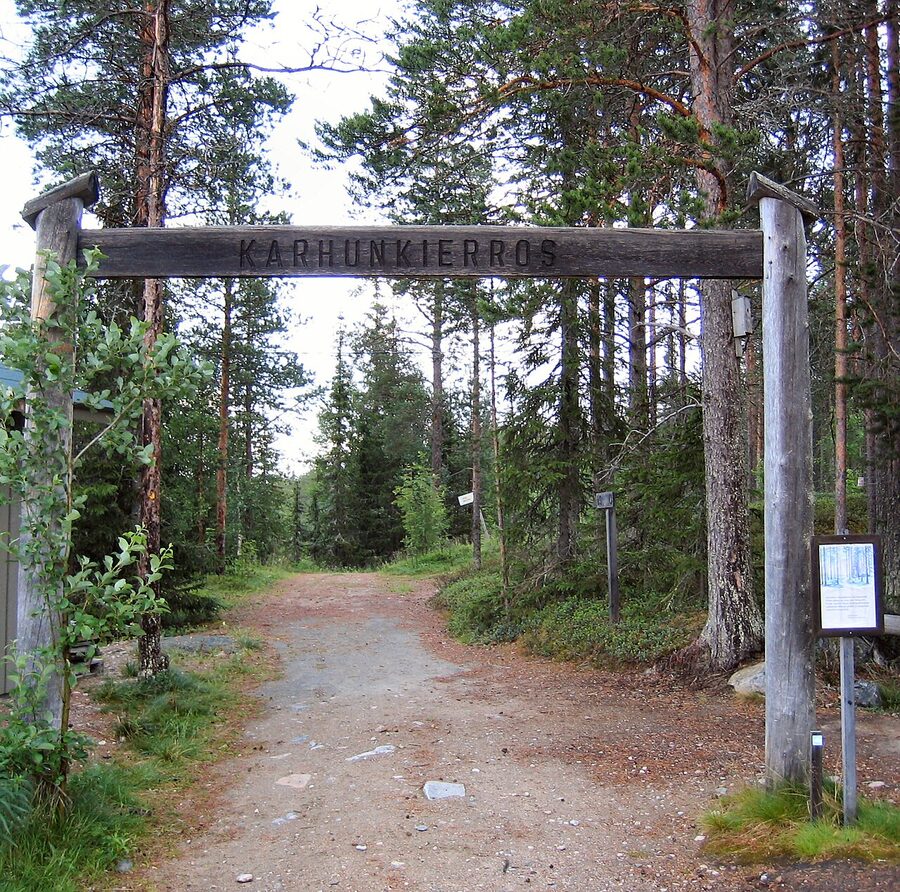
Two practical realities. The trail can flood in the first 20km in early June; the rangers at Hautajärvi will tell you if it is unsafe. And the Karhunkierros from Hautajärvi to Ruka is a one-way walk that ends at a ski resort with no morning bus back; you will need to either arrange a pickup at Ruka, leave a car at one end and shuttle, or pay around €130 for a transfer.
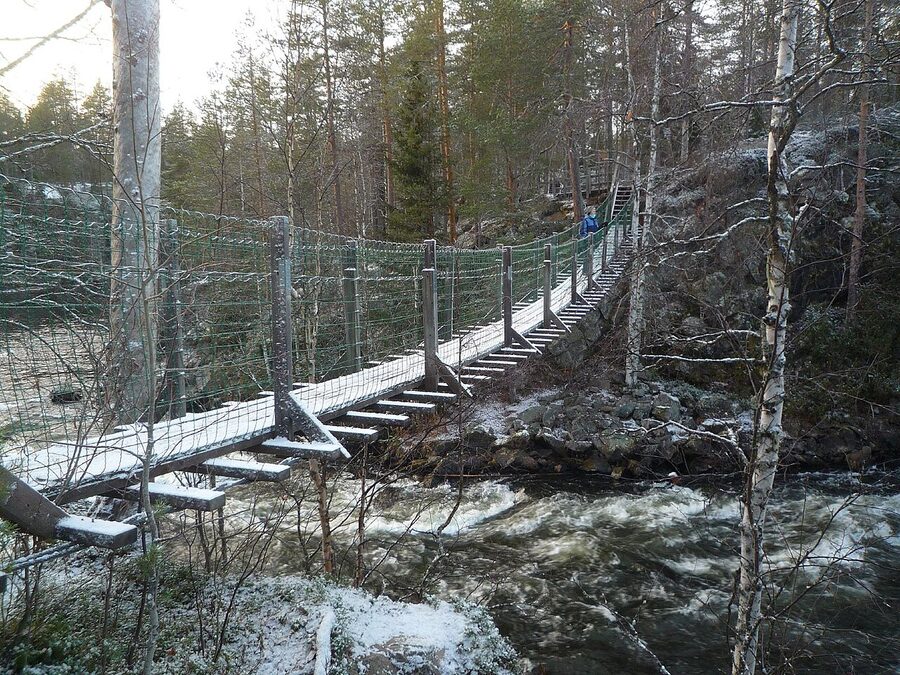
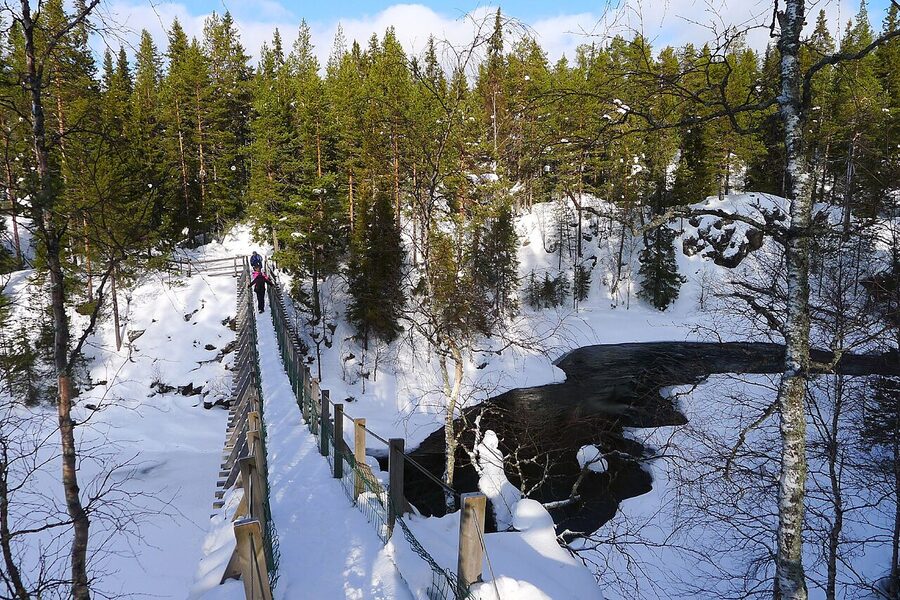
If four days on the trail isn’t realistic, do the Pieni Karhunkierros: 12km of the most photogenic section, including the Kiutaköngäs rapids and a section of suspension bridge over the Oulankajoki gorge. It starts at the Oulanka visitor centre, can be done in 4 to 6 hours, ends back at the same car park.
Rafting the Kitkajoki
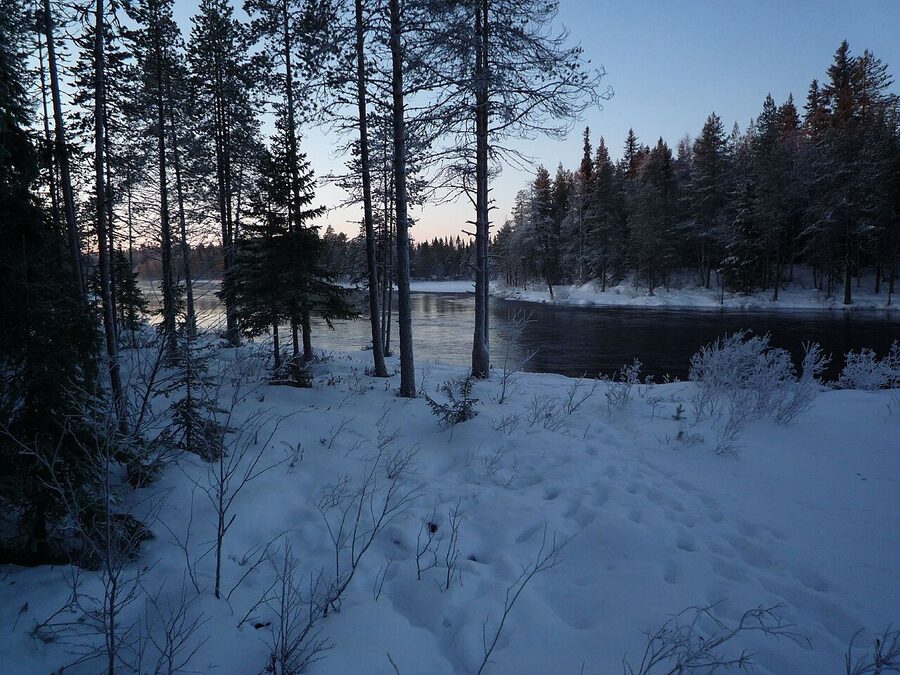
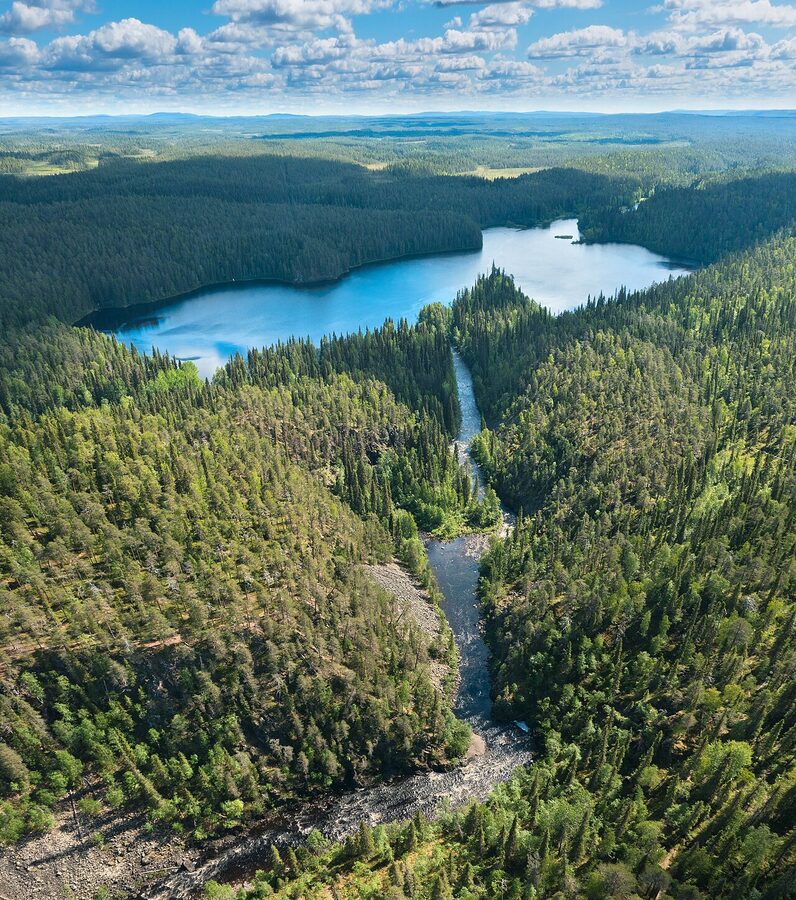
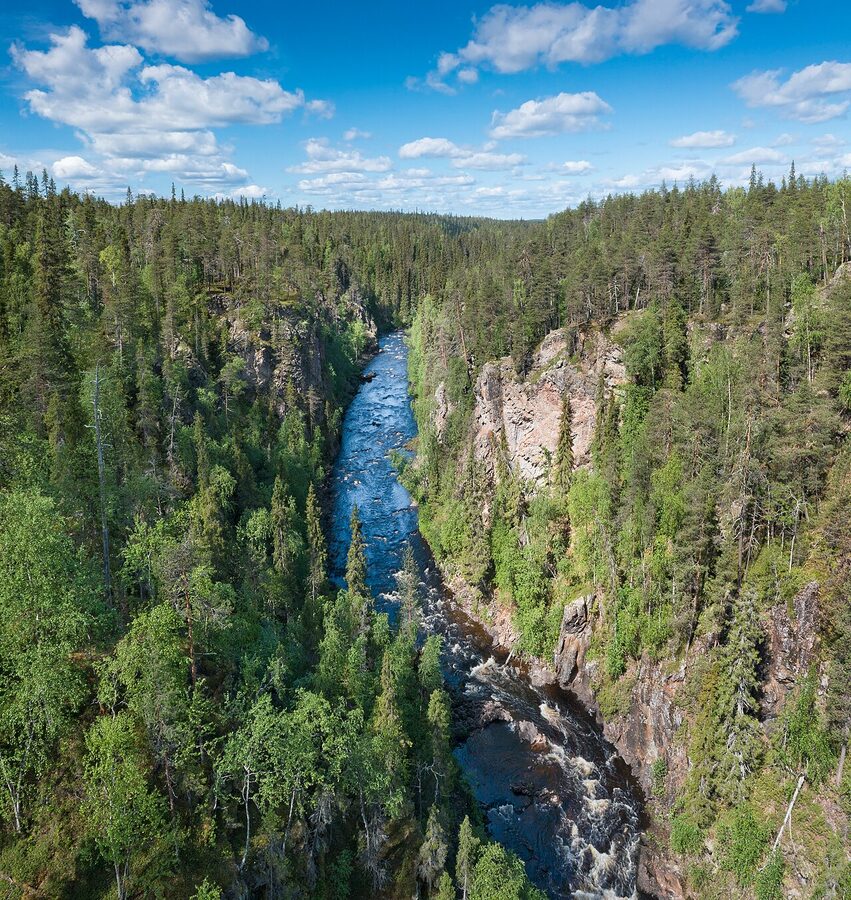
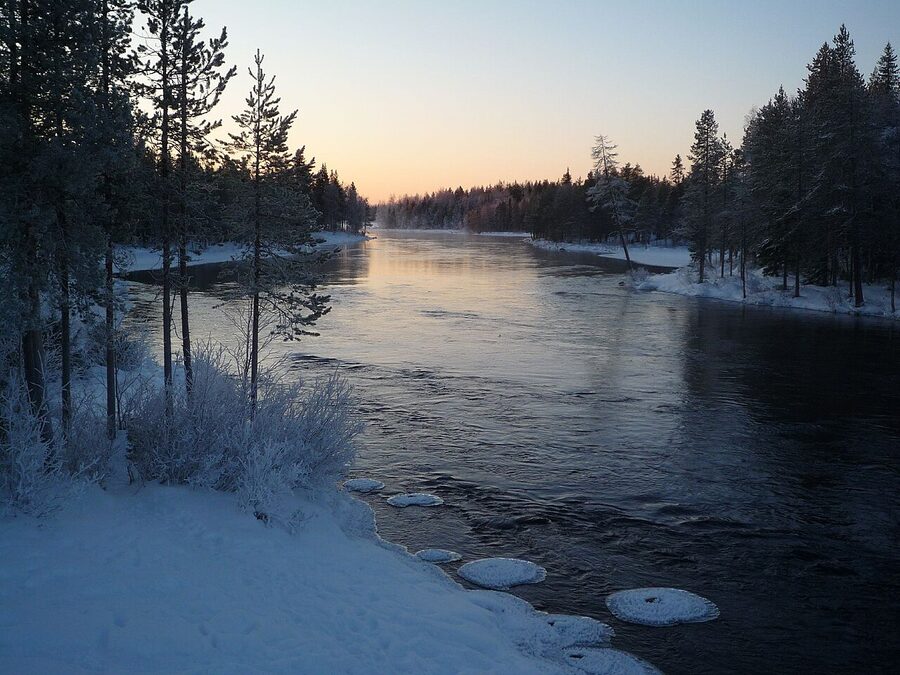
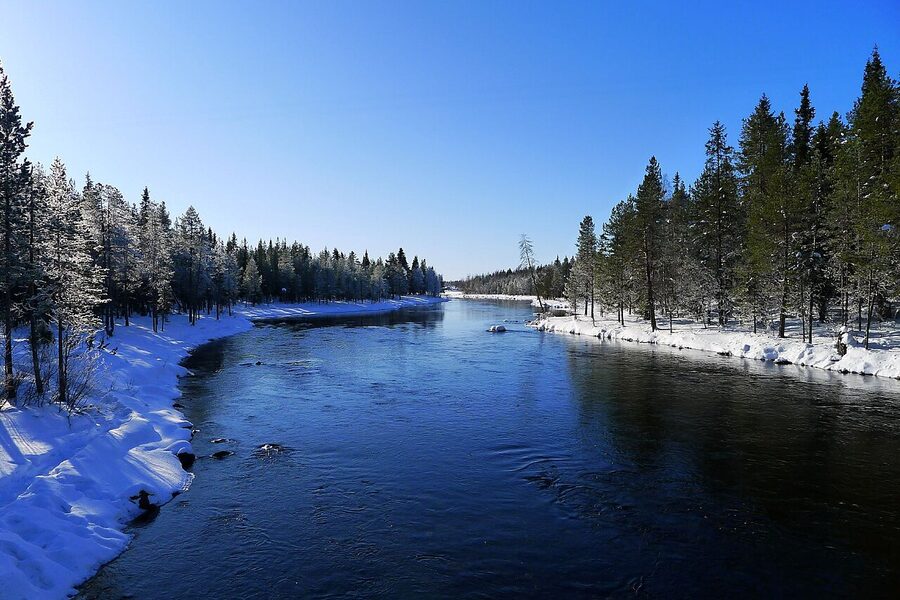
The other thing Ruka-Kuusamo does that nobody else does well is whitewater. The Kitkajoki, which feeds into the Oulankajoki, is the country’s best rafting river: a 6km grade-3-to-4 stretch through the Jyrävä rapids in early summer, dropping to a more forgiving grade 2-to-3 by August. Half-day trips run €95 to €130, full-day with a barbecued salmon lunch at a riverside camp €175. The standard operators are Ruka Adventures and Wild Nordic; both run from Käylä village by minibus to the put-in.
The Hossa rock paintings
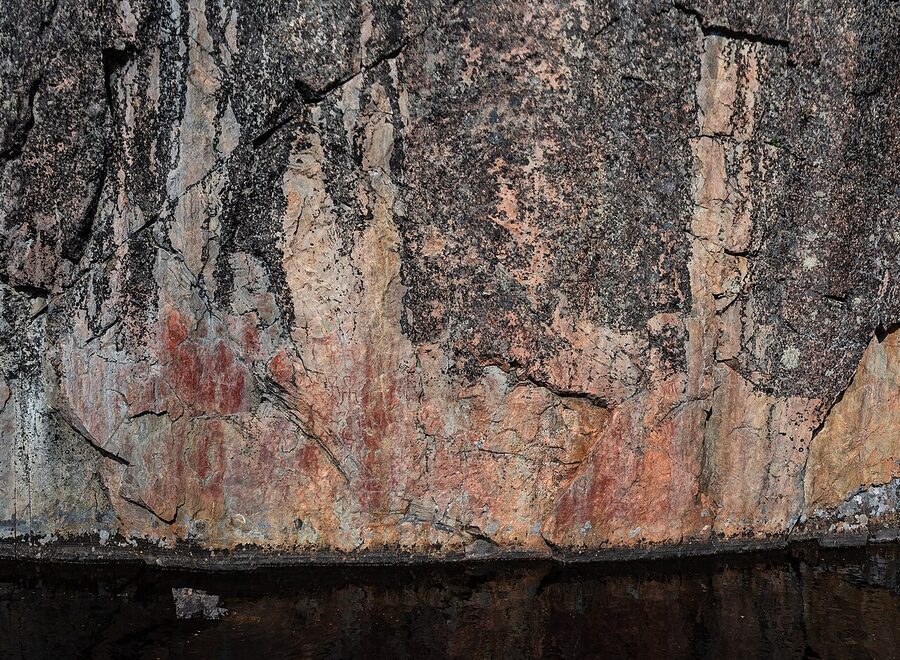
Two hours’ drive south of Kuusamo (so an awkward day-trip but a real one) sits Hossa National Park. The reason to come is the Värikallio rock-painting panel: 61 prehistoric paintings on a vertical cliff above Lake Somer, dating from roughly 4500 to 1500 BC. The walk in is 6km return from the Hossa visitor centre, the boardwalk-and-viewing platform sits below the cliff, and the panel is faded but still legible (figures of moose, bears, men with bows). The light is best in mid-morning before the sun crosses the cliff face.
Where to stay in Ruka: the resort village has a strip of hotels behind the slopes. Wilderness Hotel Inari belongs further north; the right Ruka pick is the modest end of Hotel Rukahovi (€115 typical) or one of the apartment-style cabins at the Ski-Inn properties for groups.
Pallas-Yllästunturi: the country’s largest national park
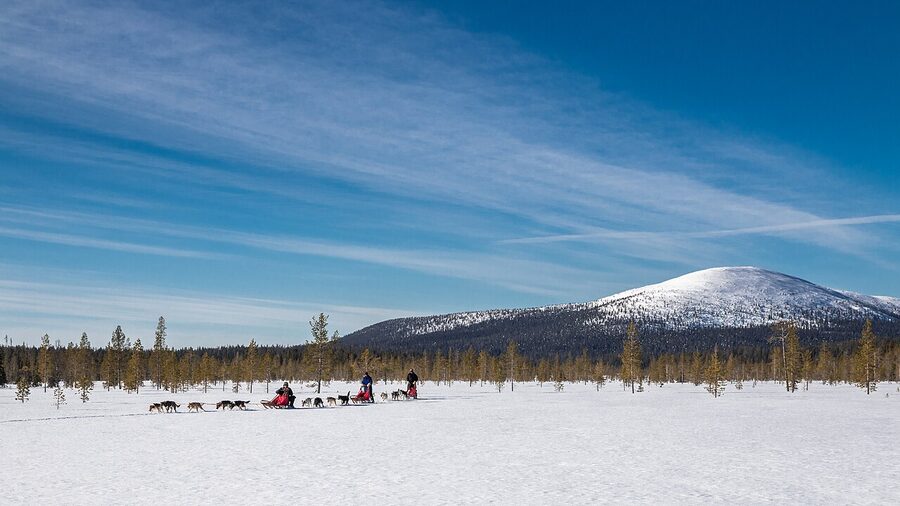
Pallas-Yllästunturi (often “Pallas-Ylläs” for short) is the largest national park in Finland and structurally the friendliest summer hiking park in the country. It runs as a north-south chain of treeless fells from Pallastunturi in the north (719m, the highest of the chain) down through Sammaltunturi, Kesänkitunturi, Kukastunturi, Kellostapuli and Yllästunturi (719m, the southern bookend). A single marked trail runs the full 55km from Hetta in the north to the village of Ylläsjärvi in the south; the Hetta-Pallas section alone is 30 to 50km depending on where you stop, and is the most-walked multi-day route in northern Finland.
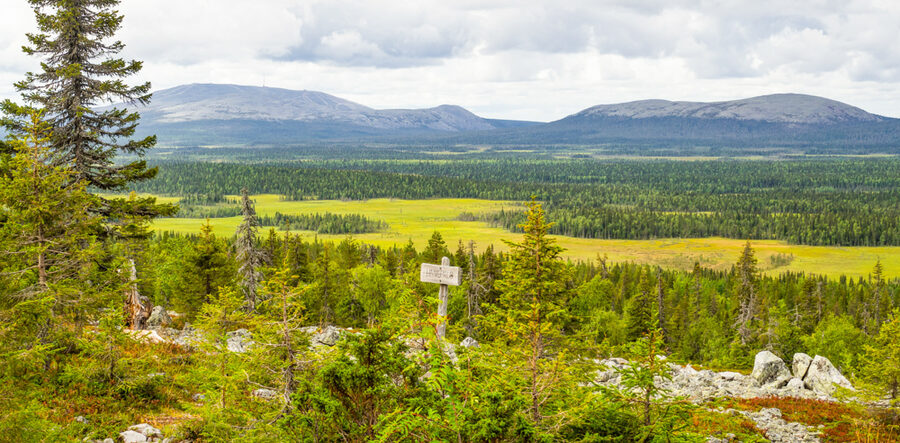
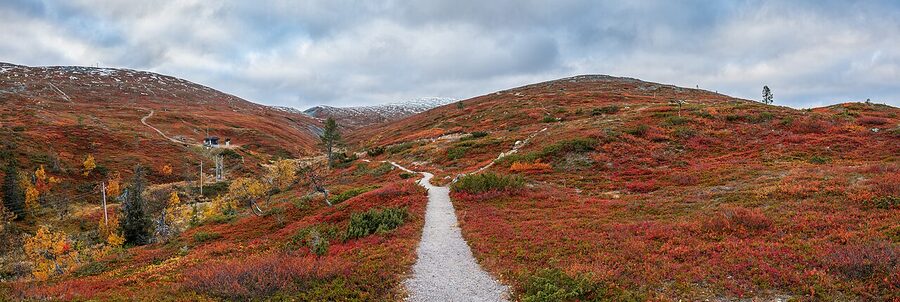
If you do not want a multi-day, do the Pallastunturi summit ridge from the Pallas-Tunturi visitor centre as a 5-hour day. The walk is unmistakable: a clear path up to a 700-metre summit and a return on a parallel ridge.
Levi vs Ylläs
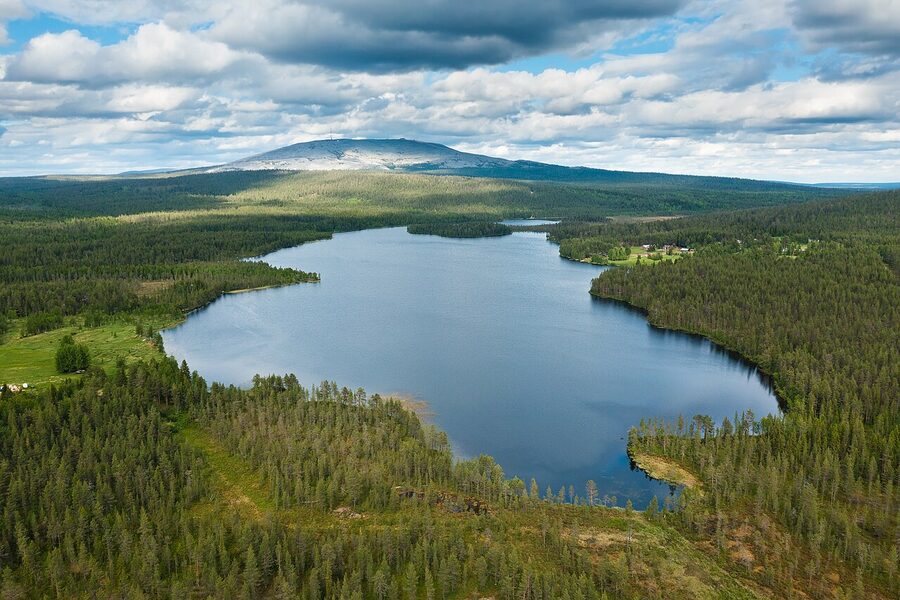
Both are ski resorts that double as summer hiking bases; the difference is style. Levi is the bigger resort, with the most hotels, the most marked mountain-bike trails (130km of them), the chairlift up Levi-tunturi that runs all summer, the country’s biggest summer-night golf event in late June, and the busiest village atmosphere of the four bases. Ylläs is quieter, with two main villages (Äkäslompolo and Ylläsjärvi), better access to the long Pallas-Ylläs traverse, and the chairlift up Yllästunturi for the lazy summit.
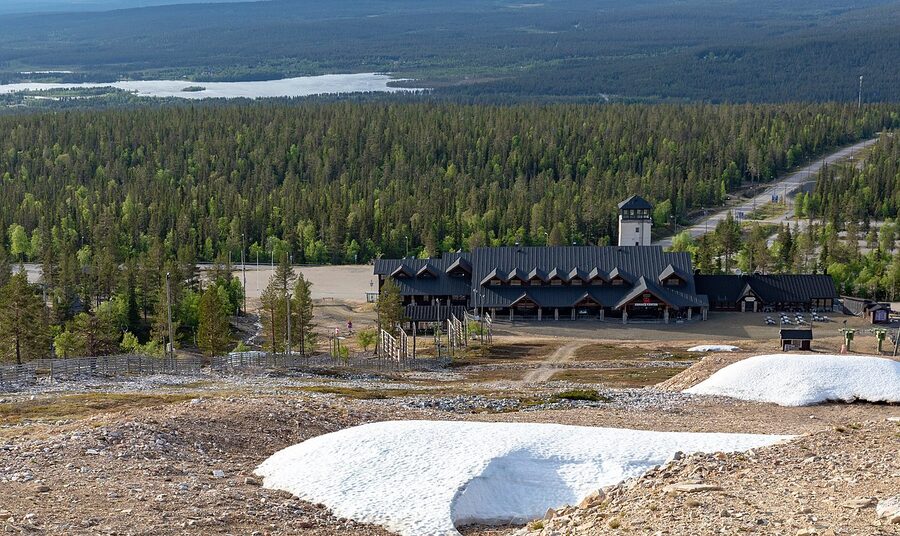
Pick Levi if you have kids, want a pool / restaurants / nightlife in the resort village, or want to mountain-bike. Pick Ylläs if you want to hike the long traverse, want a quieter village, or want the genuinely lovely 5km Kellokas-side ground-trail walk that ends at a museum on the lake.
Hotels: Hotel Levi Panorama sits at the top of the chairlift with summer doubles around €165, Hotel Hullu Poro in central Levi (€140), and Hotel K5 Levi for the higher end. On the Ylläs side, Lapland Hotels Ylläskaltio is the most reliable choice in Äkäslompolo (€145).
Pyhä-Luosto and Korouoma
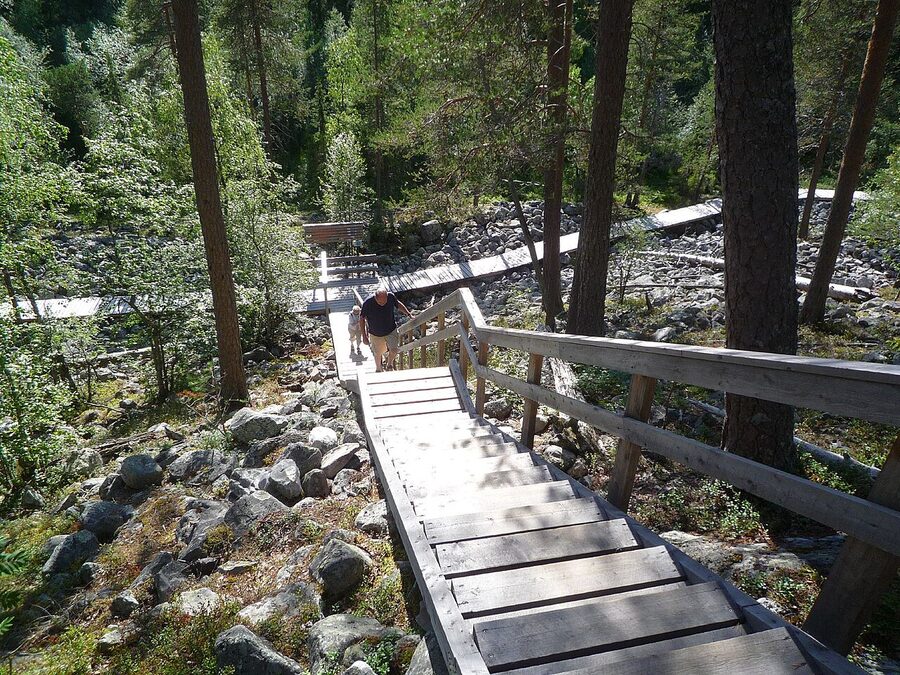
If you are short on time and only flying into Rovaniemi, the best one-day Lapland-feeling trip is to drive 110km north to Pyhä-Luosto National Park. The park is a single ridge of fell-tops that geologists date to roughly 2 billion years old; it is the oldest mountain chain still standing in Europe, eroded down from peaks that were once Himalayan-scale. The ridge is now 540m high, and you can walk it.
The other thing Pyhä-Luosto does is the Lampivaara amethyst mine, the only working amethyst mine in Europe. €36 buys you a 90-minute guided tour, an all-terrain vehicle ride to the open pit, and one piece of amethyst you dig out yourself (the deal is one piece you can carry, no tools, by hand). It is the kind of attraction that shouldn’t be good and is. Open daily 10:00 to 17:00 from June, last tour at 15:00.
Korouoma canyon
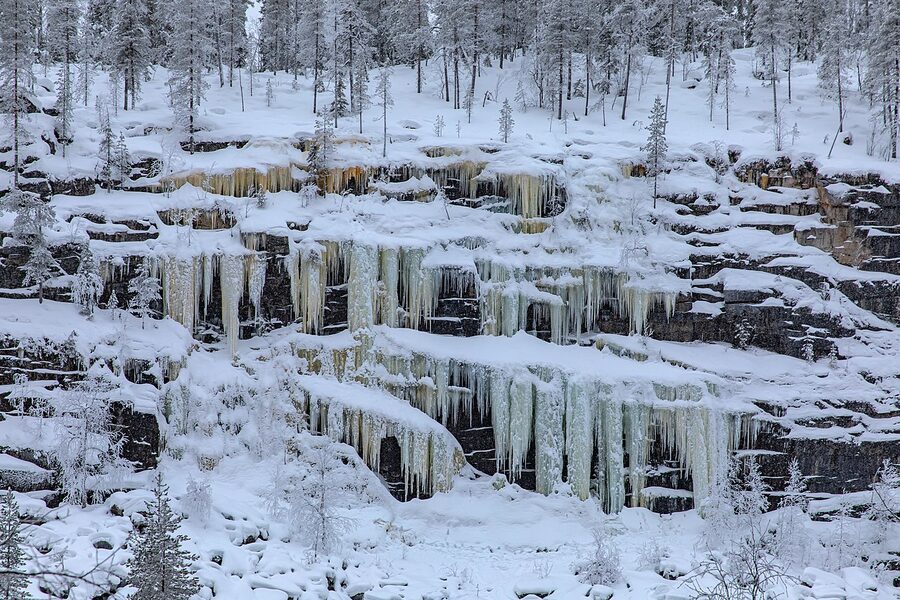
From Pyhä-Luosto you can extend a half-day to Korouoma canyon, a 30km gorge near Posio with a 4km waterfall-loop walk that is the best non-Karhunkierros short trail in the region. The canyon is about 30 metres deep, the loop runs along the rim and dips down to the falls, and in summer you do not need crampons. Free, always open.
The reindeer truth, the mosquito truth, and the Sami line
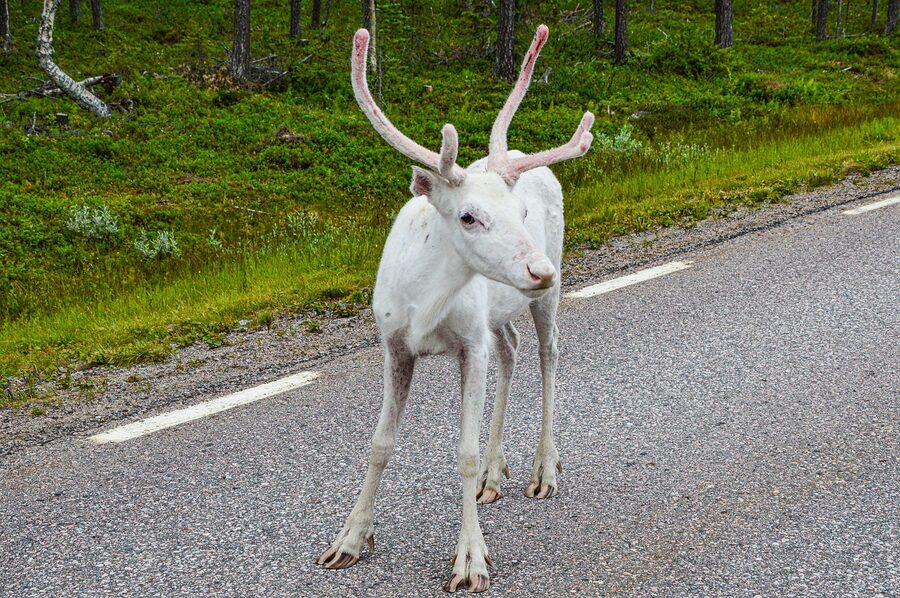
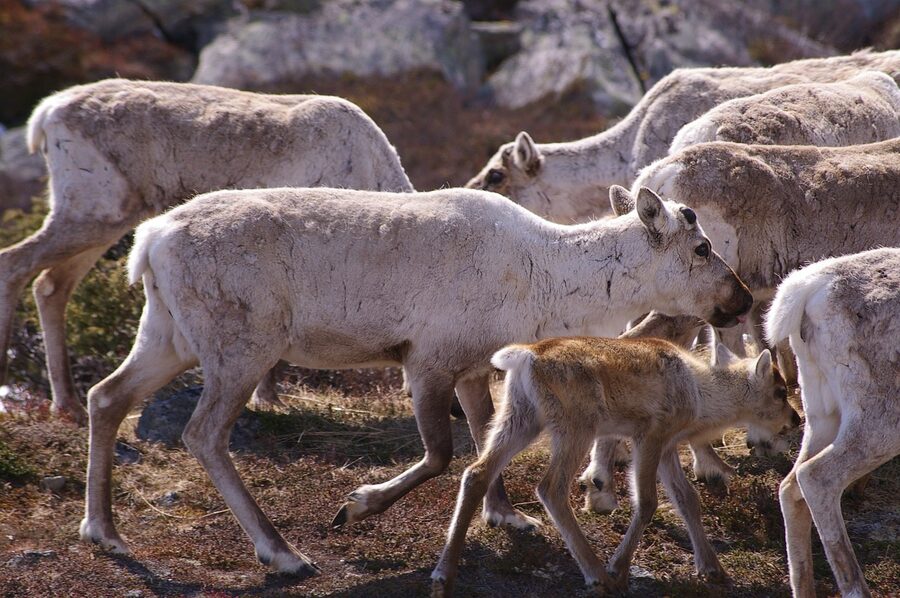
The marketing version of Lapland reindeer in summer is wrong in two ways and right in one. The wrong: there are no organised “reindeer farm visits” in the cold-and-mittens sense. The right: there are about 200,000 semi-domesticated reindeer in Finnish Lapland, owned by Sami and Finnish reindeer-herding families and roaming free, and you will see them on roads, in towns, and crossing your hiking trail. They are not pets, they are not wild, and they are not a photo opportunity. Drive carefully, especially at dusk; reindeer collisions cost the Finnish economy somewhere over €15 million a year.
The “husky farm” thing in summer is the same idea. There is no sled. The dogs are kennelled, the visit is essentially a kennel tour with a chance to pet a husky and learn how the kennel works. €40 to €60. If your trip is in summer and you are travelling without children, skip it; the dogs are off-shift, and the experience is sparse. With kids it is fine.
The mosquitoes. Read this twice. From mid-June to early August, in marshy areas and near standing water, the mosquitoes in Lapland are some of the densest in Northern Europe. This is not a brochure-friendly fact and the tourism boards do not advertise it, but locals do not pretend. You need DEET-based repellent (40 percent or above), long sleeves on hikes through bogs, and a head net for the worst sections (Lemmenjoki and the lower Karhunkierros particularly). A Permethrin treatment on your trousers and shirt is worth doing the day before you fly. The mosquitoes thin out fast after the first frost, usually around 10 August in the north; if you can travel late August, you get the trade-off of fewer mosquitoes and the early ruska autumn colour.
The Sami line. If you are coming to Lapland and you are not Sami, do not pretend to be Sami, and do not buy souvenirs that imitate Sami clothing. The traditional gákti (the colourful coat) is not generic Lapland wear; the patterns and trims are specific to family lines and to the village a person comes from, and a non-Sami wearing one is the equivalent of wearing someone else’s regimental uniform. Buy work that is signed by Sami artists at Siida or at the Sajos (the Sami parliament building’s shop); skip the airport stalls. The same goes for joik (the Sami vocal tradition); recordings exist by Sami singers, buy those rather than “joik-inspired” instrumental music made by people who are not Sami. None of this is gatekeeping; it is the polite version of how to be a guest.
Wild berries and what to do with them
Finland has a constitutional right called jokamiehenoikeus, “everyman’s right”, which lets anyone walk on, swim in, sleep on (one night, for free) and pick berries and mushrooms from any private land that is not someone’s garden or actively farmed. It applies in the parks too. So the wild berries are free for the picking, and the season is precise:
- Cloudberry (lakka or hilla): late July to early August, in bogs. The marquee Finnish berry; goes for €40 a kilo at Helsinki market. You will find them on the bog sections of the Karhunkierros and at Lemmenjoki.
- Bilberry (the wild blueberry, mustikka): late July to mid-September, everywhere in the forests.
- Lingonberry (puolukka): late August to early October, the last to come, the most reliable, freezes and stores forever.
- Crowberry (variksenmarja): late July to September, on the open fells. Bland on its own, useful in a mix.
The done thing in a cabin is to fry up reindeer with juniper and serve it with mashed potato and a spoon of lingonberry jam. If you eat one Lapland dish, eat that. Sautéed reindeer is on every menu in the region and Aanaar at Hotel Inari does a particularly good version.
The lupines, and a small ecological aside
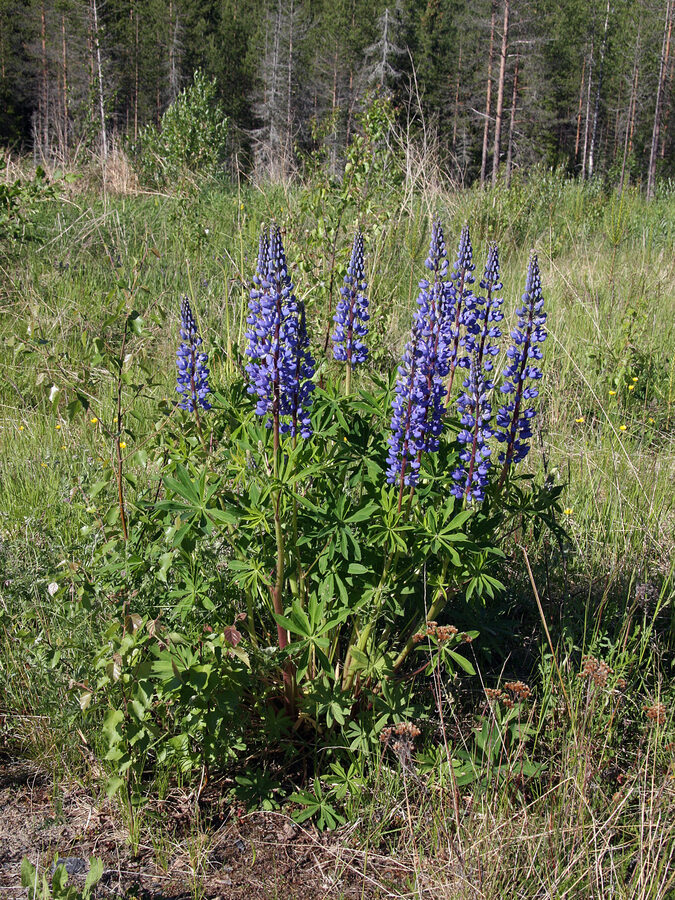
You will see roadside lupines in their thousands. Purple, pink, occasionally white, lining the verges from late June to mid-July. They are the unofficial signature of the Finnish summer. They are also Lupinus polyphyllus, an introduced North American species that is now classed as a harmful invasive plant in Finland; the Environment Institute runs annual cull weekends along the worst-affected verges. Take the photo, do not pick the bouquet for the cabin (you would be helping seed the next stand), and read it as a small ecological footnote on a country that takes its native flora seriously.
The midnight-sun sauna
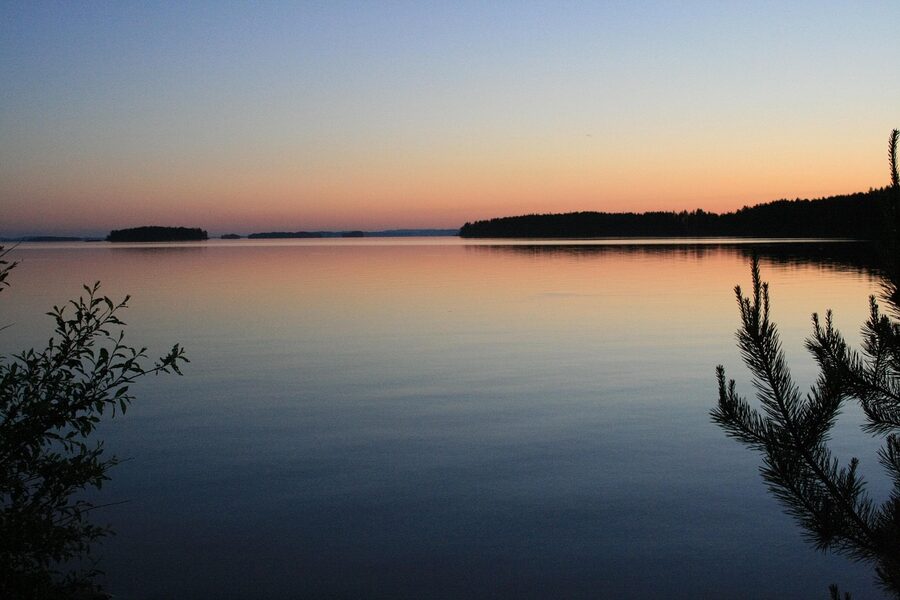
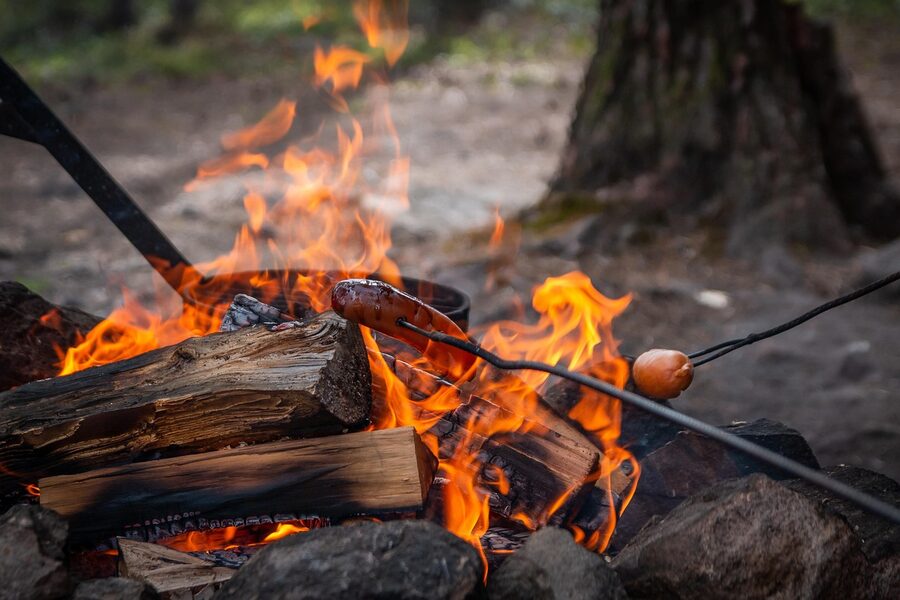
The set piece of Finnish summer is the sauna at a lake cabin around midnight. You walk in, you sit on the top bench, you throw water on the stones (löyly), you go red and slightly stupid, you walk out, you swim, you walk back in. The repeat-rate is two or three rounds. It works any time of year, but in the first week of July, with the sun still half a hand above the horizon and the lake still and the loudest sound being a loon call from across the water, this is the Finnish summer in compressed form.
The cabin you rent will likely have one. If not, the public options in the smaller towns are decent: Sodankylä’s town pool has a sauna, Saariselkä’s hotel saunas are usually open to non-guests for €15, and the wilderness saunas at Kakslauttanen and Wilderness Hotel Inari are bookable for the evening for €60 to €90. If you want the broader sauna scene done properly, the Helsinki public saunas piece is the place to start; the Lapland version is more about the cabin than the venue.
How long, and when
For a first trip, give it a minimum of five days on the ground in Lapland (so a six- or seven-day trip with the Helsinki entry-and-exit; the Helsinki city guide covers a useful 24 hours either side). That gives you two anchors: a hotel base for two or three nights at one of the four towns above, plus a one-way drive with a second base for two more nights. A serious week, with one of the multi-day hikes thrown in, is ten days.
The summer windows:
- Mid-May to mid-June. Snow has melted in the south, mostly clear in the north by 25 May, and the rivers are running high. The midnight sun is at peak. Mosquitoes have not yet arrived. Trails north of Saariselkä may be wet; check at the visitor centres. This is the under-priced window.
- Mid-June to mid-July. The classic midnight-sun window. Warmest weather (typically 18 to 25°C in the north), longest light, wild flowers in full season. Also peak mosquito season. Bookings tightest; book accommodation 4 to 6 weeks ahead.
- Mid-July to late August. Light is shortening but still good (sun up by 04:00, down by 23:00). Mosquitoes drop sharply after 10 August. Berries hit. Schools-out crowds in early August.
- Late August to mid-September. Ruska (the autumn colour) starts in the third week of August in the north, peaks first week of September. Cold nights, bright clear days, no mosquitoes, fewer tourists. My favourite window.
Getting there and getting around
By air. Finnair runs daily from Helsinki to Rovaniemi (1h 25min, around €120 return in July if booked early), Kittilä (for Levi-Ylläs), Ivalo (for Saariselkä-Inari, the northernmost airport in Finland) and Kuusamo. Norwegian also flies Rovaniemi. The Ivalo and Kuusamo routes are the rate-controlling ones; book those 8 to 10 weeks ahead in summer.
By train. The VR overnight train Helsinki-Rovaniemi is one of the better night trains in Europe: leaves Helsinki around 18:30, arrives Rovaniemi 07:25 the next morning. A double-bed cabin (the new “S2” sleepers) runs €110 to €170 per person depending on how early you book. There is a car-train option on the same route if you want to bring your own car north. The train terminates at Rovaniemi; for further north, you connect to a bus or rent a car. From Rovaniemi the standard Matkahuolto bus to Inari is 4h 30min and around €40. Compare this with our Stockholm-Helsinki overnight ferry piece if you are coming up via Sweden.
By car. Once you are north of Rovaniemi the only sensible way around is a hire car. Roads are good, distances are real, the speed limit on the E75 is 100 km/h, fuel is around €1.85 a litre at the time of writing. Hire from Rovaniemi or Ivalo airports; the cheapest week-long bookings come in around €450, the small SUV options a bit over €600. The driver-fatigue risk on the longer transfers is the polar-day thing again: do not drive at midnight in week two of your trip without sleep insurance.
One Lapland summer day, in plain order
If you book one of these, here is what one good day actually looks like, hour by hour, so the time scales make sense.
05:00. Sun has been up for nine hours. You wake up because the cabin’s blackout curtain has slipped, and decide to roll with it. Coffee on the porch. The lake outside the window is glass.
09:00. Drive 45 minutes to a fell trailhead. Park, lace up, off you go. The trail goes up through low birch into bare rock by the time you are at the top. You meet two other walkers and a group of three Sami men servicing a herding fence; they nod and you nod back.
13:00. Down. Lunch at a roadside restaurant: salmon soup and rye bread and a coffee, €18.
15:00. Drive somewhere small: the Pielpajärvi church, the Hossa rock paintings, a gold-panning hour at Tankavaara, a museum half-day at Siida. Pick the bit of culture that matches the area you are in.
19:00. Cabin. Sauna fire on. Half an hour heating up. Beer in the river. Salmon on the grill.
22:00. Sauna, swim, sauna, swim. The light is exactly the same as it was at 18:00. You stay up because there is nothing telling you to stop. You crash about 01:00 and sleep through to mid-morning.
Comparing it to the Nordic alternatives
If you are choosing between Finnish Lapland in summer and the other Nordic options, the side-by-side.
vs Lofoten (Norway). Lofoten gets the dramatic landscape vote: jagged peaks rising straight out of the sea, fishing villages on stilts. Finnish Lapland gets the wilderness scale and the cheaper price. The Lofoten road trip is about driving the scenery; the Lapland trip is about walking into it. Our Lofoten road trip piece is the read for that comparison.
vs Iceland in summer. Iceland has more variety per square kilometre (glaciers, geysers, black-sand beaches), more international flights, more crowds. Lapland has the longer light, the deeper forests and the better hiking-cost ratio. Iceland is the Marvel film, Lapland is the slow-burn novel. The Iceland Ring Road piece is your starting point for that one.
vs Tromsø in summer (Norway). Tromsø is the city, plus fjord day-trips. Saariselkä-Inari is the wilderness, plus a tiny town. The cross-Nordic Lapland comparison is at Tromsø vs Abisko for the winter version; the summer story tilts toward the Finnish side because the polar-day window is longer and the prices are lower.
What to pack that you wouldn’t pack elsewhere
- Eye mask. The single most useful piece of kit for the first week.
- DEET, ideally 40 percent or above. The supermarket-grade Off! works, but the Finnish-made Saalix works better in the bog.
- Head net. Lightweight, packs to nothing, saves your sanity on the lower Karhunkierros and at Lemmenjoki.
- A jumper. Even in late June, the night temperature on the fell-tops drops to 6°C; the lake-side cabins are cooler than you expect.
- Decent boots. The trails are rocky on top, marshy at the bottom. Trainers don’t cut it.
- A swimsuit. Every cabin has a sauna and a lake within 50 metres. You will use it.
- A power bank. Hiking-day battery drains faster than you think; the cabin power is reliable, the trail power is non-existent.
The short version
I keep coming back to one image. Late June, on the south shore of Inari, just after midnight. The water is still. The sun is exactly five centimetres above a low fell across the lake. There is a fish ring expanding maybe forty feet out, slowly. Behind me, a man and his teenage son are loading a boat, doing it without speaking, because they have done it together a hundred times before. They push off. The wake makes its way across the surface. The light does not change. They will be back at six in the morning, on the same flat water, in the same flat light, with whatever they have caught.
That is the trip. Not the Santa Village, not the husky kennel, not the chairlift. The country empties of the winter crowd in April and the summer reader hasn’t yet figured out what is here. Drive north of Rovaniemi, give yourself five days, take an eye mask and a head net, and book it before the rest of the internet works it out.


.jpg)


.jpg)


.jpg)


.jpg)
.jpg)
.jpg)

.jpg)


.jpg)


