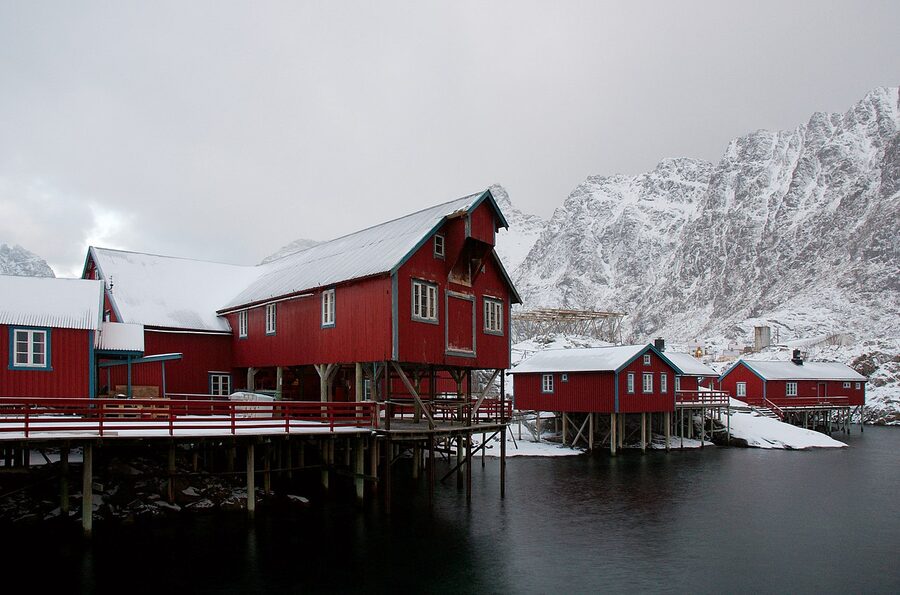
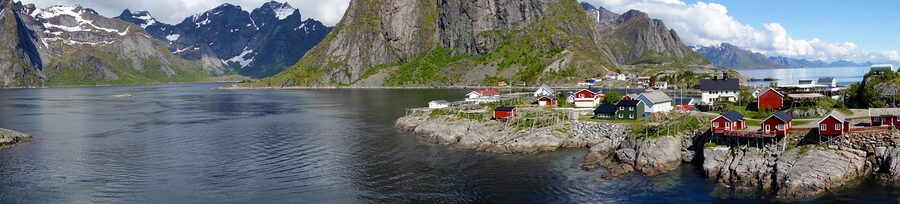
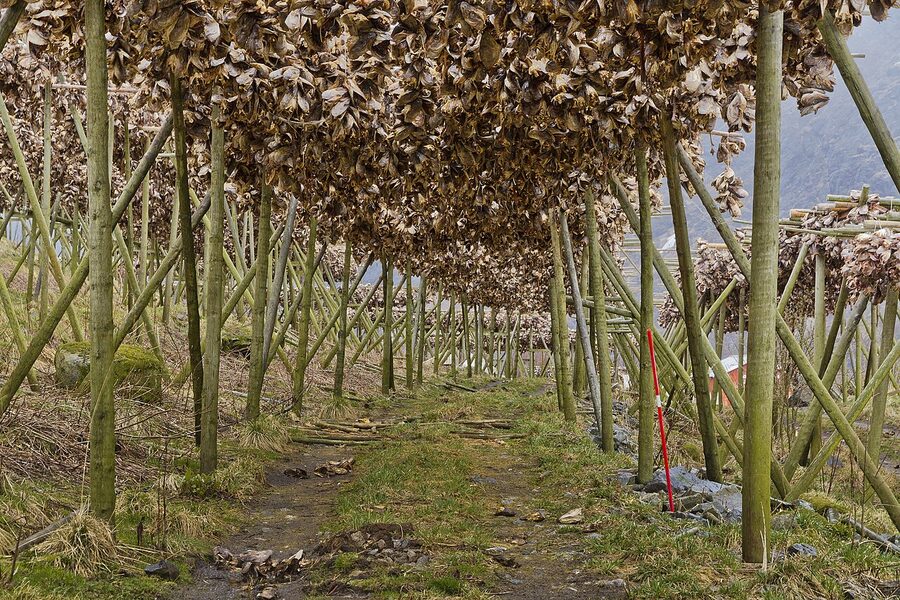
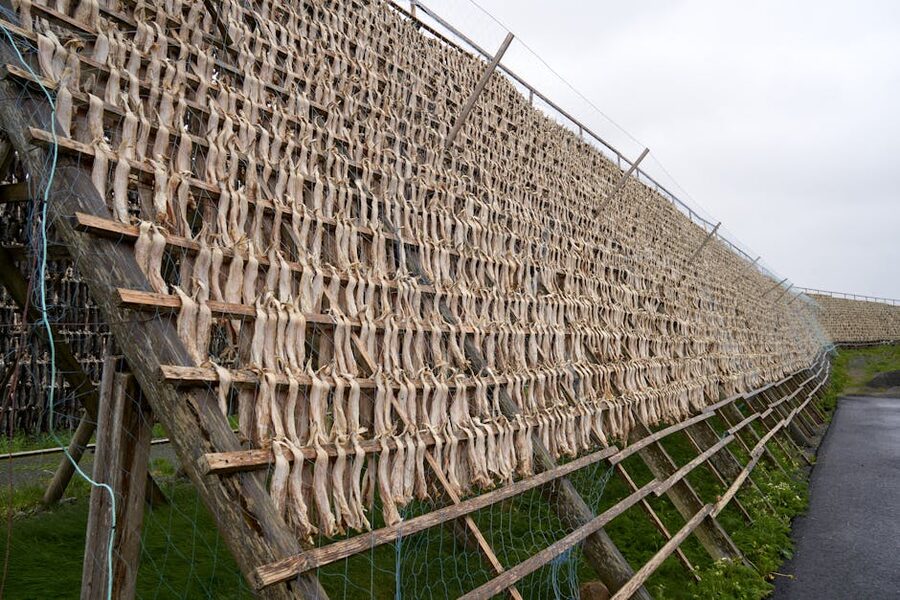
Walk past the wooden racks at Å on a still afternoon in May and the smell hits before the view does. Salt, fish, faintly sweet, slightly weird. That’s tørrfisk, cod hung up to dry in the wind off the Vestfjord, and people in this village have been doing it more or less the same way since the 1100s. The cabins are red, the racks are everywhere, and the road runs out about a kilometre further on. There is no more E10. That’s where you turn around and drive back through the entire archipelago.
Lofoten is small. The whole road from Å in the south to the Hadsel bridge in the north is about 230 km, and you can drive it in five hours flat without stopping. Nobody does. The point is to stop. A 3 to 4 day road trip is enough time to see the four villages everyone goes for, the one nobody does, and a beach or two between. It is not enough time to do every hike, every photo workshop, and every museum, and pretending otherwise is how people end up with a 7-day itinerary they spend driving 8 hours a day. This is the shorter, calmer version. I’ll tell you what to skip, and where to stay so the driving stays under two hours a day.
In This Article
- Why 3 to 4 days, not seven
- The Bodø ferry vs Evenes flight question
- Hire car: book early, pick up at the airport
- When to come
- Mid-June to mid-August: hiking, midnight sun, crowds
- Late August to mid-September: the sweet spot
- February to early April: aurora and winter peaks
- What to avoid: October, November, December
- Late December to early February: dark and cold but quiet
- The 4-day itinerary I’d actually do
- The 3-day version: cut day 2 in half
- Where to stay: rorbu cabins, what they actually are now
- The ones I’d recommend, by area
- Eggum: the one I keep telling people about
- What to eat and what to skip
- Cod, racks, and a brief history note
- A short note on driving in Lofoten
- A 4-day budget, two people, late August
- Combining Lofoten with the rest of Norway
- Things that surprised me on my first trip
Why 3 to 4 days, not seven
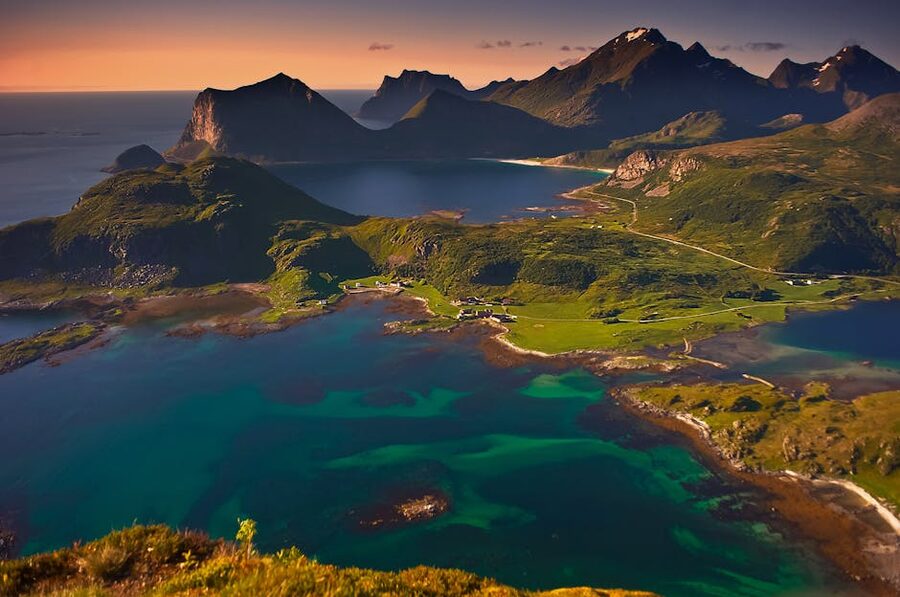
The 7-day itineraries you’ll see online are written by photographers and people doing every named hike. If you want to walk Reinebringen, Ryten, Munkebu, Veggen, and Bunes, plus surf Unstad and kayak Trollfjord, you do need a week and a half. If you want to see Lofoten, meaning the road, the villages, the racks of cod, a beach, the football pitch on the rock at Henningsvær, and the Borg longhouse, three or four days does it.
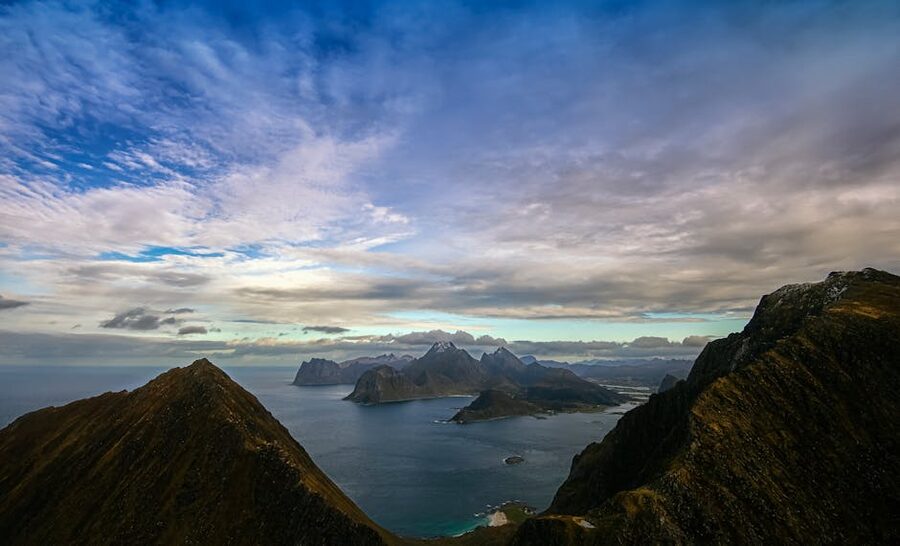
The other thing the long itineraries don’t tell you: Lofoten weather changes hour to hour. A friend of mine drove the islands for nine days last September and saw Reinebringen properly twice. If you only have three days you’ll roll the dice on weather, but you’ll also pack less driving into worse light, and you’ll come back. Most people do.
The Bodø ferry vs Evenes flight question
Two main ways in. They are not the same trip.
Bodø + ferry: Fly to Bodø (BOO), direct from Oslo with SAS and Norwegian, about 1h35. Pick up a hire car at the airport. Drive ten minutes to the Moskenes ferry terminal in town. Take the car ferry across the Vestfjord to Moskenes, which is about a 3 to 3.5 hour crossing on the new electric ferries. You arrive in the south of Lofoten, two minutes from Å, and drive north from there.
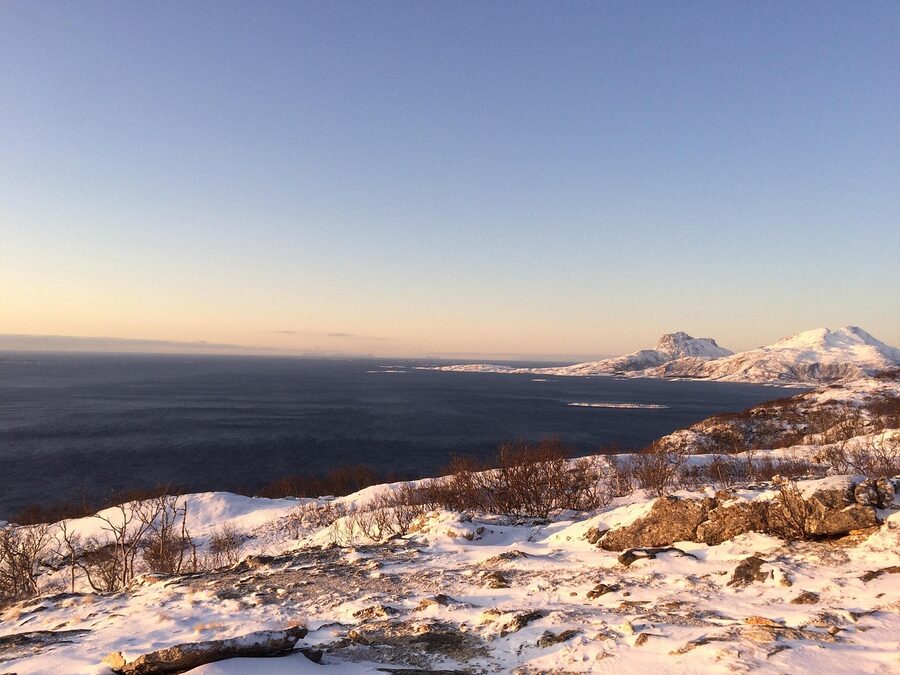
The good: it’s the cheapest combination, the ferry is the dramatic way to arrive (you watch the wall of mountains rise out of the sea for the last hour), and Bodø has the best flight connections. The bad: the ferry runs five times a day in summer and three off-season. Cars need pre-booking in July and August. Crossings cost roughly 1,400 NOK (~€121) for a small car plus driver, more for a larger vehicle, and the boat does cancel in heavy weather. A friend got stuck two extra nights in Bodø in late October waiting it out.
Evenes (Harstad/Narvik): Fly to Evenes (EVE), the airport that serves Harstad and Narvik, about 1h50 from Oslo. Pick up a hire car. Drive south on the E10 across the Tjeldsund and Hadsel bridges, into Lofoten via Vesterålen. From Evenes to Svolvær is about 2h30 of driving. Pretty driving, no extra ferries.
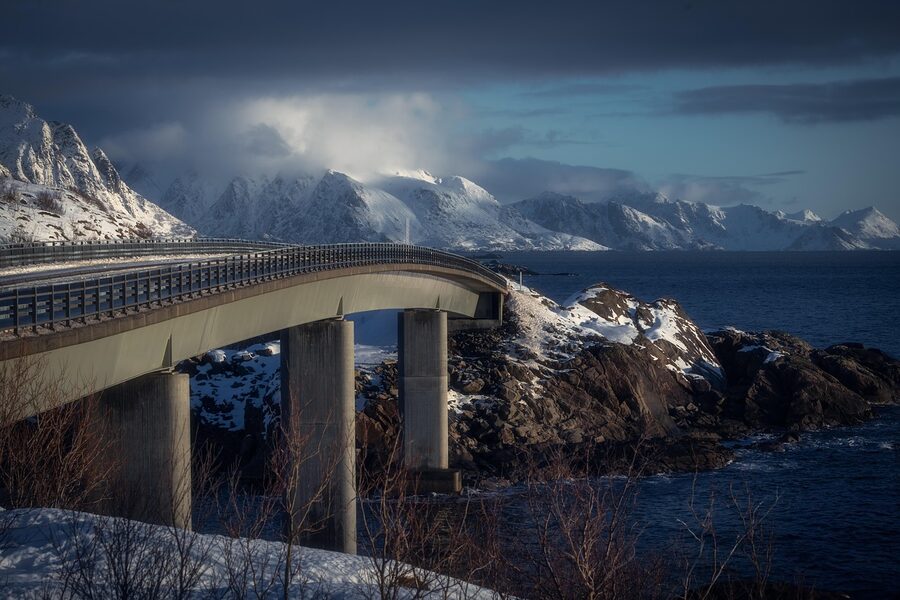
The good: no ferry to schedule around, you arrive into the islands at 80 km/h, and you can fly out of Bodø on the way home if you want a one-way drive. The bad: flights to Evenes are typically 30 to 50% pricier than Bodø, and the airport is small and weather-prone. Both Evenes and Leknes get fogged in regularly in autumn.
What I’d do for 3 days: Fly into Evenes, drive in, drive south through the islands, fly out of Bodø with the ferry as the final leg back. You see the islands properly and the ferry becomes the goodbye, not the hello. For 4 days, do the reverse if you want to maximise the south end. For a single airport in/out, Bodø wins on price.
Skip Leknes airport. Flights are expensive, the airport is tiny, and the hire-car desks are limited. Skip the day-trip from Tromsø while you’re at it: it’s a three-island, twelve-hour bus tour that gives you 90 minutes in Henningsvær and one photo stop in Reine. If that’s all the time you have, go to Tromsø or Abisko instead and save Lofoten for a real visit.
Hire car: book early, pick up at the airport
You need a car. There is no useful bus network for a road trip. The cheapest rentals are at Bodø and Evenes airports: Sixt, Hertz, Europcar, Avis all there. Expect 800 to 1,200 NOK (~€69 to €104) per day in summer for a compact, double that for an SUV or 4×4 in winter. Book three to six months out for July and August. The desks at Leknes and Svolvær airports run 30 to 50% more for the same car. Cars on the ferry from Bodø add a few hundred NOK each way, but it’s almost always cheaper than picking up a fresh car in Lofoten itself.
Two practical things rentals don’t always tell you. First, pick the car up at the airport. Town pickups in Bodø add a 30-minute taxi and the queue at the in-town counters is long in summer. Second, drop-off has to be the same location unless you pre-arrange one-way pricing, which can add 1,500 NOK (~€130) but is sometimes worth it for a Bodø-Evenes loop.
When to come
Three useful windows, two to avoid.
Mid-June to mid-August: hiking, midnight sun, crowds
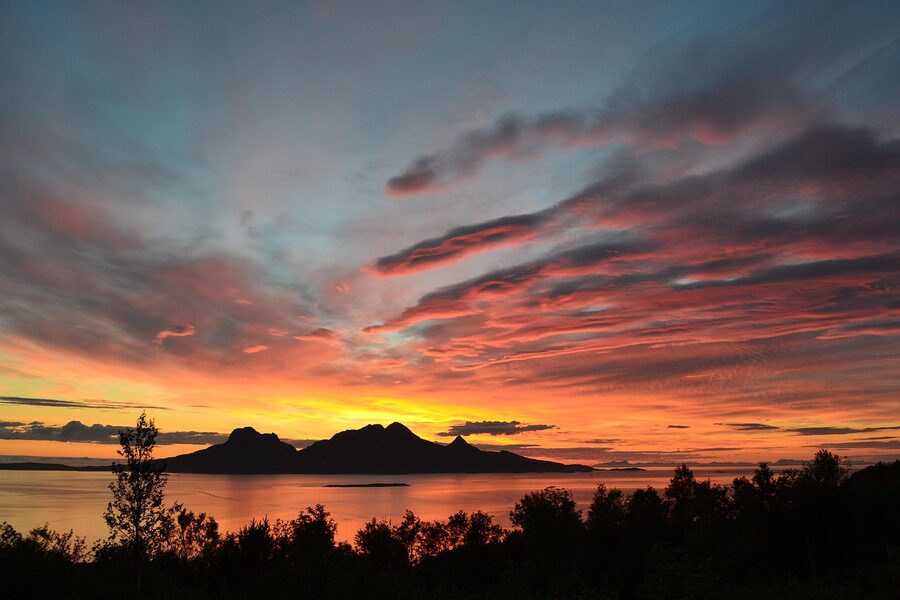
Best weather, longest light, every trail open, every café open. Reinebringen has been climbed thousands of times by lunch. Expect to share Hamnøy bridge with twenty photographers at any clear sunset and book accommodation four to six months out. From late June to mid-July the sun never properly sets. You can hike at midnight in T-shirt weather. The downside: crowds, prices up about 25% on shoulder season, mosquitoes inland in late July.
Late August to mid-September: the sweet spot
I’d argue this is the best window. The summer crowds thin out by 20 August. Days are still long. The first proper aurora appears from late August onwards, when the nights get dark enough again. Restaurants and ferries still run on summer schedule. Weather is typically a mix of bright cold days and the occasional storm. Prices drop. Accommodation is bookable a month out.
February to early April: aurora and winter peaks
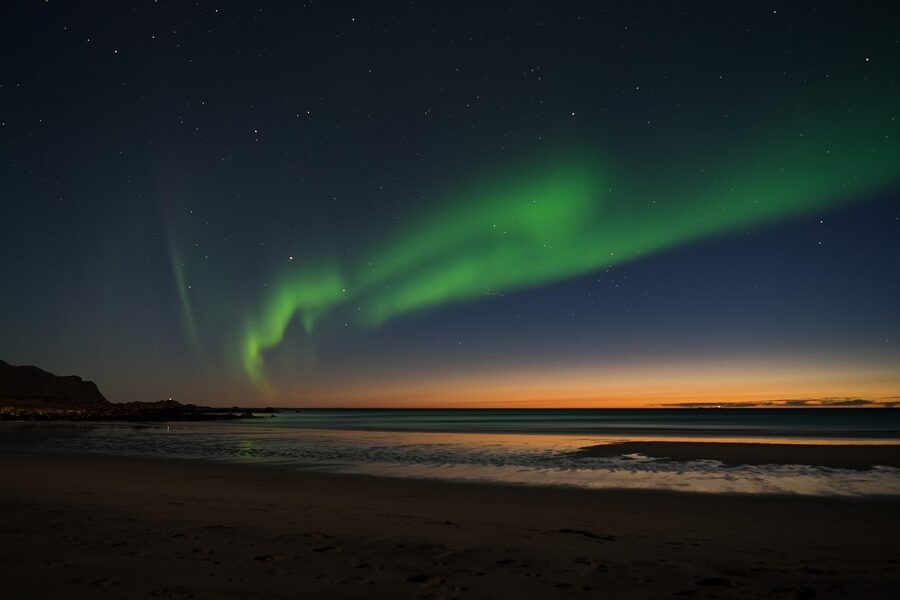
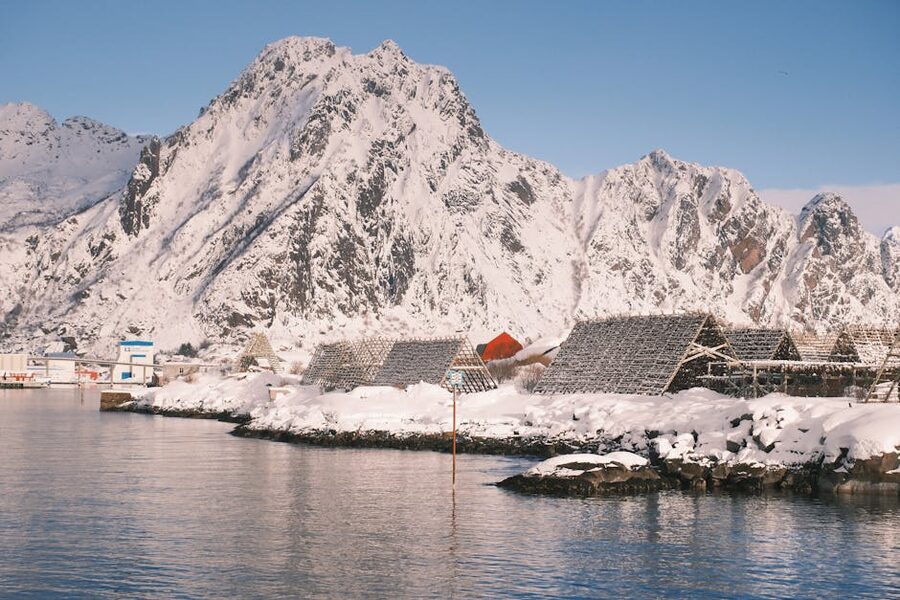
Go for the aurora and the snow on the Lofotveggen, the wall of peaks the islands are named for. Reinebringen is closed in winter (icy, dangerous). Ferry schedules are reduced. Days run from about 09:30 to 14:30 in February, lengthening fast through March. Lofoten’s aurora chances are real but more weather-limited than inland Sweden. For raw odds, see the Tromsø vs Abisko comparison. As a bonus to a road trip, though, dark hours with clear skies plus the red cabins in snow is the best combination of subjects in the Nordics.
What to avoid: October, November, December
October to early December is rain season. Storms hit weekly. Days short. Aurora visible but heavily clouded. Several rorbu owners have told me bookings drop nearly to zero in November because guests routinely report seeing nothing for five days running. If you want winter, wait for February when the snow has set in and the aurora season is reliable.
Late December to early February: dark and cold but quiet
The polar night runs from 7 December to 5 January in southern Lofoten. The sun doesn’t rise. There’s a long blue twilight in the middle of the day. It’s beautiful, weirdly silent, and most things are shut. Aurora chances are decent on clear nights. This is a niche trip for people who specifically want darkness and quiet, not for a 3-day first visit.
The 4-day itinerary I’d actually do
This assumes you fly into Evenes, drive south, and ferry out from Moskenes to Bodø on day 4. Reverse if you fly into Bodø.
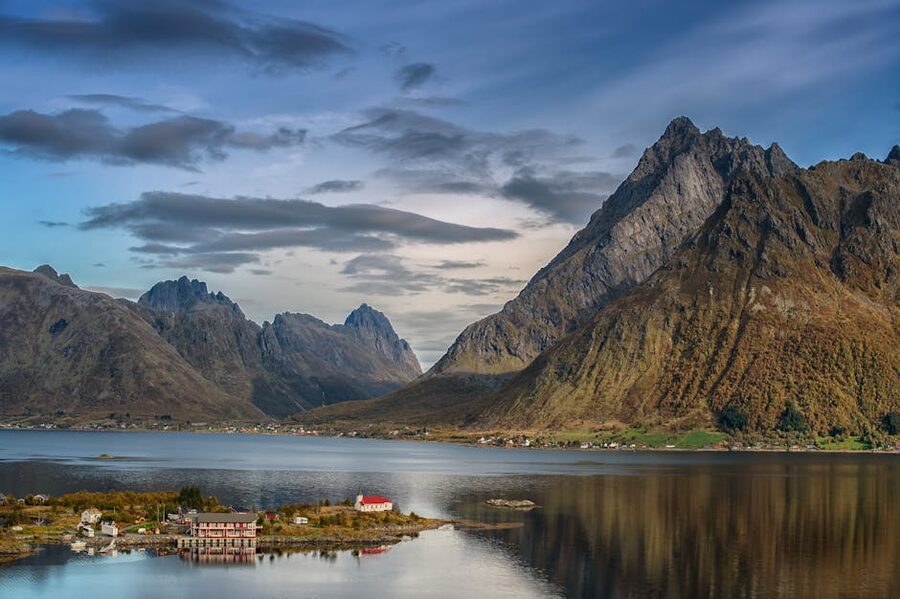
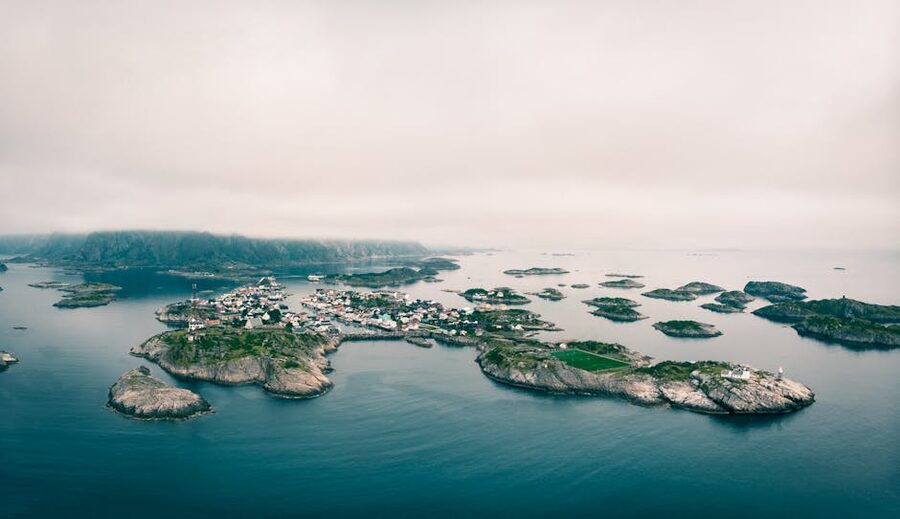
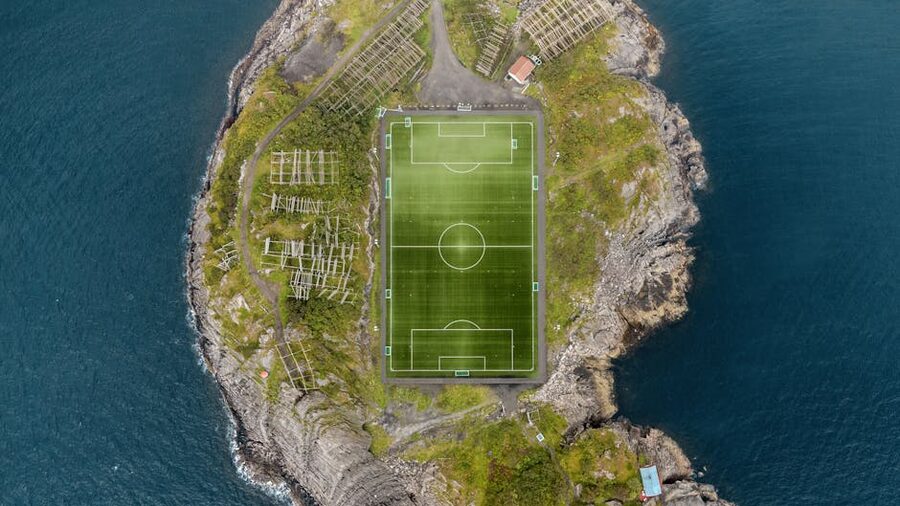
Day 1: Evenes to Svolvær via Henningsvær (driving 2h45 net, plan 6h with stops). Fly in by 13:00. Pick up the car. Drive south on the E10, cross the Tjeldsund Bridge, then the Hadsel and Raftsund bridges into Lofoten proper. Stop at Svolvær for a coffee and a look at the harbour. Drive 30 minutes south to Henningsvær, walk the village, see the football pitch on the rock from above (turn-off signed Festvågtinden, climb 20 minutes for the photo), eat at Fiskekrogen if you have a reservation or Klatrekaféen if you don’t. Sleep in Henningsvær or back in Svolvær.
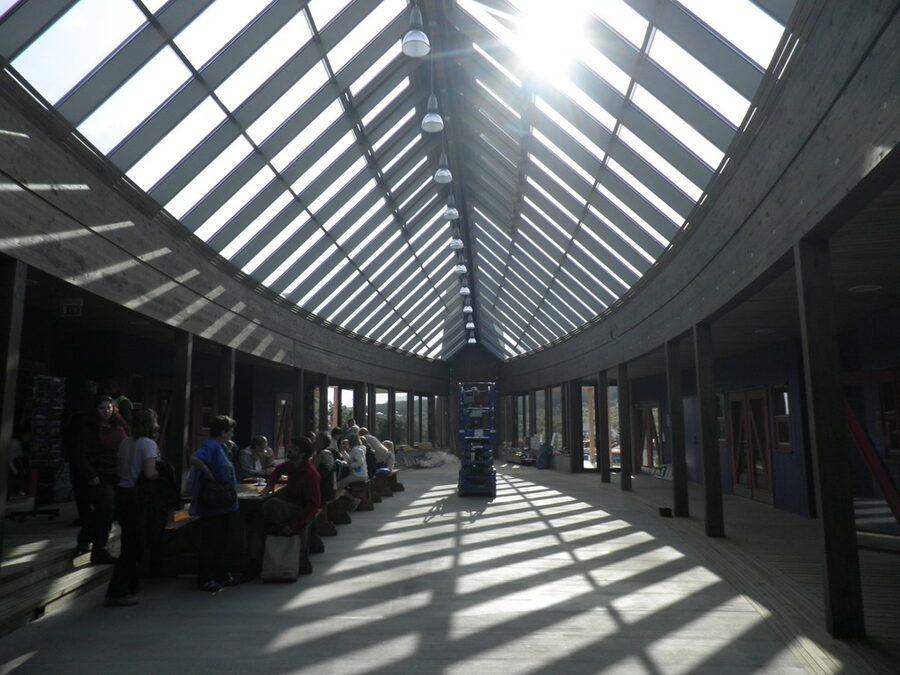
Day 2: Henningsvær to Reine via Borg, Haukland, and Eggum (driving 1h50 net, plan 8h with stops). Drive south to the Lofotr Viking Museum at Borg. This is the Borg longhouse, the largest Iron Age building ever found in Scandinavia, excavated in the 1980s and reconstructed at full 83-metre length. Adult ticket 220 NOK (~€19), open 10:00 to 17:00 most of the year, longer in summer. Hour or so inside. Then drive to Eggum (most people don’t), 25 minutes off the main road on a small turn-off, where there’s a stone-art installation by Markus Raetz called Hode on the cliff and almost nobody around. Lunch at Haukland Beach. Push on through Nusfjord (worth the detour, paid entry 100 NOK in summer for non-staying visitors). Sleep in Reine, Hamnøy, or Sakrisøy. These three are a walking distance apart.
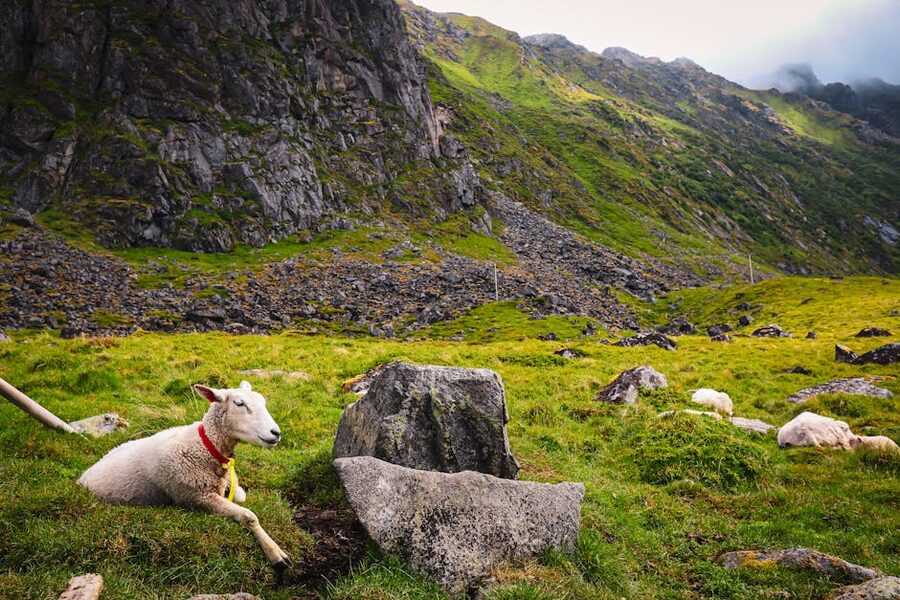
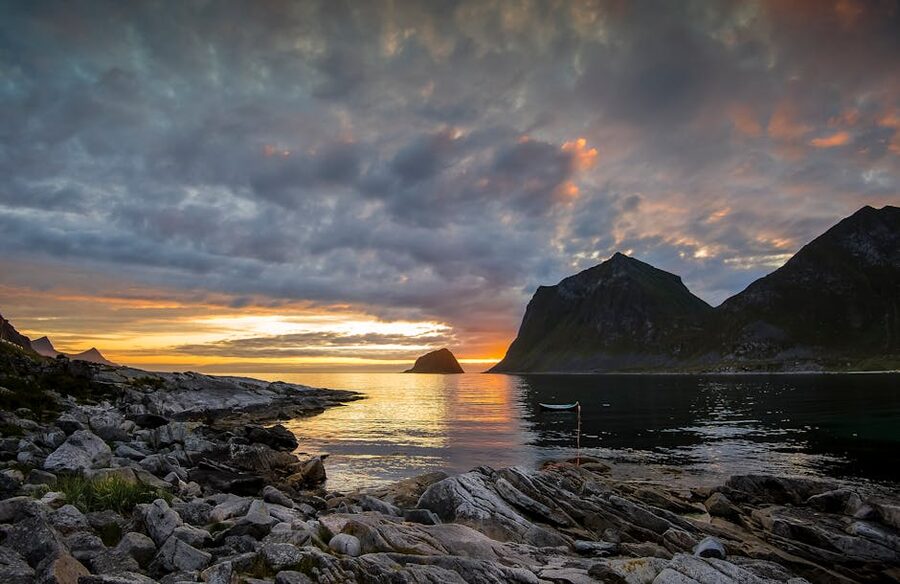
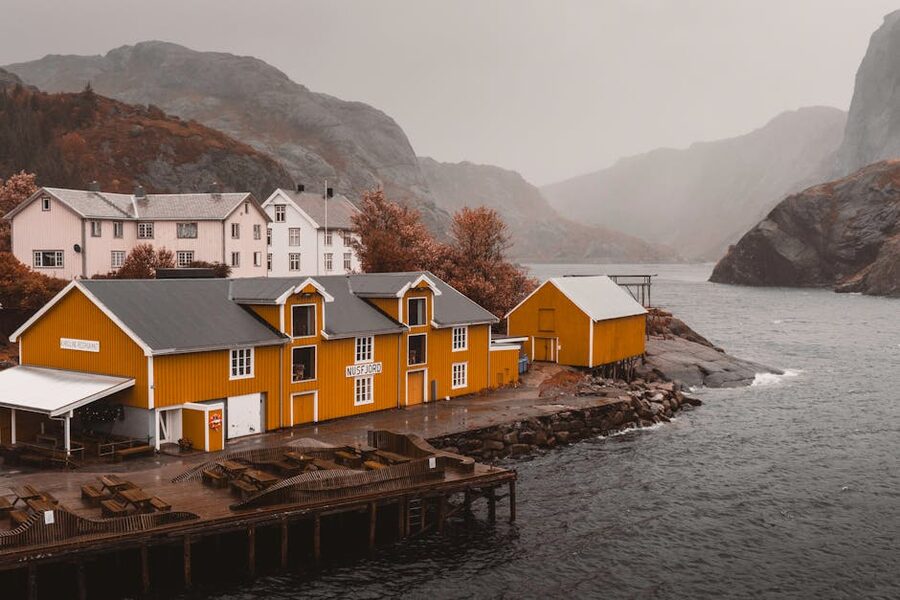
Day 3: the Reine area (driving under an hour total). This is the day to slow down. Reinebringen takes 1.5 to 2 hours up via the stone steps trail (only walk it in dry conditions, or at all in summer; it’s closed and lethal in winter). Or skip the climb and walk the bridges between Hamnøy, Sakrisøy, and Reine, about an hour of slow walking with stops at every red cabin. Lunch the small Bringen Café in Reine or Anita’s Sjømat in Sakrisøy for the best fish burger I’ve eaten in Norway. Drive 15 minutes south to Å in the late afternoon, walk around the museum-village section before the staff leave at 17:00, and watch the racks of cod come into focus in the lateral evening light. Back to Reine for dinner.
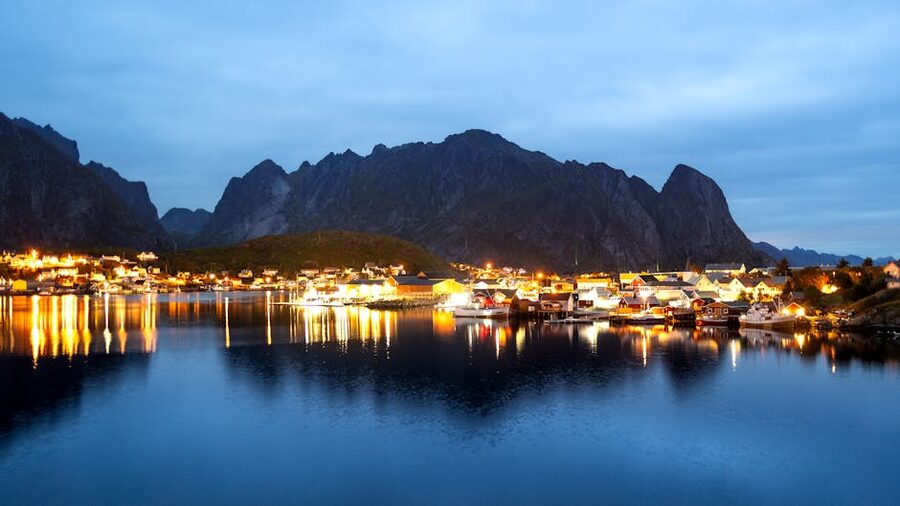
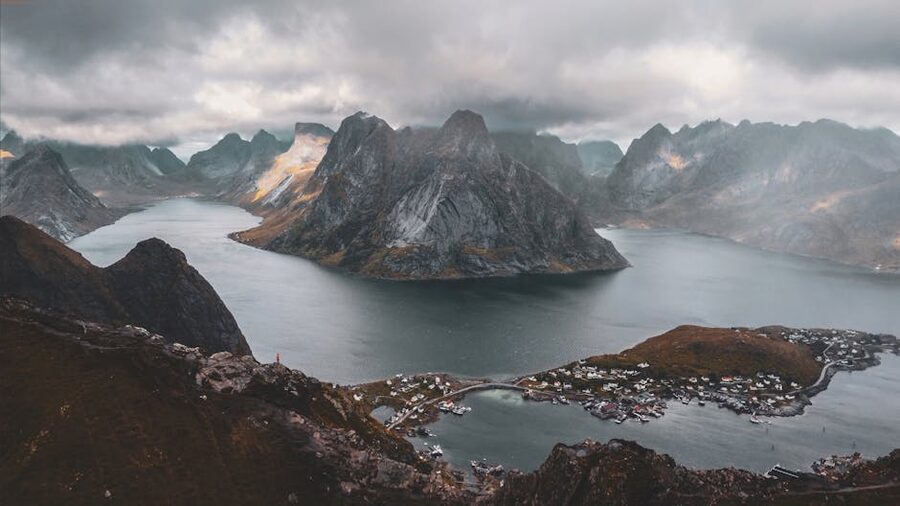
Day 4: Reine to Moskenes ferry to Bodø flight (3 hours travel + ferry crossing 3.5 hours). Slow morning. Walk the village. Ferry from Moskenes to Bodø. Drop the rental at Bodø airport. Fly home from there. Or: skip Bodø and reverse-drive back to Evenes, which makes day 4 a 4-hour drive with one coffee stop, your call. If you’re flexible, take the ferry. Watching Lofoten recede over the stern is a better goodbye than another tunnel.
The 3-day version: cut day 2 in half
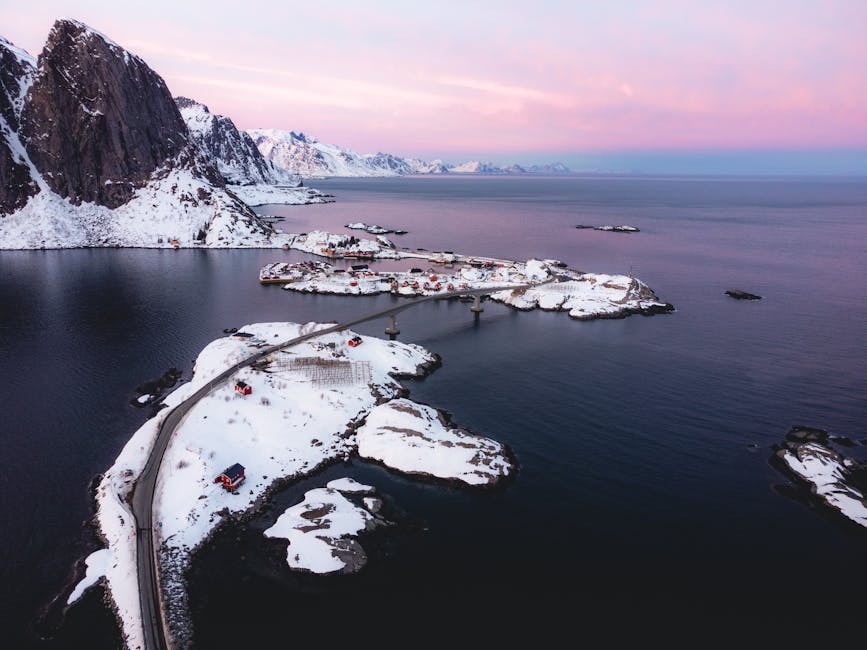
If you only have three days: drop Eggum, drop Borg, and base yourself in or near Reine for two of the three nights. Day 1 is still Evenes to Svolvær via Henningsvær. Day 2 is a faster drive south to Reine with one stop at Haukland Beach. Day 3 is Reine plus Reinebringen plus Å, then back to Bodø. You give up Borg and the Eggum diversion. Henningsvær you keep. The football pitch and the bridges are non-negotiable for a first visit.
Where to stay: rorbu cabins, what they actually are now
The original rorbuer were one-room shelters thrown up on stilts at the water’s edge for fishermen during the Lofoten cod season, January to April, when men came from all over the coast to catch the spawning cod. They slept four to a bed, hung their oilskins outside, and went home in the spring. Most are now restored holiday cabins. They’re not all old. Roughly 20% are genuine 19th-century buildings restored, 80% are reproductions built since the 1990s in the same red-and-white style. Both are fine.
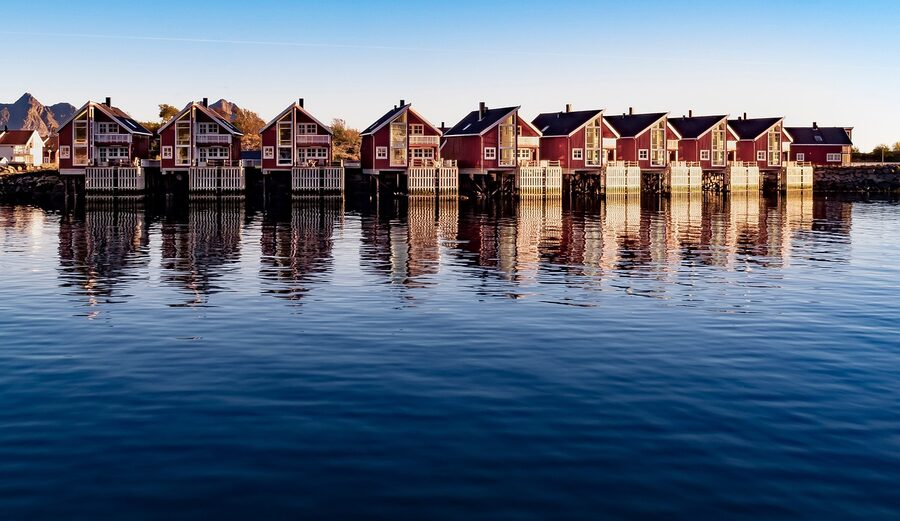
Prices in summer typically run 2,200 to 3,800 NOK (~€191 to €330) per night for two people in a basic 2-person rorbu with kitchen, double or triple that for the famous ones in famous spots. October to early February drops 30 to 40%.
The ones I’d recommend, by area
Reine / Hamnøy / Sakrisøy: The classic base. Eliassen Rorbuer in Hamnøy rents the actual cabins from the famous photo and is reliable but pricey. Sakrisøy Rorbuer is yellow instead of red, slightly quieter, and has the same view. Reine Rorbuer is in the village itself with restaurants in walking distance.
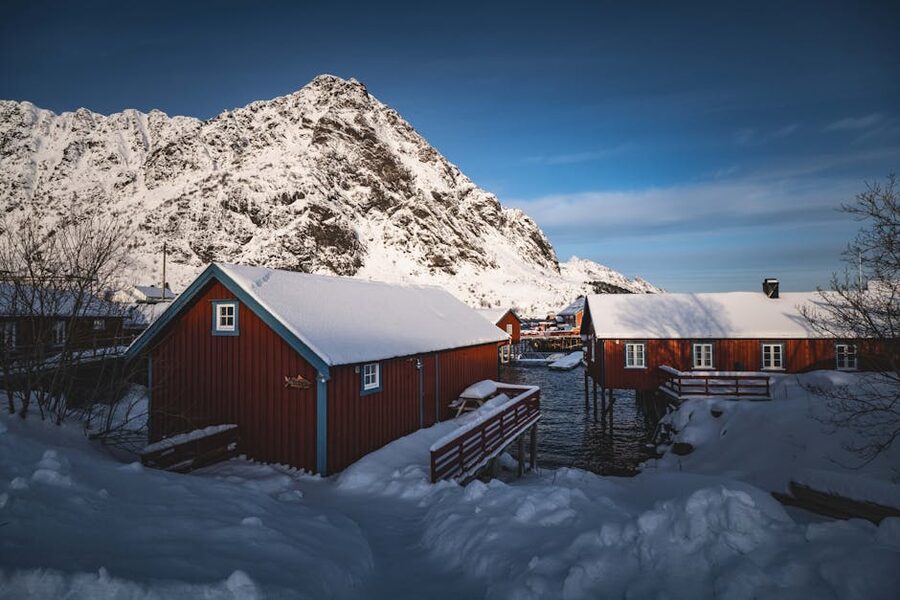
Henningsvær: Henningsvær Bryggehotell for a hotel-style stay over the water, or one of the small rorbu rentals in the village itself.
Nusfjord: Nusfjord Arctic Resort owns most of the village. Pricey, but staying there is the only way to be in Nusfjord after the day visitors leave at 17:00, which is when it’s actually quiet.
Svolvær: Svinøya Rorbuer on a small island ten minutes’ walk from the centre is the most atmospheric option. Actual restored fishermen’s cabins with kitchens. Anker Brygge is the harbour-front alternative.
Ballstad: Hattvika Lodge is the design-led one, close to Leknes airport, good for a one-night stop if you fly into Leknes.
Å: Å Rorbuer and Å Hamna Rorbuer are the two main rorbu clusters in the museum village itself. Useful if you have an early Moskenes ferry. The terminal is a four-minute drive.
For aurora specifically: Lofoten Links Lodges on Gimsøy. North-facing windows, dark site, on the ocean. Built around the world’s most northerly proper golf course.
Eggum: the one I keep telling people about
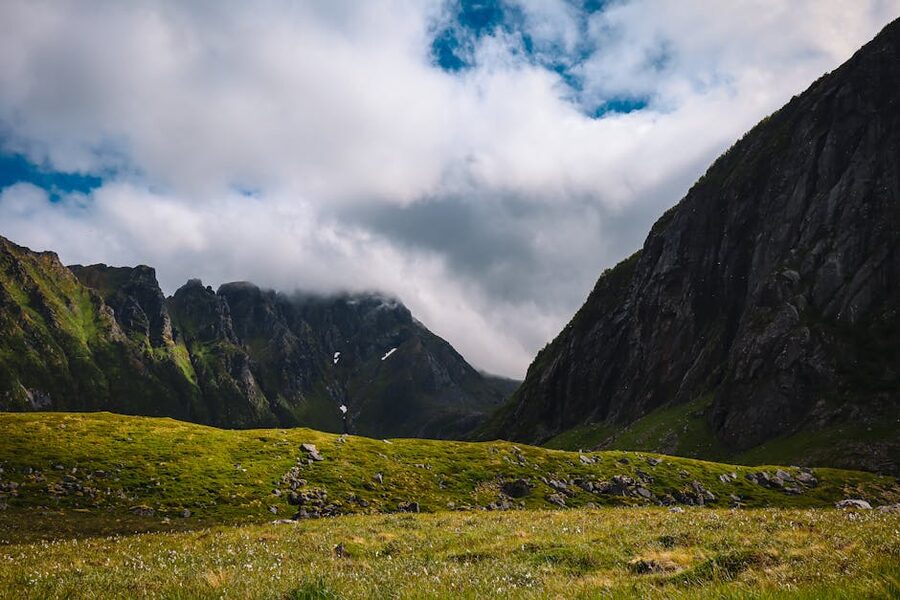
Henningsvær and Reine are on every list. Nusfjord is too. Eggum, on the north coast of Vestvågøy island, is where I’d send anyone who has driven through Lofoten before. The road in is 4 km off the main route, ending at a small village of red houses, a few sheep, and a stone-built sculpture by Swiss artist Markus Raetz called Hode (‘Head’) from the Norwegian Scenic Routes art programme. From there a flat coastal trail runs north for about an hour past German WWII radar bunker ruins, lichen-covered boulders, and views straight out to the open Atlantic. On a clear day in June you can see the Vesterålen islands. I’ve walked it three times and met four other people. The Norwegian government has, sensibly, not advertised it.
What to eat and what to skip
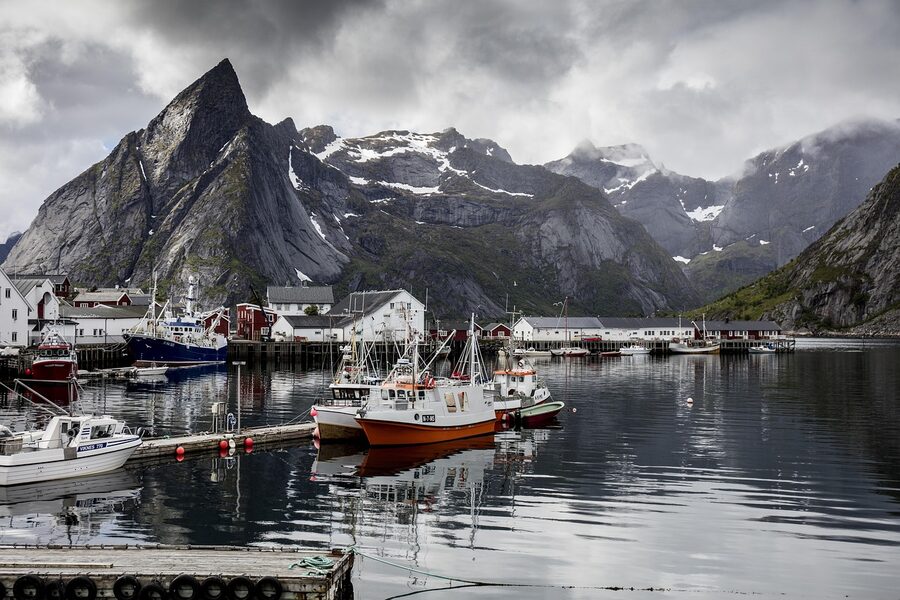
Lofoten food is mostly fish. Fresh cod, halibut, and torrfisk in winter and early spring. Reindeer and lamb in summer. The good places are scattered.
Worth the money: Fiskekrogen in Henningsvær (the seafood soup is genuinely the best in Lofoten, 280 NOK / ~€24, book ahead), Anita’s Sjømat in Sakrisøy (fish burger 250 NOK / ~€22, no booking, midday queue), Brygga Restaurant at Å Rorbuer (cosy Lofoten interior, fish stew around 320 NOK / ~€28), and Klatrekaféen in Henningsvær (climbers’ café with surprisingly good seafood pasta around 220 NOK / ~€19).
Skip: the gas-station hot dogs (genuinely bad), most of the bigger hotel restaurants (overpriced and uninspired), and the seafood “experiences” advertised on Klook for 1,500 NOK that turn out to be a soup tasting on a boat. If you want a boat experience, book the Trollfjord cruise from Svolvær or a sea-eagle safari in Svolvær harbour separately.
Self-catering is realistic. Every rorbu has a kitchen. Joker, Coop Extra, and Rema 1000 have stores in Svolvær, Leknes, Reine, and other villages. A couple cooking pasta with cod and butter spends around 200 NOK (~€17). The supermarket fish counter in Leknes is genuinely good.
Cod, racks, and a brief history note
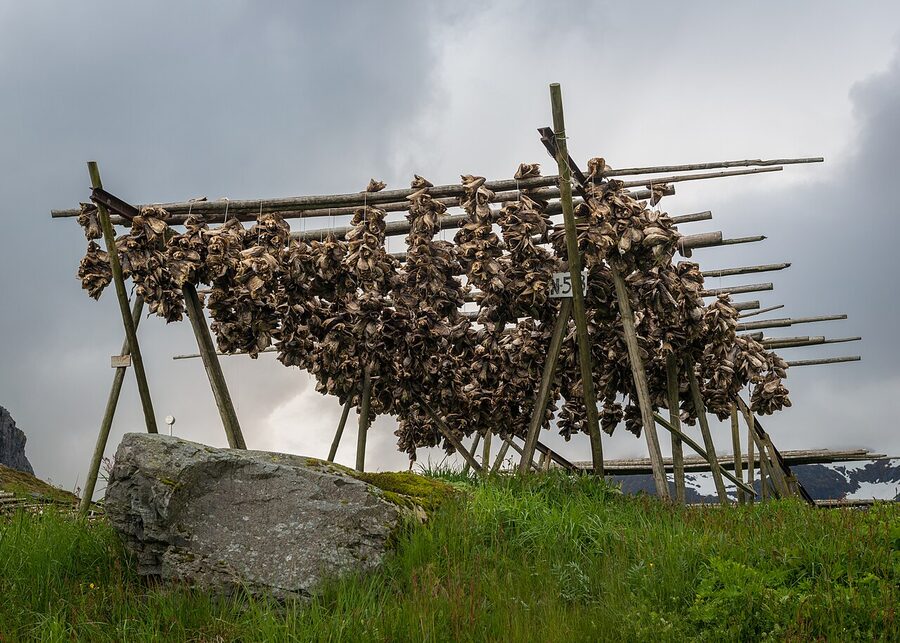
Lofoten’s pull is partly geography and partly that this place has been culturally specific for a very long time. The Lofotfiske, the Lofoten cod fishery, has been documented from the 1100s, when King Øystein Magnusson built fishermen’s huts at Vågar (near today’s Kabelvåg) to support the spawning-season fleet. From the 1300s the Hanseatic merchants in Bergen bought up most of the dried cod produced here and shipped it across Europe; by the 1500s, Lofoten torrfisk was the staple of Lent across Catholic Italy. The connection is still alive. Italy buys about 75% of Lofoten’s stockfish today, mostly for Venetian baccalà and Sicilian stocco.
The other historic anchor is at Borg. The chieftain’s longhouse excavated there in 1981, and reconstructed at full size, is the largest known Iron Age building in northern Europe: 83 metres long and dated to around 500 to 950 AD. The site predates the cod fishery by several hundred years and tells you that the islands were a power centre on the trans-Atlantic North Sea trading route long before the Hanseatic period. The museum at Lofotr is genuinely good, especially with kids, and one of the better hours’ indoor activity options on a wet afternoon.
A short note on driving in Lofoten
The E10 is two-lane, well-maintained, and signed in Norwegian and English. Speed limits are 80 km/h on open road, 50 in villages, 30 around tunnels and bridges. Tunnels are common, narrow, and frequently single-lane in older sections. Give way to oncoming traffic at the marked passing bays. There are no toll roads in Lofoten itself but the bridges going north (Hadsel, Andøy crossings) have toll cameras tied to your rental’s licence plate. Fuel is in Svolvær, Leknes, Reine, and Å. Roughly 24 NOK (~€2.10) per litre at the time of writing, about double what you’d pay in central Europe.
One overlooked thing: stopping. Norwegian Scenic Routes has put proper laybys every few km. Use them. Stopping on the road for a photo causes accidents (the kind a Norwegian local will be furious about), and there’s almost always a designated pull-off within 500 metres. Don’t be the person stopping on Hamnøy bridge.
A 4-day budget, two people, late August
Here’s roughly what a mid-range trip costs. I’ve used real numbers from a friend’s late-August 2025 trip, two adults sharing a basic rorbu.
- Flights Oslo to Bodø return: 2,200 NOK (~€191) per person
- Hire car 4 days, compact, with airport pickup: 4,800 NOK (~€416) total
- Ferry Bodø to Moskenes one way with car: 1,400 NOK (~€121)
- Three nights in rorbu cabins at Reine, Henningsvær, Svolvær mix: 8,400 NOK (~€729) total
- Meals (one cooked, one out per day for 4 days, two people): 5,200 NOK (~€451)
- Fuel for 600 km of driving: 900 NOK (~€78)
- Lofotr Viking Museum, Reinebringen parking, Nusfjord entry, miscellaneous: 800 NOK (~€69)
Per couple total: roughly 25,900 NOK (~€2,250). Per person around 12,950 NOK (~€1,125). You can shave 30% off this in shoulder season or by self-catering more aggressively. Adding a second couple in the same rorbu drops the per-person hotel cost considerably.
Combining Lofoten with the rest of Norway
Lofoten works best when you fold it into a longer Norway trip. A few combinations that don’t double-back:
Oslo, then Lofoten (one week): Oslo for two days, fly direct to Bodø or Evenes, do the 4-day road trip, fly back. The most efficient first-visit Norway week. Start with the Oslo city guide for Norway’s only proper urban day. Direct SAS or Norwegian flights between Oslo and Bodø run several times a day.
Bergen Line, then Lofoten: Take the Oslo to Bergen scenic train, fly Bergen to Bodø (1h25), do Lofoten. Adds the most beautiful train journey in northern Europe to a road trip in arguably the most beautiful coastline in northern Europe.
Lofoten plus aurora: February or March, do the 3-day Lofoten road trip, then fly Bodø to Tromsø (45 minutes) and overnight there for the aurora. See the Tromsø vs Abisko comparison for which to pick. Lofoten gives you the dramatic landscape; Tromsø or Abisko gives you the highest aurora odds.
Lofoten plus Iceland (cross-country): Different trip, similar style. If you liked the empty roads and fishing villages, the Iceland Ring Road in 7 days is the obvious next thing. Lofoten is more vertical and small-scale, Iceland more horizontal and big-country. Same red wooden buildings, different volcano-vs-glacier flavour.
Things that surprised me on my first trip
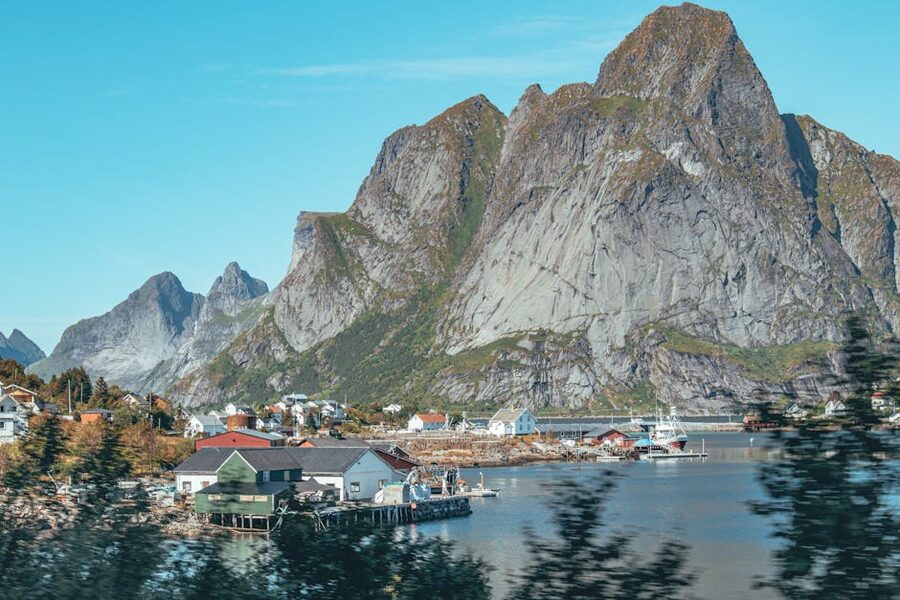
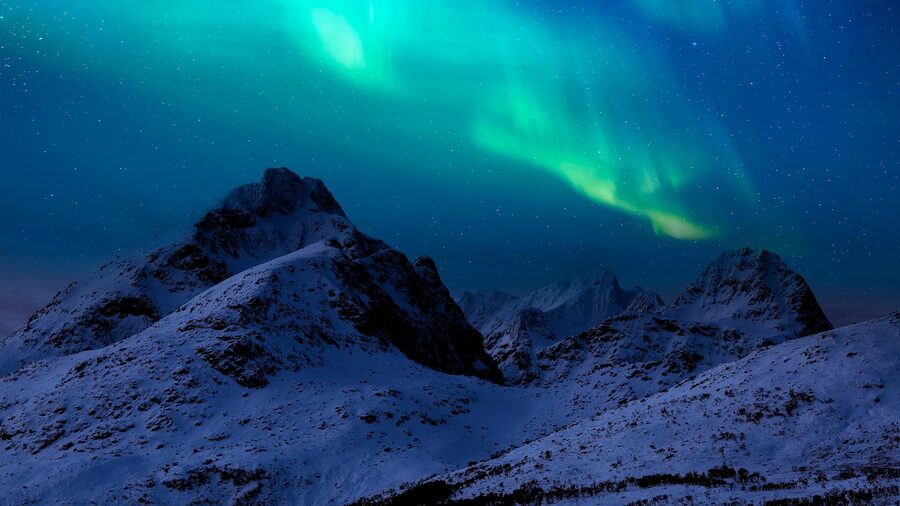
A few things that nobody warned me about. Mosquitoes inland in late July: bring repellent, the Lofotr museum trail is a feeding ground after rain. Wind: the wind on the bridges between Hamnøy and Reine is genuinely strong and has flipped over a couple of small SUVs in the last decade. Don’t drive across in 25 m/s gusts. Daylight: in early June at 23:00 it’ll feel like 18:00. Set alarms. Cash: nowhere takes it. Card readers everywhere, including the small museum-village kiosk in Å. And tunnels: if you have a small rental, the older Lofoten tunnels are unlit, narrow, and weirdly disorienting. Slow down to 50 even where the limit says 80.
One last thing. The day everyone tells you to drive is sunset at Hamnøy bridge. It is, unfortunately, exactly as good as the pictures. Park at the small lot just south of the bridge, walk back onto the bridge with caution (cars do come at speed), and stand on the eastern walkway with the row of red cabins to your left and the toothed line of Olstind, Tonkjølen, and Festhælen rising out of the water. From late September, half the time you’ll get pink alpenglow. The other half, it’ll rain horizontally. Both are fine.
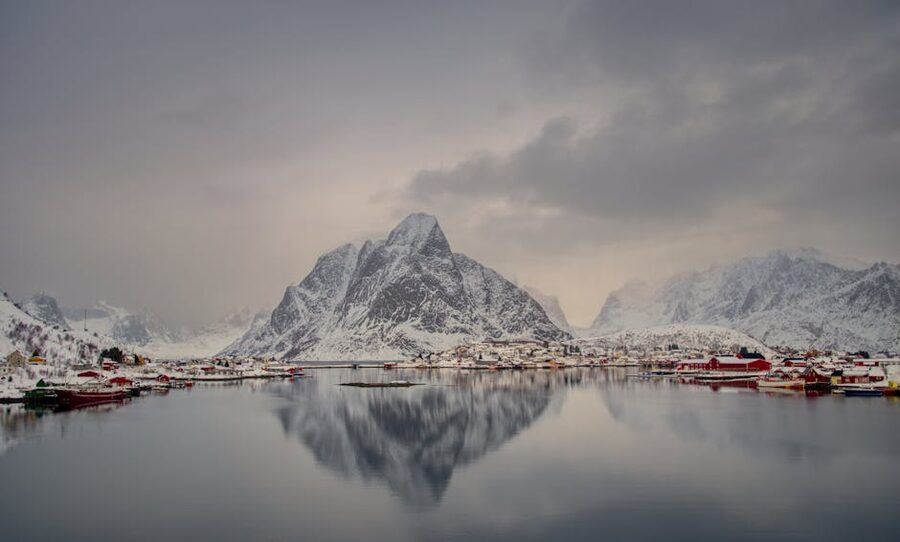
Drive south, fly north, take the ferry. Go in late August or in March. Stay in a rorbu with the window facing the sea. Skip the Tromsø day-trip. It isn’t Lofoten, and Lofoten deserves three nights, not three hours.