
On the night of 4 September 1827, a fire started in a barn on the eastern bank of the Aurajoki and burned for three days. By the time the smoke cleared on 7 September, three quarters of Turku was gone. The medieval university, the bishop’s archives, the wooden craftsmen’s quarters, the timber houses that had grown up along the river since the 1200s, all of it ash. It was the worst urban fire in Nordic history. Fifteen years earlier, in 1812, Tsar Alexander I had already moved the capital from Turku to Helsinki to put it 165 kilometres further from Stockholm and closer to St Petersburg. The fire sealed the demotion. Helsinki got a new neoclassical heart designed by Carl Ludvig Engel, who had already moved his practice east. Turku stayed on the Aurajoki and rebuilt itself slower, lower, in the grid you walk through today. That double blow, 1812 and 1827, is the story of the city, and once you can see it, you can’t unsee it.
I came to Turku the first time treating it as a Helsinki day trip and got it badly wrong. You can do the cathedral and the castle in seven hours and feel like you’ve covered the city, but you’ll have missed the river, which is the actual point. The second time I gave it three days and left wishing I’d given it four. This is the guide I wish I’d had on the first trip: how to read what the fire and the capital move did to the city, what’s actually worth the entrance fee, how to use the Aurajoki the way locals do, and how to chain Turku into Naantali, Ruissalo and the Archipelago Sea without the bus tour. Prices are 2026, in euros, with hours noted where they matter. Skip the medieval-fair gimmick if you can avoid it. Don’t skip the Föri.
In This Article
- The two histories that shaped the city
- Turku Cathedral: the church that won’t leave
- The Aurajoki: the river that is the city
- Turku Castle: the second stone building
- Aboa Vetus & Ars Nova: medieval foundations under a contemporary art museum
- Forum Marinum and the Aurajoki maritime quarter
- Luostarinmäki: the wooden quarter the fire missed
- Old Great Square, Brinkkala, and the Christmas Peace
- Kauppatori, the modern market square
- The Archipelago Sea: 50,000 islands and one ring road
- Naantali: Moomins, the King’s Road, and the wooden Old Town
- Ruissalo: oaks, jazz, and the spa hotel
- Where to stay in Turku
- Hotel Kakola: the converted prison
- Scandic Hamburger Börs (formerly Original Sokos Hotel Hamburger Börs)
- Park Hotel Turku
- Solo Sokos Hotel Turun Seurahuone
- Centro Hotel Turku
- Radisson Blu Marina Palace
- Naantali Spa Hotel
- Ruissalo Spa Hotel (Holiday Club Caribia)
- Hotel Helmi
- Eating in Turku
- How to get to Turku
- When to come
- Two and three day routes
- Two days, no archipelago
- Three days with the archipelago
- What I’d skip
- Linking Turku into the rest of a Nordic trip
- One more thing
The two histories that shaped the city
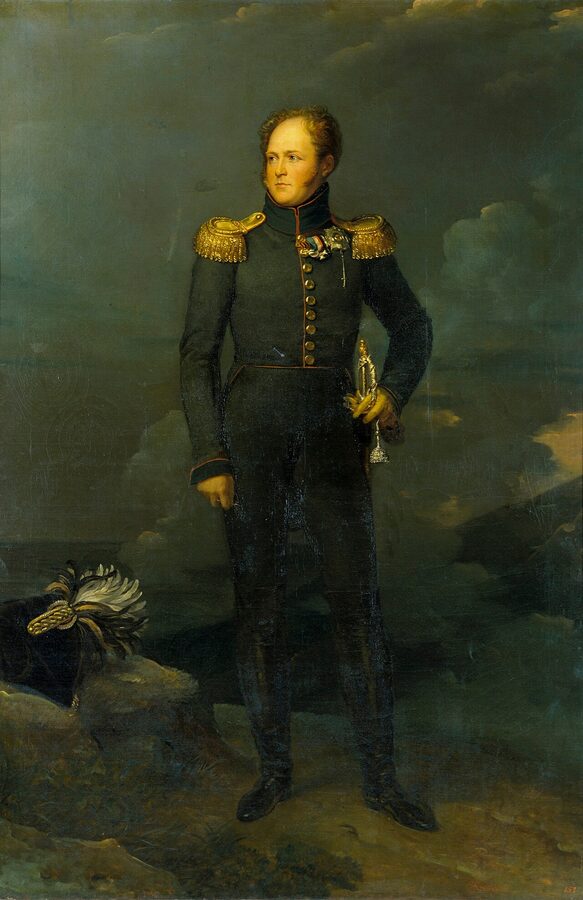
Turku was the capital of Finland from the 1290s, when Sweden built the castle, until 1812. For five centuries it was the country, in the way these things worked then. The Royal Academy of Turku (Kungliga Akademien i Åbo) was founded in 1640, the only university in the Finnish realm. The bishop’s seat sat at the cathedral. The harbour at the mouth of the Aurajoki was where Sweden’s grain came in and Finland’s tar went out. When Sweden lost the Finnish War to Russia in 1809, the country became the Grand Duchy of Finland under Russian rule, and Tsar Alexander I had to decide what to do with the new capital.
He moved it. Helsinki was already the obvious geographic choice, sitting on the Gulf of Finland three hundred kilometres east, far enough from Stockholm to break the Swedish gravitational pull. The decree was signed on 8 April 1812. The administration moved over the next decade, the university followed in 1828, and a German-born architect called Carl Ludvig Engel was given the brief to build a new neoclassical heart for Helsinki that would look like an imperial Russian capital. Senate Square in Helsinki, with the cathedral and the Senate building, is what Engel built. He died in 1840, having designed about thirty buildings in Helsinki and leaving Turku quietly behind.
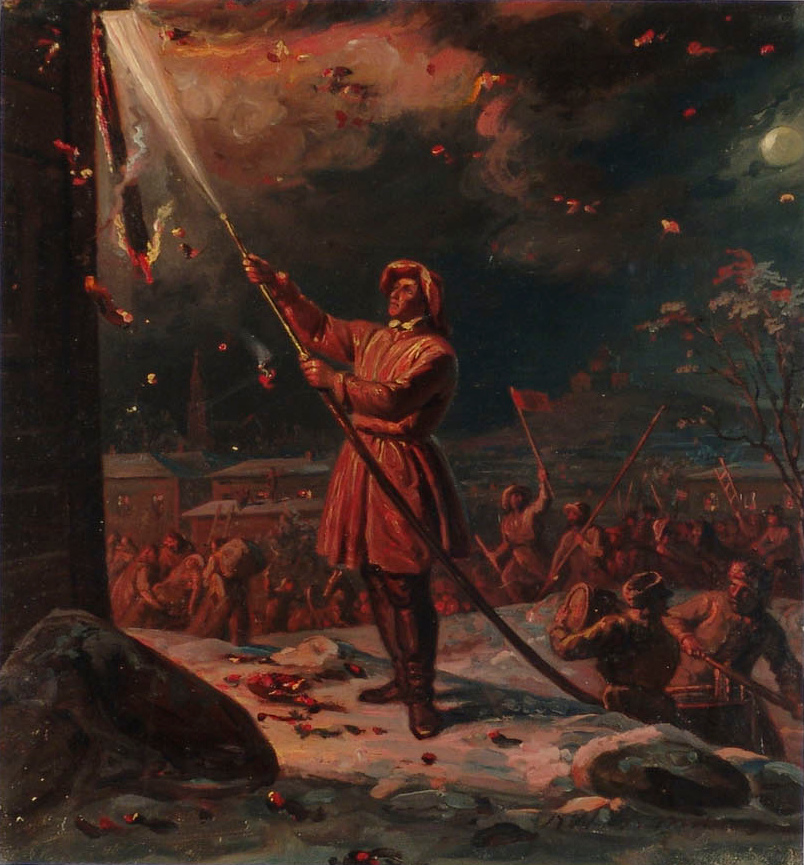
Then the fire. On the evening of 4 September 1827, a barn on Aninkaistenkatu caught light. The wind picked up, the wooden roofs caught one after another, and over the next three days the fire crossed the river twice. By the time the burning ended on 7 September, around 75% of the wooden city had gone, including most of the medieval academy buildings, the bishop’s library, and the wooden quarters that had given Turku its medieval texture. Eleven thousand people were homeless in a town of about thirteen thousand. The university was permanently relocated to Helsinki the following year. The decision Alexander I had made fifteen years earlier suddenly looked less reversible.
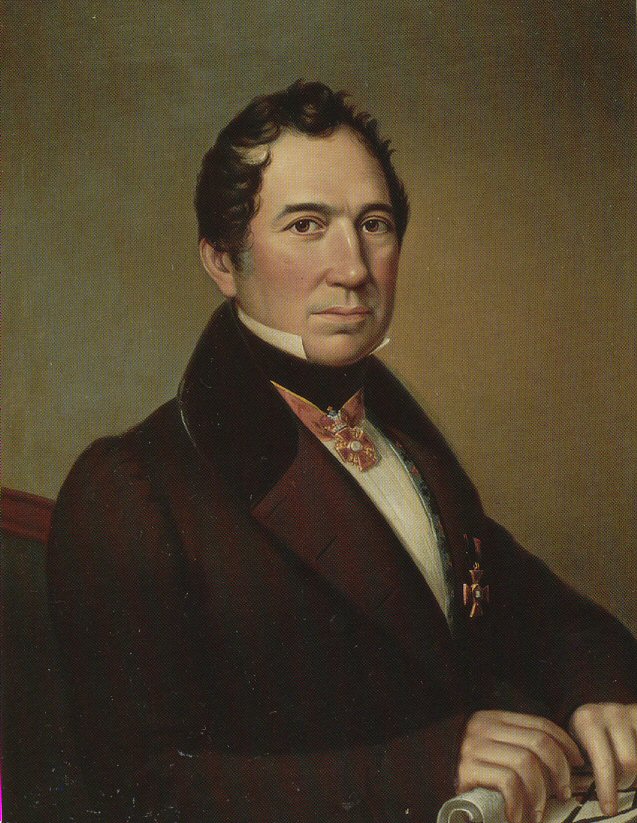
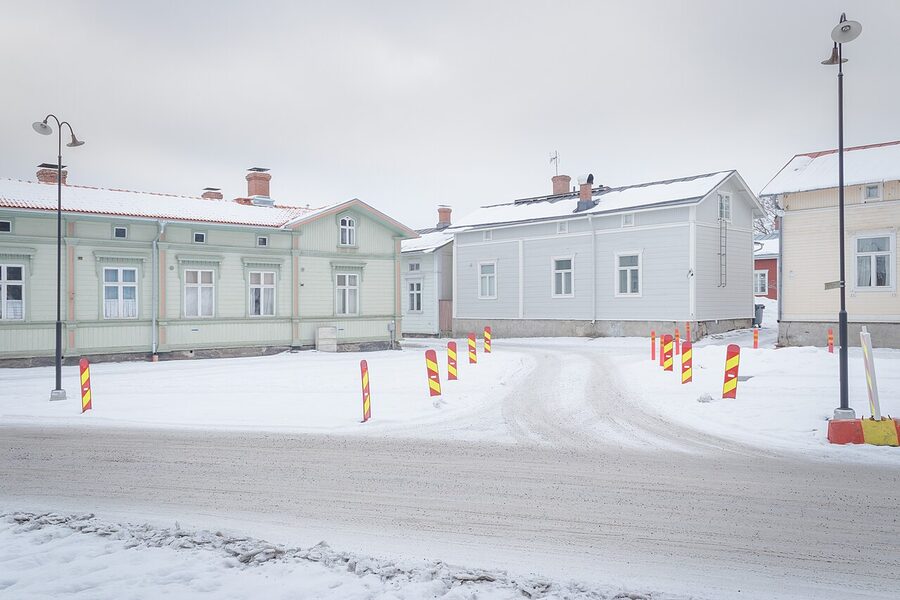
The grid you walk through in Turku now, the wide streets and the low neoclassical blocks, is the rebuild. The town engineer Carl Ludvig Engel (yes, the same one) was brought back to lay out the new street plan in 1828. He widened the streets to act as fire breaks, switched from wood to stone where possible, and gave the centre a calm, slightly austere geometry that doesn’t read as medieval anywhere except along the riverbank, where a few pre-fire wooden houses still stand. The early reaction to Turku, that the centre feels modern and a bit blank, is correct. It’s also the point. The blankness is the fire. Once you know that, the city becomes a much more interesting place to walk.
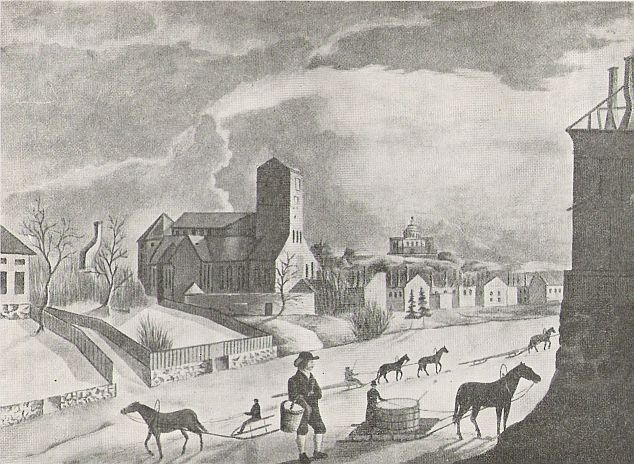
I find this more interesting than I expected to. Most European cities of this size have a continuous medieval texture you can read like a manuscript. Turku had its manuscript burned, and what’s left, the cathedral and the castle, was rebuilt and rebuilt again until they’re more about Finnish persistence than they are about the original. That’s the line I’d hold onto on a first visit: you’re not here for medieval Europe. You’re here for the post-1827 reconstruction of a city that lost almost everything and rebuilt with a wider grid.
Turku Cathedral: the church that won’t leave
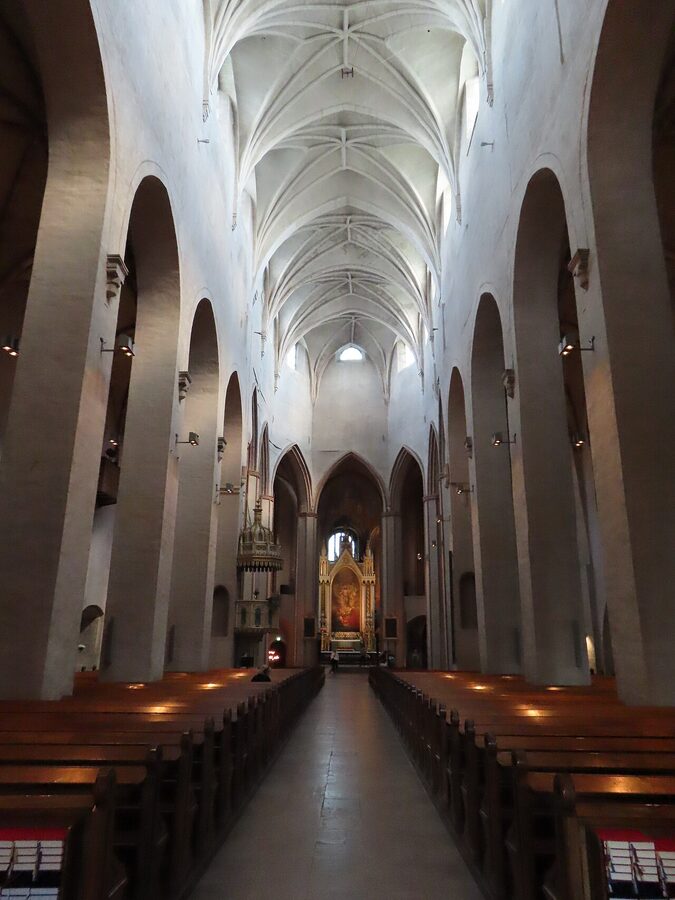
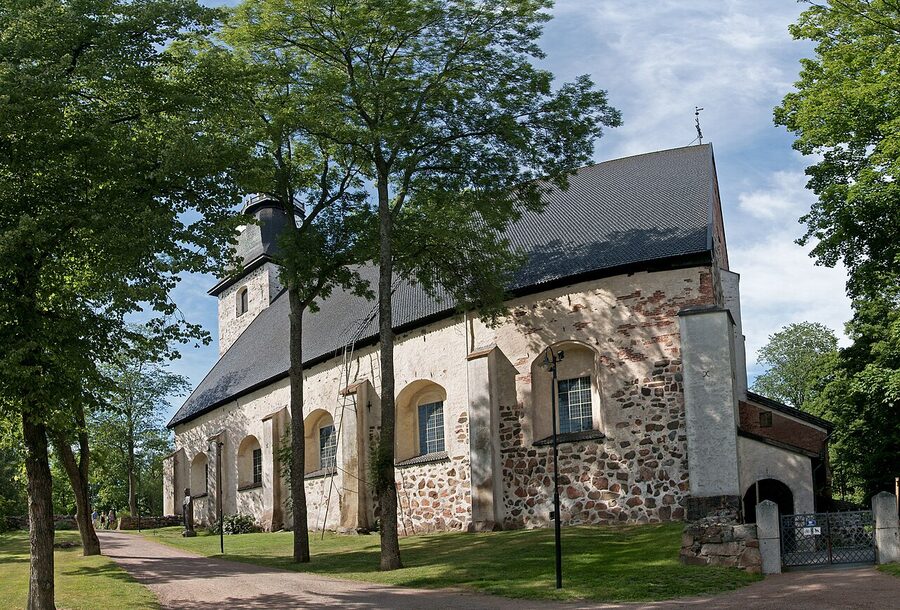
Turun tuomiokirkko was consecrated in 1300 as the seat of the Catholic Archdiocese of Finland. It’s the mother church of the Lutheran Church of Finland today and, with Turku Castle, one of only two stone medieval buildings still standing in the city. It is not Chartres. It is not Strasbourg. The whitewashed nave is austere, the vaulting is simple, and the bell tower is a stubby fortress more than a spire. None of which matters once you’ve stood inside for ten minutes, because the building is not really about Gothic ambition. It’s about how a country that arrived late to Christianity, in the 12th century, in stone, kept this single grand church standing through five fires and a Soviet bombing.
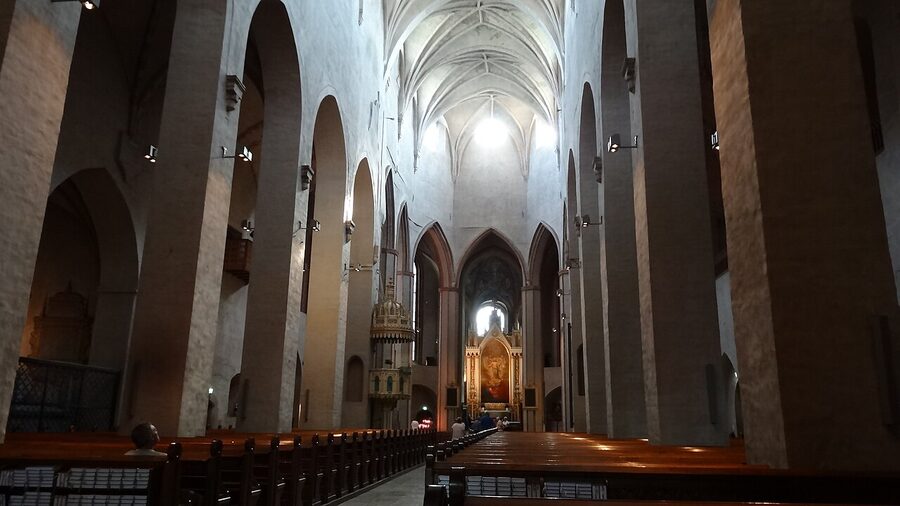
The current building is, in effect, the third or fourth Turku Cathedral. The first wooden church on the site went up in the 1230s. The stone version was consecrated in 1300, expanded into the 15th century with side chapels, then damaged in the 1827 fire badly enough that the high spire collapsed and the interior had to be redone. The 1827 reconstruction is what you see now. The Cathedral Museum upstairs in the south gallery (€5, included with the cathedral entry) walks you through the whole sequence with surviving fragments, including the medieval stone reliefs and a 14th-century crucifix that survived the fires.
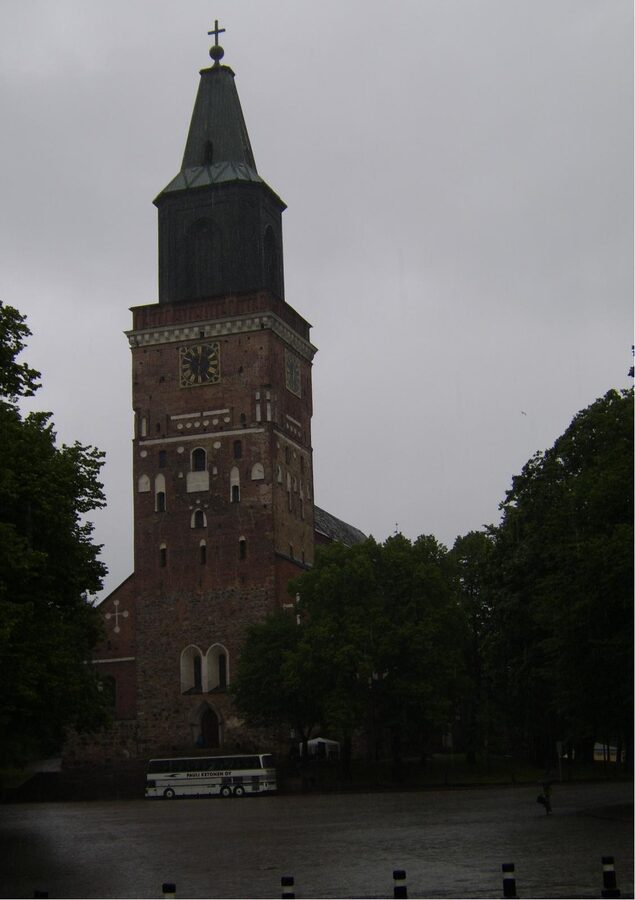
Practical: entry is free, donations welcomed. Open daily 09:00 to 19:00 in summer (mid-June to mid-August), 09:00 to 18:00 the rest of the year. The Cathedral Museum is €5 and worth it if you’ve got an hour. Try to be inside at noon on a weekday, when the bell tower’s chime, the same one broadcast on Radio Suomi nationally since 1944, sounds from above you. It’s a small thing, and the kind of small thing the city’s full of. The standard architecture-first take, that the cathedral is a mishmash of styles, is fair. But mishmash is what you get when a building survives 700 years of getting punched, and the layers of repair are, for me, the actual story.
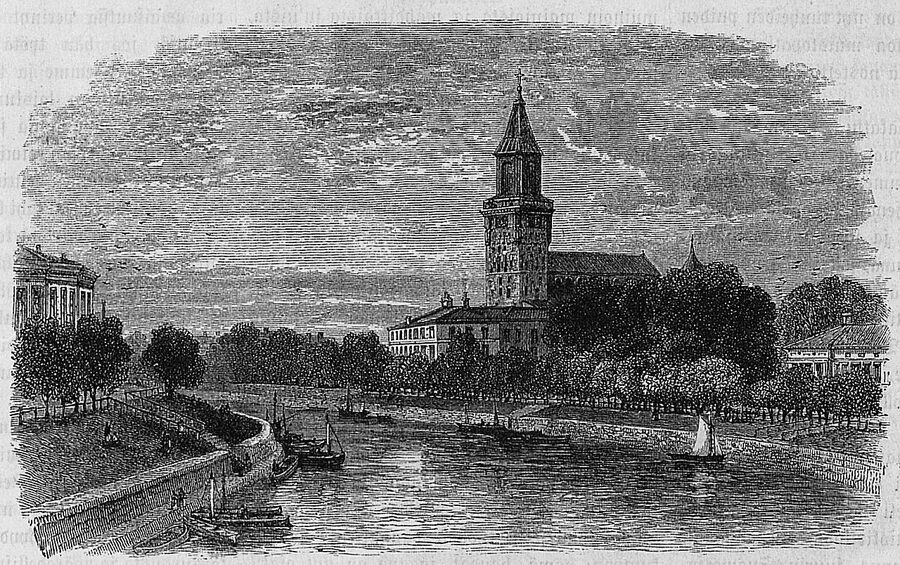
Above the cathedral runs the river. Walk out the west door, cross the small square, and you’re at the start of the Aurajoki promenade that leads down to Turku Castle. Most guides treat the cathedral and the castle as two stops with a 40-minute walk between them. They’re actually one continuous experience, and the river is the connector.
The Aurajoki: the river that is the city
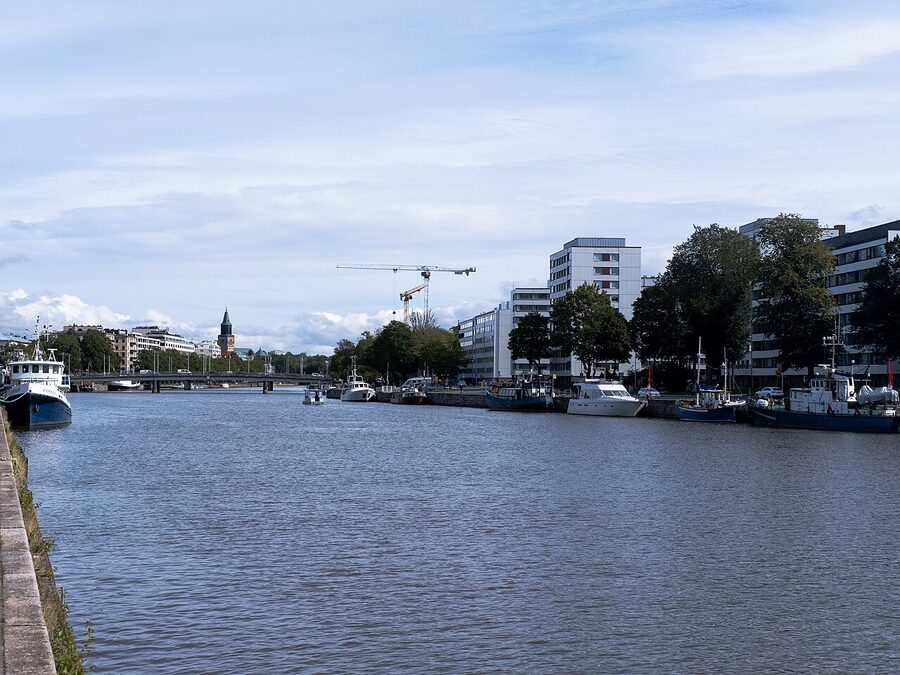
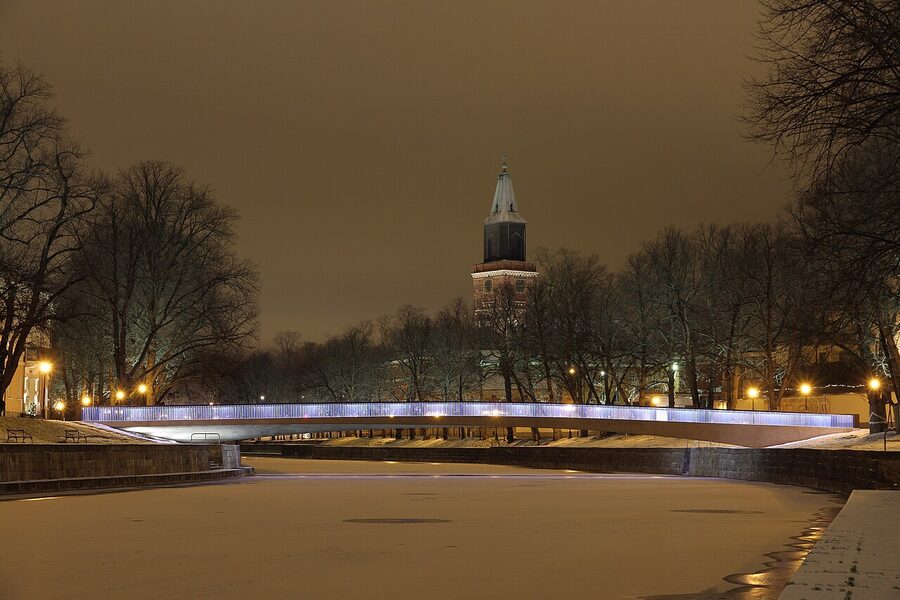
The Aurajoki is short, slow, brown, and the most important geography in Turku. It runs north-south through the centre for about 2.5km between the cathedral at the top end and Turku Castle at the harbour. In summer the embankments fill with people from about 16:00 onwards, drinking on the moored barges (the floating bars are seasonal, mid-May to mid-September), eating at the café terraces, walking to and from the bridges. The Föri municipal ferry, which I’ll come to, crosses it in 90 seconds for free. Eight bridges span it. The most-photographed view in the city is from Itäinen Rantakatu, the eastern embankment, looking back toward the cathedral, which is the photo at the top of this guide.
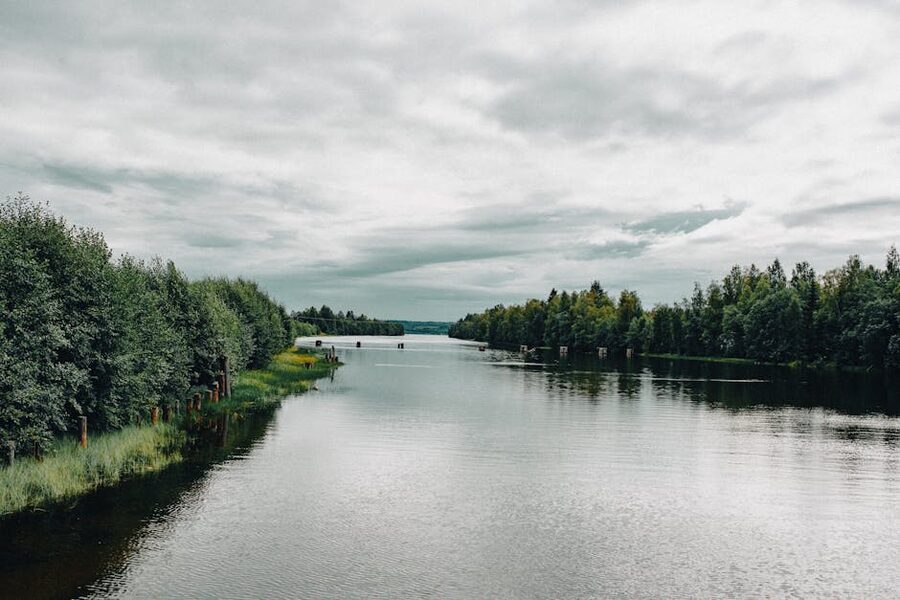
Turku doesn’t turn its back on the river the way many European port cities do. Both embankments are continuous walking paths, and the bars and restaurants face the water rather than away from it. The riverside promenade is what makes the city work. If you only had three hours in Turku, you’d walk it. From the cathedral end:
- Cathedral side (east bank): the cathedral itself, then south along Itäinen Rantakatu past Aboa Vetus, the city library, the Wäinö Aaltonen Museum and the maritime quarter at Forum Marinum.
- Old Great Square side (west bank): Vanha Suurtori, Brinkkala mansion, the city hall area, then south along Läntinen Rantakatu past the more residential, slightly cheaper restaurants and the Föri terminal.
- Bridges: Auransilta is the central one, ten minutes’ walk from the cathedral. The Kirjastosilta footbridge by the city library is where the cathedral framing photo gets taken from. The Martinsilta is the southernmost before the harbour.
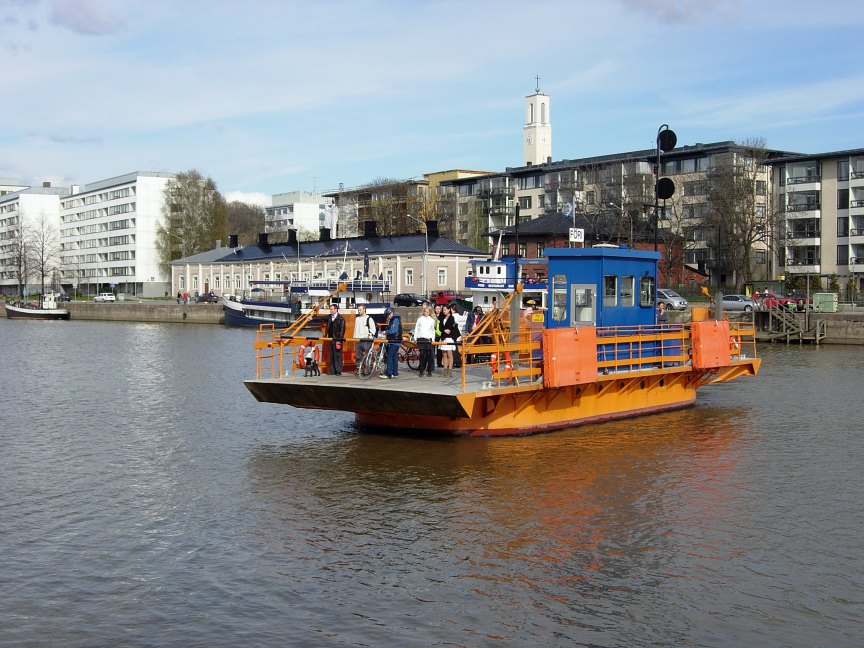
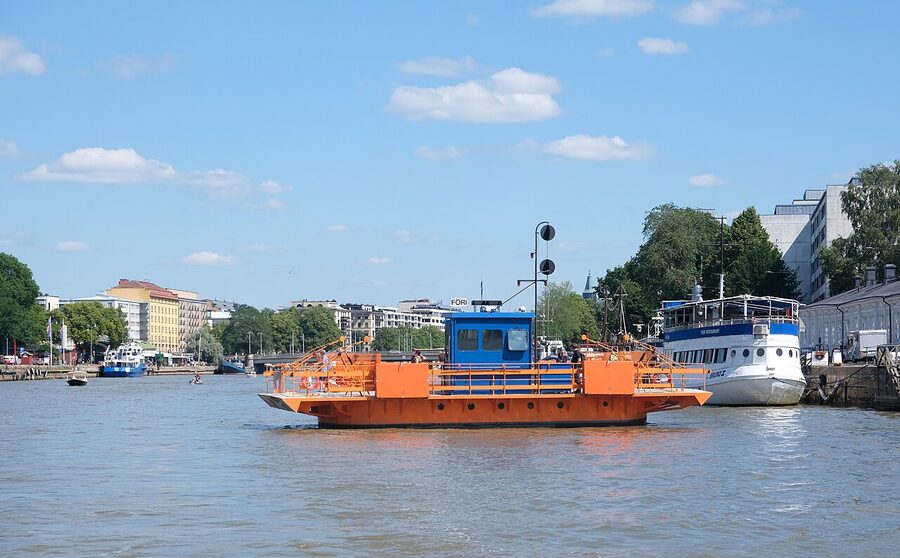
The Föri is the city’s mascot. It’s a tiny pulley-driven ferry that has run since 1904 between Martinsilta on the west bank and a pontoon on the east bank, a distance of about 90 metres. The crossing takes 90 seconds. It’s free. The locals have rejected every proposal to replace it with a bridge because the Föri is the city’s actual emotional centre, more than the cathedral or the castle. Use it at least once. There’s a small shed on the east side with the ferry’s history posted in Finnish, Swedish and English. Hours: roughly 06:15 to 21:00 May to September, slightly shorter the rest of the year.
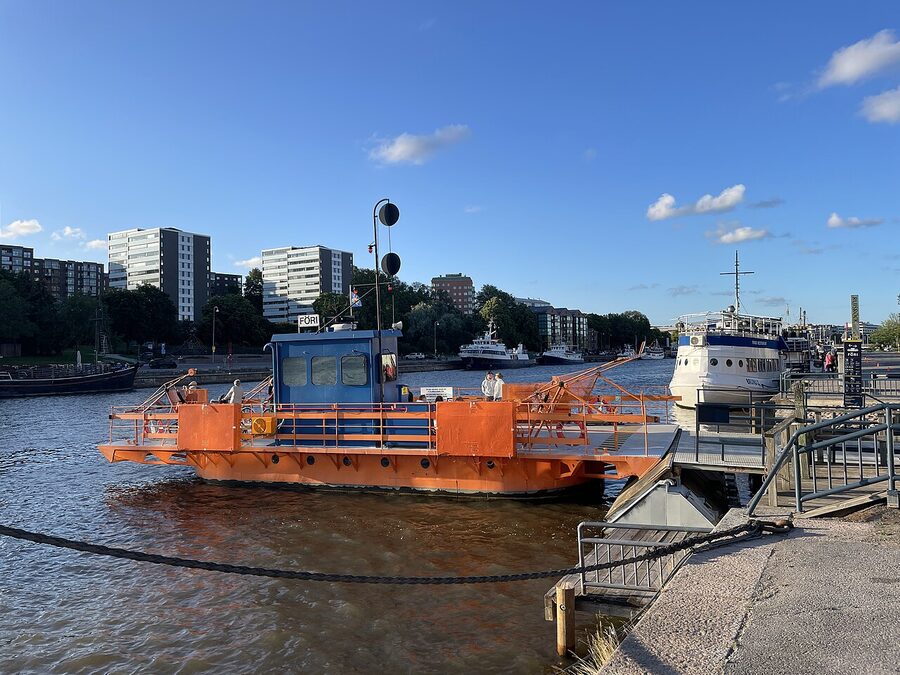
In summer the Aurajoki gets two extra layers of life. The first is the boat traffic out to the archipelago, leaving from Martinsilta and the Aurakatu landing. The S/S Ukkopekka steamer to Naantali (more on that below) leaves from here, as does the J. Reinhardt to Loistokari and the smaller passenger boats to Vepsä and Maisaari. The second is the floating bars: from late May, restaurant boats moor along the west bank between Auransilta and Martinsilta. Cindy, Donna, Papa Joe and a rotating cast of others. They’re not subtle. They’re loud, they’re cheap by Finnish standards (a half-litre of Karhu around €7-8), and they’re full of locals from Friday afternoon onwards. Skip them in shoulder season when the wind off the river makes everything cold; embrace them in July.
Turku Castle: the second stone building
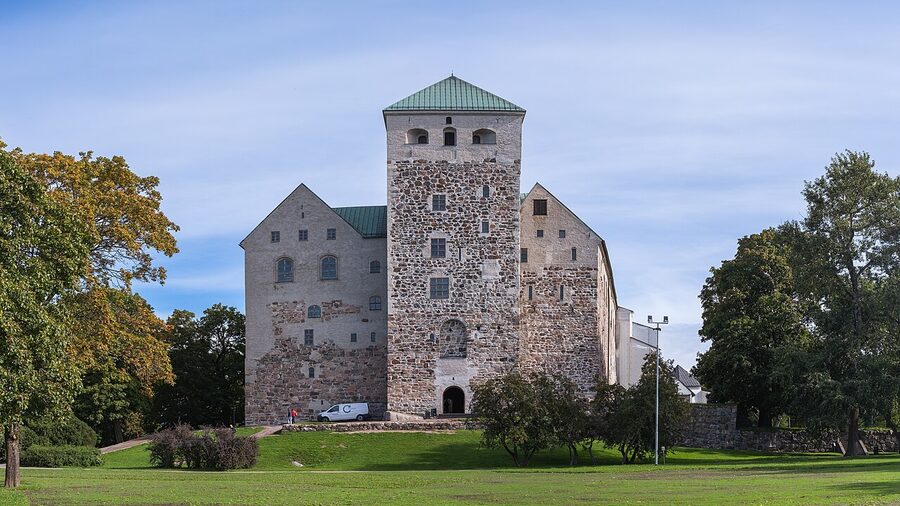
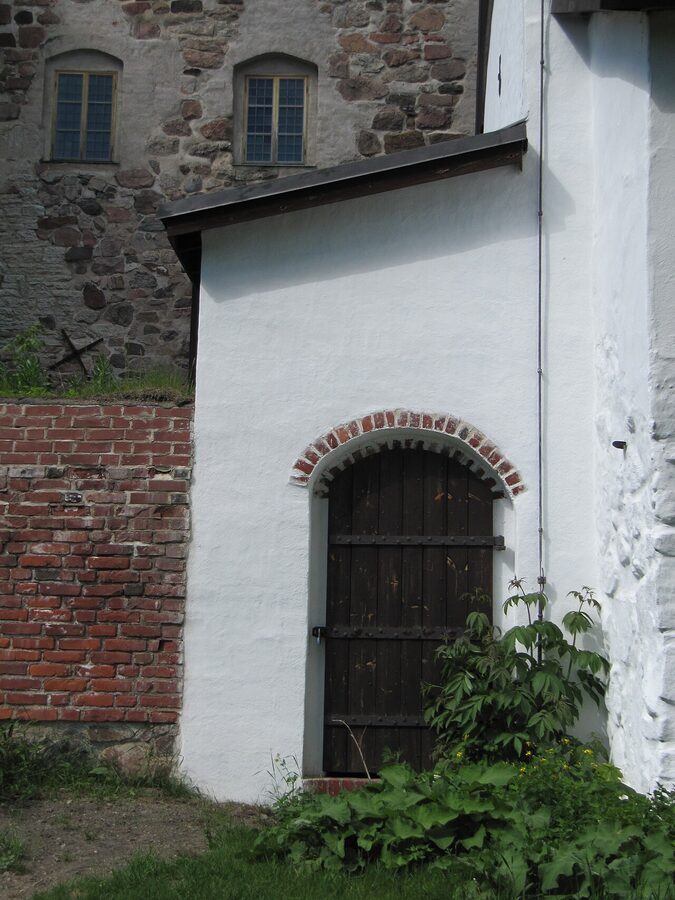
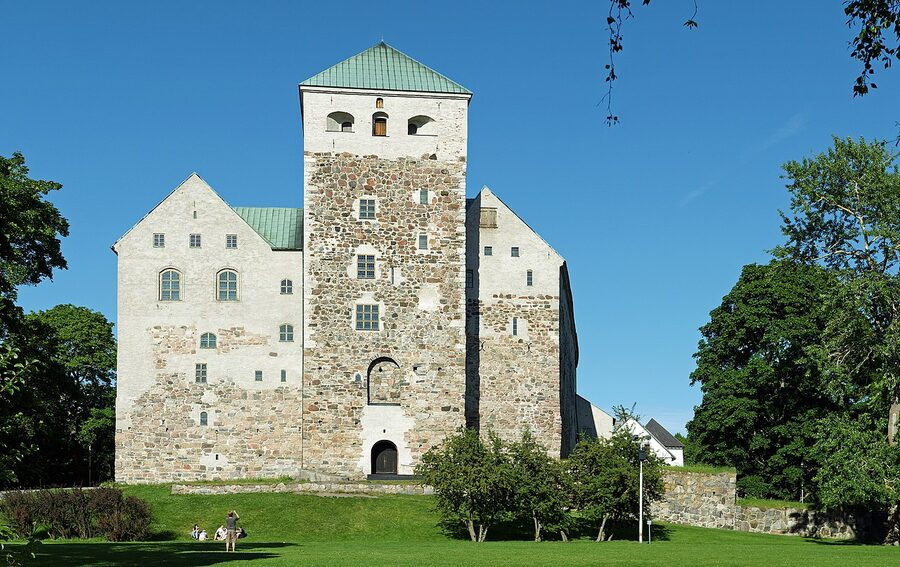
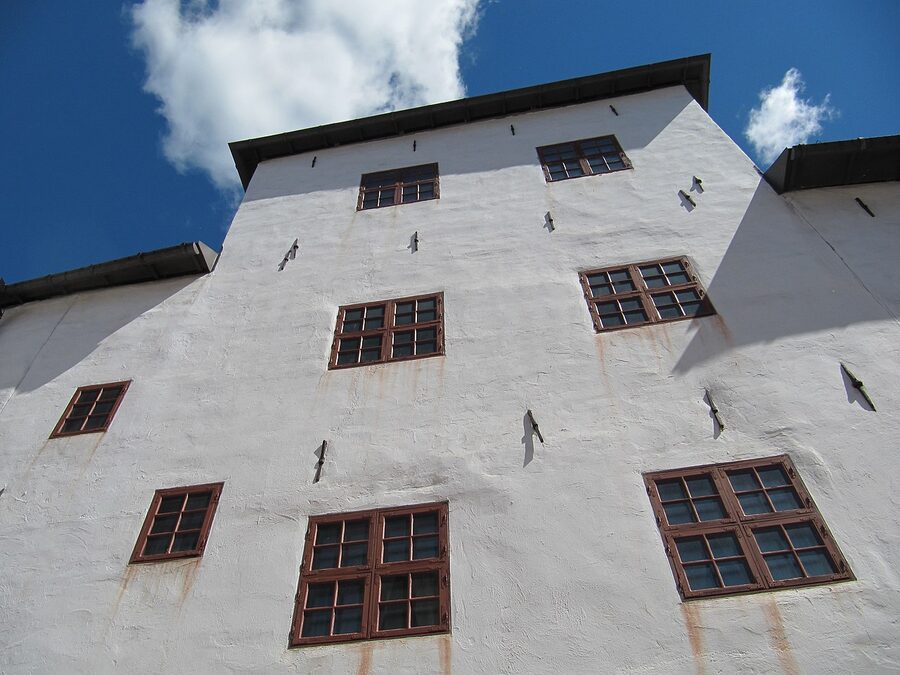
Turun linna sits at the mouth of the Aurajoki, where the river meets the harbour, about 2.8km from the cathedral end of the centre. Sweden began building it in the 1280s as the eastern administrative anchor of the realm, the seat of the Swedish royal castellan in Finland and the residence on royal visits. By the 1500s it had become the second-largest building in Sweden after Stockholm Castle. It was burned, sieged, expanded, fought over, and rebuilt enough times that the current structure is essentially a heavily reconstructed medieval shell with mid-20th-century interiors.
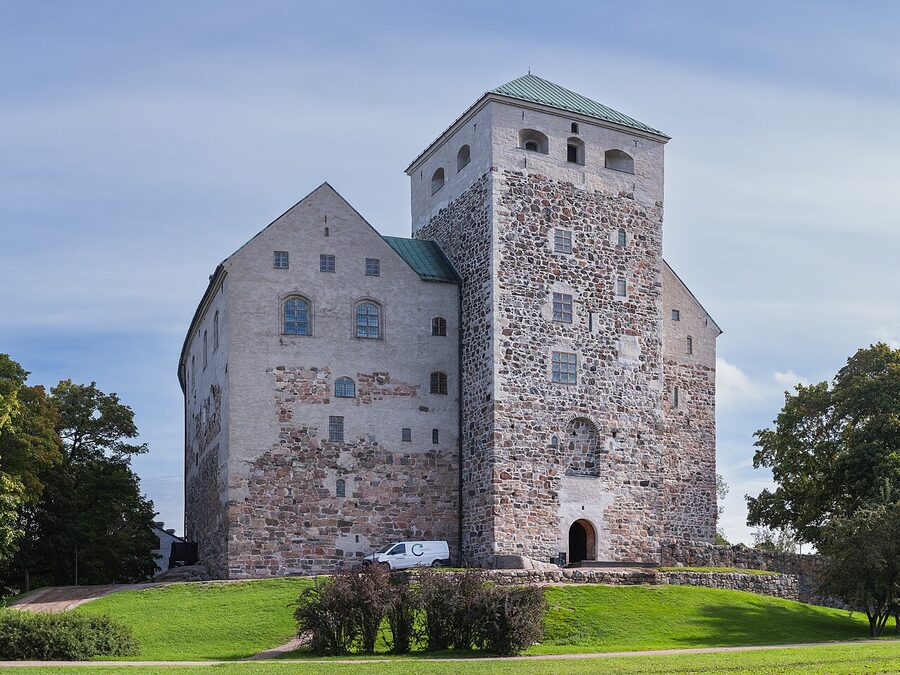
The interior is a labyrinth. About sixty rooms, four floors, two courtyards. Allow two hours minimum, three if you take the audio guide and stop in the museum. The most striking thing for me wasn’t the medieval stonework, it was the 1960s reconstruction, which after Soviet bombing damage in 1941 was led by the architect Erik Bryggman with a brief to restore historical accuracy where possible and to use modern Finnish design where the room had been lost beyond recovery. The King’s Hall and the Banquet Hall are the famous ones, but the smaller chambers off the courtyard, with mid-century Finnish lighting, oak benches and embroidered hangings, are the rooms that stay with me. The castle still hosts state banquets when foreign dignitaries visit Finland’s south.
Practical: €13 adult entry, €11 student/senior, free for under-7s. Open 10:00 to 18:00 daily June to August; 10:00 to 18:00 Tue to Sun September to May, closed Mondays in winter. The audio guide is €3 extra, in English, and worth it because the room signage is sparse. The castle’s courtyard café (open in summer) serves a perfectly good filter coffee and the Fazer salmiakki ice-cream bar that everybody who visits Finland has an opinion about. Mine: the salmiakki popsicle takes ninety seconds of focus before it tastes like anything coherent, and the second one is much better than the first. Don’t walk in expecting it to be sweet. It isn’t.
The walk down to the castle from the cathedral is 35 to 40 minutes along the east bank, slightly shorter on the west bank because Läntinen Rantakatu is more direct. If you’d rather not walk, bus 1 runs from Kauppatori (the market square) to the Silja Line terminal every 10-15 minutes; the castle is a 5-minute walk from there.
Aboa Vetus & Ars Nova: medieval foundations under a contemporary art museum
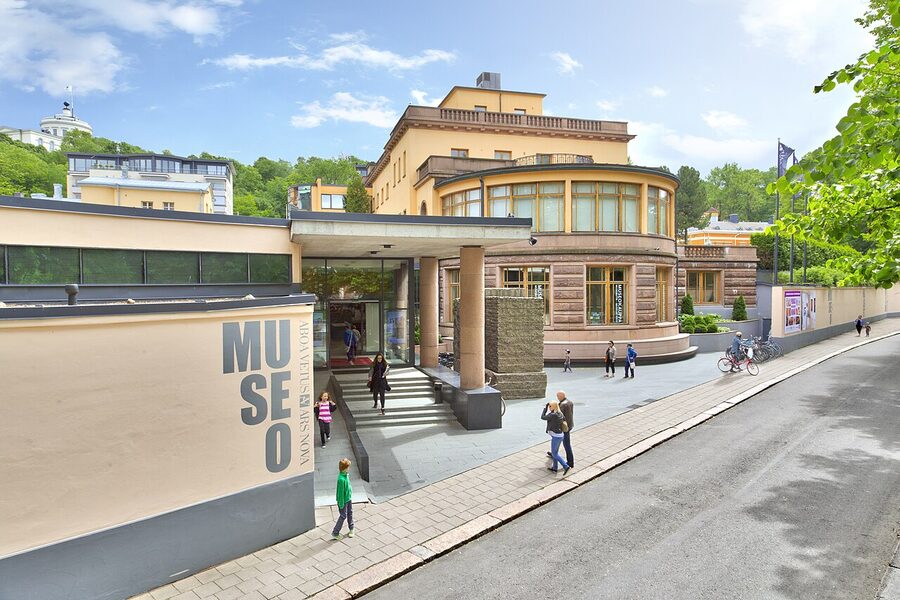
This is the museum I’d send a first-time visitor to before the cathedral or the castle. The premise: in 1992 builders preparing the foundations of an extension to the Rettig Mansion (a wealthy industrial family’s house, built 1928) hit medieval stonework two metres down. What they had hit was a section of the medieval Convent Quarter, the streets and stone foundations of the part of Turku that had been buried, sealed and forgotten under the post-1827 rebuild. Rather than fill it back in, the city excavated it and built a museum on top. The medieval foundations are Aboa Vetus (Old Turku); the contemporary art galleries upstairs are Ars Nova.
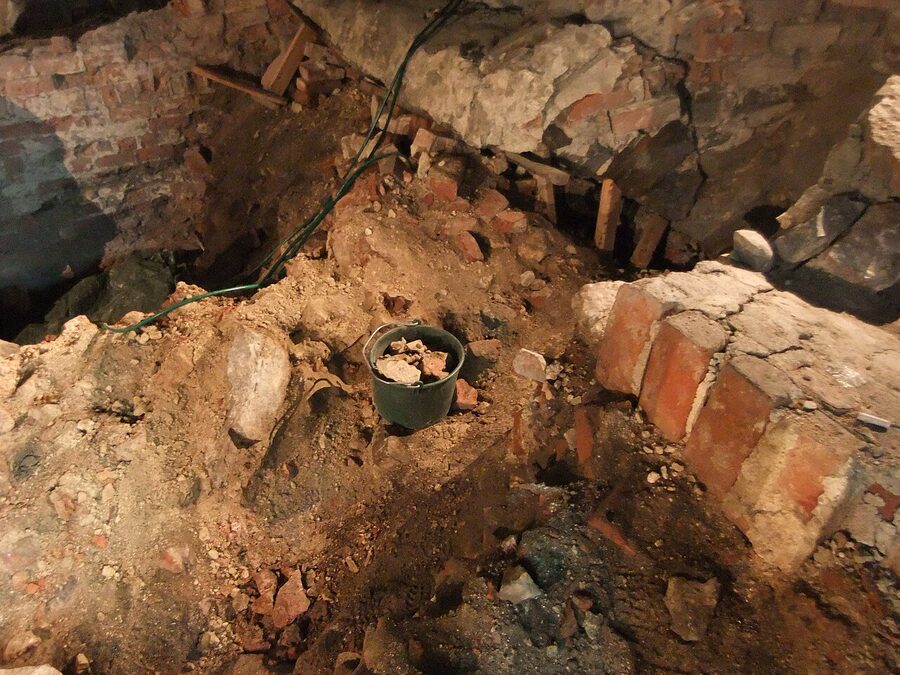
It’s a small museum, tightly curated, and the medieval part rewards an hour. You walk on metal grids two metres above the original 14th and 15th-century floor level, looking down at cellar walls, well shafts, drainage channels, and the burned timber layer from a fire in the 1670s (one of five before the 1827 catastrophe). The interpretive signage is in Finnish, Swedish and English and it’s well-done, neither dry nor over-dramatised. The Ars Nova gallery upstairs rotates contemporary Finnish exhibitions; whether it’s worth your time depends entirely on the show, but the joint ticket is worth it for Aboa Vetus alone.
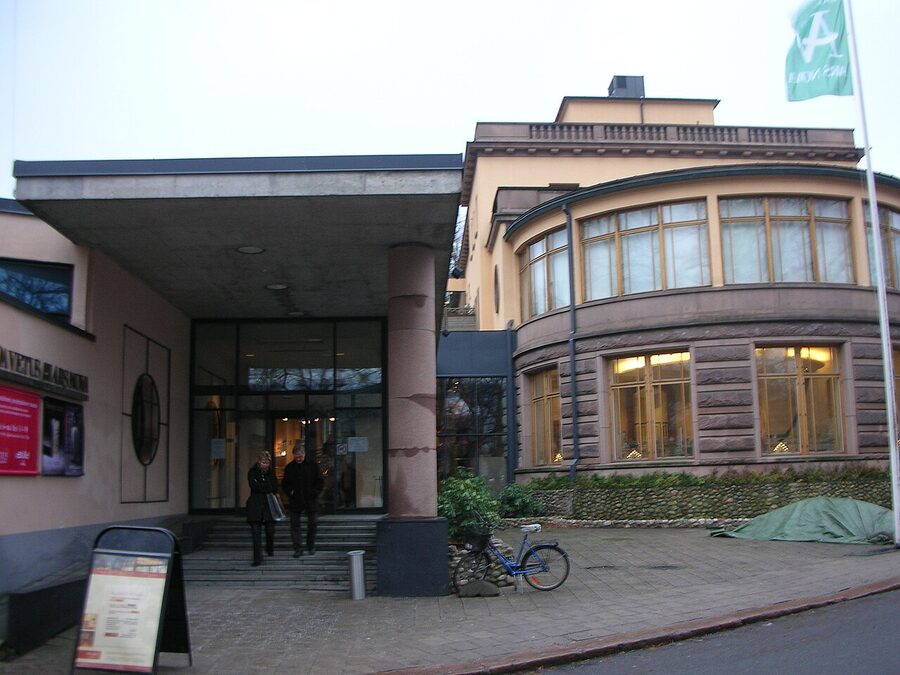
Practical: €11 adult, €9 senior, €4 student, free for under-18s. Open 11:00 to 19:00 daily May to October; 11:00 to 18:00 Tue to Sun the rest of the year, closed Mondays. The on-site M Kitchen & Café opens at 11:00 with a buffet brunch on Saturdays (€18, decent rather than exceptional, the cakes are the strong suit) and a regular café menu otherwise. Address: Itäinen Rantakatu 4-6, on the east bank of the river about ten minutes’ walk from the cathedral.
Forum Marinum and the Aurajoki maritime quarter
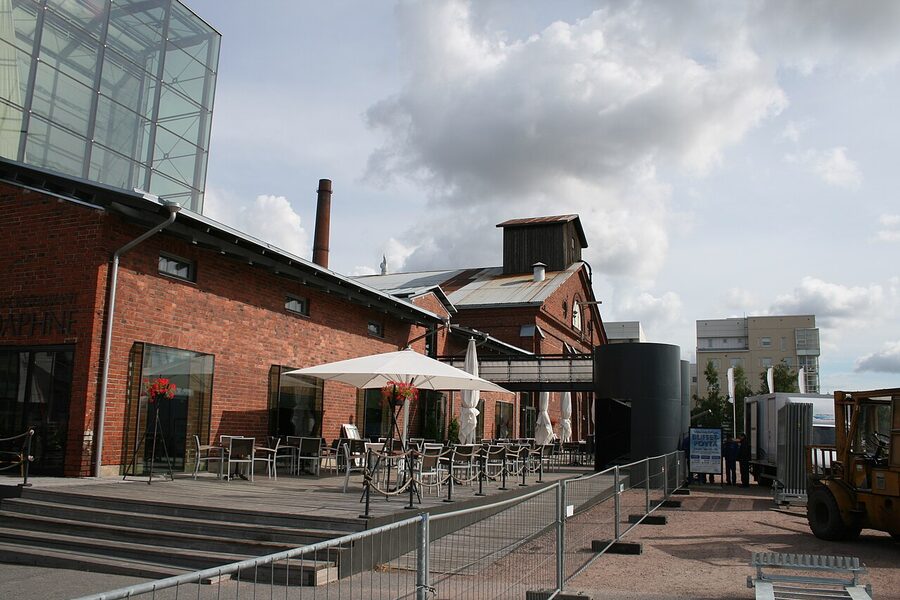
About 600m before the castle, the riverbank changes. The cafés thin out, the cranes start showing up, and you walk into the maritime quarter that Turku built up in the late 19th century when the city’s identity pivoted from “former capital” to “main shipyard”. This is where the Wärtsilä yard built ferries through the 20th century (it still builds cruise ships today, just upriver from the castle), and where Forum Marinum, Finland’s national maritime museum, has parked its preserved fleet on the embankment.
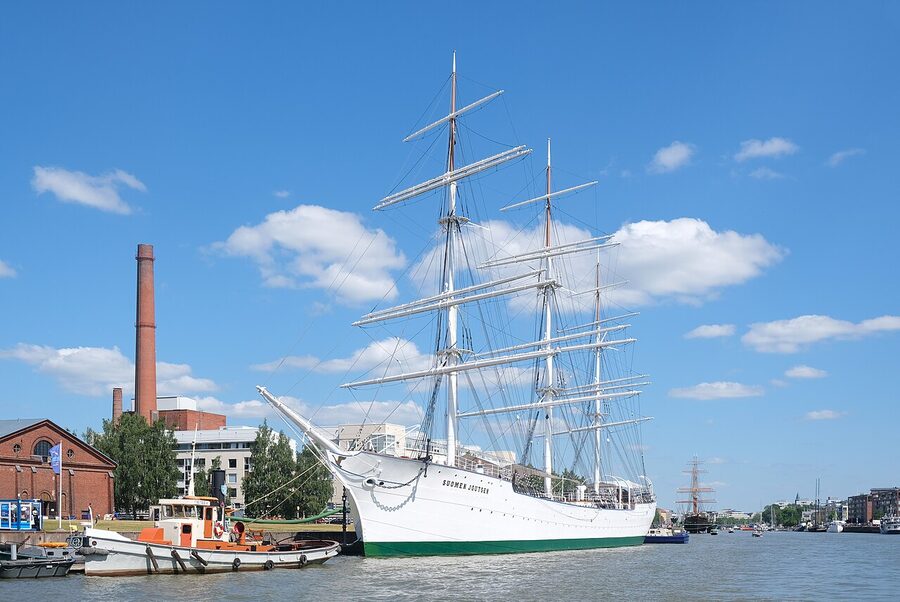
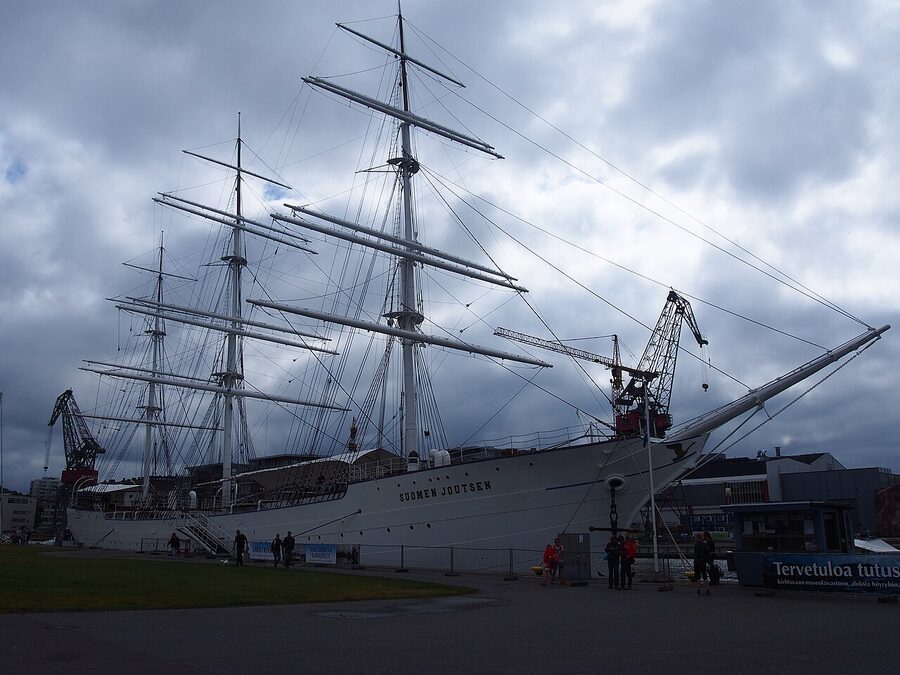
Two ships are the headline. The Suomen Joutsen (Swan of Finland) is a 96-metre, three-masted training ship launched in 1902 in Saint-Nazaire as a French school ship, sold to Finland in 1931, and used by the Finnish Navy as a training vessel until 1991. She’s now permanently moored at Forum Marinum, painted in her 1930s navy livery, and you can walk most of the upper and main decks. The cadet quarters below give you a useful sense of how unromantic actual life on a square-rigger was: low ceilings, crowded mess decks, hammocks. Free with the Forum Marinum entry.
The Sigyn is the second ship and, for me, the more interesting one. She’s a wooden barque built in 1887 in Gothenburg, the last working three-masted barque under sail in the world when she was retired in 1939. She’s also the oldest preserved wooden sailing ship still afloat in her original configuration, anywhere. Smaller than the Joutsen and easier to take in: you walk her in twenty minutes. She’s a working museum boat, restored continuously, and the smell of pine tar belowdecks is the whole reason to visit.
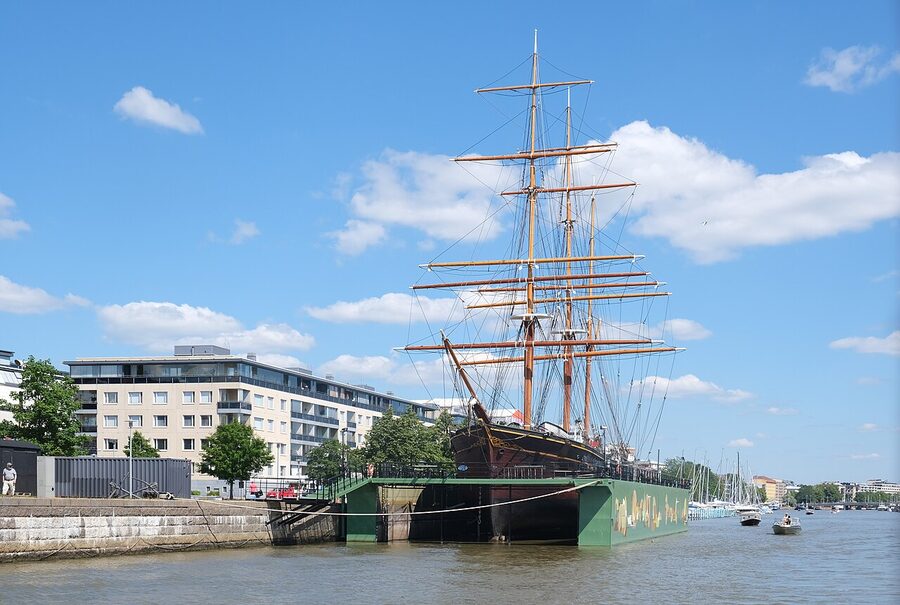
Practical: Forum Marinum entry €13 adult, €11 student/senior, includes both ships. Open 10:00 to 19:00 daily June to August; 11:00 to 19:00 Tue to Sun September to May, closed Mondays. The ships are seasonal: deck access on the Joutsen is mid-May to late September, the Sigyn is open during the same window. Off-season you can walk the embankment past both but you can’t board.
Luostarinmäki: the wooden quarter the fire missed
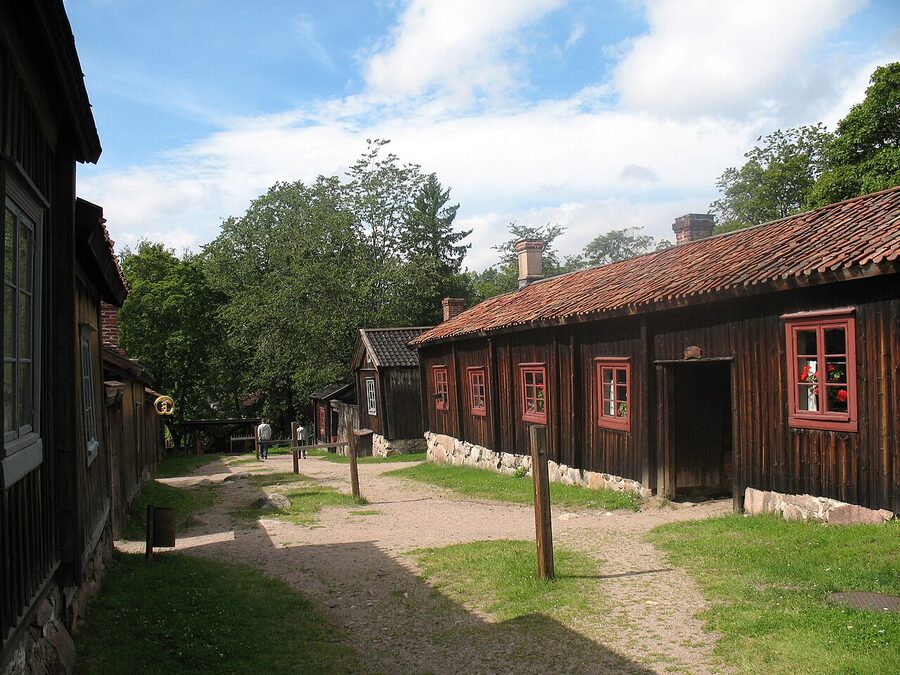
This is the part of Turku that the fire didn’t take. Luostarinmäki sits on a small hill east of the cathedral, just outside the area the 1827 flames reached. About thirty 18th-century artisan houses still stand on their original cobbled streets, and since 1940 the whole quarter has been preserved as Finland’s first open-air museum. It’s not a relocated assembly of houses brought in from elsewhere, like Skansen in Stockholm or the Arnhem Open-Air Museum, it’s the actual neighbourhood, in place, with the original cobblestones and the original timber.
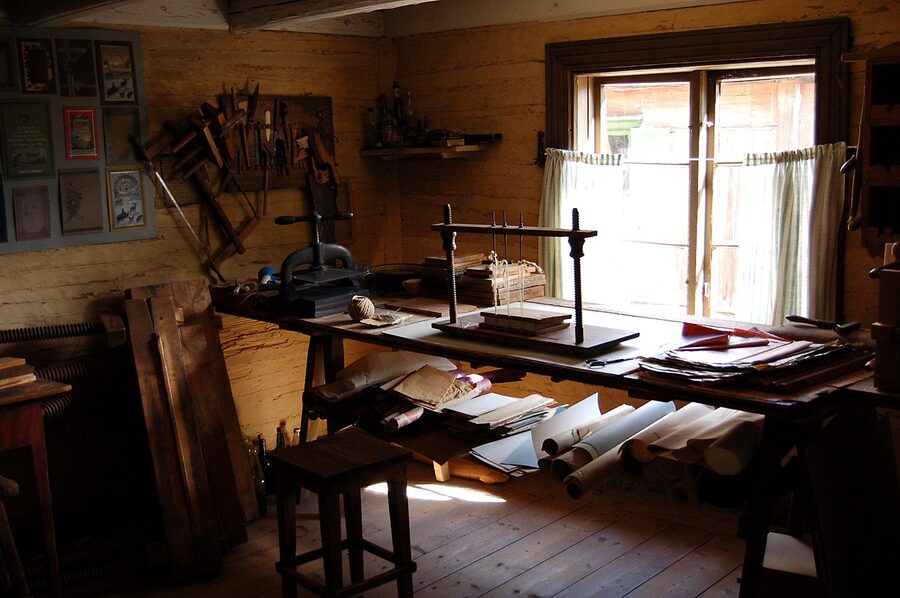
In summer (late June to mid-August) about fifteen workshops have demonstration craftsmen working the original tools, weavers, blacksmiths, a baker, a printer, a shoemaker, a clay-pipe maker. The rest of the year the houses are open as static interiors and the whole quarter feels emptier and, frankly, more atmospheric. I prefer it then. Walking the cobbles in early October with hardly anyone else around is closer to what 18th-century Turku felt like than the same place in July with a coach tour ahead of you.
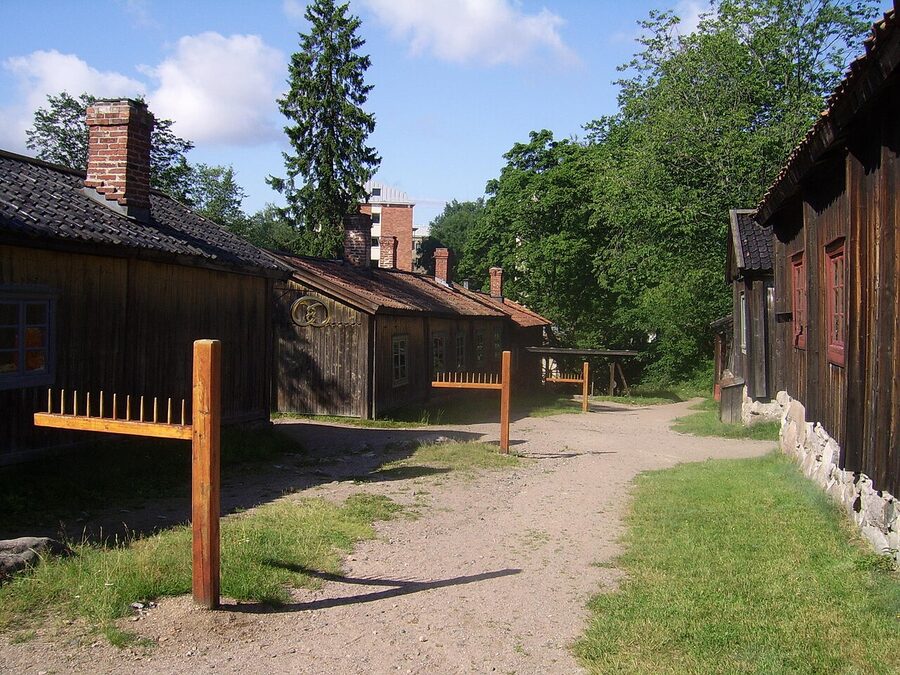
Practical: €8 adult, €5 student/senior, free under-18s. Open daily 10:00 to 18:00 June to August; 10:00 to 15:00 Tue to Sun May and September; closed October to April except for the Christmas market weekends in early December. Address: Vartiovuorenkatu 2, a 12-minute uphill walk east of the cathedral. Wear shoes that can handle cobbles. Combine with the cathedral or with the Sibelius Museum (Finland’s only musical instrument museum) which is on the way.
Old Great Square, Brinkkala, and the Christmas Peace
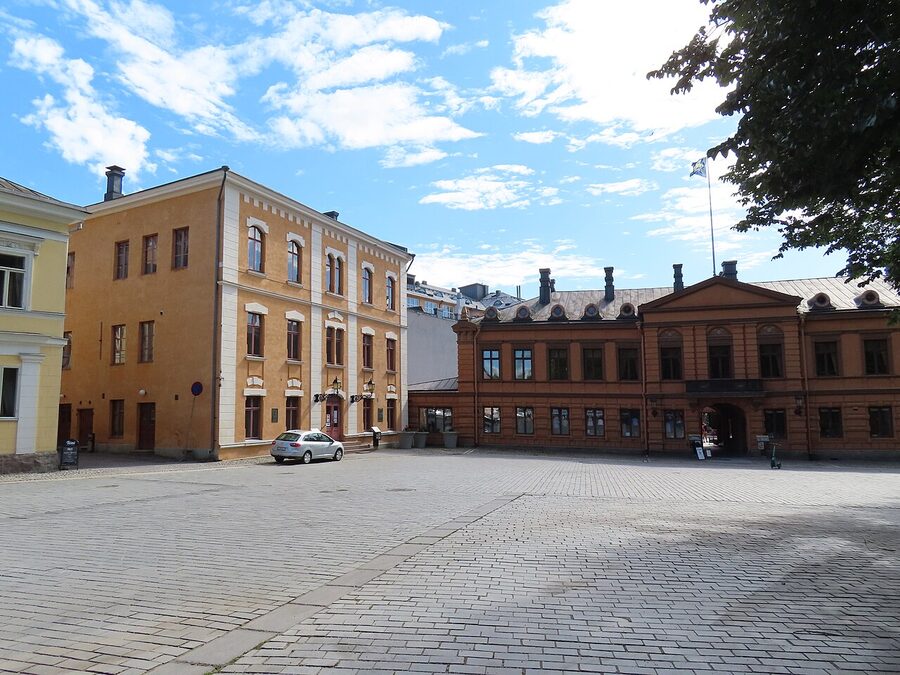
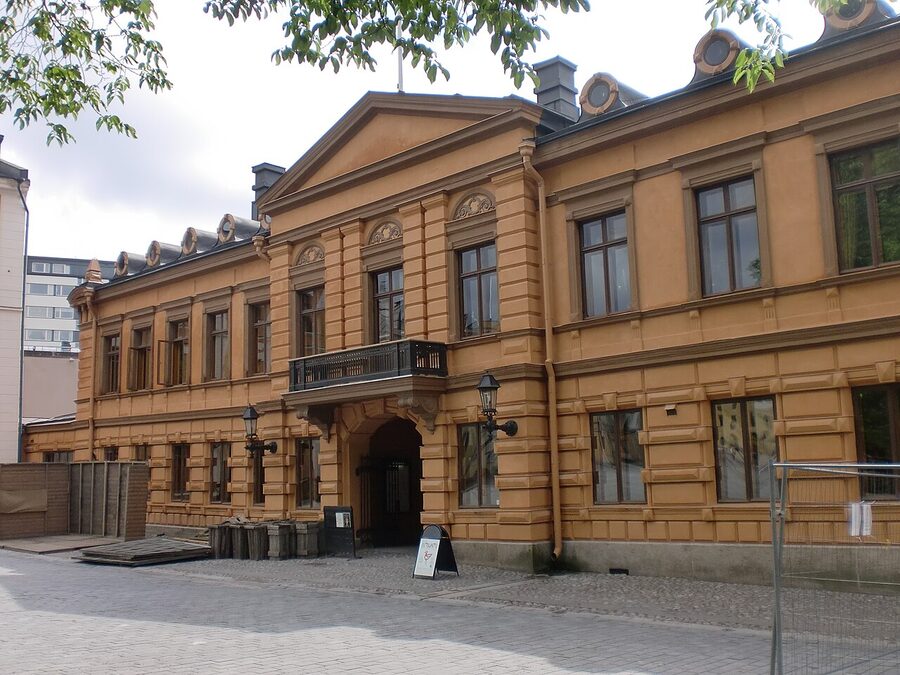
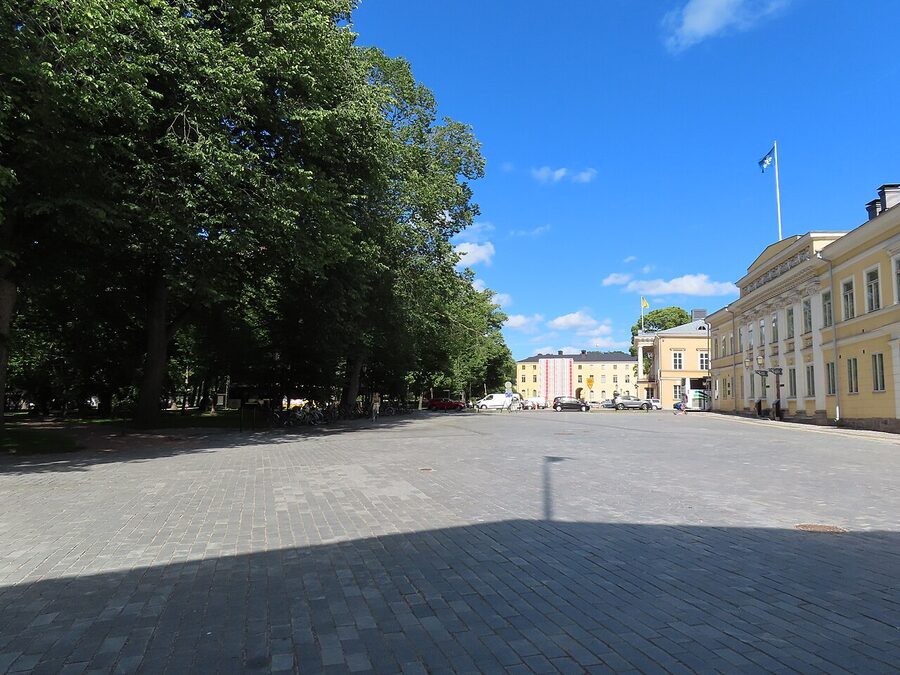
The Old Great Square (Vanha Suurtori) is a quiet square just north-west of the cathedral that you can walk past in two minutes and miss everything important about it. The square has been Turku’s commercial centre since the 13th century. The post-1827 rebuild kept it but neoclassicised it: the buildings around the edge today are mostly 1830s and 1840s. The most important of them is the Brinkkala Mansion on the south side, a yellow neoclassical block that hides one of the longest unbroken civic traditions in Europe.
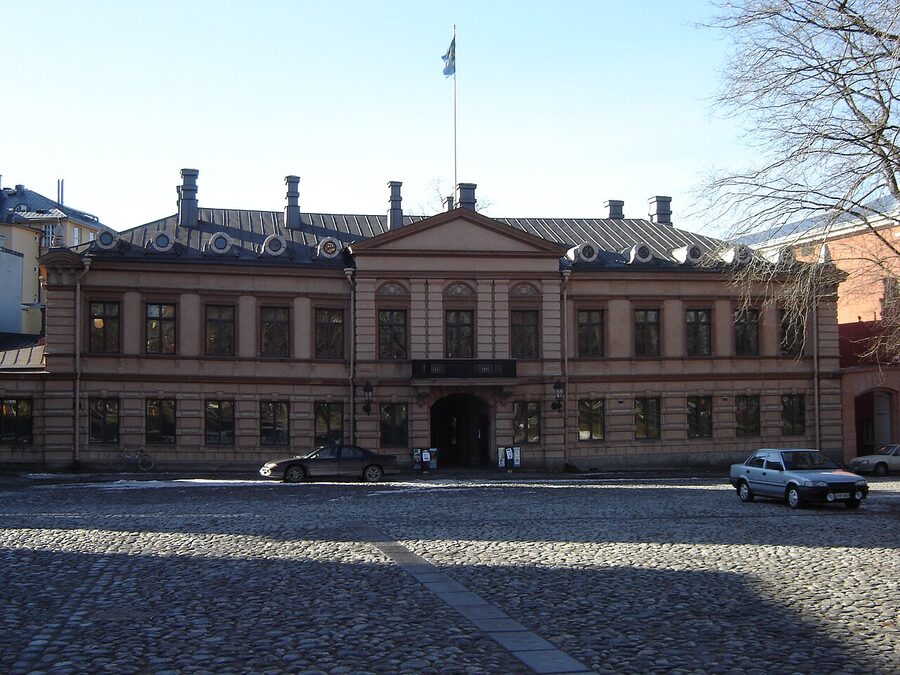
Every year on 24 December at noon, a town official steps onto the Brinkkala balcony and reads the Christmas Peace Declaration: a public proclamation of peace for the holidays, in Finnish and Swedish. The tradition is almost certainly the oldest unbroken civic ceremony in Finland. Records of it survive from at least 1320, though it likely predates the records by another century. The text is read out, the Porilaisten marssi (the March of the Pori Regiment) is played, and the city’s Christmas officially begins. The reading is broadcast nationally on YLE television and radio, and these days it’s also a well-attended public event in the square itself, with maybe two thousand people standing in the snow looking up at a balcony.
If you’re in Turku on Christmas Eve, this is the thing to be in the city for. The rest of the year, the square is just a square, with a couple of cafés and the medieval Town Hall (now an archives) on the corner. Pinella, the restaurant on the ground floor of the building next to Brinkkala, is one of the city’s older fine-dining rooms (open since 1848 in various forms; the current Pinella since 2010) and is worth booking for the dining room alone, never mind the food.
Kauppatori, the modern market square
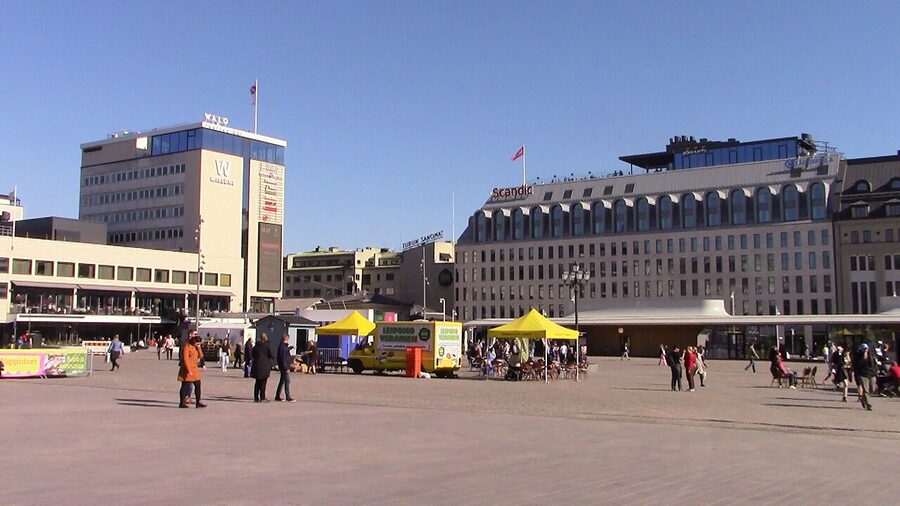
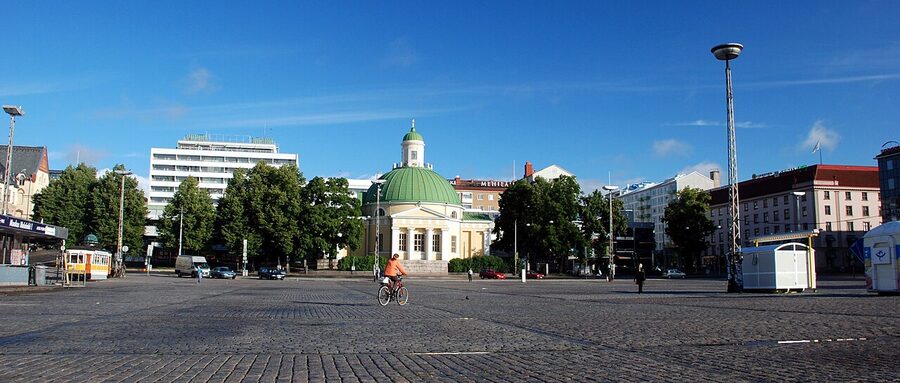
Kauppatori is what replaced the Old Great Square as the commercial centre after 1827. Engel laid it out as part of the rebuild, much wider than the medieval square, framed by neoclassical blocks and now lined with the Sokos department store, the Hansa shopping centre, and the Orthodox Church (Engel again, 1845). The outdoor market runs Monday to Saturday, roughly 07:00 to 14:00 from May to October and 09:00 to 14:00 the rest of the year. Berries in season (cloudberry late July, lingonberry August), smoked Baltic herring from the archipelago year-round, peas in pods that you eat raw, fresh bread from the Hyvön Hyvä bakery stall, mushrooms in autumn.
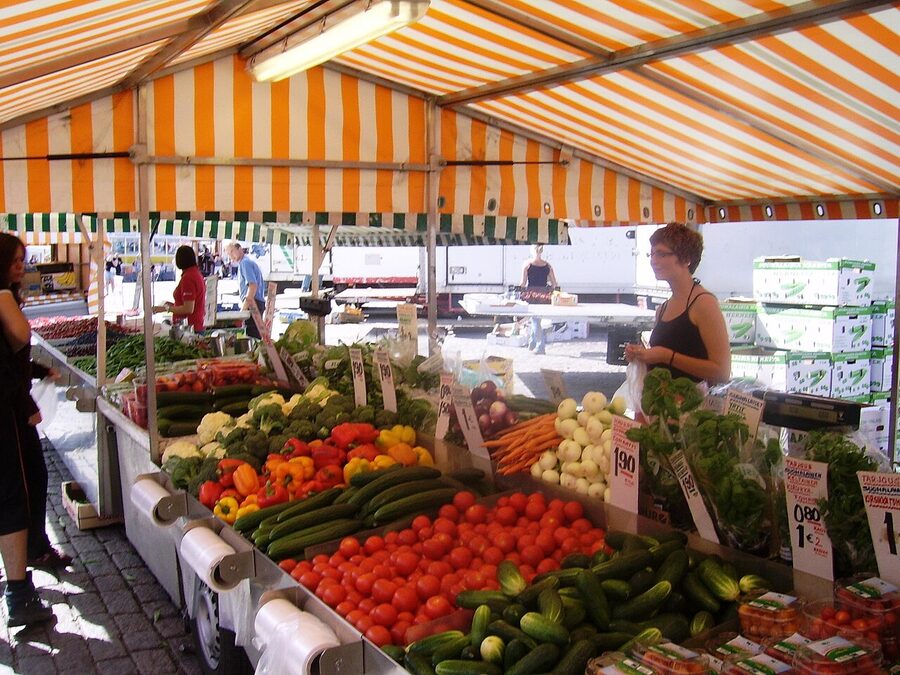
The indoor Market Hall (Kauppahalli, Eerikinkatu 16) is the better food stop in cold weather. Built in 1896, restored 2009, about thirty stalls under a long iron-and-glass roof, and the home of two of the city’s better quick lunches: the Roskeri stall (smoked salmon sandwiches, around €9), and Lihapiirakka Hyvä Sika (a Karelian-style meat pasty with a soft-boiled egg on top, around €7). Open Mon-Fri 08:00-18:00, Sat 08:00-16:00.
The Archipelago Sea: 50,000 islands and one ring road
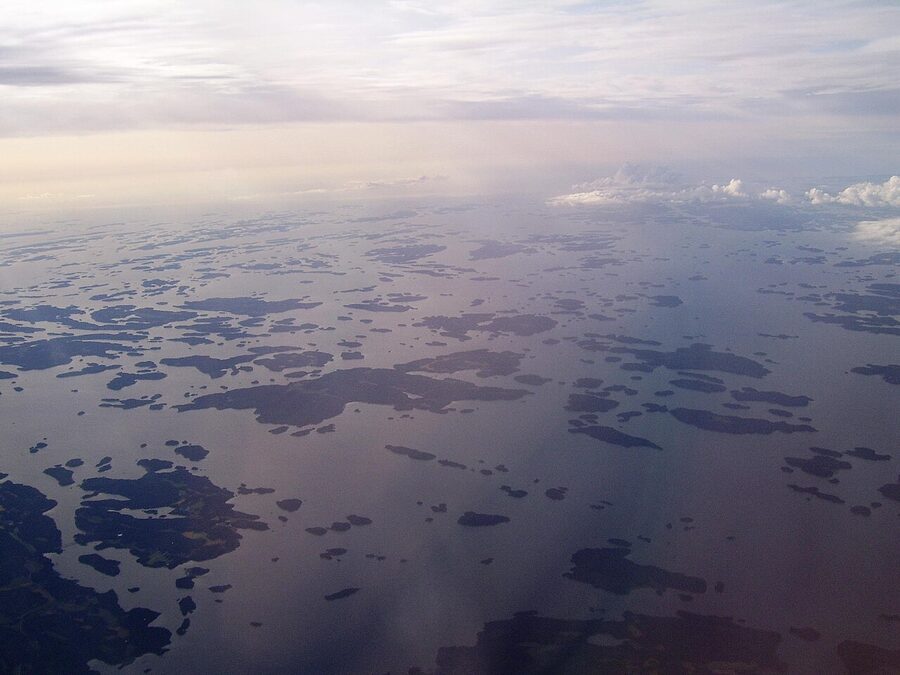
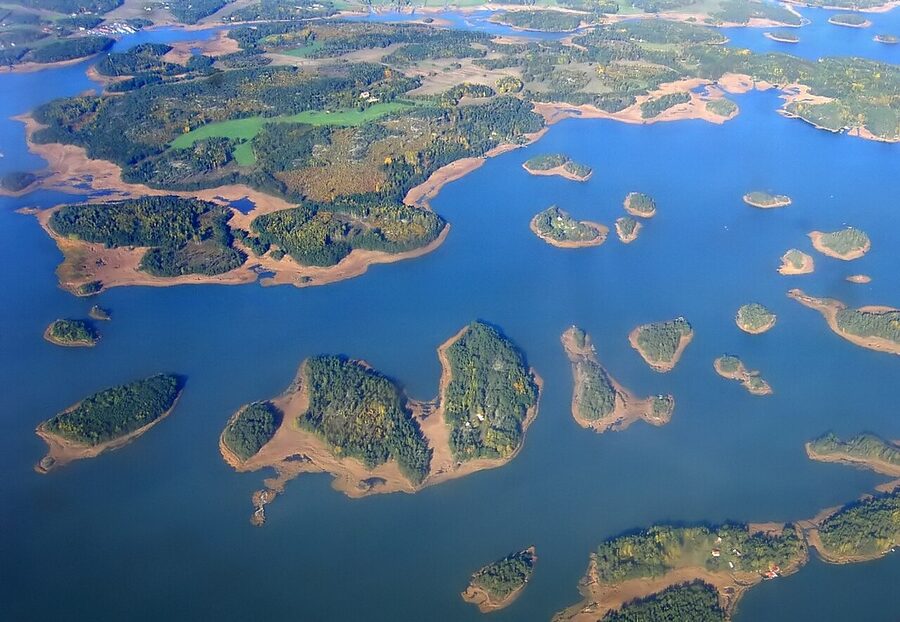
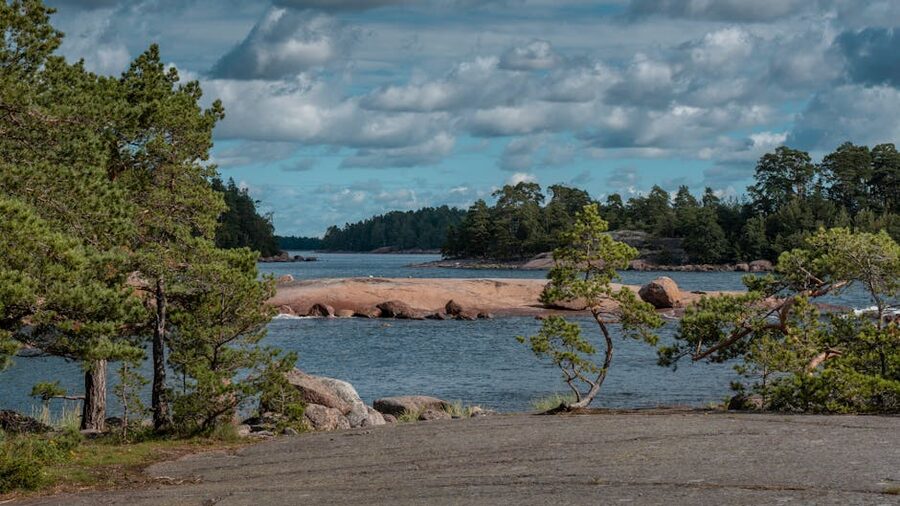
This is the section that most English-language Turku guides skip, and it’s the section that turns Turku from a half-day stop into a serious base. The Saaristomeri (Archipelago Sea) is the body of water between Turku and the Åland Islands, around 8,300 square kilometres dotted with about 50,000 islands and skerries. By island count it’s the densest archipelago in the world. The bigger inhabited islands, Pargas, Nagu, Korpo, Houtskär, are connected to Turku by a chain of bridges and cab ferries (yhteysalukset, the small free boats Finland operates between archipelago islands), and you can either drive the whole loop or cycle pieces of it.
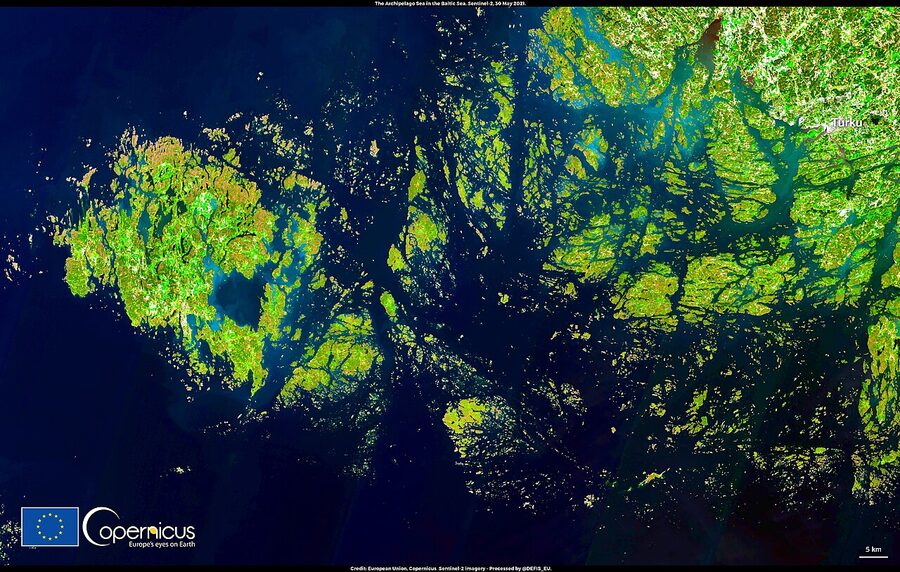
The Saariston Rengastie, the Archipelago Trail, is the marketing name for the 250-kilometre summer-only loop south-west from Turku. It runs Turku – Pargas – Nagu – Korpo – Houtskär – Iniö – Kustavi – back to Turku, using ten free cab ferries to hop between islands. Total drive time, allowing for ferry waits, is around eight to ten hours of moving. You’d never do it in a day. Most people give it three to five days, breaking the route at Nagu (Nauvo) for the first night and Korpo (Korppoo) for the second. The ferries are summer-only, late May to mid-September; outside that window the smaller islands lose their road connections altogether.
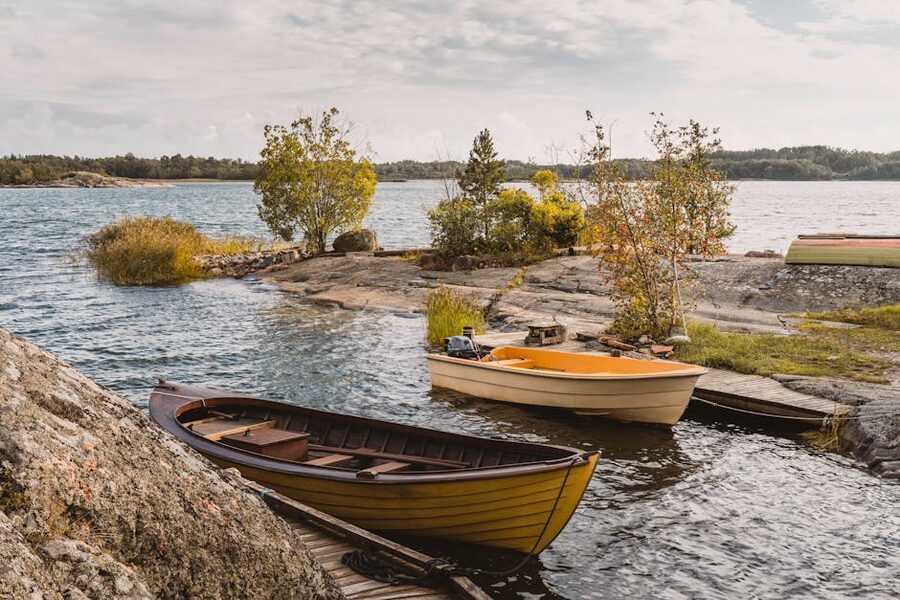
The cab ferries are the part to understand. They’re free, they run on published schedules but no booking, you queue your car, you drive on, you sit on deck for between five and 35 minutes depending on the crossing, you drive off. The longest leg, Korpo to Houtskär, is 35 minutes. The shortest, the Lillmälö-Pargas hop, is six. There’s a useful summary at the Finnish Transport Agency’s site (vayla.fi) and printed schedules at every petrol station on the route. Show up an hour before high-season departures in July; outside July you can usually drive on with five minutes’ wait.
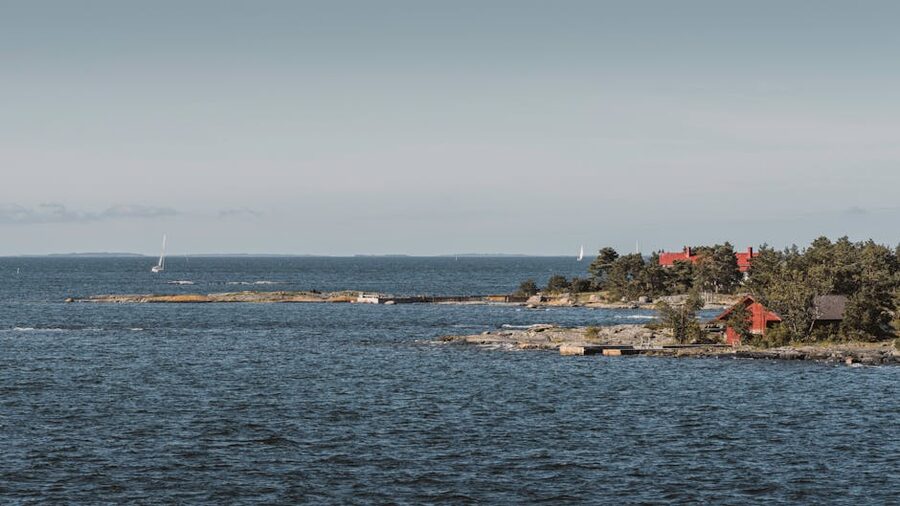
Where to stop on the trail: Nagu (Nauvo) is the obvious first overnight, a small wooden village around a yacht harbour, with three or four good restaurants and easy island-hopping by smaller boat to Själö (Seili), the medieval leper colony turned biological research station. The Själö Saturday boat in summer is the way to do it: the L’Escale leaves Nagu harbour at 11:00, you get the island and the hilltop chapel and the lichen-rich pine forests, you catch the 16:00 boat back. Korpo (Korppoo) is rougher, more outpost. Houtskär is mostly Swedish-speaking and feels like a different country. Iniö is the smallest of the four big islands and is for the day you’ve stopped wanting to do anything.
If you’re not driving, the day-trip alternative is the boat to Naantali (covered in the next section), or the smaller passenger boats from Aurakatu in central Turku to Loistokari, Maisaari and Vepsä. These are summer-only too, mid-June to early August, and run by the city as effectively a public swimming-island service: you pay €5-7 each way, you get a sauna and a swim, you’re back in Turku by 19:00.
Naantali: Moomins, the King’s Road, and the wooden Old Town
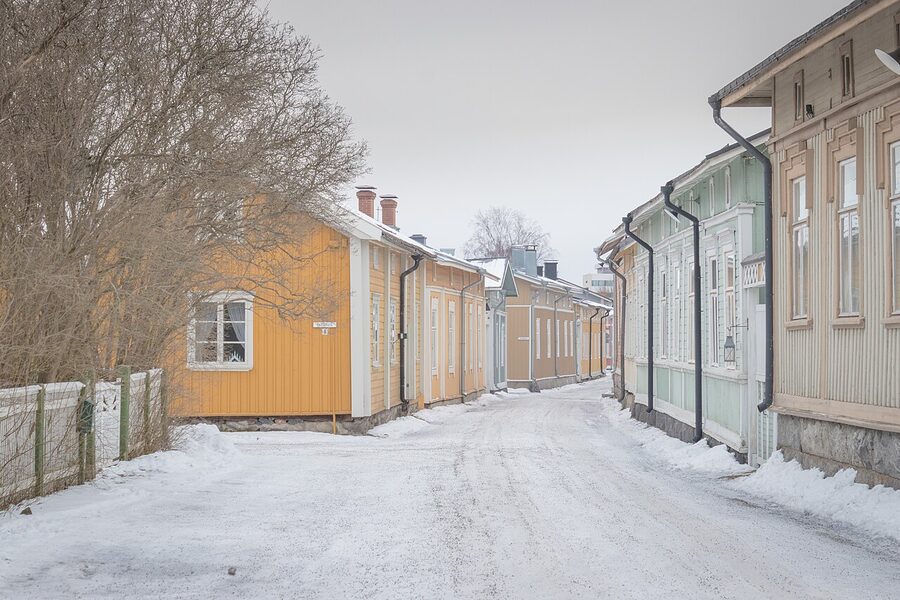
Naantali is sixteen kilometres west of Turku and the easiest archipelago day trip in the country. It’s also where the country’s president spends part of every summer (at Kultaranta, see below) and where Tove Jansson’s Moomins live (at Moominworld, also below). The town itself is a small medieval port settlement that grew up around a 14th-century convent, the Vallis Gratiae nunnery, of which only the church survives. The Old Town, a few streets of 18th-century wooden houses behind the harbour, is the prettiest collection of pre-fire Nordic timber architecture you’ll see south of Porvoo.
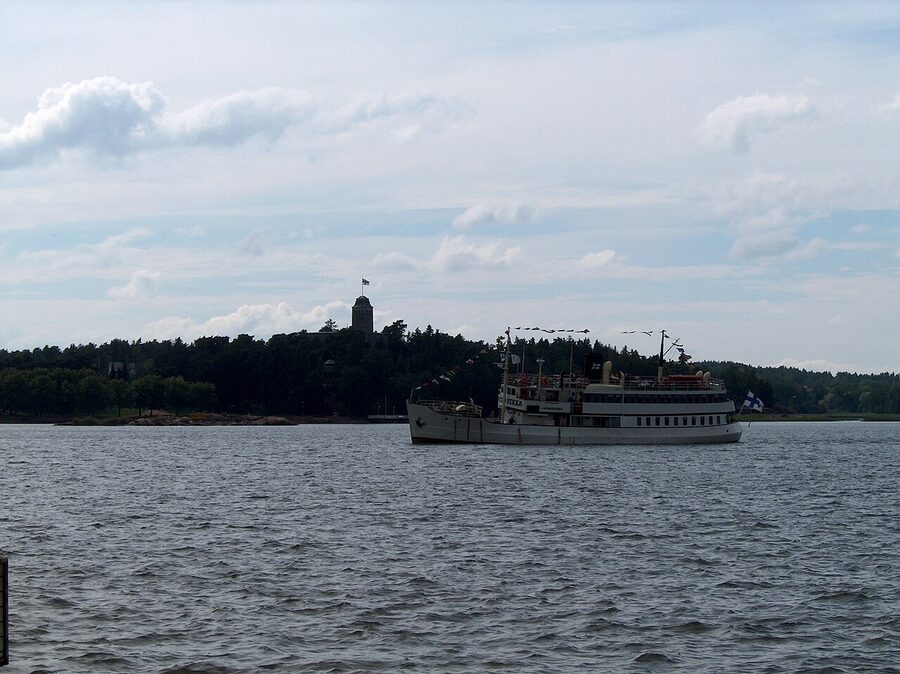
How to get there: bus 6 or 7 from Turku market square, every 15 minutes in summer, every 20-30 minutes the rest of the year. €3.30 each way with a Föli ticket (the regional public transport card). About 30 minutes door to door. The romantic alternative, in summer, is the steamer S/S Ukkopekka from the Aurakatu landing in central Turku. The Ukkopekka is a 1938 coal-fired passenger boat that runs daily 10:00 to 18:00 mid-June to mid-August, takes 1h 45 each way, and costs €27 single, €45 return as of 2026. The boat lunch on board (€18, salmon soup or meatballs) is decent. Book direct at ukkopekka.fi; the boat fills on summer weekends.
What to do once there. The Old Town is small enough to walk in 45 minutes; the church is worth the ten extra minutes; the harbourfront restaurants (Kala-Trappi and Uusi Kilta are the better two; both do fish, both are pricey for what they are) are where you’d lunch. Then either Kultaranta or Moominworld depending on what kind of trip you’re on.
Kultaranta is the official summer residence of the President of Finland, on Luonnonmaa island just west of Naantali. The president and family are in residence June to August. The grounds (including the famous rose garden, with around 6,000 roses across 200 varieties) are open to the public on guided tours only, in summer, around €15. Tours run from the Naantali tourist office; they sell out, book ahead at visitnaantali.com. The walk over the bridge to Luonnonmaa is also free if you just want to see the gates.
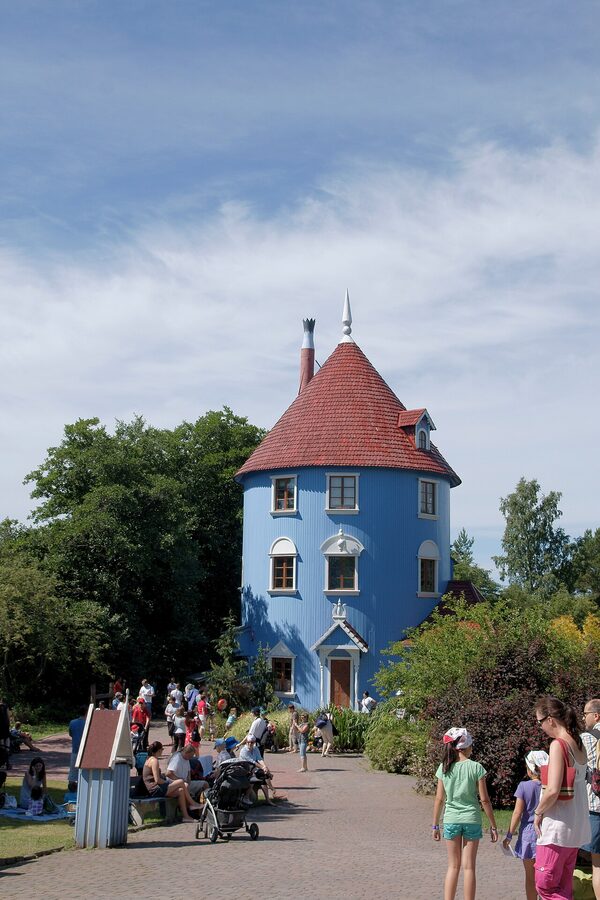
Moominworld (Muumimaailma) is on Kailo, a small island connected to Naantali by a footbridge. It’s a theme park built around Tove Jansson’s Moomin characters, opened in 1993 and run by the Jansson family estate. It’s deliberately not a fairground, no rides, no rollercoasters, just a wooden Moomin house you can walk through, performance areas, costumed Moomin characters meeting visitors, and a long shore walk. It’s aimed at families with kids under ten, and the park is at its best in that mode. Adult tickets are €34 (June-August), kids €34, under-2s free. Open daily 10:00-18:00 mid-June to mid-August, then weekends only into September.
The verdict: if you don’t have kids and you’re not a serious Tove Jansson reader, the entry fee is hard to justify. The shore walk on Kailo is open separately and free in shoulder seasons, and the Moomin Museum in Tampere (140km north of Turku) is a much better stop for an adult who wants to engage with the work seriously. That said, walking past Moominworld with kids who’ve grown up on the books is one of the more straightforwardly happy hours you can have on an archipelago day.
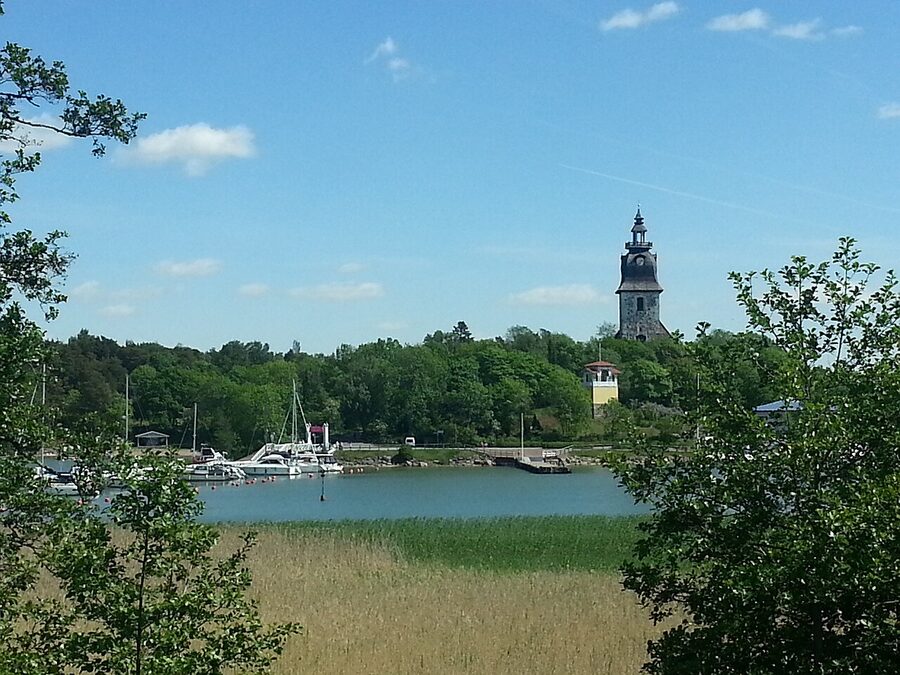
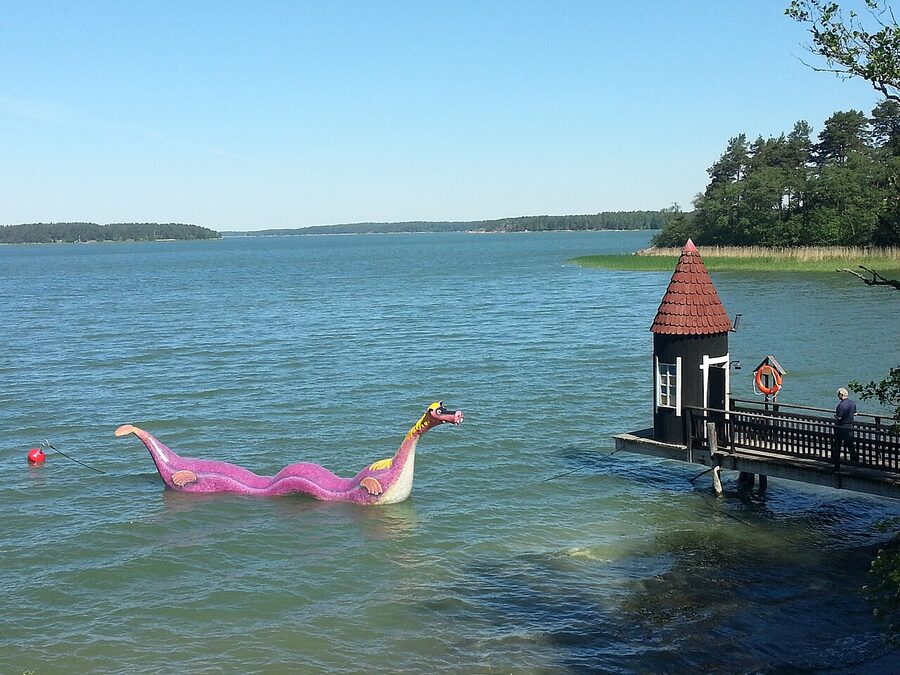
Ruissalo: oaks, jazz, and the spa hotel
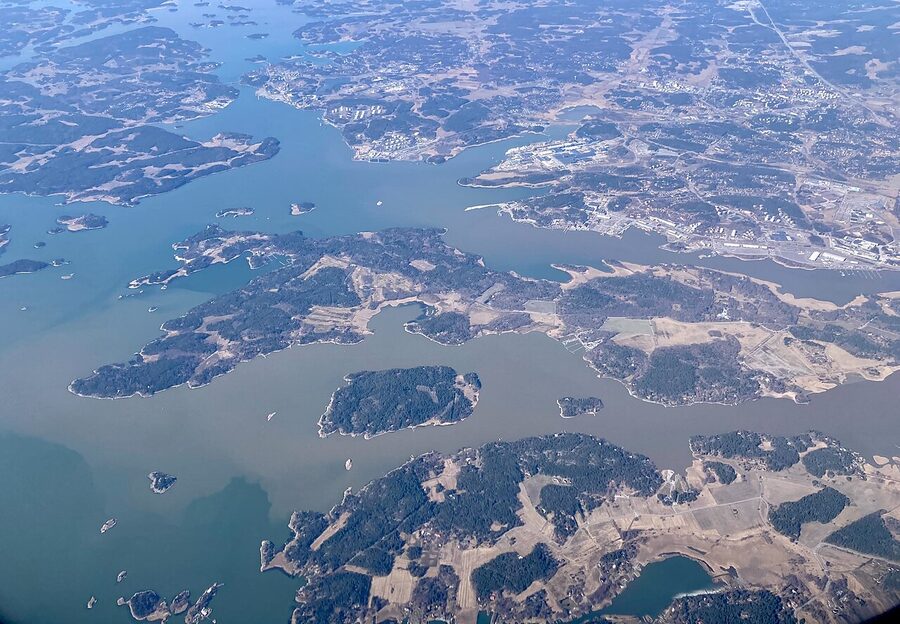
Ruissalo is a 12-square-kilometre island five kilometres west of central Turku, connected by a road bridge from Hirvensalo. Locals come here to walk, swim, picnic, and in early July to see the Ruisrock festival, Finland’s oldest rock festival (since 1970). The interior of the island is mostly oak forest, which is rare in Finland: oaks reach their northern limit in southern Finland and Ruissalo has one of the densest stands in the country. The University of Turku Botanic Garden is on the eastern side (open daily, free, 11:00 to 19:00 in summer). The Holiday Club Caribia spa hotel on the eastern side is the place to stay if you want a saunas-and-pools weekend.
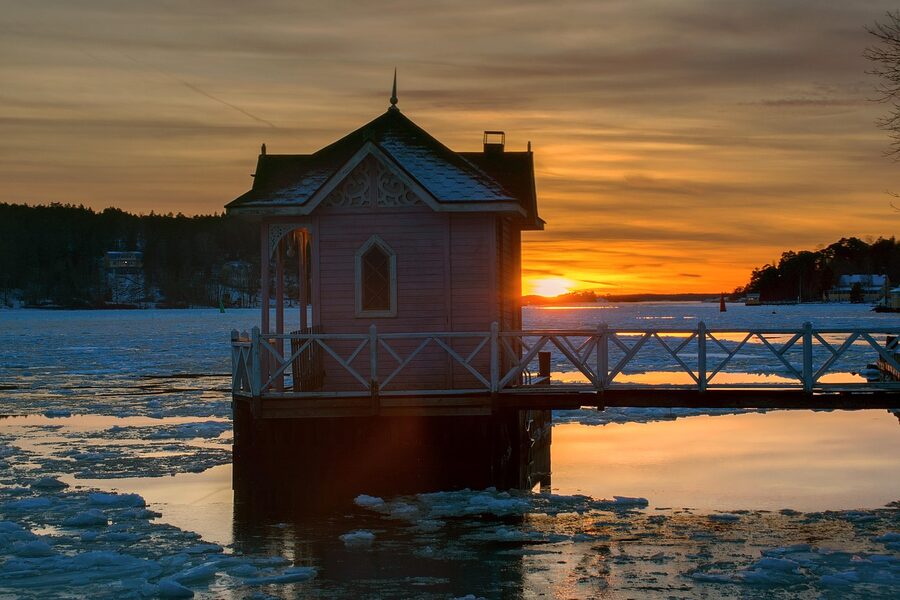
Ruisrock the festival is mid-weekend in early July; tickets €130-160 a day, three-day passes around €290. The line-up is a mix of Finnish bands and one or two international acts, less serious than Provinssirock but better than the urban summer festivals. If you’re in Turku that weekend the city sells out completely; book accommodation by April. The rest of the year Ruissalo is just an island, and a good walk: the marked path around the southern shore is 4.5km and takes about an hour with stops.
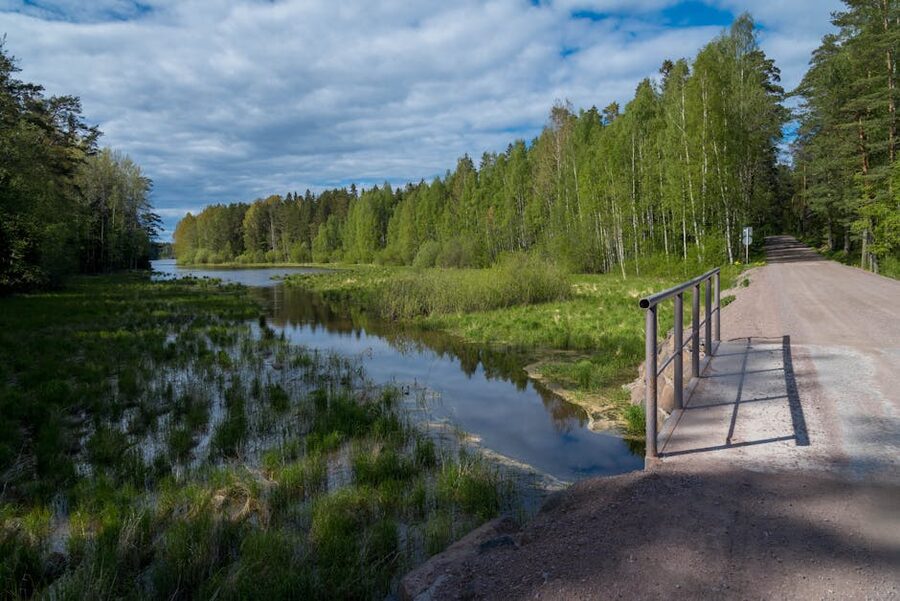
How to get there: bus 8 from the Turku market square, every 15-20 minutes year-round. About 25 minutes to the spa hotel. Or cycle: the dedicated cycling route from central Turku via the Hirvensalo bridge is 8km, mostly flat, mostly traffic-segregated. Bike rental from Drömmar Cykel near the cathedral, around €25 a day, electric bikes €40.
Where to stay in Turku
The city is small enough that almost everything central is walkable to the cathedral and the river. The trade-off is between the river side (Itäinen Rantakatu and Läntinen Rantakatu, quieter, walking distance to the cathedral and the museum row) and the market square side (around Kauppatori, busier, walking distance to the train station and the bus connections to Naantali). I’d pick the river side for a first visit. All booking links below are plain URLs; my experience is that the prices on the link match what I find anywhere else.
Hotel Kakola: the converted prison
Hotel Kakola, opened 2023, is the most unusual hotel in the city. It’s a conversion of the Kakola prison, a hilltop neoclassical jail that operated from 1853 to 2007 on the south side of the river. The cell block is now the spa wing, the warden’s house is the lobby, and the rooms are former cells, knocked through into pairs and triples to give them workable size. The architecture is beautiful, the spa with its cold-plunge pool is one of the city’s better wellness rooms, and the bar in the old chapel is worth a drink even if you’re not staying. €170-280/night double, with the cell-conversion rooms at the lower end. Check rates on Booking.com.
Scandic Hamburger Börs (formerly Original Sokos Hotel Hamburger Börs)
The grand old hotel of Turku, on the market square, taken over by Scandic from Sokos in early 2025. The 1928 building is the city’s most prominent corner hotel and the rooms in the older block have parquet, casement windows over the square, and proper proportions. The newer block (1980s) is functional rather than memorable. €130-220 double. The hotel restaurant is fine; the better rooms are on the third or fourth floor of the original wing. Check rates on Booking.com.
Park Hotel Turku
A small Art Nouveau hotel right on Puolalanmäki park, ten minutes’ walk from the cathedral and five from Kauppatori. Twenty rooms, family-run since 1903, the same family. The rooms are individually decorated, the breakfast room is a converted parlour, and the building has the kind of creaking-wooden-floor charm the chains can’t replicate. €120-180 double. Best for a couple’s three-night stay; less ideal if you want anything chain-hotel reliable. Check rates on Booking.com.
Solo Sokos Hotel Turun Seurahuone
A 1928 city block just behind the market square, restored in 2018, now part of the Sokos Solo line. The rooms are small but well-designed, the spa is on the top floor with views over the city, and the location is the best of the chain hotels for walking the centre. €140-230 double. Check rates on Booking.com.
Centro Hotel Turku
The cheapest credible option in the centre. Sixty rooms in a 1970s block on Yliopistonkatu, two minutes from Kauppatori. The rooms are plain, the breakfast is decent, the wifi works, the staff are practical. €85-130 double, often cheaper midweek in winter. Check rates on Booking.com.
Radisson Blu Marina Palace
On the west bank of the Aurajoki, ten minutes’ walk to the cathedral, with the river-side rooms (request: room ending in 11, 12, 13, 14 on the higher floors) facing east over the water. The hotel is a 1980s conversion of an older bank, the public spaces are tired, but the rooms have been refurbished in the last five years and the location is the best on the river. €130-200 double. Check rates on Booking.com.
Naantali Spa Hotel
If you want to add a Naantali night to a Turku trip, this is the obvious choice. A large spa resort right on the Naantali waterfront, with two outdoor pools, a long indoor pool, multiple saunas, and the harbour cafés a five-minute walk away. €180-320 double in summer including spa entry; cheaper Sunday-Thursday off-peak. Family-friendly, a good base for a Moominworld trip. Check rates on Booking.com.
Ruissalo Spa Hotel (Holiday Club Caribia)
On the east end of Ruissalo island, 6km from central Turku by bus 8. A large family-friendly spa resort with the standard Finnish package: indoor pools, saunas, a water park, restaurants. Less character than Naantali Spa, more space. €140-260 double. Worth it if you want the full spa-resort thing; not worth it as a city base. Check rates on Booking.com.
Hotel Helmi
The good budget option. A 1939 functionalist block, recently refurbished, on the corner of Linnankatu and Kristiinankatu, six minutes’ walk from Kauppatori. Small rooms, decent breakfast, no bar. €75-110 double. Check rates on Booking.com.
Eating in Turku
The food scene has improved fast in the last decade and is now genuinely good for a city of 195,000. The strongest line is the New Nordic-influenced restaurants doing locally sourced archipelago fish and Southwest Finnish ingredients (rye, juniper, pike, perch, dill, butter, lingonberry). The market hall and the riverside bars are the cheap end. Below are the places I keep going back to. Book ahead for the dinner places, walk in for lunch.
- Kaskis (Kaskenkatu 6a, kaskis.fi). The best restaurant in the city. New Nordic, two-Michelin in 2023 to 2025, downgraded to one star in 2026 (still serves the same way). Tasting menu €130, with paired wines €220. Book three weeks ahead in summer.
- Smör (Läntinen Rantakatu 3, smor.fi). A river-side restaurant in a vaulted brick cellar of an 1830s post office. New Nordic with a heavier hand on the butter (smör is Swedish for butter, hence the name). Tasting €95, à la carte mains €32-46. Book a week ahead.
- Mami (Linnankatu 3, mami.fi). The neighbourhood place I’d send a friend to. Bistro food, archipelago fish on the menu most of the year, mains €24-32. Walk in early or book.
- Tintå (Läntinen Rantakatu 9). On the river. Pastas, fish, decent pizza. Mains €18-24. Loud, fast, fun in summer with the river right there.
- Roster (Aurakatu 12). Wood-fire grill, no booking, queue from 18:30 in summer. Steaks, chickens, sides, around €25 for a main. The bone-marrow toast (€14) is a standout.
- Pinella (Vanha Suurtori 2). The grand old room, since 1848. Good for a long lunch on the square, less for dinner. Mains €30-44.
- Lihapiirakka Hyvä Sika (Market Hall stall). The €7 Karelian-style meat pasty with a soft-boiled egg on top. Lunch only.
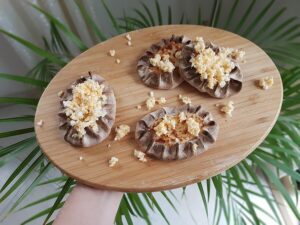
- Café Ekberg (Linnankatu 11). The cardamom buns I’d cross town for. €4-5 each, slightly stale by mid-afternoon, eat them in the morning.
The riverside barges, in summer, are their own thing: cheaper drinks (€7-8 a half-litre of Karhu), grilled snacks, no kitchen to speak of. Cindy and Donna are the two I keep coming back to; they’re moored east bank between Auransilta and Martinsilta. They’re not booking; just turn up.
How to get to Turku
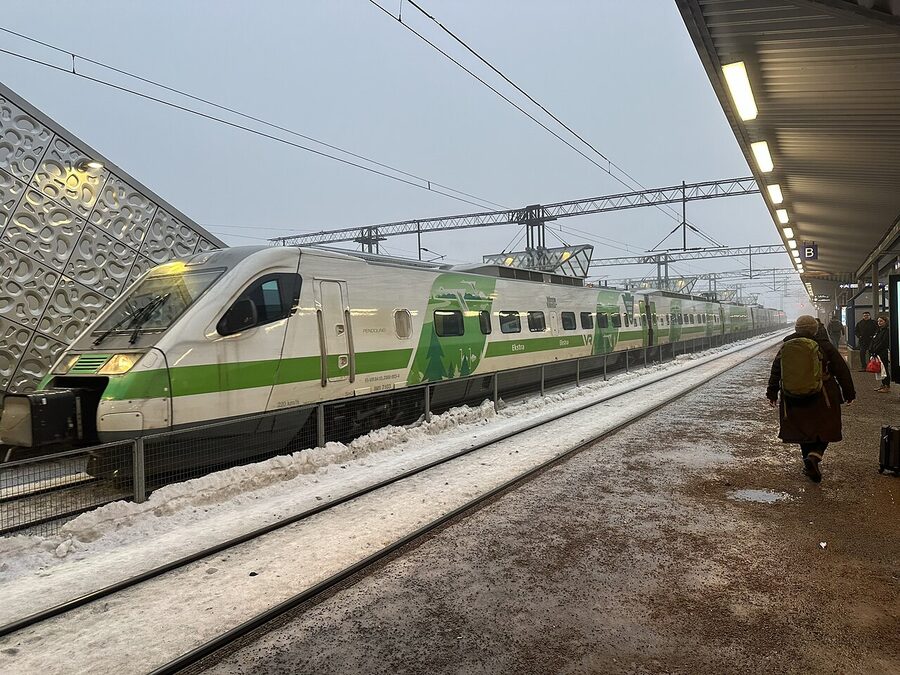
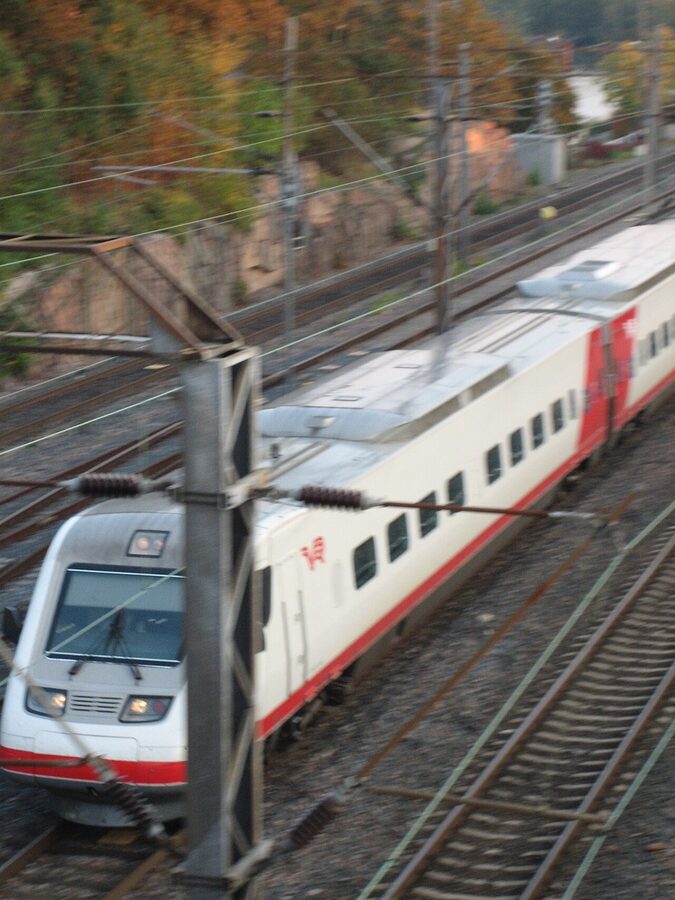
From Helsinki, the train is the right answer. VR (Finnish Railways) runs the Helsinki-Turku express on Sm3 Pendolino tilting trains; the schedule has it as 1h 50min on the fast services and 2h 5 on the standard. About sixteen daily services, every 60-90 minutes from 06:00 to 22:00. Book ahead at vr.fi: prices start at €15-19 for advance fares, walk-up €30-45. The train terminates at Turku station, a 12-minute walk from the cathedral or a four-stop bus from Kauppatori on bus 1, 2 or 30.
The bus is the budget alternative. Onnibus and Matkahuolto run the Helsinki-Turku route every 30-60 minutes; €10-25 advance, 2h 15 to 2h 30. The Onnibus stop in Turku is at the Linja-autoasema (bus station) on Aninkaistenkatu, 10 minutes walk from Kauppatori. The bus is a fine option in either direction, slightly slower than the train but fully reliable.
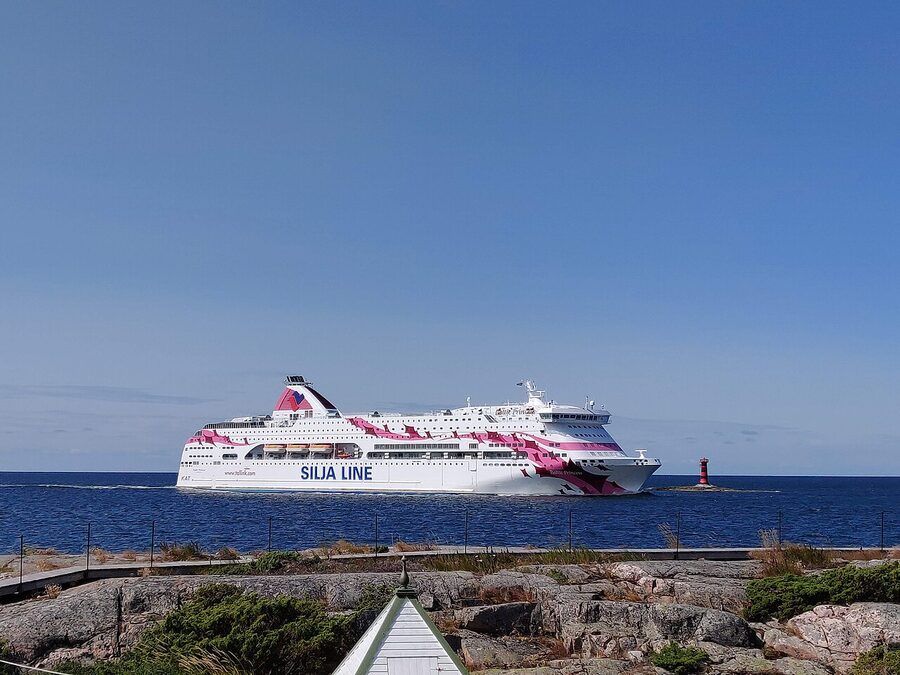
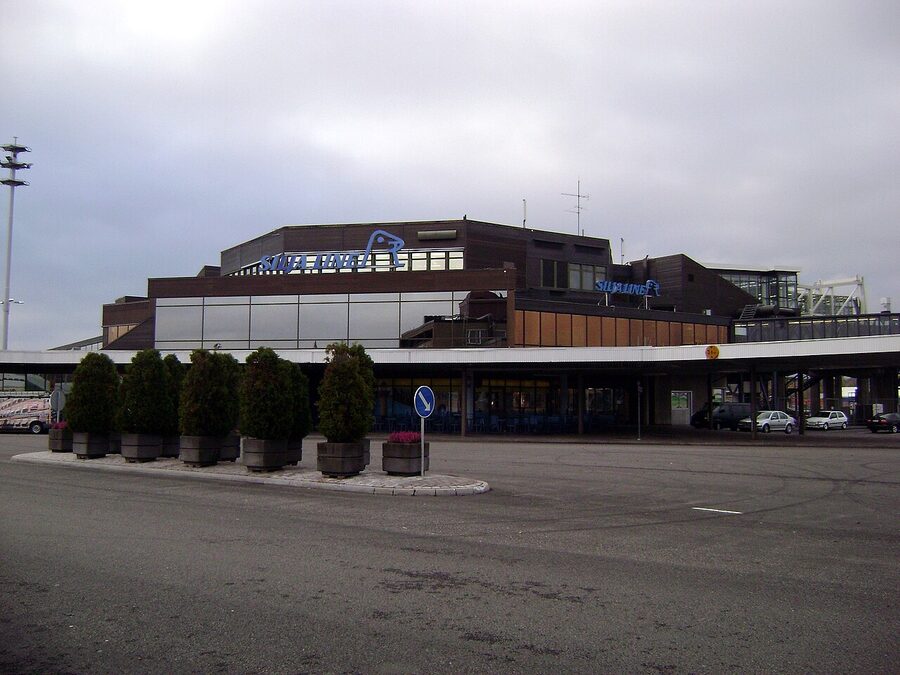
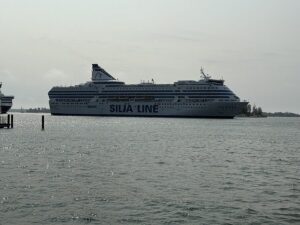
From Stockholm, you take the ferry. This is the option most non-Nordic visitors don’t know about: Silja Line and Viking Line both run overnight ferries between Stockholm and Turku via Mariehamn (Åland), with departures around 19:30 from Stockholm and arrival in Turku at 07:00 or 07:30. The crossing is 11 hours, cabins from €60 per person sharing in shoulder season. It’s the cheapest way between the two capitals (cheaper than the flight), and the Mariehamn stop in the middle of the night is the only reason to ever set foot in the Åland tax-free shop. The Silja terminal in Turku is at the foot of the castle; the Viking Line terminal is 200m away. Both are 20 minutes by bus 1 from the centre. For the deeper write-up of the route see my Stockholm to Helsinki overnight ferry guide, which covers Turku and Helsinki landing options side by side.
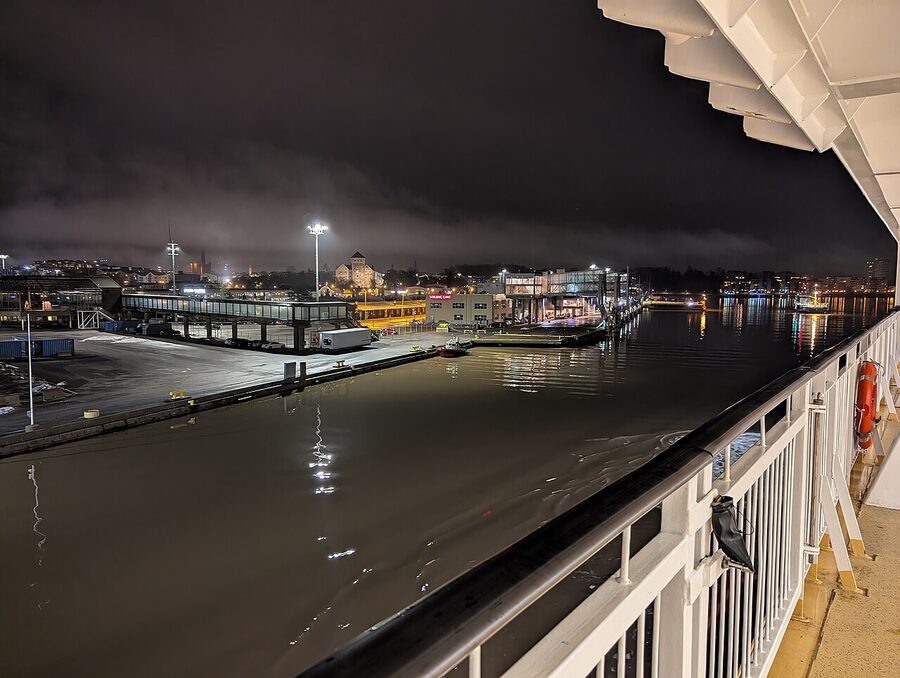
From the rest of Europe, fly to Helsinki and take the train. Turku has a small airport (TKU) about 8km north of the centre, with limited flights from Stockholm Arlanda (SAS, three a day), Riga (airBaltic, daily), and seasonal routes to Berlin, Munich and Gdańsk. It’s worth checking, but Helsinki Vantaa is much better connected.
When to come
Turku has four distinct seasons, and which one you pick changes the trip more than in most European cities. The summary:
- June to August, the obvious window. Light from 04:00 to 23:00, the river bars open, the archipelago boats running, Naantali in full season, Ruissalo accessible. The downside is that the city is at peak tourist density for two months and the Friday-Saturday market square is loud. Plan archipelago time and book hotels four weeks ahead.
- April to May and September, the shoulder. Cooler, less crowded, hotel prices 30-40% lower. The river bars are mostly closed, the Ukkopekka steamer doesn’t run, but the cathedral and the castle are at their best when half-empty. Light is still good, sunset around 21:30 in May.
- October to November, the quiet months. Short days, often grey, but the cathedral has the kind of empty atmospheric quality that summer drowns out. Excellent for the museums and the indoor parts of the city. Hotel rates lowest of the year.
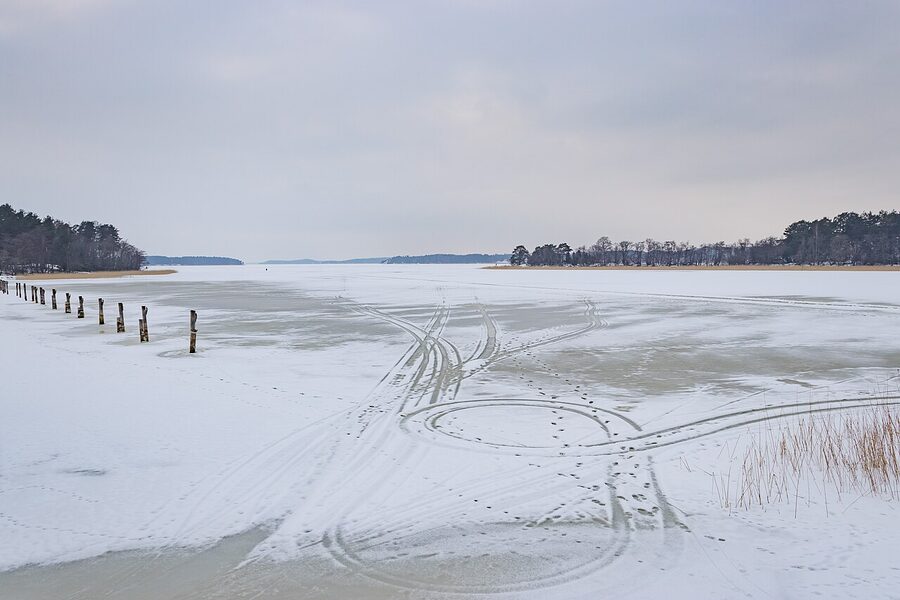
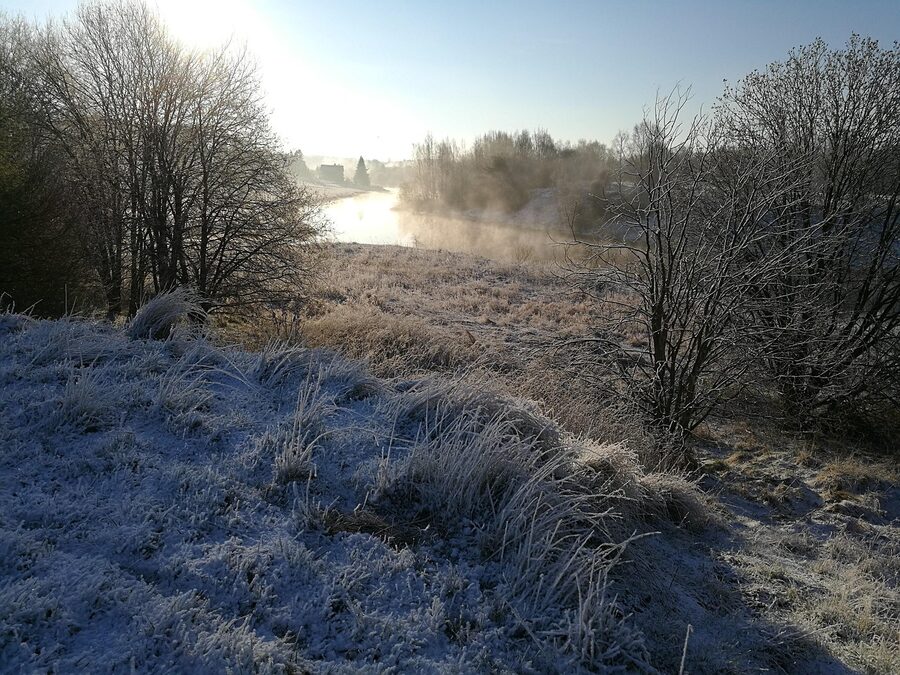
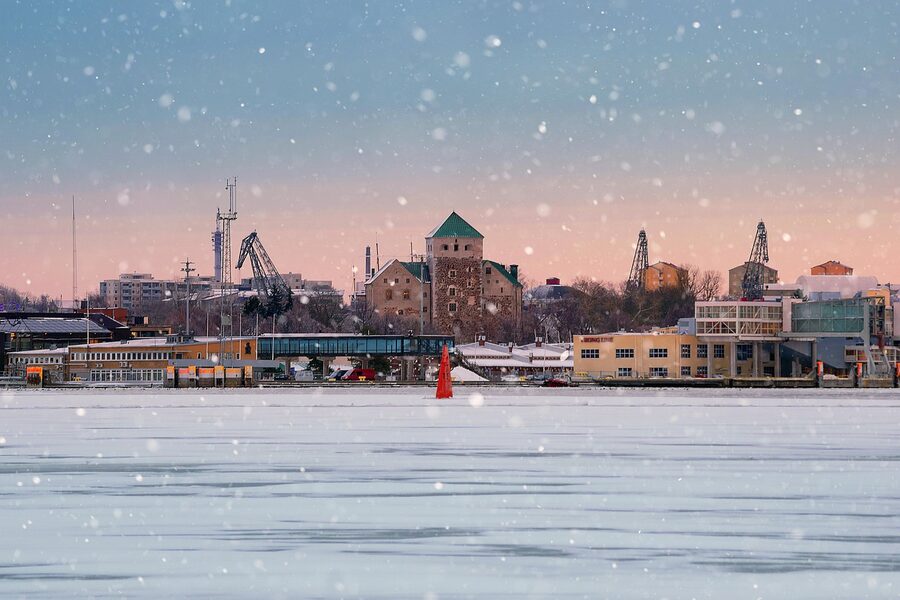
- December to March, winter. The Aurajoki freezes over from late January to early March most years; you can walk on it (do, briefly). Christmas Eve at noon for the Brinkkala Peace declaration is the unmissable winter date. February to March daylight is back to manageable, sun up around 08:00 and down around 17:00.
The Ruisrock weekend (early July) and the Christmas Eve declaration are the two pivots; book either months ahead or avoid them. Outside those, the city is rarely full.
Two and three day routes
This is what I’d actually do, given a weekend or a long weekend.
Two days, no archipelago
Day 1. Train from Helsinki on the 09:00 service, arriving Turku 10:50. Bus 1 to Kauppatori, walk to the cathedral (15 mins), one hour inside including the Cathedral Museum. Lunch at the Market Hall (Lihapiirakka Hyvä Sika or Roskeri). Walk down the east bank along the Aurajoki to Aboa Vetus & Ars Nova for the medieval section (1.5 hours). Continue south to Forum Marinum and Suomen Joutsen (1.5 hours). Walk back via the Föri (cross from west to east bank for the experience). Dinner at Mami or Smör. Night at Hotel Kakola.
Day 2. Cross the river back at the Föri. Coffee at Café Ekberg. Luostarinmäki for the morning (1.5 hours, take a slow walk through). Brinkkala and the Old Great Square. Late lunch at Pinella or, in summer, on a riverside barge. Bus 8 to Ruissalo, 90 minutes for the south-shore walk. Train back to Helsinki on the 19:00 service.
Three days with the archipelago
Days 1-2 as above. Day 3: early bus (09:00, 30 mins) to Naantali, or Ukkopekka steamer at 10:00 (1h 45). Old Town walk and church (1 hour), lunch on the harbour at Kala-Trappi or Uusi Kilta. Either Kultaranta tour (book ahead) or Moominworld (with kids), or both if you skip the lunch. 17:00 boat or bus back to Turku. 18:50 ferry to Stockholm if you’re chaining countries; 19:00 train to Helsinki if not.
If you have a fourth day, do the Archipelago Trail by car: pick the car up in Turku, drive to Nagu via Pargas (90 mins with one ferry), overnight at Hotel Strandbo on the harbour, return to Turku via Korpo and the back ferries the next day.
What I’d skip
A few things the official guides push that I wouldn’t lose sleep over missing.
The Medieval Market in late June. Crowded, expensive, the medieval cosplay is mostly bad, the food stalls overpriced. If you find yourself in town the weekend it’s on, walk through the Old Great Square once, see the jousting if you must, then leave. The original premise (a museum-organised commemoration of medieval trade) was fine; what it became is a coach-tour fixture.
The Sibelius Museum, unless you specifically care about the composer or about historical instruments. Small, dated displays, €5 entry. The Helsinki Sibelius monument and the Ainola estate north of Helsinki are better stops for the Sibelius pilgrim.
Posankka, the giant pig-duck sculpture by Alvar Gullichsen on the southern campus of the University of Turku. It’s a beloved local in-joke and worth a photo if you’re already on the south side of the river, but a 25-minute round-trip walk just to see it is steep.
Day-tripping from Helsinki without an overnight. Possible, technically, on the 06:30 train down and the 19:00 back, but you’ll be running. Two nights in Turku is the minimum that does the city justice. One night and one day is half a trip.
Linking Turku into the rest of a Nordic trip
Turku is the Finnish city that fits cleanly into a multi-country Nordic itinerary, more than Helsinki does, because of the ferry. The chain that makes the most sense, and that I’ve done twice now, is three days in Stockholm, overnight ferry to Turku (the Silja or Viking Line crossing covered in detail in my Stockholm-Helsinki overnight ferry guide, which sets out the Turku terminus options), two or three days in Turku and the archipelago, train to Helsinki, and either the Allegro train into Russia (no longer running since 2022) or onward to Tallinn or back to Stockholm. Done that way, Turku is the country’s front door. Done as a Helsinki side trip, it’s a back-of-the-house room.
If you’re stretching further north, the night train from Helsinki to Lapland leaves around 18:30 nightly and arrives Rovaniemi 09:00; my Finnish Lapland aurora guide covers the destinations once you’re up there. If you’ve come to Finland in summer, see the Lapland in summer piece for the alternative season. If you’re rounding out the Helsinki end with a day trip, Porvoo is the other obvious one and pairs naturally with Turku as the eastern and western Helsinki day cities. And for the broader Finnish food context, the Finnish food guide sets out the regional cuisine; Turku, sitting on the south coast, is where archipelago fish meets Karelian pies.
One more thing
Walk the river at midnight in late June. The water is still, the light is grey-blue, the Föri shuts down around 21:00 but the embankments stay alive, the bars on the moored boats are loud and warm against the cold air off the water, and somewhere across the city the cathedral bell rings the quarter. That walk is the trip. Everything else, the castle, the cathedral, the ferries to the islands, the museums, is built around it. The fire took the medieval city and the capital move took the political weight, but the Aurajoki kept moving through both, and that’s what’s left to look at. Two hundred years on, that’s enough.


.jpg)
_03.jpg)


_01.jpg)


.jpg)


_near_the_Helsinki_railway_station_in_Finland.jpg)


