The Finnish food you will eat as a visitor today was largely written between 1939 and 1944. That is not a flourish. The Winter War and the Continuation War took roughly 11% of Finland’s pre-war territory, and 410,000 Karelians were evacuated west into a country already on rationing. They brought their pies, their stews, their fish-and-pork loaves, and their cardamom buns with them, and the food they cooked in resettlement villages between 1944 and 1948 became the canon Finland still serves at lunch eighty years later. Macaroni casserole was a wartime ration recipe. Lihapullat were beaten thin to stretch the meat. Even the supermarket version of karjalanpiirakka in every Finnish K-Market today is essentially a recipe that walked west across the lost Karelian Isthmus on a horse-cart. The cuisine that visitors call “Finnish” is, accurately, a survival cuisine that became a national one.
That history is what most travel guides skip. They list ten dishes, point at a Helsinki market hall, and tell you to try the reindeer. They do not explain why these dishes survived, why a country with one of the world’s harshest growing seasons developed a cuisine built almost entirely around preservation, smoking, fermentation and rye, or why every kiosk in Tampere sells a sausage made of pig blood and rye flour. I am not Finnish. I am not a chef. I am a frequent visitor who has eaten the canon repeatedly across Helsinki, Tampere, Kuopio and Lapland, and what follows is the food guide I wished I had on my first trip in 2015, when I ordered a kalakukko at the Old Market Hall, ate the pastry crust, and wondered why the woman next to me was watching me with the faint amusement of someone who had seen this before.
One thing to set aside before going further. Skip Restaurant Lappi on Annankatu. It is the touristy “traditional Lapland” place every English-language list points at, and on every recent visit I have made it has been mediocre and overpriced. The reindeer is fine. The interior is themed. The bill is not the bill a Finn would pay. Eat your reindeer at Savotta on Aleksanterinkatu opposite Senate Square instead, or pay a little more at Savoy for the proper Aalto-room version, or just buy the supermarket frozen poronkäristys at K-Market and warm it up in your hotel kitchen with mash and lingonberry. All three options give you the dish. Lappi gives you a souvenir.
In This Article
- The history that explains everything
- Ruisleipä: the bread that holds the country up
- Karjalanpiirakka: the pie that became a country
- Kalakukko: the fish-and-pork loaf you should eat in Kuopio
- Lohikeitto: the salmon soup that does the heavy lifting
- Salmon, the rest of it: gravlax, smoked, the Tornio run
- Reindeer: poronkäristys, and where not to eat it
- Korvapuusti and pulla: the cardamom country
- Salmiakki: the salt-licorice that divides everyone
- Wild berries and Everyman’s Right
- Leipäjuusto: the cheese that squeaks
- The new wave: Savoy, Olo, Toca, Demo, Savotta, Ravintola Nolla
- Mustamakkara: the Tampere blood sausage you should still try
- Muikku: the small fish that taught me to eat with my hands
- The Helsinki market halls: where to actually shop and eat
- Coffee, lonkero, the drinks that go alongside
- The full table: julbord, May Day, midsummer, fasting
- Where to take some home
- Three days, three lunches, three dinners
- The MATKA fair, if you are here in late January
- One last thing
The history that explains everything
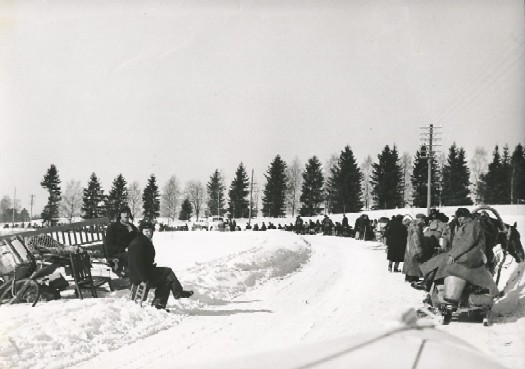
Three forces shaped the food. The climate is the first. Finland sits between 60 and 70 degrees north. The growing season in Helsinki is roughly 165 days; in Rovaniemi, 130; in Utsjoki, 95. Nothing tropical grows. Wheat is marginal. Rye, barley and oats survive. Root vegetables survive. Berries are wild and short. Fish swims in cold water. Reindeer walks in the high north. Everything else has to be imported, preserved, or done without. Every Finnish dish older than 1995 was built around that constraint.
The second force is the wars. Finland fought two of them against the Soviet Union in five years. The Winter War (November 1939 to March 1940) cost the eastern province of Karelia, the second city of Viipuri (now Vyborg), and a strip of territory bigger than Belgium. The Continuation War (June 1941 to September 1944) ran alongside the German campaign and ended with another evacuation. By 1945, 410,000 Karelians had been resettled in central and western Finland, half of them in farming districts that had to absorb a population increase of 12% overnight. Wartime rationing ran from 1940 to 1954. Coffee was rationed for 14 years. Sugar, butter and meat were rationed for nearly as long.
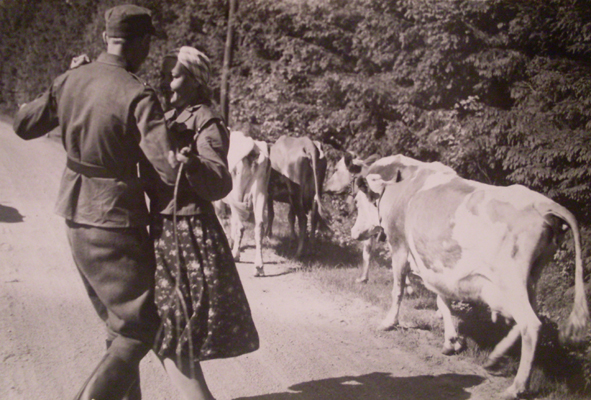
What the wartime kitchen produced was a cuisine of stretching. Macaroni casserole (makaronilaatikko) is half a kilo of mince spread across a kilo of pasta and a litre of milk; it feeds six on a budget that would feed two of anything else. Liver casserole (maksalaatikko) takes the same approach with rice and offal. Pea soup (hernekeitto) was Thursday lunch in the army and became Thursday lunch nationally because the army habit walked home with every conscript. The Karelian pie went west because evacuees did, and a thin rye crust filled with rice porridge that costs almost nothing to make is exactly the dish a country wants when butter is rationed and milk is short. Even pulla, the cardamom bun, exists in the form it does because the wartime version was thinned to use less butter and the recipe stuck.
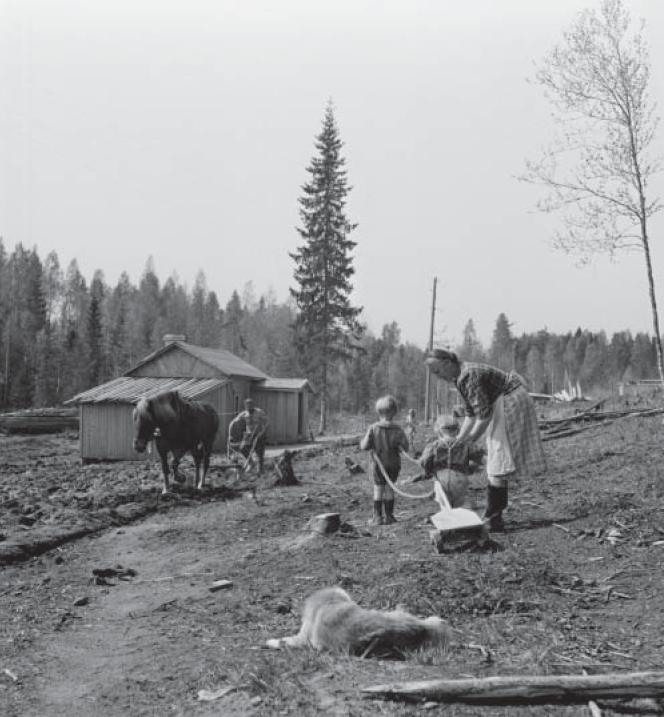
The third force is the European Union. Finland joined in 1995, and within a decade the food shifted. Restaurants stopped apologising for their own ingredients. A serious fine-dining scene appeared in Helsinki for the first time in modern memory. The first Michelin stars in Finland landed in 2003 (Chez Dominique, since closed) and 2007 (Olo, still trading). The new wave was young, technically excellent, and explicitly proud of Finnish produce. They put cloudberry on plates next to fermented herring and wild mushrooms. They cured salmon at every restaurant. They turned the rye loaf into a slow-fermented sourdough on a tasting menu and made it the best bread on the table.
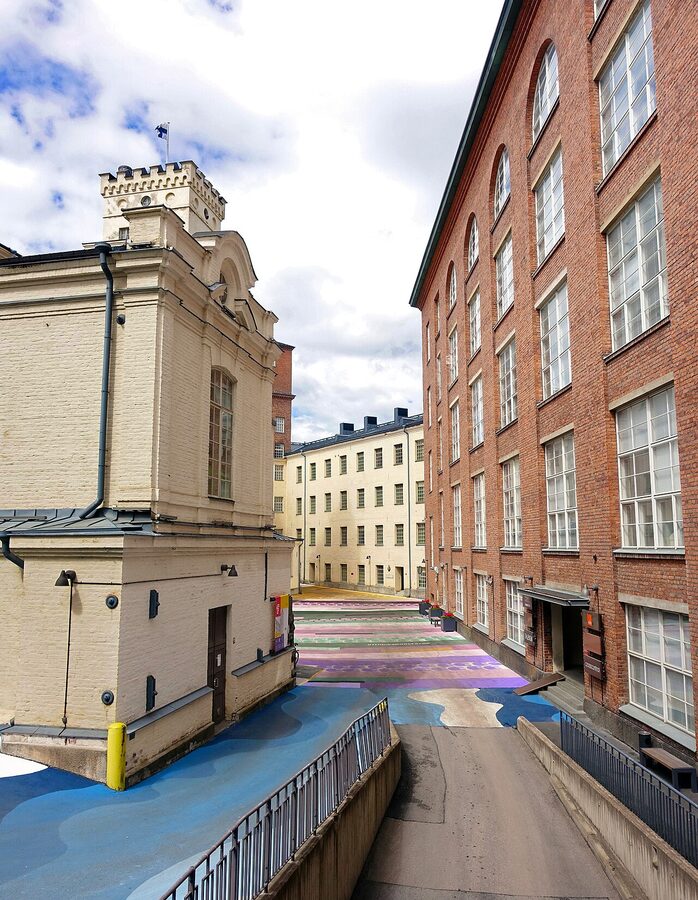
Read the canon below with all three forces in mind. Climate explains the rye and the preserved fish. War explains the casseroles, the pies, and why every Finn over fifty has an opinion about the macaroni layer. The EU explains why your dinner at Olo or Savoy tonight will be one of the best meals in Northern Europe rather than the apologetic pre-1995 version.
Ruisleipä: the bread that holds the country up
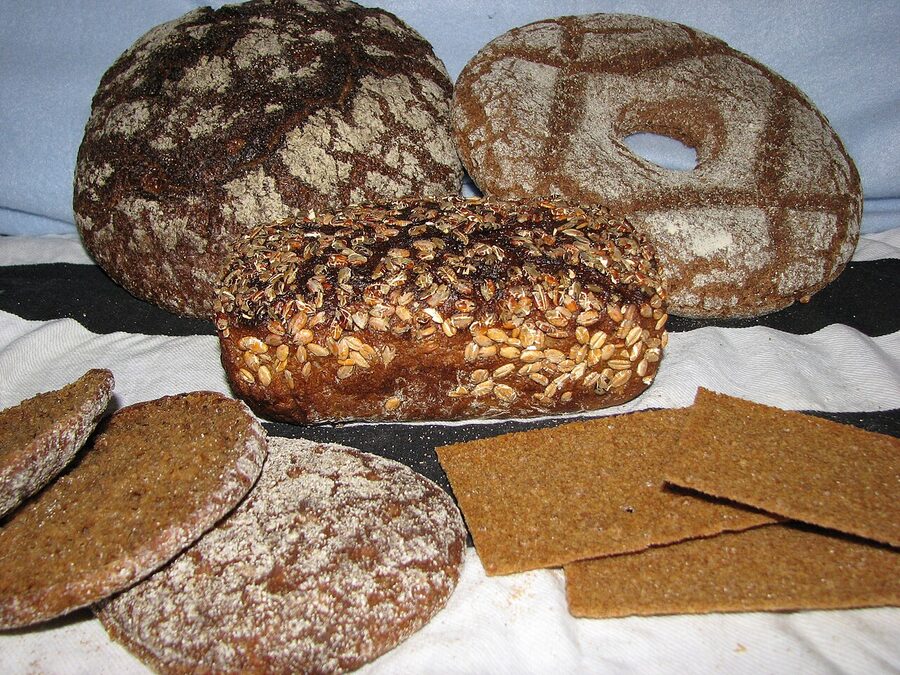
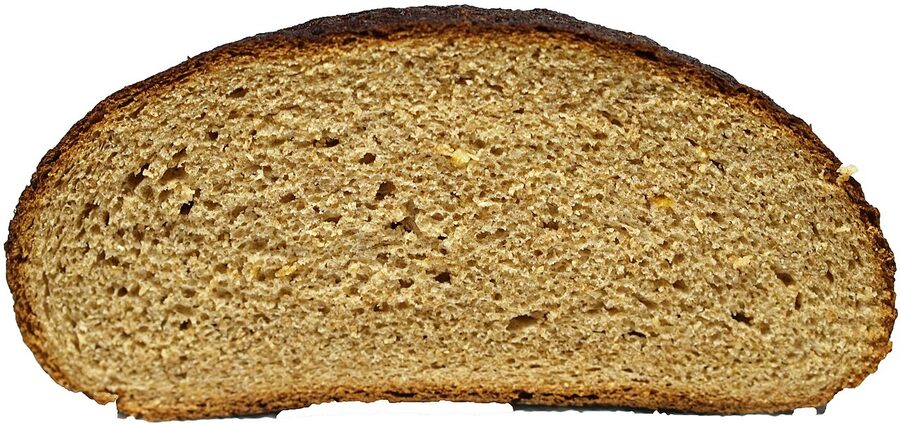
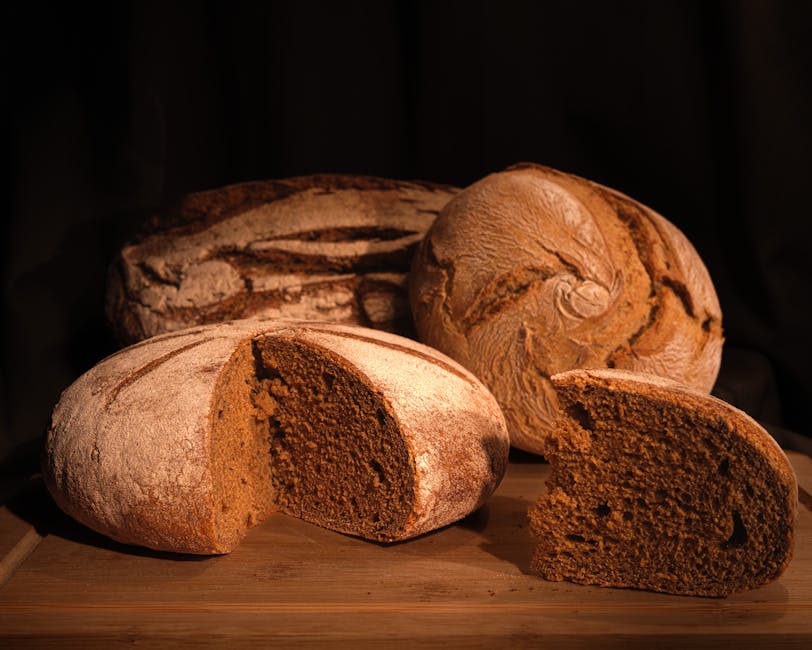
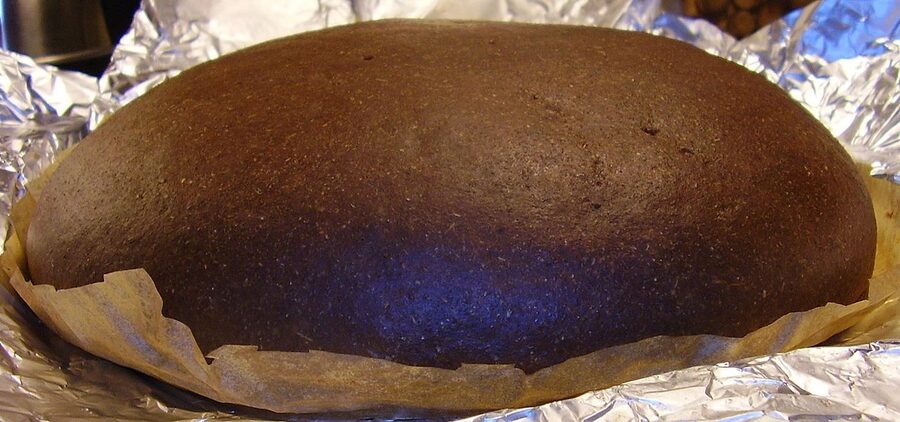
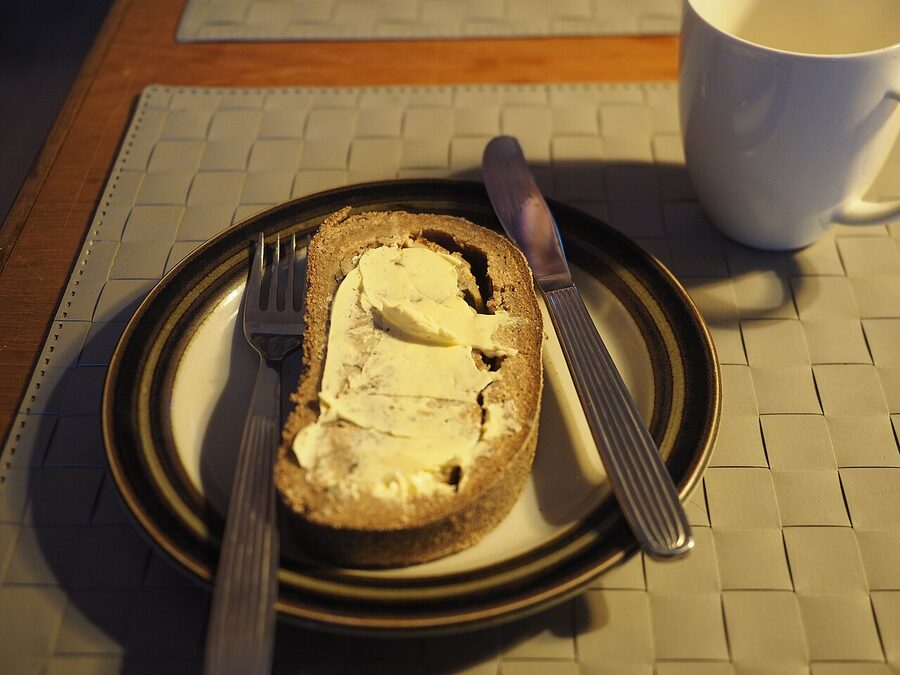
Ruisleipä is the load-bearing element. Dense, tangy, sourdough rye, much darker and heavier than the Danish rugbrød the smørrebrød guide describes, and noticeably more sour. A good slice will sit on the table at almost every Finnish meal you eat. A bad slice does not really exist; the country takes its rye seriously enough that even the supermarket loaf is decent.
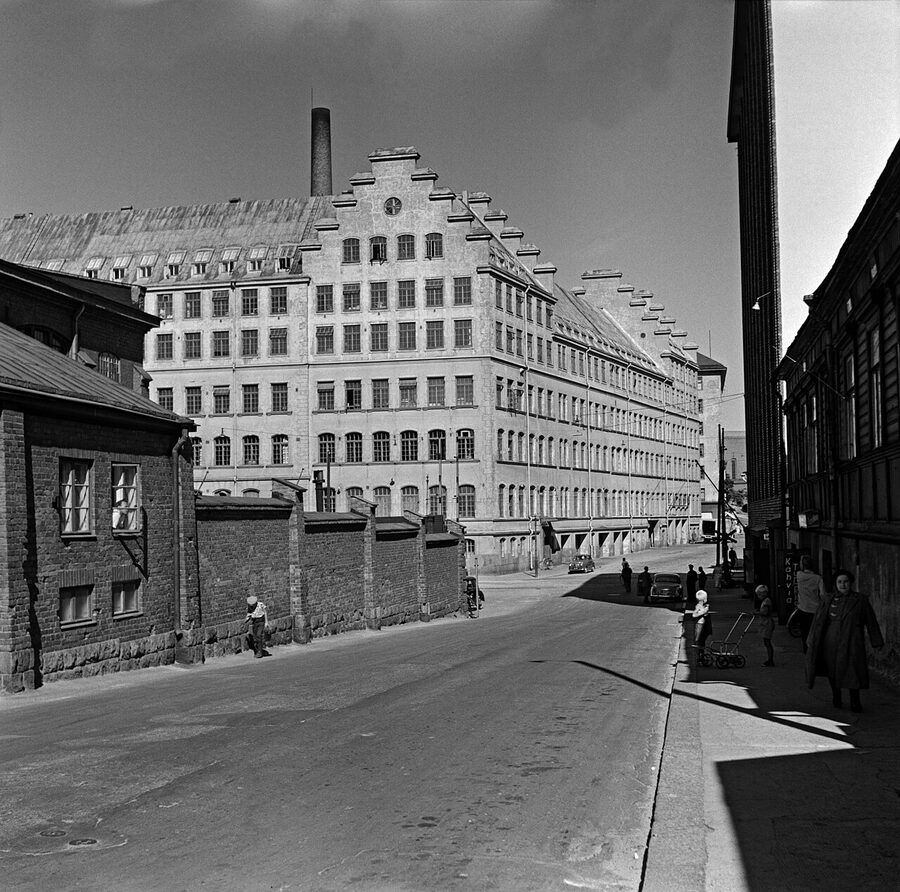
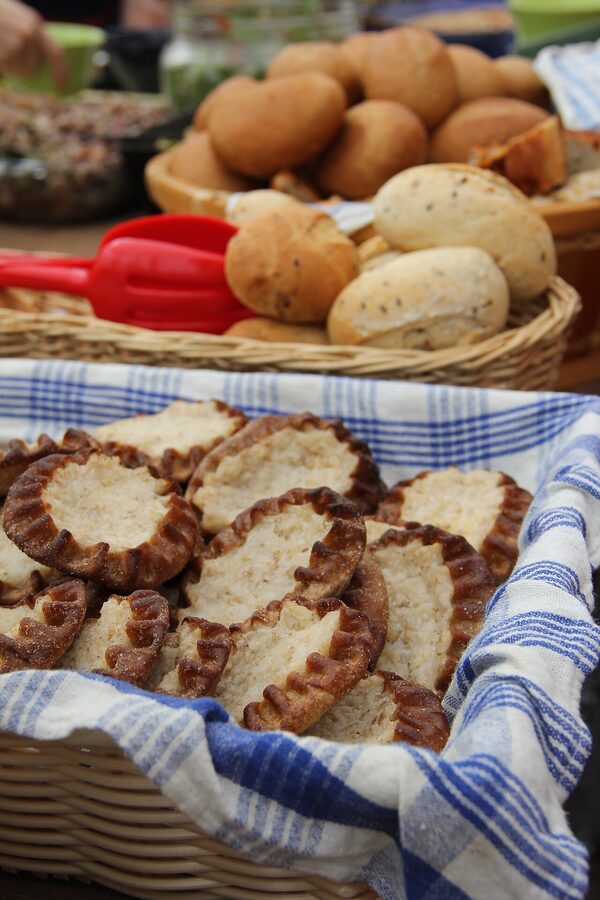
The history is medieval and rural. Finnish farms baked rye twice a year, drilled a hole through the centre of each round loaf, and hung the loaves on a long pole running across the rafters of the bakehouse. The reikäleipä shape (the one with the hole) is what survived once a year’s bread had to last six months. The bread dried hard, kept indefinitely, and was softened with milk or broth at meals. Modern industrial rye lost the hole because tin loaves stack better in lorries, but Fazer still bakes a reikäleipä and any farm market in Savo will sell you one. Worth eating once on its own to see what 600 years of preservation logic tastes like.
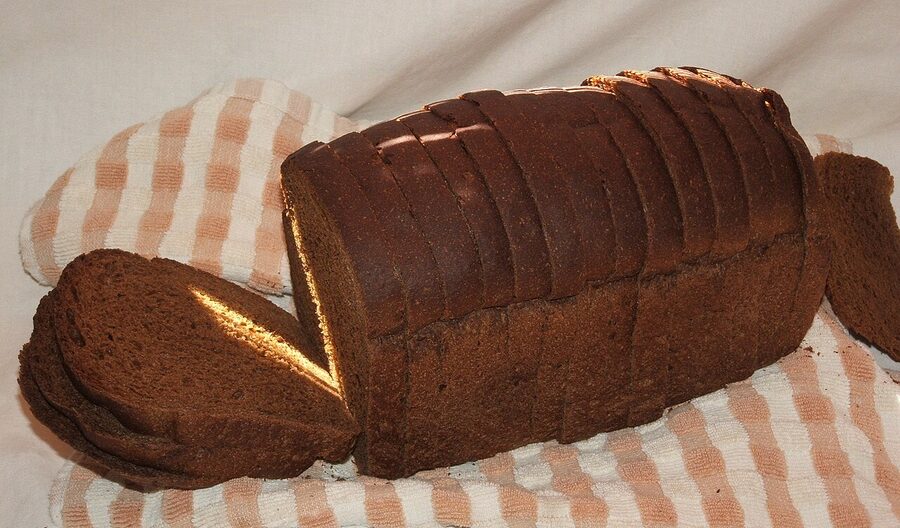
The everyday version most visitors meet is reissumies (literally “travelling man”), the sliced supermarket loaf in the dark blue Vaasan packet. The hapankorppu (sour crispbread) is the dry crisp; supermarket aisles dedicate whole shelves to it and the Finnish habit of eating it at breakfast with butter and a slice of cheese is real. Both are easy to take home; reissumies vacuum-packed lasts the flight to anywhere in Europe.
Karjalanpiirakka: the pie that became a country
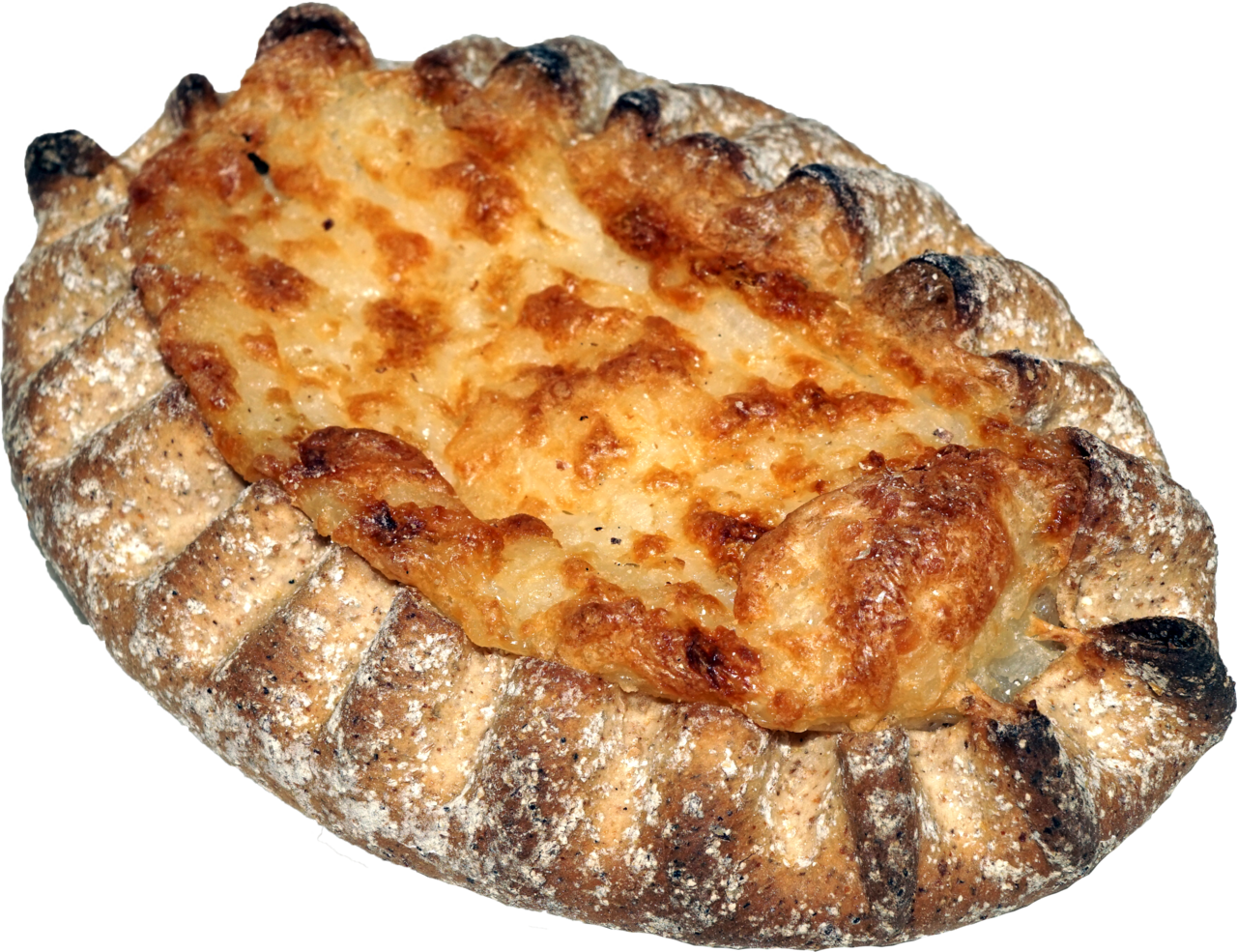
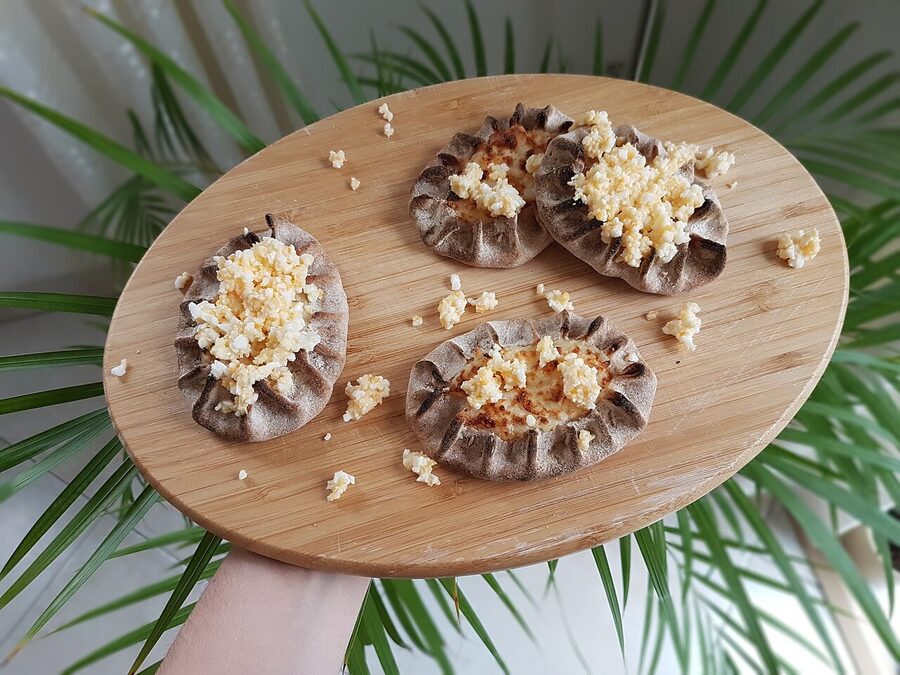
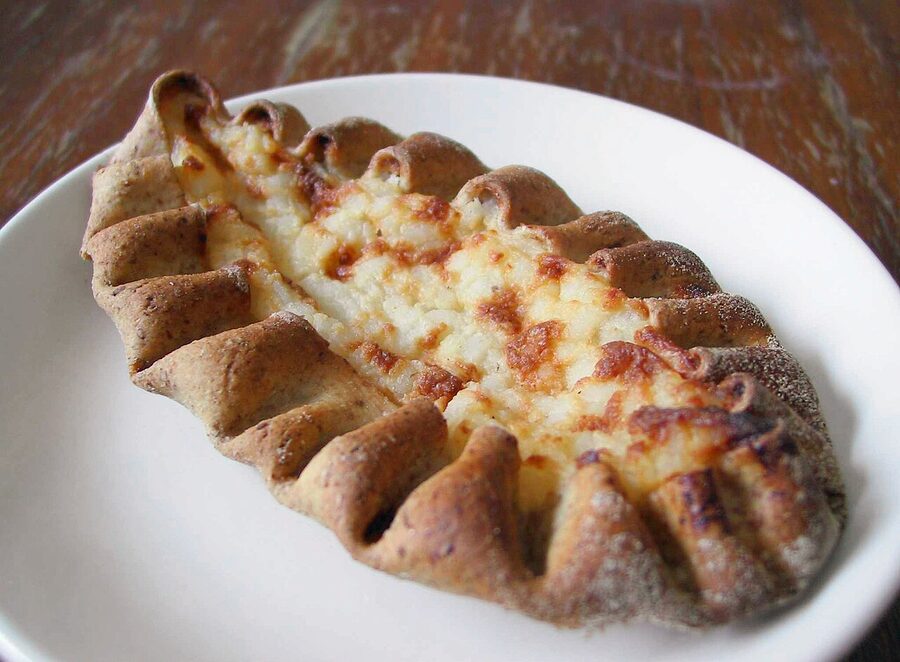
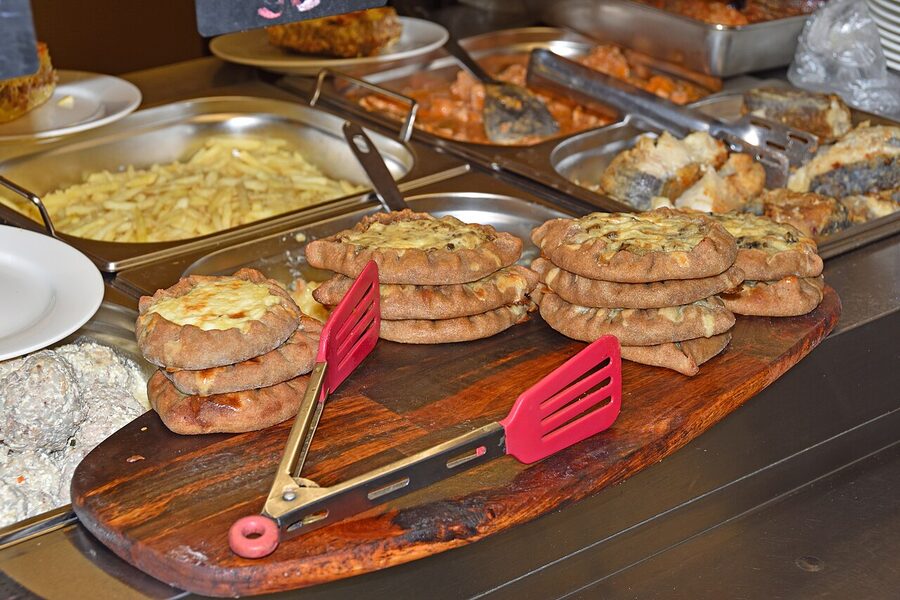
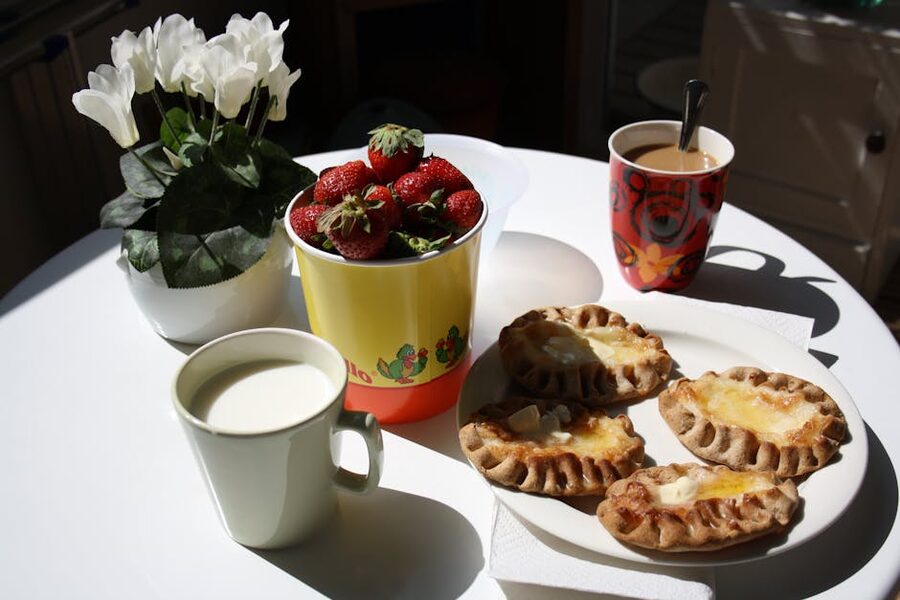
The Karelian pie is the dish that walked west in 1944 and became Finland. Thin rye crust, oval-shaped, crimped along the long edges, filled with rice porridge (or, in the older recipe, barley or potato), baked hot until the crust toughens and the filling cooks through. Eaten warm with munavoi (egg butter, simply hard-boiled egg mashed into softened butter) and a coffee. Cold with a slice of cheese. Reheated in foil in the oven. There is no version that does not work.
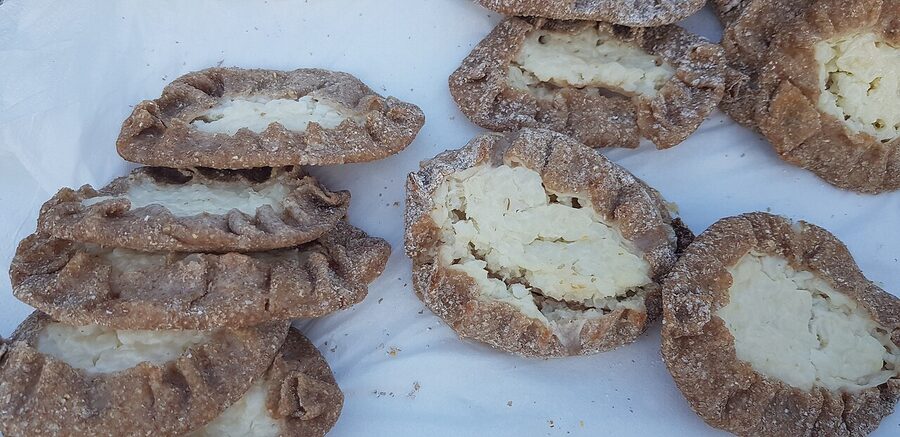
The dish is from Karelia, the region Finland lost to the Soviet Union in 1940 and 1944. Pre-war it was a regional speciality of the eastern province, made differently in different villages, with rice porridge as the most common filling once rice arrived in Finland in the late 1800s. After 1944, when half a million Karelians were resettled across western and central Finland, the pie went with them. By the 1960s every supermarket sold a frozen version. By the 1980s the Finnish bakery industry had standardised the rice-porridge filling and the karjalanpiirakka became the breakfast pastry of a country that had not eaten one before the war.
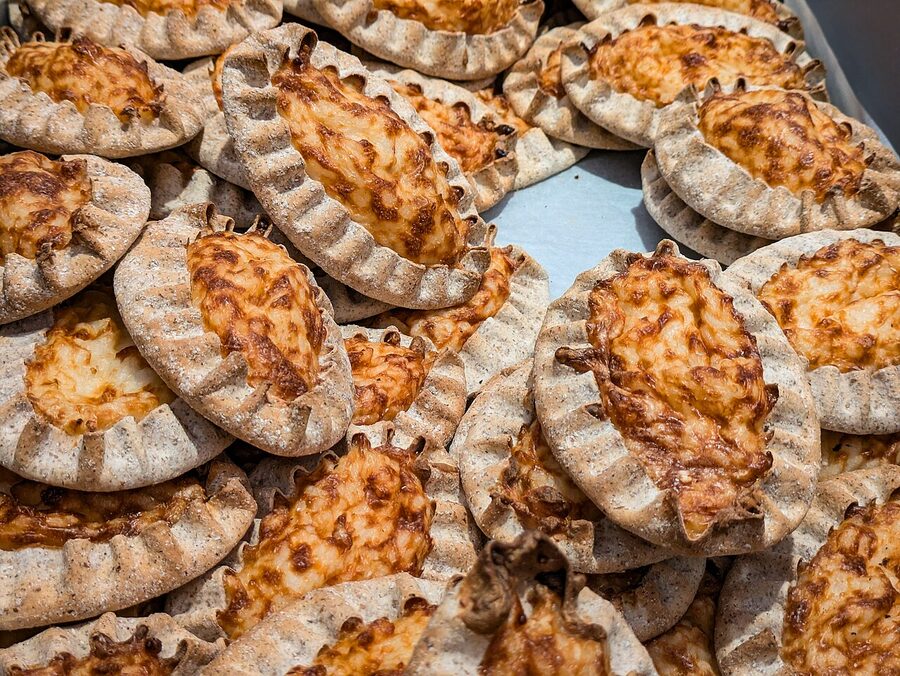
Where to eat one. Hakaniemi market hall, the post-2023 reopening, has half a dozen counter bakeries that turn out karjalanpiirakka warm by 8am. Kanniston Leipomo on the ground floor is reliable. Vanha Kauppahalli (the Old Market Hall on the south harbour) has Soppakeittiö’s pie alongside the salmon soup, and Story upstairs serves them with proper egg butter rather than the supermarket-tub version. If you want the version Finland eats every day, walk into any K-Market before 10am and buy a fresh pack from the bakery counter.
Kalakukko: the fish-and-pork loaf you should eat in Kuopio
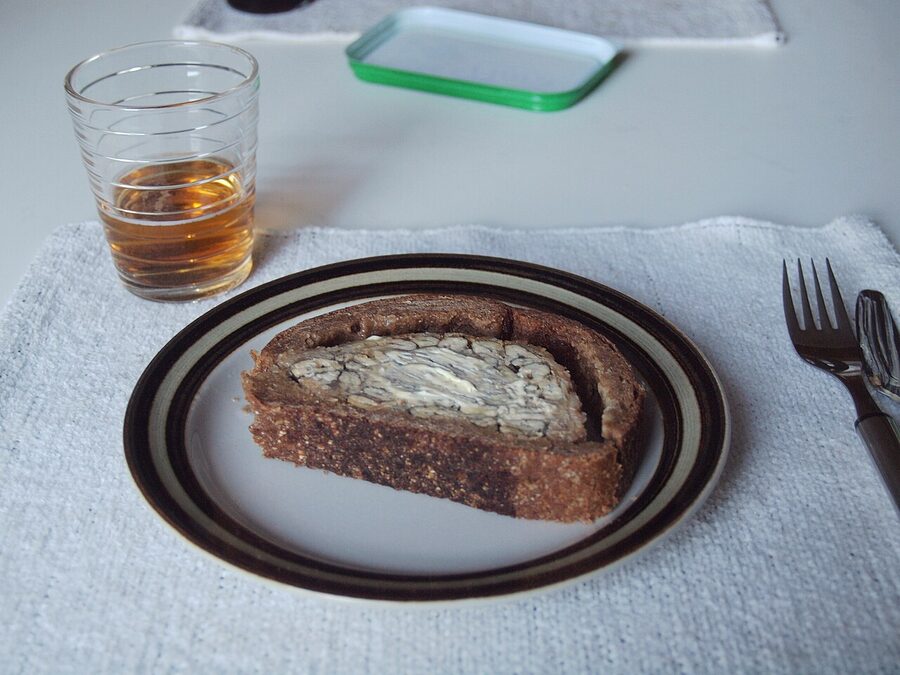
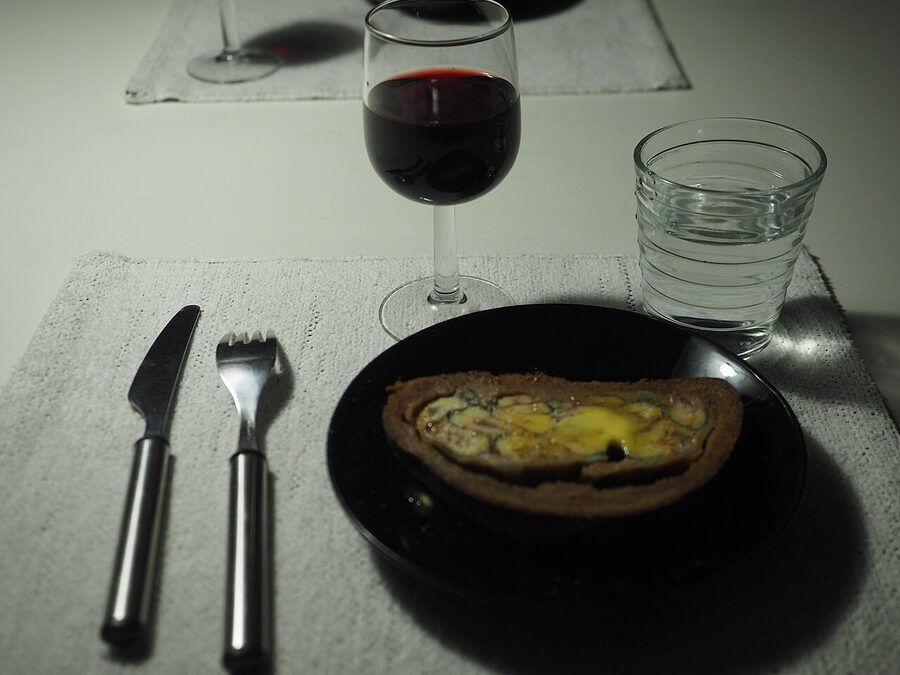
Kalakukko is the dish I ordered wrong on my first trip. It is a Savonian speciality from around Kuopio: small whole vendace (muikku) and slabs of pork belly packed inside a rye-flour dough, sealed shut, and baked at low heat for four to seven hours until the rye crust forms a near-impenetrable shell and the fish softens to the point where you eat the bones. The result is the size of a small loaf, weighs roughly a kilo, and was historically the lunchbox of Savonian farmers and fishermen because the sealed crust kept the contents safe for several days without refrigeration. It is not a starter. It is not a sandwich. It is a meal you slice and share.
The proper kalakukko is from Kuopio. Hanna Partanen’s stand at Kuopio market square (Kuopion kauppatori) has been baking them since 1989 and was awarded the EU’s protected geographical indication for Savonian kalakukko in 2002. The full loaf is around 35 to 40 euros and feeds four; a half-loaf around 20 euros. If you cannot get to Kuopio, the Old Market Hall (Vanha Kauppahalli) in Helsinki sells a serviceable version daily, and Hakaniemi has it at the bakery counters.
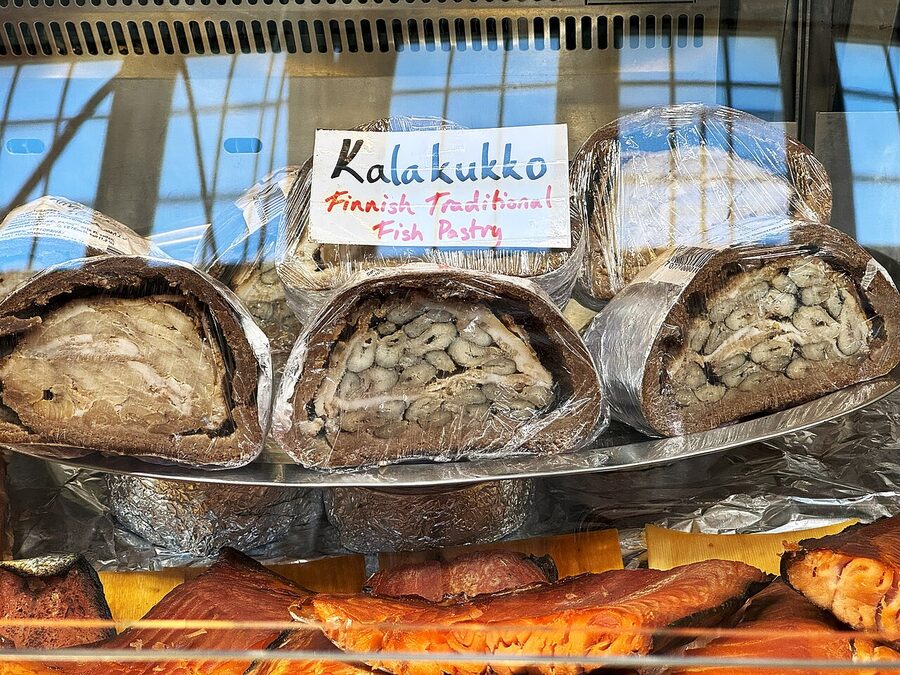
How to eat it. Slice across the loaf, not lengthways. The crust is the wrapper. Some Finns eat the crust, some leave it; the inside is the point. A good slice is two to three fingers thick, eaten with cold butter, a small mustard, and beer or red wine. Cold the next day with cucumber works. The flavour is fully fishy, oily, salty from the pork, and the rye carries it. Skip if you do not like oily fish; this is not a soft introduction.
Lohikeitto: the salmon soup that does the heavy lifting
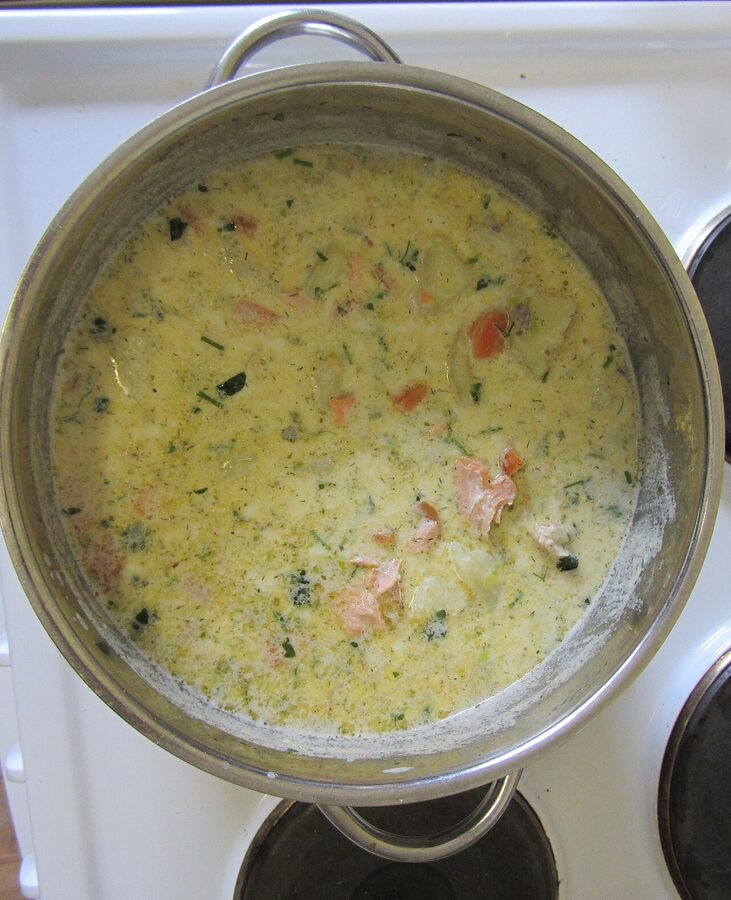
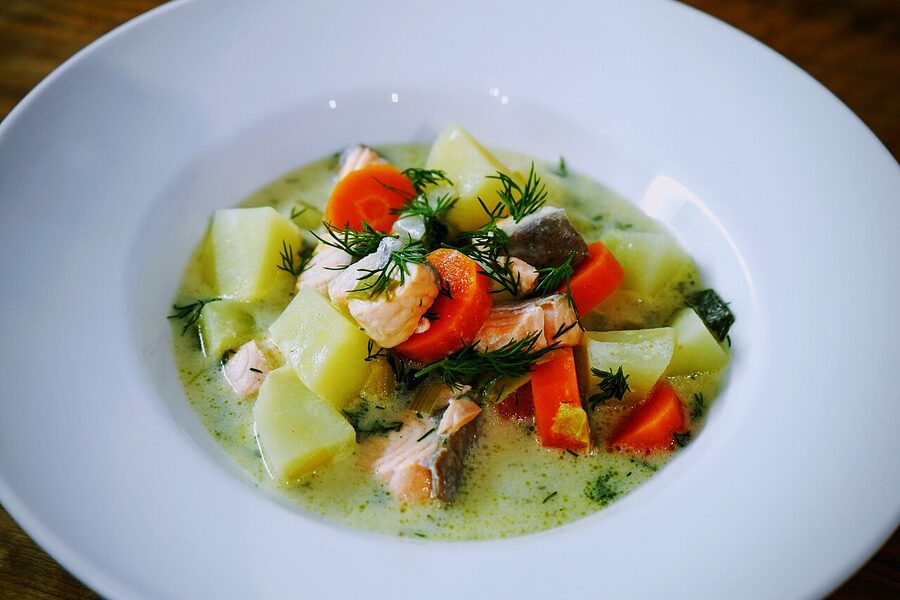
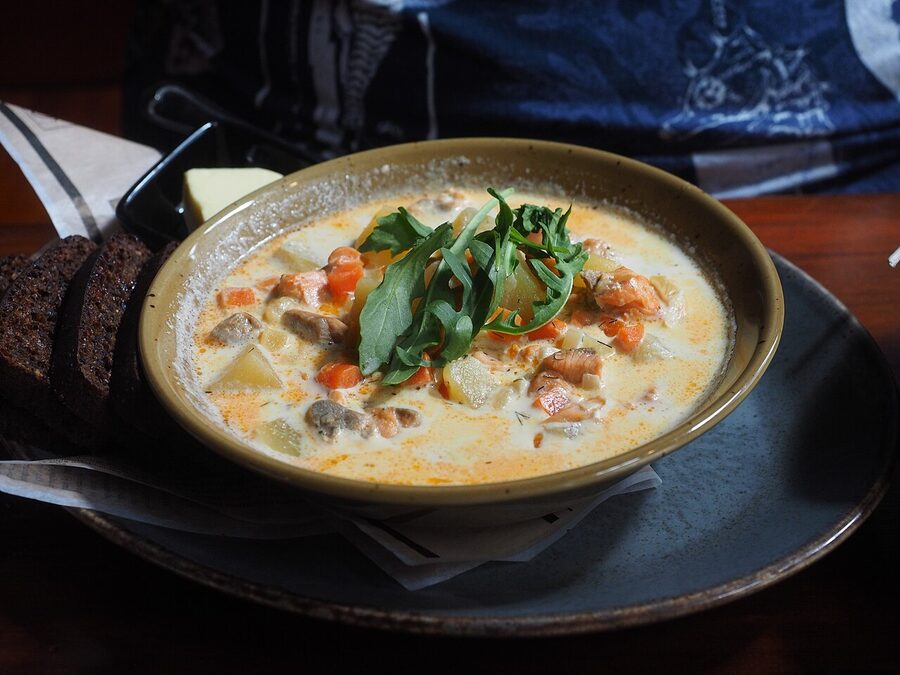
If you eat one Finnish dish on this trip, eat lohikeitto. Salmon, potato, leek, butter, cream, dill, white pepper, salt. That is the recipe. The skill is in the fish stock and the timing; the salmon goes in last and finishes in the residual heat so it stays soft and pink rather than turning into chunks of overcooked protein. A good bowl is rich without being heavy, salty enough to wake you up, and ladled into a deep bowl with a slab of rye on the side. It is the dish that does the most work for the least effort and the one I have ordered most often on every Finnish trip.
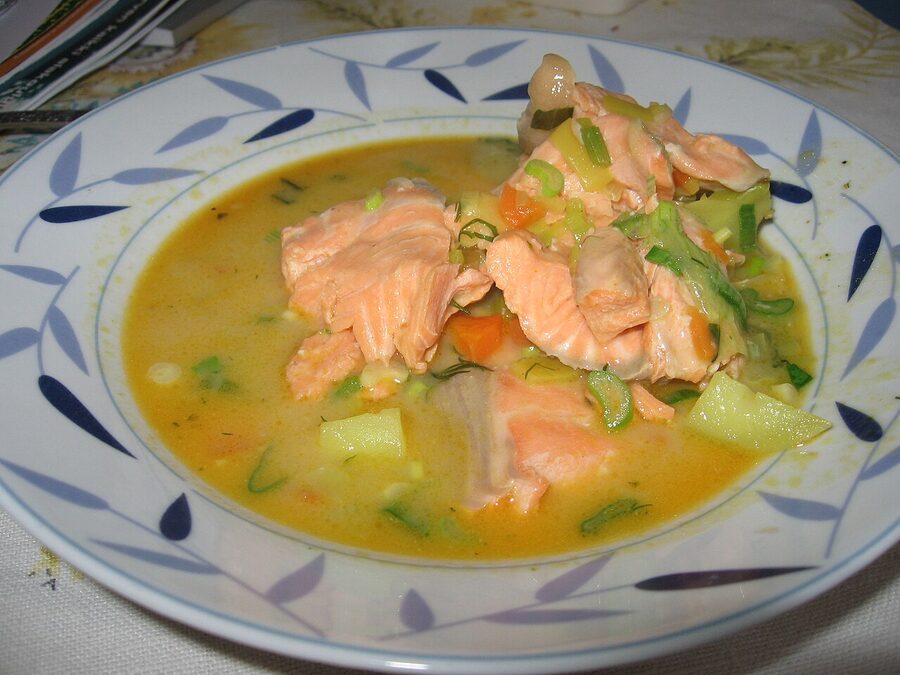
Where to eat it. Soppakeittiö (“the soup kitchen”) at Vanha Kauppahalli is the institutional answer. They do four soups a day rotating through the week, with lohikeitto on the menu most days, and the lunch queue says everything; expect 10 to 15 minutes wait between 12 and 13:30. About 14 euros for a bowl, rye and butter included, no service. The Old Market Hall version is what most of Helsinki eats when they want a proper soup at lunch, and it is genuinely excellent.
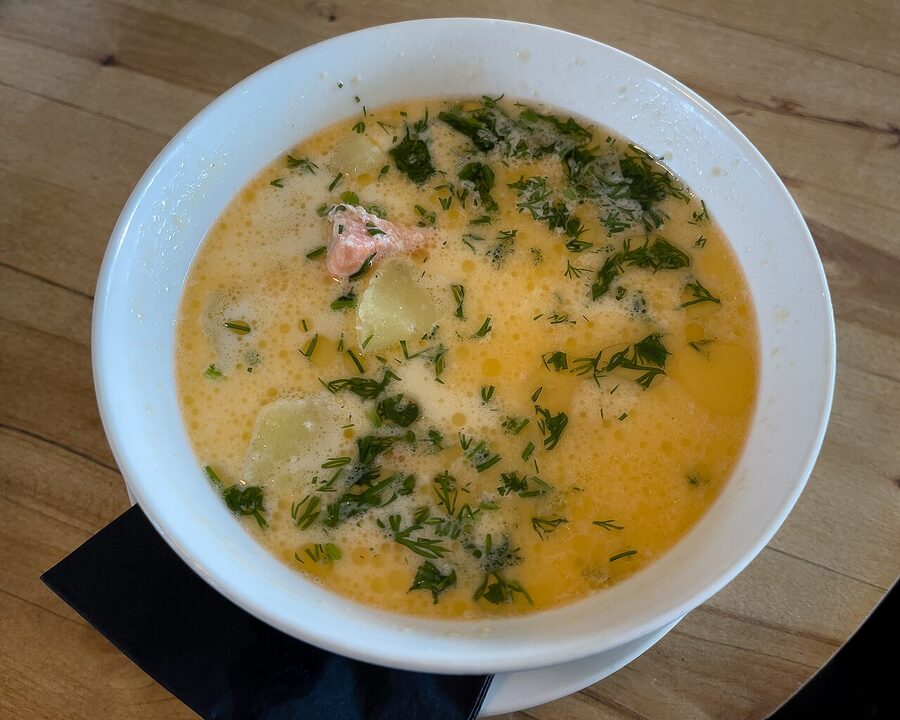
For something more refined, Story at the upper level of Vanha Kauppahalli does an excellent lohikeitto with a fennel-and-anise note, and the Plevna brewery in Tampere’s Finlayson district pairs theirs with a dark lager that is the best beer match the country produces. Löyly on Hernesaari serves the post-sauna bowl that the Helsinki public saunas guide covers in more detail; the soup itself is fine rather than great, but eaten in a robe at sunset on the waterfront the bowl has its own context.
Salmon, the rest of it: gravlax, smoked, the Tornio run
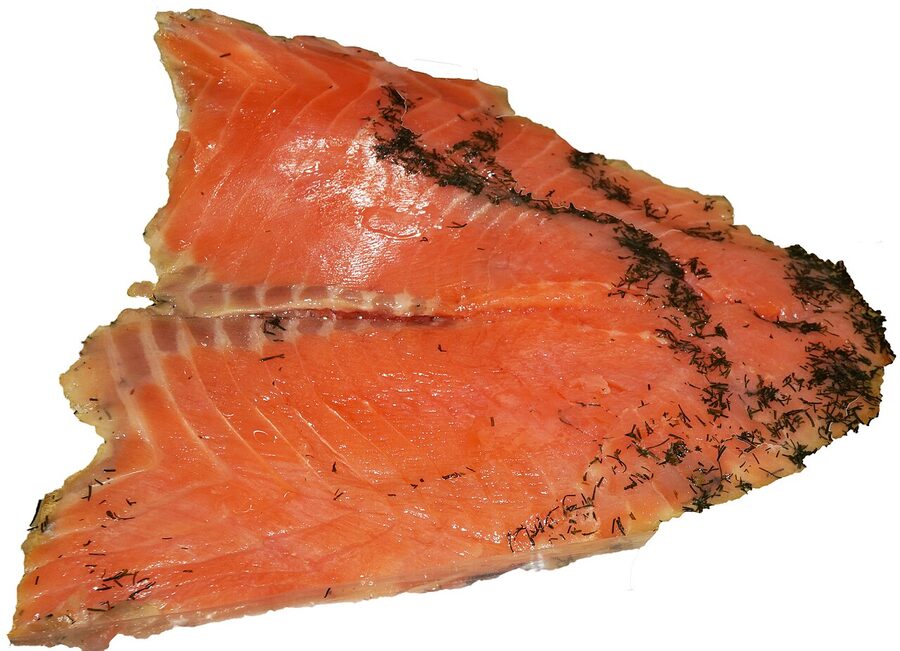
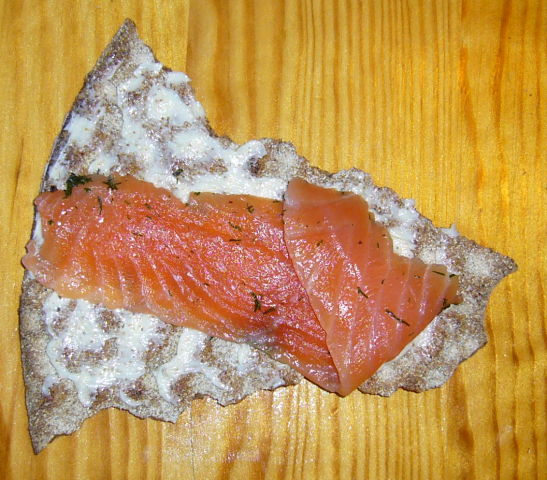
Salmon is everywhere in Finnish food and works in roughly four registers. Gravlax (graavilohi in Finnish) is the cured fillet: salt, sugar, dill, no heat. The fillet is buried in the cure for 36 to 48 hours, weighted, then sliced thin. Eaten on bread with mustard sauce, on a platter with dill, on top of the karjalanpiirakka, in salads. It is the salmon move that takes the least equipment and produces the largest payoff.
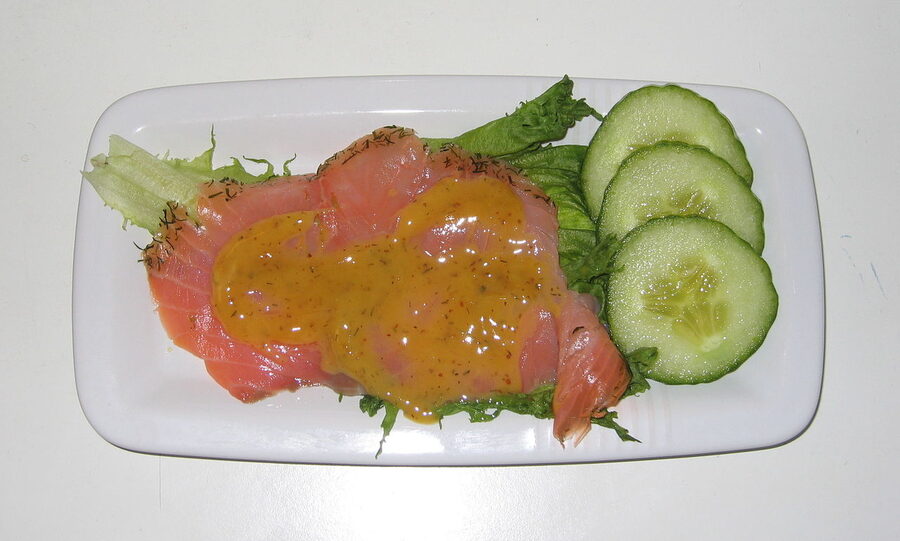
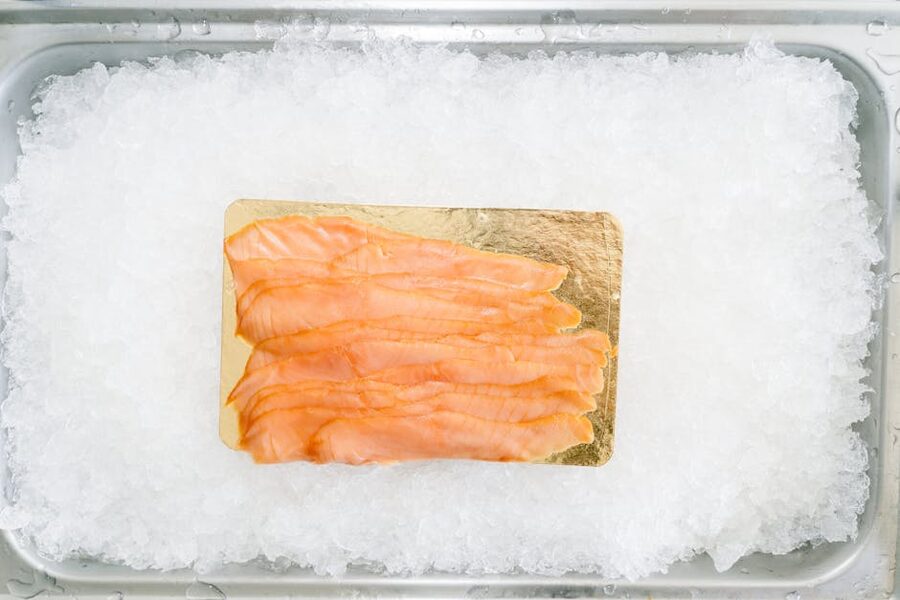
Smoked salmon (savustettu lohi) is the second register. Cold-smoked is the dinner-plate version, sliced thin, often on rye with mustard and dill. Hot-smoked is the lunch-and-supper version, flaked into salads or eaten warm with potatoes. The fish-counter in any decent Finnish supermarket has both; K-Ruoholahti and Stockmann’s basement food hall on Aleksanterinkatu are the easy Helsinki options. Buy a 200-gram pack of cold-smoked, a packet of hapankorppu, and a small tub of mustard for the train.
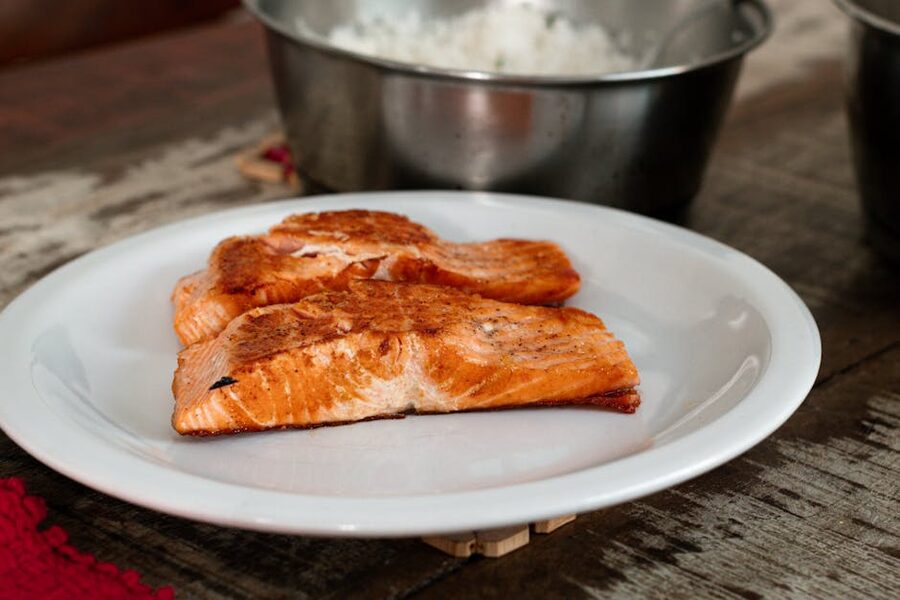
The third register is the river-run salmon. Tornio, on the Swedish border, runs a wild salmon population from the Bothnian Bay up the river every June and July, and the smoke-houses along the river produce the country’s best fish for those eight weeks. Loimulohi (flame-grilled salmon, mounted on a wooden plank next to an open fire) is the Tornio party trick and worth eating once if your trip is in summer; Lapin Kulta runs an open kitchen at the Tornio market on Saturdays through the season.
The fourth is the soup, already covered above. A note for the squeamish: Finnish farmed salmon (mostly from Norway, not Finland) is the everyday product; Baltic wild salmon has dioxin-contamination warnings that the Finnish food authority (Ruokavirasto) advises pregnant women and children should follow. Tornio salmon from the river is fine. Restaurant gravlax is fine. Pregnant readers should ask which.
Reindeer: poronkäristys, and where not to eat it
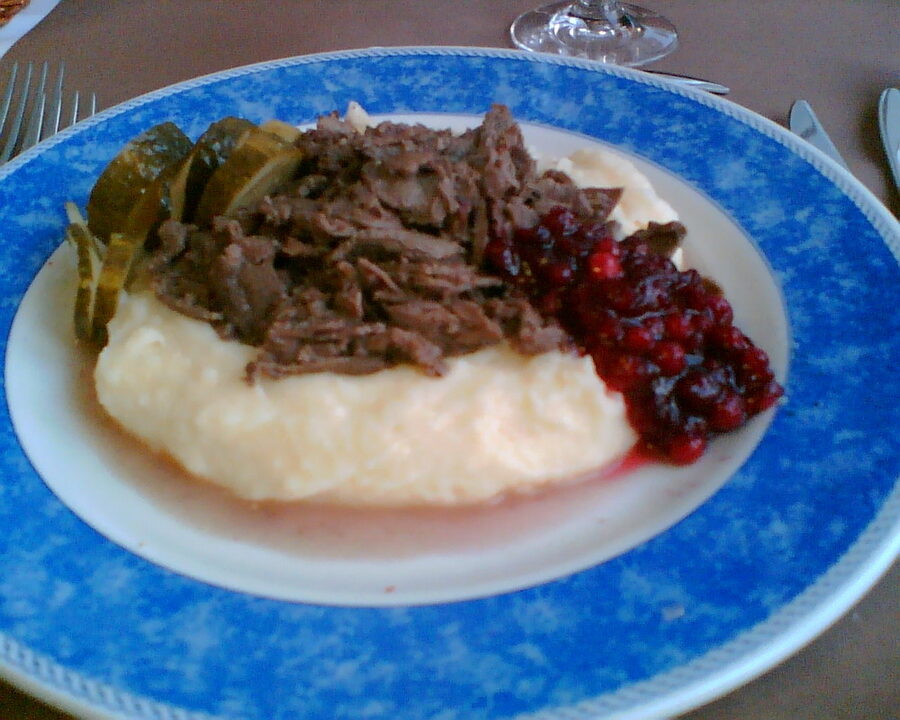
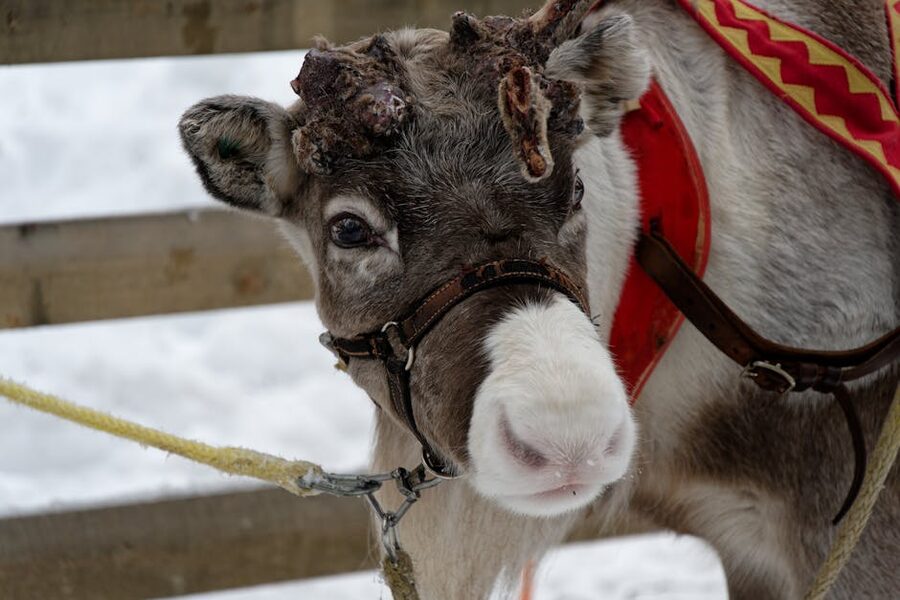
Reindeer meat is the high north’s contribution to Finnish food. The Sámi reindeer-herding districts run from Kuusamo north to Utsjoki, and the meat from those herds works its way south to every supermarket in the country. The defining dish is poronkäristys: thinly sliced reindeer (frozen, then shaved into curls) sautéed in butter with onion and a splash of beer or stock, served on mashed potato with a generous spoonful of lingonberry sauce. It is winter food. It is also the dish a Finn will most often cook at home from a frozen supermarket pack.
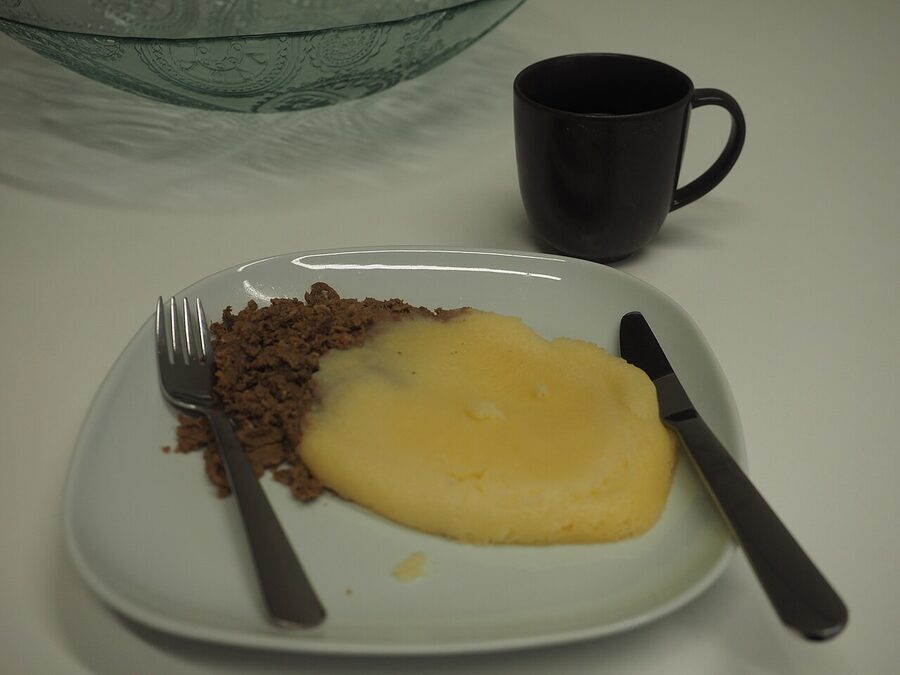
Two cuts matter. The lean cut (käristys from the leg) is the standard supermarket and canteen version: drier, beefier, sometimes a touch tough. The fatty cut (rasvakäristys, often from the shoulder or breast) is the home cook’s version: richer, slightly sweet, the one a Lapland host will put in front of you. Most Helsinki restaurants serve the lean cut by default; ask if they have the fatty version and you will get a different and usually better dish.
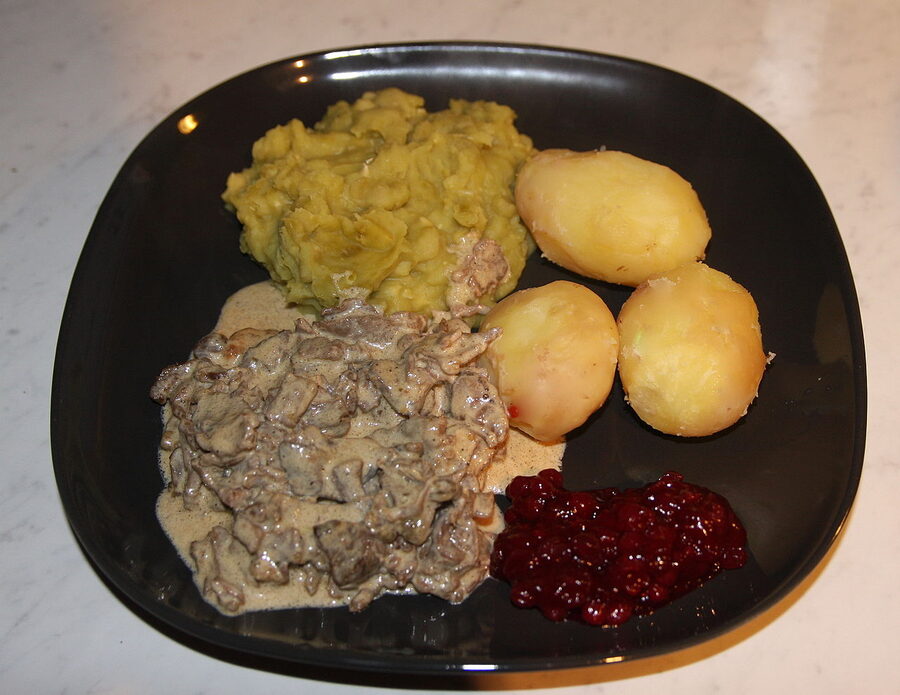
Where to eat it. Savotta on Aleksanterinkatu 22, opposite Senate Square, is the right answer for a proper restaurant version: log-cabin interior that is more theatrical than the food but still earnest, lean and fatty cuts both available, around 36 euros. Savoy on Eteläesplanadi 14 (the Aalto-designed dining room from 1937) is the fine-dining version; reindeer at 56 euros, but you are paying for the Aalto chairs, the Marshal Mannerheim history, and a kitchen that has been quietly excellent for nine decades. Skip Lappi on Annankatu unless someone has booked it for you. The location is on every English-language list and the dish is competent rather than good.
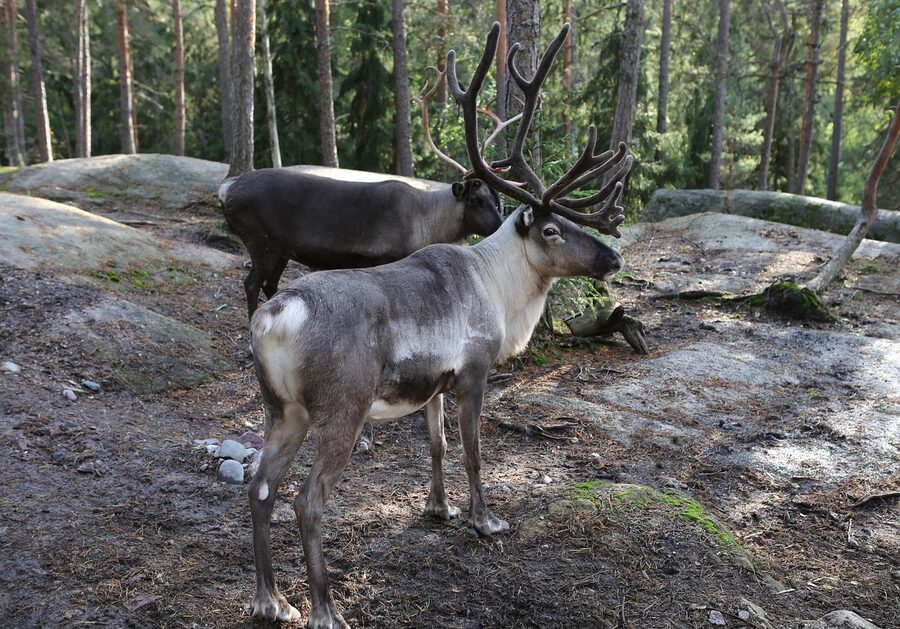
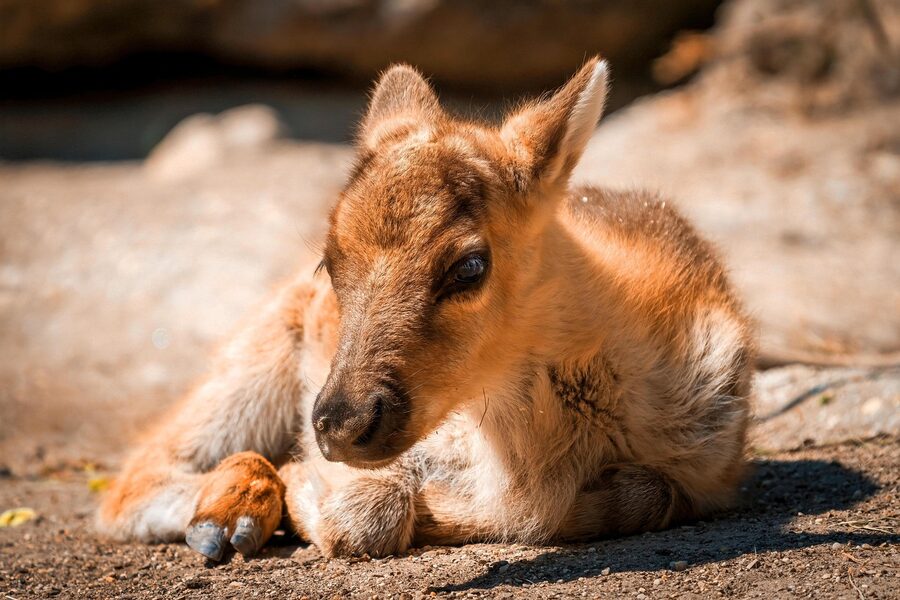
If you are in Lapland itself, the canonical place is Nili in Rovaniemi (Valtakatu 20), where the kitchen does the fatty cut properly and the lingonberry is housemade. Around 32 euros for the dish, 18 to 22 euros for the lighter starter portion. The Finnish Lapland aurora guide covers a few other Lapland-region restaurants worth knowing about; reindeer is at most of them, and if your dinner host on a sleigh tour has cooked one over an open fire in a Lapp hut, that is the right version of the dish, regardless of price.
Korvapuusti and pulla: the cardamom country
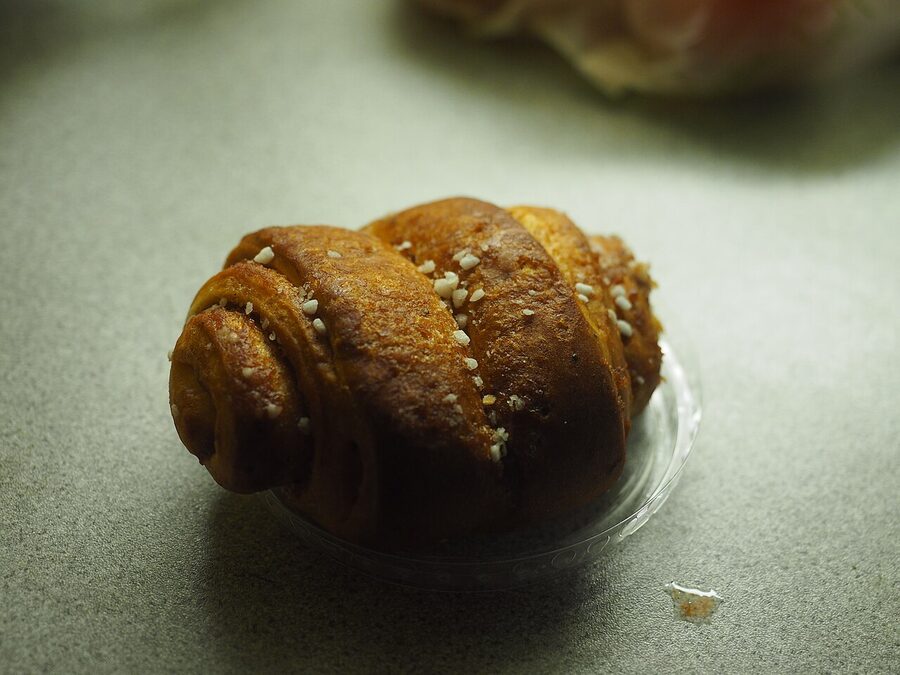
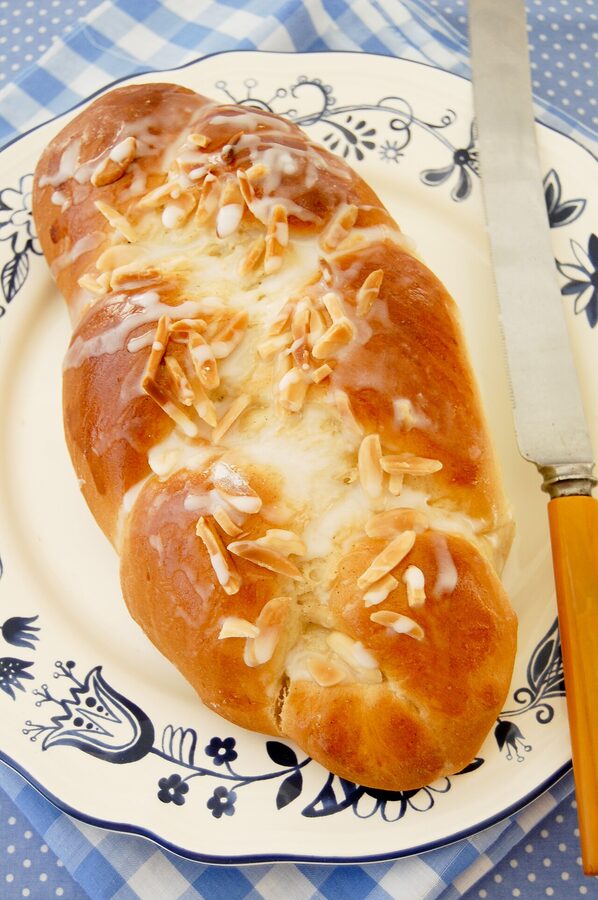
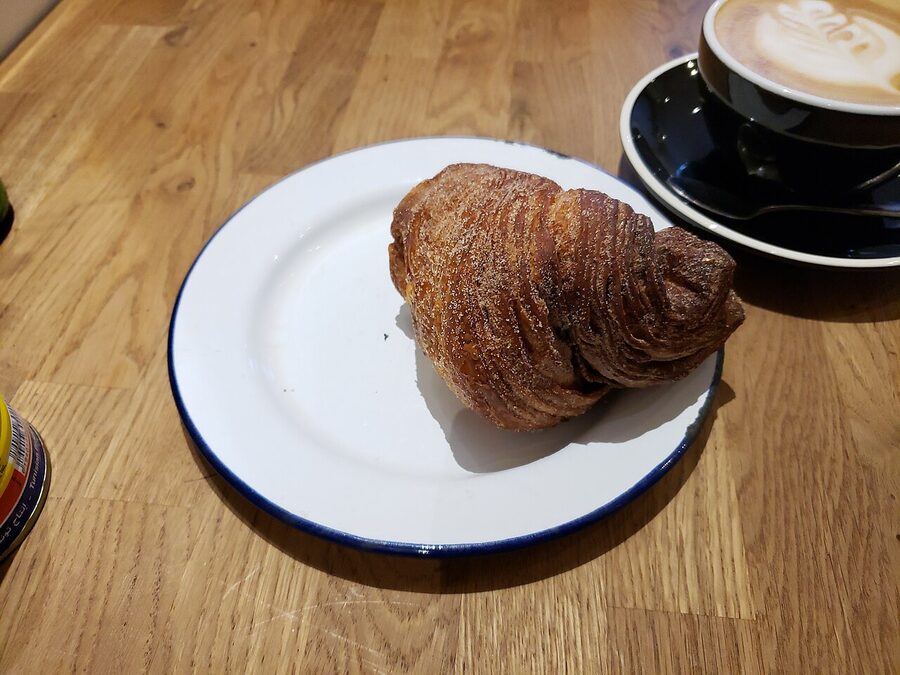
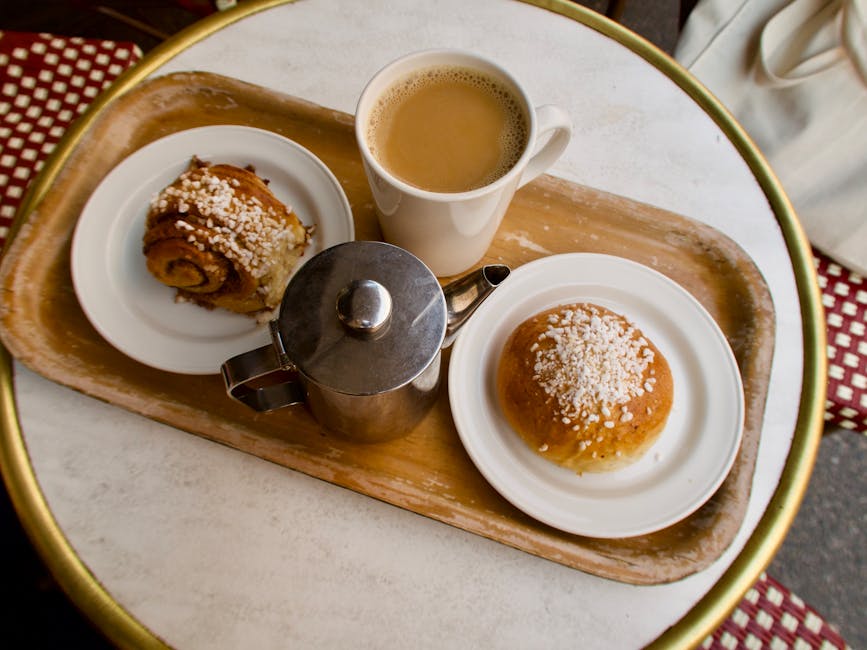
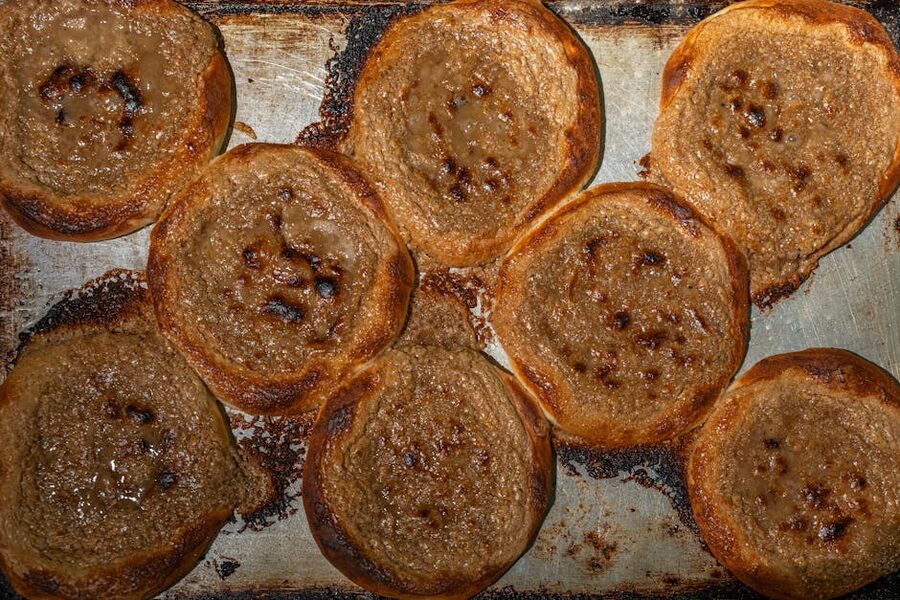
Korvapuusti is the Finnish cinnamon bun and the country’s everyday afternoon snack. Pulla is its mother dough: a sweet, butter-rich, cardamom-heavy yeasted bread that gets twisted into braids, knotted into rolls, or rolled flat with cinnamon-and-sugar filling and cut into the slapped-ear shape that gives korvapuusti its name. The cardamom is the giveaway. The Swedish kanelbulle is mostly cinnamon. The Finnish version is one-third cardamom, one-third cinnamon, one-third butter, and the cardamom is the note that lingers on the palate.
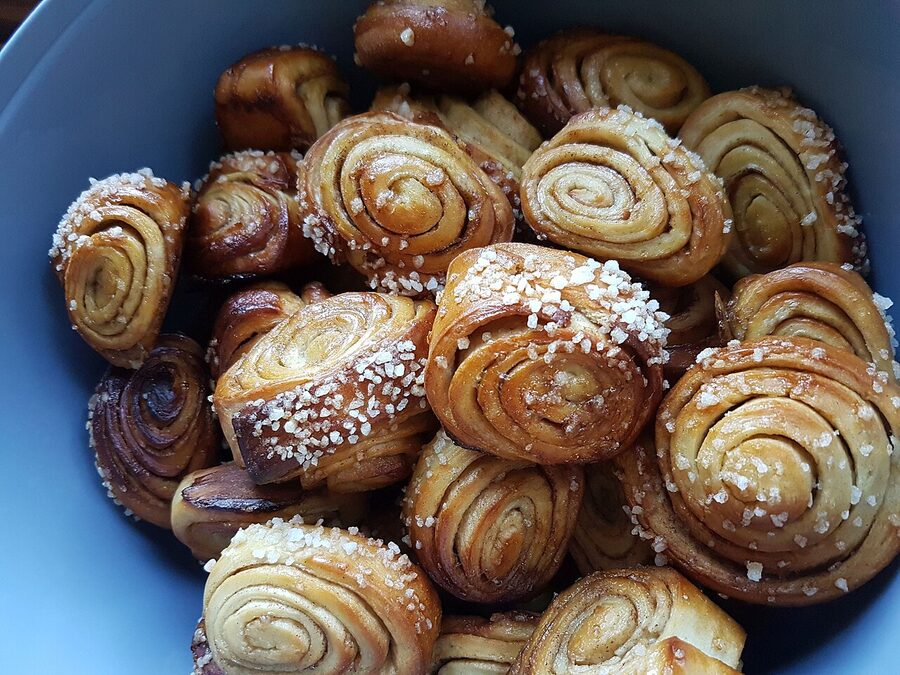
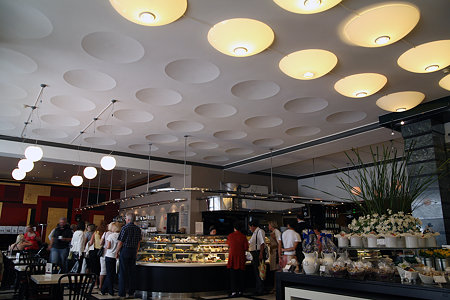
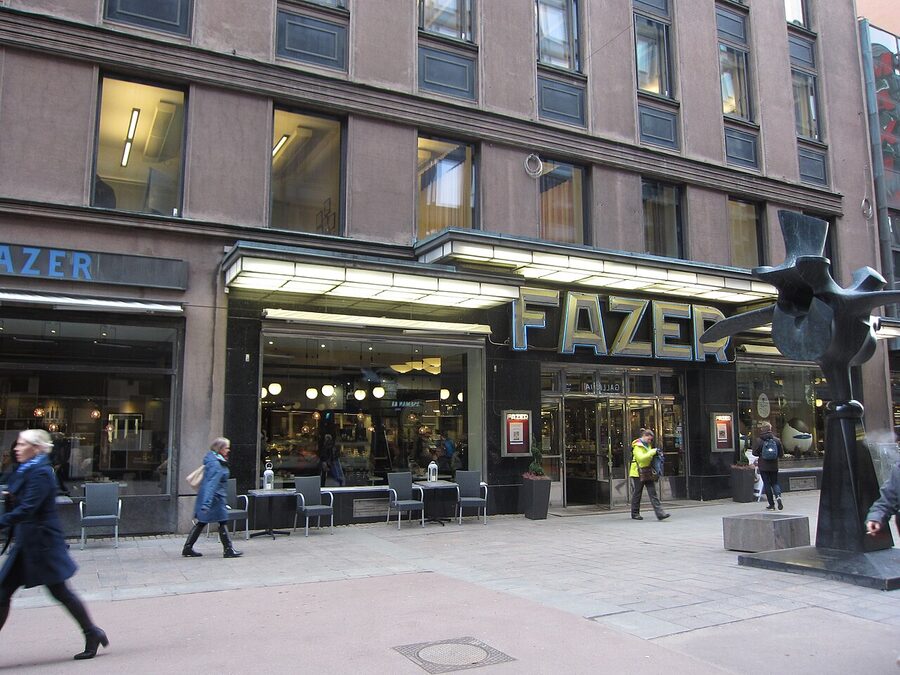
Where to eat one. Café Regatta on Merikannontie, the small red seaside cabin behind Sibelius Park, charges 4.50 euros for a korvapuusti and serves it on a wood stove that the staff feed all day. The bun is the second-best in Helsinki; the riverside view of Töölönlahti is the first. Karl Fazer Café on Kluuvikatu 3, in the company that started Finnish chocolate in 1891, sets a higher bar with a 5-euro version that is properly buttery and a 6-euro pulla braid. Café Ekberg at Bulevardi 9, Helsinki’s oldest bakery (founded 1852), is where I send anyone who wants the historical context and a proper coffee at marble tables. The cardamom there is roasted slightly differently and the buns are a touch drier, which I prefer.
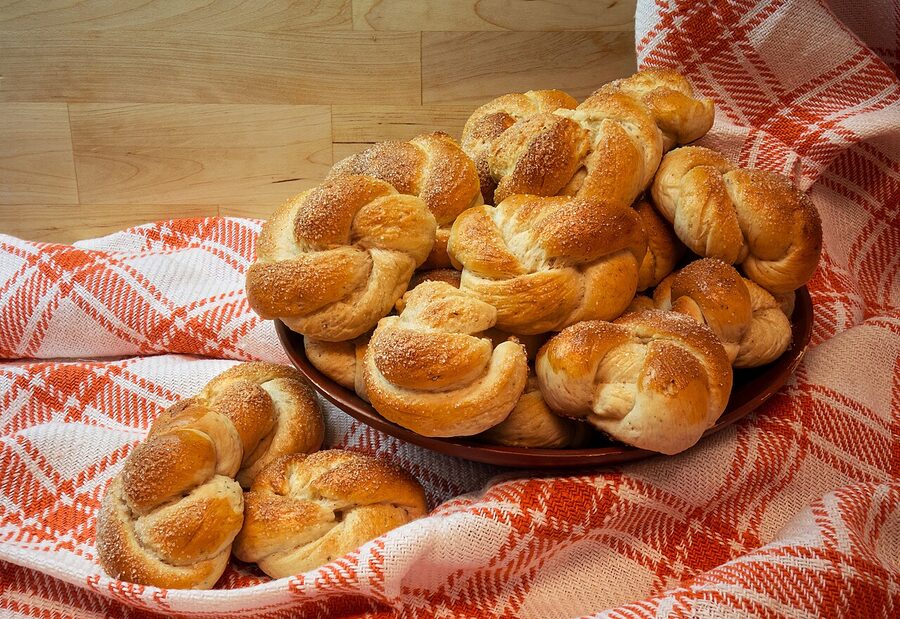
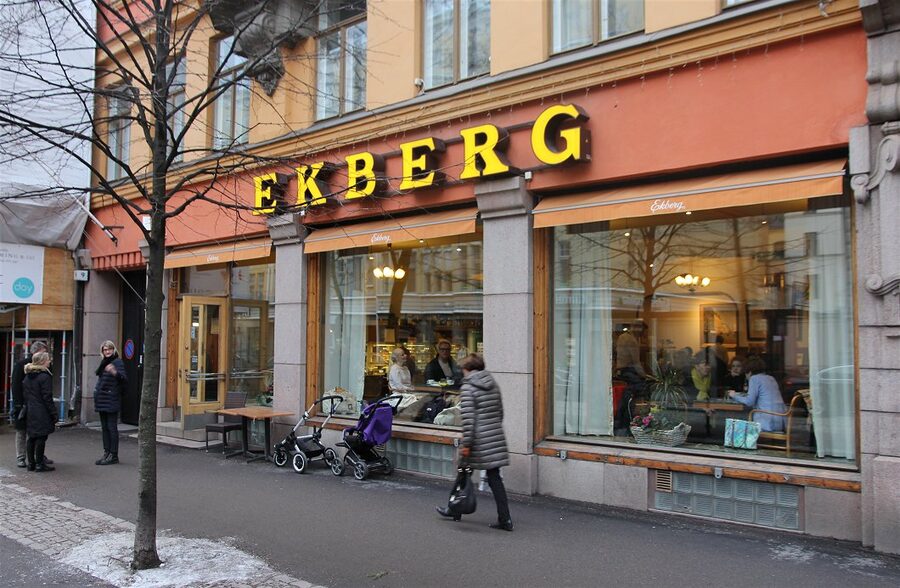
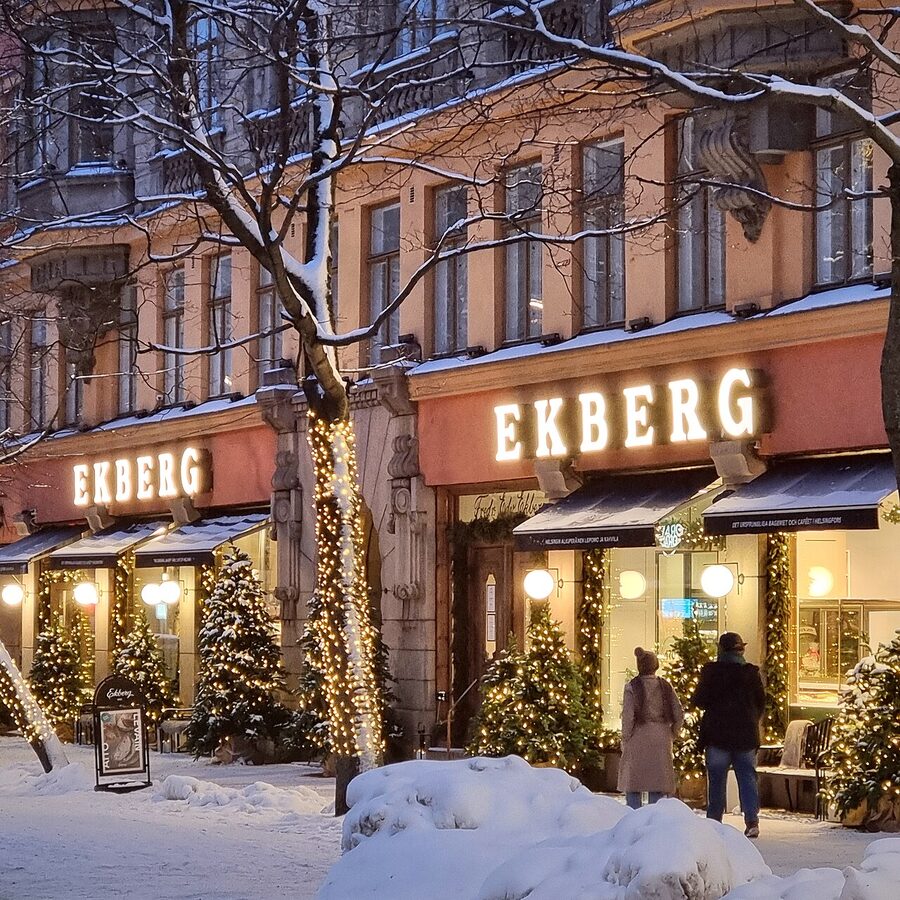
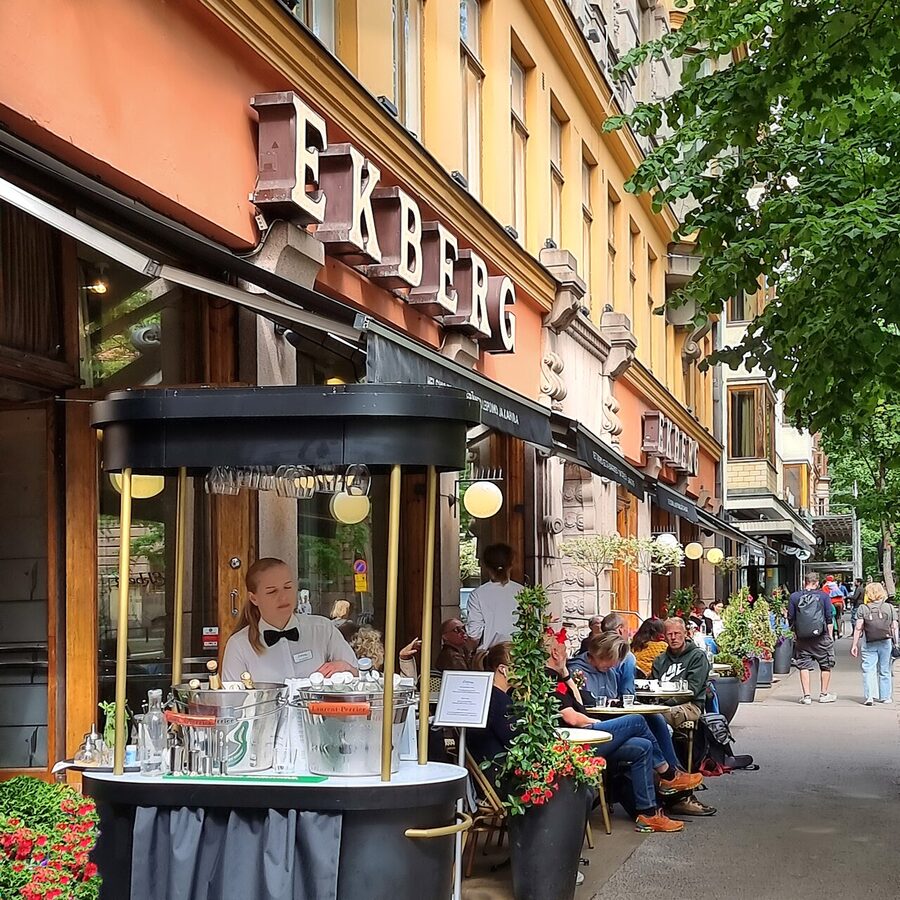
One linguistic note. The Finnish word for the coffee-and-bun ritual is “pullakahvit”, literally “bun coffees”. When a Finn invites you for pullakahvit, they are not making small talk; they are inviting you to sit down for forty minutes, drink two filter coffees, eat one bun, and either talk about something or not talk at all. Both options are valid.
Salmiakki: the salt-licorice that divides everyone
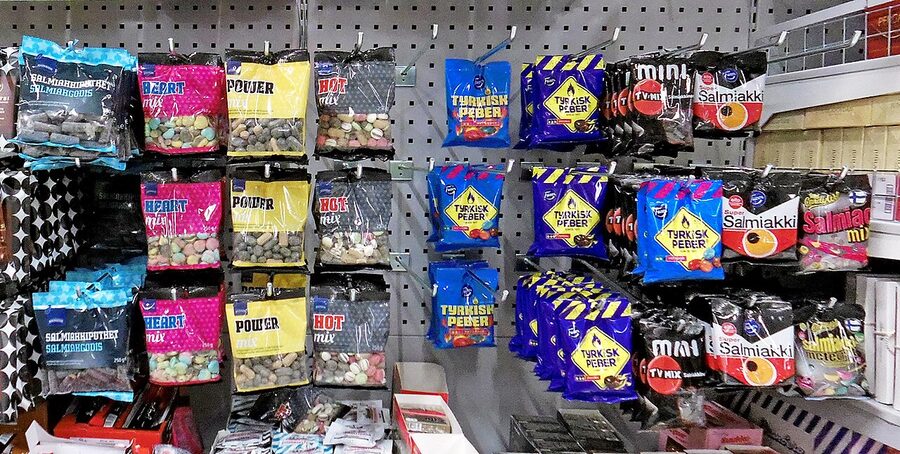
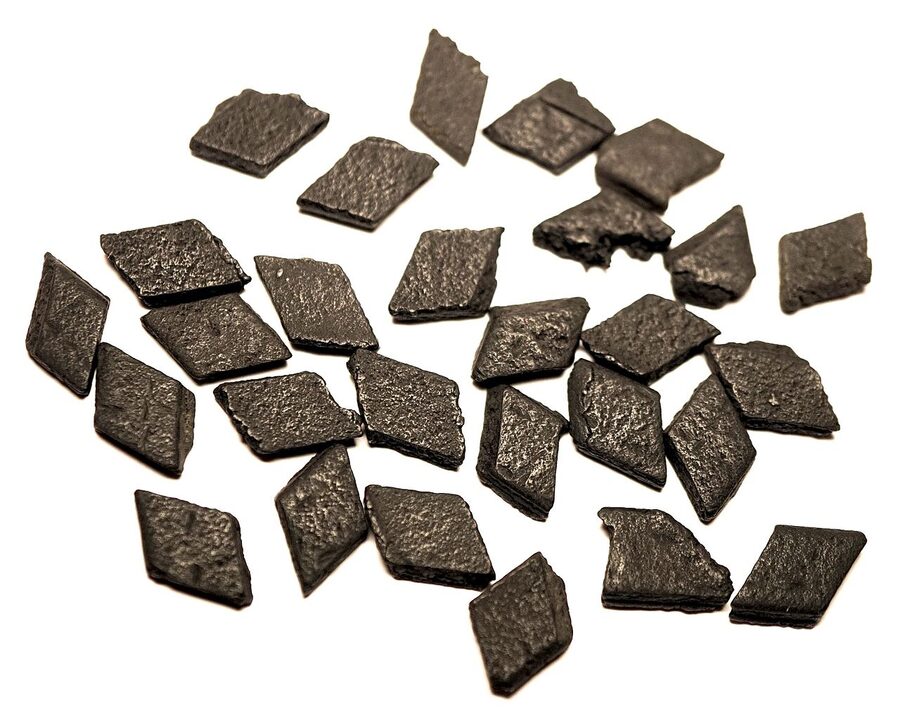
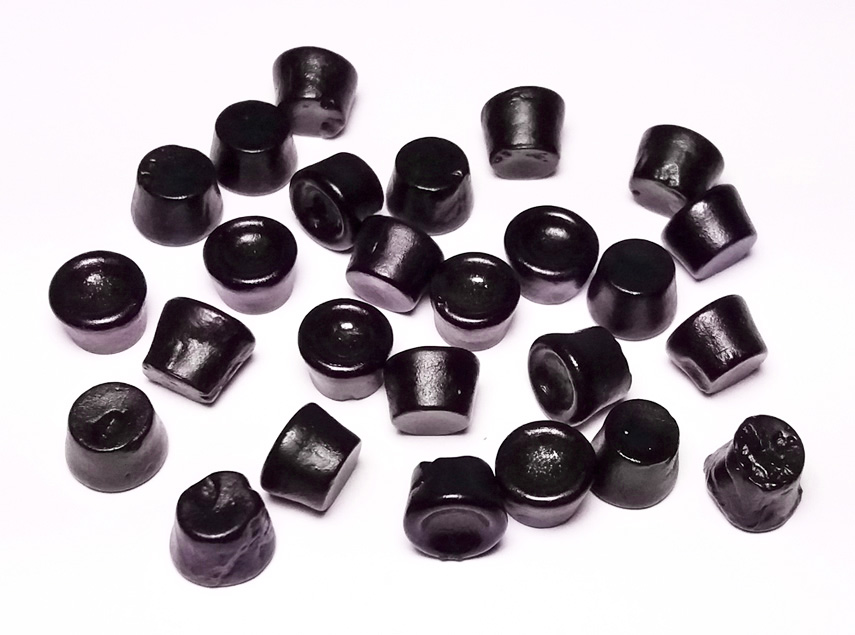
Salmiakki is the dividing line. Black licorice flavoured with ammonium chloride (NH4Cl, the salmiakki itself), giving it a salty-ammonia tang that is either the best thing you have ever put in your mouth or the worst. The split is roughly 50:50 among visitors and 95:5 among Finns; the country eats roughly two kilos per person per year, and consumption goes up at house parties. It is the sweet that explains a lot about the rest of the cuisine: a country that ferments its bread, salts its herring, and smokes its pork would, of course, also produce a candy that tastes faintly of cleaning fluid.
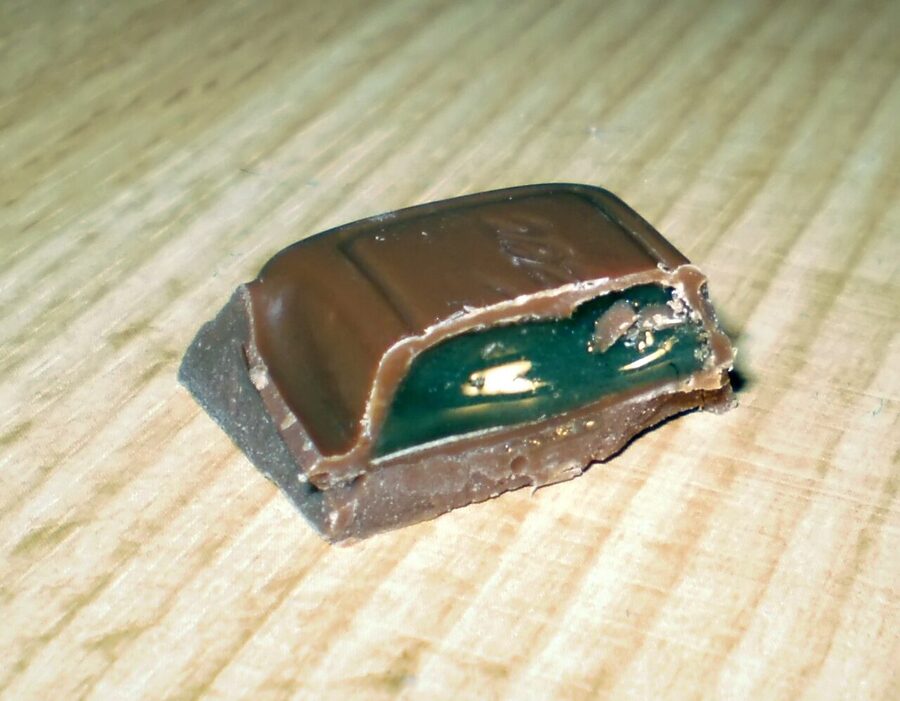
Where to start. If you have never tried salmiakki, do not begin with the strongest version (Turkin pippuri, with a “Turkish pepper” punch that punishes a beginner). Start with a milder Pirkka or Halva pastille and work up. Karl Fazer’s salmiakki chocolate is the easiest entry point: dark chocolate around a salmiakki centre, the bitter and the salty doing each other favours.
The grown-up version is salmiakki schnapps: vodka or grain spirit with salmiakki dissolved into it, usually around 32 to 40% ABV. Apteekin Salmiakki is the everyday brand. Salmiakkikossu (Koskenkorva vodka with salmiakki) is the harder version, a Finnish ski-cabin classic. You drink it cold, in 25ml shots, after a sauna. It tastes like nothing else in the world; whether that is a recommendation depends on you.
Wild berries and Everyman’s Right
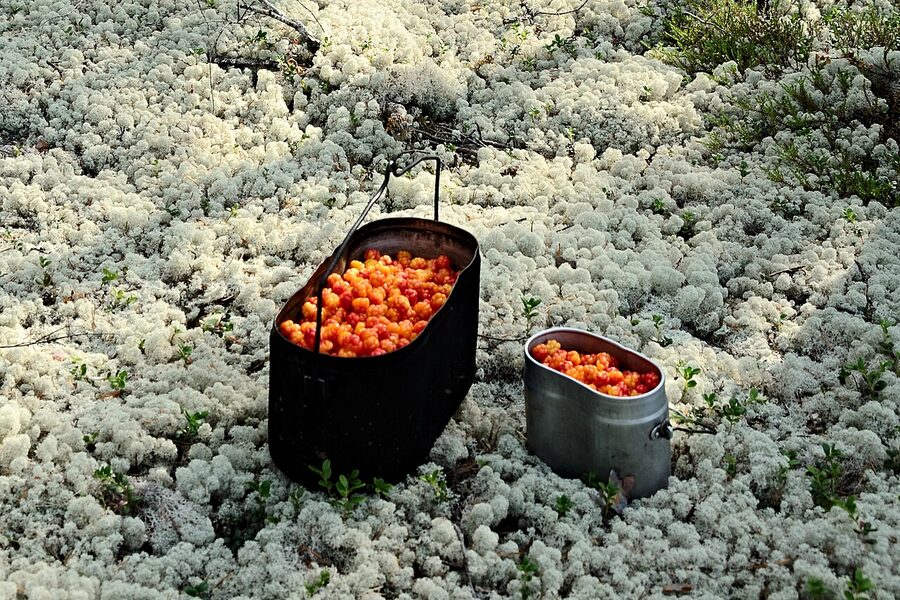
Finland has a constitutional right that is older than the constitution itself: jokamiehenoikeus, “every man’s right”. You can walk through any private forest, ski across any frozen lake, and pick any wild berry or mushroom you find, regardless of who owns the land. You cannot pitch a tent for more than a night, light a fire without permission, or get within sight of someone’s house. But the berries are yours. This is not a hippie idea; it is law, and roughly 60% of Finns pick wild berries every summer.
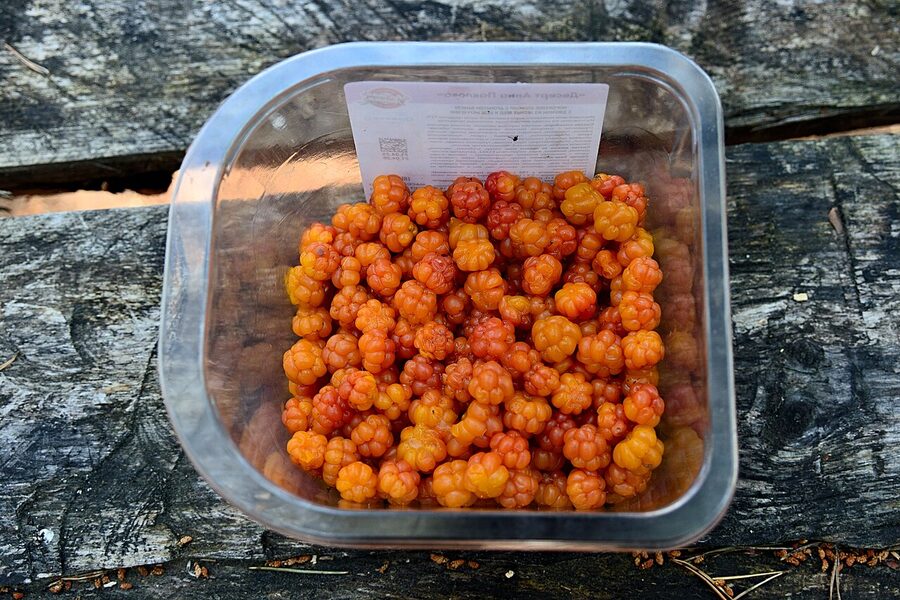
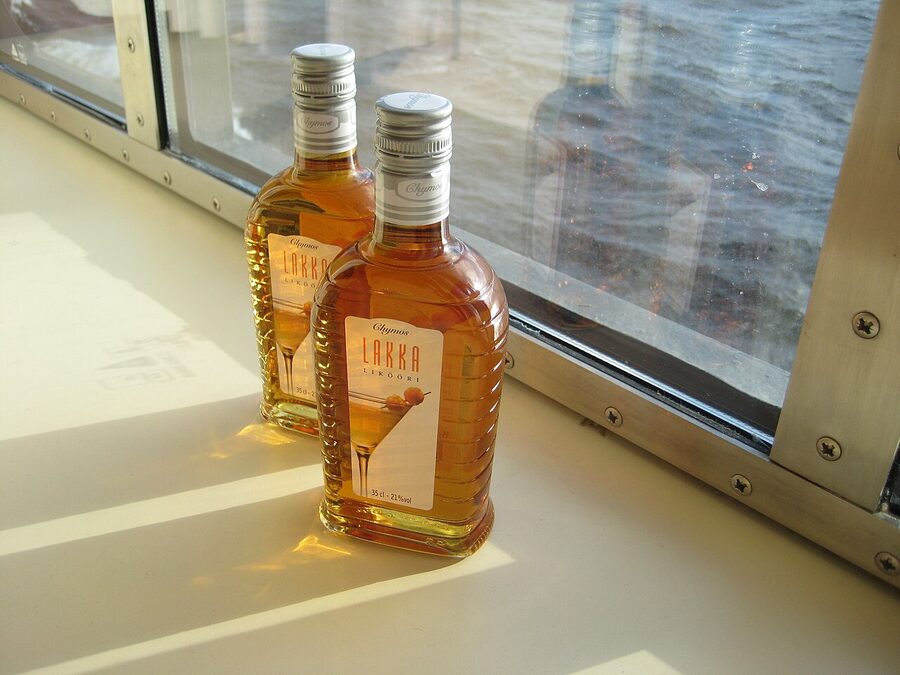
Three berries matter for a visitor. Lakka (cloudberry, Rubus chamaemorus) is the rarest and most expensive: a sub-Arctic bog berry, golden-orange when ripe, with a flavour that combines apricot, honey, and the faintly mineral edge of the swamp it grows in. The picking window is roughly two weeks in late July. The berries do not transport well, so you mostly eat lakka as jam (with leipäjuusto, see below), as a liqueur (Lapponia Lakka), or as a dessert sauce on rice porridge. The home of cloudberry is Lapland; the Saariselkä bog system produces some of the best.
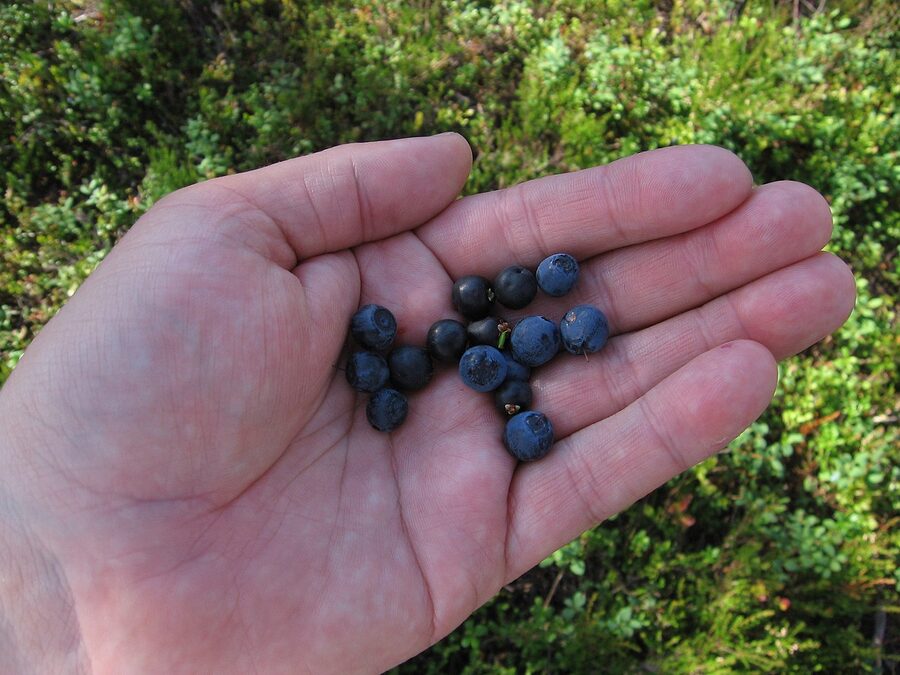
Mustikka is the Finnish bilberry. Smaller, darker, and more concentrated than the American blueberry; the flavour is properly purple rather than the uniform sweetness of cultivated highbush blueberries. Mid-July to late August, ankle-height bushes carpeting Finnish forest floors, and roughly half the country picks them. Mustikkakeitto (cold blueberry soup, eaten with a spoon at lunch) and mustikkapiirakka (pie) are the everyday uses. The Finnish supermarket pancake aisle has frozen mustikka year-round; a 500-gram pack is around 6 euros.
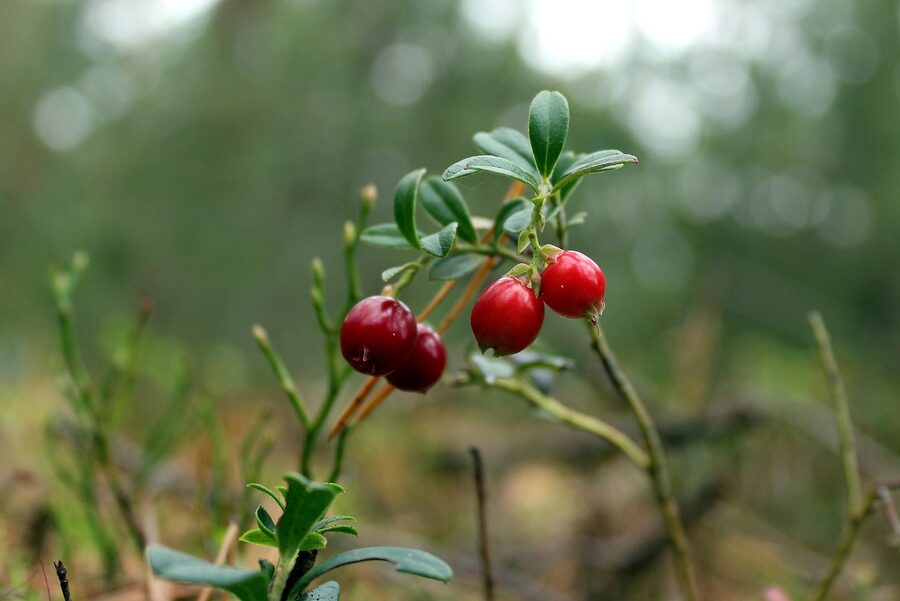
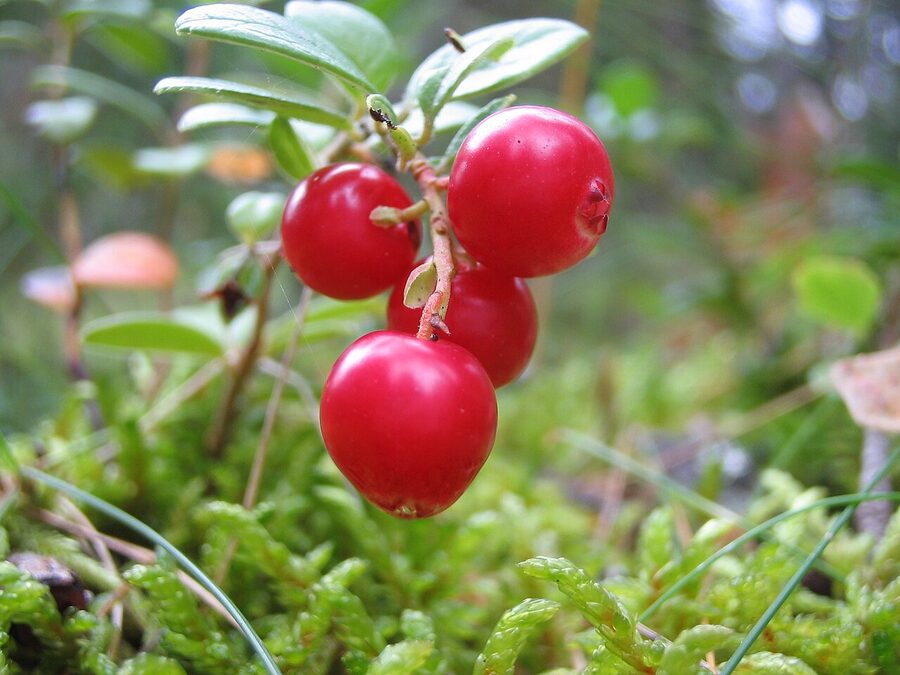
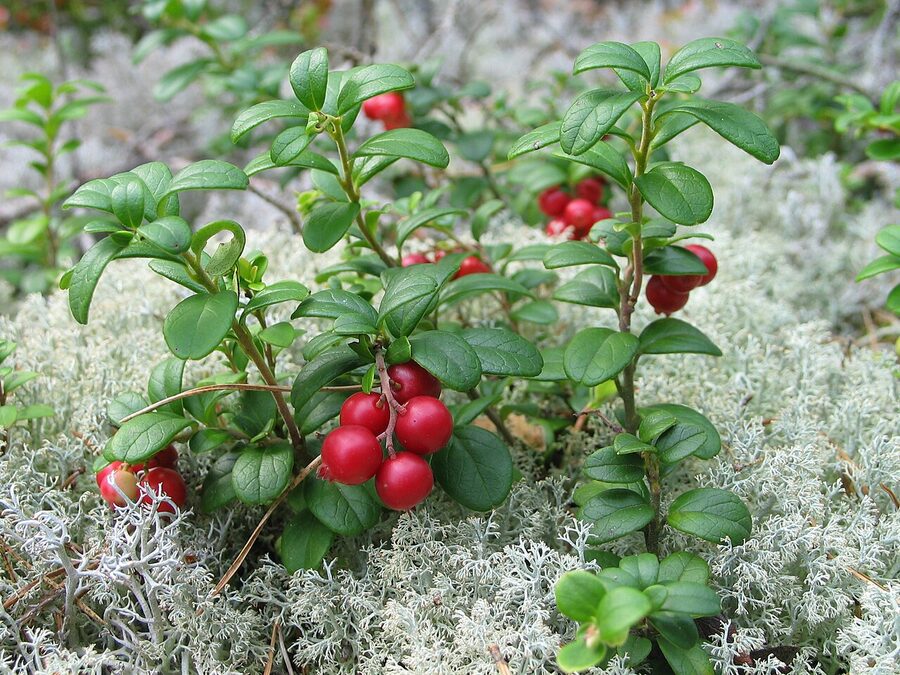
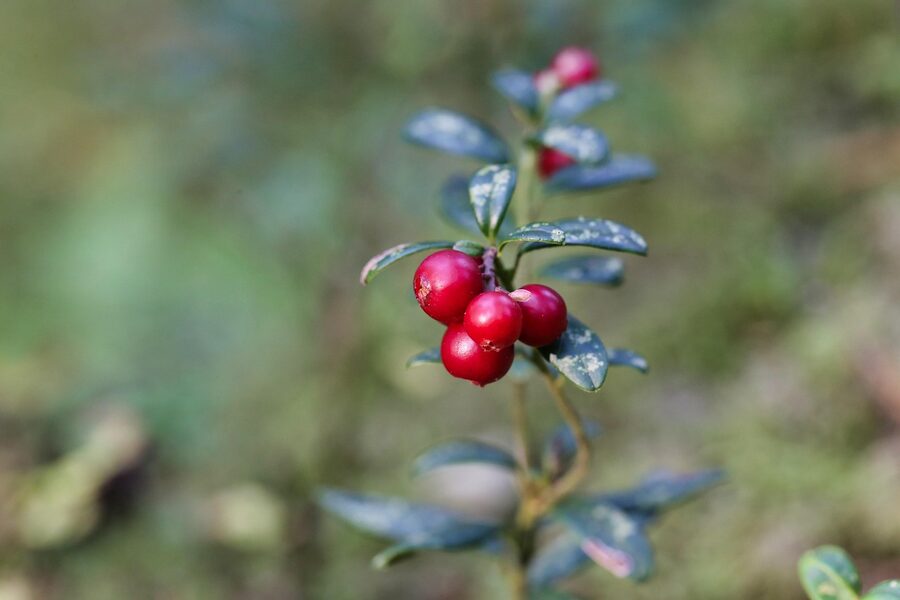
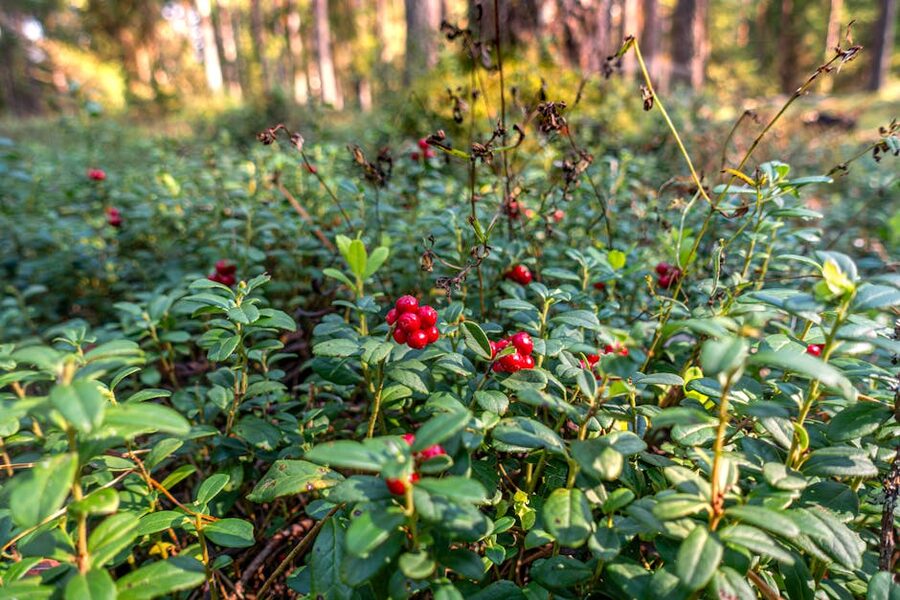
Puolukka, the lingonberry, is the third. Tart, faintly bitter, ripens late September to October, and works as the savoury counterpart to richer dishes (the reindeer plate, the meatball plate, the liver casserole) where mustikka is too sweet. The lingonberry sauce that arrives next to the reindeer or the fried herring is house-made at any decent Finnish kitchen. You can buy frozen puolukka in any supermarket from October.
Leipäjuusto: the cheese that squeaks
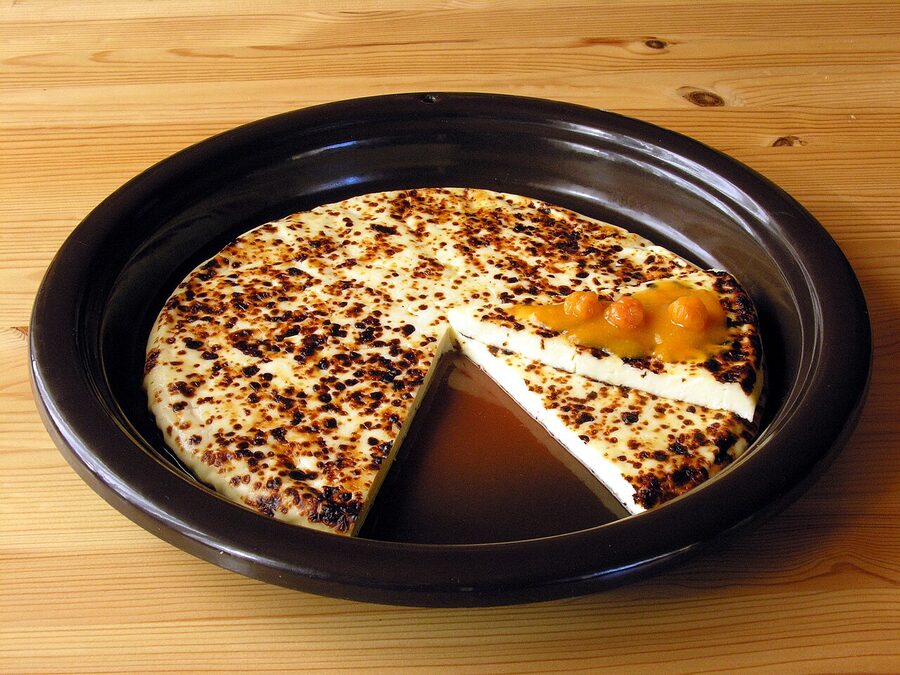
Leipäjuusto is the dish that explains Finnish food in one bite. A flat, baked cow’s-milk cheese (originally cow, sometimes reindeer or goat in the historic Lapland version), pressed in a wooden mould, baked open-faced over flame so the surface caramelises into brown patches, then sliced thick and warmed before serving. It squeaks against your teeth, hence its other name in English: “Finnish squeaky cheese”. The traditional pairing is cloudberry jam. The two flavours together, faintly salty and faintly sweet, are the dessert end of every Finnish meal that takes itself seriously.
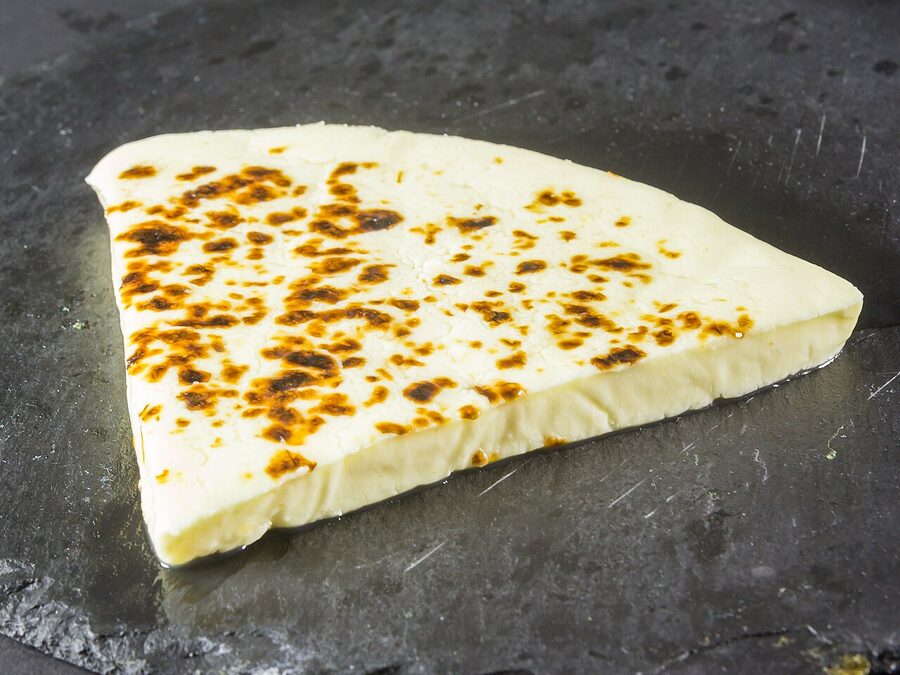
How to eat it. Heated, with cloudberry jam. Cold, in cubes in a coffee (yes, the Lapland habit of dropping cubes of leipäjuusto into hot coffee is real, and yes, it works; the cheese softens and the coffee tastes faintly of cream). With Christmas ham at a julbord. Or simply on its own with a spoon of jam, which is what most Finnish dinner parties do. Hakaniemi market hall, Vanha Kauppahalli, and any decent supermarket cheese counter will have it; about 8 to 12 euros for a 250-gram round.
The new wave: Savoy, Olo, Toca, Demo, Savotta, Ravintola Nolla
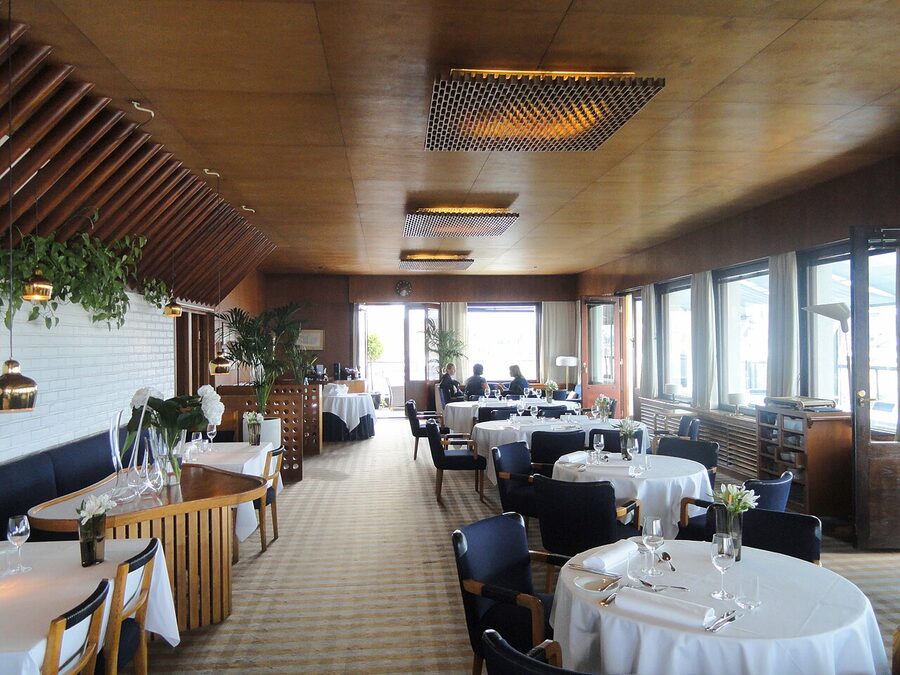
Helsinki’s serious dining scene is the post-1995 story. Six restaurants matter for a visitor. Savoy on Eteläesplanadi 14 is the historical one: opened 1937, designed by Alvar Aalto for the Ahlström industrial dynasty, kept in its original form (chairs, lamps, panelling) ever since, and used by Marshal Mannerheim for diplomatic dinners during the Continuation War. Mannerheim’s vorschmack (a smoked herring, lamb and onion paste he loved enough to put on the menu under his name) is still served today. Tasting menu around 145 euros. Lunch is the cheaper way in at around 65 euros. The view across the Esplanade is part of the meal.
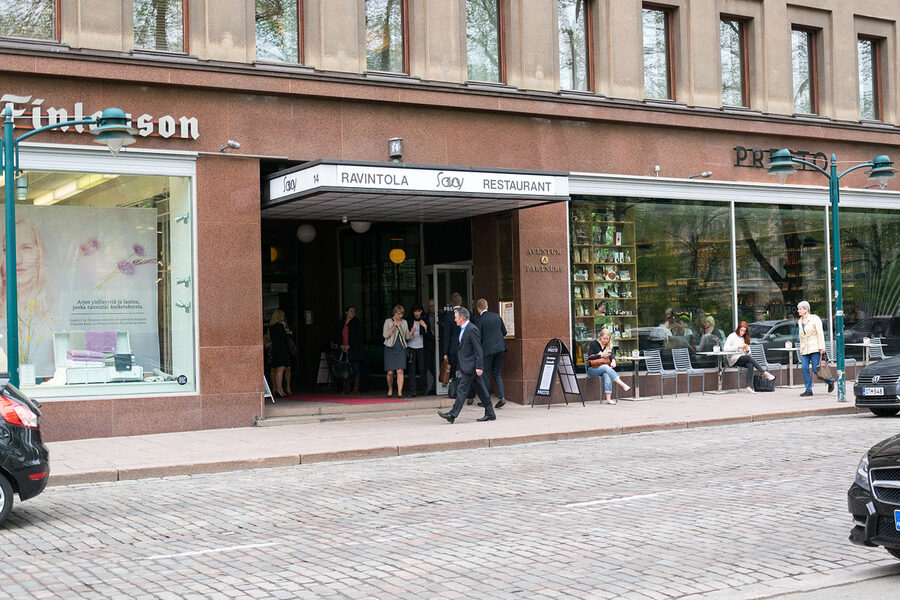
Olo on Pohjoisesplanadi 5 is the Michelin-starred version. One Michelin star since 2011, kept it ever since, and the kitchen does the most disciplined Finnish ingredient work in the city: cured Bothnian salmon on fermented kohlrabi, smoked reindeer with juniper, the closing course almost always a leipäjuusto reinterpretation. Tasting menu around 165 euros without wine, 245 with the pairing. Book three weeks ahead.
Demo on Uudenmaankatu 9 is the second Michelin star (since 2007) and a quieter room. Tommi Tuominen and Teemu Aura’s kitchen is the technically purest in the city; the food is less Finnish-flagged than Olo and reads as French with Finnish ingredients. Tasting menu around 125 euros, lunch around 55 euros and the easiest first-Michelin entry point in Helsinki.
Toca on Unioninkatu 18 (Pia Lahdenmaki and Jouni Toivanen’s room) is the new-wave Italian-influenced one, half a Michelin star away from the rest, more relaxed. Around 75 to 95 euros for a four-course menu and a glass. The cured fish course is genuinely excellent.
Savotta on Aleksanterinkatu 22, opposite Senate Square, is the proper traditional restaurant the tourist version (Lappi) is pretending to be. Wood-cabin interior, long communal-feel tables, a kitchen that does the canon properly; reindeer, salmon soup, gravlax, leipäjuusto, the Karelian stew, and an excellent lakka liqueur list. Around 60 to 80 euros for a full meal with a beer. Reservations advisable for dinner.
Ravintola Nolla on Fredrikinkatu 22 is the zero-waste room. Albert Franch Sunyer’s kitchen runs the city’s most rigorous sustainability programme; jars of fermented vegetables line one wall, the bread is from yesterday’s leftovers, the menu changes weekly. Set menu around 60 to 90 euros. The flagship of post-2018 Helsinki dining and worth the trip if you care about how the food gets to the plate.
Mustamakkara: the Tampere blood sausage you should still try
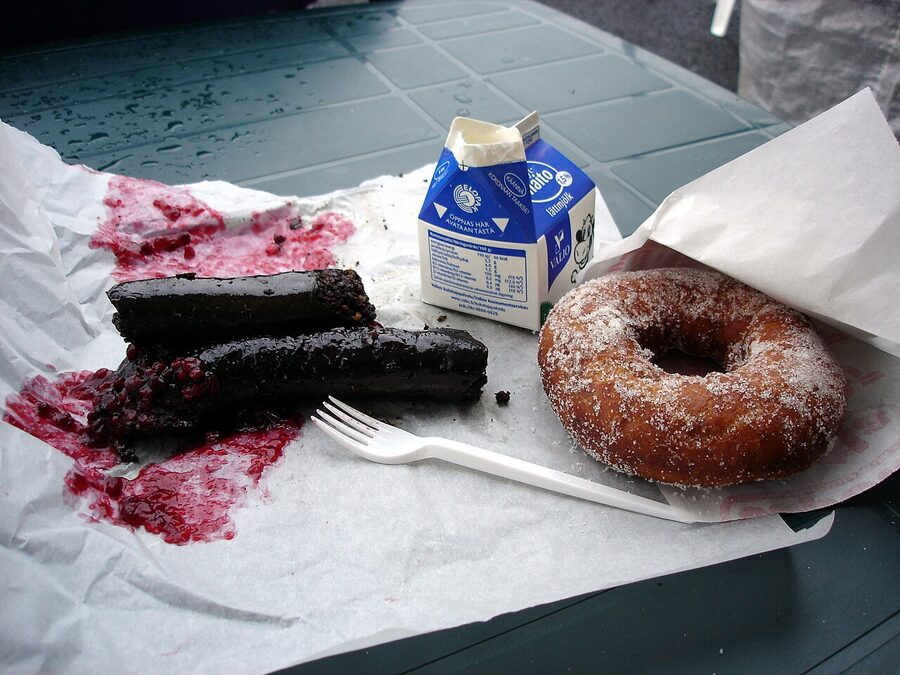
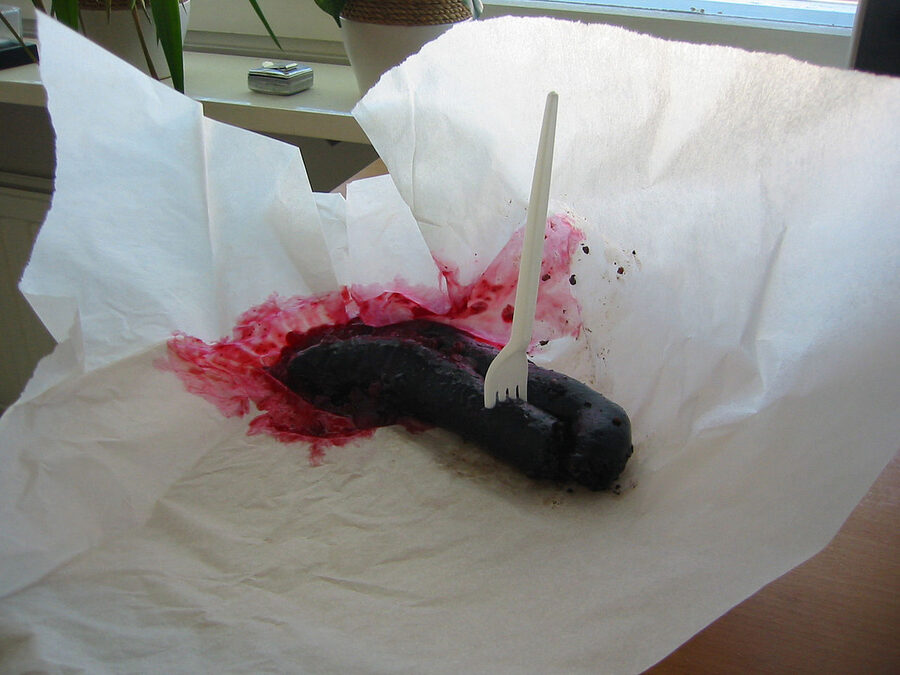
If you make it to Tampere, eat mustamakkara. The “black sausage” is a regional speciality: pig blood, rye flour, marjoram, onion, salt, packed into pig casings, simmered, then griddled until the skin blisters. The dish dates to medieval Tampere when the Tammerkoski rapid drove the town’s mills and the slaughterhouse waste was cheap protein. The rye flour is the Finnish move; further south in Sweden, the equivalent sausage uses oats. You eat it warm at a market stall with a generous spoon of lingonberry jam and a glass of cold milk on the side.
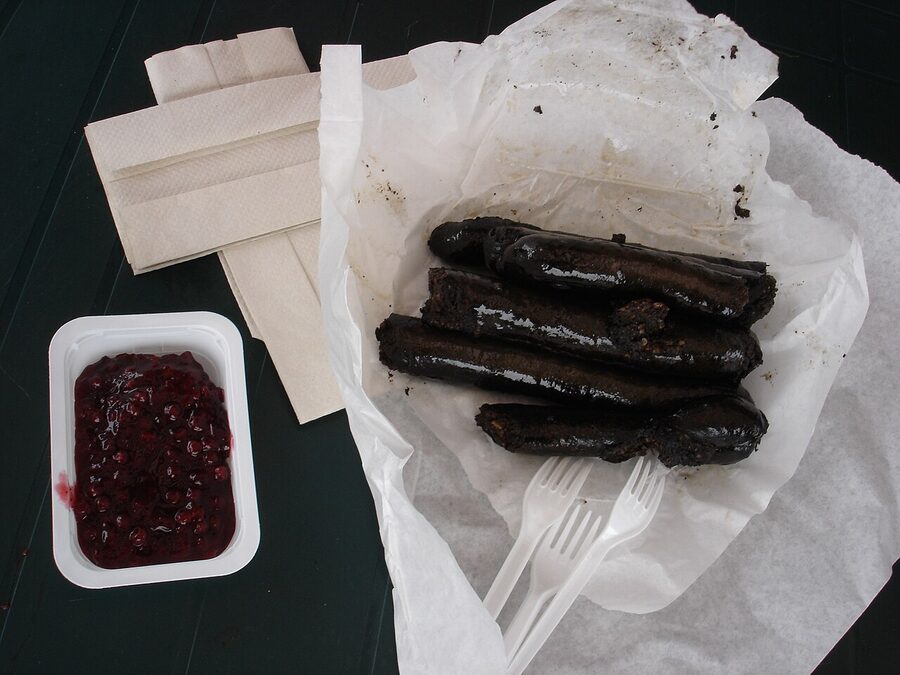
Where to eat it. Tampere kauppahalli (the indoor market hall on Hämeenkatu, the longest in the Nordics at 60 metres) has Tapola’s stall, the original family producer; about 7 euros for two sausages on a paper tray. Outside the hall, look for “mustamakkara” signs at any market stall; a 2-euro version from the Pyynikki market square in summer is the everyday one. The dish does not transport well, and cold mustamakkara is a different dish; eat it on the spot.
Muikku: the small fish that taught me to eat with my hands
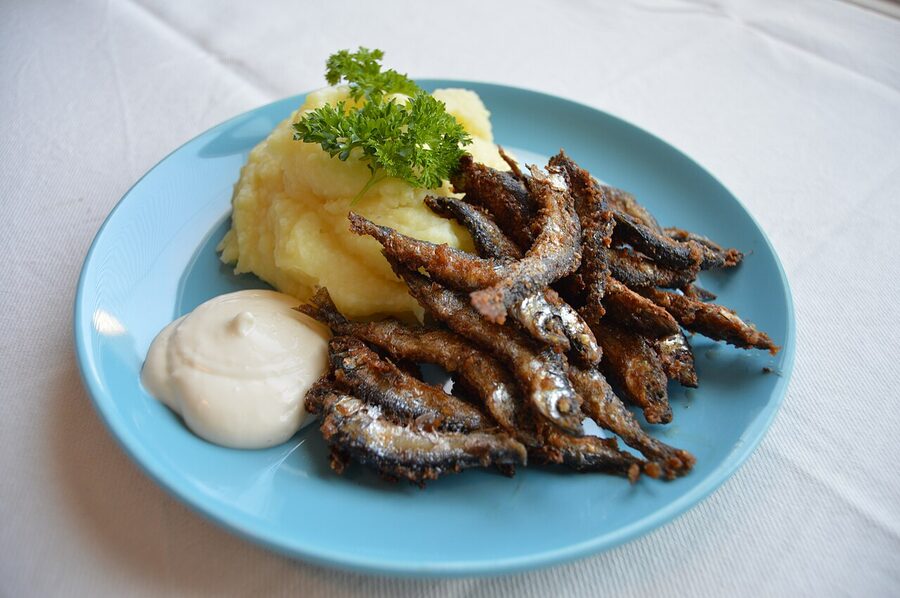
Muikku is the small whitefish (vendace, Coregonus albula) that lives in the deep cold lakes of central and eastern Finland, particularly Lake Saimaa. Adults reach 15 to 20 centimetres. The dish is paistetut muikut: rolled whole in salted rye flour, deep-fried until crispy, eaten head and tail and bones at once with the fingers. The traditional accompaniment is mashed potato and a glass of cold beer. The summer-market version is paper-tray fried muikut at the lakeside town of Savonlinna or Kuopio for around 10 to 14 euros a portion, eaten standing up in front of the boat that brought the fish in that morning.
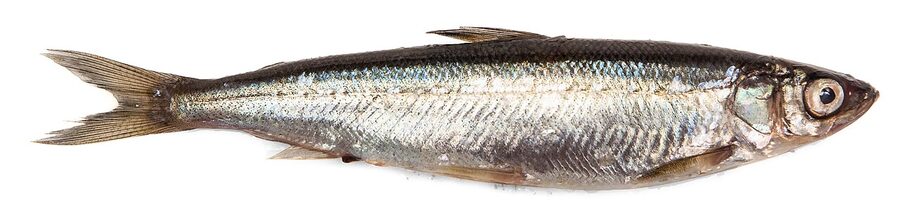
How to eat. Pinch a fish at the tail, dip the head in mustard, eat in two bites. Yes, the bones. Yes, the head. The frying makes the bones soft enough that they crunch rather than stab; a Finn does not pick them out and you should not either. If you skipped this on a previous trip because the head bothered you, get over it; this is one of the most genuinely Finnish things you will eat.
The Helsinki market halls: where to actually shop and eat
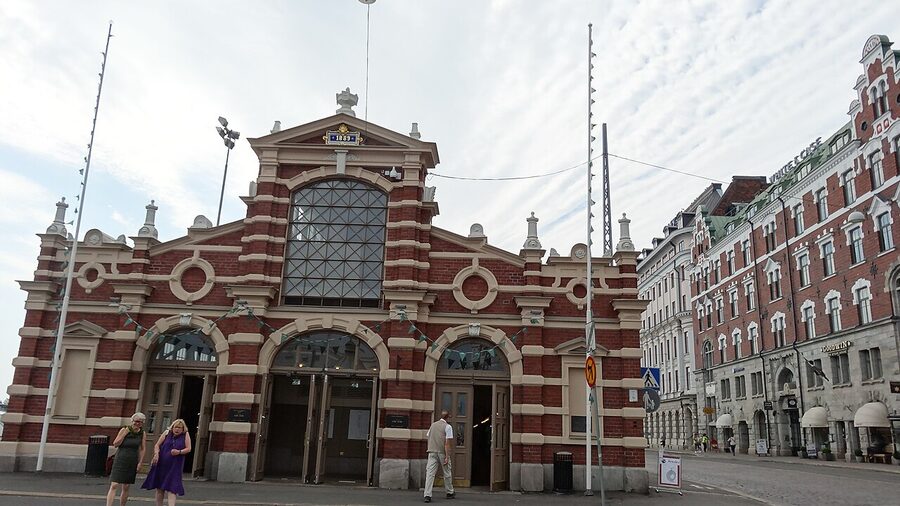
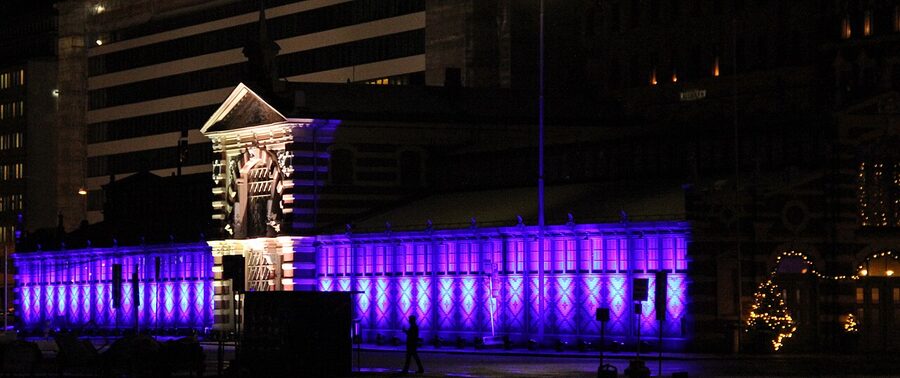
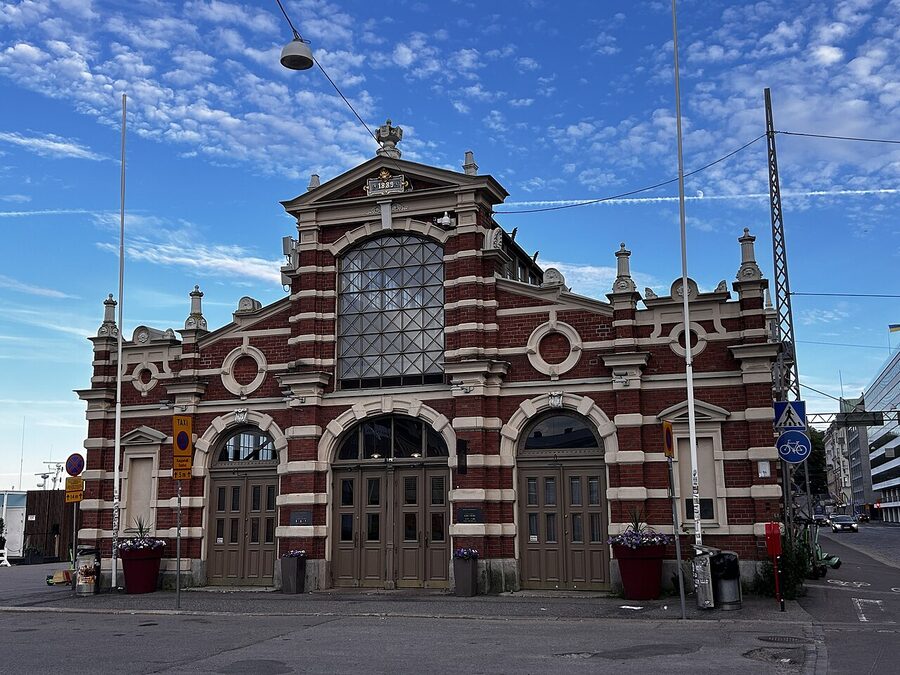
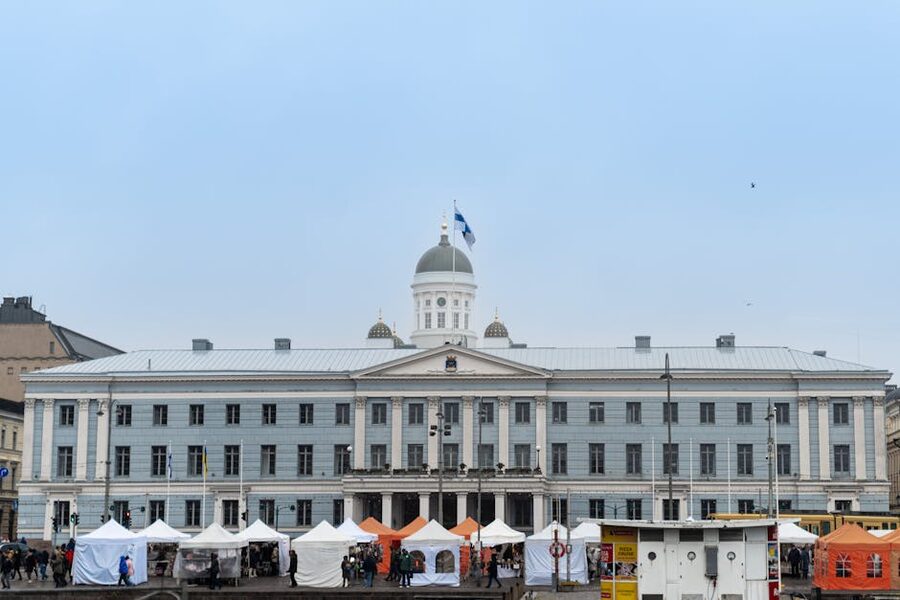
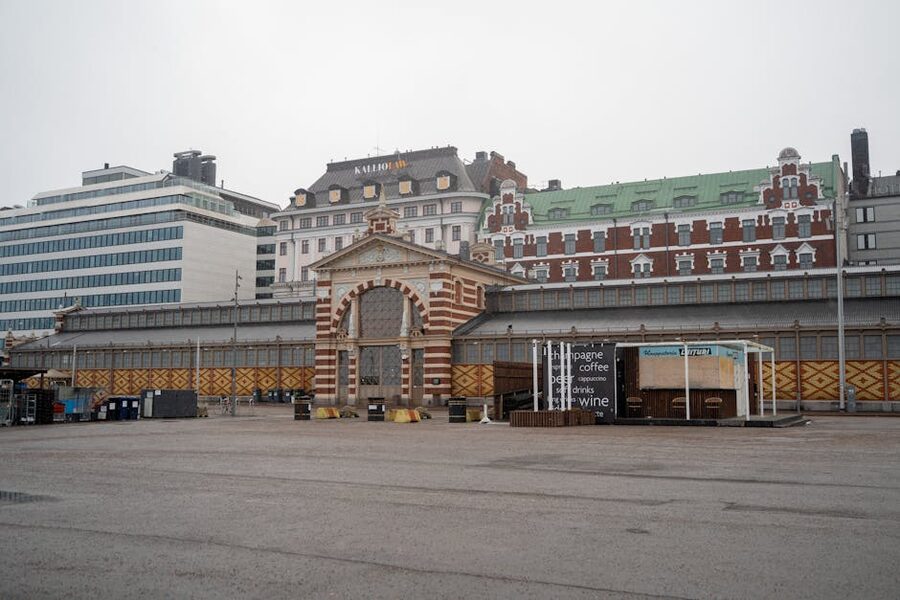
Helsinki has three market halls and the order in which you visit them matters. Vanha Kauppahalli (the Old Market Hall) on the south harbour is the architectural one; built in 1889, brick and arched-window, the city’s oldest covered market and still the most enjoyable to walk through. Soppakeittiö’s daily soups (lohikeitto, fish soup, the rotating Thursday pea soup) are the lunch institution. Story upstairs is a sit-down option doing a refined karjalanpiirakka and lohikeitto. The seafood counter near the Fabianinkatu door has the freshest fish in the city; if you book a kitchen at your hotel, this is where you stock it.
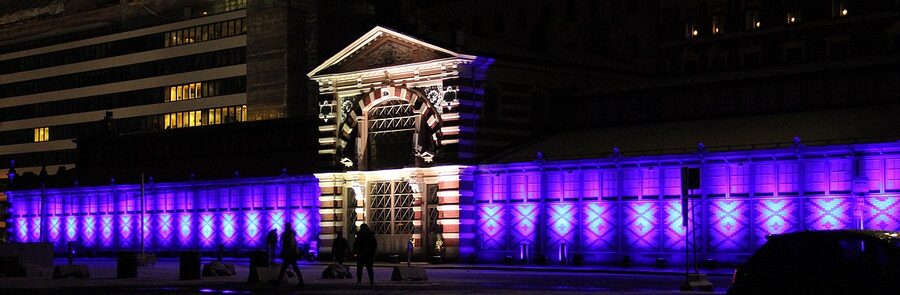
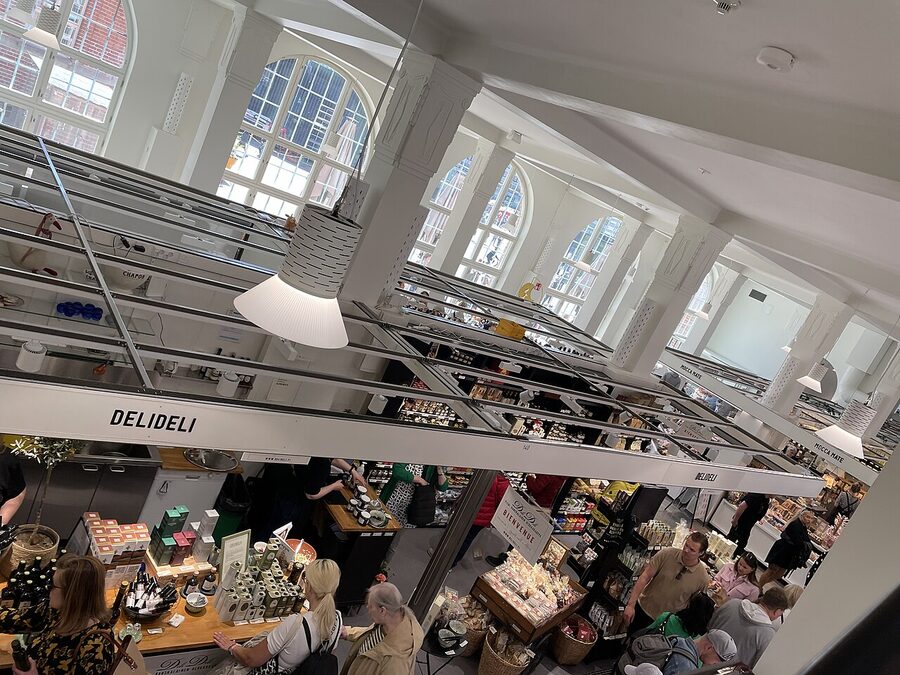
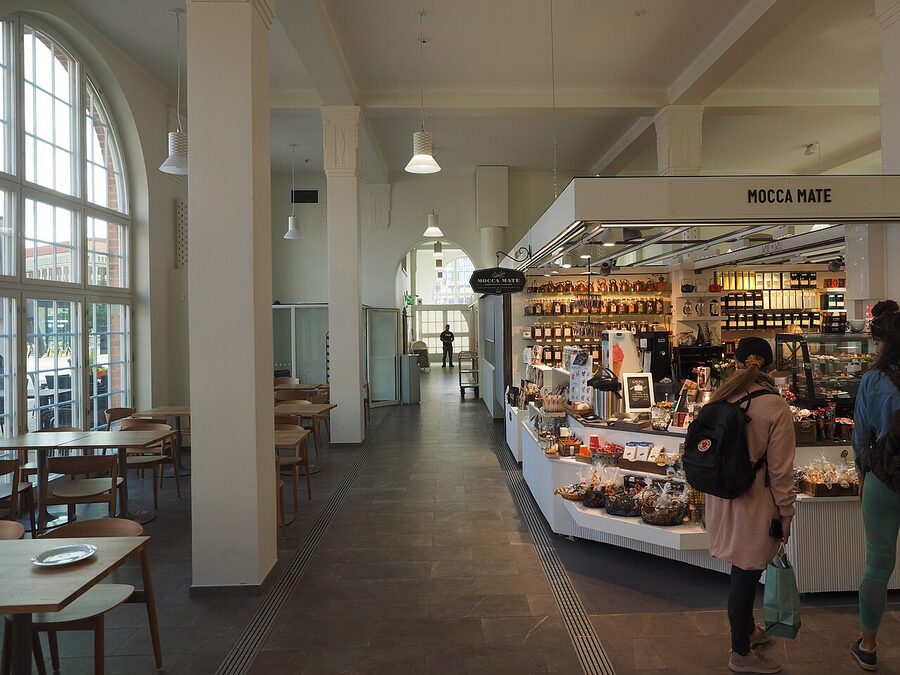
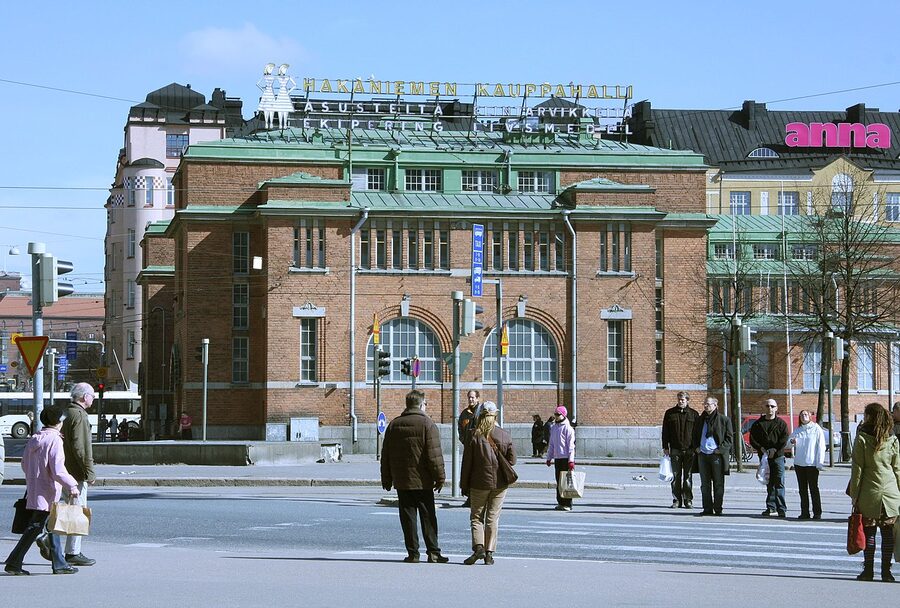
Hakaniemen kauppahalli (Hakaniemi market hall) on the north side of the bay is the local one. Built 1914, used by the working-class Kallio neighbourhood, the post-2023 reopening (the building closed for full renovation in 2018 and reopened in stages through 2023) restored the cast-iron structure to original condition while adding a proper basement food hall. This is where Helsinki actually shops for food. Kanniston Leipomo on the ground floor has the city’s most reliable karjalanpiirakka by 8am; the cheese counter has half the leipäjuusto producers from the central Finnish farm cooperatives; the spice merchant on the upper level imports half the cardamom Helsinki bakes with.
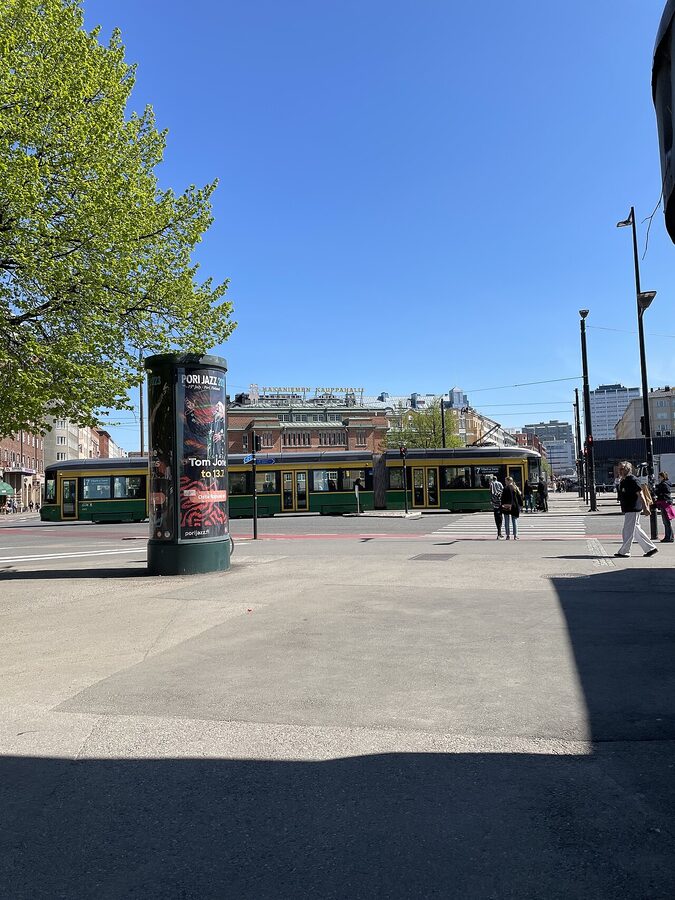
The third hall is Hietalahden kauppahalli on Bulevardi at the western end. Smaller, quieter, the antique-market-and-pawn-shop end of central Helsinki. The food offering is thinner; a couple of decent cafés, a fishmonger, but it is more of a flea-market hall than a food building. Skip on a tight schedule; visit on a Saturday morning if you have time and want to combine with the outdoor flea market.
Coffee, lonkero, the drinks that go alongside
Finnish coffee is the everyday infrastructure. Filter, lighter-roasted than continental espresso, and refilled at every café until you stop nodding at the waiter. The country drinks roughly 12 kilos per capita per year, the highest in the world by a fair margin, and the working pattern is two cups in the morning, two at the lunch break (the coffee that goes with the post-lunch karjalanpiirakka), and one with afternoon pulla. Espresso machines exist in Helsinki cafés but the everyday drink is filter and asking for an Americano in a working café will get you a faintly raised eyebrow.
Lonkero is the local long drink. Gin and grapefruit soda, originally invented for the 1952 Helsinki Olympics to give arriving foreigners something they would actually drink at the bar; the drink stuck and is now sold in cans in every K-Market for around 3.50 euros at 5.5% ABV. Hartwall’s Original Long Drink is the everyday brand. Drink it cold from the can on a Helsinki summer evening; it is the easiest cocktail introduction the country has.
Beer is the working drink. Lapin Kulta and Karhu are the everyday lagers; Finlandia Vodka and Koskenkorva are the spirit options at 40% and 38% respectively. Sahti, the medieval farmhouse ale brewed with juniper berries instead of hops, is the unicorn; if you see it on a craft-beer menu, order it. The brewery names worth knowing for craft beer are Bryggeri Helsinki on Sofiankatu, Plevna in Tampere’s Finlayson district, and Stadin Panimo in Vallila.
The full table: julbord, May Day, midsummer, fasting
The Finnish year has a few specific food days that are worth lining up if your trip falls near them.
The julupöytä (the Finnish julbord) is the Christmas Eve table: roast Christmas ham (joulukinkku) at the centre, several baked casseroles (rosolli the beetroot one, lanttulaatikko the swede one, porkkanalaatikko the carrot, lipeäkala the lye-cured cod for the brave), gravlax, sill, the leipäjuusto-and-jam course at the end. Hotel restaurants in Helsinki run a Christmas julupöytä lunch from late November through Christmas Eve; Sokos Hotel Vaakuna and Hotel Klaus K both do passable versions for around 50 to 65 euros. Restaurant Savoy’s version at 145 euros is the proper one if you want the full ceremony.
Vappu (May Day) is the food day for the spring flush. Sima (a fermented lemon-and-raisin drink), tippaleipä (a deep-fried, lattice-shaped pastry, dusted in icing sugar), munkki (sugared doughnuts). Helsinki celebrates Vappu hard; the entire city ends up at Kaivopuisto park on May 1st with picnic baskets full of these items. If your trip lands on Vappu, do not eat at a restaurant. Buy the food and join the picnic.
Juhannus (midsummer, the weekend closest to 24 June) is the strawberry-and-grilled-fish weekend. Most of the country leaves the cities for the cottage; restaurants in Helsinki close. If you are in Helsinki at midsummer, eat at the hotel; if you are at a lake, eat what is on the grill.
Laskiainen (Shrove Tuesday, late February) is laskiaispulla day. The whipped-cream-filled cardamom bun (a softer, fatter pulla, split open and stuffed with whipped cream and either almond paste or jam) is the Finnish Shrove pastry, eaten by everyone, and most bakeries make a special version for the day. About 5 to 7 euros at Ekberg. Worth lining up an afternoon for.
Where to take some home
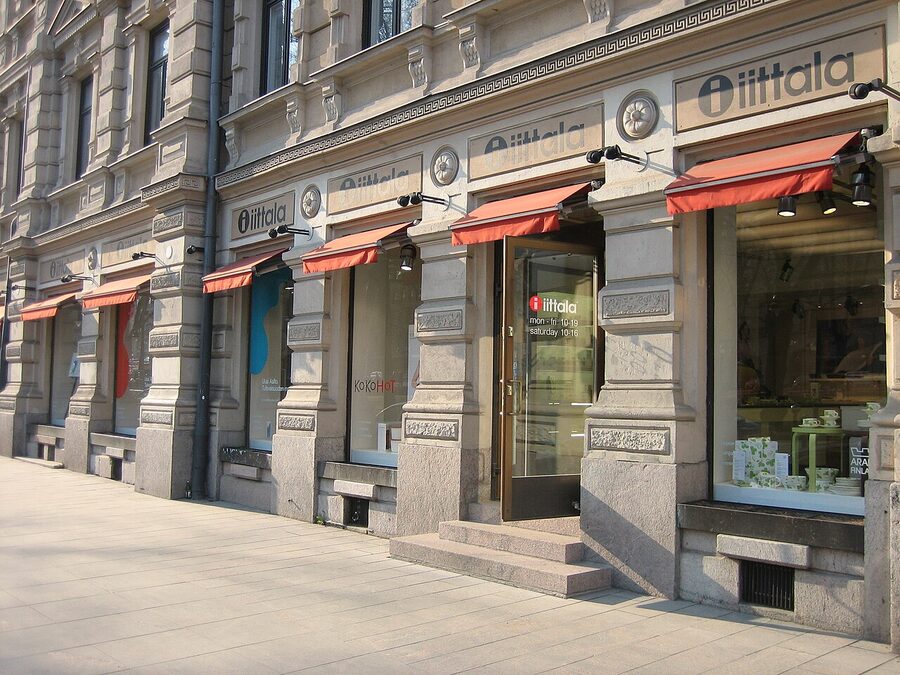
The Stockmann food hall in the basement of the department store on Aleksanterinkatu is the easy answer for take-home shopping. Cardamom, salmiakki, frozen muikku, vacuum-packed reissumies, cloudberry jam in jars, lakka liqueur (which you can also buy at any Alko, the state alcohol monopoly), Karl Fazer chocolate. About 15 to 30 minutes’ shop and a backpack’s worth of Finland goes home.
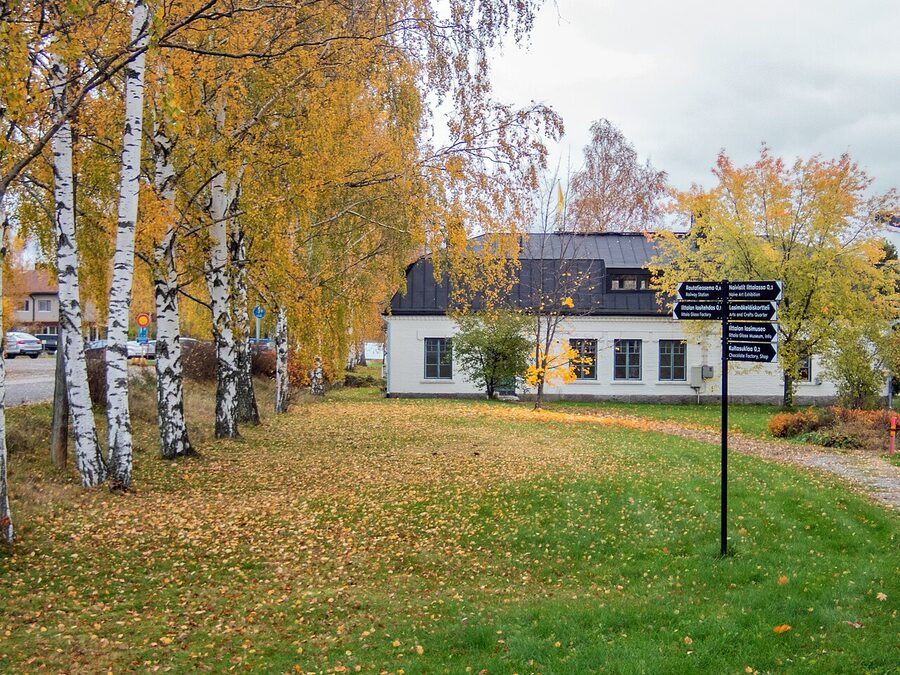
Hakaniemi is the harder-working answer. The cheese counter, the spice merchant on the upper level, the deli with the rye loaves baked that morning. Buy a leipäjuusto round, a 200-gram pack of cold-smoked salmon, a packet of hapankorppu, a small jar of cloudberry jam, and a 200-gram bag of Pirkka salmiakki. About 60 to 80 euros and you have most of the canon of this guide on your kitchen counter at home.
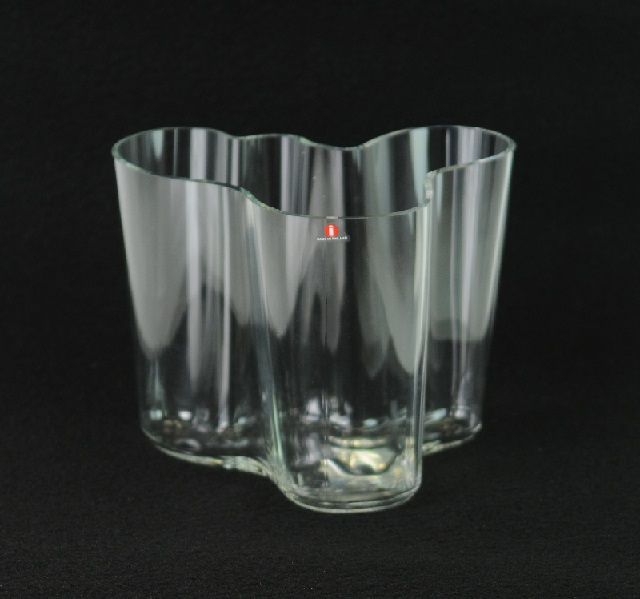
One thing not to do. Avoid the airport food shops. The Helsinki-Vantaa terminal has Marimekko-branded gift packs of liquorice and chocolate at roughly 40 to 60% premium over the supermarket version, and the cardamom is half as fresh. Stockmann at the airport is the only fair option there; the rest is the price of impatience. Stop at a city K-Market on the way to the train.
Three days, three lunches, three dinners
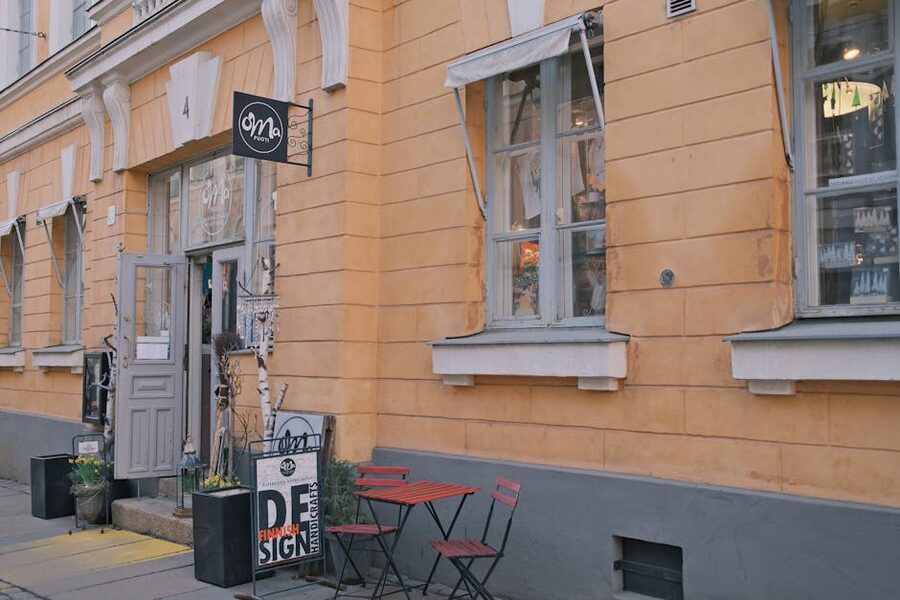
The minimum schedule that gets you through the canon. Day one, lunch at Vanha Kauppahalli (Soppakeittiö lohikeitto, a karjalanpiirakka from the bakery, a slice of leipäjuusto from the cheese counter, around 24 euros total). Afternoon coffee at Café Ekberg (korvapuusti and a filter coffee, 9 euros). Dinner at Savotta (reindeer poronkäristys, lakka schnapps, around 70 euros).
Day two, breakfast at Karl Fazer Café (pulla, two coffees, 14 euros). Lunch at the new-wave Ravintola Nolla (set lunch around 35 euros) or skip and graze at Hakaniemi. Afternoon at Löyly for a sauna and a salmon-soup bowl (45 euros sauna entry, 22 euros soup). Dinner at Olo or Demo (165 to 200 euros, book three weeks ahead).
Day three, take the 1h 35min train to Tampere (about 22 to 35 euros each way on VR, depending on advance booking). Lunch at Tampere kauppahalli for mustamakkara, a cold milk, and a salmon soup at Plevna in the Finlayson complex with a dark lager. Coffee at Pyynikki Observation Tower’s Munkkikahvila for the doughnut. Train back, dinner at Savoy if you booked it; the night-time view of the Esplanade in the Aalto chairs is the right way to end three Finnish days.
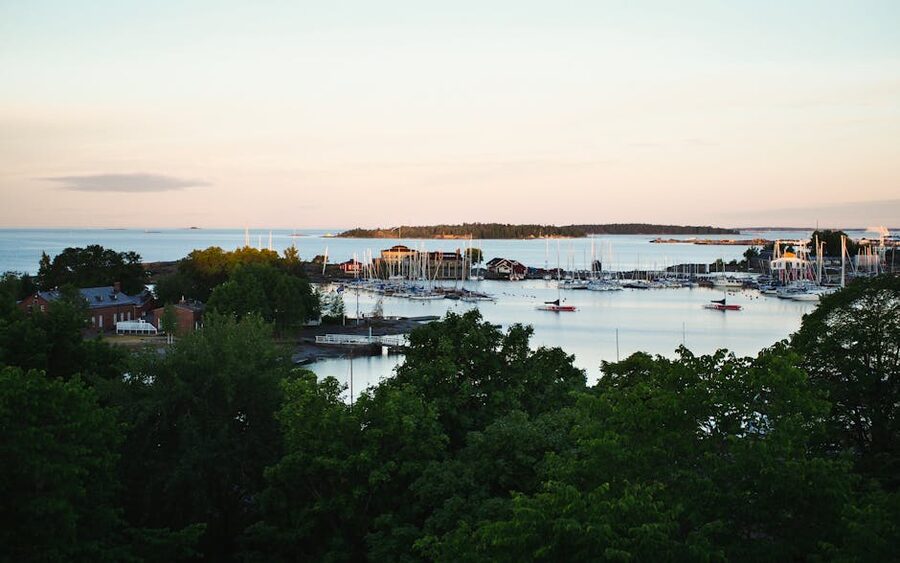
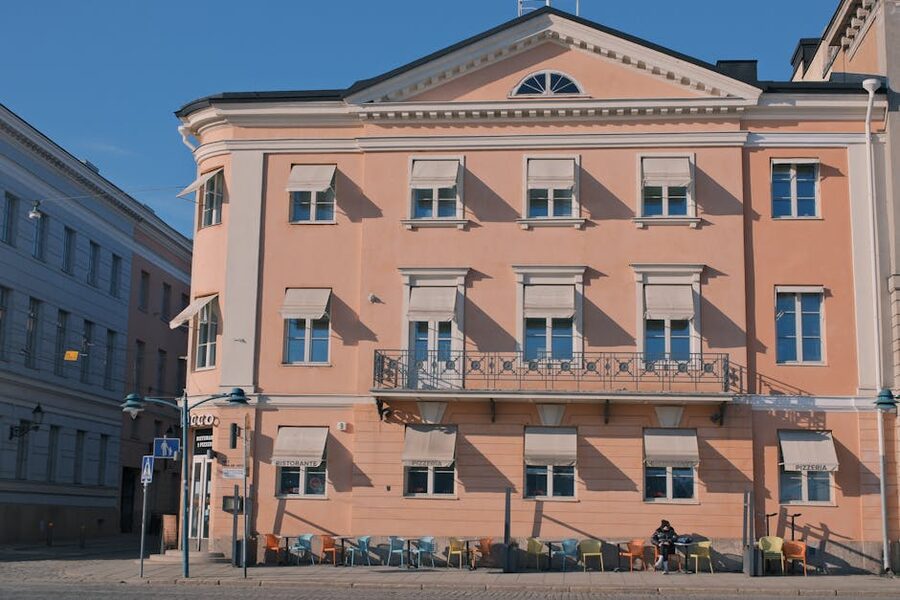
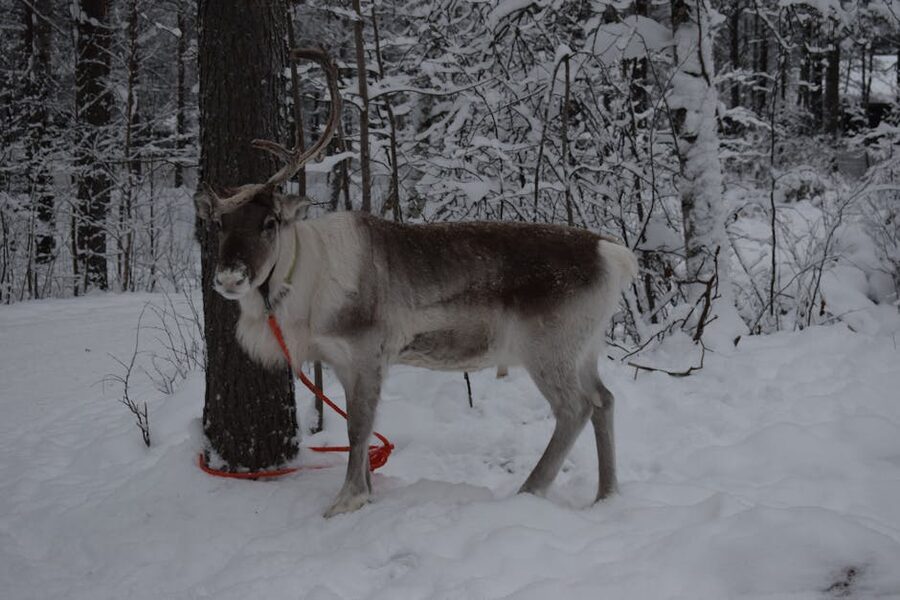
If you have a fourth day, the proper move is north. The night train from Helsinki to Rovaniemi runs daily, leaves around 18:25, arrives 7:25, and the dining car serves a passable salmon soup and a beer for around 28 euros. The reindeer in Lapland is different. The cloudberry jam at the Saariselkä farms is different. The food in the wood-cabin rauha at Kakslauttanen is the slowest meal in Finland, and the gravlax at Nili in Rovaniemi is the best I have eaten this side of the Baltic. The aurora cluster guide covers the rest of that trip.
The MATKA fair, if you are here in late January
If your trip lands in late January (15 to 18 January 2026 for the next edition), MATKA is the Finnish travel and food trade fair at Messukeskus, the convention centre at Pasila. Roughly 750 exhibitors including most of Finland’s regional food producers, hands-on tasting at every stand, and the press day on Thursday opens to consumers from Friday afternoon. The MATKA Helsinki travel fair guide covers the practical side; the food angle alone is worth the 18 euros entry. Cloudberry jam producers from Lapland, fish-smoke houses from Tornio, the rye-bread cooperatives from Savo, the Ahvenanmaa pannukakku from Åland, all under one roof. If you have ever wanted to taste fifteen kinds of leipäjuusto in two hours, this is the day.
One last thing
Eight years of Helsinki lunches and Tampere afternoons and Lapland dinners and the surprise has not faded. A country that for most of its history grew almost nothing and ate very little produced a cuisine that is precise about everything: the rye loaf has a name and a shape and a hole, the salmon has four registers, the reindeer has two cuts, the cinnamon bun has a slap. Finland’s food is the food of a place that paid attention to small things because there were not many big things to pay attention to. Eat the canon and you eat the country’s history; eat the new wave and you eat what 30 years of EU membership and Michelin attention did to a kitchen that already knew how to feed itself in the dark.
If you eat one thing this trip, eat the lohikeitto. If you eat two, add a karjalanpiirakka with proper munavoi. If you eat three, walk to Hakaniemi at 8am and pick up the day’s first warm pie at Kanniston, eat it on the tram to wherever, and let the rest of the trip arrange itself. The country will keep feeding you whatever you let it.
The catalogue’s other Nordic-food piece is the Copenhagen smørrebrød guide; the city pillar is the Helsinki city guide; the sauna meal is in the Helsinki public saunas guide; the awards retrospective from the same era as the Karelian recipes is the best Nordic travel blogs piece.