
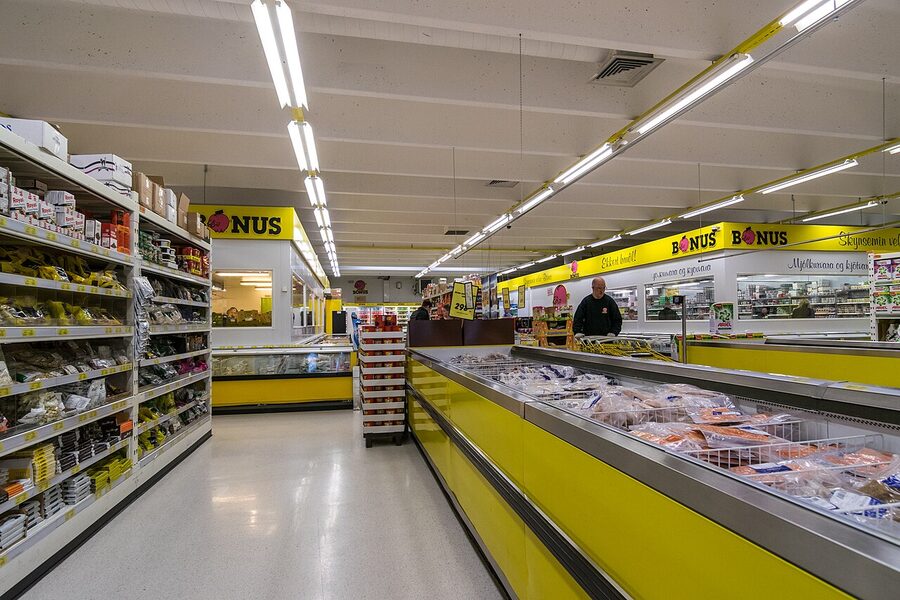
A 1L bottle of milk in Bónus, Reykjavík: 219 ISK (~€1.50). The same bottle in the Keflavík airport shop on the way out: 689 ISK (~€4.70). A pint of beer at a bar on Laugavegur: 1,400 ISK (~€9.50). A Blue Lagoon entry on a peak summer Saturday: 12,990 ISK (~€88). A 38-degree soak at Sundhöll Reykjavíkur, half a kilometre from your hotel and unchanged since 1937: 1,330 ISK (~€9). Iceland is genuinely expensive. It’s also expensive in specific, predictable, mostly avoidable ways, and that’s the only reason this guide can be useful.
I’ve done Iceland four times now. The first trip I treated it like Norway with worse weather and went home convinced the country was unaffordable. The second I read every blog with “budget” in the title, brought freeze-dried meals from home, and spent so much time eating cold pasta that I wasted half the daylight I’d flown in for. The fourth was the one that worked. The trick isn’t to do Iceland cheap. It’s to do Iceland priced. Know what each thing costs, know which trade-offs are worth making, and accept that some line items aren’t negotiable.
This is the practical version. Real ISK numbers from spring 2026, no USD, no clichés, no pretending you can do the Ring Road for £400. What you’ll get instead: a per-day budget at three honest brackets, a breakdown of what the supermarkets actually charge for the things you’ll actually buy, the cost of each thing the other budget guides keep telling you to do (and a verdict on whether it’s worth it), and the cheap-authentic alternatives nobody on the first page of search seems to mention. It’s the longest piece on the cluster because it has to link to almost every other Iceland article on the site, and because the question “how much does Iceland cost” is the one that determines whether you ever go.
In This Article
- The three-bracket reality check
- What you cannot avoid spending money on
- Flights
- The bed
- Getting around
- The supermarket map
- The duty-free run
- The food question, honestly
- The hot dog
- The gas station meal, honestly
- Bakeries and the cardamom test
- The water trick
- The free side of the country
- The real authentic Iceland: the public pool
- The etiquette
- Beyond Reykjavík: the regional pools that earn the detour
- The free hot springs nobody talks about
- The lagoon question
- Activities, with verdicts
- The “skip this” list
- Camping, the campervan question, and where to actually sleep cheaply
- The FlyBus question
- The shoulder-season trick
- The Reykjavík City Card, decoded
- Where to spend less: where to base, what to do day-by-day
- The Reykjavík-only week (3 to 5 days)
- The seven-day Snæfellsnes loop
- The Ring Road, on a budget (10 to 12 days)
- What to actually budget for a week, in numbers
- The five rules that actually save money
The three-bracket reality check
Forget “shoestring vs luxury”. Iceland has three honest budget brackets, and the difference between them is mostly accommodation and how you eat.
Under €100 a day per person. Hostel dorm in Reykjavík at 6,000 to 9,000 ISK (~€40 to €60), all groceries from Bónus or Krónan, public bus only inside the city, walk for everything else, one paid attraction per trip, public swimming pools instead of lagoons. Doable. You’ll have a kitchen, a bunk, and you’ll see the country mostly from your own two feet plus the occasional Strætó bus or shared rental. The £400-for-five-days framing some bloggers use is real but it assumes you’re staying inside Reykjavík and using day-tour buses for everything outside. That’s not a road trip. It’s a city break with bus excursions.
Around €150 a day per person. Private hostel room or guesthouse double (split between two), small petrol-engine rental car split between two or three, mix of Bónus self-catering and one gas-station meal a day, two paid attractions on the trip (say one lagoon and one glacier walk), public pools for the rest. This is the sweet spot for most people doing a Reykjavík + south coast + Snæfellsnes loop in five to seven days. You’ll see what you came for, sleep warm, and not flinch when the rental returns.
Around €250 a day per person. Mid-range hotel or guesthouse with private bathroom, small 4×4 split between two, restaurant lunch at gas stations and one decent restaurant dinner most evenings, three or four paid experiences (lagoon, glacier walk, snorkelling at Silfra, whale watching). This is what the average couple actually spends if they’re not white-knuckle budgeting. It’s also roughly what Adventurous Kate calculated for a 13-day Ring Road in August at peak. Anything above this is by choice, not necessity.
For comparison: Eygló at Lonely Planet quotes 25,000 to 45,000 ISK per person per day for “meals, accommodation and activities” at peak season, which lands at €170 to €310. The numbers above match because they’re the same numbers, just dragged out of the appendix and put up front where you can use them.
What you cannot avoid spending money on
Three line items will eat the largest hole in your wallet no matter what you do, and pretending otherwise is the reason most “Iceland on a budget” articles read like fiction. The flight, the bed, and getting around the country.
Flights
The good news: Iceland has more flights for its size than any other country in Europe, because Reykjavík sits halfway between New York and London and a lot of airlines route through it. Icelandair, Play, EasyJet, WizzAir and Norwegian all fly into Keflavík from the UK and Continental Europe. From London, Manchester, Edinburgh and Dublin, off-peak return fares run £80 to £180 if you book three to six months out. Peak summer (June through August) and Christmas to New Year roughly double that. The single best time for a cheap flight is the second half of October, the first half of November, or late January through early March. December is the trap month: it looks cheap until you realise everything closes early and you’re paying for hotel nights with three hours of usable daylight.
Lonely Planet’s tip on flying direct to Akureyri instead of Reykjavík is worth taking seriously if you’re set on north Iceland, because EasyJet now runs a direct from London Gatwick and Manchester to Akureyri in winter. You skip the 50 km transfer at the south end of the country entirely. The catch is that there’s no equivalent budget connection within Iceland once you’re up there, so it only saves money if north Iceland is the whole trip.
For the cheapest UK fare on any given week, search Skyscanner with the “everywhere” wildcard from your nearest airport across a calendar month. Set the destination to Reykjavík and let the dates flex. Single-day swings of £40 are normal, two-day swings of £80 happen.
The bed
This is where Iceland actually hurts. There’s no Premier Inn equivalent. The country has fewer than 200 hotels for the whole island, and demand outstrips supply for nine months of the year. A single guesthouse room outside Reykjavík regularly costs more than a four-star hotel in Berlin. The structural fix isn’t a magic discount website; it’s booking earlier than you would for anywhere else.
Realistic 2026 ranges per night, two people sharing, in shoulder season (April or October):
- Hostel dorm bed: 5,500 to 9,500 ISK (~€38 to €65) per person.
- Hostel double room or guesthouse double, shared bath: 18,000 to 28,000 ISK (~€124 to €193).
- Mid-range hotel double, en-suite, breakfast: 28,000 to 45,000 ISK (~€193 to €310).
- Edda hotel summer double (a former boarding school, only open mid-June to mid-August): around 20,000 ISK.
- Self-catering Airbnb apartment: 20,000 to 43,000 ISK depending on size and location.
- Campsite pitch with own tent: 1,500 to 2,500 ISK per adult plus a 400 ISK tourist tax.
Add 30% to 50% across June through August. Drop 15% to 25% in November, January, February.
The hostels worth knowing about in Reykjavík: KEX Hostel on Skúlagata is the city’s most photographed hostel and has private rooms as well as dorms, with a bar people actually drink in (1,200 ISK happy-hour beers). Loft HI Hostel on Bankastræti is the cheapest decent dorm in the city centre, with a rooftop terrace and a kitchen big enough to actually cook in. B47 Hostel is plain and central and the cheapest of the three. Bus Hostel is on the southern edge of town next to the BSÍ coach station, useful only if you have an early or late flight. HI Reykjavík City Hostel in Laugardalur is a 25-minute walk from the centre but next to Laugardalslaug, the city’s biggest swimming pool. Out east, Hotel Edda Akureyri is a summer-only boarding school option for north Iceland. Hostel Höfn in the southeast is the cheapest bed within striking distance of Jökulsárlón.
Getting around
If you’re staying inside Reykjavík for the entire trip, you don’t need a car. The city is walkable and the Strætó bus network covers everything you’ll want to reach. A 24-hour bus pass is 2,750 ISK (~€19), a 10-ride pass is 6,900 ISK, single rides are 670 ISK. Children under 12 ride free. Get the Klapp app and load it before you arrive.
The moment you want to leave the capital region, the calculus changes. There is a national bus network (Strætó’s intercity routes) but it’s expensive. Reykjavík to Akureyri is 13,000 ISK one way and takes six and a half hours. Reykjavík to Vík is 9,070 ISK and takes nearly four hours including changes. For two people doing a single one-way trip, a small rental car split with fuel often beats the bus before you even count the freedom of stopping at every roadside waterfall.
Realistic rental costs for a small petrol hatch (Toyota Aygo, Hyundai i10, Kia Picanto class) booked three months out:
- October to April: 4,600 to 7,500 ISK per day.
- May and September: 7,500 to 12,000 ISK per day.
- June through August: 12,000 to 18,000 ISK per day.
- Add 30% to 60% for an automatic, 60% to 100% for a small 4×4.
Petrol runs around 320 ISK per litre at N1 and Olis, slightly cheaper at the self-service Orkan and ÓB stations. A full Ring Road circuit on a small hatch will burn through 8 to 10 tankfuls, around 28,000 to 40,000 ISK in fuel for the whole loop. Diesel is currently a hair cheaper than petrol but the smaller cars only come in petrol; book diesel only if you’re getting a 4×4 anyway. The Hvalfjörður tunnel is now free as of 2018; the only paid tunnel is Vaðlaheiðargöng east of Akureyri at 1,790 ISK each way, and you can avoid it by taking the older mountain road.
The Iceland car rental guide goes deep into the insurance maze (CDW, SCDW, Gravel, Sand and Ash); the short version is that the gravel cover is worth taking and the sand-and-ash cover is only worth it for the south coast in spring. Whatever you do, don’t construct your booking from the website of a brand you haven’t heard of. Stick to Blue Car Rental, Lotus, Reykjavík Cars, or one of the international names. The cheapest “no-brand” deals on aggregators are sometimes legitimate and sometimes a small operator who’ll find a 240,000 ISK chip on your windscreen at return.
For the FlyBus question (Keflavík to Reykjavík), see the dedicated section further down. Short answer: take it on arrival, take a taxi or shuttle on departure if you can split the fare.
The supermarket map
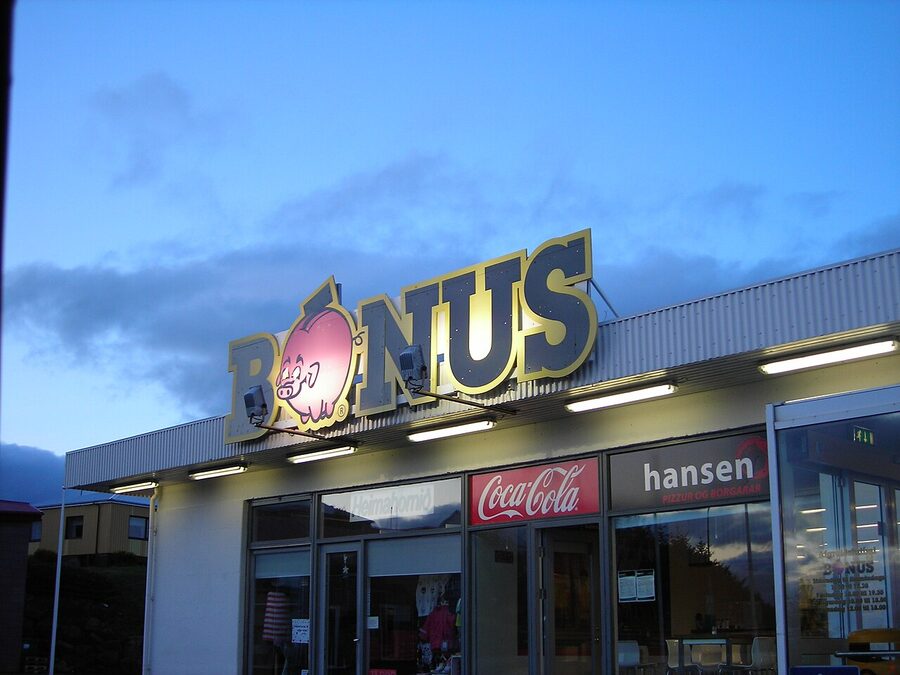
The single biggest budget lever in Iceland is the supermarket. There are three chains worth knowing, ranked by price.
Bónus is the cheapest. Pink pig logo, gold background, look for it as soon as you land. There are around 30 branches across the country and they cluster in towns of any size. They don’t open early (most start at 11:00) and most close by 18:30, so plan around their hours, not yours. The Keflavík branch is on Hringbraut, ten minutes by car from the airport, and it’s open by the time the morning flights have cleared customs. The Reykjavík branches at Smáratorg and Hagamelur are the biggest in the city. There’s no Bónus in Höfn, in Egilsstaðir, or anywhere in the Westfjords.
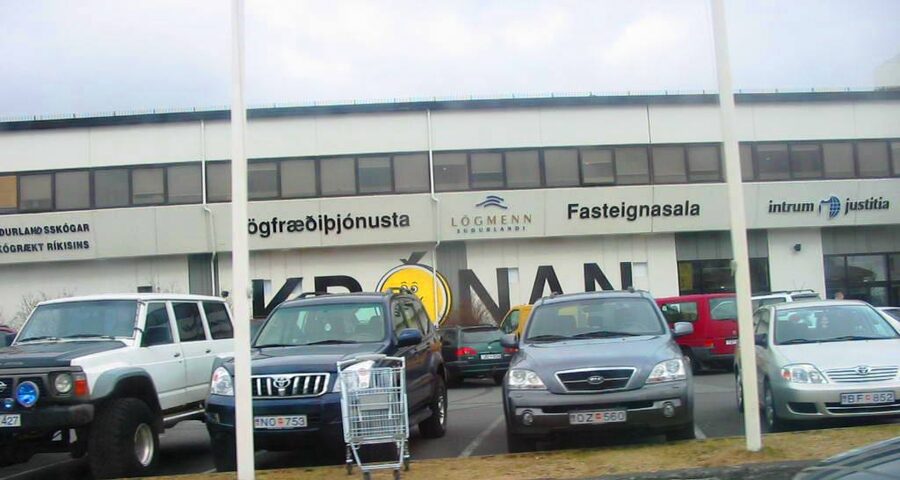
Krónan sits about 5% to 10% above Bónus on most items but has wider hours (often 09:00 to 22:00) and a slightly broader stock. There are roughly 30 branches and they cover the gaps Bónus leaves: Höfn, Egilsstaðir, Vík, Borgarnes, Sauðárkrókur. If you’re on the Ring Road, you’ll switch between the two without thinking about it.
Nettó is the third option, similar in pricing to Krónan, with branches in some smaller towns the other two skip. It’s the only national chain with a 24-hour branch (Mjódd, Reykjavík).
What’s expensive: anything imported with no Icelandic substitute (avocados, fresh berries out of season, decent bread, beef). What’s actually cheap: skyr (Icelandic yogurt, 119 to 159 ISK for 170g), Icelandic lamb (buy on offer, freeze nothing, eat the same day), bananas, pasta, basics like rice and tinned tomatoes, the Bónus own-brand crisps which are absurdly good. Don’t buy alcohol at the supermarket; supermarkets only sell pilsner-strength beer (under 2.25%). For real beer, wine and spirits you need Vínbúðin, the state-run liquor store, which has limited hours (often closed Sundays) and is around 40% more expensive than the airport duty-free.
A typical week’s grocery shop for two, doing breakfasts and most dinners self-catered with one or two restaurant meals built in, lands around 18,000 to 24,000 ISK (~€124 to €165) at Bónus or Krónan. Compare that to one mid-range Reykjavík dinner for two, which is the same number.
The duty-free run
The single most useful piece of information that no one prints on the airport signs: the duty-free shop is on the arrivals side, not just departures. After you clear immigration, before you reach baggage reclaim, there’s a Fríhöfnin shop on the right. This is where Icelanders buy their alcohol. Wine starts around 1,400 ISK a bottle; vodka and gin around 3,500 ISK. Add roughly 60% to those numbers if you wait and buy at Vínbúðin. If you drink at all on this trip, hit duty-free on the way in, not the way out.
The legal limit is 1 litre of spirits + 0.75 litre of wine + 3 litres of beer per adult, or various combinations of those. Don’t try to skip it; the airport is small enough that they can and do check.
The food question, honestly
Restaurant food in Iceland is not bad. It’s just not, on the whole, special enough to justify the price most of the time. A main at a mid-range Reykjavík restaurant is 4,500 to 6,500 ISK (~€31 to €45). A two-course dinner for two with one beer each lands around 18,000 to 24,000 ISK before tip (which is not customary; the service charge is included). A bowl of lobster soup at Sægreifinn on the harbour is 2,200 ISK. A langoustine main at any of the better fish restaurants is 5,800 ISK and up. The Friday-lunchtime fish-of-the-day at Slippbarinn at Reykjavík Marina is 2,900 ISK and includes a soft drink, which is one of the best food values in the city.
What I do, having now been four times: one decent restaurant dinner per trip, ideally at a place with a coastal view that justifies the price. Everything else is supermarket, gas station, hot dog stand or bakery. This is the Icelandic pattern, not a budget compromise.
The hot dog
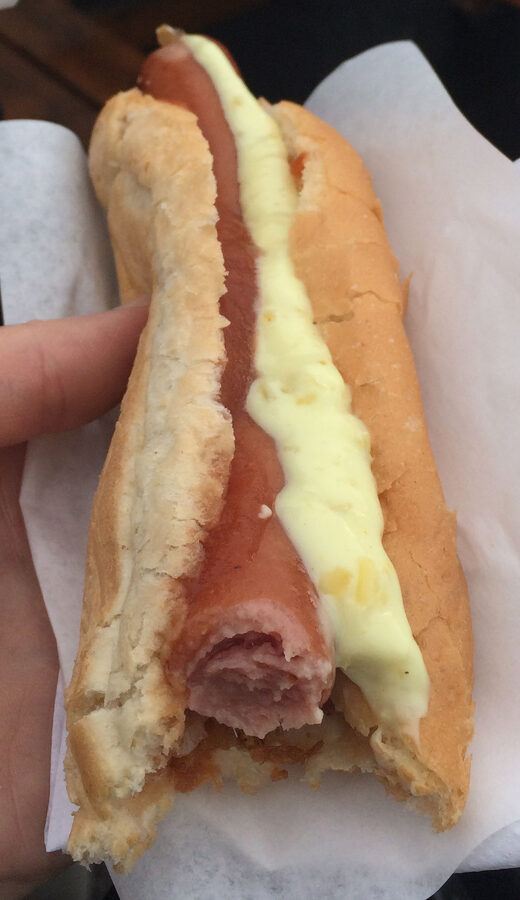
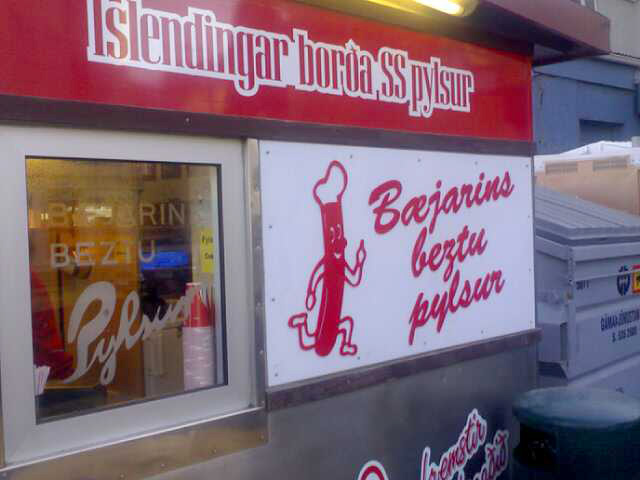
The Icelandic hot dog (pylsa) is genuinely good and at 700 ISK at Bæjarins Beztu Pylsur on the Reykjavík harbour, or 550 to 700 ISK at any 10-11 or N1 station around the country, it’s the cheapest hot meal you can buy. Made from Icelandic lamb plus pork, served with sweet brown mustard, ketchup, remoulade, raw onions and crispy fried onions. Order it “eina með öllu”, one with everything. Bæjarins Beztu has been on the harbour corner since 1937 and has a queue most lunchtimes; it moves fast.
The hot dog at every Olis, ÓB, N1 or Orkan station around the country is essentially the same product. If you’re driving and need a quick meal stop, it’s the same answer. Add a bowl of soup (kjötsúpa, the Icelandic lamb-and-vegetable broth) at the better stations for around 1,800 ISK and you have a hot meal for under €15.
The gas station meal, honestly
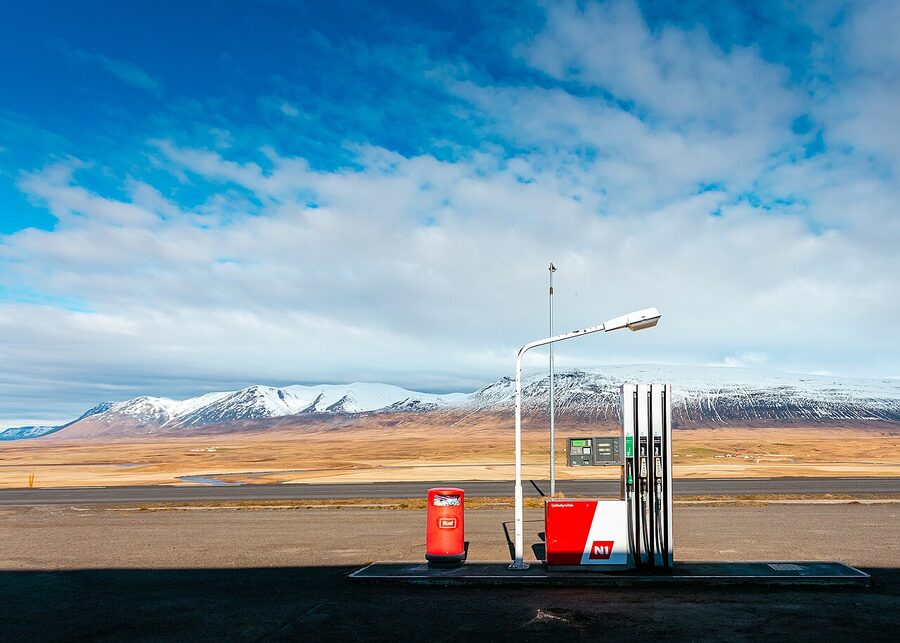
The roadside N1, Olis and Orkan stations are not just where you fuel up; they’re where you eat. The bigger ones (look for “Esso Restaurant” or “Olís Express” branding) have a hot counter doing fish and chips for around 2,800 ISK, burgers for 2,400 to 2,900 ISK, and the soup-and-bread combo for around 1,800 ISK. The food won’t change your life. It will fill you up at half the price of a sit-down restaurant. The N1 at Stykkishólmur, the Olís at Vík, and the Esso at Höfn are the three I’ve eaten at most often and will happily eat at again. If you’re driving the Ring Road, plan to lunch at one of these every other day.
Bakeries and the cardamom test
Icelandic bakeries (bakarí) do excellent breakfast and lunch food at half the price of restaurants. A kanilsnúður (cinnamon bun) is 500 to 700 ISK. A vínarbrauð (Danish-style pastry) is the same. Sourdough loaves around 800 ISK. Soup-and-bread combos at the better bakeries are 1,800 to 2,200 ISK and feel like a real lunch. Brauð & Co in Reykjavík is the most photographed (the rainbow shop on Frakkastígur), but every town of any size has a working bakery, and the rural ones are better. Many do a half-price discount on yesterday’s stock from around 16:00; it’s worth asking.
The water trick
Don’t buy bottled water in Iceland. Reykjavík tap water is among the cleanest in the world, comes straight from the mountains, and is so soft it’s measurably better than the bottled stuff. The tap in your hostel, restaurant, gas station bathroom and the airport drinking fountain all run the same water. Carry a refillable bottle and you’ll never need to spend the 600 ISK that bars and restaurants charge for a 500 ml bottle of imported still water. The smell of sulphur in the hot tap is normal; that’s the geothermal supply, and it goes away in ten seconds. Cold tap water is sulphur-free.
The free side of the country
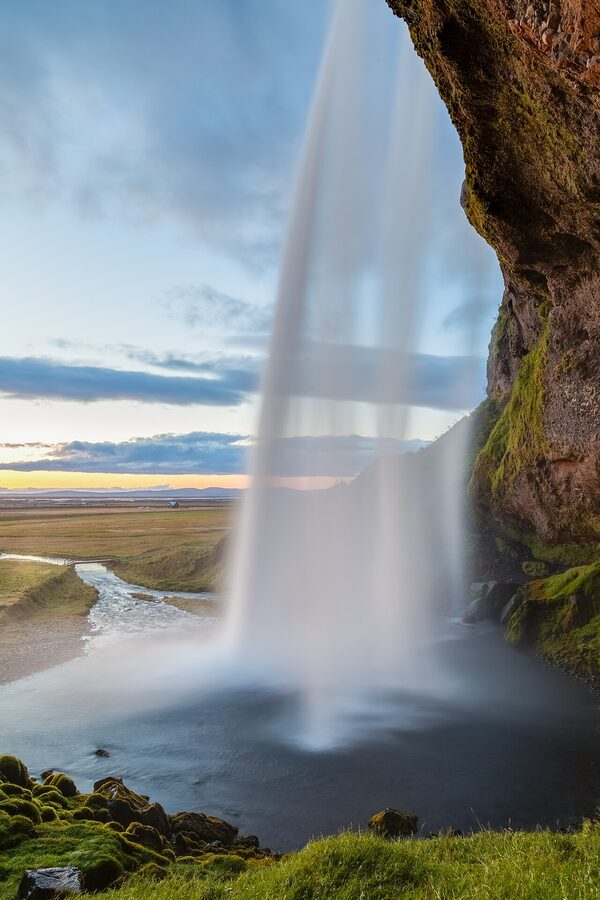
Most of the country’s most famous attractions are free to enter. What gets charged is parking, which has crept in over the past few years and is now the standard for most marked roadside stops. Typical 2026 parking fees:
- Seljalandsfoss / Gljúfrabúi: 1,000 ISK.
- Skógafoss: free for the lower viewpoint, 1,000 ISK if you use the official car park.
- Kirkjufellsfoss (Snæfellsnes): 800 ISK.
- Svartifoss / Skaftafell: 1,000 ISK.
- Kvernufoss: 800 ISK (private land).
- Reynisfjara black-sand beach: 1,000 ISK.
- Þingvellir National Park: 1,000 ISK day parking.
The geyser area on the Golden Circle, Geysir itself, has free parking. The waterfall Gullfoss has free parking. Dettifoss has free parking. Goðafoss has free parking. The pattern is roughly: south-coast, popular, paid; north and east, paid only at the busiest spots.
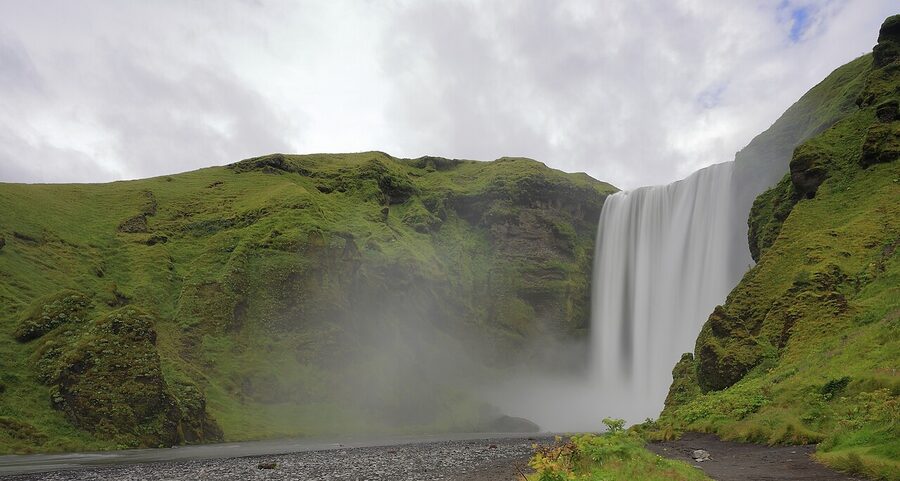
Free, no-parking-fee, no-ticket attractions you should specifically plan around:
- Gullfoss waterfall (the third stop on the Golden Circle).
- Dettifoss in the north (Europe’s most powerful waterfall, free parking on both sides).
- Goðafoss between Akureyri and Mývatn.
- Hvítserkur basalt sea stack in the north (free; no ticket).
- Stuðlagil canyon, east Iceland (the basalt-column canyon).
- Múlagljúfur, Fjaðrárgljúfur and Kolugljúfur canyons.
- Jökulsárlón glacier lagoon (paid parking 1,000 ISK; the lagoon itself is free).
- Diamond Beach across the road from Jökulsárlón.
- Djúpalónssandur black-pebble beach (Snæfellsnes).
- Saxhóll crater (Snæfellsnes; you can climb it in five minutes).
- Búðakirkja, the black wooden church on Snæfellsnes.
- Hvalfjörður’s Glymur waterfall (the second-tallest in Iceland).
- The Sólheimajökull glacier viewing point, walkable from the car park (no glacier tour required).
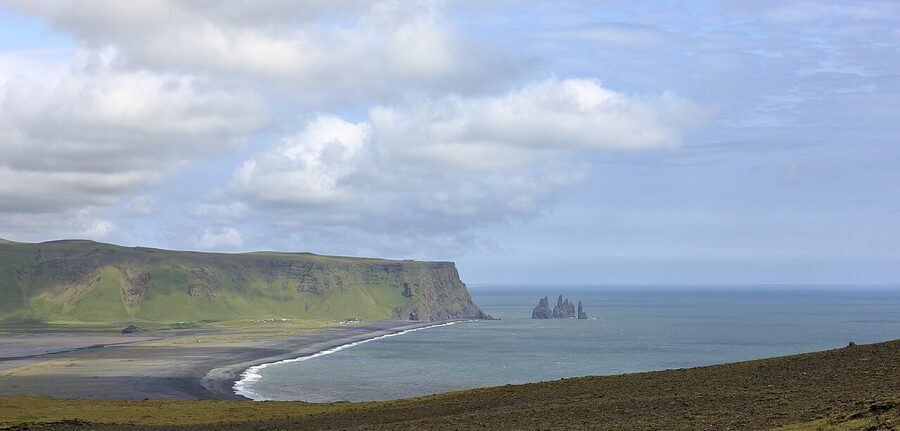
If you’re on a properly tight budget and willing to plan around the free attractions, you can spend a week in Iceland and pay for nothing besides parking, fuel, food and your bed. The country is not a giant theme park where every photogenic thing costs €30; that’s the Reykjavík harbour-front Blue Lagoon shuttle’s framing of it, not the reality.
The real authentic Iceland: the public pool
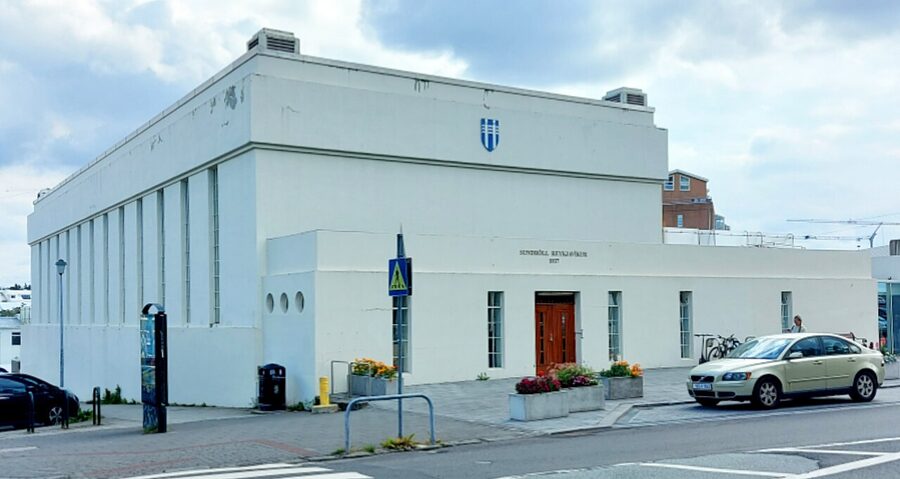
Iceland has 120-plus public swimming pools, one in nearly every settlement of any size, geothermally heated to 27 degrees in the main pool and 38 to 44 in the hot pots, costing 800 to 1,330 ISK to enter. The Blue Lagoon is the marketing version. The sundlaug is the real thing. This is, without exaggeration, the cheapest authentic experience in the country and the one most “Iceland on a budget” guides skim past in two sentences.
The Reykjavík pools you should know about, in rough order of usefulness:
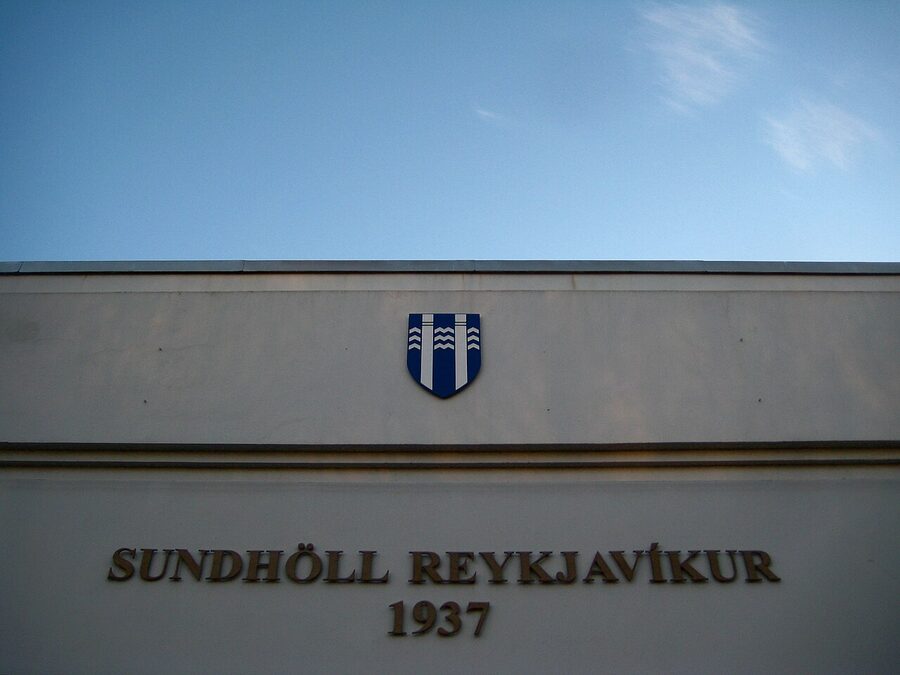
Sundhöll Reykjavíkur (Barónsstígur 45a, central). Opened 1937, designed by state architect Guðjón Samúelsson in a stripped-classical style that’s older than most of the city around it. Indoor 25m pool, outdoor pool added in 2017, four hot pots at varying temperatures, a steam room, and a rooftop sun deck. 1,330 ISK adult entry, opens 06:30 weekdays, 08:00 weekends. The most central pool in Reykjavík and the cheapest thing of any cultural value you can do in the city. If you’re staying anywhere within walking distance of Hallgrímskirkja, this is your morning swim.
Vesturbæjarlaug (Hofsvallagata 84, west side). The neighbourhood-favourite pool: smaller, less touristed, and where the writers and academics from the nearby university swim. 1,330 ISK. Five hot pots at different temperatures, a steam room, and a small café next door (Kaffihús Vesturbæjar) that’s been running for decades. If Sundhöllin is the architectural one, Vesturbæjarlaug is the social one.
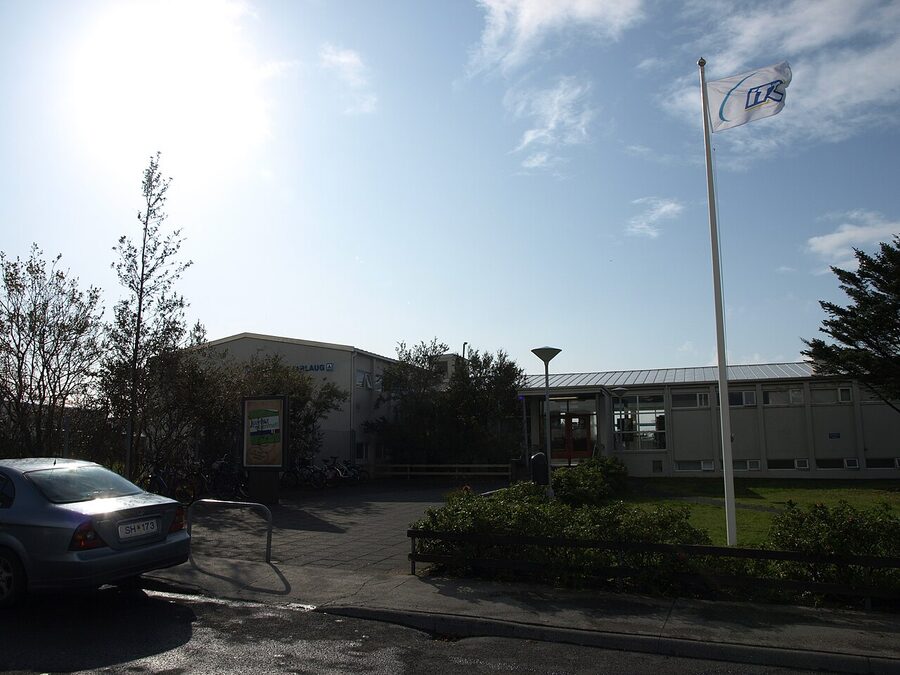
Laugardalslaug (Sundlaugavegur 30a, east of centre). The biggest pool in Iceland: a 50m outdoor pool, an indoor pool, two slides, seven hot pots ranging from 38 to 44 degrees, a salt-water tub, a children’s pool, a children’s lagoon. 1,330 ISK. This is where Reykjavík families spend a Saturday afternoon. If you want pools-and-slides for two hours and you’re staying anywhere east of central Reykjavík, this is the one.
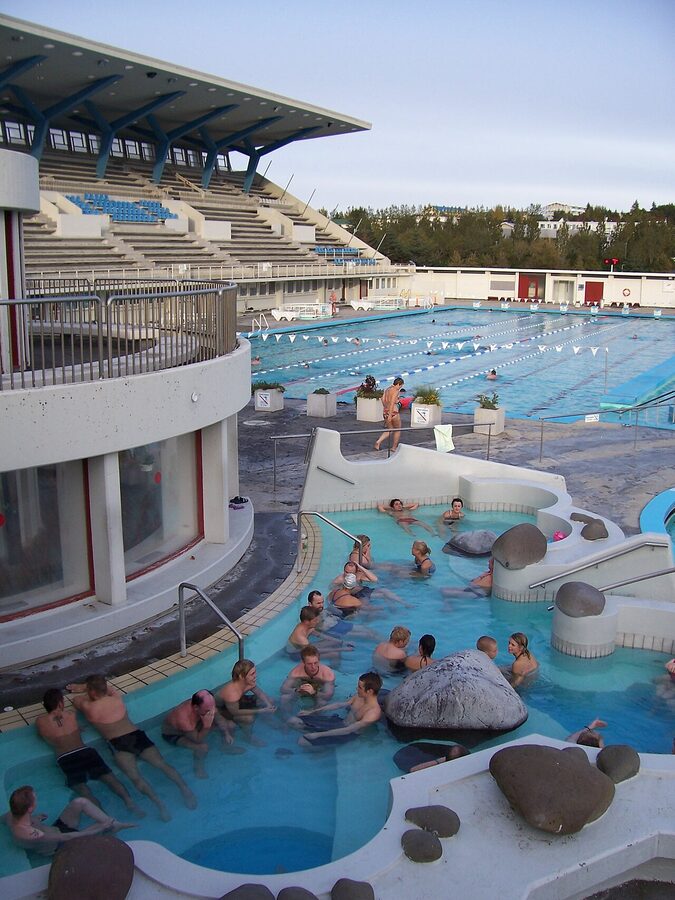
And four more around the city: Árbæjarlaug, Breiðholtslaug, Grafarvogslaug, Klébergslaug. The same pricing, the same etiquette, smaller and less touristed; pick the closest one to where you’re staying.
The etiquette
The pool experience comes with one non-negotiable rule that catches every first-time visitor and that nobody warns about gently. Before you enter the water, you take off everything, walk to the showers, and wash with soap, properly, including all the labelled body parts (yes, including those). Then, and only then, you put on your swimsuit and enter the pool. There are diagrams. There are sometimes pool attendants. The shower rooms are gender-segregated and entirely communal. This is not a hazing ritual; it’s how Iceland keeps its pools chlorine-light and safe at scale, and it’s the price of entry. If you can’t do it, you can’t use the pools, and you’ll have a worse trip for it.
The other rules are gentler: no diving in shallow areas, no phones in the changing rooms, lockers operate on a wristband you take with you in the water, and the stewardship of the hot pots (don’t shout, don’t soak for 90 minutes if there’s a queue, accept that strangers will speak to you in Icelandic first) follows the same code as a Helsinki sauna. Speaking of: I wrote about the Finnish equivalent at Helsinki’s public saunas; the cultural logic is the same on both ends of the Nordic arc.
Beyond Reykjavík: the regional pools that earn the detour
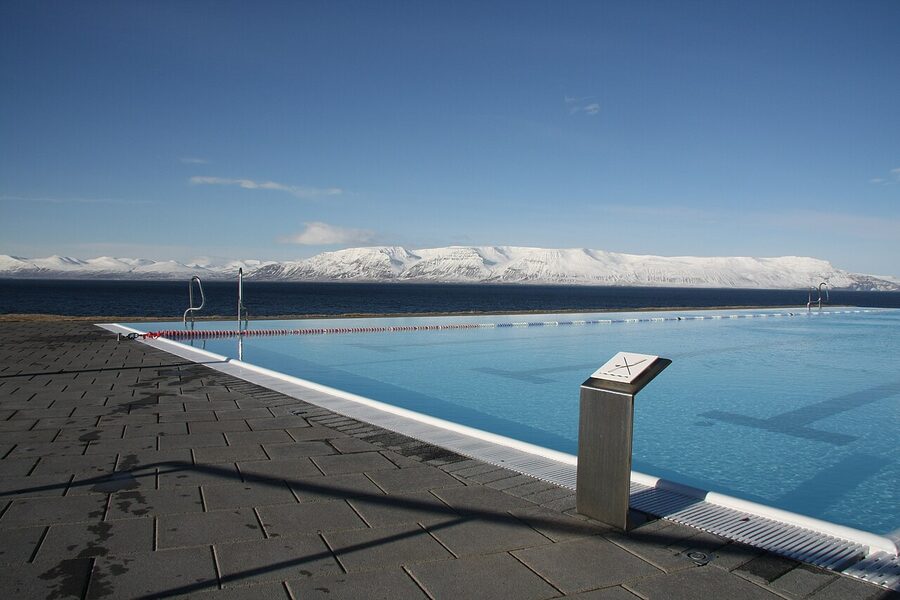
Hofsós, north Iceland. Tiny harbour town on Skagafjörður, with a pool that runs an infinity edge directly out toward the fjord. Architecture by Basalt Architects (the same firm that did the Blue Lagoon hotel). Wallpaper magazine had it on a “world’s best swimming pools” list a decade ago; the reality on a clear day is better than the photos. Around 1,000 ISK. A 25-minute drive off Highway 1 from Sauðárkrókur, which is itself an hour west of Akureyri.
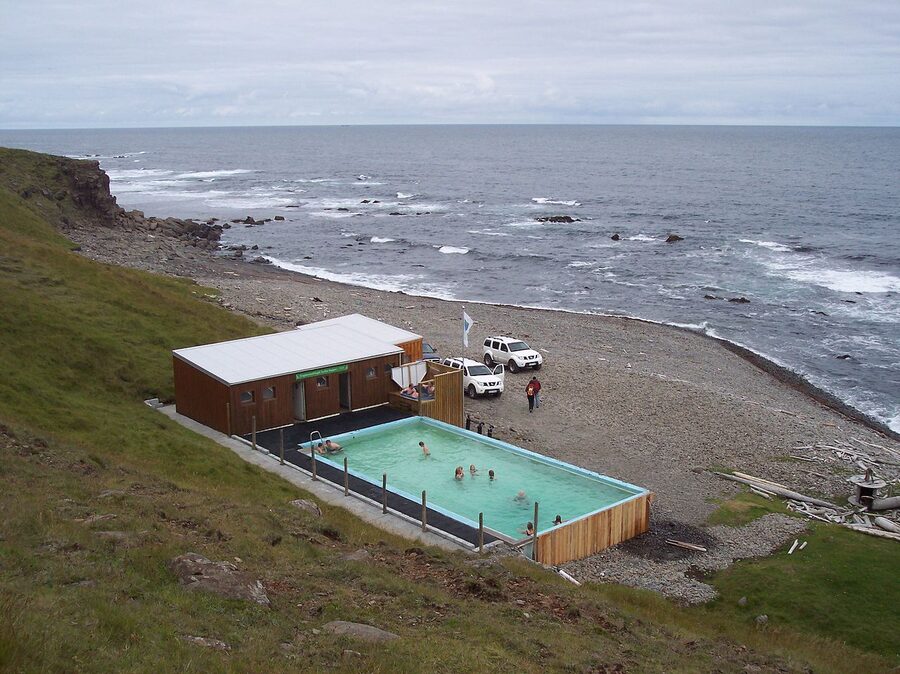
Krossneslaug, Westfjords. End of the road, literally. A concrete pool and a single hot pot at the end of the Strandir coast in the northwest, with the Atlantic crashing 30 metres away. Open year-round, around 1,000 ISK. Getting there is a four-hour commitment from Hólmavík; the road is gravel, single-lane in places, and closes in winter. Worth it once.
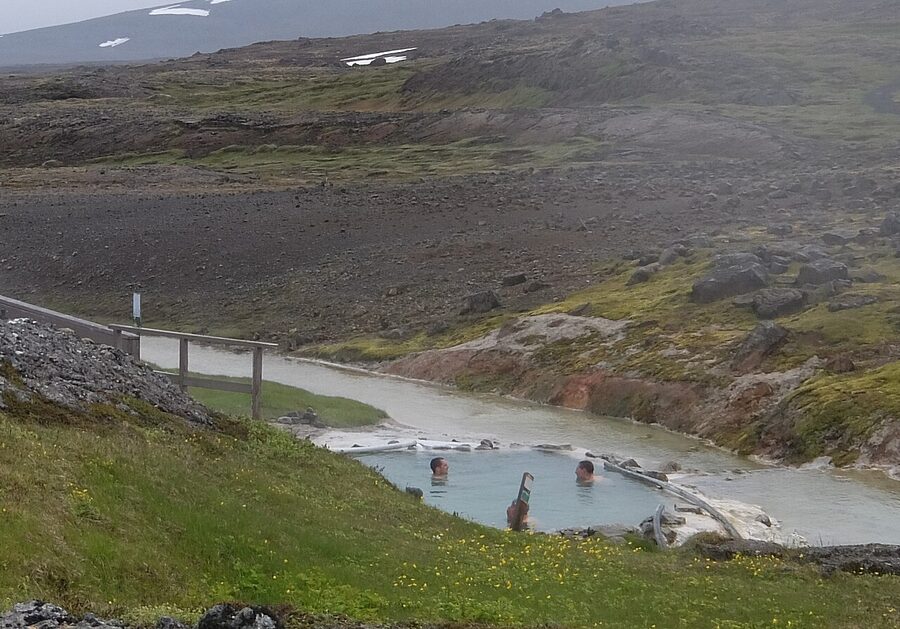
Hveravellir, central highlands. A natural geothermal pool sitting at the crossroads of the Kjölur (F35) and the desert. Free to bathe. F-road access only, summer only, 4×4 only. If you’re already up there it’s the highlands’ best free dip.
Lýsuhóll, Snæfellsnes. The natural-bottom pool with mineral-rich water, 800 ISK. Open in summer only.
Selárlaug on the Selá river in Vopnafjörður (east), and GeoSea in Húsavík (a paid spa that’s still cheaper than the Blue Lagoon at around 6,500 ISK and overlooks the bay where the whales swim) are the other two regional ones I’d specifically detour for.
The free hot springs nobody talks about
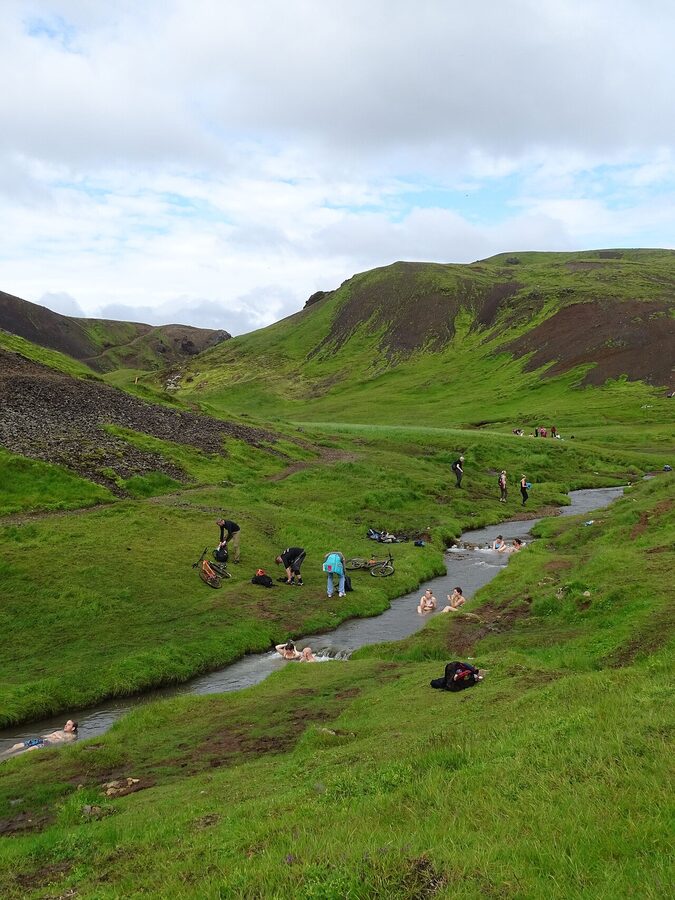
And then there are the genuinely free ones: warm rivers and natural pools where the only cost is the hike. The most accessible is Reykjadalur, the “steam valley” 45 minutes south of Reykjavík by car. From the small car park above Hveragerði, walk 3 km uphill on a marked path, climbing about 200 metres. The river you reach is naturally hot (the temperature varies along its length so you find a spot that suits you). Free. There’s a wooden boardwalk for changing. Bring a small dry bag for clothes. In summer it’s busy by mid-morning; the trick is to start before 09:00 or go in October.
Other genuinely free natural pools, with the caveat that some are remote and several have signs asking visitors to be respectful: Seljavallalaug on the south coast (a 1923 concrete pool fed by a hot spring, free, a 20-minute walk from a small car park near Skógar, the pool isn’t cleaned often, swim at your own discretion); Hrunalaug near Flúðir (a tiny bath that the local farm has had to start charging a small parking fee for because it was being trashed); Grjótagjá near Mývatn (the cave pool from Game of Thrones; bathing technically not permitted any more but visiting is free); Drangsnes (three hot pots on the Westfjords harbourside, free, donations welcome).
The trick with the free pools is to arrive early, leave the place cleaner than you found it, and not post the GPS coordinates of the smaller ones to social media. Several have closed in the last five years because nobody respected the etiquette.
The lagoon question
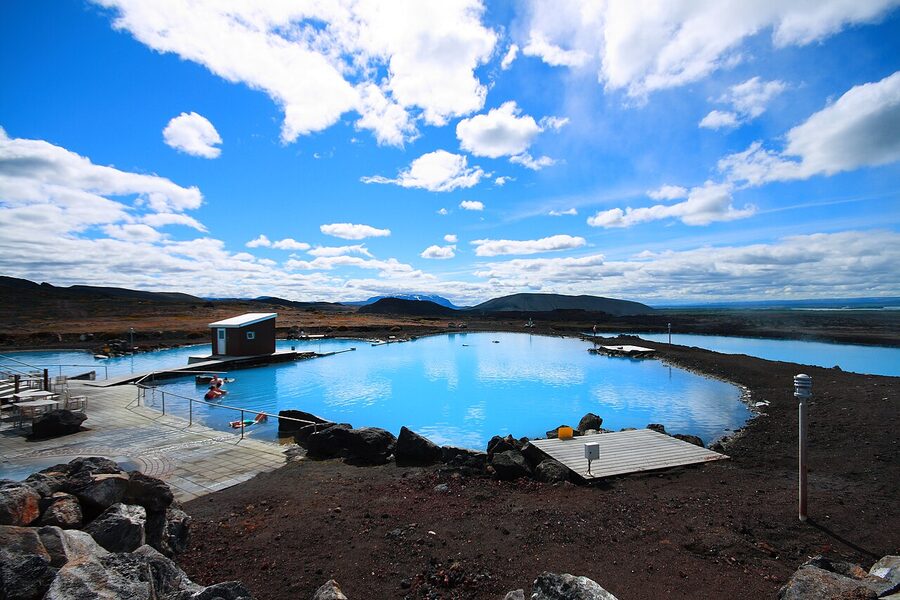
Five purpose-built lagoons compete for the same Reykjavík-arrival money. Real spring 2026 ranges, including the basic adult entry without robes or drinks:
- Blue Lagoon: from 9,990 ISK off-peak to 14,990 ISK on a peak Saturday.
- Sky Lagoon (in Kópavogur, 10 minutes from the city centre): 8,990 ISK Pure pass, 13,990 ISK with the seven-step ritual.
- Hvammsvík (Hvalfjörður, 45 minutes from Reykjavík): 6,990 ISK weekday, 7,990 ISK weekend.
- Mývatn Nature Baths (north): 6,500 ISK.
- Forest Lagoon (Akureyri): 6,990 ISK.
- Krauma (Reykholt): 5,200 ISK.
- Vök Baths (Egilsstaðir, east): 6,990 ISK.
- GeoSea (Húsavík, north): 6,500 ISK.
- Fontana (Laugarvatn, Golden Circle): 4,900 ISK.
If you want a single decent geothermal soak with infrastructure (towels, lockers, café, the works) and don’t need it to be the famous one for the photo, Fontana on the Golden Circle is the cheapest option at less than half the Blue Lagoon’s price. Mývatn Nature Baths up north is the same product as the Blue Lagoon at roughly half the price and a fraction of the crowds. Hvammsvík is the most undersold of the new openings. The Blue Lagoon is the most expensive, the most crowded, and the one I’d skip on most trips. The Sky Lagoon is the only one of the new build-outs I’d genuinely pay for, because the seven-step ritual is the closest thing Iceland has to a Helsinki-style sauna sequence and it earns the price.
For the city pool that beats all of these on value (1,330 ISK against 9,990 ISK is a 7.5x multiple): see Sundhöllin and the section above.
Activities, with verdicts
The honest costs and a yes/no on each. Prices are spring 2026 typical:
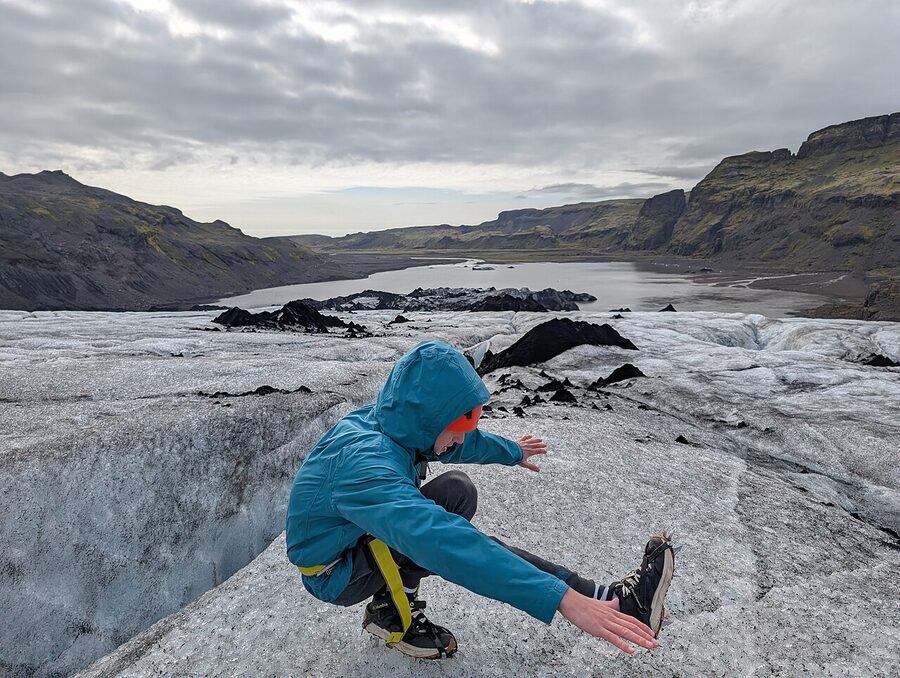
Glacier walk on Sólheimajökull (south coast). 13,500 to 15,500 ISK. Worth it. You need a guide because you need crampons and the ice changes weekly. Sólheimajökull is the closest glacier to Reykjavík and the cheapest tour. Save the more expensive Vatnajökull tour for a future trip.
Ice cave on Vatnajökull. 22,000 to 28,000 ISK. Worth it once, in November to March only. The natural blue ice caves only exist when the glacier is cold enough; nothing similar exists anywhere else in Europe. Don’t book the “anytime” caves which are usually man-made tunnels in the wrong colour of ice.
Snorkelling at Silfra. 21,000 ISK. Worth it. The fissure between the North American and Eurasian plates, in 2-degree water visible to 100 metres, in a drysuit. Don’t pay extra to dive instead of snorkel; the visibility is the same and the snorkel route is faster.
Whale watching from Reykjavík. 13,500 ISK. Skip. Whale watching from Húsavík: 12,500 ISK. Worth it. The Húsavík bay is the best whale-watching water in Europe; Reykjavík’s harbour boats often turn up nothing.
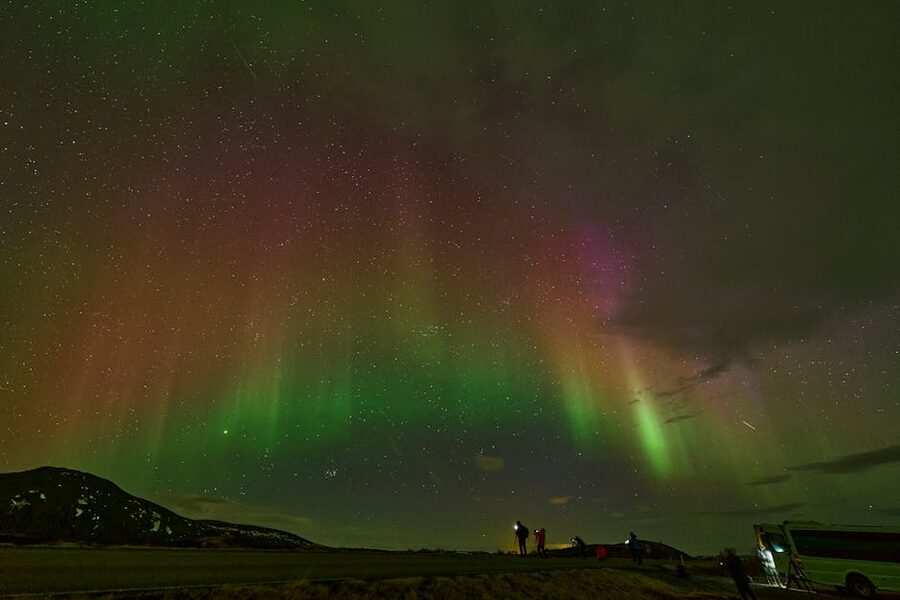
Northern Lights bus tour from Reykjavík. 9,000 to 12,000 ISK. Skip if you have a car; drive yourself out of the city to a dark spot (the Reykjanes peninsula, Þingvellir, anywhere up Hvalfjörður). The aurora isn’t on a schedule; the bus drives where the cloud forecast says, and you can do the same with the same forecast on your phone. The free Veðurstofan aurora map is what the tour buses use. Worth it if you’re in Reykjavík for one night and the cloud cover is dense over the city; the buses chase 60 km in any direction. For the deeper question of when and where to actually see the lights in Iceland, see the northern lights in Iceland guide.
Golden Circle bus tour. 12,000 to 15,000 ISK. Skip if you have a car; the loop (Þingvellir, Geysir, Gullfoss) is 230 km of empty road, four hours plus stops, and you can do it independently and stay as long as you want at each.
Horseback riding (typically near Reykjadalur or Skagafjörður). 14,000 to 18,000 ISK. Worth it if you’ve never sat on an Icelandic horse, because the tölt gait is unique and the horses are uniquely placid.
Reykjavík City Card (24h: 6,500 ISK; 48h: 9,500 ISK; 72h: 11,500 ISK). Includes entry to all seven Reykjavík thermal pools, all the city’s museums, the ferry to Viðey island, and unlimited Strætó bus travel within Reykjavík. Worth it if you’re going to do at least three pools and two museums in the time window. Otherwise individual entries are cheaper.
The “skip this” list
Things that are popular and probably not worth what they charge for what they deliver:
- The Lava Tunnel (Raufarhólshellir). 8,400 ISK for a 50-minute walk through a single lava tube. There are far better free lava fields to walk on Snæfellsnes.
- The Aurora Reykjavík museum. 1,440 ISK for a small visitor centre about a phenomenon you came to see in real life. Read the Wikipedia article instead.
- FlyOver Iceland. 5,990 ISK for a 25-minute flight-simulator film. The country itself is more impressive.
- Inside the Volcano (Þríhnúkagígur). 50,000 ISK. Yes, you go down inside an extinct volcano. Yes, it’s unique. No, it isn’t worth €340 for 90 minutes.
- The dedicated Northern Lights “wake-up call” hotel package. The aurora is free everywhere outside the city.
Camping, the campervan question, and where to actually sleep cheaply
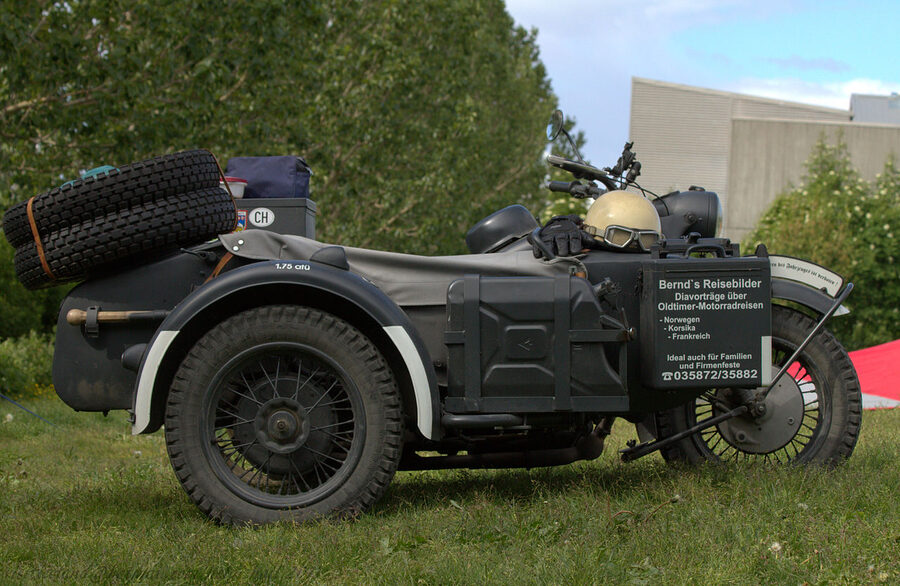
Camping in Iceland is the cheapest way to sleep, with caveats. The big one: wild camping has been illegal since 2015. You must use designated campsites or have explicit permission from the landowner. Designated sites cost 1,500 to 2,500 ISK per adult per night, plus a 400 ISK municipal tax in some regions. Most include a kitchen building (a hut with hobs, kettles, a sink, sometimes a fridge) and basic showers (some pay-per-minute, around 200 ISK for five minutes).
The Iceland Camping Card at €179 (~25,000 ISK) covers two adults and up to four children for 28 nights at any of 35-plus participating sites. Worth it if you’re doing two-plus weeks in summer and willing to choose your route around the participating list. Skip it for shorter trips.
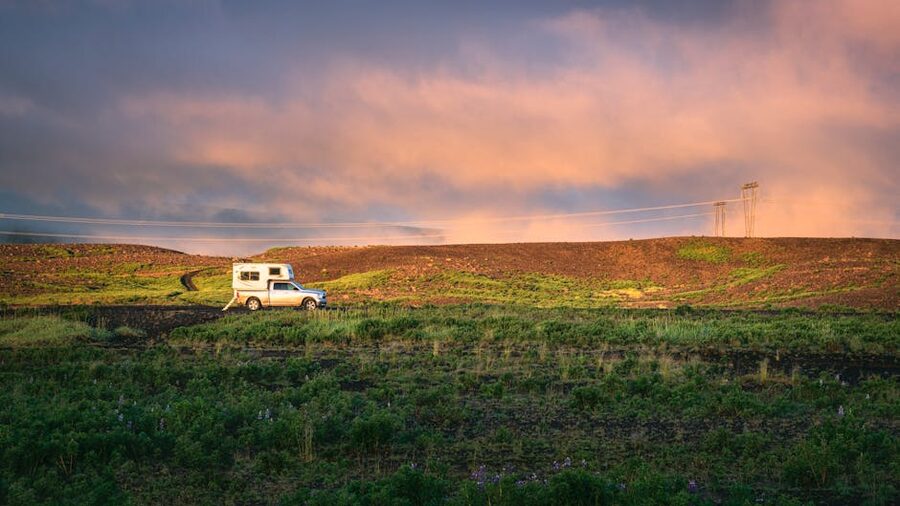
The campervan question, honestly: a two-person camper in summer rents for 17,000 to 22,000 ISK per night, against 12,000 ISK for a small petrol car plus 2,500 ISK each at a tent campsite (10,000 ISK total for two). The campervan is more flexible and you don’t have to pitch in the rain, but you still pay the campsite fee for the parking space (the same 1,500 to 2,500 ISK per person). The math only works if you’d otherwise be paying for guesthouses every night. If you’re already planning to camp, get the small petrol car and the tent.
The FlyBus question
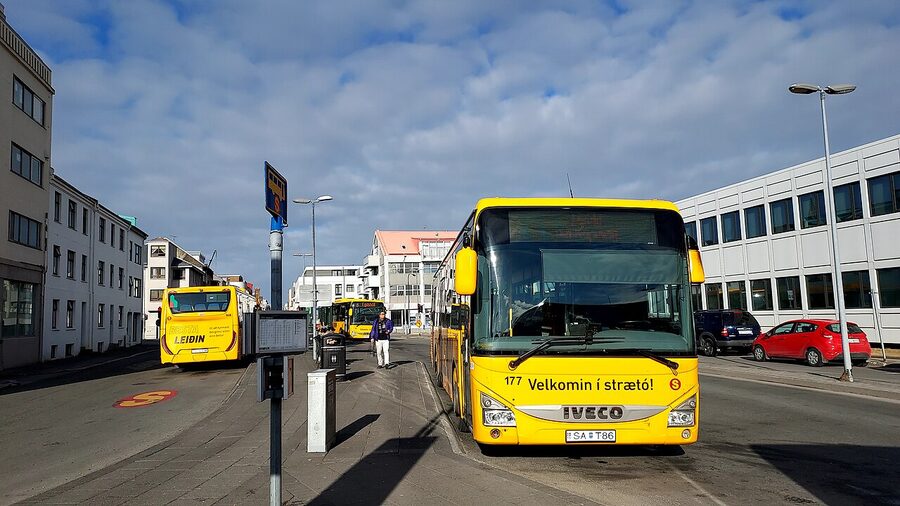
Keflavík airport is 50 km from Reykjavík. The four ways from the airport to the city:
- FlyBus (Reykjavík Excursions): 4,499 ISK one way, 8,499 ISK return. Drops at BSÍ coach station, where they put you on a smaller shuttle to your specific hotel for a few hundred ISK extra.
- Airport Direct: 4,400 ISK one way. Drops at the same BSÍ.
- Strætó bus #55: 1,960 ISK one way, the public bus. Same route, takes 75 minutes against the FlyBus’s 50, drops you in Mjódd in the suburbs from where you change to a Strætó city bus.
- Taxi: 18,500 to 22,000 ISK fixed one-way fare for up to four passengers. Splits between four to a per-person price below the FlyBus.
- Rental car from the airport itself: free shuttle from terminal to rental, then drive yourself.
The right answer depends on group size and arrival hours. Solo or as a couple, take the FlyBus on arrival because Strætó’s #55 doesn’t run after 22:30 and you’ll often land later. As a group of three or four, taxi-share. With a rental car booked anyway, just collect the car and drive in (the road is straightforward; the rental shuttle is free). Dan from Dan Flying Solo’s framing of the FlyBus as “skip and use the public bus” is true for a daytime arrival on a budget but false at any other time; in practice the FlyBus is what you’ll take on the way in and a taxi or shuttle on the way out.
The shoulder-season trick
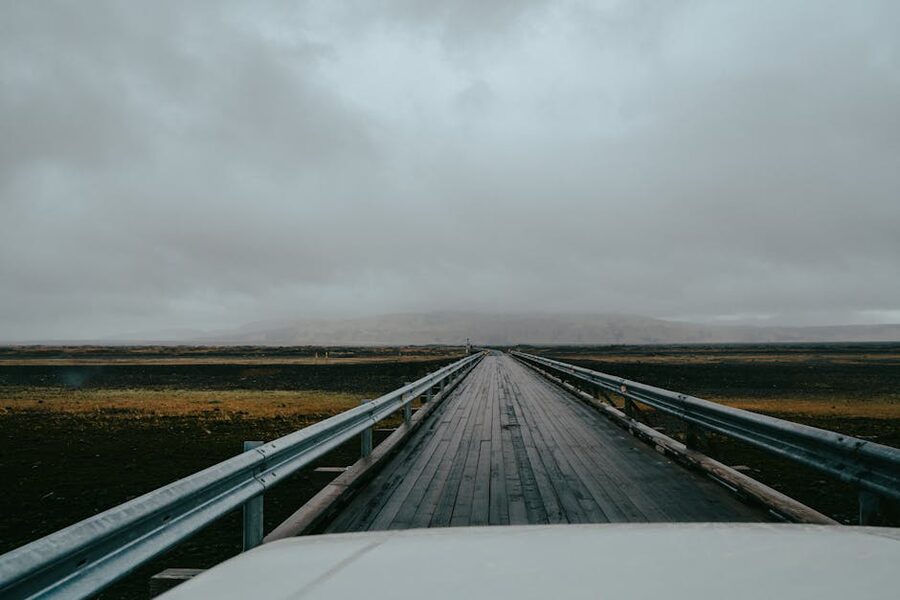
The single biggest saving in Iceland is timing. Iceland’s accommodation occupancy data (which the country publishes openly) shows the rooms sit at around 86% full in July, 50% full in May, 77% full in October. Hotels and guesthouses price accordingly, and a May or October booking against a July booking on the same room can drop 25% to 35% off the rate, with a similar drop on rental cars and a 10% to 20% drop on flights.
The five honest months for shoulder-season pricing:
- Late April to mid-May. Daylight 14 to 18 hours, weather variable but with sunny stretches, most attractions open, F-roads still closed but Ring Road clear. Cheapest weather window with full daylight.
- Late September to mid-October. Aurora season starts, autumn colour, Ring Road still clear, F-roads close around mid-September. Cheapest aurora window.
- Mid-November (excluding the week before Christmas). Cheapest accommodation of the year, but daylight drops to four to five hours by early December. Doable for Reykjavík + Golden Circle only.
- Mid-January to late February. Aurora-season pricing rises again but you can still find deals on weekdays. Snow sometimes closes the Ring Road’s south coast (always check road.is).
- Early March. Snow still on the ground, daylight back up to 11 hours, prices still in the winter band. The single best winter month for value.
Avoid these specific weeks at all costs unless you’re actually here for them: the week before Christmas through 2 January (Christmas in Reykjavík is properly nice, but prices double); the August Bank Holiday weekend (locals book domestic trips); the Verslunarmannahelgi long weekend in early August; Þjóðhátíð weekend in the Westman Islands at the start of August (the entire south coast accommodation is gone). Iceland Airwaves week in early November also tightens Reykjavík hotel availability.
The Reykjavík City Card, decoded
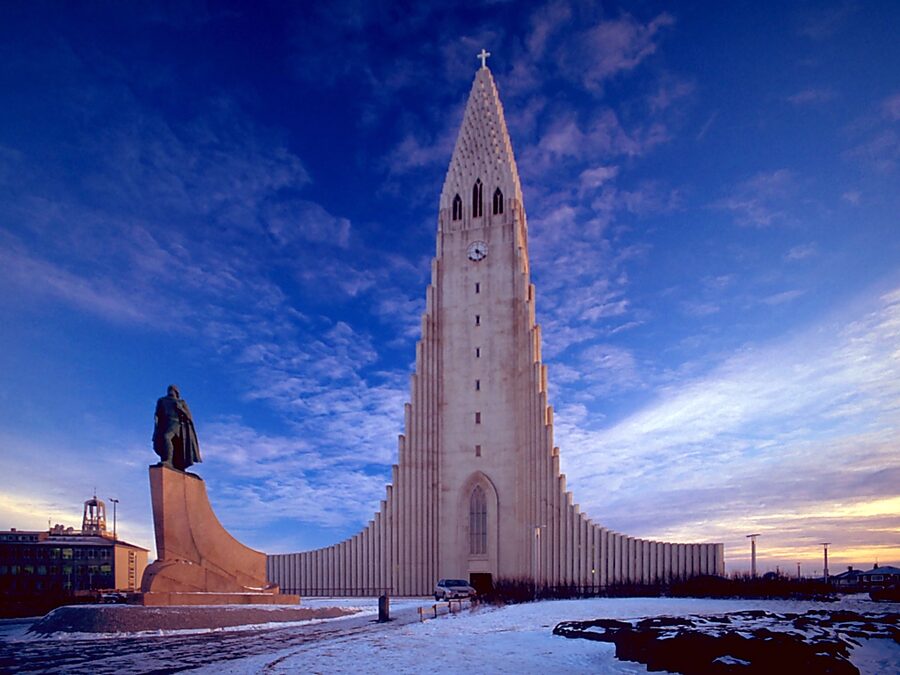
The card sounds expensive (6,500 ISK for 24 hours, 9,500 for 48, 11,500 for 72) until you do the maths. What it actually includes:
- All seven Reykjavík city pools (worth 1,330 ISK each).
- The Reykjavík City Museum (Settlement Exhibition + Saga Museum + Maritime Museum + Árbær Open Air Museum + Viðey Island, all five for one ticket worth 2,500 ISK).
- The Reykjavík Art Museum (three sites, worth 2,200 ISK).
- The National Gallery of Iceland (worth 2,200 ISK).
- The National Museum of Iceland (worth 3,000 ISK).
- The Family Park and Zoo (worth 1,180 ISK).
- The ferry to Viðey island (worth 2,200 ISK return).
- Unlimited Strætó travel within zone 1.
What it doesn’t include: Hallgrímskirkja’s tower lift (1,300 ISK, worth paying for), the Phallological Museum (3,000 ISK, worth it for the curiosity value), the Whales of Iceland exhibition (3,500 ISK, skip).
If you’re going to do two pools, two museums, and use the bus across town twice, the 24-hour card breaks even. Three pools, three museums, you’re properly ahead. For a one-day Reykjavík stop where you walk the harbour and Hallgrímskirkja and don’t go inside anything, skip it.
Where to spend less: where to base, what to do day-by-day
The single biggest spending decision after the flight and the rental is where you base. Three patterns work:
The Reykjavík-only week (3 to 5 days)
Base in a central hostel or guesthouse. Walk the city. Do Hallgrímskirkja, Harpa, the harbour, the National Museum. Do at least two of the city pools. Take a half-day to do the Reykjadalur hot-river hike (45 minutes by bus or rental). Take a full day to do the Golden Circle independently or by tour. Take a full day to do the south coast as far as Skógafoss (independent rental, return same day). Optional: a single half-day at a thermal spa (Sky Lagoon if you want the ritual, Hvammsvík if you want quiet). Cost: under €600 per person for four nights at the under-€100-a-day bracket, comfortably under €1,000 at the €150-a-day bracket. The full Reykjavík city pillar lives at the Reykjavík city guide.
The seven-day Snæfellsnes loop
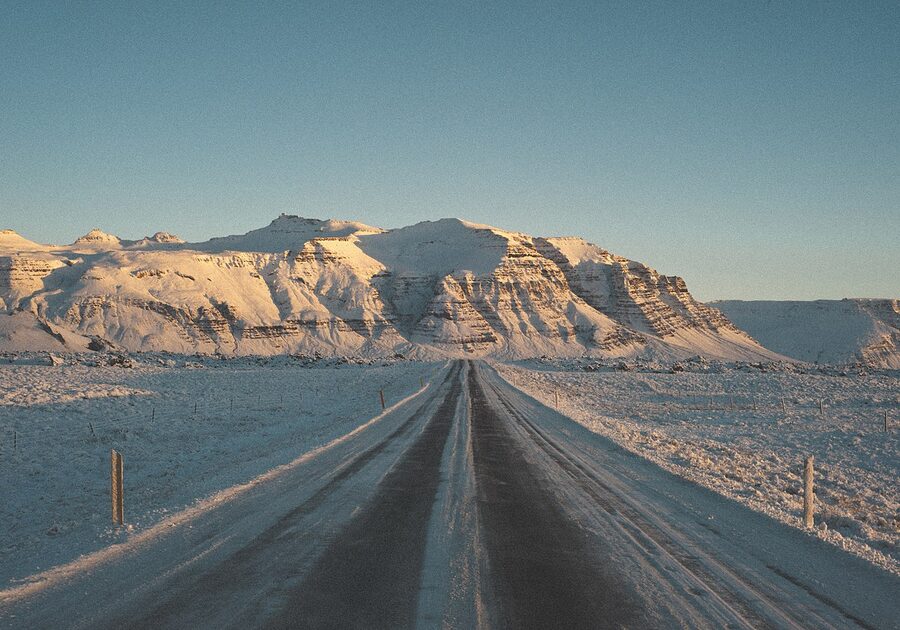
Three nights in Reykjavík, three nights based in Stykkishólmur or Grundarfjörður on Snæfellsnes, the loop and the south coast in three full days. It’s a fraction of the petrol of the Ring Road and you see two-thirds of what makes Iceland Iceland. The detailed loop is at the Snæfellsnes peninsula guide.
The Ring Road, on a budget (10 to 12 days)
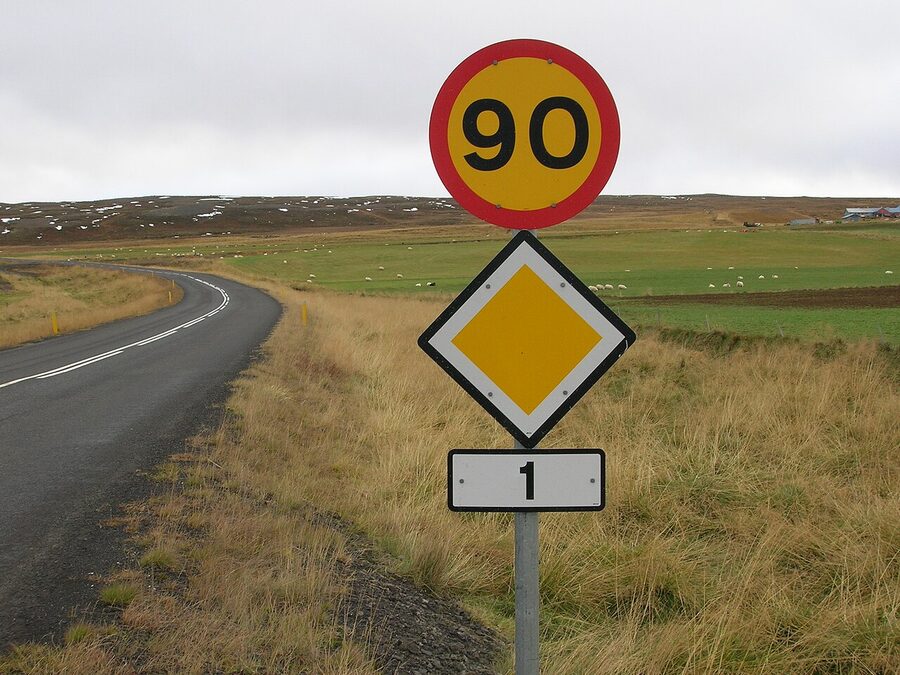
This works if you have the time. Twelve days, June to early September only (because of the daylight, not the weather; the road is open year-round but the south coast can be sketchy in winter), small petrol hatch, ten campsites or cheap guesthouses, almost everything self-catered. Realistic at €100 to €130 a day per person if you’re disciplined and split everything between two. The full Ring Road plan is at the Iceland Ring Road 7-day itinerary.
What to actually budget for a week, in numbers
For a real seven-day trip in late September or early May, two adults sharing, with a small petrol rental, half self-catering and half eating out at gas stations or modest restaurants, two paid attractions:
- Flights from a UK hub: £150 to £220 per person.
- Six nights of hostel doubles or budget guesthouses: 22,000 ISK per night for two = 132,000 ISK total = €910, or €76 per person per night.
- Seven days of small rental car: 9,000 ISK × 7 = 63,000 ISK = €435, or €31 per person per day split.
- Petrol for ~1,400 km of driving: 25,000 ISK = €172, or €12 per person per day split.
- Groceries for seven days: 22,000 ISK total for two = €152.
- Five gas-station or hot-dog meals + two restaurant dinners + one decent restaurant dinner: 35,000 to 45,000 ISK per person = €240 to €310.
- Three public-pool entries + one paid lagoon + one glacier walk + parking fees: 30,000 to 40,000 ISK per person = €207 to €276.
Total per person: roughly €960 to €1,100 plus the flight. Compared to most “Iceland is impossible on a budget” rhetoric, this is a real number for a real week including a real activity programme. Doing it solo without a sharing partner adds about 25% to the bed and the car. Doing it in July adds another 30%. Doing it without the rental and using day-tour buses out of Reykjavík cuts about €200 but trades freedom for it.
The five rules that actually save money
Stripping out everything else, the five things that move the needle:
- Book the flight, the rental and the bed all at the same time, six to nine months out. Iceland’s room supply is small enough that prices are mostly set by remaining inventory; book early and you book against the year-old rate. Last-minute is the one place where Iceland actually punishes the unprepared.
- Travel in May, late September, or early March. Anything outside the high-season block. The single biggest line item in the budget responds to the date you choose.
- Hit Bónus on the first day. Not the airport shop, not the petrol-station shop, not the corner 10-11. The drive between the rental desk and your first hostel passes a Bónus; do the week’s shop on day one and the food line collapses by 60%.
- Do the public pools instead of the marketing lagoons. 1,330 ISK at Sundhöllin gives you the same 38-degree water as 12,990 ISK at the Blue Lagoon. The difference is what’s printed on the wall, and a tenth of the queue.
- Carry a refillable bottle and use the duty-free for any alcohol you want. The two cheapest, fastest budget moves in the country are also the easiest to remember.
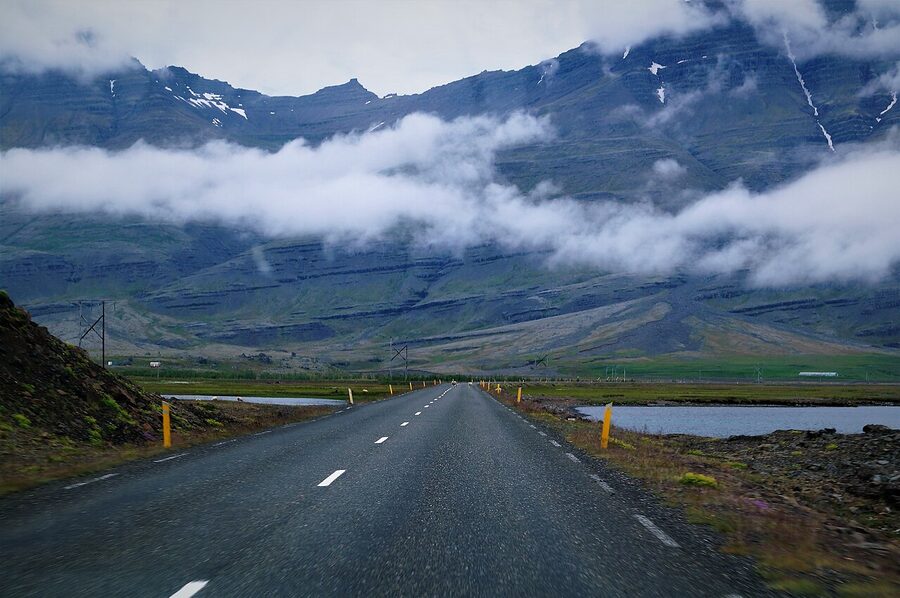
Iceland is the only Nordic country where the cost question genuinely shapes the trip. Stockholm or Copenhagen you can do affordably without thinking about it. Iceland needs the spreadsheet. Make the spreadsheet, hit Bónus, take the public pool, accept that the petrol won’t get cheaper between now and arrival, and book early. The country pays it back in landscape.
One last thing the marketing material doesn’t tell you. The shower-naked rule at the public pools is the price of admission. Pay it. Most travellers’ first-trip embarrassment turns into the second-trip “of course” and then into the thing you’ll miss most about the country when you get home. That’s the actual best value the country offers, and it costs less than a Reykjavík cup of coffee.

.jpg)
.jpg)


.jpg)


.jpg)


.jpg)


