Bornholm gets 1,847 hours of sunshine a year. Copenhagen, on a good year, manages 1,539. That 308-hour gap is roughly the amount of waking daylight in a Danish February, and it is the single fact that explains everything about why a third of all Danes have spent at least one childhood summer on this granite island in the middle of the Baltic. The light comes off the water and bounces back off whitewashed walls, and the kids you meet on the beach at Sandvig speak the soft, slightly rolled Bornholmsk dialect that the rest of Denmark teases them about gently. Their parents have been coming since the 1970s. The grandparents have a sommerhus inland near Aakirkeby that has stayed in the family since before the Soviets left.
I have been visiting Bornholm on and off for years, mostly out of season, occasionally in the middle of July. This is the practical guide I would have wanted on my first trip and have been refining ever since. It is not the official portal at bornholm.info, which has to flatter every operator on the island, and it is not the editorial blog version, which usually involves three nights at one hotel, half the smoked-herring stops missed, and the four medieval round churches lumped into a sentence. What you get here is a decision-led guide. Where to base. Which day-trip is worth the boat. How to handle Hammershus before the cruise coaches arrive. Which smokehouses still smoke their own herring over alder, which restaurants are worth the drive, and what to skip.
In This Article
- The thing about Bornholm
- Getting there: ferry, plane, or train-and-ferry from Sweden
- Where to base, in one decision
- Where to actually sleep, with verified Booking links
- In Allinge-Sandvig
- In Svaneke and the east coast
- In Rønne and Aakirkeby
- Hammershus before eleven, every time
- The four round churches, in one circuit
- Christiansø: the day trip nobody else explains properly
- The smoked-herring run
- Glass, ceramics, chocolate, and licorice: the design trail
- Restaurants worth the drive
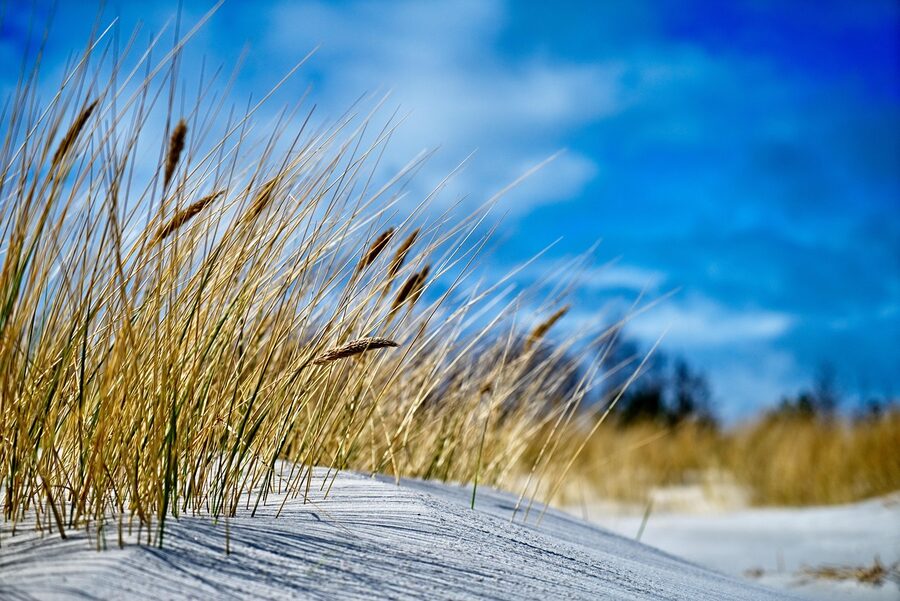
- Beaches
- Cliffs, forests, and the inland walks
- Cycling the island
- The other towns, briefly
- Getting around the island
- When to come, and when not to
- Practical bits
- What I would do with three, four, or five days
The thing about Bornholm
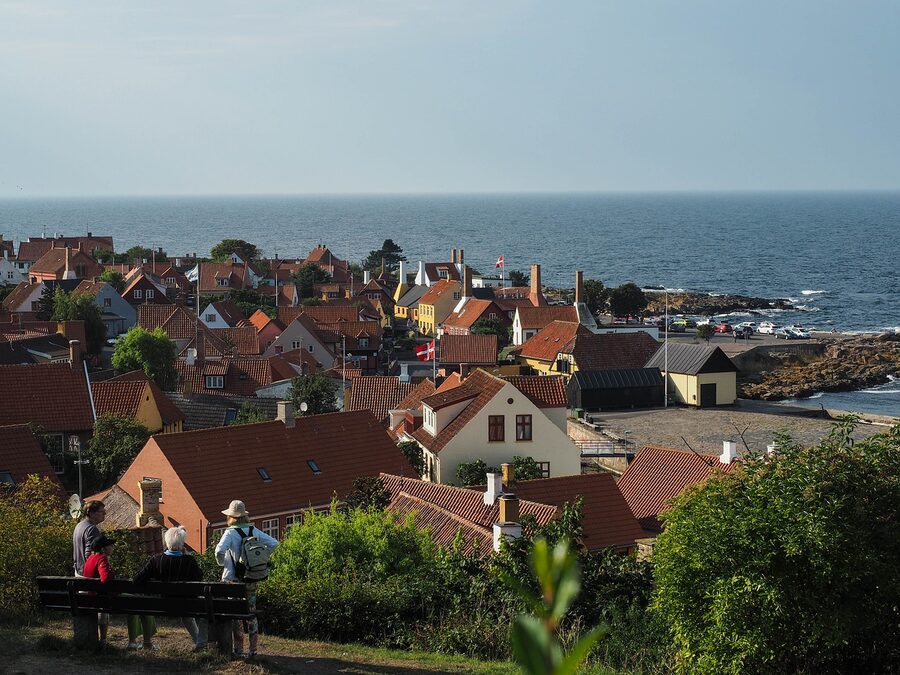
The geography is unusual. Bornholm sits 200 km east of Copenhagen and 37 km off the south coast of Sweden, closer to Sweden, Poland and Germany than to mainland Denmark. The bedrock is granite, the same granite Stockholm is built on, which gives the northern half the rugged, almost-Norwegian feel that nothing else in Denmark has. The south is sand: Dueodde and Balka have some of the finest white-sand beaches in northern Europe, the kind where Napoleon, the story goes, ordered an hourglass made for himself. The whole island is 588 square kilometres, has a population of about 39,500, and is governed as Bornholms Regionskommune, administratively bundled with the Capital Region of Copenhagen for political convenience.
Historically the island has been Danish almost continuously since the 1100s, with a brief Swedish occupation between the Roskilde Peace of 1658 and a local uprising the same year that put the Swedish commander into a grave in Rønne and Bornholm back under Danish rule. It was the last part of Denmark to be liberated in 1945, by Soviet bombing of Rønne and Nexø rather than by negotiation, and the last to be unoccupied: the Soviets stayed until April 1946. Both towns were rebuilt in a pragmatic 1940s style that explains why their old quarters feel patchier than Svaneke’s or Allinge’s, which were spared. Sweden tried to buy the island in 1658 and failed. The Danish state has had it ever since.
If you have not yet been to Denmark proper, this is not the place to start. The pillar of any first Denmark trip is Copenhagen, and the second-city Jutland counterweight is Aarhus. Bornholm is a third trip, or a long weekend tacked onto Copenhagen for travellers who already know they like Denmark and want to see what the Danes themselves do with summer.
Getting there: ferry, plane, or train-and-ferry from Sweden
There are three sensible ways onto the island, and a fourth that the websites mention but I would not recommend.
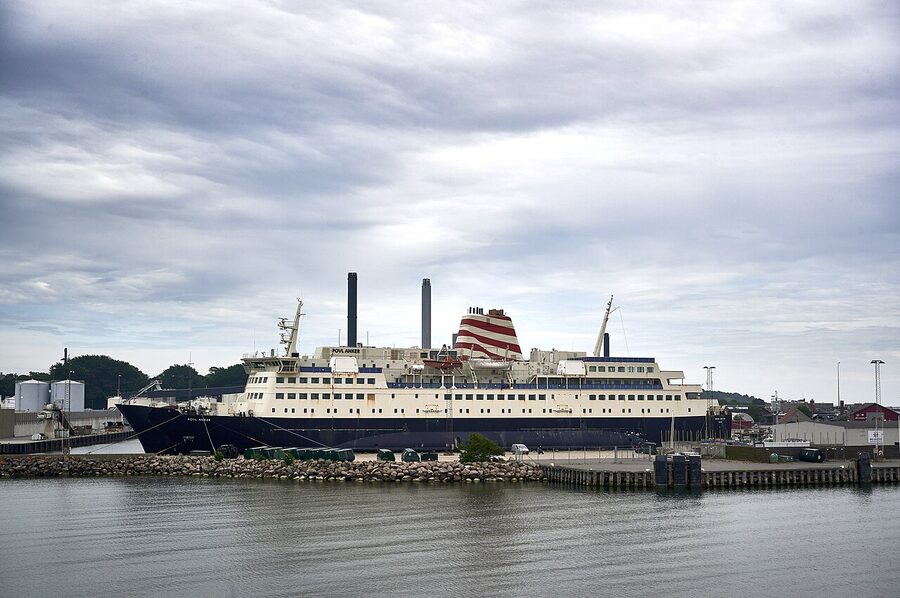
The fast ferry from Ystad is what most Danes do. It is operated by Bornholmslinjen, takes 1 hour 20 minutes, and runs year-round with up to ten sailings a day in summer. The route from Copenhagen is via Hovedbanegården to Ystad on a DSB train (about 3 hours, change at Malmö C and Malmö Hyllie), then a 5-minute walk from Ystad station to the ferry quay. DSB sells the combined ticket as a single Copenhagen-Ystad-Rønne fare from around 280 DKK (~€38) one-way if you book a few days ahead, more if you walk up. Foot passengers can board last, with cars boarding 30 to 45 minutes before sailing. If you are driving across the Øresund Bridge from Copenhagen, the Sound toll is currently 470 DKK (~€63) one-way, plus the ferry, plus your fuel; the train-and-ferry combo is the cheaper option for two people.
Direct flight from Copenhagen takes 35 minutes on Danish Air Transport (the airline still simply branded DAT). The Bornholm Airport code is RNN; the airport sits about 6 km south-east of Rønne. Up to six daily flights in summer, four in winter. Walk-up fares around 800 to 1,200 DKK (~€107 to €161) one-way, online a week ahead can drop to 450 DKK (~€60). It is the simplest option if you are short on time and not bringing a car, but you give up the slow, Baltic-light approach by sea, which I would argue is half the point.
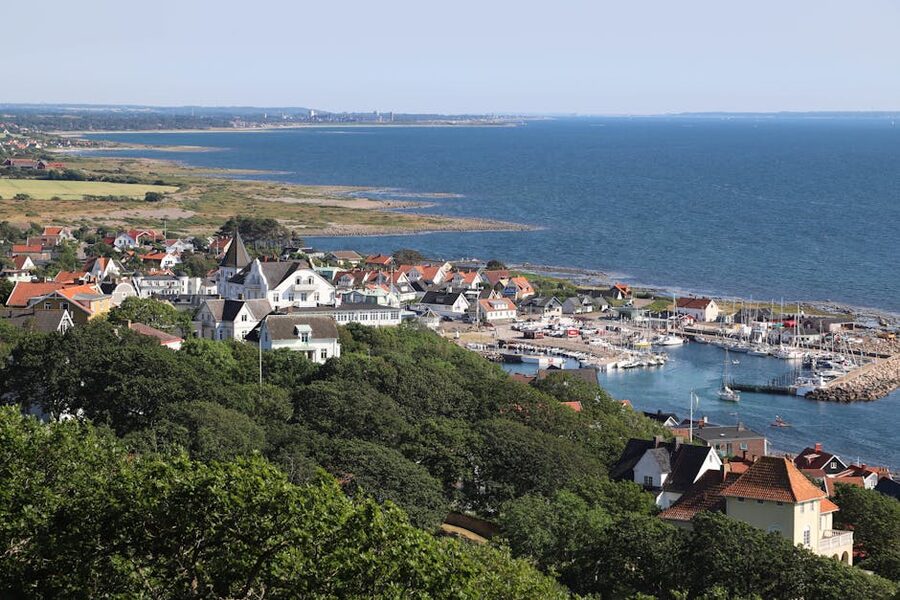
The slow ferry from Køge (south of Copenhagen) runs overnight and takes 5 hours 30 minutes. It costs less per car than the Ystad fast cat, sails from Mondays to Saturdays year-round, and is the easiest option if you have a car packed for a fortnight and don’t fancy the early Ystad train. It is also the option Danes choose when they want to drink on the boat. Cabins are bookable but small.
The Sassnitz ferry from Germany is the fourth option and is mostly used by Germans driving up from the autobahns; foot passengers from elsewhere will find the connections awkward and slow. Skip it unless you are already in Mecklenburg.
Anyone chaining Bornholm with another Nordic stop should look at the Sweden side of the equation. The Ystad ferry is a 45-minute train ride from Malmö C, which means a Stockholm-Bornholm trip on the back of three days in Stockholm works neatly: night train to Malmö, breakfast in town, then the train to Ystad and across. From the other end, ferry travellers chaining the Baltic countries can pair this with the Stockholm to Helsinki overnight ferry for a no-flying triangle that Danes routinely manage in their twenties.
Where to base, in one decision
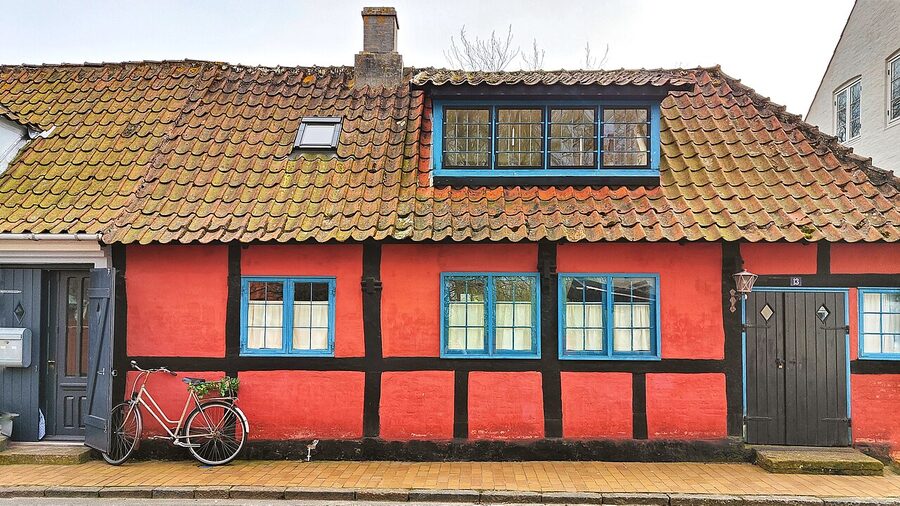
This is the single decision that will make or break a four-day trip, and most of the editorial guides I have read fudge it. Bornholm is small but not so small that town doesn’t matter. Driving from end to end is fine; commuting from Rønne to Allinge and back twice a day in July is not.
Allinge-Sandvig is the right answer if Hammershus, the north-coast cliffs, and the Christiansø day-trip are at the top of your list. The two villages have grown into one over the years and share a harbour. The Hammershus visitor centre is a 7-minute drive south, the Sandvig sand beach is on your doorstep, and the Folkemødet (Denmark’s annual political festival in mid-June) is the only week of the year you should not stay here unless you have booked a year in advance and want to see the prime minister buying ice cream.
Svaneke is the right answer if the four round churches, the smokehouses, the design and ceramics trail, and the south-east beaches at Balka and Dueodde are what you want. The town itself is the loveliest on the island, with three streets of timbered houses painted ochre and oxblood, a working harbour, and the Svaneke Bryghus brewery still in business. Officially Denmark’s smallest købstad (chartered market town). The east coast is sunnier, the cycling routes are flatter, and you are 20 minutes from Bornholm’s Michelin-starred restaurant Kadeau in Aakirkeby.
Gudhjem is the right answer if you want one base for everything and you are happy with hills. It sits exactly midway up the east coast, has a working harbour, the Oluf Høst museum (one of the underrated Danish painter-house museums), and the Bornholms Kunstmuseum is fifteen minutes north. The town is built on a slope and you will know it; bring shoes, not Crocs.
Rønne is the right answer only if you are arriving on the last fast cat of the day and leaving on the first one out the next morning. It is the largest town on the island (about 13,000 people), has the airport, the Køge ferry, and the bulk of the chain-hotel rooms, but it was bombed flat in May 1945 and the rebuild produced a town that is functional rather than pretty. The old quarter survived in patches and is worth an hour. Don’t anchor a holiday on it.
Nexø, Hasle, and Aakirkeby are the inland and southern alternatives. They have their charms, but they are towns to drive through, not to stay in.
Where to actually sleep, with verified Booking links
Hotels on Bornholm are not cheap and most are seasonal. Outside the May-to-September window you will find half of them closed or running a stripped-back winter menu. Below are my picks across the four bases I would seriously consider, with prices for two people in a double in mid-summer.
In Allinge-Sandvig
Hotel Nordlandet is the design-led pick on the north coast. A converted seaside hotel right on the rocks at Allinge harbour with 22 rooms, a respected modern Danish restaurant on site, and a small cocktail bar called Underbar that the Vogue Bornholm piece was not wrong to single out. Sea-facing doubles from around 2,400 DKK (~€322) in high summer, less in shoulder season. Worth the money for one or two nights, expensive for a week.
Stammershalle Badehotel is the alternative if you want the same coastal setting in a more period building. Built in 1911 by a German entrepreneur, the bright-yellow timber-framed hotel sits on the cliffs between Tejn and Gudhjem, has 18 rooms, a kitchen that ages well year on year, and that particular Danish badehotel atmosphere of polished oak floors and white linen at breakfast. Doubles from around 1,800 DKK (~€242). My pick for an anniversary trip.
Allinge Badehotel is the relaxed mid-range option and the one I have stayed at most often. It is right on the shore in Allinge proper, has a private dock for swimming, and rooms are simple in the blue-and-white seaside way Danish coastal hotels do well. Doubles from around 1,400 DKK (~€188). Breakfast is included and is not an apology.
Pension Slægtsgården is the most charming budget option I know in the area. A family-run guesthouse with seven rooms in a half-timbered farmhouse five minutes from Sandvig beach. Doubles from around 950 DKK (~€128) including a homemade Danish breakfast that is one of the small reasons people keep coming back. Cash and card both fine.
In Svaneke and the east coast
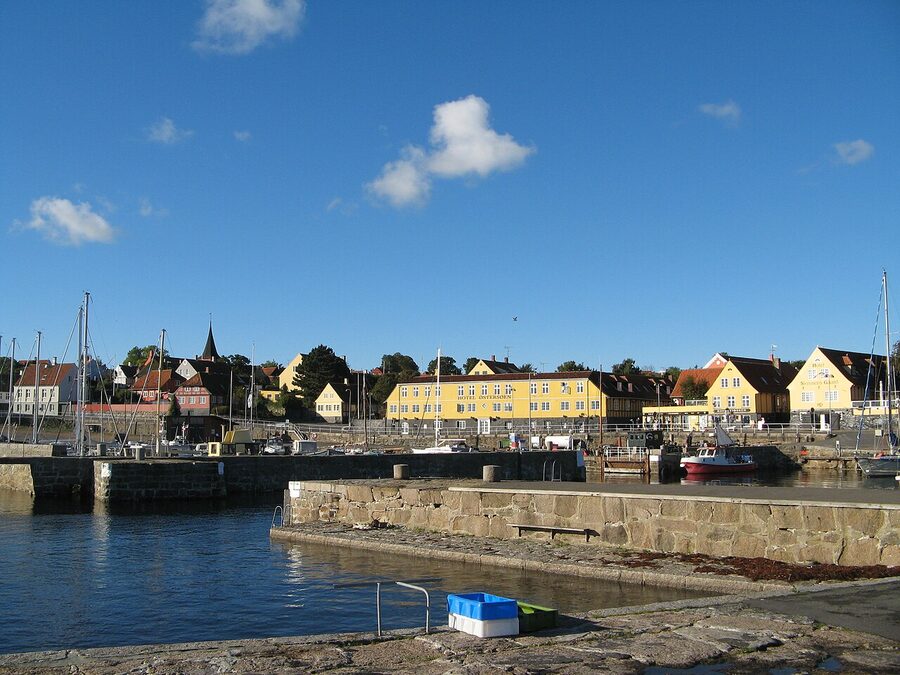
Hotel Siemsens Gaard is the obvious pick: a 17th-century merchant’s house at Svaneke harbour with 49 rooms across several buildings, an arcaded courtyard, and a kitchen that does proper Danish lunches. Sea-view doubles from around 1,750 DKK (~€235). Some of the rooms in the older wings are small and have low beams; ask for a renovated one in the harbour wing if that matters.
Hotel Balka Strand is the family-oriented alternative south of Svaneke at Balka beach: 113 rooms, indoor pool, kid-friendly restaurant, and a 100-metre walk through the dunes to one of the best swimming beaches in Denmark. Doubles from around 1,200 DKK (~€161). Less character than Siemsens Gaard, more practical.
In Rønne and Aakirkeby
Griffen Spahotel is the practical pick if you are arriving late, leaving early, and want a pool to swim away the ferry crossing. Big chain-style hotel right on the Rønne harbour with 142 rooms, a wellness floor, and views over the strait toward Sweden. Doubles from around 1,300 DKK (~€175). Not romantic, fine for the function.
Radisson Blu Fredensborg, the sister property, sits a few minutes south of Rønne above its own private cove. Has the better location and the better breakfast, lacks the harbour-view cool of Hotel Nordlandet. Doubles from around 1,600 DKK (~€215).
For a sommerhus rental on Bornholm, which is what most Danish families do, the local agency Feriepartner Bornholm has the deepest catalogue. Expect 4,500 to 9,000 DKK (~€605 to €1,210) a week for a four-person cottage in summer; less than half of that in May or September. Book by February for July.
Hammershus before eleven, every time
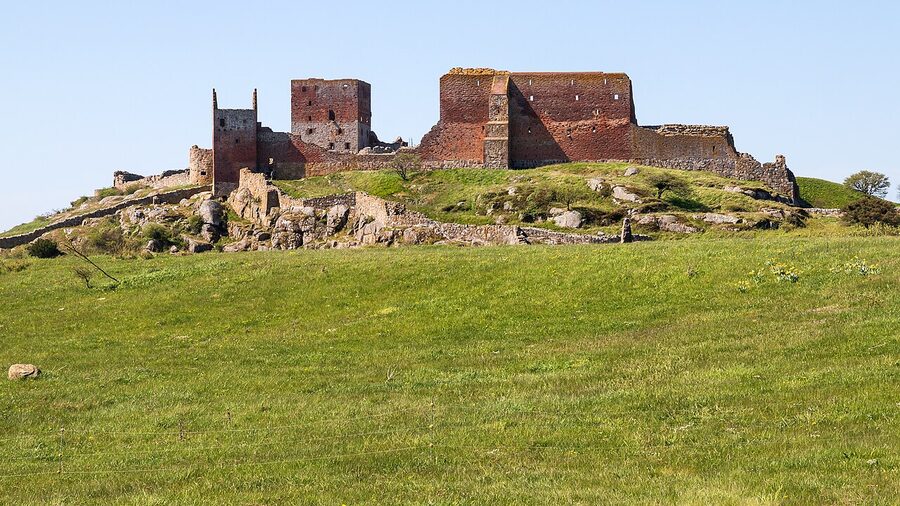
Hammershus is the largest medieval fortress ruin in Northern Europe and the single must-see on the island. The site sits 74 metres above the Baltic on a granite headland at the north-west tip, two kilometres of switchback road from the village of Sandvig. Construction began around 1255 under Archbishop Jakob Erlandsen of Lund, who used the labour of the local population and the granite under their feet. By the late medieval period the complex covered roughly 75,000 square metres, with thirteen distinct buildings, a defensive ring wall, a chapel, kitchens, and a brewhouse, all set inside the natural cliff defences on three sides.
The fortress was the seat of royal power on the island for nearly five hundred years and the site of two of the more dramatic episodes in the history of Northern European royalty. Christian II’s daughter Christina Rosenkrantz was held here as a political prisoner. Leonora Christina, the half-sister of Frederick III, was imprisoned in the Bluestone Tower with her husband Corfitz Ulfeldt for eighteen months in 1660 to 1661. Ulfeldt died in flight a few months after their release; Leonora Christina was later locked up in Copenhagen for another twenty-two years and wrote one of the great Danish memoirs of the 17th century, Jammers Minde, about it.
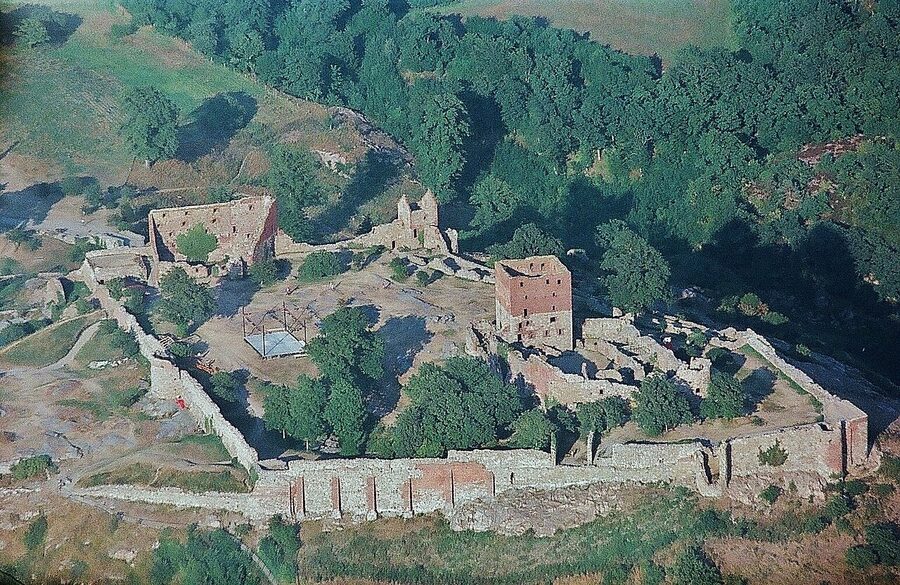
The site was abandoned by 1743 after a long, slow decline; from then until 1822 the locals carted off the granite to build their own houses, and you can still spot Hammershus stones in older walls in Sandvig and Allinge. The fortress was finally protected as a national monument in 1822, the first castle ruin in Denmark to be granted that status. The visitor centre opened in 2018: a low concrete and glass building tucked into the cliff, designed by Arkitema, with the on-site museum and an excellent café. Entry to the ruins is free; entry to the museum is 75 DKK (~€10) for adults, free for under-18s.
Here is the practical bit nobody else writes down. Cruise ships dock at Rønne about three days a week in summer, and the Hammershus coach tours leave the cruise terminal between 09:30 and 10:30. They reach the ruins between 10:45 and 11:30, and they leave again at 13:30 to make the return sailing. If you arrive at 09:00 you will have the site essentially to yourself for two hours. If you arrive at 11:30 you will share it with three Costa coaches, four MSC coaches, and the school groups. Open 24 hours; the visitor centre runs 10:00 to 17:00 in summer (closed Mondays in winter).
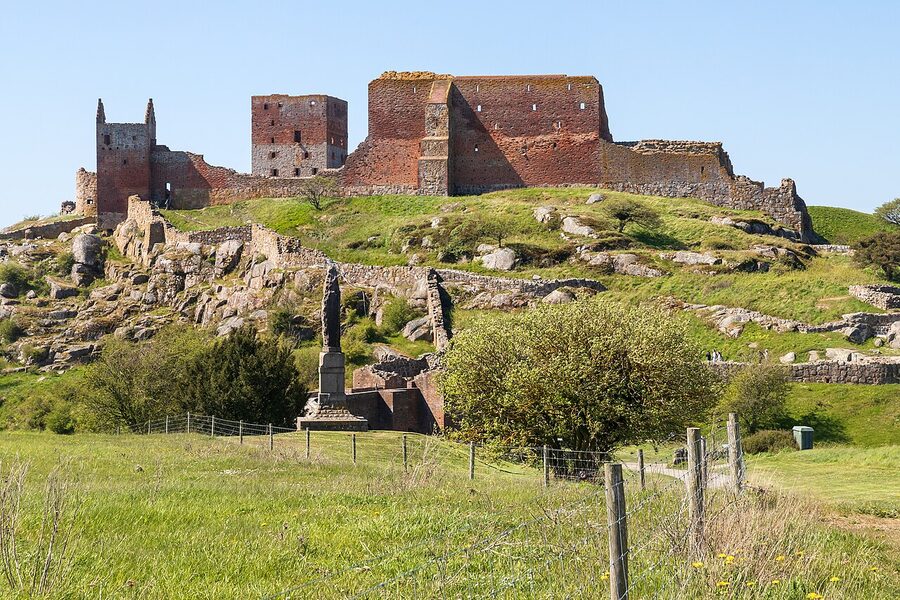
Plan two and a half hours for a thorough visit: forty minutes for the museum, ninety for the ruins themselves, and a coffee at the café before you leave. The walk down from the visitor centre to the gatehouse takes about ten minutes; the path is paved but steep, and there is a return loop that goes around the seaward side and back via the cliff path that is worth doing if the wind is gentle. From the very top of the Mantelturm (the central keep, accessible via a wooden staircase) you can see Sweden on a clear day. From the cliff path you look straight down 74 metres to the water, and on a still afternoon the seals at the base of the rocks bark loudly enough that you can hear them.
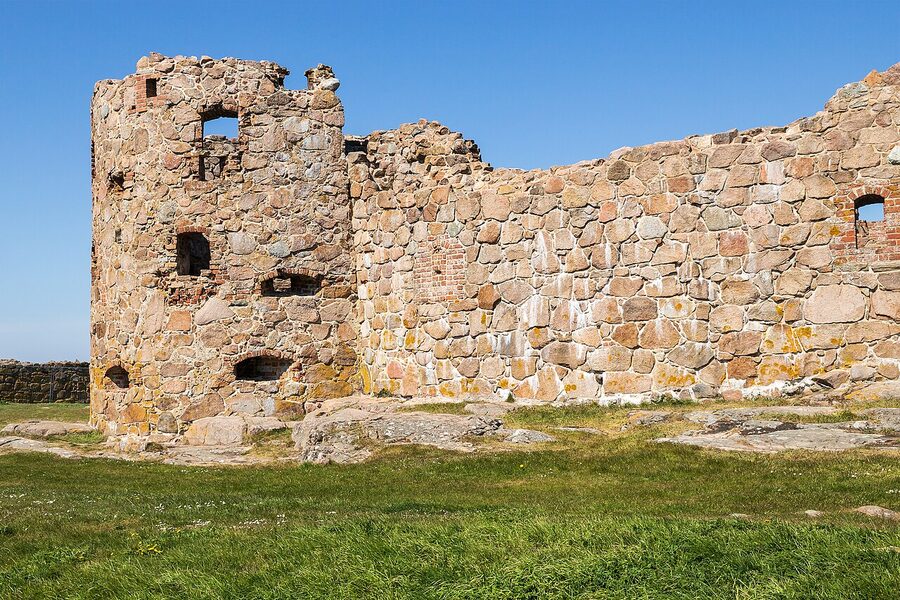
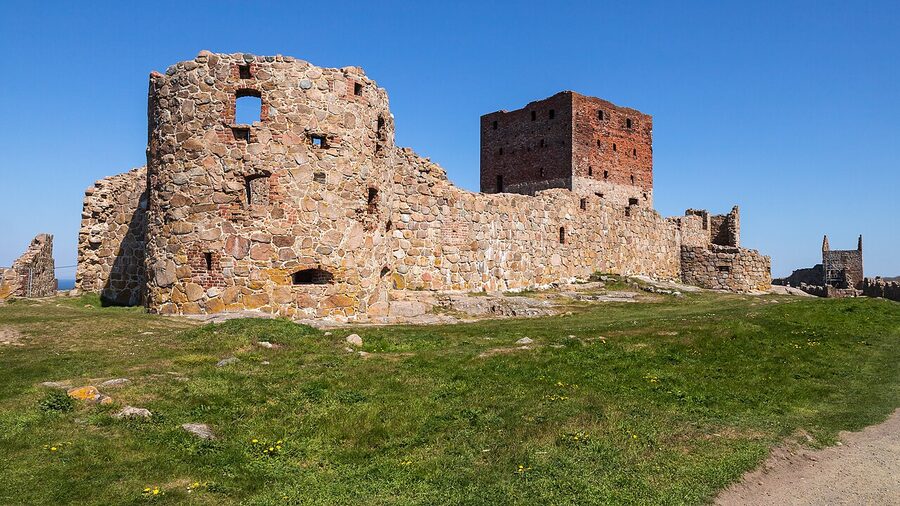
The walk back along the coast path to Sandvig is one of the best two-hour walks in Denmark. You drop down past the Madsebakke rock carvings (Bronze Age petroglyphs of ships and footprints, easy to miss; look for the small information board off the marked path), through the heath above Hammeren, past the Opal Lake (a flooded former granite quarry), and into Sandvig at sea level. Catch BAT bus 7 back to the visitor centre car park if you left a car there.
The four round churches, in one circuit
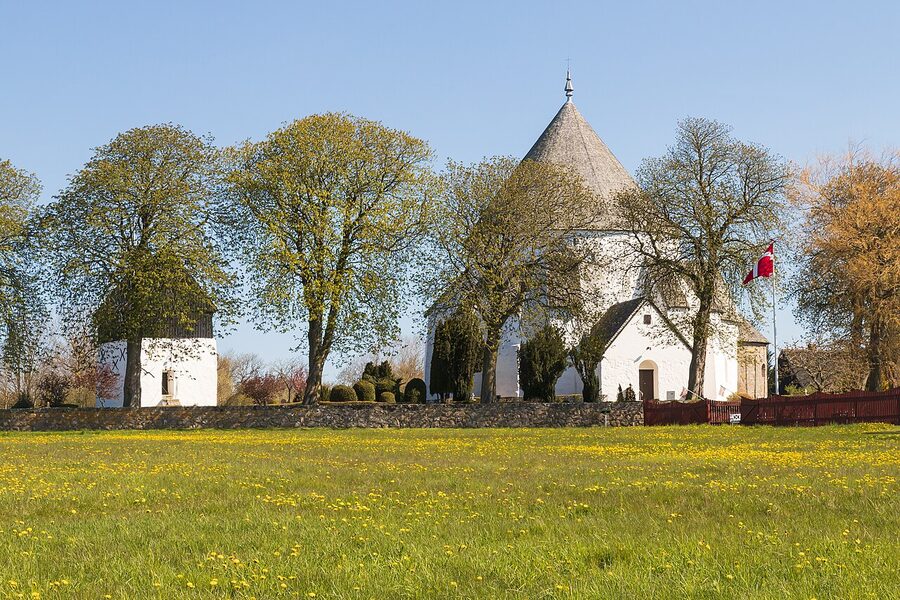
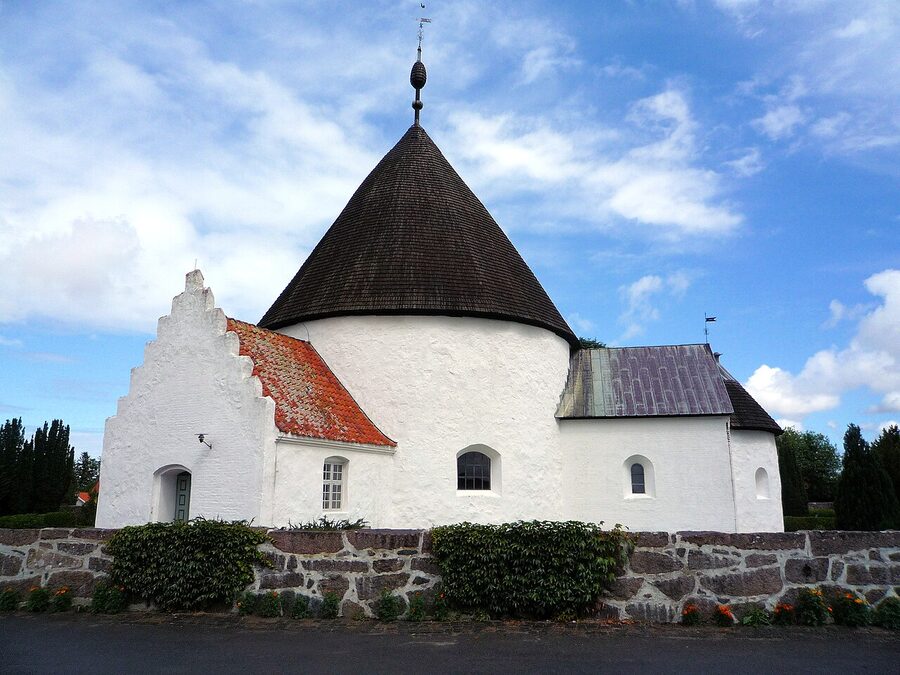
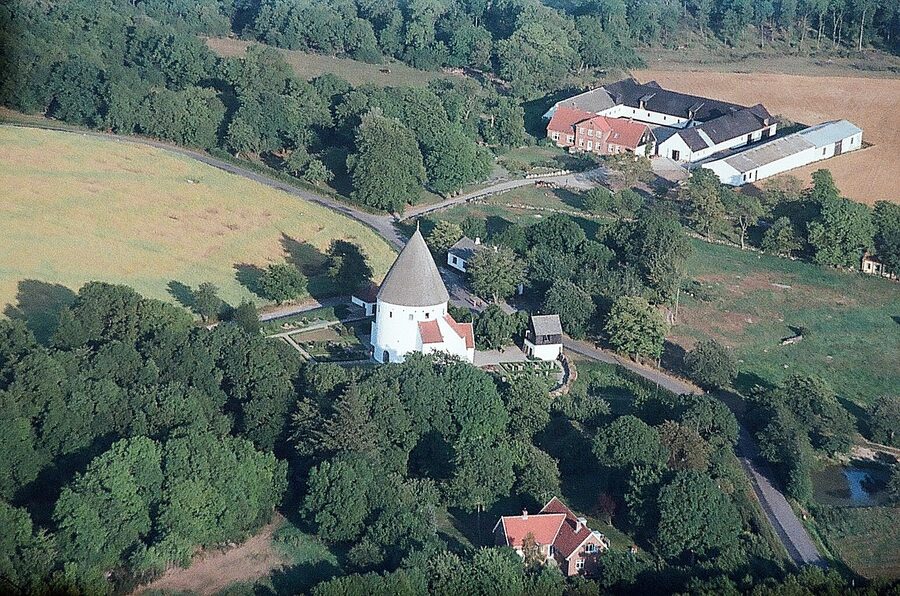
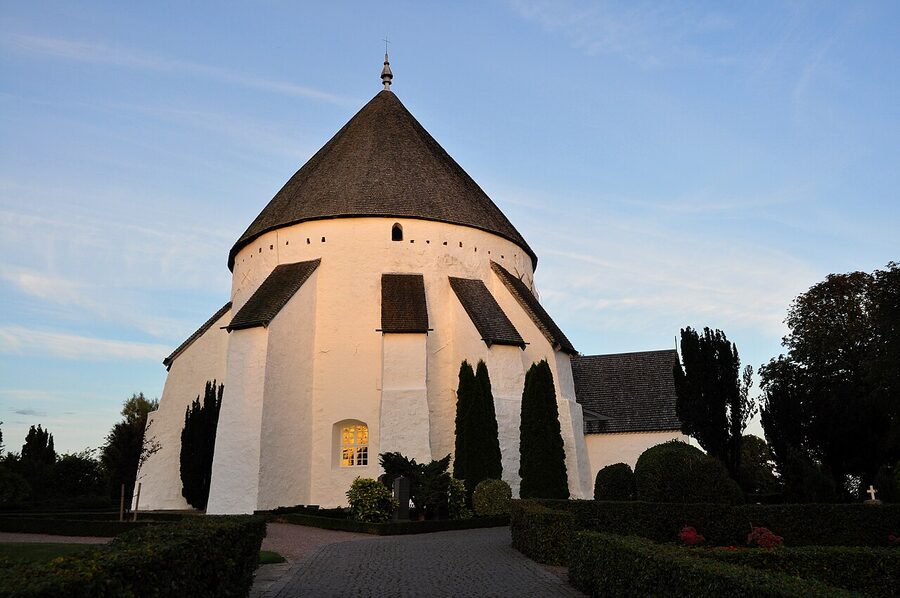
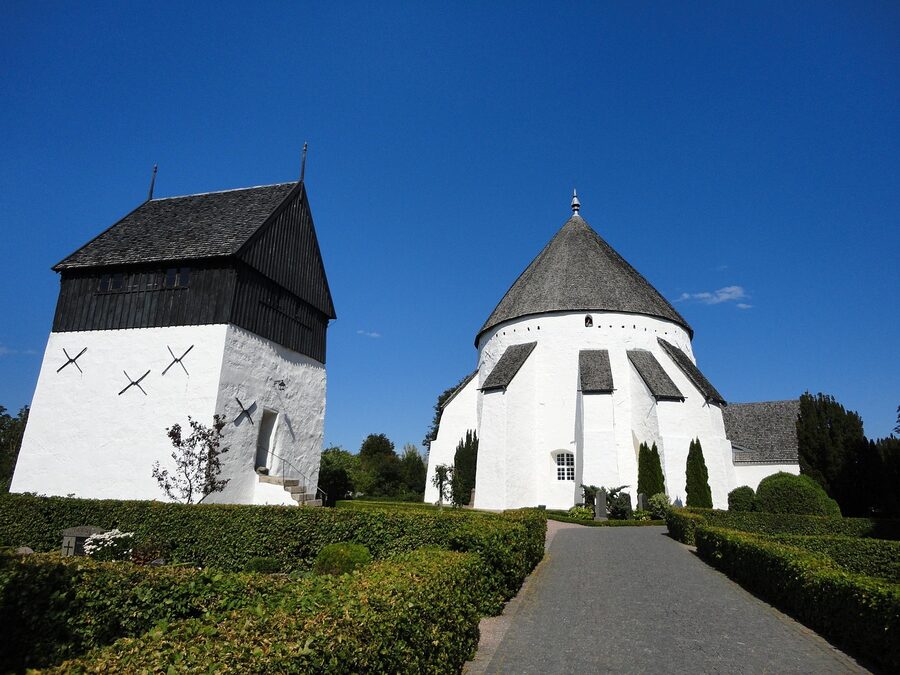
Bornholm has four medieval round churches: Østerlars, Nylars, Olsker, and Nyker. They were built in the 12th century, are unique to this island in Denmark (though the form is found in Sweden and on Gotland), and are the strongest physical evidence of the period when Bornholm was a frontier outpost in the early Christian Baltic. The popular romance is that the Knights Templar built them and may have hidden the Holy Grail somewhere on the island; the actual evidence is that the parish congregations built them, the Templars never had a recorded presence on Bornholm, and the round form is straightforwardly defensive. They are forts that happen to be churches.
The same load-bearing logic explains why the central pillar of Østerlars is hollow. The middle storey was a defensible refuge with arrow-slits; the population sheltered there during Wendish raids in the 1100s and 1200s. The exterior buttresses were added in the 18th century when the foundations began to subside, which is why Østerlars looks heavier than the others. Whitewashed cone roofs sit on three of the four; the fourth, Olsker, has a tall pointed spire that was added in the 14th century, making it the tallest of the round churches and the easiest to spot from a distance.
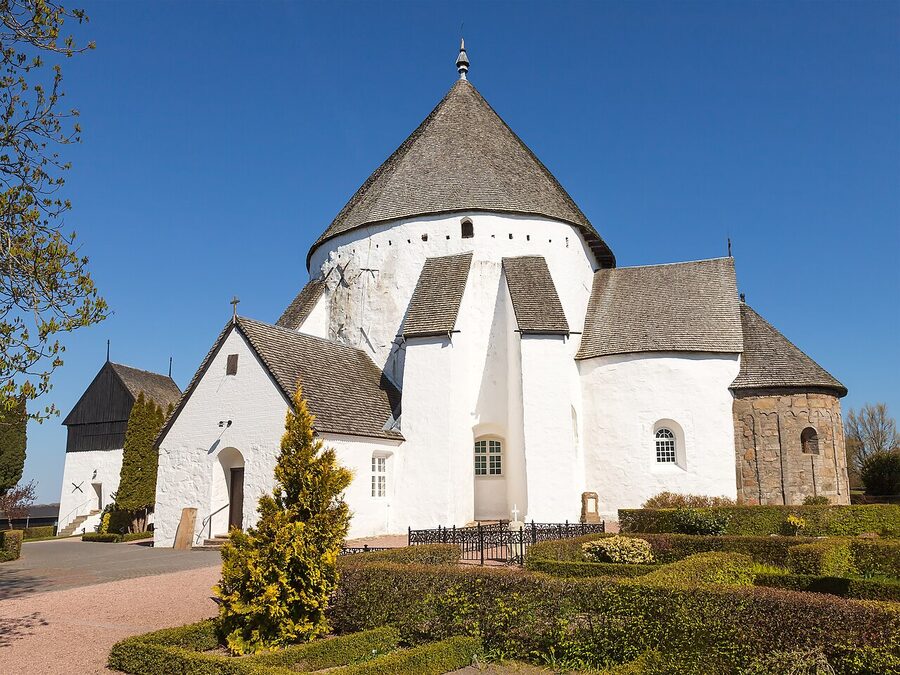
If you only see one, see Østerlars. The frescoes are the best preserved (a continuous narrative cycle across the inner pillar showing the life of Christ from Annunciation to Last Judgement, painted around 1350). The view across the rolling fields from the churchyard is the Bornholm landscape that the painters came for. The church is open Monday to Saturday 09:00 to 17:00 in summer, with a small entry fee. Sundays are reserved for services; you are welcome to attend but not to wander with a camera.
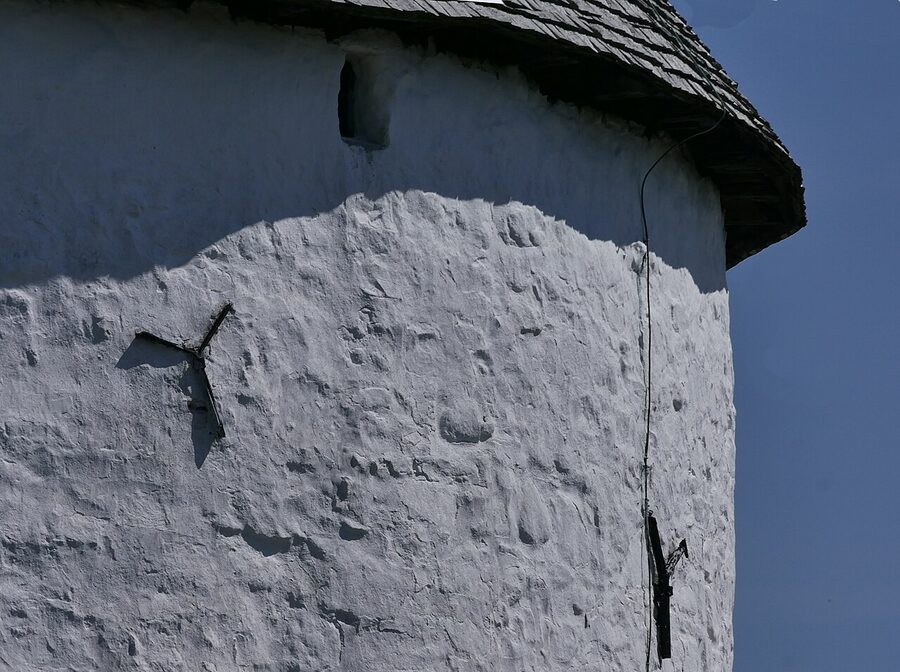
If you have the morning, do all four as a circuit. The drive takes roughly two hours for the loop, plus stops. From Svaneke or Gudhjem, the order I would do it: Østerlars first (10:00, before any tour buses arrive), then south-west to Nylars (smallest, easiest, best stand of runestones in the porch), then north-west to Nyker (the most utilitarian-looking of the four, single conical roof, simplest interior), then up to Olsker (tallest spire, also called Sankt Ols Kirke, sitting on a hilltop with the longest views). Park considerately, drop a coin in the donation box at each, and don’t loiter inside if a service is starting.
Christiansø: the day trip nobody else explains properly
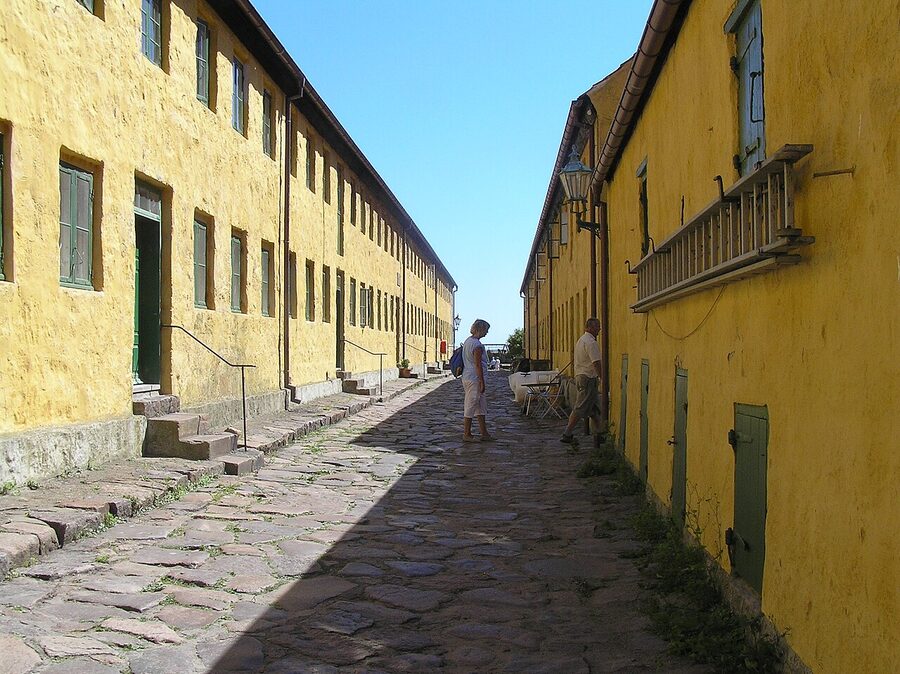
Off Bornholm’s east coast, 18 km out, lies the Ertholmene archipelago: a group of small granite islets, the easternmost point in Denmark. The two largest, Christiansø and Frederiksø, are inhabited and connected by a footbridge. They were fortified by Christian V in 1684 as a forward defensive position against the Swedes, and the Danish Defence Ministry has owned them ever since. About ninety people live there year-round; there is a school for the dozen or so children, a single grocery, two seasonal restaurants, and a guesthouse. No cars. No bicycles either, by ordinance. You arrive on the boat, you walk for the day, you leave on the same boat in the late afternoon.
This is the day-trip almost no English-language guide gets the timing right on. The boat is the M/S Ertholm, run by Christiansøfarten from Gudhjem. In summer (mid-May to mid-September) it sails twice daily on weekdays and once a day on weekends; the morning sailing leaves Gudhjem at 10:00, reaches Christiansø at 11:00, and the return sails from Christiansø at 16:00. That gives you five hours on the islets, which is exactly enough to walk the perimeter of Christiansø, cross the bridge to Frederiksø, climb the Lilletårn (Little Tower) for the view, eat lunch at the Christiansø Gæstgiveri (the inn), swim from one of the rock-cut bathing pools, and be back on the boat without rushing. Round-trip ticket: 280 DKK (~€38) for adults, 140 DKK (~€19) for children. Cash is fine, card preferred. Book online; the boat sells out on summer weekends.
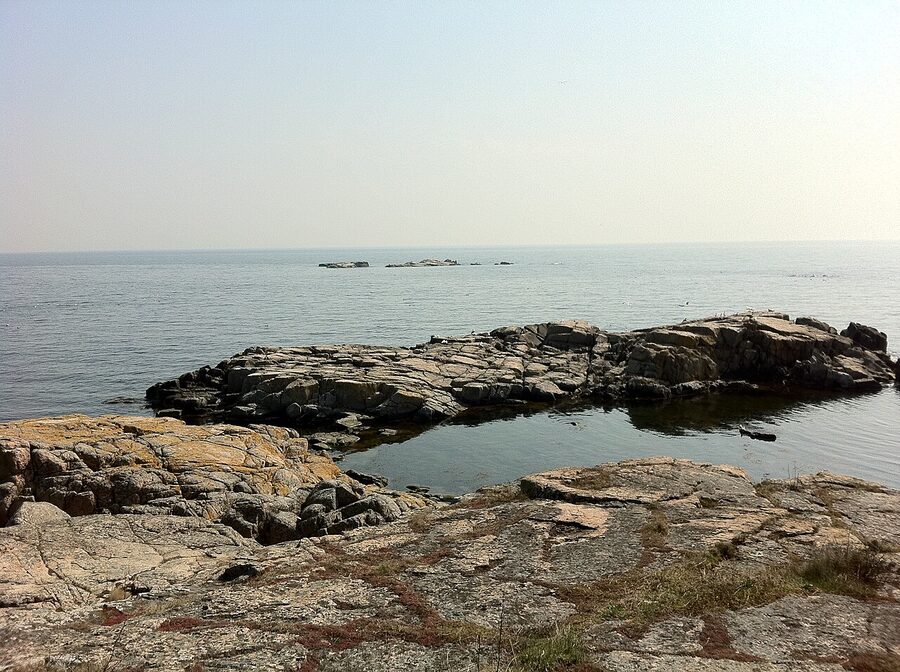
The reason the boat times matter is that you cannot stay if you have not booked the guesthouse, and the guesthouse has six rooms. Day-trippers must catch the 16:00 return; missing it is genuinely awkward. There is no harbour-master sympathy. Pack a sweater, even in July. The wind on the open water is colder than you expect and the Christiansø restaurants run out of bread by mid-afternoon when the day-trip crowds arrive.
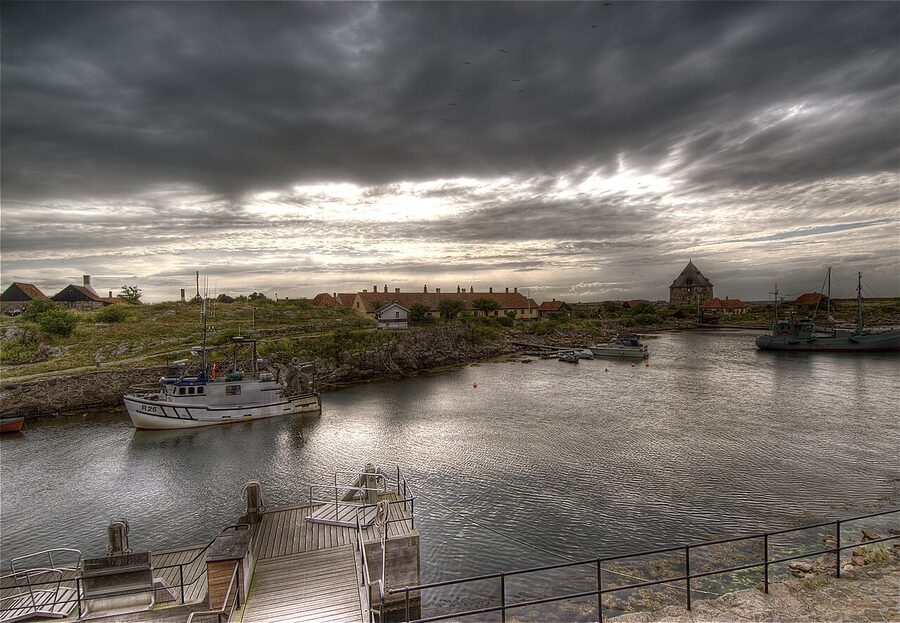
If you do stay overnight at Christiansø Gæstgiveri (book a year ahead in summer; doubles around 1,400 DKK / ~€188), you get the islet to yourself after 17:00 when the boat leaves and before 11:00 when the next one arrives. Sunset over the Baltic from the rocks at the eastern edge is the experience you remember. Bring all your medication, your wine if you drink it (the inn has a small selection but the prices reflect the supply chain), and good walking shoes. There is a small bird sanctuary on the smaller, uninhabited islets nearby and you can paddle past in a kayak rented in Gudhjem if the weather is right.
The smoked-herring run
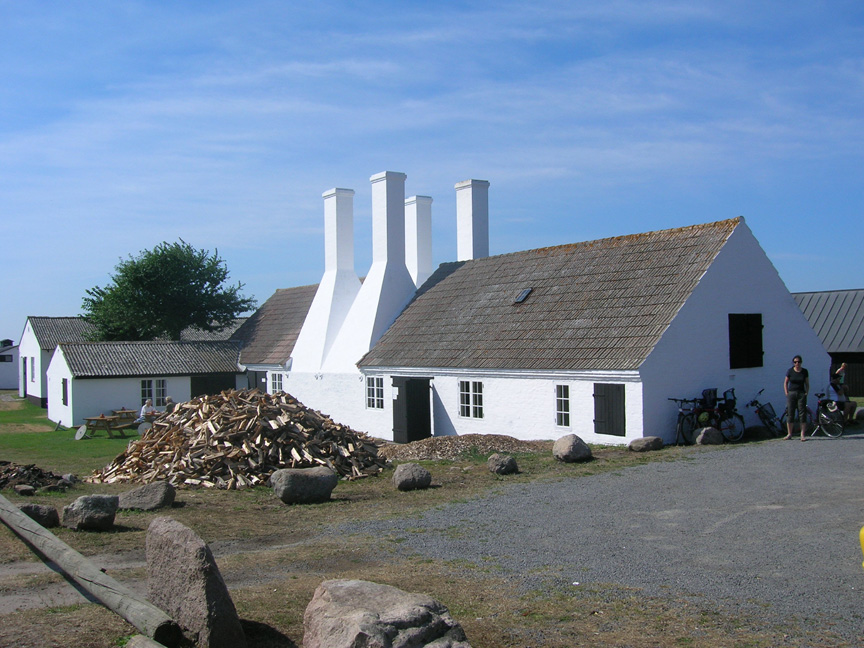
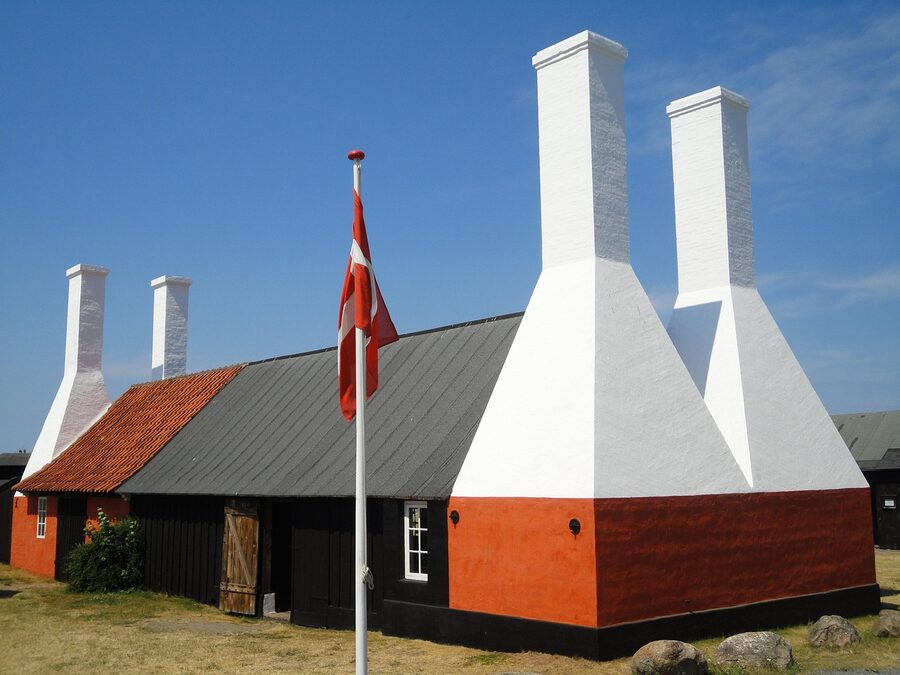
The smoked herring is the food the island grew up on and the first thing you should eat. The Catholic fast days of the medieval period drove the trade: salt-cured herring kept through the winter, smoked herring kept through a longer journey, and Bornholm’s sheltered harbours and dense alder forests provided the ingredients. By the late 1800s sixty smokehouses were operating along the coast; today sixteen still smoke fish on site. The whitewashed brick chimneys you see in every coastal village are the most photographed buildings on the island after the round churches.
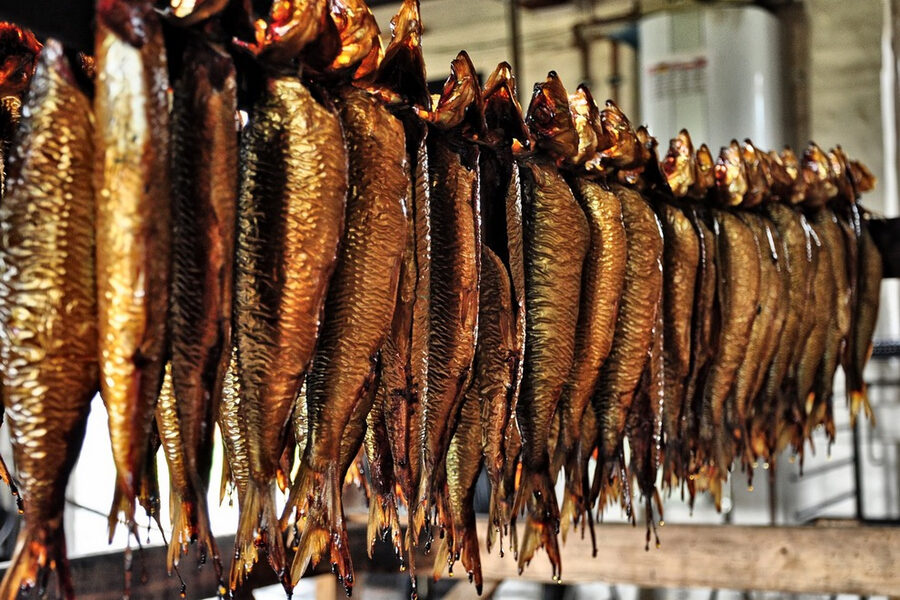
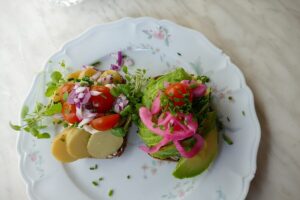
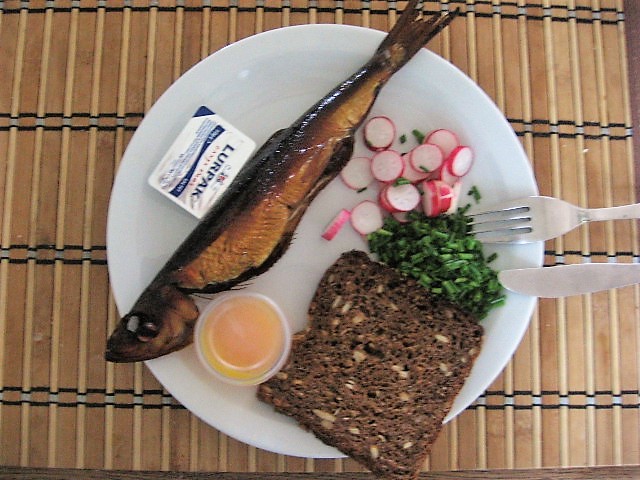
The order of eating is straightforward. You order a plate of warm-smoked herring (still alder-warm, ideally) on rye bread with raw white onion, capers, and a small mound of strong Danish mustard. You drink an unfiltered Bornholms beer with it, often a Svaneke Bryghus pilsner or the Penyllan barrel-aged saison if you can get hold of it. You skip the cheap pickled herring in jars; that’s not the point. The proper Bornholm dish, ordered by name, is Sol over Gudhjem: the smoked herring laid on rye, topped with a raw egg yolk, surrounded by chopped chives, radishes, and onion. The egg breaks over the fish when you cut into it. Tastes like nothing else, and is the only dish on the island that local Bornholmers will defend the spelling of in a fight.
The smokehouses to know:
Snogebæk Røgeri on the south-east coast is the one most Bornholmers will name first. They smoke their own herring on alder, run a no-bookings counter from 11:00, and the queue at the Sunday lunch is the local indicator of summer. Open mid-April to mid-October. About 110 DKK (~€15) for a herring plate, 145 DKK (~€20) for the egg-yolk version. Eat outside on the harbour wall.
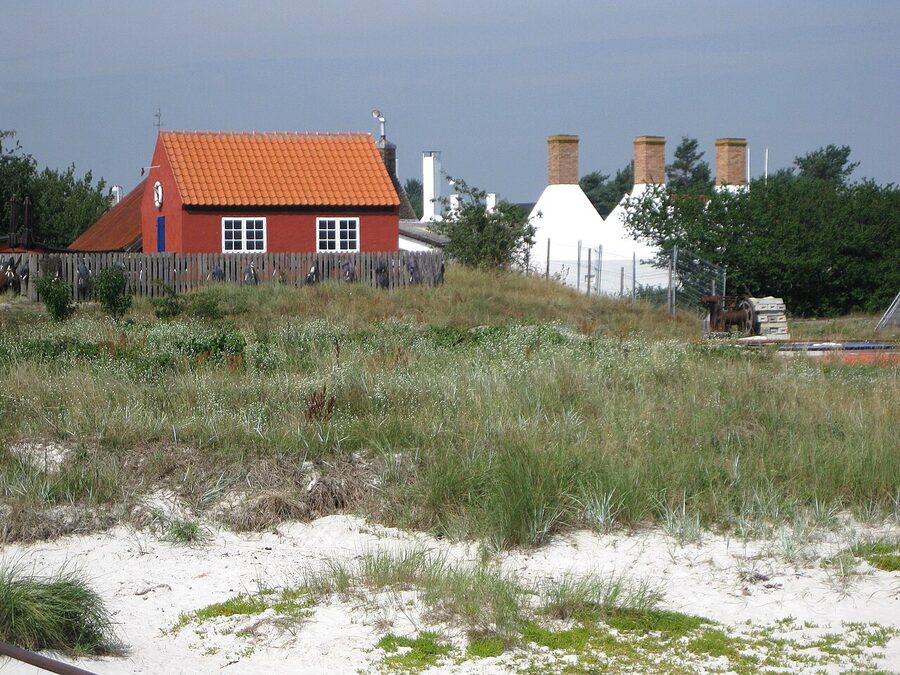
Hasle Røgeri on the west coast, in the village of Hasle, has been smoking herring since 1907 and is the only smokehouse on Bornholm with a UNESCO listing for the buildings themselves (added 2019, for the chimneys and the working smokehouse interiors). The fish is excellent and the building is worth the visit on its own. Slightly less crowded than Snogebæk because it is harder to drive to, easier to queue at.
Gudhjem Røgeri on the harbour is the historic one to do if you are basing in Gudhjem and want lunch right there. The buffet system is touristy but the smoked herring is properly done. Skip the cheaper pickled fish and stick to the warm herring.
Svaneke Røgeri, just outside Svaneke proper, is the one to go to if you have already had the others. It does the formal Sol over Gudhjem on a wooden plank with the right amount of pomp and the kitchen extends to other smoked fish: salmon, mackerel, and an excellent smoked eel when in season.
Skip the supermarket vacuum-packed Bornholmer Røget Sild. It is fine for a picnic but doesn’t taste like the real thing.
Glass, ceramics, chocolate, and licorice: the design trail
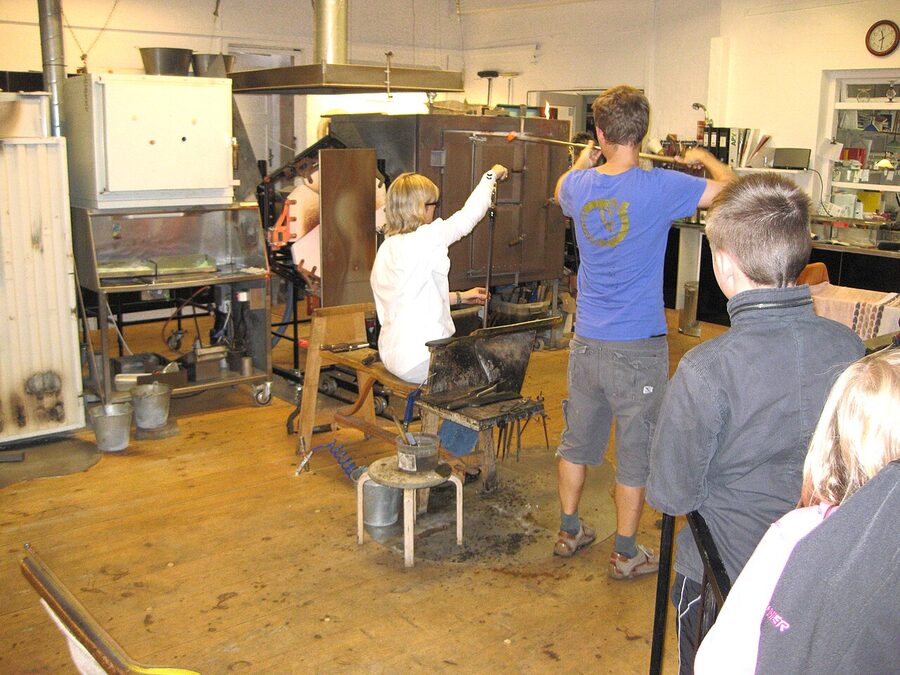
Bornholm has more makers per capita than anywhere else in Denmark, including Copenhagen. The reason is the school: Glas- og Keramikskolen Bornholm in Nexø, founded 1997, the only Danish craft school that runs full BA-level programmes in glass and ceramics. Graduates settle on the island, open studios, and feed back into the next generation. You can buy direct from the maker at most of them, and the prices are roughly half what the same pieces cost in Copenhagen design shops.
The names worth knowing:
Pernille Bülow Glas in Svaneke is the studio that put Bornholm glass on the international map. Pernille Bülow trained at Holmegaard, set up on Bornholm in 1986, and her sculptural pieces and pendant lights are now in the Designmuseum Danmark collection. The studio shop sits on the harbour at Brænderigænget; you can usually watch the glassblowers at work in the back. Open Monday to Saturday 10:00 to 17:00 in summer.
Baltic Sea Glass in Gudhjem (formally Hjorths Glasværksted, but everyone knows it as Baltic Sea Glass) is the second flagship. Owners Maibritt Jönsson and Pete Hunner started in 1979; their oceanic blue and turquoise pieces are what most Bornholmers buy as wedding gifts. Workshop visits run on the hour in summer, and the showroom is one of the few places in Denmark where you will see hand-blown vases in the 800 to 2,000 DKK (~€107 to €269) range that are genuinely worth the asking price.
Lakrids by Bülow is the licorice. Founded 2007 by Johan Bülow on Bornholm, the brand has gone international from a single shop in Aakirkeby to outlets in London, New York, and Stockholm. The original factory is on Klemensker Hovedgade and runs a tour Monday to Friday at 11:00 and 14:00 (book ahead, 95 DKK / ~€13 with sampling). The chocolate-covered licorice balls in coloured boxes are now everywhere; the salted licorice, which is Danish in a way the chocolate version isn’t, is the one to bring home. If you have not eaten serious Danish salt licorice before, start with the regular flavour, work up to the strong, and don’t try the extra-salt without warning.
Svaneke Bolcher on Storegade in Svaneke is the boiled-sweet shop where they pull and twist the candy in front of the counter. Touristy in the obvious way but the sweets themselves are made on the spot from beet sugar and natural flavourings. Liquorice, honey-aniseed, the Bornholmer mix that has dill and salt in it. About 60 DKK (~€8) for a bag, watch the kids’ faces when they realise the candy was a giant rope twenty seconds before.
Svaneke Chokoladeri, also on Storegade, makes its own chocolate from cocoa beans the owners source in small batches from Madagascar and Belize. Single-origin bars, sea-salt caramels, and a praline range that holds its own against any Copenhagen chocolatier. About 50 DKK (~€7) for a 70g bar.
Other studios worth a stop if your time is loose: Hjorths Fabrik in Rønne for ceramics (the historic factory, not just a shop, with a working museum on site, 95 DKK / ~€13), Bornholms Andelsmejeri in Klemensker for the local cheese (try the Bornholmer Sky cream cheese), and the wine-makers at Lille Gadegård in Aakirkeby, who run a working vineyard at 55 degrees north and produce a respectable rosé from solaris grapes. Yes, Bornholm has a vineyard.
Restaurants worth the drive
Bornholm has more good restaurants per capita than any Danish region outside Copenhagen, and a couple genuinely up there with the New Nordic flagship places on the mainland. The list below is what I have eaten at and what I would book for a future trip, with prices and verdicts.
Kadeau Bornholm in Aakirkeby is the headline. One Michelin star, two co-founders born on the island (Nicolai Nørregaard and Rasmus Kofoed), a kitchen that uses about ninety per cent Bornholm-grown or Bornholm-foraged ingredients across the menu. The dining room is a glass box on the cliffs at Sømarken, looking due south over the Baltic. Tasting menu only, around 2,400 DKK (~€322) for the long version, plus 1,400 DKK (~€188) for the wine pairing. Book six months ahead for July and August; quieter weekends in May or September are the best time to try. Worth the drive from anywhere on the island.
Stammershalle Badehotel restaurant on the north-east coast does serious New Nordic cooking in the dining room of the 1911 hotel. Three-course set menu around 750 DKK (~€101) with optional wine pairing. The locals eat here on anniversaries. Sea view, polished wood floors, the kind of place where the maître d’ will quietly correct your wine selection if you ask.
Hotel Nordlandet’s restaurant in Allinge, in the same building as the hotel, runs a four-course tasting around 850 DKK (~€114) and a shorter à la carte. The chef changes the menu fortnightly through summer, and it leans further toward seafood than Stammershalle does. Their lunch sandwiches are the best in Allinge.
Râzapâz in Rønne is the casual place that the Vogue piece on Bornholm namechecked, and which deserves the praise. Run by Patrick Hult, who spent over a decade at Noma and other Copenhagen fine-dining kitchens before coming home, it is a wine bar and small-plates restaurant that does the relaxed, no-clipboard version of New Nordic. Five-course menu around 650 DKK (~€87), à la carte plates 90 to 220 DKK (~€12 to €30) each. Natural-wine list. Open evenings Wednesday to Sunday in summer; book.
Nordbornholms Røgeri og Restaurant in Allinge does the polished version of a smoked-fish lunch. Order the Sol over Gudhjem here for the polished version (180 DKK / ~€24), then add the smoked-mackerel salad. Lunch only.
Madsen’s Madbar in Svaneke is the casual lunch / early dinner spot when you don’t want a tasting menu. Burgers, pulled pork, grilled fish, a kids’ menu that doesn’t insult the children. Around 180 DKK (~€24) for a main. Outdoor seating in summer; the indoor room is a converted shed.
Norresan in Gudhjem is the morning place: sourdough sandwiches, salads, soups, and excellent filter coffee in a small harbour café. Around 140 DKK (~€19) for a plate. Closed in winter.
Lucy’s Bakery in Nexø, run by Louise Kuhre who came back from Hong Kong and San Francisco to set up here, opens only on Saturdays and largely sells pre-orders. The Spandauers (Danish pastries) with rhubarb or wild plums, and the sourdough croissants, are the best baked goods on the island. Order ahead through her Instagram.
Hallegård at Aarsdale is the third-generation farm shop and butchery, with a small café-style restaurant attached on the way back from Svaneke. The Bornholmer pulled pork sandwich, the smoked sausage, and the homemade ice-cream cones are the order. Open Monday to Saturday 10:00 to 17:00.
Skip the harbour-front tourist traps in Rønne (the buffets near the ferry terminal are a sad approximation of Danish lunch). Skip the touristy “Viking restaurant” cosplay in Allinge, which is fine for kids and bad for adults. Skip any restaurant whose menu is in three languages with photographs.
Beaches
The south of Bornholm has the soft white sand, the north has the granite coves, and the east coast is in between. The beaches I would single out:
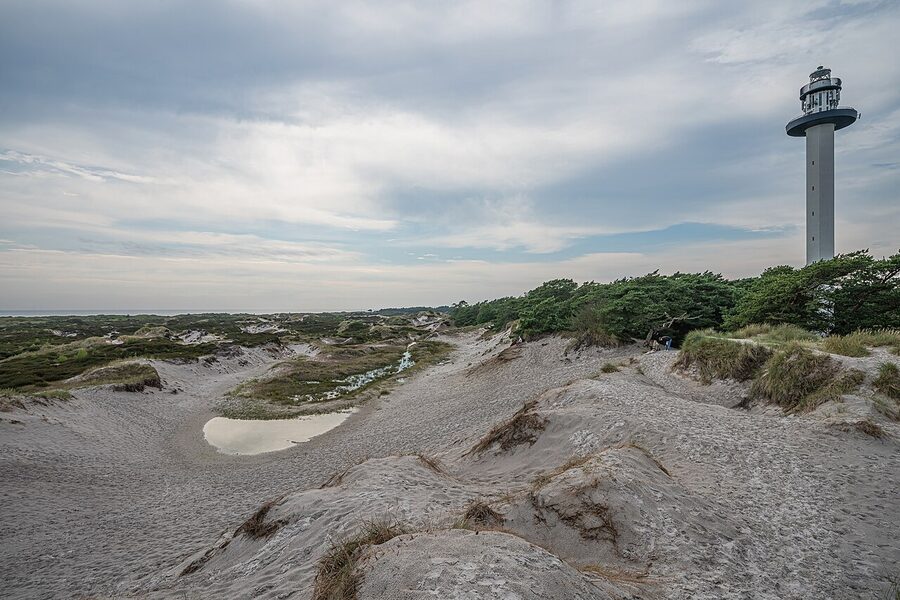
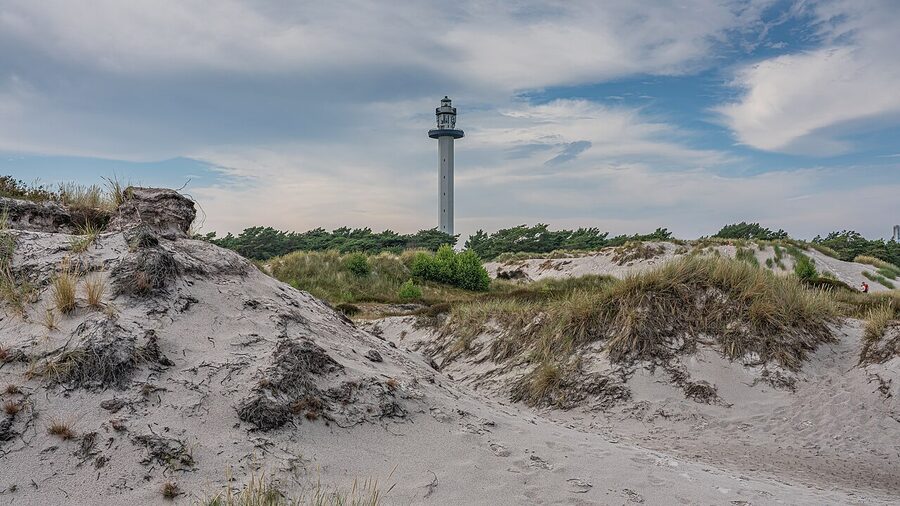
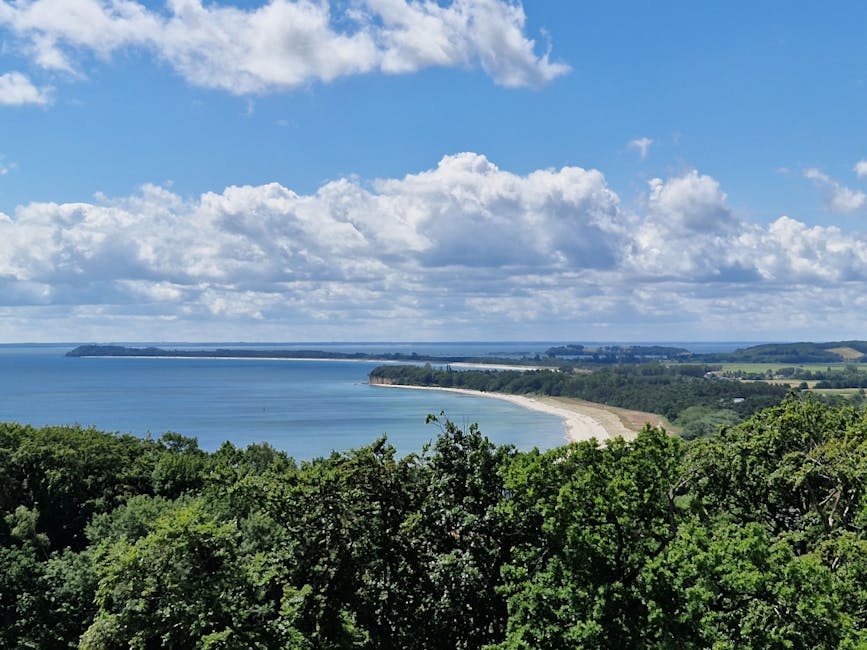
Dueodde at the southern tip is the beach that gets named in the international press. Three kilometres of nearly-white sand, gentle surf, dunes behind, and the 1962 lighthouse at the eastern end. Climb the lighthouse if you can; 196 steps for the view back across the south of the island. The car park is large but fills up by 11:00 in July; arrive early or take BAT bus 6 from Nexø.
Balka just north of Dueodde is the family-friendly alternative. Shallow water, lifeguard cover in July and August, sand bottom that runs out for fifty metres before it gets up to your waist. The least dramatic of the south-east beaches and the most useful for kids.
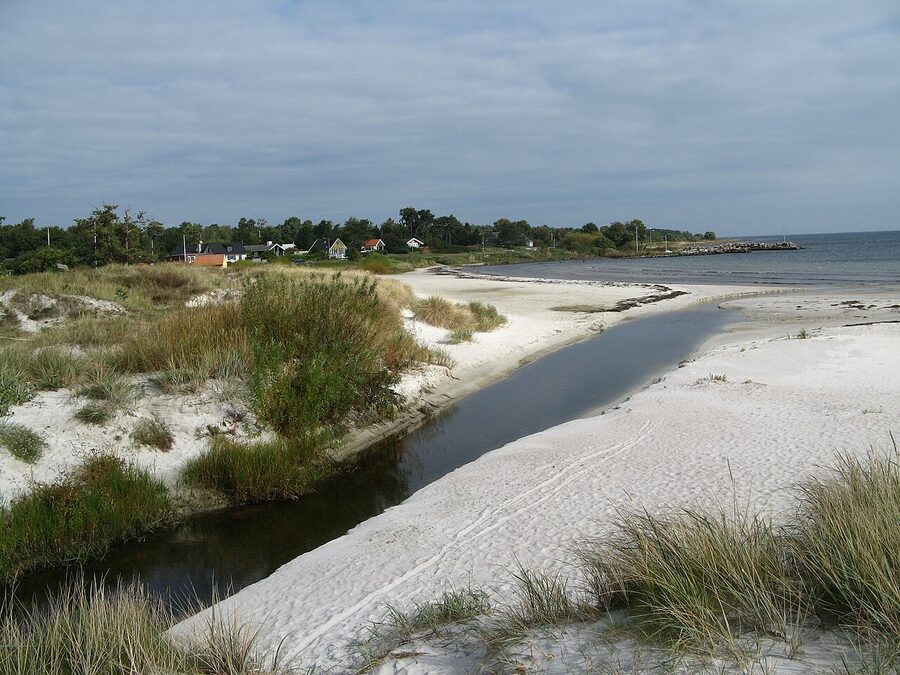
Sandvig beach on the north coast, in front of Allinge-Sandvig, is the most accessible if you’re staying north. Shorter than Dueodde but well kept, sheltered, with a small kiosk and showers at the back of the dunes. Walk west from here onto the Hammeren peninsula for the granite-and-heath alternative.
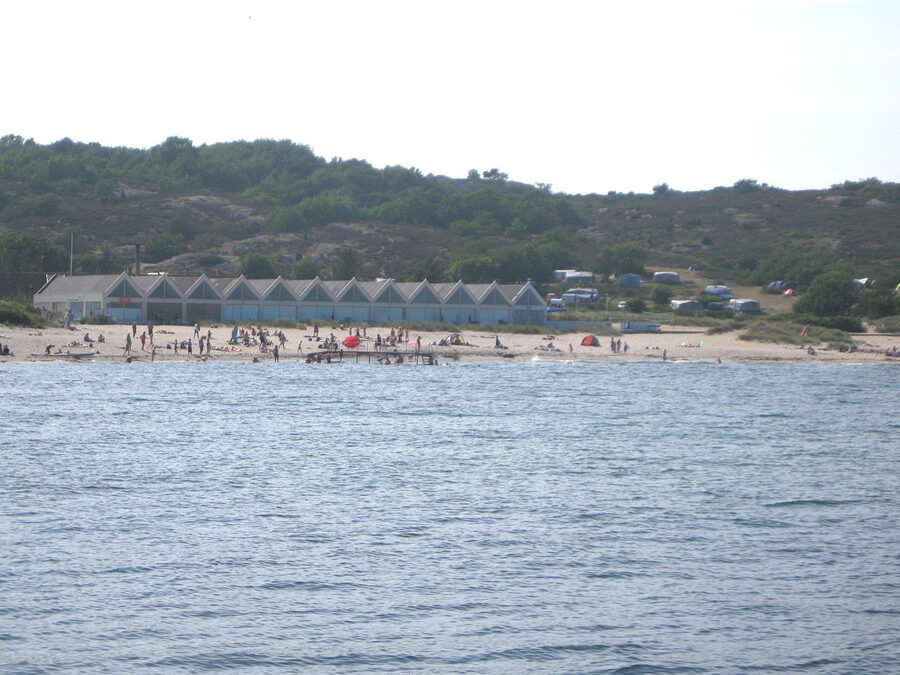
Sandkås and Tejn on the north-east coast are smaller, quieter, and have rocky coves alongside narrow sand strips. Best for swimming when the wind is from the south, which is most often.
Antoinette on the south coast east of Sømarken is the windsurf and SUP beach. Beach café, lifeguards, paid parking. Less peaceful than Dueodde but more practical if you want gear rental.
Skip Hasle Lystskov beach unless you happen to be in Hasle anyway; the sand is patchy. Skip the small Rønne strand in town; it’s fine for the kids before dinner and not somewhere you would drive to.
Cliffs, forests, and the inland walks
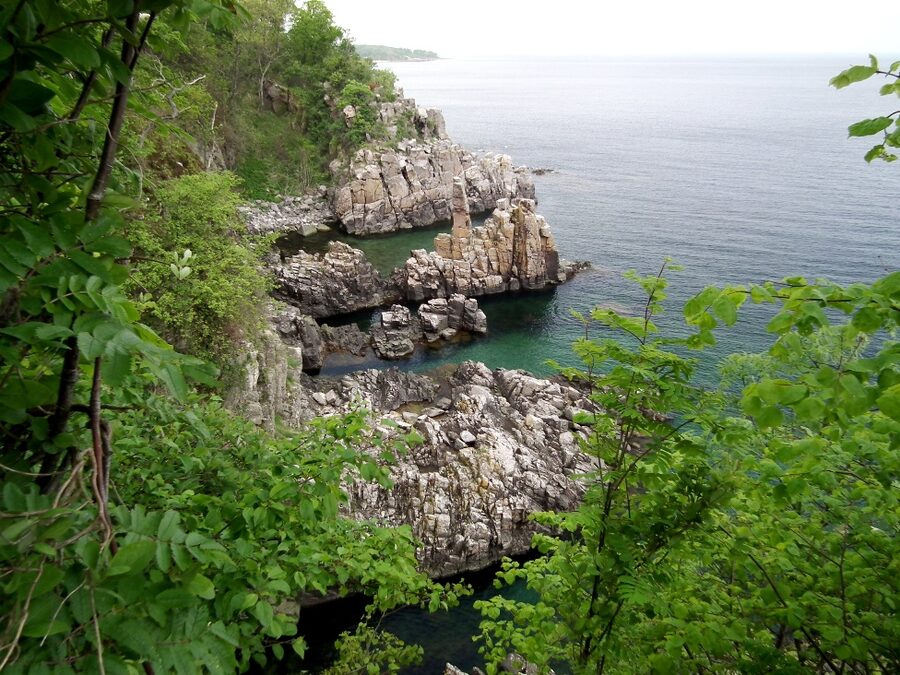
The Helligdomsklipperne (Sanctuary Cliffs) on the north-east coast between Tejn and Gudhjem are the most dramatic stretch of coast on the island. Twenty-two-metre granite walls cut by narrow gullies, sea caves at the base, and a cliff path that runs for about 7 km from the Bornholms Kunstmuseum down to Gudhjem harbour. The path is well marked, mostly easy walking on a packed gravel surface, with a few short stair sections cut into the rock.
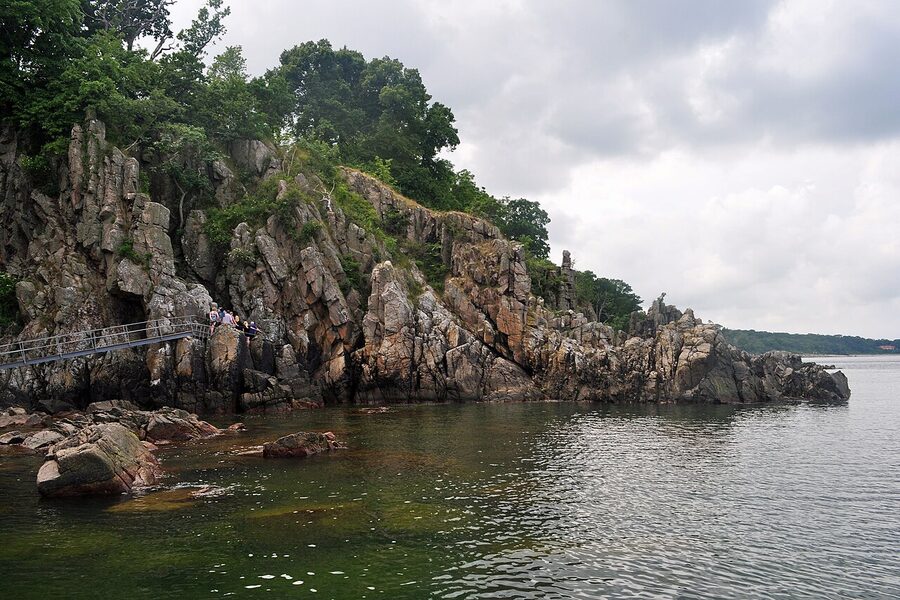
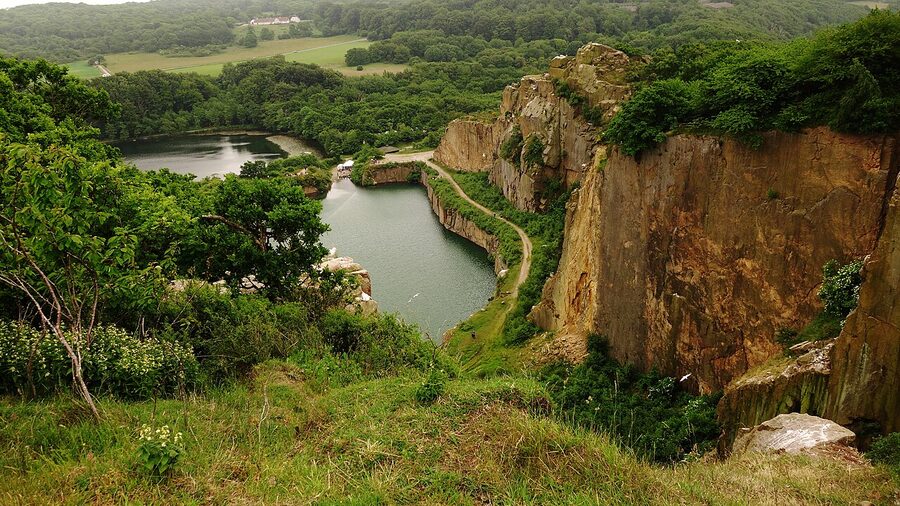
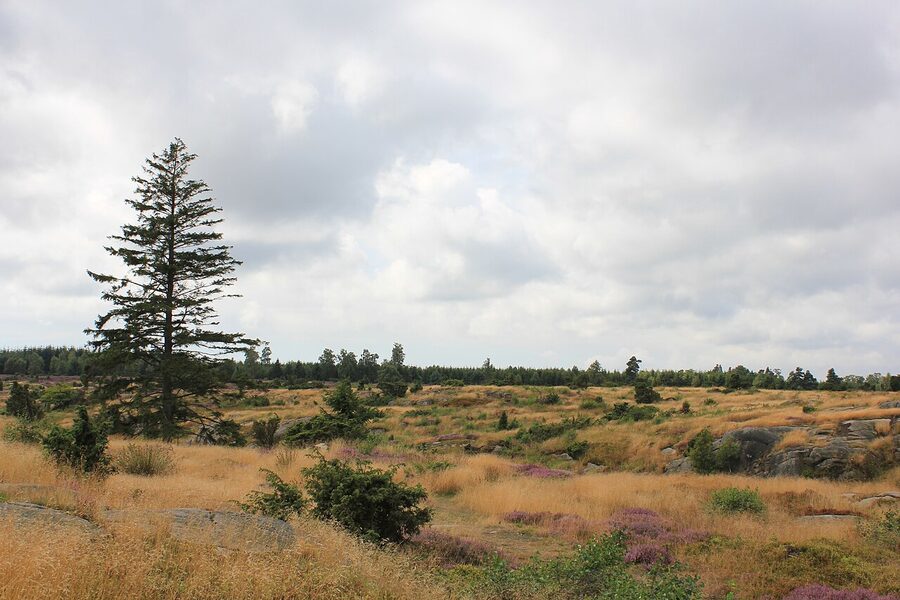
The Hammeren peninsula at the northern tip is the granite-heath landscape: short turf, wild thyme, granite outcrops, the Opal Lake (a flooded former quarry, swimmable in summer at your own risk, no lifeguard), and the Hammer Knude lighthouse from 1872. Climb the Hammer Knude in good weather; the view back along the coast is the geographic context for Hammershus and the rest of the north shore. Three to four hours for a full circuit from Sandvig.
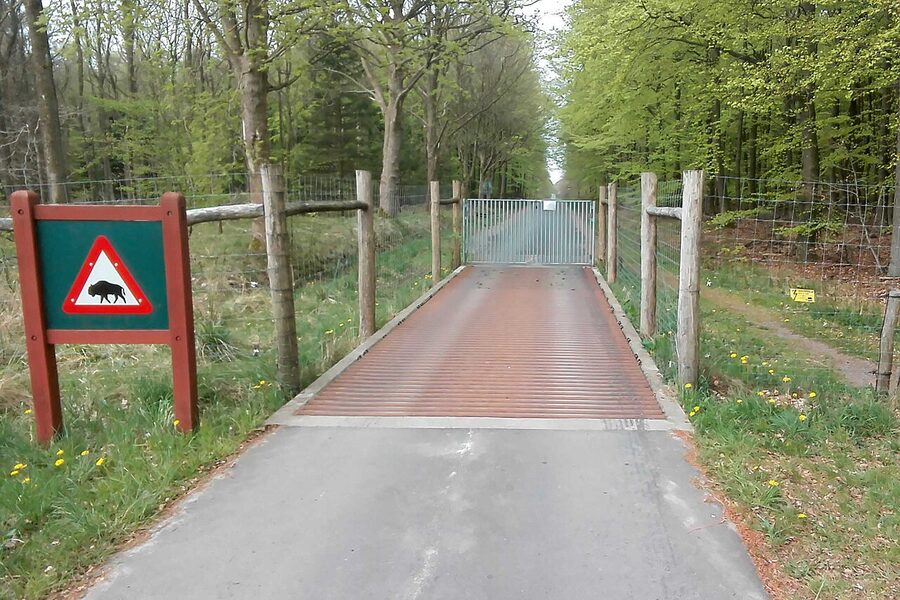
Almindingen, in the centre of the island, is the third-largest forest in Denmark and the most accessible serious woodland walk on Bornholm. The wood was a royal hunting forest from the 1700s; it now covers about 24 square kilometres and contains, among other surprises, a herd of European bison reintroduced in 2012 in a fenced area called Bisonskoven. The bison are not always visible from the trail, but the trail itself runs about 4 km in a loop and is good for a morning. The Rytterknægten, the highest point of the island at 162 metres, is in the middle of the forest, with a 12-metre observation tower (the Kongemindet, a 19th-century memorial obelisk) on top of it. From up there, you can see the Swedish coast on a clear day.
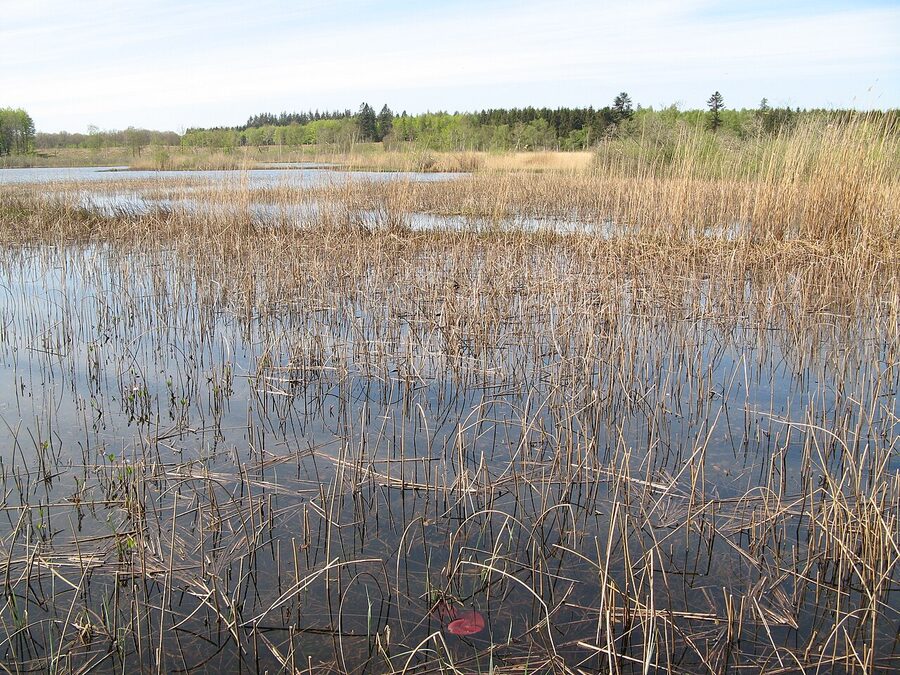
Paradisbakkerne (the Hills of Paradise), inland from Nexø, is the smaller, more eccentric option. Granite outcrops in heathland, glacial erratics, a hidden waterfall called Døndalefaldet that runs hard in spring and stops by August. Three-hour loop from the car park near Bolsterbjerg, well marked but quieter than Almindingen.
Cycling the island
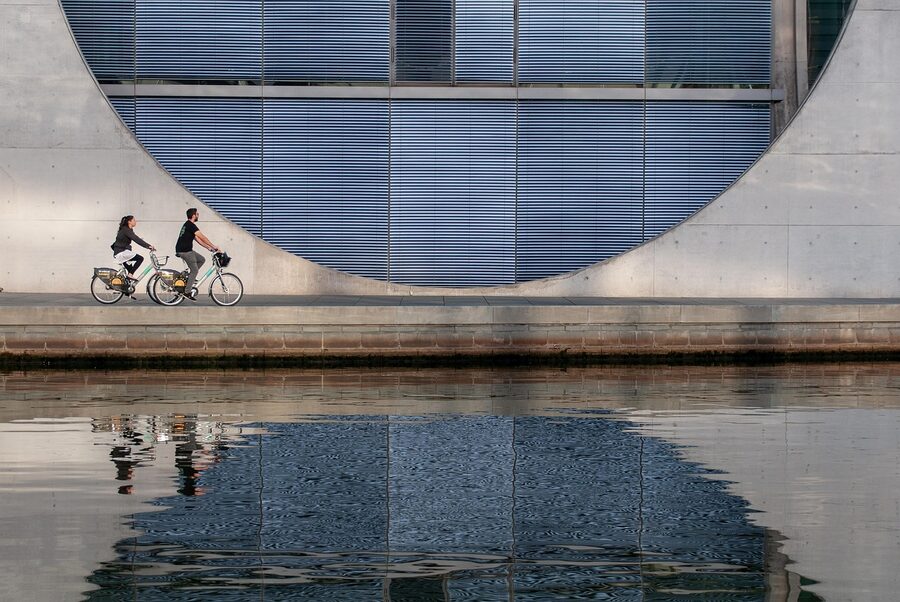
Bornholm is one of the great cycling destinations in northern Europe and the official 235 km of signposted routes are mostly very rideable. The headline ride is Cykelrute 10, the full coastal loop, which runs about 105 km on a mix of tarmac, gravel, and dedicated cycle path with a few short forest sections. Strong cyclists do it in a long day; most people break it into two days with an overnight in Allinge or Gudhjem. The official tourism site at bornholm.info has the official maps.
Hire a bike from Cykelregnskab Bornholm in Allinge or from Bornholms Cykeludlejning in Rønne; about 100 to 150 DKK (~€13 to €20) per day for a hybrid, 200 to 280 DKK (~€27 to €38) for an e-bike, with a multi-day discount. E-bikes are the right call for the north coast and the Almindingen interior, where the gradients are real if not Alpine. Helmets are not required by law but always available; bring your own padding-shorts if you have them.
The Højlyngssti, a 40 km cross-island route from Allinge in the north to Aakirkeby and on to Dueodde in the south, is the alternative to the coastal loop. It runs through Almindingen forest and is quieter and shadier than the coast. A good day-out option for inland-curious cyclists; allow five to six hours with photo and lunch stops.
Bornholm is also one of the easiest places in Denmark to bring your own bike on. Bornholmslinjen takes bikes free; DSB charges a small reservation fee on the trains. Folding bikes are accepted everywhere as luggage.
The other towns, briefly
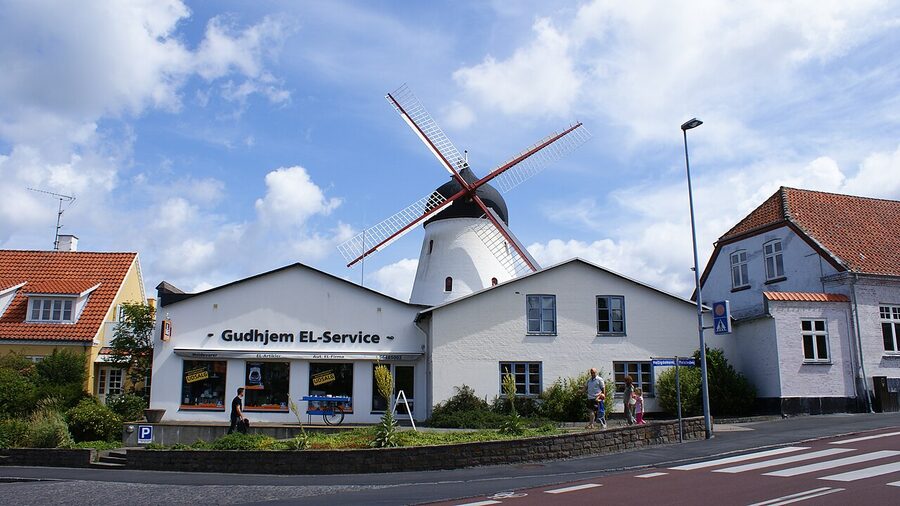
Gudhjem, halfway up the east coast, is the second town to walk through. Stepped streets, the 1893 windmill on the hill, the Oluf Høst museum (the painter who built his own house here in 1929 and painted from his garden until 1966), and the boat to Christiansø. Park at the upper car park and walk down. Ninety minutes is enough; three hours if you do the museum properly.
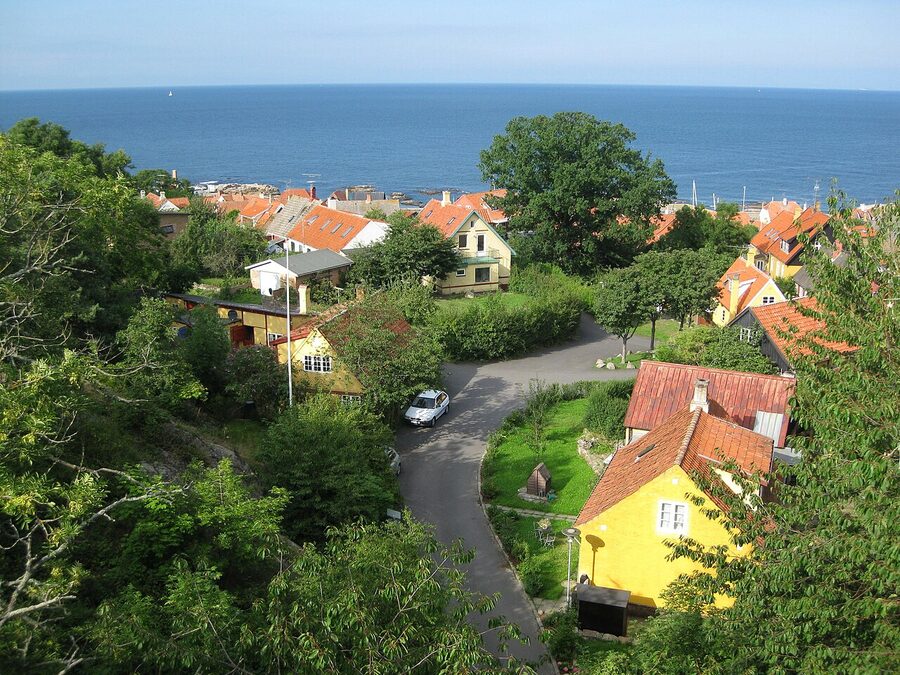
Rønne, the largest town and the ferry port, is mostly the airport-town reality of the island. The bombing of May 1945 took out a third of the historic centre, and the rebuild is functional. Worth an hour for the surviving streets around Storegade and Lille Madsegade, the Bornholms Museum (95 DKK / ~€13, good on the island’s history if you skipped Hammershus), and the Hjorths Fabrik working ceramic museum. Skip the harbour shopping centre.
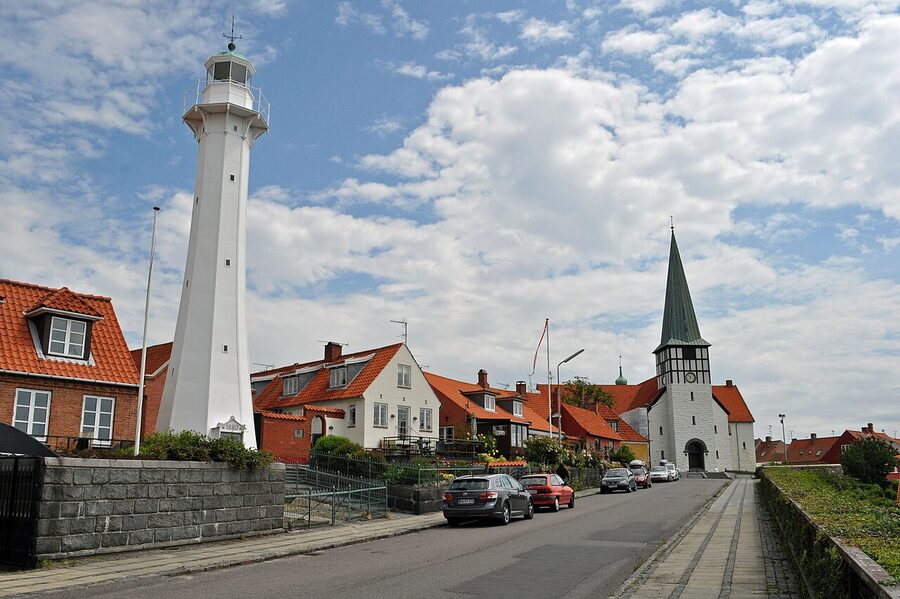
Nexø, on the south-east coast, is the second-largest town and the centre of the surviving fishing fleet. It was bombed almost as heavily as Rønne in 1945 and rebuilt in similar style; the harbour-front buildings are mostly post-war. Worth a stop for the Martin Andersen Nexø house (the proletarian novelist of Pelle the Conqueror grew up here, the museum is small and free), Lucy’s Bakery on a Saturday, and the start of the Cykelrute 10 south coast ride.
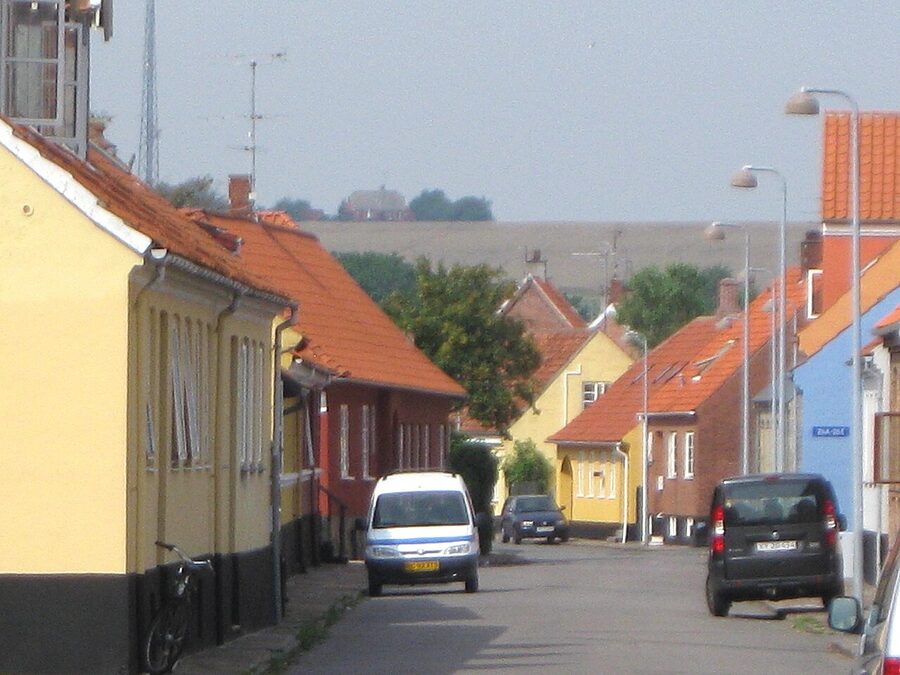
Hasle on the west coast is the smaller working fishing town, with the UNESCO smokehouse and a pleasant harbour walk. An hour, including a smoked-herring lunch, is the right amount of time.
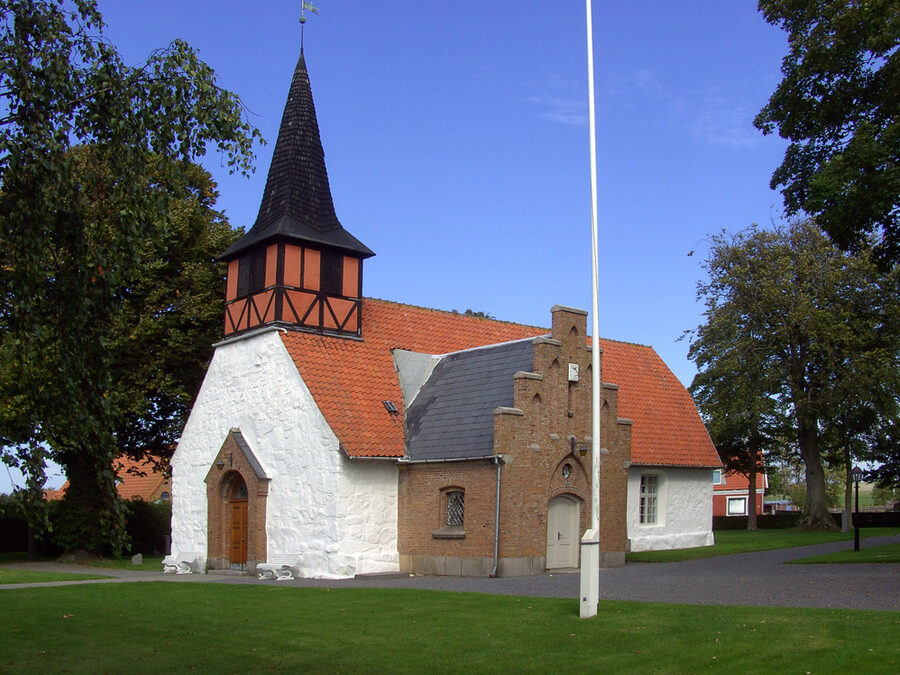
Aakirkeby, in the centre, is the inland market town. Worth a stop for the Aa Kirke (the largest medieval church on Bornholm, not round but long, with a Romanesque baptismal font cut from a single block of granite around 1200), the original Lakrids by Bülow factory in nearby Klemensker, and a small but excellent local museum (NaturBornholm, 145 DKK / ~€20) that walks you through the geology of the island in about an hour. Recommended for kids and for anyone curious about why Bornholm looks the way it does.
Getting around the island
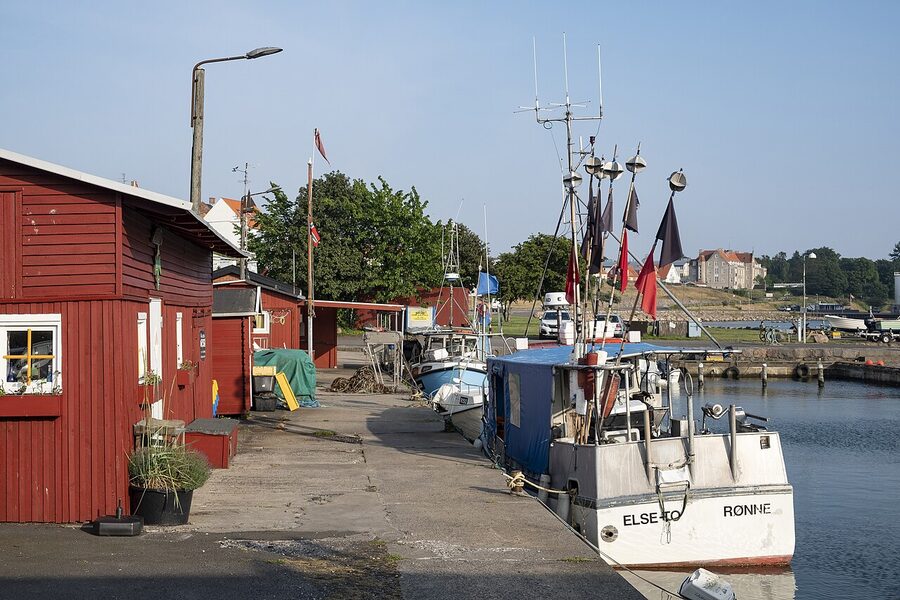
A car is the practical answer for a four-day trip if you want to do the round-church circuit, the south-coast beaches, and Hammershus without rationing time. Rentals at the airport and the ferry terminal: Avis, Europcar, Hertz, and the local Bornholms Biludlejning. Manual transmissions are the default; reserve well ahead in summer if you need an automatic. Expect 500 to 800 DKK (~€67 to €107) a day for a small hatchback in July, less in shoulder season. Petrol stations are everywhere on the main routes; cards work without issues.
The bus network, run by BAT (Bornholms Amts Trafikselskab), is good and not expensive. A 24-hour island-wide ticket is 165 DKK (~€22), a 7-day card 565 DKK (~€76), and the whole network is integrated with the Rejsekort. Bus 7 (Rønne-Hasle-Allinge-Gudhjem-Svaneke-Nexø-Rønne) is the loop bus and the most useful single line for sightseeing. Frequencies drop sharply on Saturdays and even more on Sundays; check the timetable. The buses are clean, reliable, and the drivers are patient with confused English-speakers.
Cycling is genuinely viable for getting around if you have time and the weather is willing. The 235 km network is paved or hard-packed gravel, the gradients are mostly mild, and the route signage is clear. See the cycling section above.
For chaining Bornholm into a wider Nordic itinerary that doesn’t involve flying back to Copenhagen, the Ystad ferry connects you straight onto the Skåne rail network, which puts you in Stockholm by overnight train (the SJ EuroNight service runs from Malmö C). Add a couple of nights at the start or end of the Bornholm leg with the Nordic-blogger picks I keep close at hand for ideas on second cities you might not have considered. Oslo is the alternative jumping-off point if you fly out from Bornholm to Copenhagen and chain across the Skagerrak.
When to come, and when not to
The high season is mid-June to mid-August, which is when the island is fullest, sunniest, warmest, and most expensive. School holidays in Denmark, Germany, and Sweden all line up, and from the second weekend of June to the third weekend of August any weekend booking should be made at least a month in advance. The first half of June and all of September are the sweet spot: the hotels are open, the smokehouses are smoking, the weather is reasonable, and the prices drop by twenty to thirty per cent. May is fine for hiking and the round churches but cold for the beach. The Folkemødet (mid-June, four days) is when politicians, journalists, and activists descend on Allinge for Denmark’s annual political festival. If you are not part of it, do not stay in Allinge that week.
Autumn (October and November) is the contrarian’s choice. Smokehouses close one by one, hotels switch to weekend-only, the wind picks up, and the cliffs at Helligdomsklipperne look properly Atlantic. If you like Skagen-style autumn light and don’t need to swim, this is your trip. December through March is for committed locals only: most things are closed, the ferry runs at reduced frequency, and the planes are still flying but unreliable.
Christmas markets exist in Rønne, Svaneke and Allinge in the first three weekends of December, and they are pleasant rather than essential. If you are doing a winter Nordic trip with a Christmas-market focus, mainland Denmark and Germany have larger markets; Bornholm in winter is a slow, sparse, romantic option for repeat visitors.
Practical bits
The Danish krone is the currency. The euro is not commonly accepted; cards are universal. Tipping is not expected. Tap water is excellent. The internet works.
Public toilets in Allinge, Sandvig, Svaneke, Gudhjem, Rønne, Nexø and at the major beach car parks (Dueodde, Balka, Sandvig) are clean, free or 5 DKK / ~€0.70 by card, and reliable. The smokehouses also have toilets, which they will let you use without buying.
Cardless small purchases are still possible at one or two of the older harbour kiosks; bring 50 DKK in coins if you plan to buy ice cream from the kid running the till at Sandvig.
Phone reception is reasonable across the island and excellent in the towns. EU roaming applies. The 4G is faster than the 5G in most spots; the towers were built for sparse summer-house traffic, not festival weekends, and Folkemødet routinely brings the network to its knees in Allinge.
The cycle paths share routes with cars in some sections of the inland Højlyngssti. Watch for tractors at field-edges in summer; the harvest runs late June through September.
Bornholmsk, the local dialect, is closer to Old Norse and Skånsk than to Standard Danish; older Bornholmers speak it daily, younger ones switch to Danish around tourists. English is understood almost everywhere by anyone under sixty. German is the second-most-useful language. Polish helps in summer when the Polish day-trippers come over from Sassnitz.
What I would do with three, four, or five days
If you have three days: arrive on the morning ferry from Ystad, base in Allinge, do Hammershus and Sandvig on day one (Hammershus before 11:00, swim in the afternoon, dinner at Hotel Nordlandet), the four round churches and the east coast on day two (Østerlars first, then a Sol over Gudhjem at Snogebæk, then Svaneke for the afternoon), and Christiansø on day three before the late ferry back. It will feel rushed; the Christiansø boat sets the pace.
If you have four days: same as three days but reverse Christiansø to day three and add a relaxed fourth day for either the south-coast beaches (Dueodde and Balka, with lunch at Madsen’s Madbar) or the Almindingen forest and the Helligdomsklipperne walk. Eat at Stammershalle on the last evening.
If you have five days: stay overnight on Christiansø on what was day three, take the boat back the next morning, and use the fifth day for whatever you missed (Bornholms Kunstmuseum, the Lakrids factory tour, a half-day cycling Cykelrute 10 from Svaneke south to Nexø, or a long lunch at Kadeau).
If you have a full week, base half in Allinge, half in Svaneke. Do the cycle loop properly. Eat at Kadeau. Sleep on Christiansø. Walk the full coastal path in segments. The week is the right length for the island and the right length for the hotel rates outside July; one week in early June or mid-September is the trip I always end up recommending.
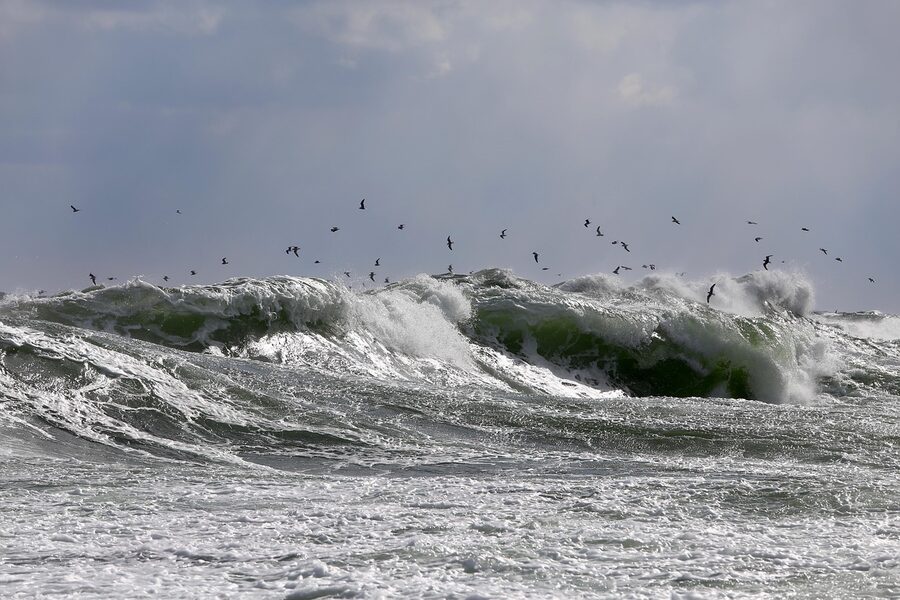
Bornholm gets that 1,847 hours of sunshine a year not because the gods of weather are kind to it but because of a meteorological quirk: the island’s position on the leeward side of the Swedish landmass for the prevailing westerlies, plus the sea’s heat retention, plus the relative absence of orographic rainfall. None of that matters when you are on the rocks at Sandvig with a wedge of warm smoked herring in one hand and a cold pilsner in the other and the kids next to you are speaking the soft Bornholmsk and the sun is two hours from going down. What matters is that there is a small island off the coast of Sweden where Danish summer is almost continuous, where the food is good and the buildings are old, and where most of Denmark, on its better days, would still rather be.