
On 5 July 2015, sitting in a conference room in Bonn, the UNESCO World Heritage Committee voted to add the Speicherstadt and Kontorhausviertel to its list. Germany’s 40th site, Hamburg’s first. I remember reading the news on a delayed Vy train somewhere outside Drammen and thinking: that’s the one I haven’t done. Stockholm, Copenhagen, Oslo, Helsinki, Reykjavík, all of them more than once. Hamburg I’d only ever changed planes in. So a few months later I went, mostly to look at warehouses, and found I’d been wrong about the city for years.
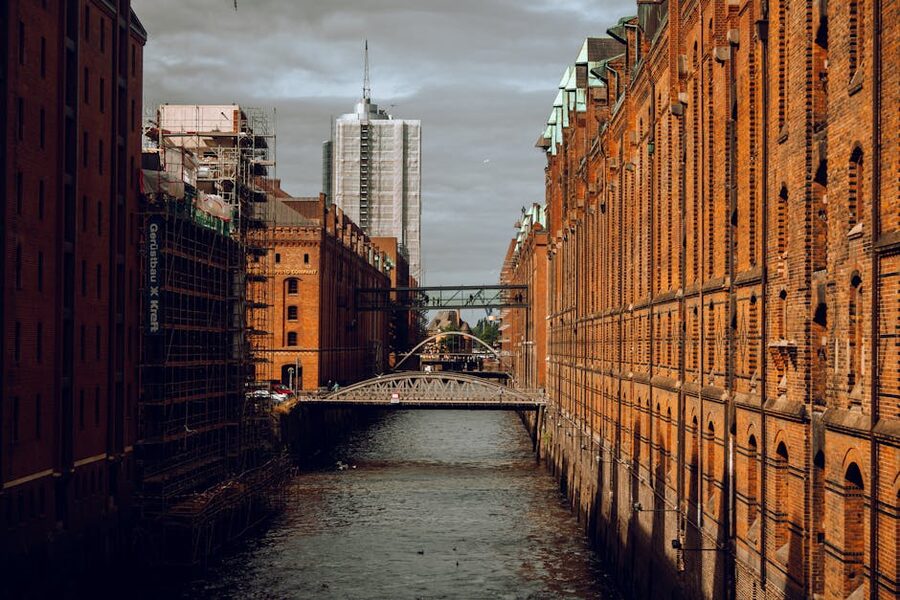
If you’re booking from one of the Nordic capitals, Hamburg is closer than you think. The cheap flights from Stockholm, Copenhagen and Helsinki land you in a North Sea port city that feels like a cousin to Bergen and Gothenburg. Brick. Water. Cranes. Container ships moving past the windows of fish-bun stalls. The two UNESCO districts at the centre of this guide, Speicherstadt and Kontorhausviertel, are right next to each other and walkable in a single morning. The rest of the article is what I wish someone had told me before that first trip: where to actually go, what to skip, how the place fits with the Nordic itinerary you might already be planning.
In This Article
- Why a Nordic traveller should bother with Hamburg
- The Speicherstadt, in plain terms
- What to actually do in Speicherstadt
- Wasserschloss and the Poggenmühlenbrücke view
- Speicherstadt Museum
- Miniatur Wunderland (the obvious one)
- A canal cruise, but the right one
- The guided walking tour I’d skip on a good-weather day
- Kontorhausviertel: the half almost nobody visits
- The Chilehaus
- Sprinkenhof and the others
- A working half-day plan
- A second day, if you have one
- St Michaelis (the Michel)
- Reeperbahn, but during the day
- Alter Elbtunnel
- Sunday morning Fischmarkt
- Where to stay
- Getting there from the Nordic capitals
- When to go
- Things I’d skip
- A note on the food
- Practical bits
- The view I’d leave you with
Why a Nordic traveller should bother with Hamburg
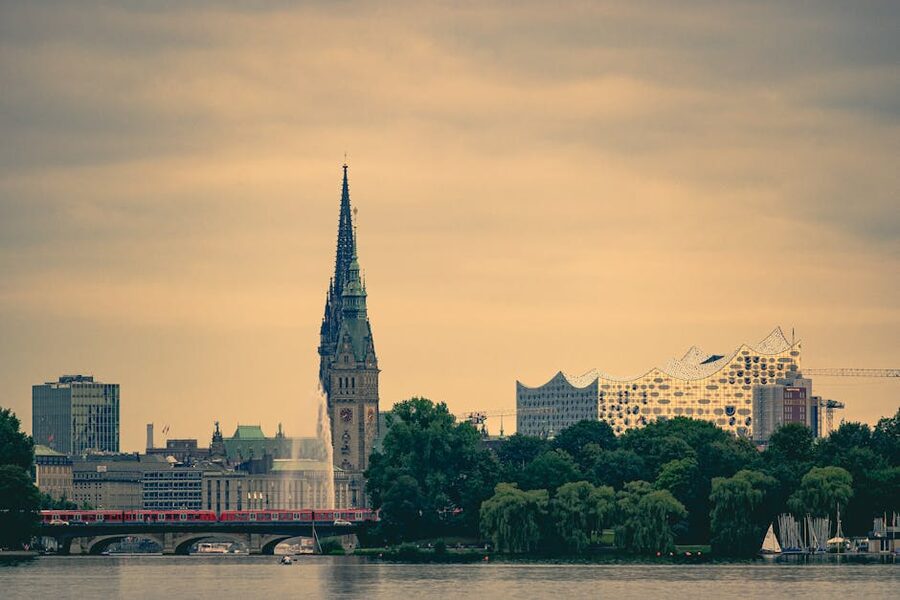
From Copenhagen the train to Hamburg now runs in about 4.5 hours via the Storstrøm and Femern routes (the new Fehmarnbelt tunnel is due to halve that around 2029, but for now the existing service is fine). From Stockholm Arlanda the SAS direct is roughly 1 hour 35 minutes. Helsinki is closer to two hours. Oslo gets you there in just under two as well. Reykjavík is a four-hour Icelandair hop. So Hamburg is the one major German city you can fit into a Nordic trip without it feeling like a separate holiday.
And it rewards the visit. Hamburg is the second-largest city in Germany, the country’s biggest port, and the most North-Atlantic-feeling place south of Denmark. The light is grey, the rain is constant, the food leans on smoked fish and rye bread. If you’ve ever liked a wet day in Bergen or Helsinki harbour, you’ll click with this place fast.
The headline reason to come, though, is the UNESCO ensemble. Speicherstadt is the largest unified historic warehouse complex in the world. Kontorhausviertel is a tight cluster of early-modernist office blocks, including the Chilehaus, that almost nobody outside Germany has heard of. Together they tell the story of how a Hanseatic port city handled the explosion of global trade between 1880 and 1940. As far as architecture-led day-trips go in northern Europe, this is one of the strongest.
The Speicherstadt, in plain terms
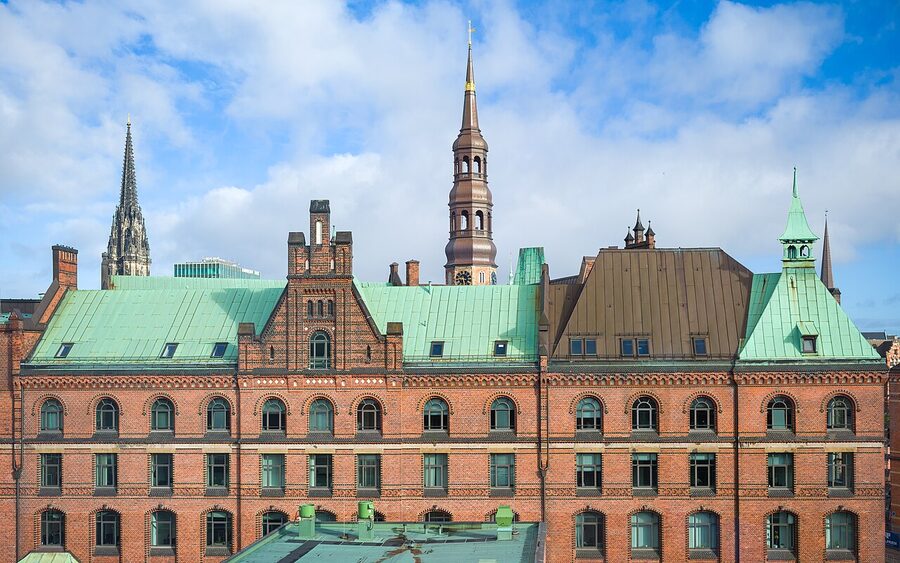
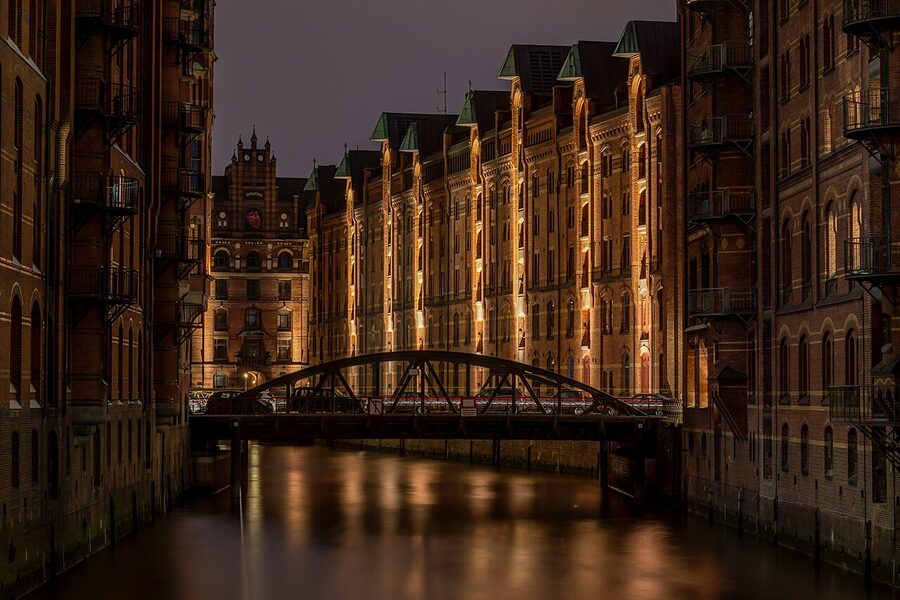
“Speicherstadt” means warehouse city, and the name is literal. Construction began in 1883, the first phase opened in 1888, and the last block went up in 1927. It runs roughly 1.5 km long by 250 m wide, on a string of narrow islands in the Elbe. Fifteen huge warehouse blocks, plus six smaller buildings, all in red brick with green-copper turrets and gables. The architect of record was Carl Johann Christian Zimmermann; the engineer who made it work, Franz Andreas Meyer.
What’s unusual about it isn’t the size, although the size is impressive. It’s the foundation. Hamburg sits on tidal mud, so the entire complex is built on oak piles driven into the riverbed. The buildings can take goods on by water at the back and by cart at the front, on different floors. They were never homes, never offices. They stored coffee, tea, spices, tobacco, oriental rugs, and (this surprised me) most of the world’s traded oriental rugs as recently as the early 2000s. Some of them still do.
The reason it exists at all is a customs decision. When Hamburg agreed to join the German Customs Union in 1881, it negotiated a permanent free port carve-out. Goods could be landed, stored, processed and re-exported without paying duty as long as they stayed inside the zone. The Speicherstadt was that zone. To clear the ground, more than 20,000 people, most of them poor, were pushed off the islands of Kehrwieder and Wandrahm. That part of the story doesn’t get told often enough on the boat tours.
Operation Gomorrah, the Allied bombing in summer 1943, destroyed about half of the warehouses. Reconstruction was conservative and slow, finishing only in 1967. The fact that the surviving buildings sit so naturally next to the rebuilt ones is one reason UNESCO accepted the nomination on authenticity grounds. The other reason is that the function never changed. Some blocks still hold coffee and tea. Walk past the Kaffeerösterei on Kehrwieder around 11 in the morning and you’ll smell roasting through closed doors.
What to actually do in Speicherstadt
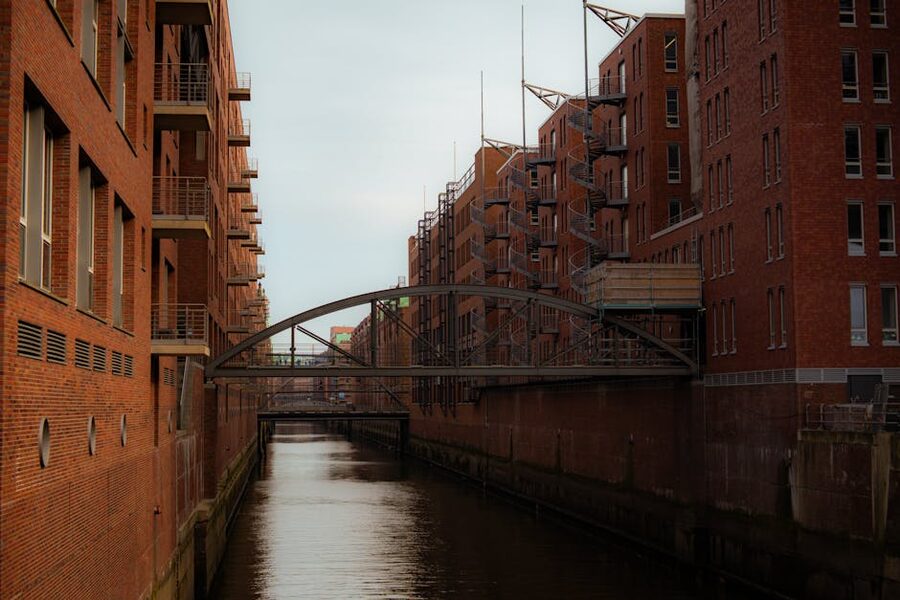
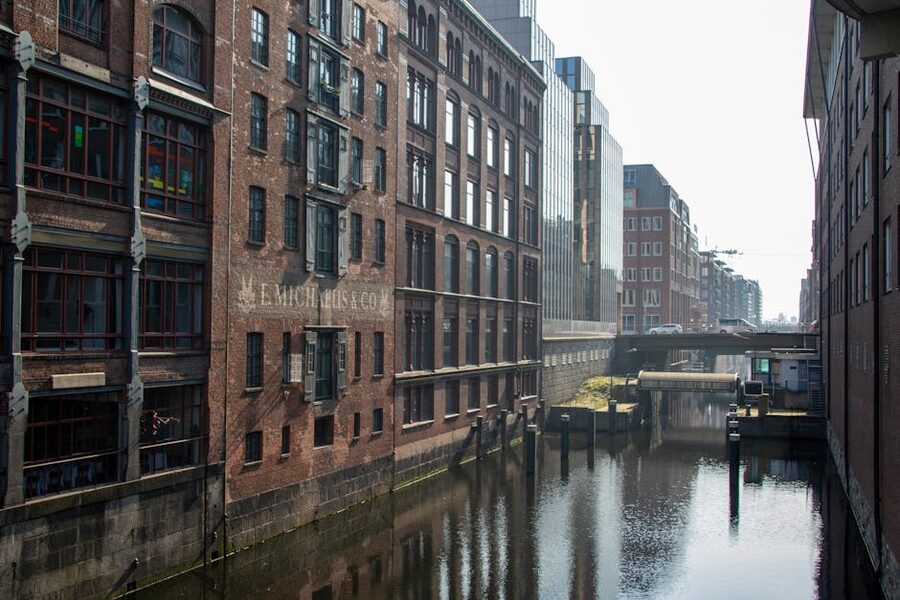
The short answer is: walk. The most rewarding hour I’ve spent in Hamburg was a slow loop on foot from the Baumwall U-Bahn around the southern blocks, across the Poggenmühlenbrücke, and back up Brooktorkai. No tickets, no museums, just brick and water and the occasional cyclist with a Sternschanze look. If you do nothing else here, do that.
If you want more structure, here’s what’s worth your time, in rough order of how strongly I’d push it.
Wasserschloss and the Poggenmühlenbrücke view
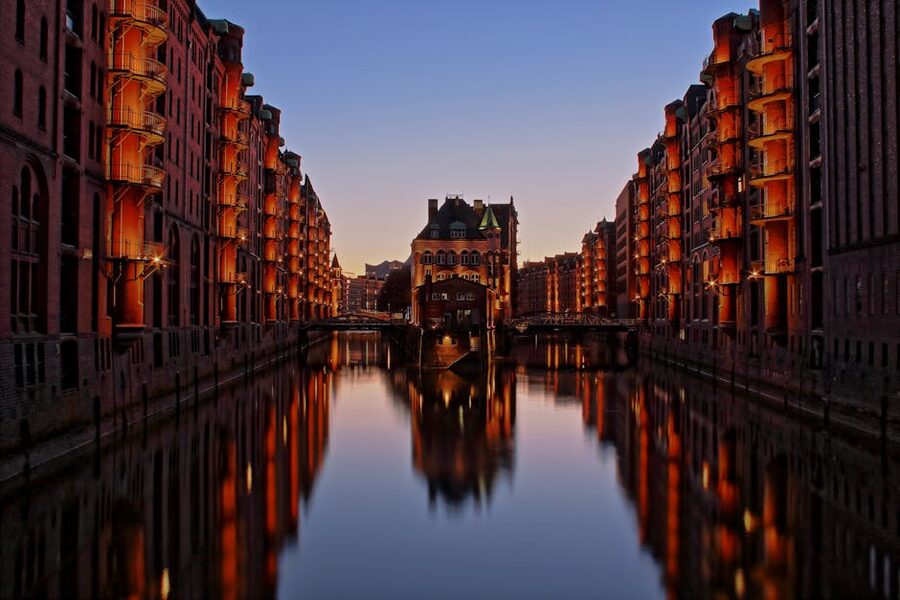
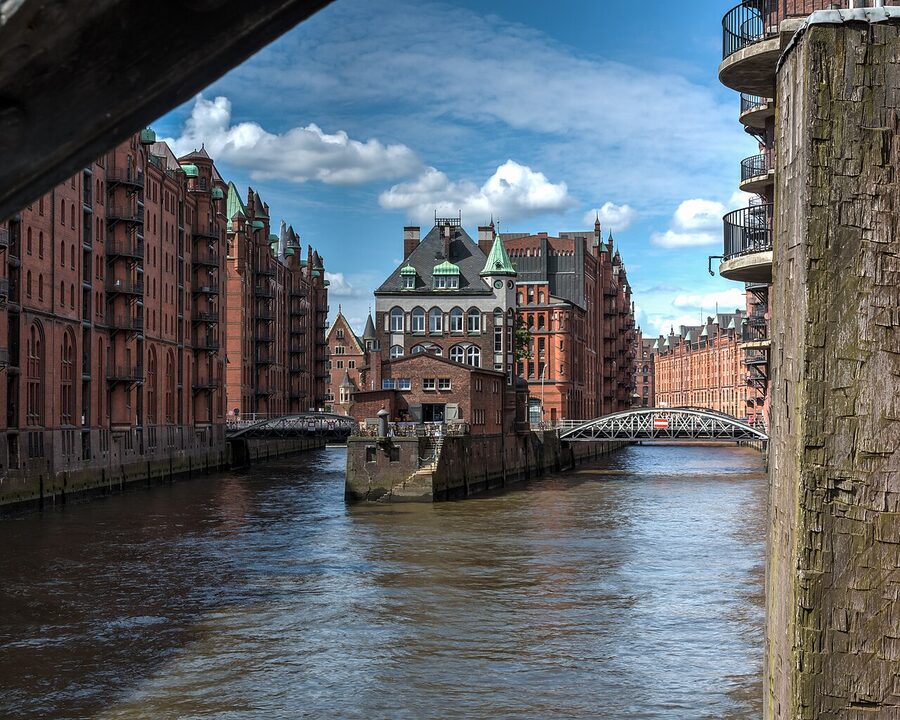
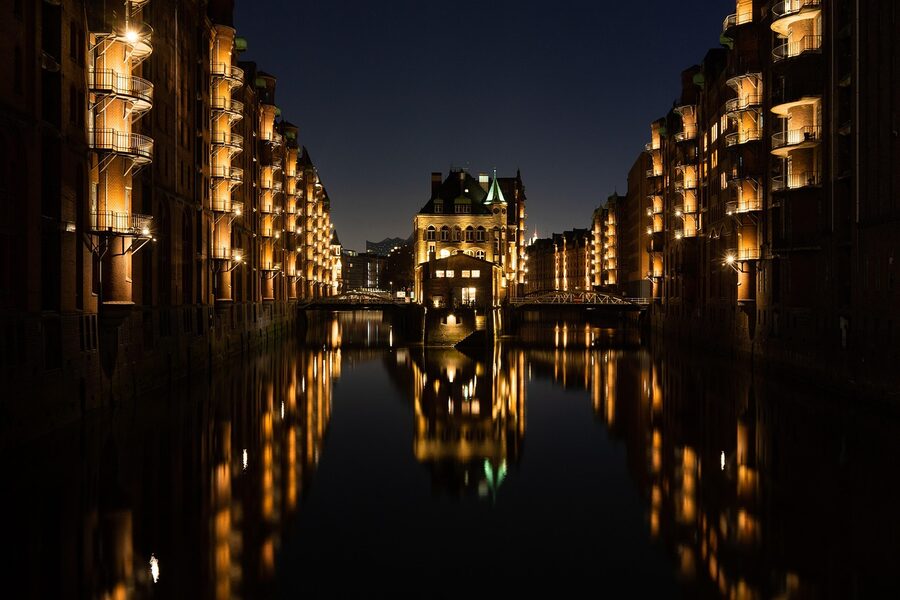
The Wasserschloss is a small, fairy-turreted building stranded on a triangular island where two canals meet. It was built around 1907 to house the workers who maintained the hydraulic winches the warehouses ran on (the cranes you see jutting out from the upper floors needed pressurised water; the winch shop made sure they kept working). It’s been a tea shop and restaurant since 2011. Skip lunch there if you’re not specifically into tea (the food is fine, the prices reflect the postcard view), but the building is the single most photographed object in the district. Stand on the Poggenmühlenbrücke just east of it and you’ll see why.
Speicherstadt Museum
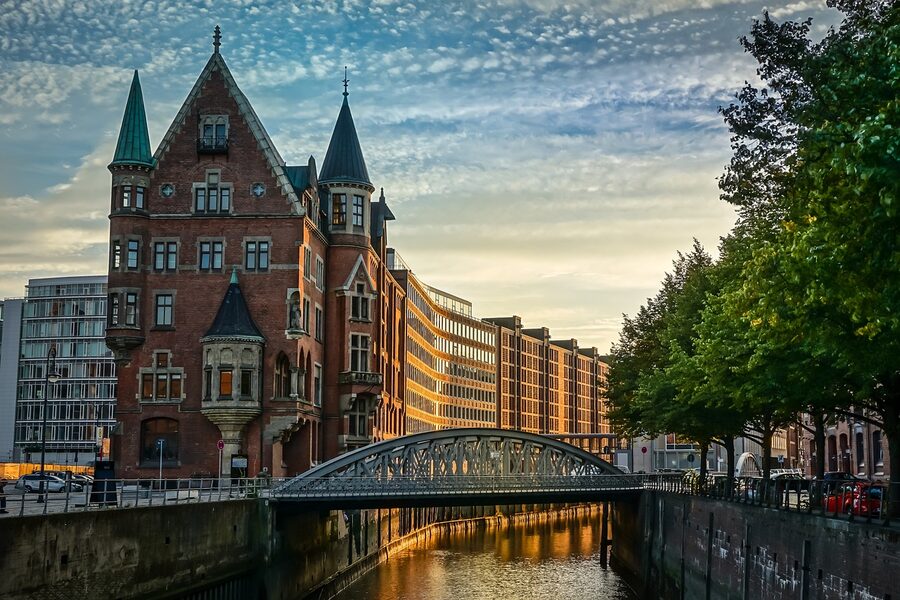
The Speicherstadtmuseum is in an actual surviving warehouse, on St. Annenufer. Adult entry was €5 last time I checked, which buys you a small but properly curatorial walk through coffee, tea, rug and spice trading at the height of the free port. There’s a working coffee-roasting demonstration on Saturdays. If you only have an hour for “indoors” stops, this is the one. Open Tuesday to Sunday, 10:00 to 17:00, with longer hours in summer; closed Mondays.
Miniatur Wunderland (the obvious one)
I’ll say upfront that I find Miniatur Wunderland slightly excruciating, but I’m in the minority. It is, in fact, the world’s largest model railway, the most-visited paid attraction in Germany, and the queue at the door tells you everything about its pull. The Scandinavia section has a working model of Bergen funicular and a tiny Stockholm waterfront. Tickets start at around €20 for adults, a bit less for children, and you absolutely must book online; same-day walk-up gets you a four-hour wait in summer. Allow two to three hours inside. If you have kids, this is non-negotiable. If you don’t, it’s an interesting half-hour you’ll feel obliged to extend.
A canal cruise, but the right one
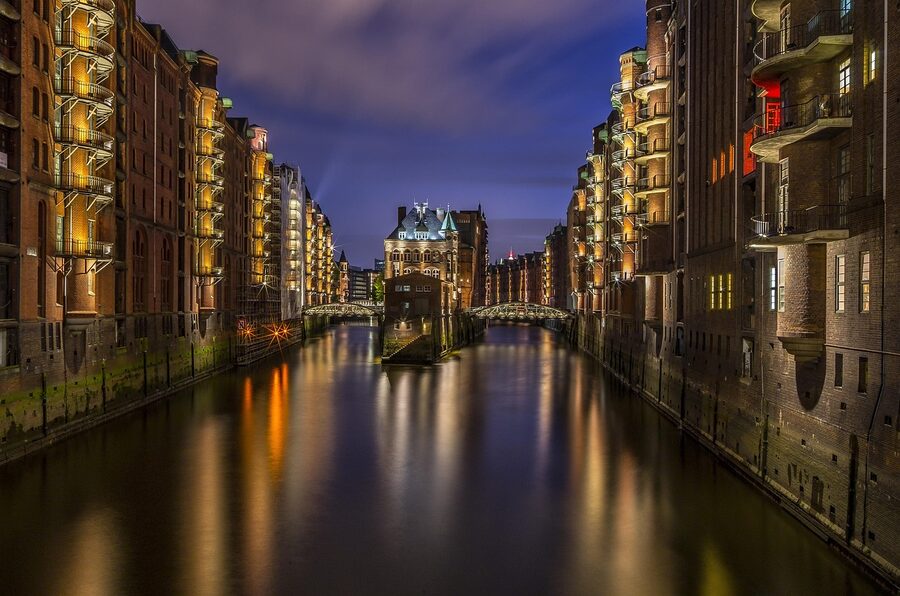
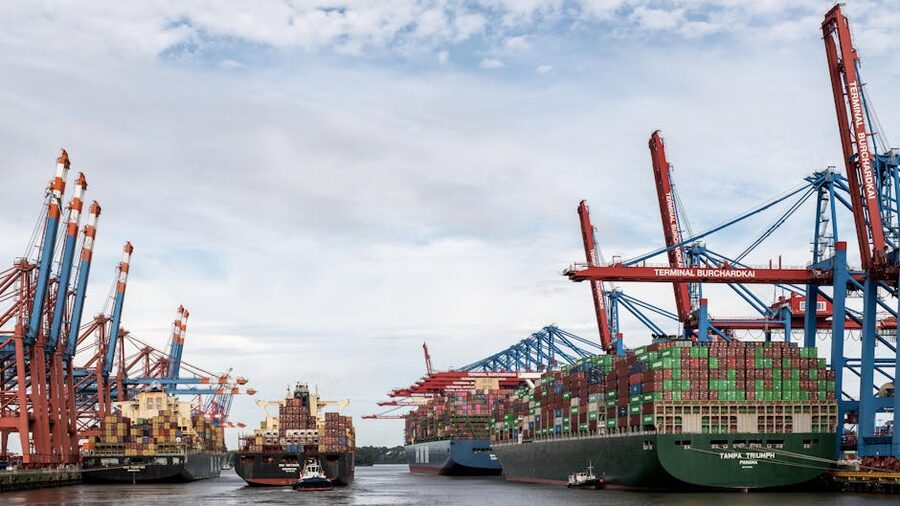
The big “harbour cruise” boats from Landungsbrücken are fine, but they spend most of their time looking at container terminals on the south bank of the Elbe. For the warehouses you want a smaller boat, what’s known locally as a Barkasse, which can fit under the Speicherstadt’s lower bridges. The combined Hafen-und-Speicherstadt-Rundfahrt is the standard tour, around 1.5 hours, around €20 to €25, and runs from Brücke 1 at Landungsbrücken. Klook lists the Harbor and Speicherstadt cruise here; it’s also bookable on the day at the kiosk if the weather looks good.
Do this once, and do it as your first activity in the district. It gives you the geography. After the cruise the walking makes sense.
The guided walking tour I’d skip on a good-weather day
There are guided walking tours of the UNESCO ensemble, starting around €18 to €25, often with a coffee tasting added on. GetYourGuide runs the standard UNESCO World Heritage tour. They’re well done. But the streets are short, the signage is good, and the audio guides on offer at the Speicherstadtmuseum cover most of the same ground for a fiver. I’d pay for the tour if it’s raining sideways or if architecture history is the reason you came; otherwise the cruise plus a self-guided walk gives you 90% of it.
Kontorhausviertel: the half almost nobody visits
Walk a hundred metres north of Speicherstadt, cross Willy-Brandt-Straße, and you’re in the other half of the UNESCO listing. Kontorhausviertel (“office-house quarter”) is a five-hectare cluster of early-twentieth-century office blocks, eight buildings in total. The names are good, German, and a bit of a mouthful: Chilehaus, Messberghof, Sprinkenhof, Mohlenhof, Montanhof, Miramar-Haus, the former Post Office at Niedernstraße 10, and the office building at Burchardstraße 19-21.
The whole quarter went up between 1922 and the late 1930s, on a piece of ground that had been one of Hamburg’s notorious slum districts (“Gängeviertel”) cleared after a cholera outbreak in 1892. The architecture is what’s called Brick Expressionism, a movement contemporary with the Bauhaus that almost nobody outside German architecture courses talks about. If your reference point is Stockholm City Hall (1923) or Helsinki’s National Romantic blocks, the Kontorhausviertel sits in the same family tree, but with a much harder northern-German edge.
The Chilehaus
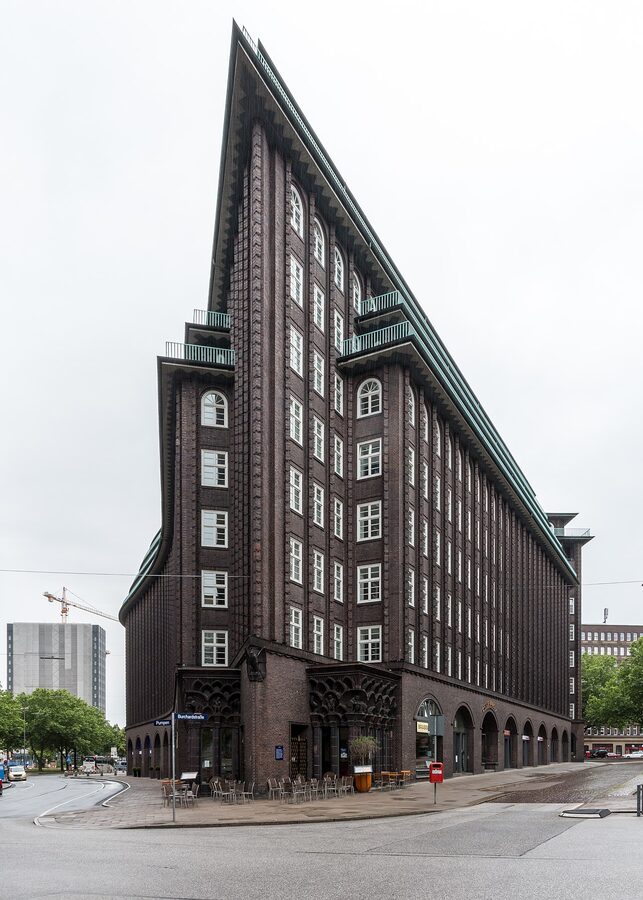
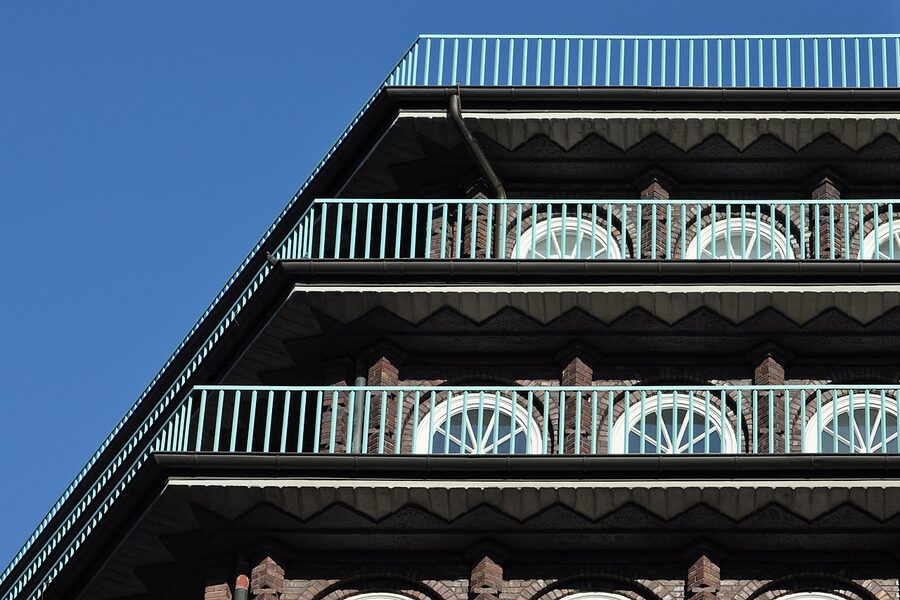
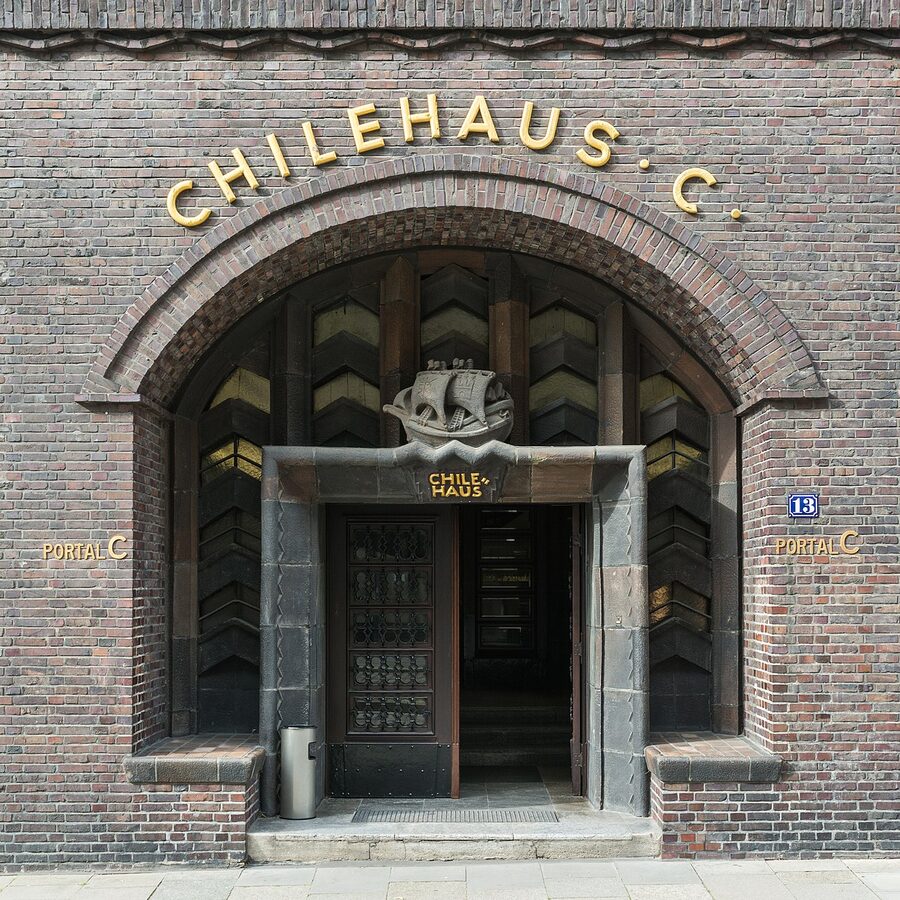
The Chilehaus is the building most people come for, and rightly so. Architect Fritz Höger, completed 1924, ten storeys, 4.8 million bricks, a triangular footprint with a sharply pointed eastern corner that was deliberately designed to look like the bow of a ship coming up the Elbe. It was commissioned by Henry Brarens Sloman, a shipping merchant whose fortune came from saltpetre trading with Chile, hence the name.
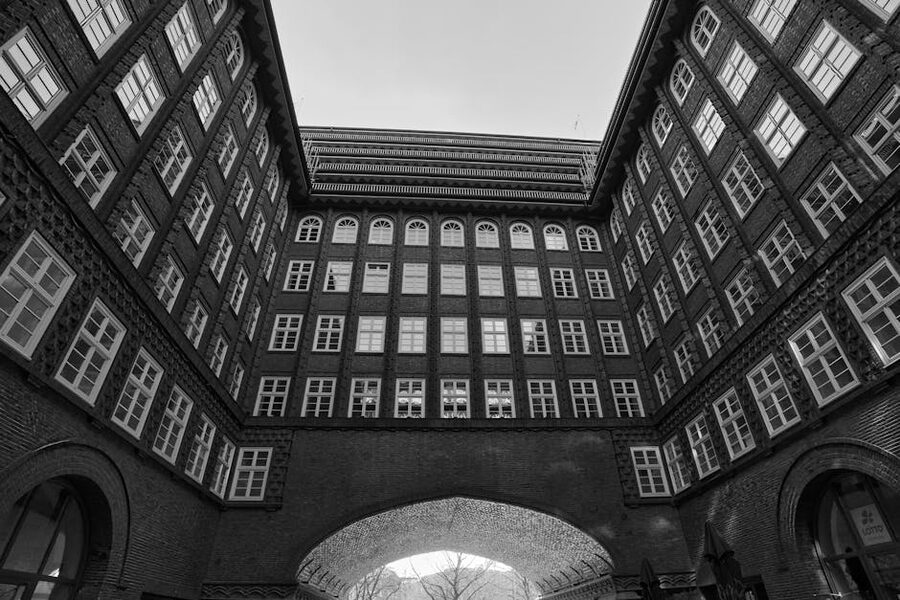
The right way to see it is on foot, slowly, three times. Once from across Pumpen to get the prow. Once through the courtyard at the centre, where the mosaic floors and the spiral staircases reward a long look. And once at street level along Burchardstraße to see how the brickwork shifts colour and texture as the wall curves. Don’t try to do it from a moving cruise boat or a passing tour group; you’ll miss the whole thing.
Two practical things. First, the Chilehaus is still a working office building. Stay out of the upper-floor stairwells unless you’re invited. Second, the courtyard cafe (Café Paris in the Chilehaus, no relation to the more famous one near the Rathaus) does a decent flat white if you need a sit-down. Open Mon to Fri, around 8:00 to 18:00; closed weekends, which is annoying.
Sprinkenhof and the others
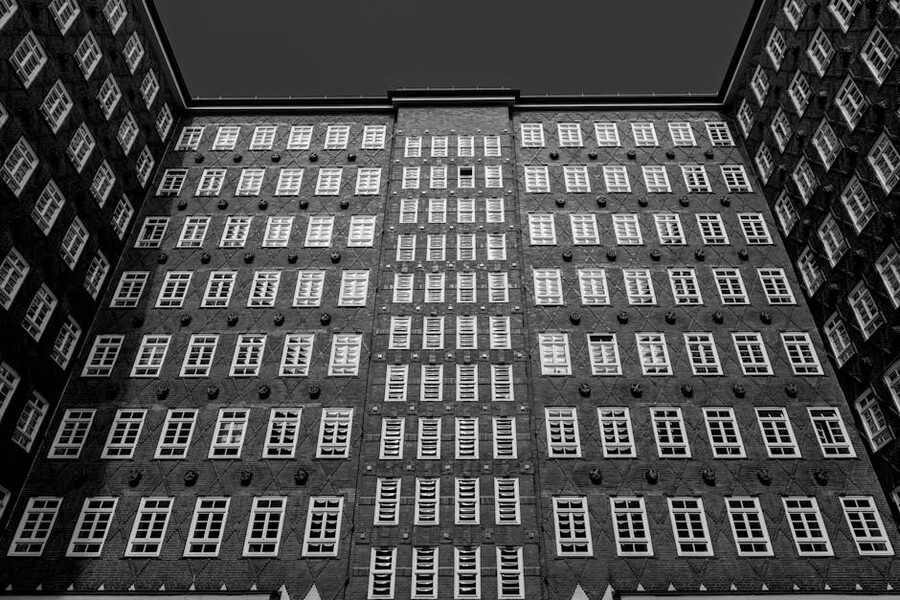
The Sprinkenhof, built in three phases between 1927 and 1943, is the largest of the Kontorhausviertel buildings and the one most worth tracking down after the Chilehaus. The famous trick: it has two entrances, and inside both are spiral staircases that look like something from a Lang film. The doors are normally closed. They’re also the entrances to a working office building, so wait a minute and someone will open them coming out. Walk in, look up, and walk out. Don’t take the lift to other floors; you’d be trespassing.
The Messberghof, Mohlenhof, and Montanhof are smaller, less photographed and worth a glance each from outside. Miramar-Haus has been heavily renovated; if your time is short, skip it. The whole loop, Chilehaus to Sprinkenhof to the rest, is about 20 minutes’ walking. Most visitors give it 90 seconds and a phone photo of the prow. They miss the point.
A working half-day plan
If you’re working with a single day, here’s the order I’d run it. It’s tight but doable.
- 08:30: Coffee at Speicherstadt Kaffeerösterei on Kehrwieder 5. Skip the chain options.
- 09:00: Walk the southern blocks of Speicherstadt. Cross the Poggenmühlenbrücke. Photograph the Wasserschloss before the day-trippers arrive.
- 10:00: 90-minute Hafen-und-Speicherstadt-Rundfahrt from Brücke 1 at Landungsbrücken. Around €25.
- 11:45: Quick lunch on the run. A Fischbrötchen at Brücke 10 is the move (€5 to €7); Der Backfisch with a small Holsten is the local order.
- 12:30: Cross Willy-Brandt-Straße into Kontorhausviertel. Chilehaus from outside, then through the courtyard. Then Sprinkenhof spiral staircases. Allow at least an hour.
- 14:00: Speicherstadtmuseum on St. Annenufer. Around an hour.
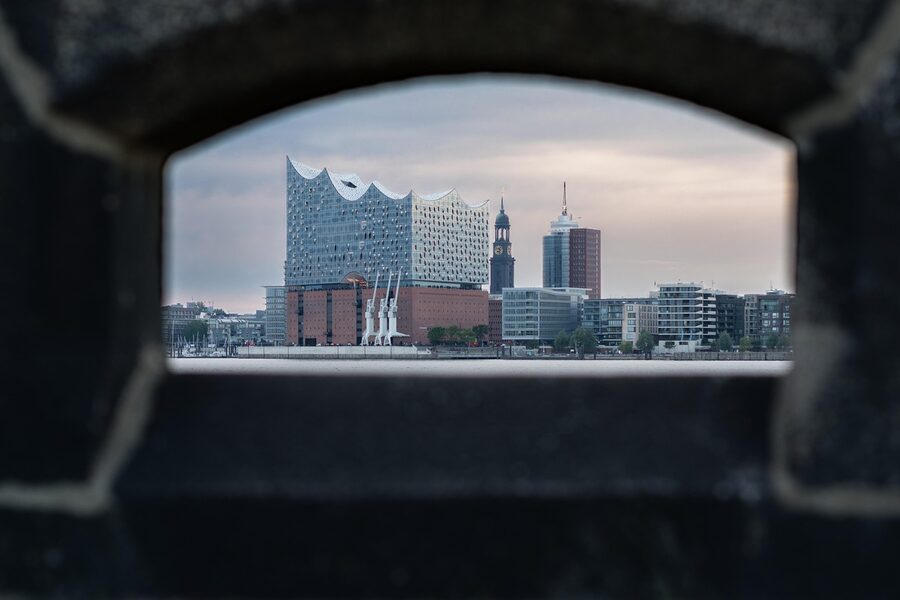
- 15:30: If the weather’s holding, walk to the Elbphilharmonie Plaza for the free 360° view from the public terrace (€3 reservation in advance, otherwise queue for a same-day free pass on site).
- 17:00: Light fades fast in winter. If it’s after October, this is the right time to stop walking and start drinking a Pilsner somewhere with a view of the harbour.
A second day, if you have one
Two days is when Hamburg starts to make proper sense. Day two I’d do as a counterpoint to the UNESCO ensemble: Rathaus and the Alster lakes in the morning, then west to Reeperbahn or south through the Elbtunnel to the Hafenmuseum side.
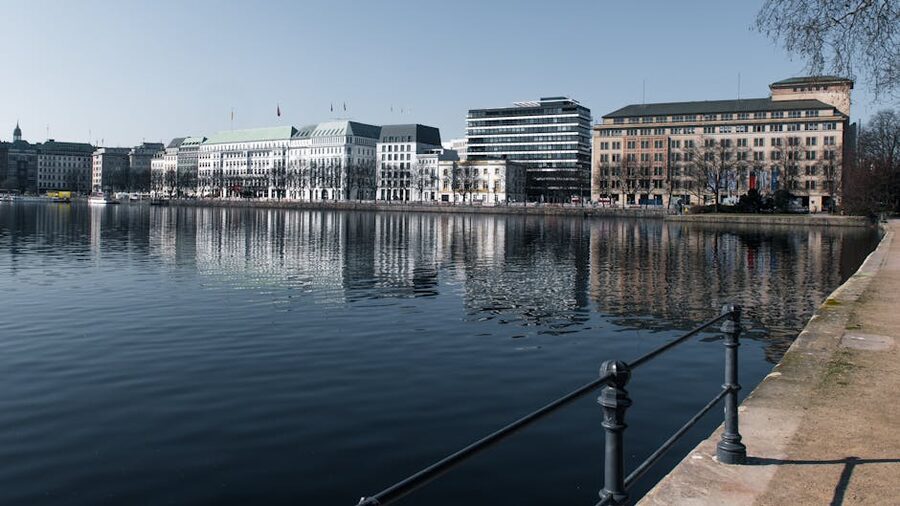
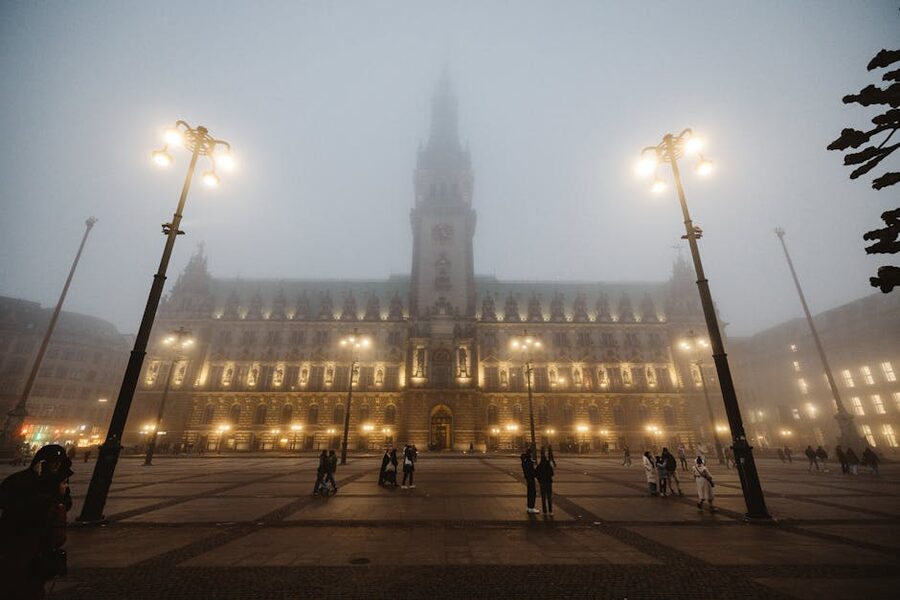
The Rathaus itself is a Neo-Renaissance pile from 1897 that sits on (no joke) 4,000 oak piles driven into the Alster mud, the same trick used in Speicherstadt. Inside is open only by guided tour, around €5, runs hourly in English in summer. Outside, the Alsterarkaden curve along the Alsterfleet and look genuinely Venetian if you squint past the rain.
St Michaelis (the Michel)
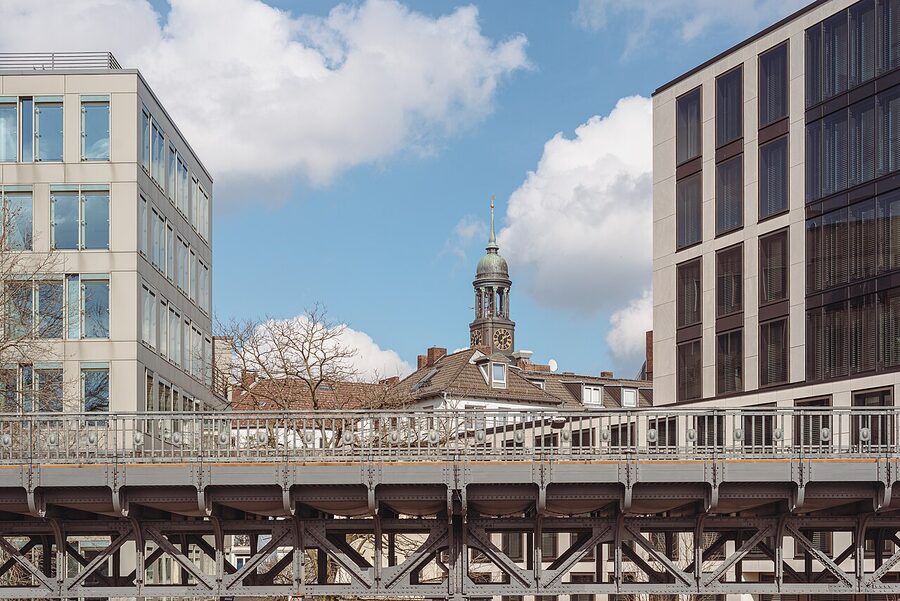
St Michaelis, locally always “der Michel”, is the baroque church the city’s silhouette is built around. The tower viewing platform costs around €8 and gets you 106 m up with a 360° look across the harbour, the Speicherstadt, and (on a clear day) all the way north to the Alster. More interesting than the Elbphilharmonie Plaza for orientation, and a fraction of the queue. Open daily, 9:00 to 18:00 in winter, until 20:00 in summer.
Reeperbahn, but during the day
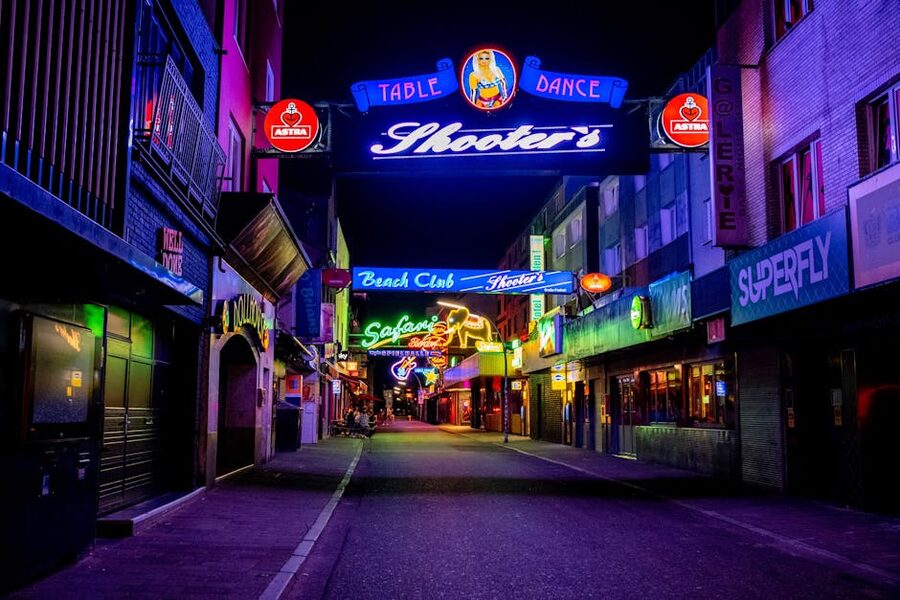
The Reeperbahn is on every Hamburg list and it earns its place, but I’ve never had a great night out there. The street is the spine of St Pauli, the famous red-light district, and at 1 am on a Saturday it’s a stag-do horror. By daylight it’s quieter, oddly architectural, and the music history is genuinely interesting. The Beatles played their early gigs at the Indra Club at Große Freiheit 64 in 1960; the building is still standing, with a small plaque. The Kaiserkeller is a few doors down. Both can be visited as venues today, but in the daytime you can simply look at them.
If you do want a proper night out, two recommendations from people I trust: Mojo Club for live jazz and electronic, Große Freiheit 36 for bigger touring acts. Skip the bus tours of “Beatles Hamburg” unless you’re a serious fan; the walking version with a local guide is much better.
Alter Elbtunnel
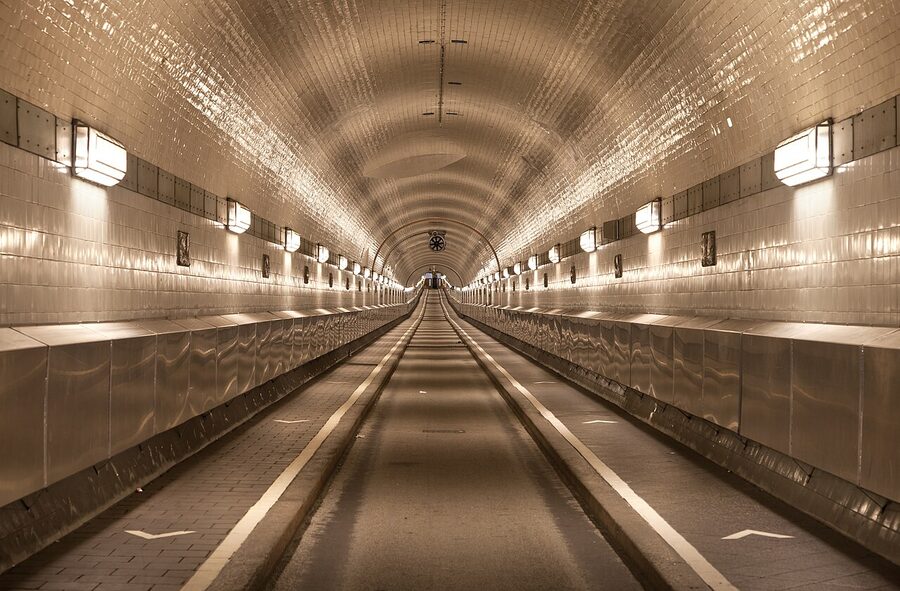
The Old Elbe Tunnel was opened in 1911, runs under the river from St. Pauli to Steinwerder, and is free to walk through. There are still working car lifts at each end (cars can use the tunnel on weekdays only). The white-tiled walls have small ceramic ornaments of fish, crabs, even a starfish or two; it’s worth slowing down to spot them. About 20 minutes one way. The viewing platform on the south side gives you the cleanest panorama of the Landungsbrücken across the water.
Sunday morning Fischmarkt
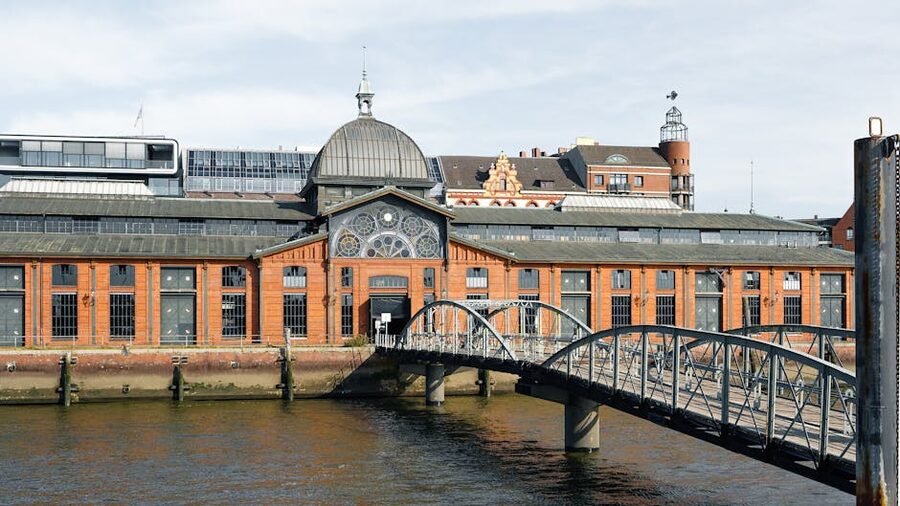
If your trip lines up with a Sunday morning, the Fischmarkt at Altona is worth the early start. It’s been running since 1703, opens at 5:00 in summer (7:00 in winter), and shuts at 9:30 sharp. The fish stalls and the brass band inside the auction hall are the show. Rolling in at 8:00 with a Fischbrötchen and a coffee after a Saturday night on the Reeperbahn is a Hamburg rite of passage that I will not personally vouch for but plenty of locals do.
Where to stay
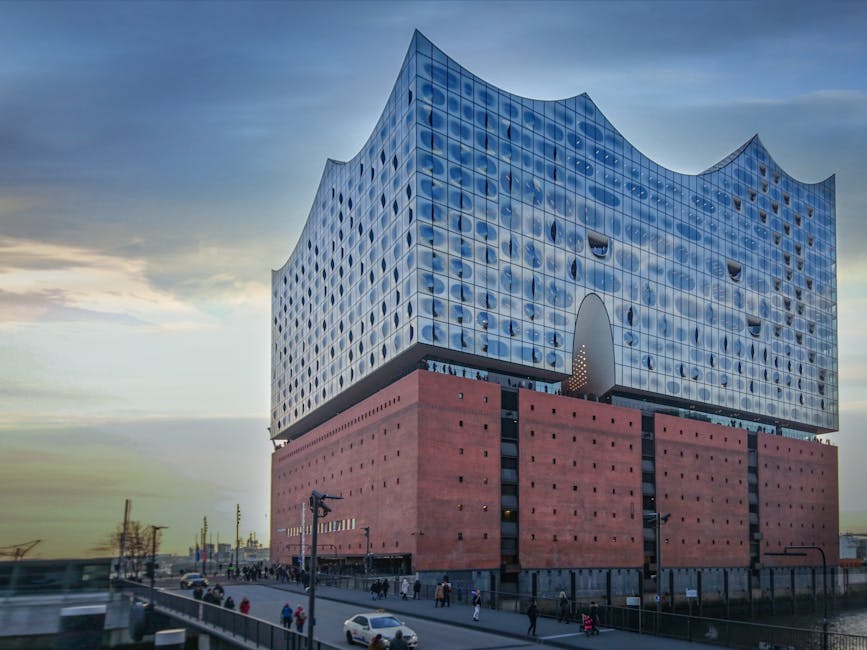
The hierarchy for a first-time visit, in plain order: stay near the Hauptbahnhof or in HafenCity. Both are walking distance to the UNESCO sites, and the Hauptbahnhof option is cheaper. Avoid hotels deep in St. Pauli unless you’re specifically here for the nightlife; the noise after 11 pm is real.
Three I’d point at, in different price brackets:
- AMERON Hamburg Hotel Speicherstadt: literally inside a converted warehouse on Am Sandtorkai. Mid-range, around €170 to €240 a night. The view from the canal-side rooms is the article you’re reading made flesh. Book ahead in summer; it sells out.
- 25hours Hotel HafenCity: design hotel on Überseeallee with a maritime fit-out, sailor-themed rooms, and a top-floor sauna. Around €150 to €220. Good for a couple, fun on a long weekend.
- Hotel Atlantic Hamburg, Autograph Collection: the city’s grand-old-dame hotel, on the Outer Alster, opened 1909. Top end (€250+ in season). Worth it once if you want to feel the pre-war Hamburg the warehouses were built for.
For budget travellers Hamburg is good. There are clean A&O hostels near the Hauptbahnhof from around €40 a night, and Generator Hamburg is the dorm option with a decent bar. Avoid anything described as a “boutique pension” near Steindamm; that stretch is grim at night and the rooms reflect it.
Getting there from the Nordic capitals
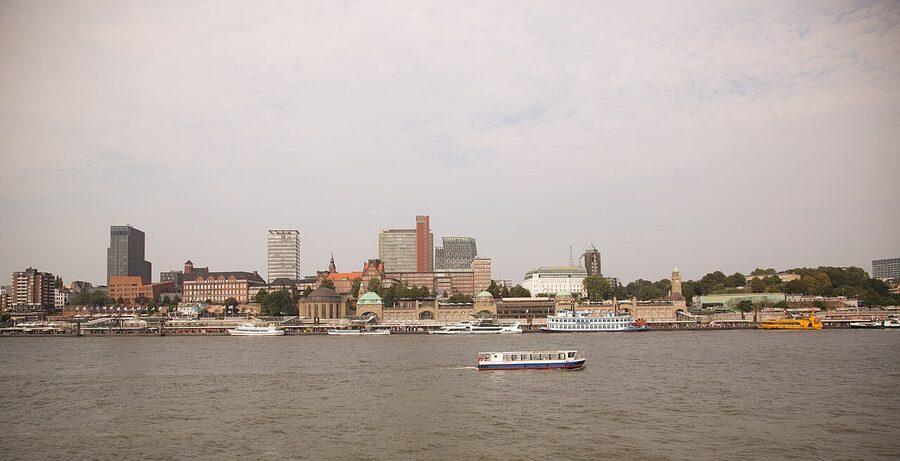
Practical routes from each Nordic capital, with the ones I’ve actually used.
From Copenhagen. The cheapest option is the train, around 4.5 hours via Rødby and the ferry crossing (or, if the Femern tunnel has finally opened by the time you’re reading this, much faster overland). Tickets from around €60 booked early. SAS and Easyjet fly the route in 50 minutes for similar money. If you’re piecing together a Nordic itinerary, Copenhagen-Hamburg is the natural pairing; pencil it in alongside the Copenhagen city guide if you want to do both properly.
From Stockholm. Direct flights with SAS or Norwegian, around 1 hour 35 minutes, often €80 to €130 return on a midweek booking. There’s no quick rail option (the train via Copenhagen is 16 hours and only worth it if you actively enjoy it). If Stockholm is your starting point, build a few days into the city itself; my three-day Stockholm guide sets that up.
From Helsinki. Finnair direct, around 1 hour 55 minutes. The Stockholm-Helsinki overnight ferry plus train down through Sweden and Denmark is doable but takes two full days; if you’re set on going overland, look at the Silja and Viking Line ferry options as the first leg. Otherwise, fly. If Helsinki is the trip and Hamburg an add-on, my Helsinki city guide covers the city itself.
From Oslo. SAS direct, just under two hours. The Hurtigruten cruise via Kiel and a short train is romantic, expensive, and slow.
From Reykjavík. Icelandair direct, around four hours. Often cheap as an add-on to a Keflavík stopover; if you’re flying Icelandair to mainland Europe anyway, Hamburg is a quieter alternative to Frankfurt.
When to go
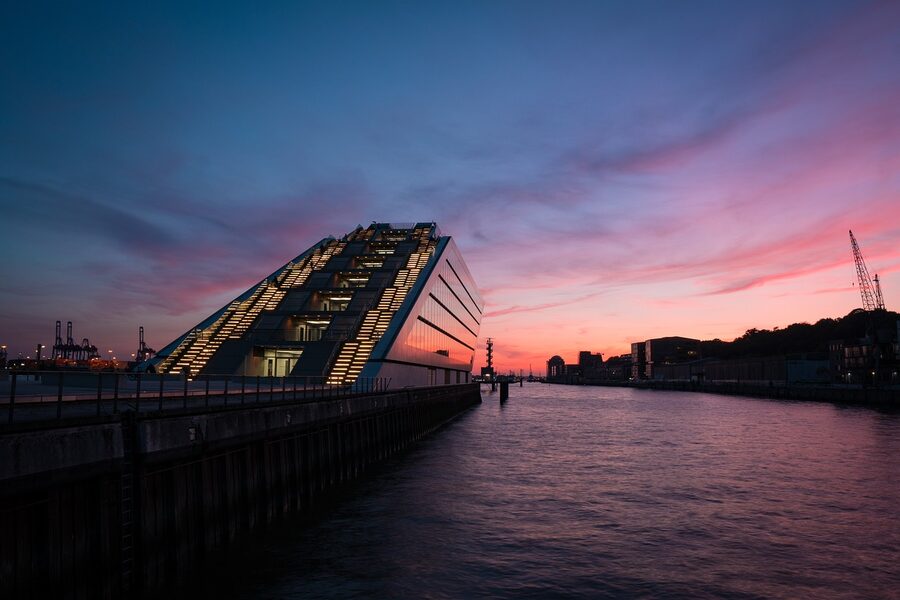
Hamburg’s weather is northern: grey and wet most of the time. Highs of 22°C in July, lows around 0°C in January, and a steady 80 days of rain a year. If you’re coming from Bergen this won’t faze you. If you’re coming from Reykjavík you’ll feel like you’ve stepped into an oven for one week in mid-July and nothing else.
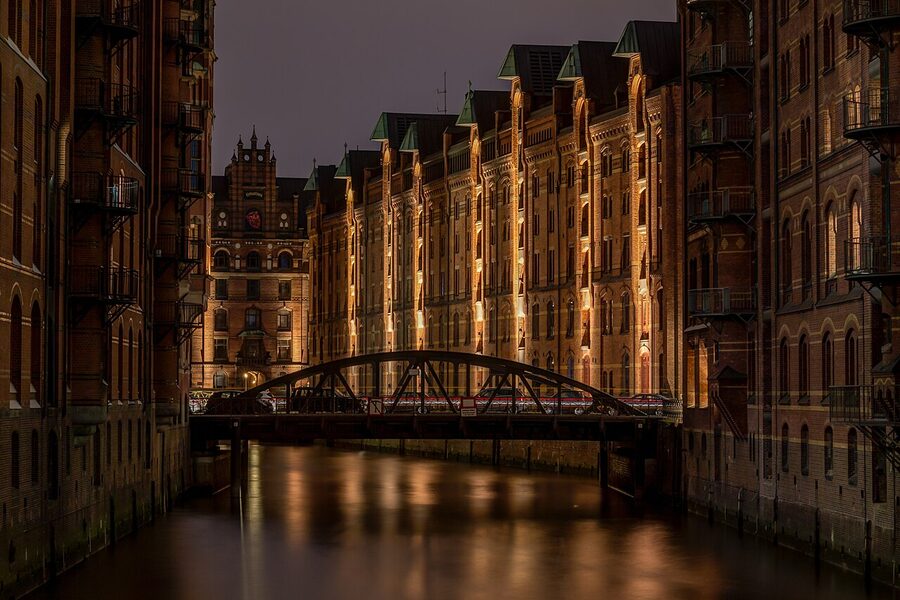
The Speicherstadt photographs best in two windows: late afternoon in autumn, when the brick goes from red to almost wine-purple in the low sun; and the half hour after the lights come on at dusk, year-round. Avoid the first week of June, when the Hafengeburtstag (port birthday) festival floods the place with two million people. The Christmas market in HafenCity (late November to 23 December) is the lower-key, higher-quality version of Germany’s more famous markets, with mulled wine on a converted icebreaker that you can drink while looking at the Elbphilharmonie.
Things I’d skip
Three things on most Hamburg lists that I wouldn’t bother with on a short trip.
- The Hamburg Dungeon. It’s an actor-led horror experience aimed at British stag groups. Skip it unless that is what you came for.
- The Big Bus tour. Hamburg is dense and walkable. The buses crawl through traffic and you see less, not more.
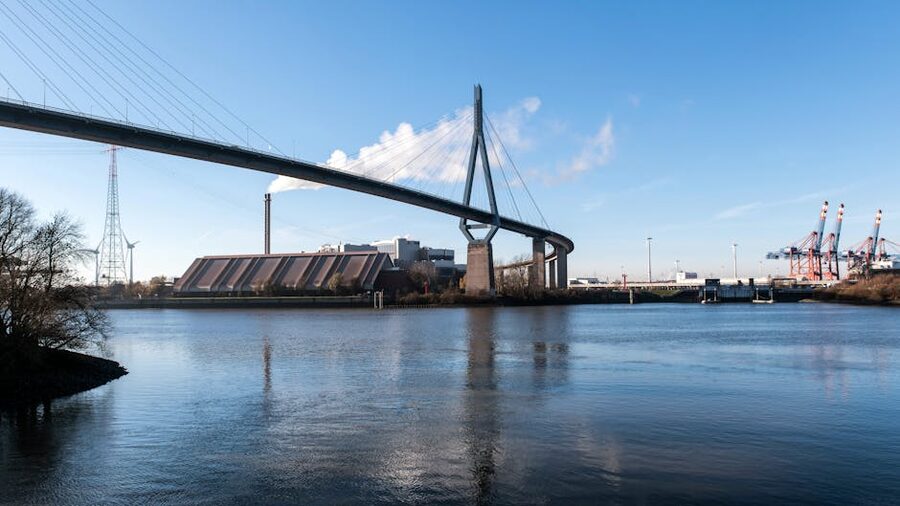
- The Köhlbrandbrücke “tour”. The bridge is genuinely beautiful from a distance; the harbour cruise gets you close enough. The dedicated coach trip is for people who collect bridges.
A note on the food
Hamburg eats like a port. Fischbrötchen on the run (€5 to €7, the standard fillings are matjes, Backfisch and Bismarck herring; ask for senf if you want mustard). Labskaus, the corned-beef-and-beetroot mash that looks alarming and tastes good, around €15 in a Kneipe. Franzbrötchen, a cinnamon-laminated pastry that’s the local answer to the Swedish kanelbulle, around €2 from any bakery. The Speicherstadt Kaffeerösterei is the coffee on Kehrwieder; Nord Coast Coffee on Deichstraße is the rival. Both are good, both are busy, both will make a flat white that wouldn’t embarrass Stockholm.
For dinner the safe bet near Speicherstadt is Oberhafen-Kantine, a tiny tilted-floor canteen that’s been doing northern German cooking since 1925; reservations needed (mains €18 to €26). For a Nordic-traveller comparison: it’s the Hamburg equivalent of Stockholm’s Pelikan, in that it does honest old-school food with no nonsense and a beer list that makes sense.
Practical bits
Currency is the euro. Tipping is the German norm: round up at a cafe, 5 to 10% at a sit-down restaurant. Tap water is fine but in restaurants you’ll be served sparkling unless you ask for “Leitungswasser” or “stilles Wasser”. The HVV public transport network covers U-Bahn, S-Bahn, buses and harbour ferries; a one-day group ticket is around €13 for up to five people, the standard adult day ticket is around €8.20 (off-peak from 9 am, around €7). Buy through the HVV Switch app rather than the machines; it’s faster and the app handles the harbour ferries.
The closest U-Bahn station to Speicherstadt is Baumwall (U3) for the western blocks, or Meßberg (U1) for Kontorhausviertel. From the Hauptbahnhof to either is around 8 minutes by metro or 20 minutes on foot, both fine. Hamburg airport (HAM) is connected to the Hauptbahnhof by S-Bahn (S1) in 25 minutes for €3.60 one-way. No taxi needed.
The view I’d leave you with
The first time I came to Hamburg I stayed for a long weekend, mostly to look at the warehouses. I went back for a second weekend the same year because the city had quietly insisted on being more interesting than I’d expected. I have made the same mistake about Hamburg that English-language travel writing tends to make about Aarhus, Bergen and Oulu: I had filed it as “secondary city, do later.” It isn’t. It’s a port city of 1.9 million with a UNESCO ensemble at its centre that almost nobody outside Germany has heard of, and it sits two hours by air from anywhere in the Nordics. Build it into your next northern itinerary. Stand on the Poggenmühlenbrücke at dusk. Eat a Fischbrötchen on Brücke 10 with a small Holsten. Walk through the Chilehaus courtyard once just to see what brick can do when it’s pushed.


.Detail.2.ajb.jpg)
.Eingang_Burchardstra%C3%9Fe_13.29133.ajb.jpg)


.jpg)
.08.12471.ajb.jpg)