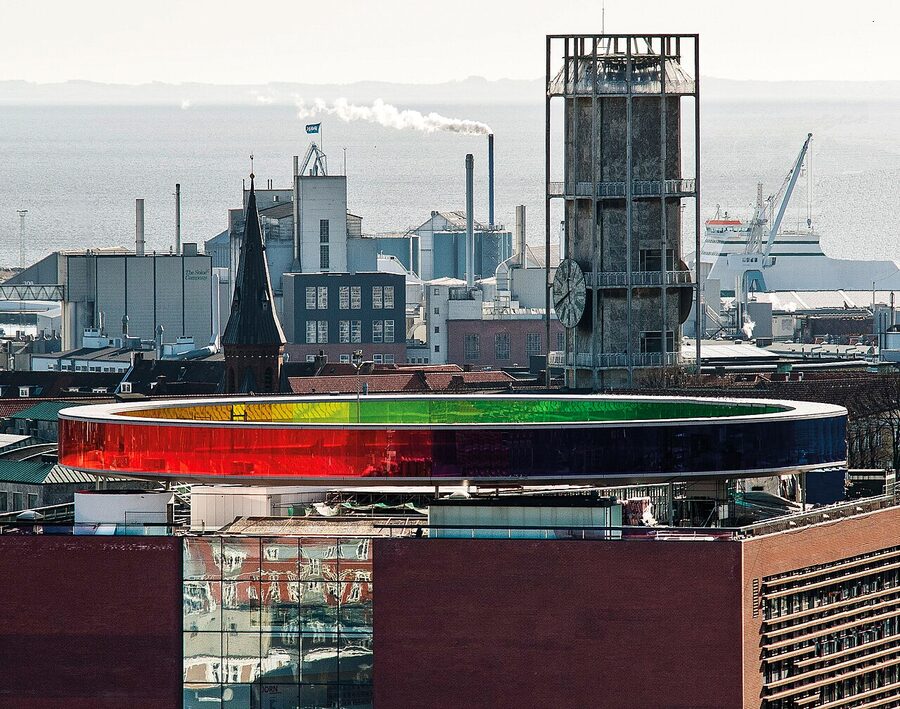
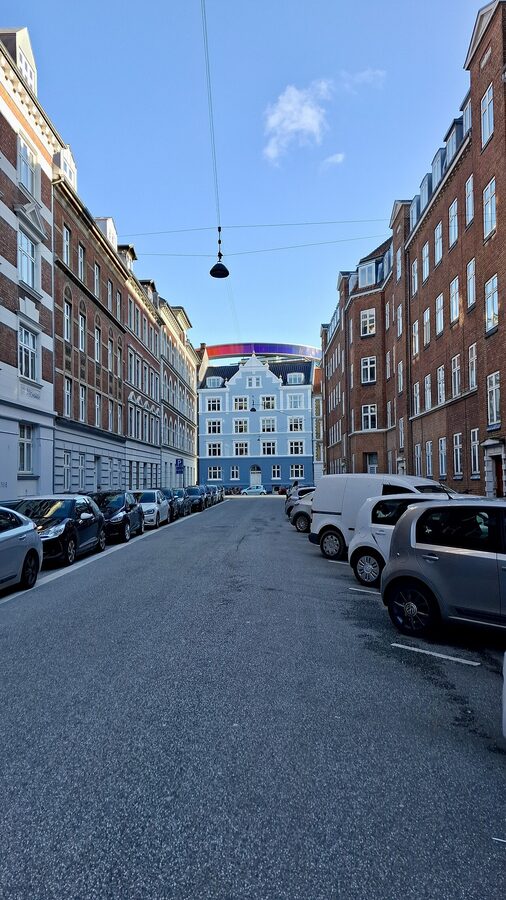
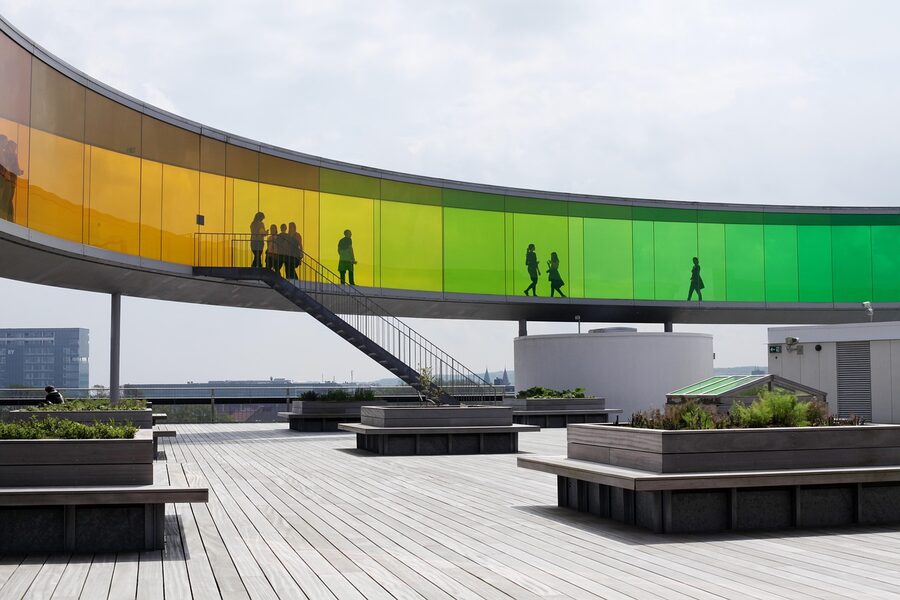
Stand on the roof of ARoS at five o’clock on a clear afternoon and the city changes colour every three steps. The 150-metre walkway is glass, every panel a different shade of the spectrum, and as you circle it your view of Aarhus shifts from cobalt to magenta to dandelion-yellow without a single building moving. Olafur Eliasson made the thing in 2011 and it has been one of the most copied photographs in Danish travel writing since. The reason it still works is that it does the one thing the photograph can’t: it tells you, in colour, that you’re standing 52 metres above a city that is small enough to take in at a glance and dense enough to spend a week in.
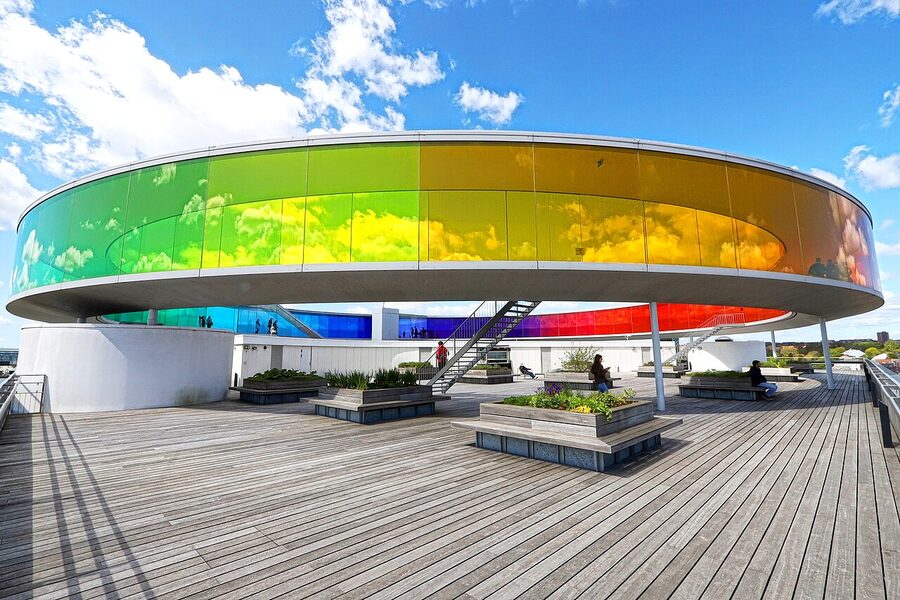
I’m not going to spend this guide telling you Aarhus is a quieter version of Copenhagen, because it isn’t. It’s a city of about 360,000 people on the Jutland side of Denmark with a 12th-century cathedral, an Iron Age bog body, an open-air museum that runs continuously from the 1500s to a 2014 shopping mall, a Olafur Eliasson rooftop, the tallest building in the country, and a harbour redevelopment that you can swim in from June to September. It happens to be the second-largest city in Denmark. That’s geography, not a quality assessment, and I’d rather just write about Aarhus on its own terms.
In This Article
- Getting here, and why the train is the answer
- Where to stay, and which neighbourhood will save your feet
- ARoS: yes, the rainbow, but also the basement
- Den Gamle By: the time machine that actually works
- Moesgaard, and the man in the bog
- The Domkirke and a brief history of an old city
- The Latin Quarter
- Aarhus Ø and the harbour: the city Aarhus is becoming
- Where I’d actually eat
- Frederiksbjerg, the deer park, and what to do with a bike
- Den Uendelige Bro: walk a circle over the sea
- When to come (and why August is special)
- Getting around once you’re in
- Practicalities, in roughly the order you’ll need them
- How long you’ll actually want
Getting here, and why the train is the answer
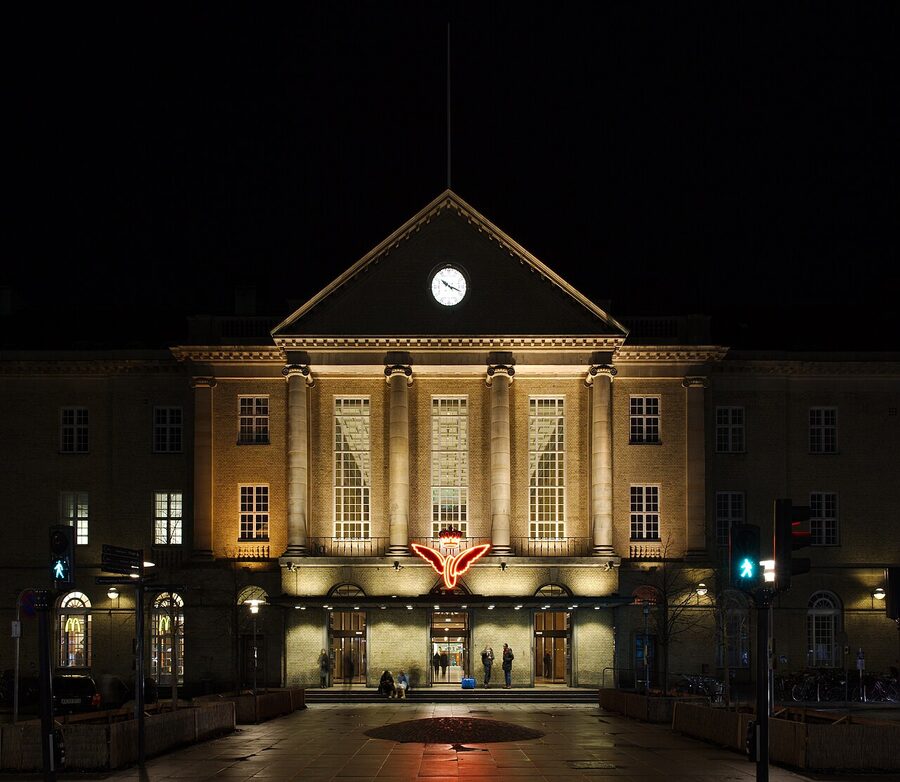
From Copenhagen, the fast Lyntog services run København H to Aarhus H in roughly 3 hours. You leave the island of Zealand, cross the Storebælt fixed link (the 18-kilometre road and rail bridge over the Great Belt that opened in 1997), traverse Funen via Odense, then cross the Lillebælt onto the Jutland mainland. Buy DSB‘s Orange-billet tickets at least a week ahead and you’ll typically pay 99 to 199 DKK (~€13 to €27) one-way. The walk-up fare on departure day is roughly 459 DKK (~€62). Reserve a seat for 30 DKK (~€4) at booking; it isn’t optional in your head, only on the website.
If you’re piecing together a longer Nordic trip, Aarhus connects neatly back to the Copenhagen pillar, which I’d suggest as the comparison point only because most people will already have it on the itinerary. Coming the other direction, the Hamburg to Aarhus train via Flensburg and Padborg takes about 4 hours 40 minutes with one change; this is the same line travellers used to ride for the Speicherstadt and Kontorhausviertel weekend, which I covered separately in the Hamburg UNESCO sites guide. The Flixbus from Copenhagen runs about the same time as the train at half the price, which is fine if you don’t mind motorways. The Kombardo Expressen bus-and-ferry combo from Copenhagen leaves the island via Sjællands Odde and the Mols-Linien fast cat: gentler scenery, similar journey time, slightly cheaper than the train.
Where to stay, and which neighbourhood will save your feet
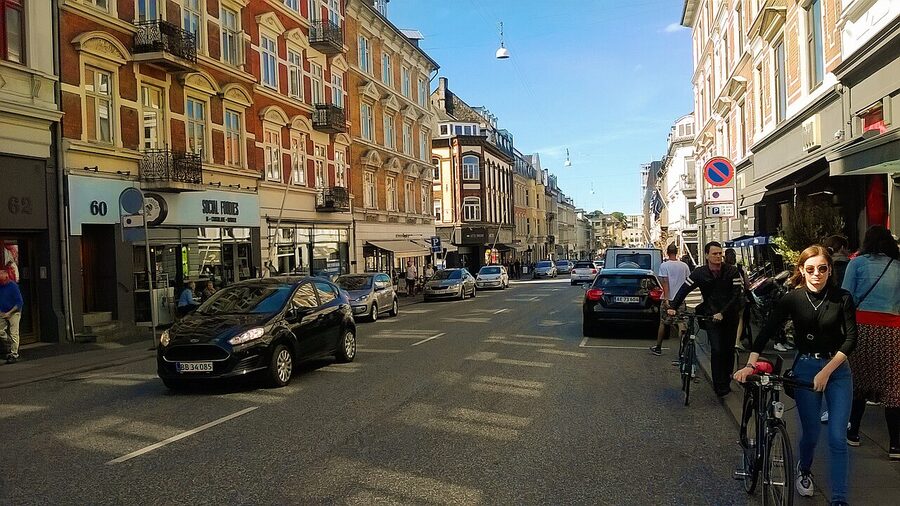
Almost everything you’ll want to do is inside the 8000 Aarhus C postcode, which is what locals mean when they say “the centre”. You can walk from the train station to ARoS in 12 minutes and to Den Gamle By in 25. So pick a hotel and stop overthinking it.
For a first stay I’d put you in the Latin Quarter or in Frederiksbjerg, the residential block south of the station that has most of the city’s good bakeries on a single street. Villa Provence is the most charming small hotel I know in town: 40 rooms in a converted townhouse near Mølleparken, French rather than Scandi in tone, doubles from around 1,150 DKK (~€155). City Hotel Oasia is the dependable mid-range pick: a 5-minute walk from Aarhus H, breakfast included, doubles from around 900 DKK (~€121). For the budget end, the central Cabinn Aarhus on Kannikegade is the most no-frills option that’s still walkable to everything; rooms are small, doubles from around 700 DKK (~€94). The Wakeup Aarhus by Arne Jacobsen Hotels Group near the harbour is the design-on-a-budget choice and has the better location of the two budget hotels.
Mid to top end: Scandic Aarhus City sits a block from ARoS, doubles from around 1,200 DKK (~€161). The Radisson Blu Scandinavia is the same block, slightly older, big rooms, doubles from around 1,100 DKK (~€148). For a one-time treat south of the city, Helnan Marselis Hotel sits on the bay 4 km south of the centre with views straight out to sea and a private path down to Ballehage Strand.
Skip the suburb hotels unless you’re driving and need parking. Aarhus is small and the buses in from anywhere outside the centre are not cheap.
ARoS: yes, the rainbow, but also the basement
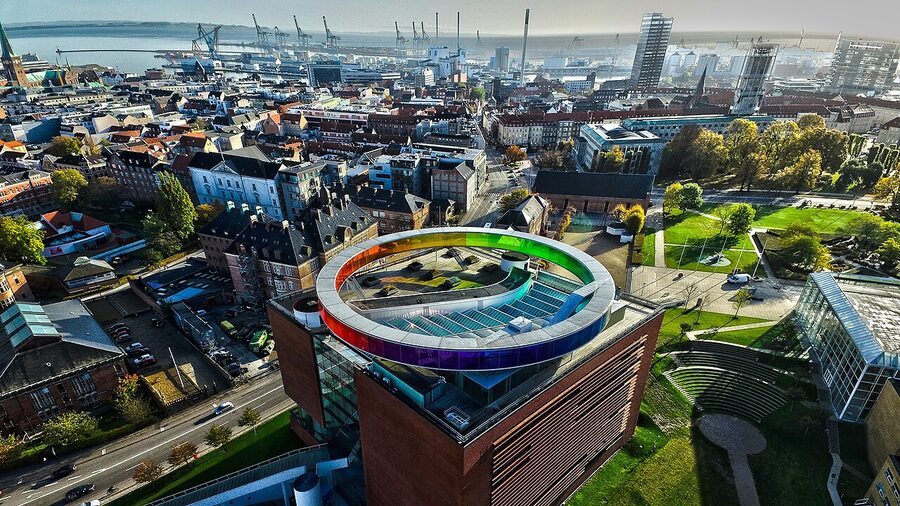
ARoS is the largest art museum in Denmark outside Copenhagen, with eight-and-a-half floors of permanent and rotating exhibitions and a 1,300-square-metre rainbow on top. Adult admission is 165 DKK (~€22), under-30s 130 DKK (~€18), under-18s free. Hours are 10:00 to 21:00 Wednesday and 10:00 to 17:00 the rest of the week (closed Monday). The first thing most people do is go up; the second thing many people skip is the basement, which is a mistake.
The 9 Spaces is the lower-level installation: nine site-specific rooms in pitch black or saturated colour by artists including Tony Oursler, Pierre Huyghe, James Turrell, Bill Viola and Carlos Amorales. They run continuously and you wander through one to the next. James Turrell’s Endstation Aarhus is the room everybody talks about (a single coloured volume of light that you walk into) but the Bill Viola at the end is the one I keep going back to. Allow 90 minutes for the basement plus 30 for the ring at the top. The Boy by Ron Mueck on the lower mezzanine, a 4.5-metre crouching figure, is the main draw between the two. Plan three hours total.
Den Gamle By: the time machine that actually works
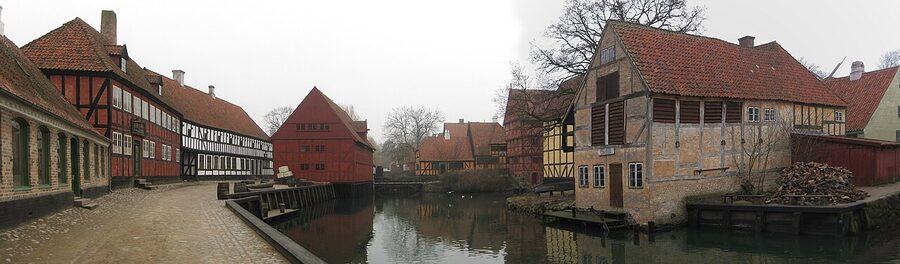
Den Gamle By means “the old town” and that’s exactly what it is: 75 historic Danish buildings disassembled in their original locations across the country and reassembled here over the course of a century, with the first house moved in 1909. What makes it work as a museum, rather than a theme park, is that it isn’t only old. It’s three time periods running side by side: a 1864 market town, a 1927 quarter, and a 1974 quarter that includes a working hi-fi shop, a Maoist bookshop, a women’s clinic, and a pølsevogn (sausage cart) selling actual hotdogs.
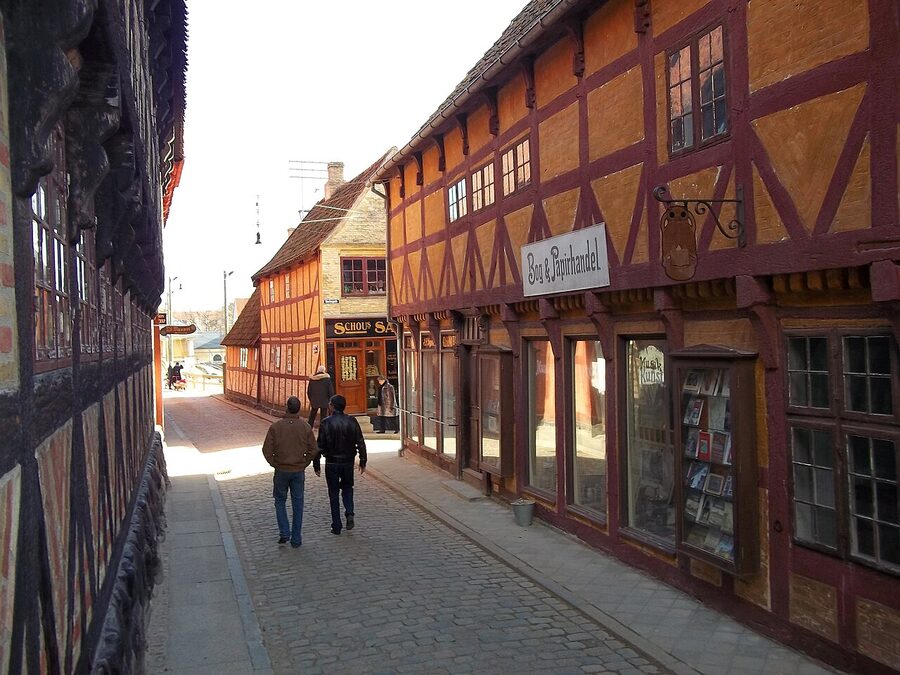
You walk in, you go left, and you basically time-travel from the Industrial Revolution to the year you were probably born. The interpreters are in costume but won’t pin you down for a tour unless you want one. Adult admission is 160 DKK (~€21) in winter, 195 DKK (~€26) in summer, and 215 DKK (~€29) during the Christmas weeks (the Christmas market season is when most Danes visit, and the museum doubles its decorations across all three quarters). Children under 18 are free. The 1974 toy shop on Storgade still sells the Lego sets it sold then; the 1864 baker on Algade sells real bread. Plan four hours. If you visit in November or early December you’ll get the Christmas market on top, and the cellar pub in the 1864 quarter does a respectable mulled wine.
Moesgaard, and the man in the bog
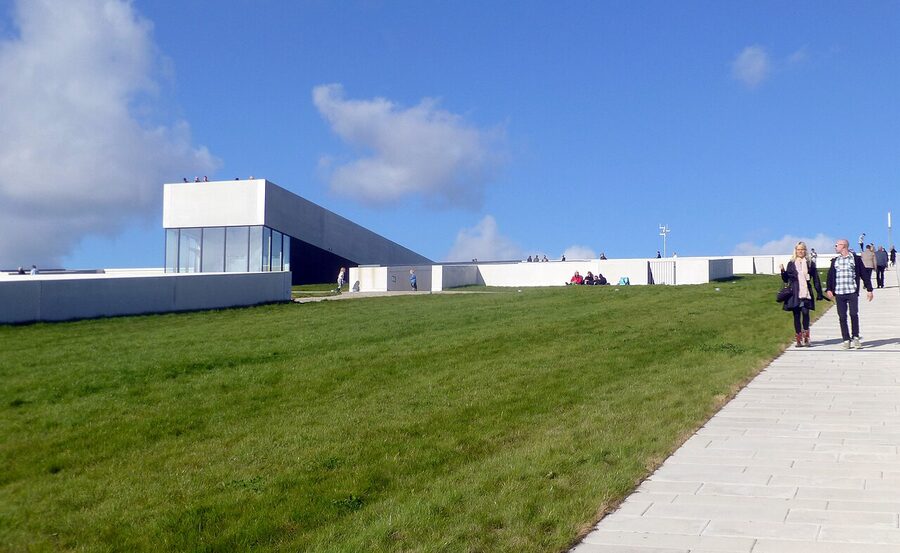
Moesgaard sits 9 km south of the centre, a 30-minute ride on city bus 18 (which leaves from Park Allé and runs to Moesgaard Allé) or 18 minutes on the bus 31 from the train station. You see the building before you reach it: a single sloped grass plane that rises out of the meadow as if a chunk of the field had peeled up at one corner. Henning Larsen Architects finished it in 2014, and the slope is climbable. Locals bring sleds in winter, picnic blankets in summer. The cafe inside has a wall of glass that frames it as you walk down towards the entrance.
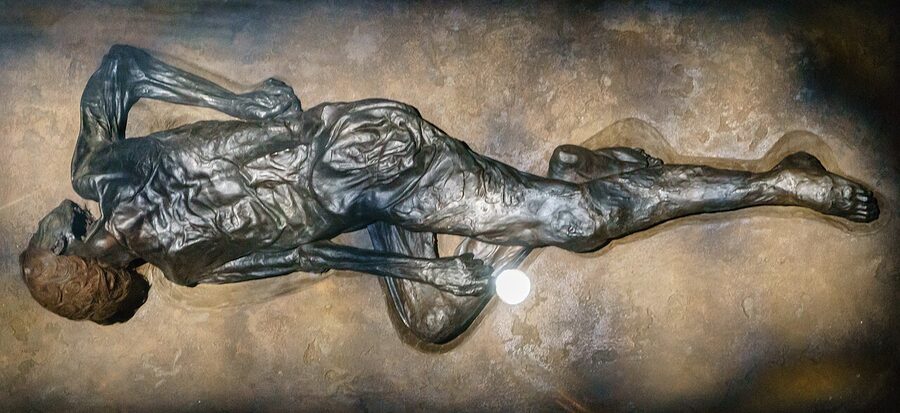
The reason most people come is the Grauballe Man, an Iron Age body pulled out of a peat bog 35 km west of Aarhus in April 1952 by a labourer named Tage Busk Sørensen, who was cutting peat for fuel. He’s about 2,300 years old, dated to roughly 290 BCE. His throat was cut from ear to ear; the leading theory is human sacrifice. The peat preserved him so completely that you can see the wrinkles on his fingers and a single hair caught in his eyebrow. The presentation at Moesgaard is dim and respectful, and you’re allowed to look at him properly without the queue management of, say, the British Museum’s Lindow Man room. He sits at the bottom of the prehistoric exhibition, after the Stone Age and the Bronze Age halls.

The rest of the museum runs forward through the Viking Age (the Aarhus harbour was a Viking trading post called Aros from around 770) and into the medieval. Adult admission 200 DKK (~€27), under-18s free. Open 10:00 to 17:00, closed Monday. Plan three hours. If you have a clear afternoon, walk the Prehistoric Trail in the woods behind the museum: it loops 2 km past reconstructed graves and a Stone Age house, ends at the beach at Moesgård Strand, and you can take bus 31 back from there.

The Domkirke and a brief history of an old city
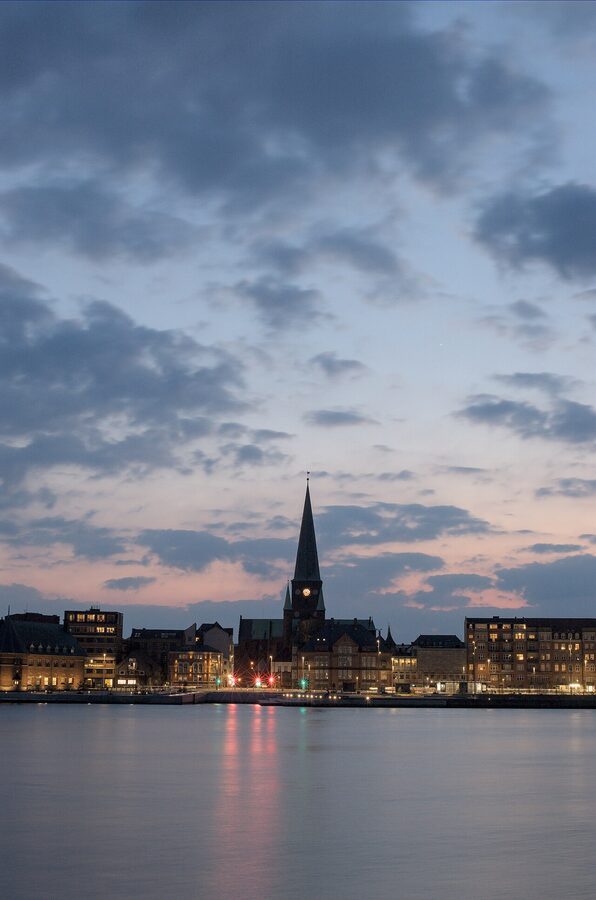
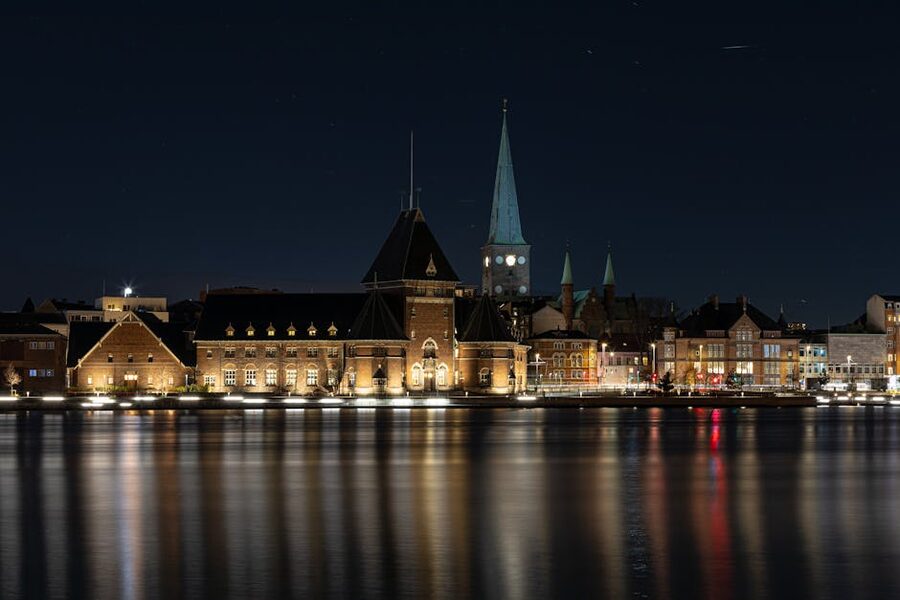
Aarhus Domkirke (Aarhus Cathedral, dedicated to Saint Clement, the patron saint of sailors) is the longest church in Denmark at 93 metres. The current Gothic building was finished around 1300; the earlier Romanesque cathedral on the same site dates to the late 1100s. Bishop Peder Vognsen, who commissioned both, is buried under the floor of the choir. The church survived a 1330 fire, the Reformation, and a 19th-century restoration that put back the medieval frescoes the post-Reformation whitewash had hidden for three centuries. Several of those are still visible high on the nave walls.
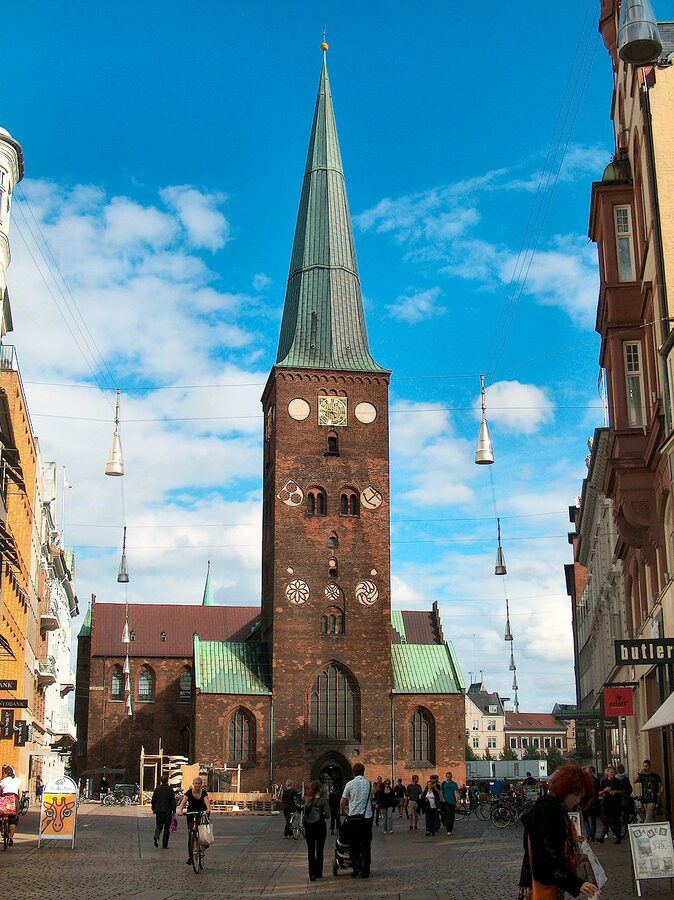
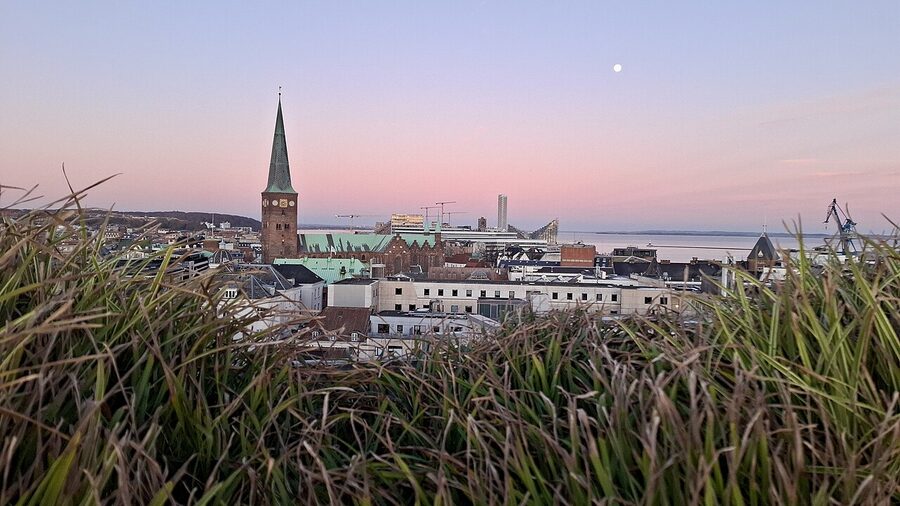
This is also the long view of why Aarhus is here at all. The settlement at the mouth of the Aarhus Å (the river) has been continuously inhabited since around 770 CE, when the Vikings dug an earthen rampart around a small trading post. The town’s old name, Aros, means “river mouth”. Excavations in the 1960s found Viking-era halls, weaving combs, hacksilver, and a Frankish coin under what is now the Latin Quarter. Aarhus got its first market charter in 1441. The old earthen rampart survived in fragments through the early 1400s, when the city was finally allowed to demolish it; the Latin Quarter was built on the cleared ground.
If you want a single layered hour, climb the cathedral spire (free for the cathedral itself; 30 DKK to climb the bell tower), then walk three minutes south to the free Salling Rooftop, which is a public terrace on top of the Salling department store with the second-best view of the cathedral spire and the city.
The Latin Quarter
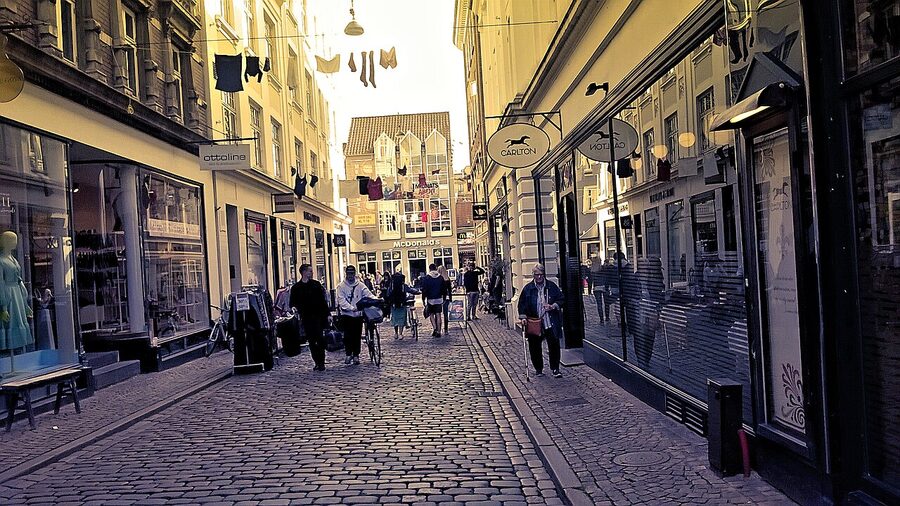
The Latinerkvarteret is the densest patch of small streets in Aarhus and the part most visitors are happiest to wander without a destination. The shops are mainly independent: secondhand bookshops on Rosensgade, a couple of vintage clothing places on Studsgade, the wonderful Café Ris Ras for filter coffee and Belgian beer (cash only on the small payments, no minimum), the design-led Tres for ceramics on Graven. Soul Shine, the secondhand store the Guardian’s local-author guide named in 2022, is still going on Volden. The square at Pustervig Torv is the natural pause: order a Tuborg Klassisk and watch what walks past for half an hour.
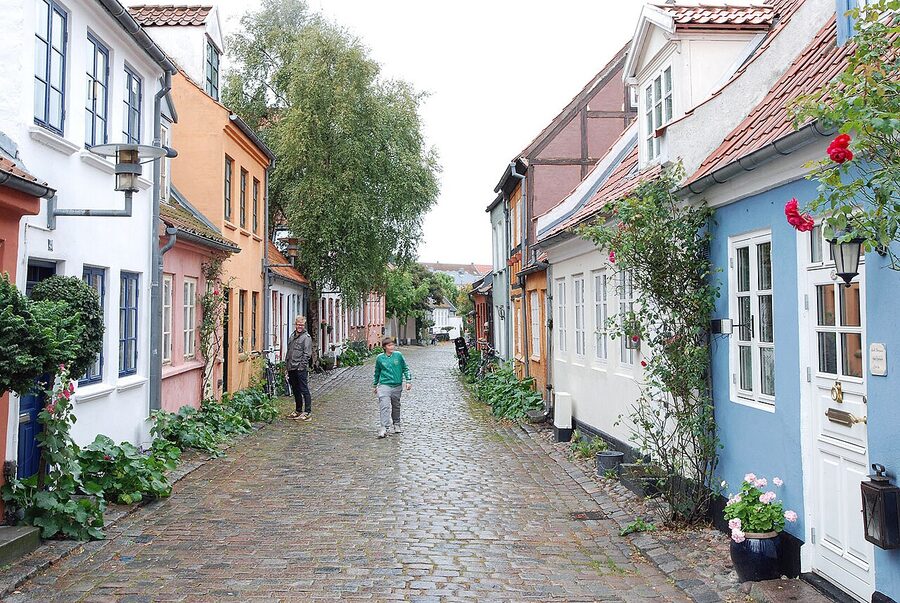
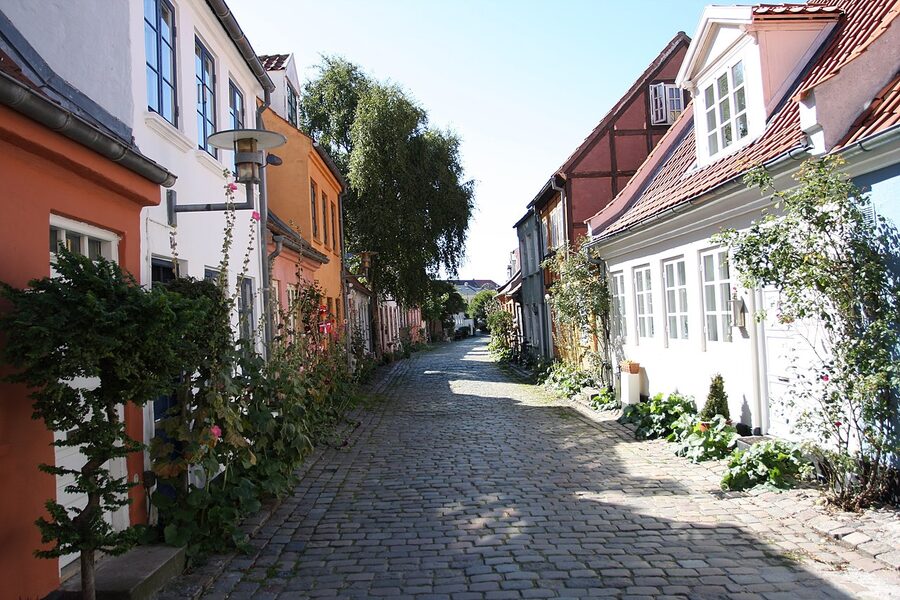
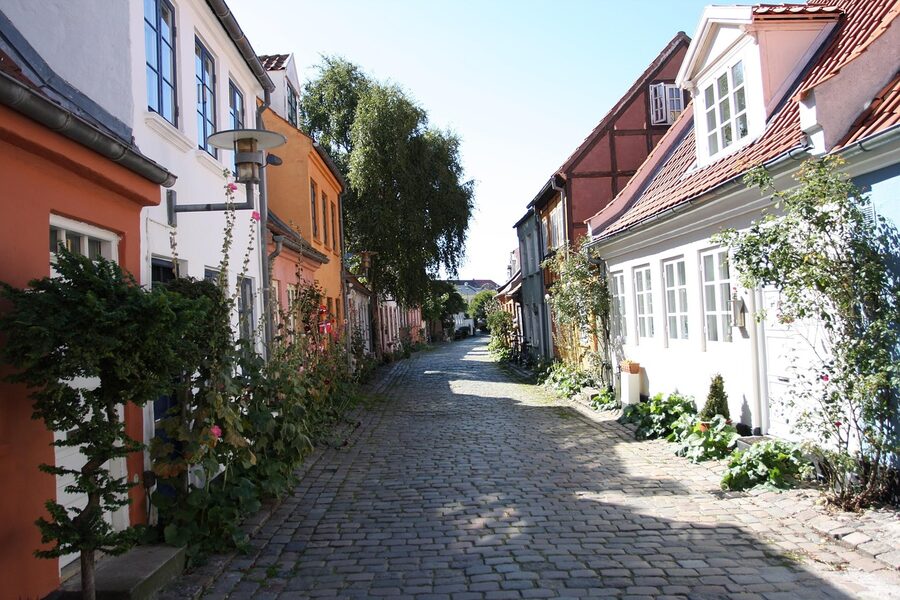
Tucked into the western edge is Møllestien, a 240-metre lane of pastel-painted cottages with hollyhocks growing up to the eaves. People still live here. Don’t lean on doors, don’t open gates, and try not to be the third selfie-stick of the morning. It’s a working street that has photographed well for 150 years and has not lost the courtesy of its residents yet.
Aarhus Ø and the harbour: the city Aarhus is becoming
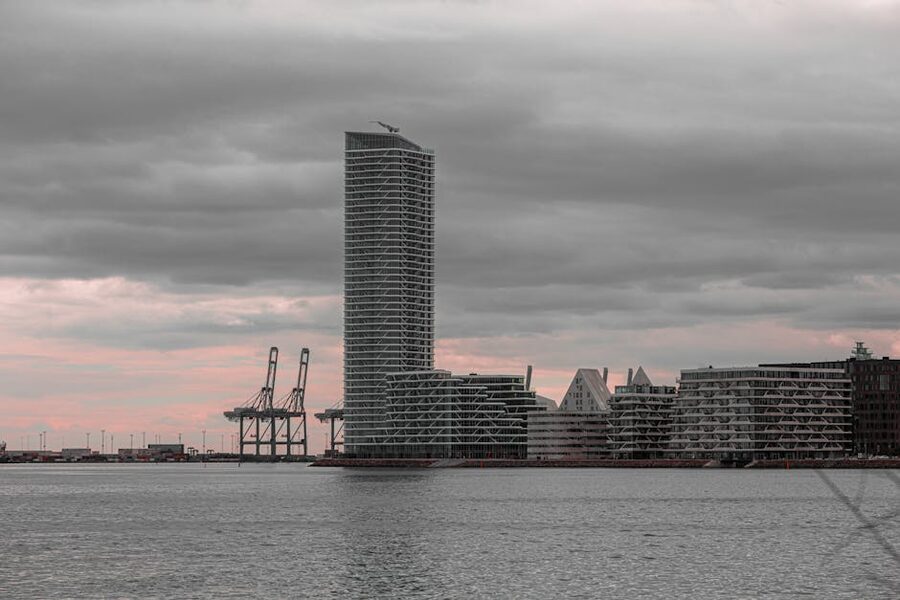
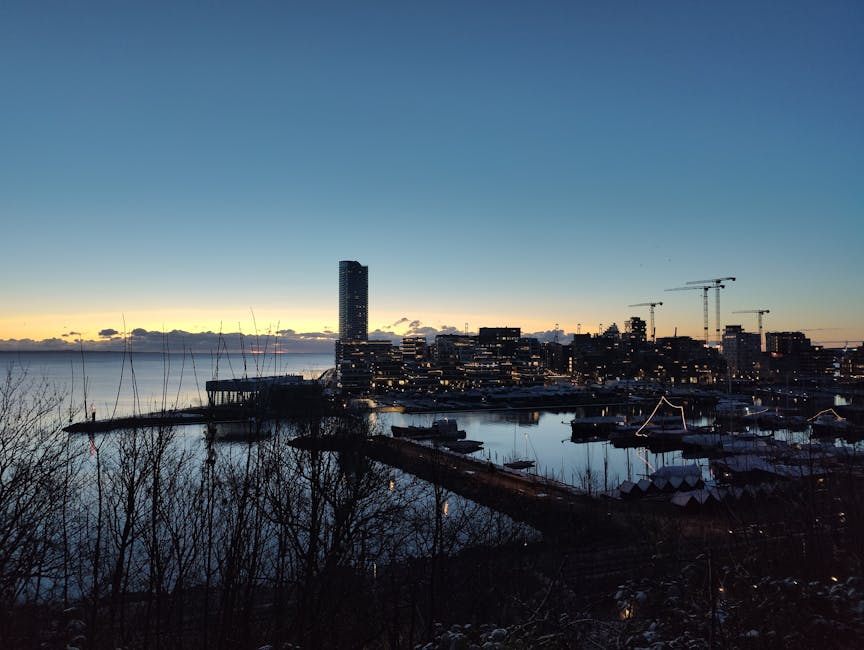
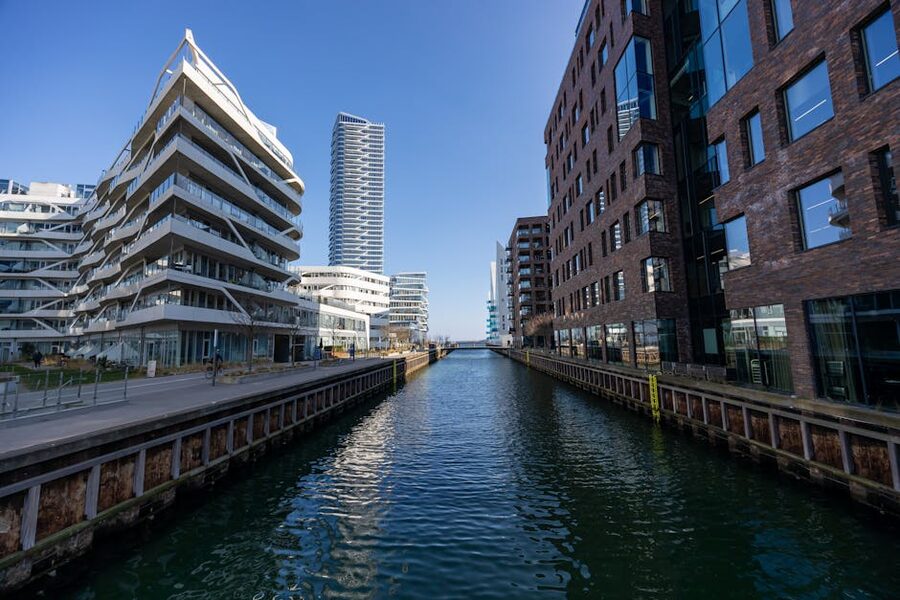
The harbour redevelopment is the new piece of Aarhus and worth at least half a day. Until the early 2000s the entire eastern end of the harbour was working container port; the docks have moved further out and what’s left is a 1.4-million-square-metre district of new apartments, public swimming basins, the country’s tallest building, and the country’s best library. The land bridges out from the old harbour edge in three sections, called Bassin 7 (the closest in), Pier 1, and Pier 2. From the train station to the foot of Aarhus Ø is a 20-minute walk along the eastern bank of the river; the Letbane (light rail) covers the same distance in 7 minutes from Dokk1 station.
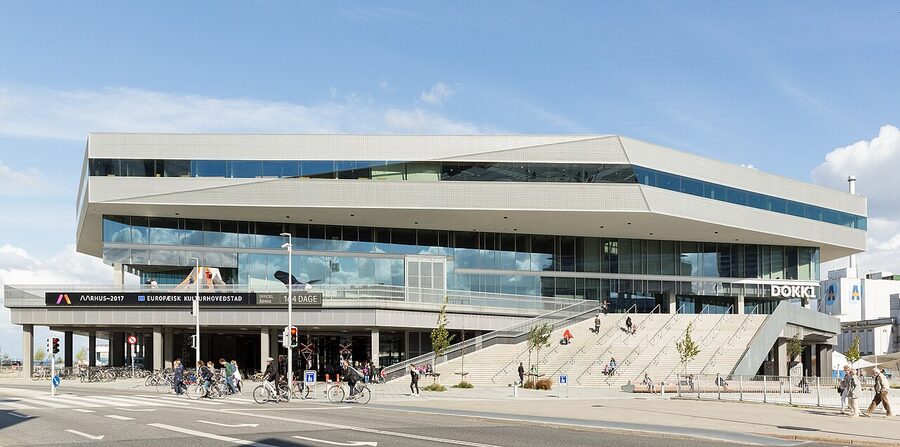
Dokk1, finished in 2015 by Schmidt Hammer Lassen Architects, is your gateway. It’s a 35,600-square-metre civic library with a children’s section the size of a small hotel, an automated book-sorting machine you can watch through a glass wall, a four-tonne bell that rings whenever a baby is born in the city’s hospital (the parents press a button from the maternity ward), and a tall glass facade that frames the harbour. It also has the best free toilets in Aarhus. Open 8:00 to 22:00 weekdays, 8:00 to 18:00 weekends. Just go in.
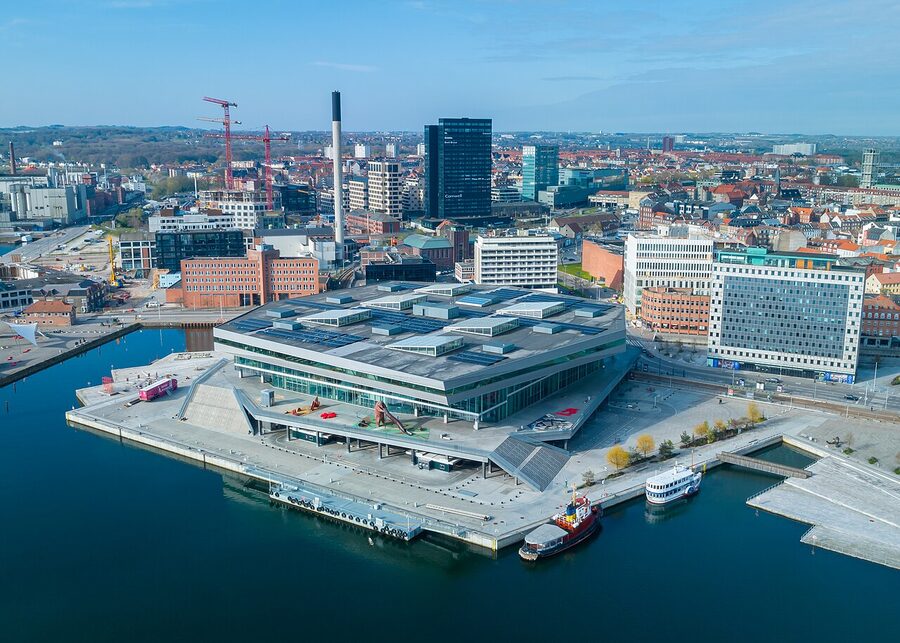
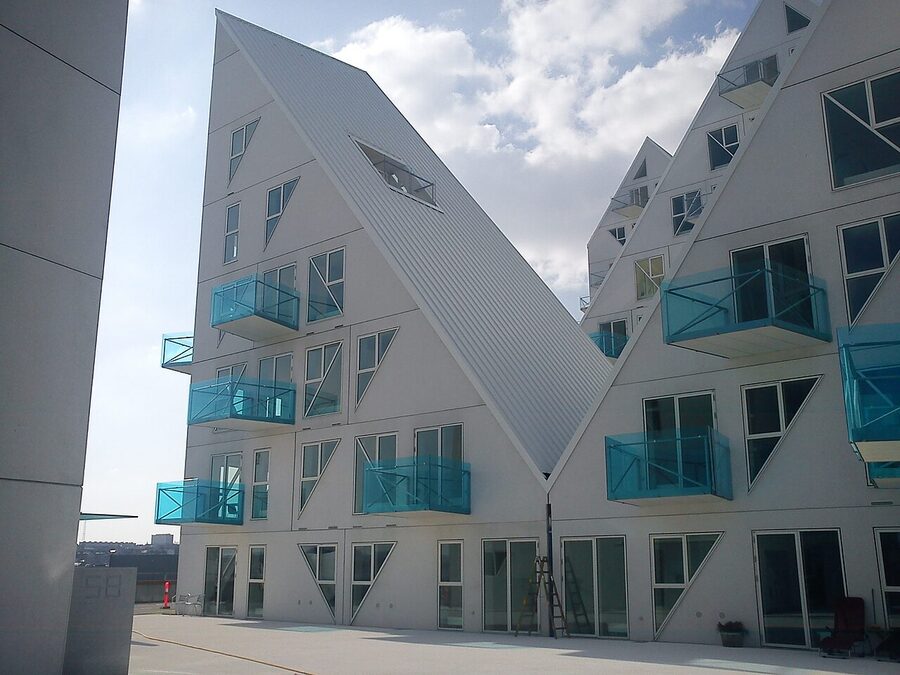
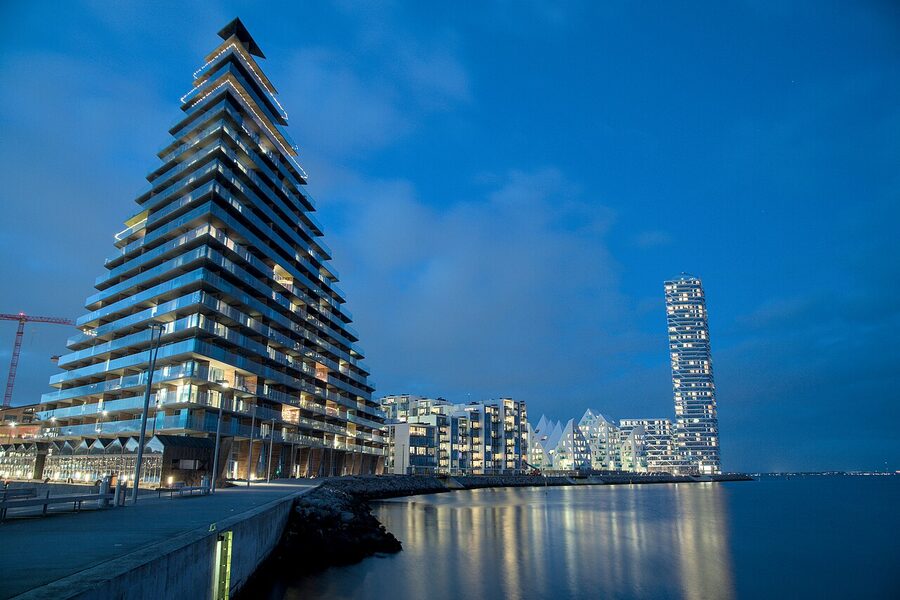
From Dokk1, walk north along the quay onto Aarhus Ø proper. The Iceberg complex (Isbjerget), four jagged white residential blocks shaped like calving icebergs, was the first big build of the new district in 2013. The Lighthouse, the 142-metre cylindrical residential tower at the far tip of Aarhus Ø, became the tallest completed building in Denmark when its top floor was occupied in 2023; it has 142 apartments across 41 floors. There’s a viewing platform, Aarhus Øje (Aarhus Eye), open to the public for 145 DKK (~€20) adults. The view is genuinely something. The whole bay opens out, you can see the Mols hills across the water, and on a clear day you can spot Samsø island 40 km out.
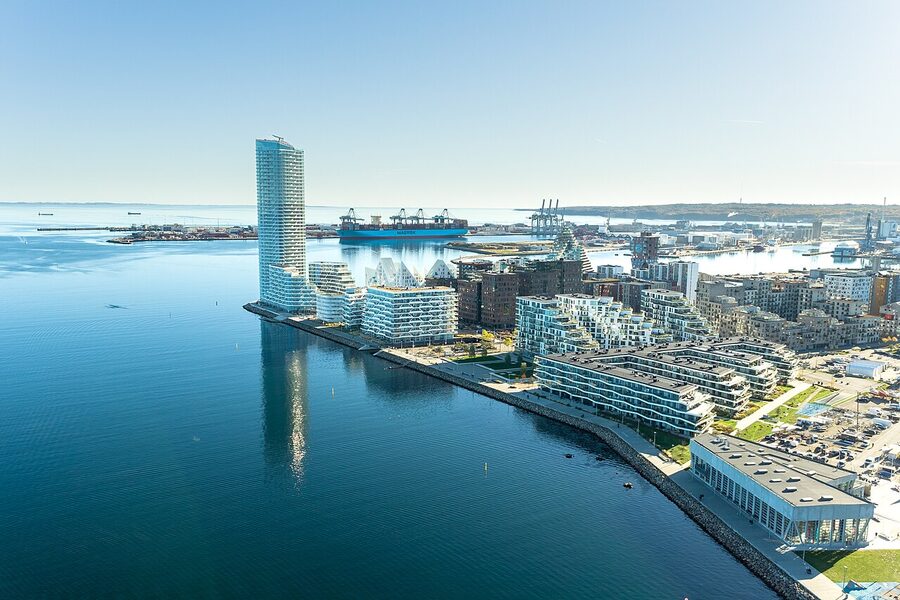
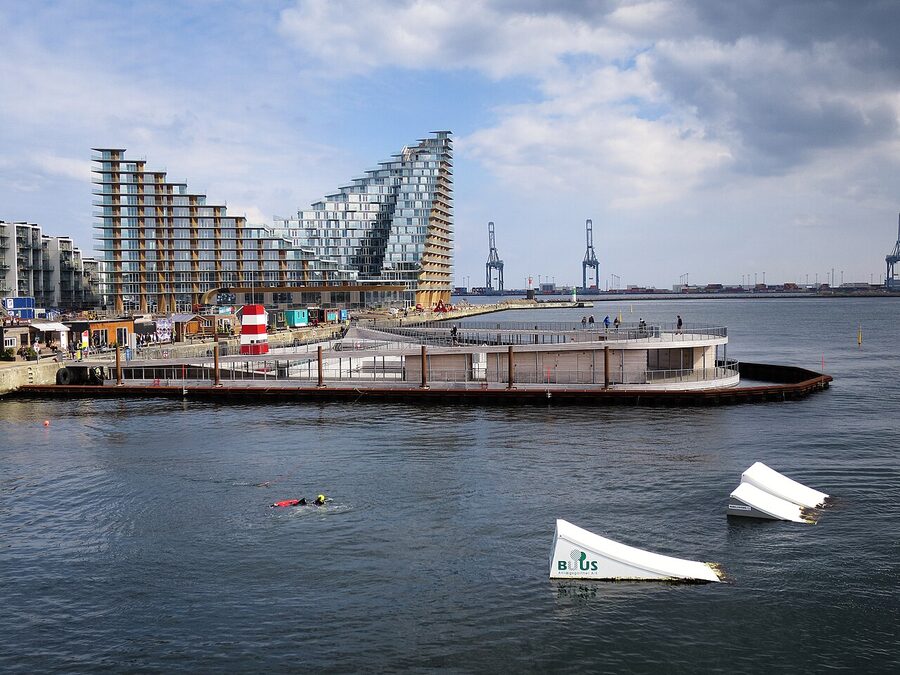
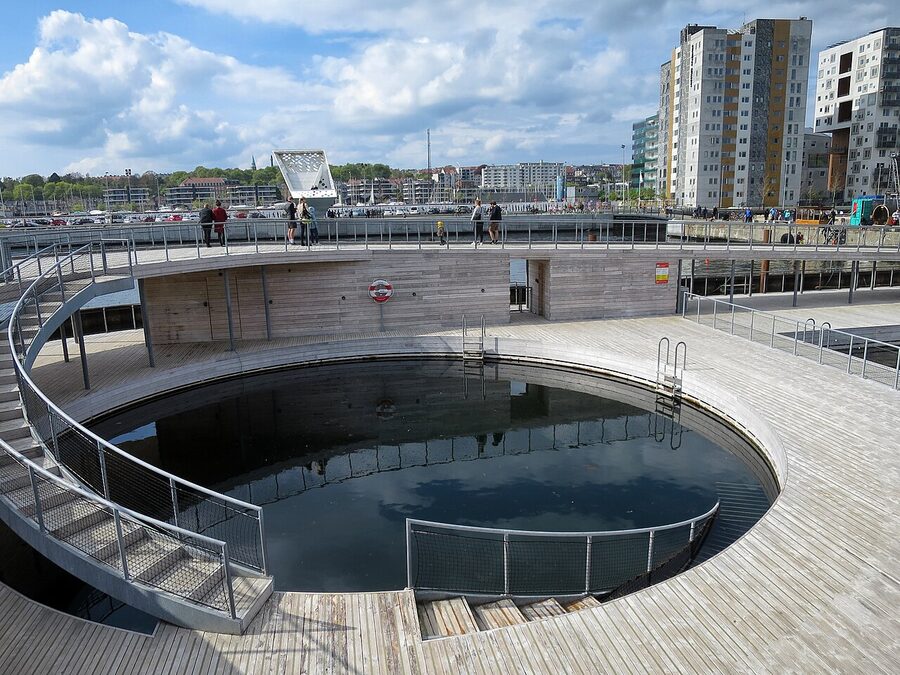
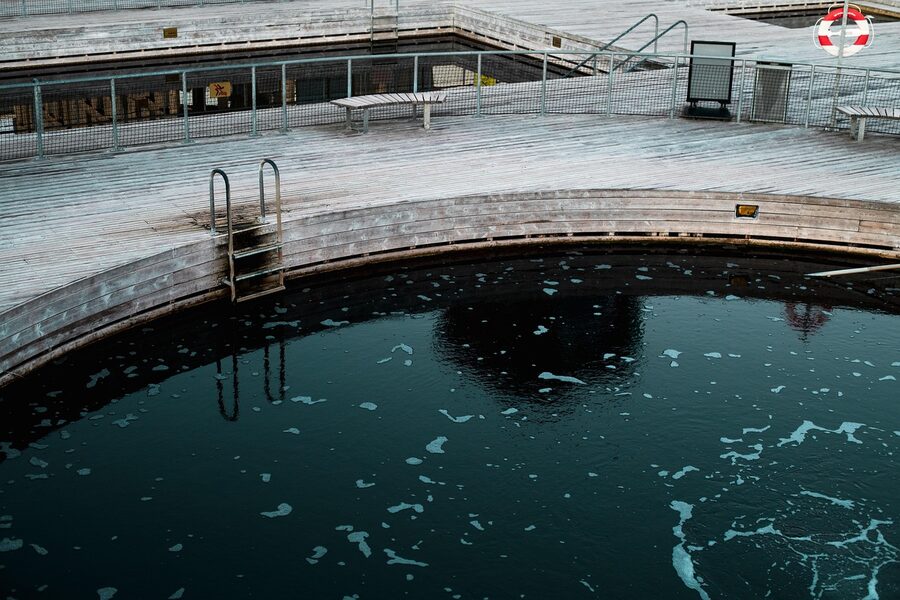
Between the two, on Bassin 7, is Havnebadet (the harbour bath), a public open-air swimming complex by Bjarke Ingels’ BIG: 50-metre lap pool, children’s pool, diving pool, two saunas, free entry. June to September, 10:00 to 19:00. The water is filtered seawater. It’s busy, it works, and it’s free.
Where I’d actually eat
Det Glade Vanvid (literally “the happy madness”) on Mejlgade 12 is the small, ambitious, opinionated dinner I’d recommend if you’re booking one nice meal. It’s a 20-cover place that calls its own food bistronomi: New Nordic ingredients, French technique, no menu, you eat what they cook. Five courses with wine pairings runs around 1,150 DKK (~€155); without wine, 750 DKK (~€101). Book a fortnight ahead. They don’t take walk-ins.
Teater Bodega, on Skolegade just below the cathedral, is the other place to know. It’s been there for over 100 years, the menu is old-school Danish, and the stegt flæsk med persillesovs (fried pork belly with parsley sauce) is the version against which I’ve judged every other one I’ve eaten in Denmark. Around 195 DKK (~€26). Order a small Tuborg with it. Closed Sunday and Monday.
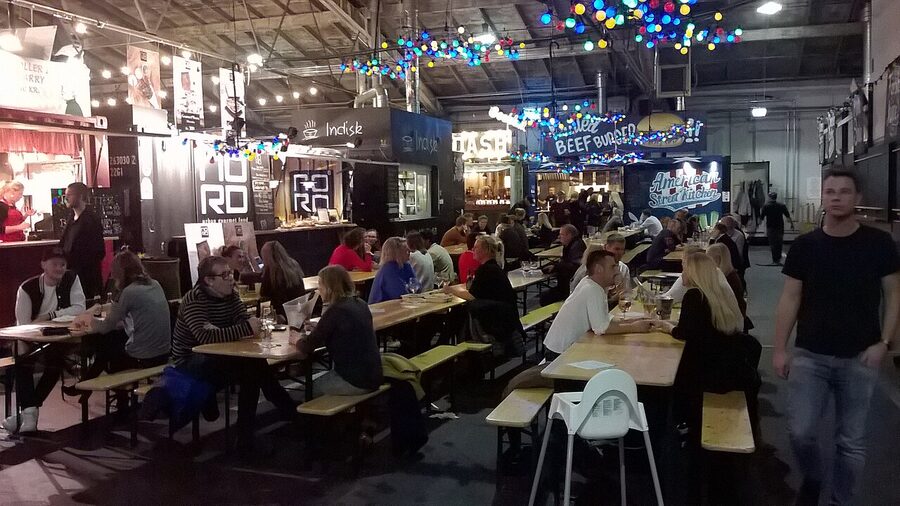
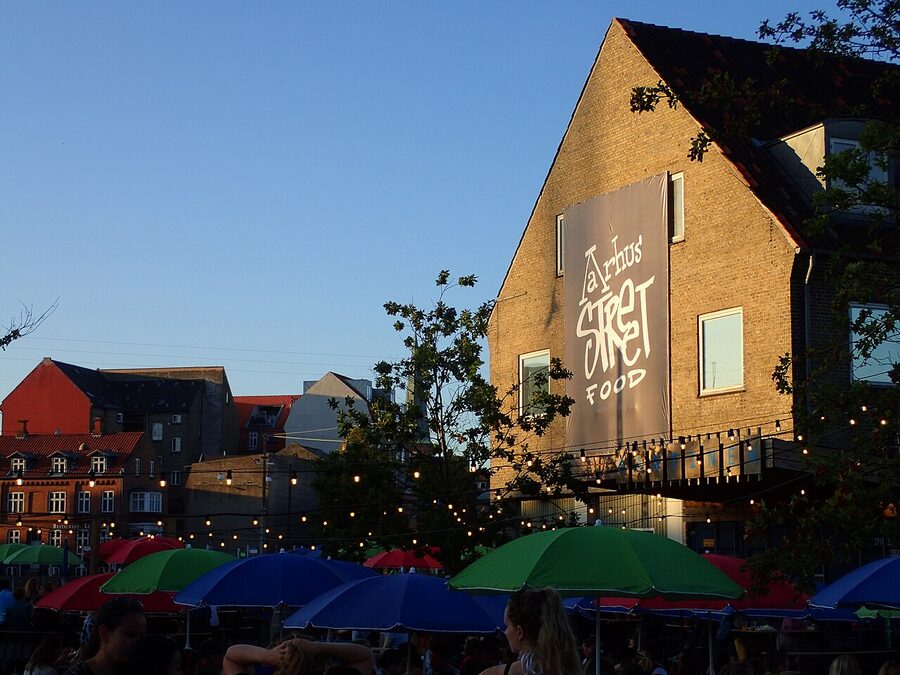
For lunch on a budget, Aarhus Street Food on Ny Banegårdsgade does what it says: a converted warehouse with about 30 stalls and long communal tables. Plates run 80 to 130 DKK (~€11 to €17). The Vietnamese banh mi at MJ Bahn Mi is reliable, Ramen Takumi does a passable shoyu, and Shakshuka, run by William Malloul, has a free Søbogaard juice with weekday plates ordered before 5pm. The drinks are reasonably priced for Denmark. Aarhus Central Food Market on Frederiks Allé is the newer harbour-quarter sibling and slightly more polished if you’d rather not eat next to the bus station.
For coffee in the morning, Stillers Kaffe at Lille Torv 4 roasts its own beans on-site. A flat white is 38 DKK (~€5). Café Risskov in Frederiksbjerg, Smag Kaffebar on Frederiks Allé, and La Cabra Roasters (the Aarhus-born specialty roaster that now exports across Europe) are the other three good options. Fairbar on Nørre Allé, a non-profit volunteer-run café-bar with beers from 25 DKK and live music a couple of nights a week, is the cheap drink in the centre.
And for the bakery: Briançon on Mejlgade is French in style, croissants at 32 DKK, kanelsnegle (cinnamon snails) the only thing I’d queue for in this town. The classic pastry shop, Lagkagehuset, has multiple branches and is fine; Briançon is the better one.
Frederiksbjerg, the deer park, and what to do with a bike
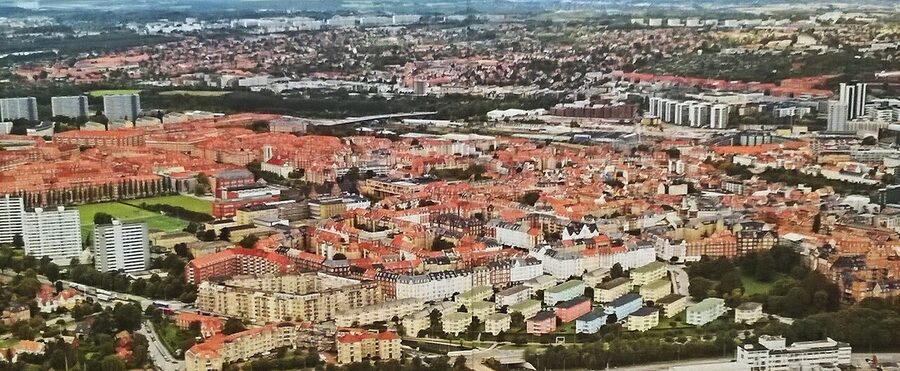
Frederiksbjerg is the residential block immediately south of the station, built mostly between 1880 and 1910, and the most pleasant neighbourhood in town to walk through aimlessly. Jægergårdsgade, the main spine, has the bakeries, the gelato (Mammis at Jægergårdsgade 53 is the one most locals queue for, scoops at 35 DKK), the secondhand shops, the wine bars, the small restaurants. M.P. Bruuns Gade is the parallel street and quieter. Sankt Pauls Kirke, a 1887 red-brick church on Nørre Allé, sits at the north end. There’s no big sight, which is the point.
Aarhus is a cycling city in the casual Danish sense: 18 per cent of all journeys in the municipality are by bike, dedicated lanes on every main street, and visible (if not Copenhagen-level) infrastructure. Donkey Republic’s app-based rental works fine, around 30 DKK (~€4) for half an hour or 110 DKK (~€15) for a day; orange bikes parked at marked stations across the city. Bring a dock photo if you’re paying by the day; the fines for leaving it at a non-station are real.
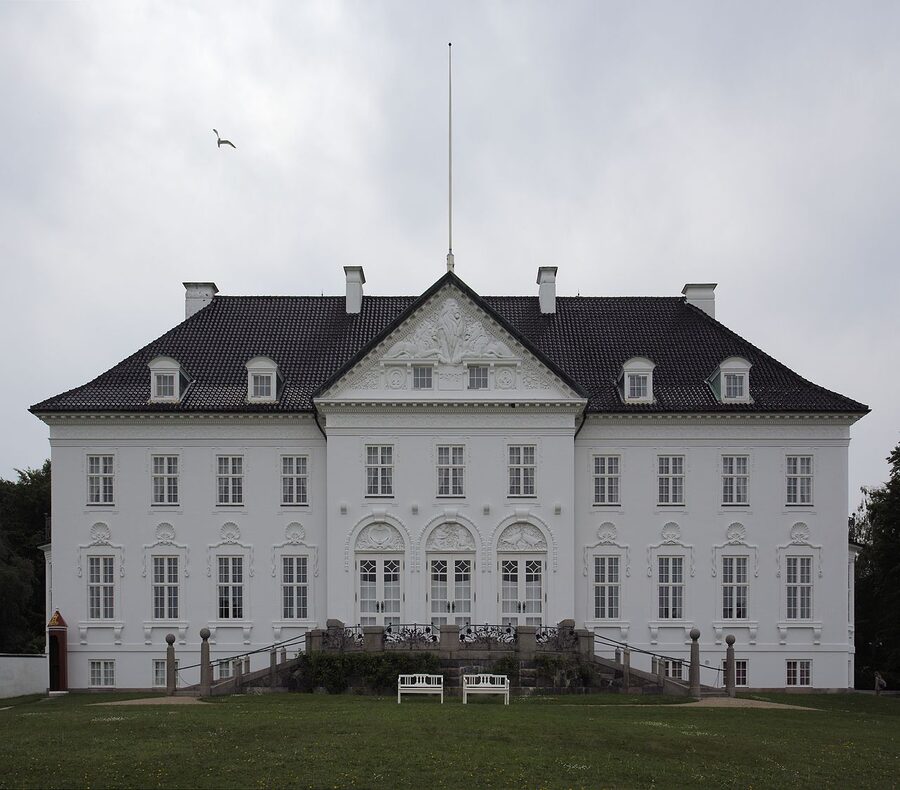
What I’d cycle: the coastal path south. From Dokk1 you head south past Mindeparken and the deer park (Marselisborg Dyrehave, free, mainly fallow deer that ignore people but are protective during the autumn rut), past the royal summer residence at Marselisborg Slot (closed to visitors but the gardens are open when the royals aren’t there), and on to the beach at Ballehage Strand. Total about 6 km one way, mostly flat, fully separated cycle paths. The Infinity Bridge sits just before the beach.
Den Uendelige Bro: walk a circle over the sea
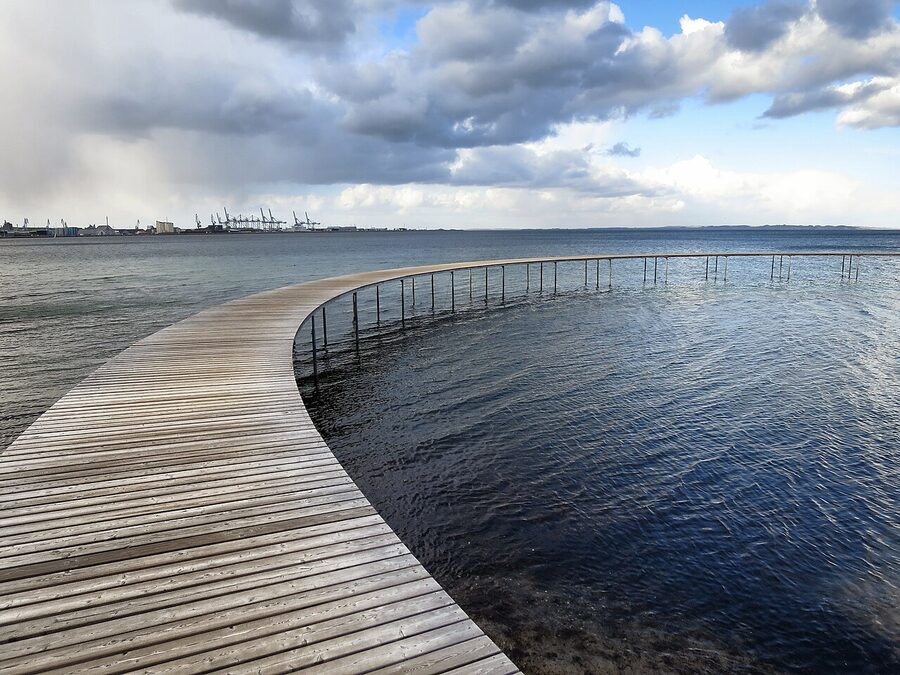
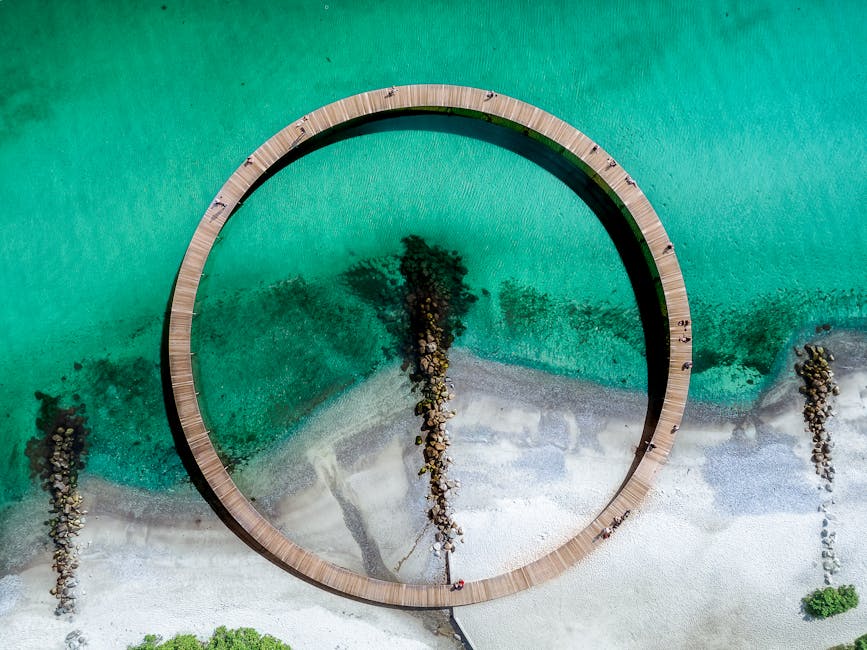
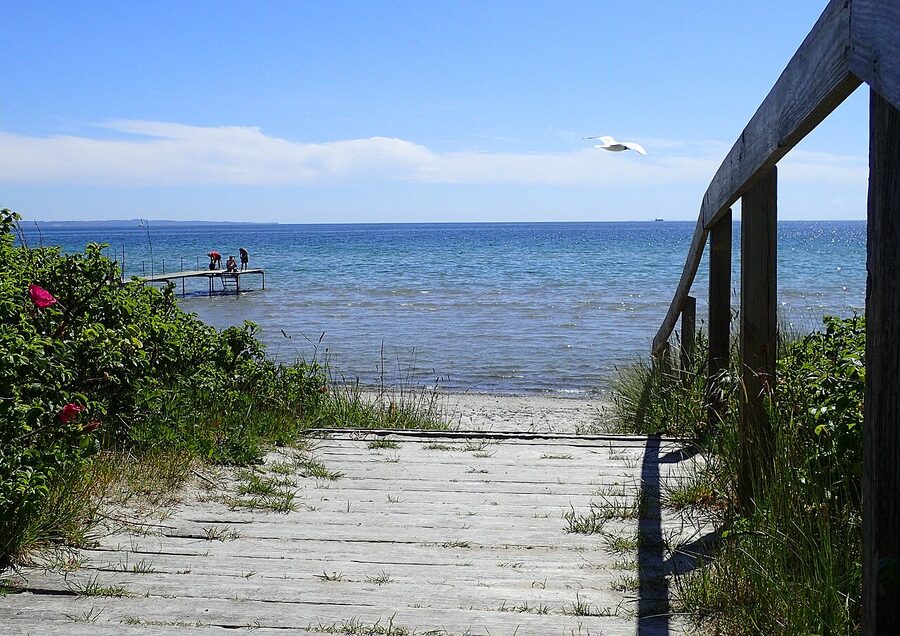
Den Uendelige Bro (the Endless Bridge), at Ballehage Strand on the bay south of the centre, is a 60-metre-diameter circular wooden pier that started life as a temporary commission for the 2015 Aarhus Sculpture by the Sea exhibition and stayed because the city loved it. Half the circle stands on the beach; the other half hangs over the sea on pilings. You walk it, the perspective never quite resolves, the horizon swings around you, and after about 90 seconds you arrive back where you started without ever turning. It’s free, it’s open from late April to October (the timber is taken in storage every winter to protect it from ice), and on a clear evening with low sun it’s the second-best photograph in Aarhus after the rainbow.
When to come (and why August is special)
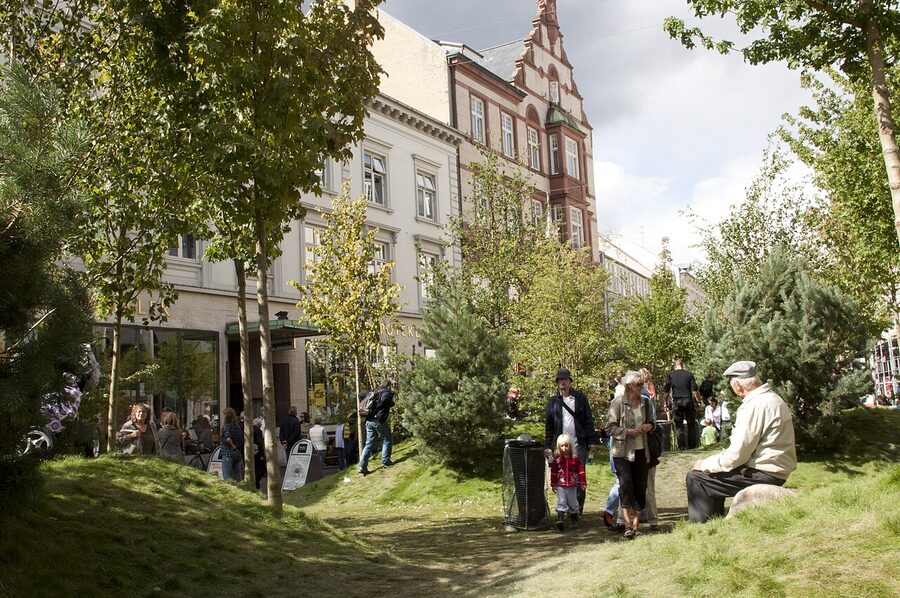
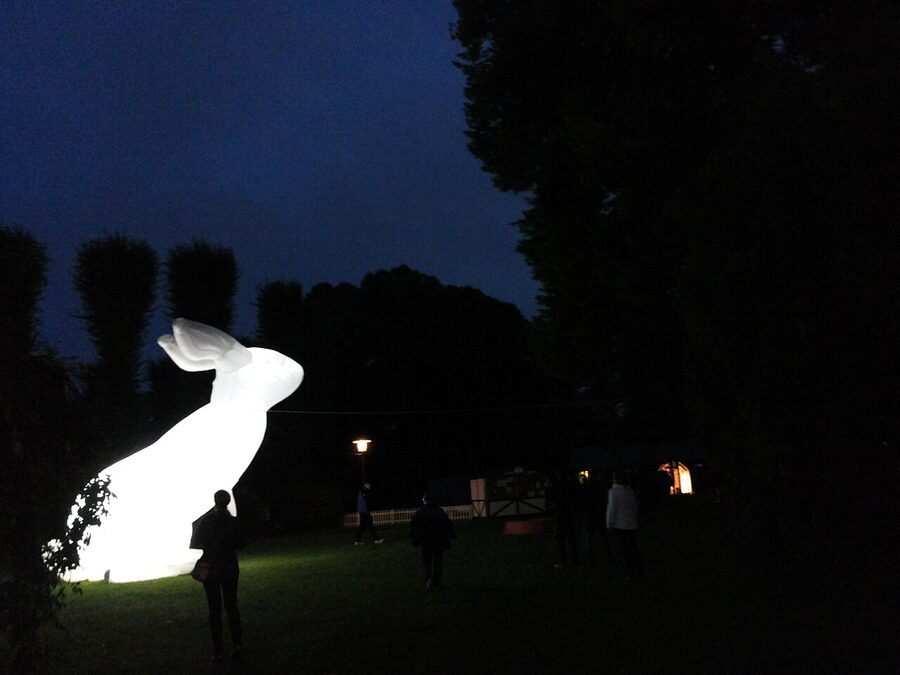
The single best week to be in Aarhus is the late-August Aarhus Festuge, the city’s cultural festival. It’s been running since 1965 and crosses theatre, music, design, food, and outdoor installations across about ten days. Most events are free or cheap. The 2026 festival runs 28 August to 6 September. Book accommodation early; the city visibly fills.
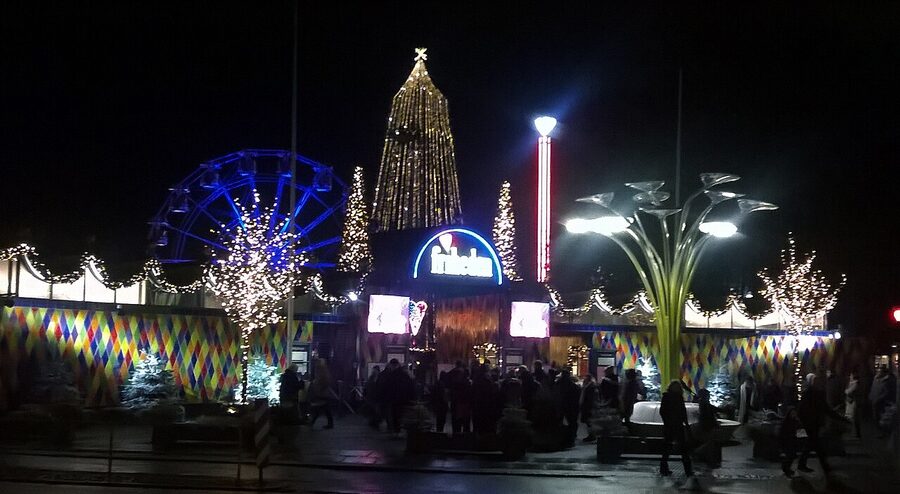
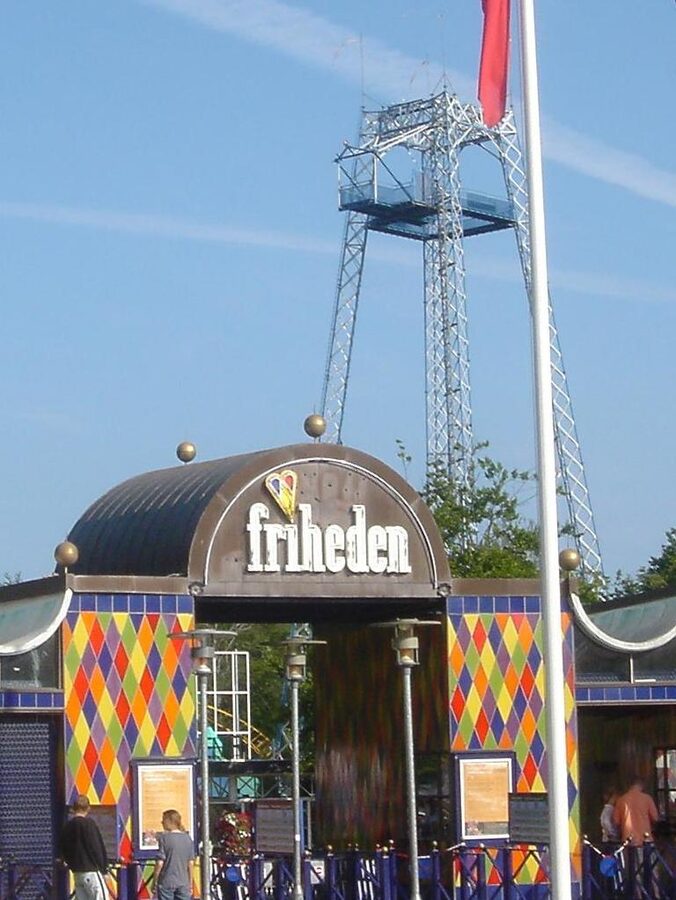
The other date worth flagging is summer at Tivoli Friheden. Yes, Tivoli is the Copenhagen one. There’s also a Tivoli in Aarhus: Tivoli Friheden, a 9-hectare amusement park 1.5 km south of the centre, founded in 1903 and run as a non-profit. It opens for the season around late April and closes mid-October, with shorter weekends through Christmas. Adult day tickets 295 DKK (~€40), under-3s free, and it’s smaller, cheaper and less crowded than its Copenhagen namesake. The Friheden Open Air concerts on the main lawn through July (past programmes have included Massive Attack, Bryan Ferry, Nils Frahm) are the better summer draw.
NorthSide, the three-day music festival on the western edge of the city in early June, has had The National, Bjork, Cigarettes After Sex, Liam Gallagher and Queens of the Stone Age all on a single year’s lineup. Spot Festival in early May is the smaller new-music festival, also worth catching if you’re a programmer rather than a stadium-rock person.
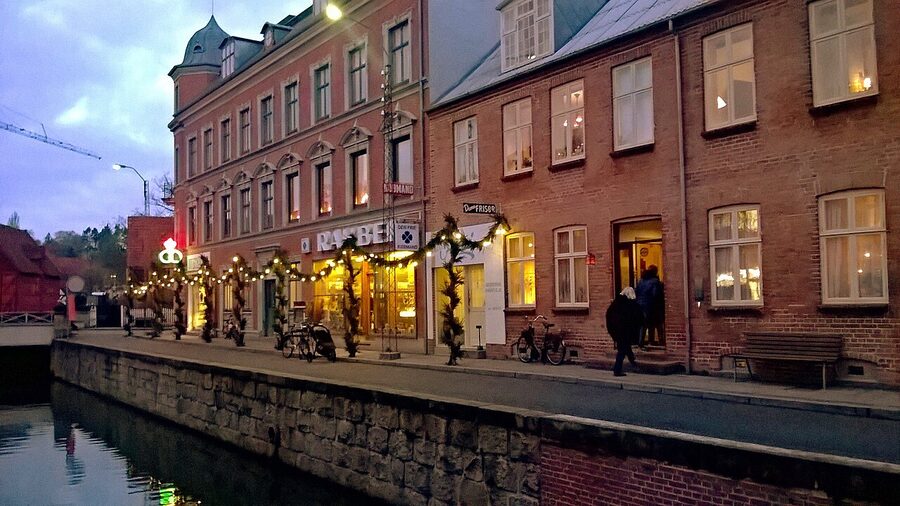
And if you’re here for the dark months: late November and December for the Christmas markets at Den Gamle By, the Salling Christmas window, and the Ridehuset crafts market (which is small but exclusively handmade). The light is gone by 4pm in December but the city does warm interiors well.
Getting around once you’re in
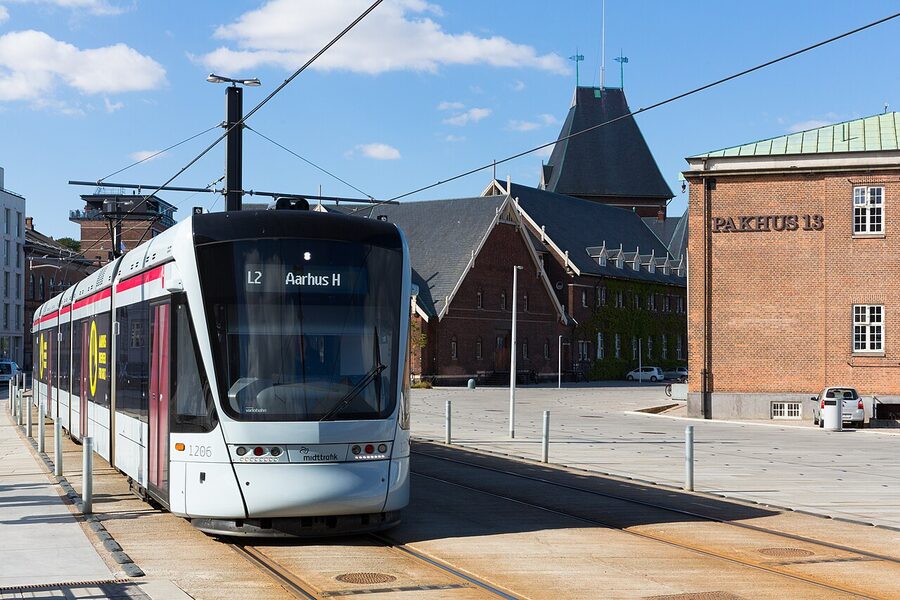
Walk for everything inside the centre. Bike for the harbour, Frederiksbjerg, Marselisborg and the southern coast. Take a city bus for Moesgaard, Tivoli Friheden, and the airport. The Letbane (light rail) is mostly a commuter line; you’ll only ride it if you’re staying past Lystrup or going to the southern hospital. Two-zone single ticket on the Midttrafik network is 24 DKK (~€3.20) and valid for 90 minutes including transfers. Buy via the Midttrafik Live app rather than at the kiosk; the kiosk is 4 DKK more.
From the airport at Tirstrup (Aarhus Airport, AAR), the airport coach takes 50 minutes to Aarhus H and costs 175 DKK (~€23). Billund Airport, an hour west, has more international routes and a coach via Vejle (about 90 minutes total) for 250 DKK (~€34). If you’re flying from London, Aarhus Airport is the more direct hop; if you’re flying from anywhere else in Europe, Billund usually wins on schedule.
Practicalities, in roughly the order you’ll need them
Currency. Denmark uses the Danish krone (DKK), not the euro. At the time of writing, €1 ≈ 7.46 DKK. Card is accepted everywhere, including the smallest pastry shops. You will not need cash. If you do need it, a Danske Bank ATM takes Visa and Mastercard with no fees from your home bank’s side; ask your bank about your end.
Tipping. Built into prices. Round up if you’re feeling generous; nothing more is expected. Service charges are part of menu prices.
Tap water. Excellent everywhere. Restaurants will give it free unless you ask for sparkling. Don’t buy bottled.
Language. Danish. English is universal in the city, especially among under-50s, and signage in tourist contexts is bilingual or English-first. The waiters at older restaurants like Teater Bodega will sometimes start in Danish; just say “do you have an English menu?” and the switch is instant. Don’t try to order in Danish unless you actually speak some; the pronunciation is harder than it looks and they’d rather give you the right thing.
Sundays. Most of the central shops close on Sunday. Cafés and museums stay open. Plan your shopping for Saturday or weekday evening (most non-grocery shops close at 18:00 weekdays, 16:00 Saturday).
Weather. Maritime, mild, always slightly damp. June to August averages 17 to 22 degrees daytime; January and February average 0 to 4 degrees. Rain is unevenly distributed but expect some on at least one day per week, year round. The wind off the bay is strong; bring a packable shell even in summer, and plan for one indoor activity per day from October to March.
How long you’ll actually want
Two full days will give you ARoS, Den Gamle By, the Latin Quarter, Aarhus Ø, the cathedral, and one good dinner. Three days adds Moesgaard properly (it really wants its own day), the southern coast cycle, and the Salling rooftop at golden hour. Four days lets you not rush, and adds either Mols Bjerge National Park or Ebeltoft on a day trip out east on the Mols peninsula. I wouldn’t try to do it in one day from Copenhagen unless you genuinely don’t have a choice; you’ll get the rainbow and the cathedral, which is fine, but you’ll miss the half-hour-of-nothing-much that’s how a city actually shows itself to you.
If you’re wiring Aarhus into a wider Nordic loop, the natural extensions are: across the Storebælt to Copenhagen for two more days; the overnight to Stockholm via the rail link through Sweden’s south, then a couple of days walking around Södermalm and Gamla Stan; or the slow option, the Hamburg train south to chain in the Speicherstadt on the way home. Aarhus is small enough to fit in a fortnight that visits four cities, and big enough to be worth a fortnight on its own if you’re so inclined.
The closing thought is the one I made at the rainbow. The reason a city is worth staying in for several days isn’t the things you queue to see; it’s the half-empty squares between them, where you find yourself sitting at three in the afternoon eating a kanelsnegl from a paper bag and not quite ready to leave. Aarhus has those squares. The Latin Quarter has them. Frederiksbjerg has them. The bench on the harbour at Bassin 7 by the swimming pools has the best one. Sit there long enough and you’ll work out, without anyone telling you, why people who came once mean it when they say they’re coming back.