

Anna Ancher painted Sunlight in the Blue Room in 1891. The painting hangs at Skagens Museum now, ten minutes’ walk from where she made it. The blue parlour, the slatted shutter, the warm panel of light spilling across the floor while her daughter Helga sits unbothered at the table: she set up her easel inside Anchers Hus on Markvej, and the room is still there. You can stand in it. You can look out the same window. The light is the same light.
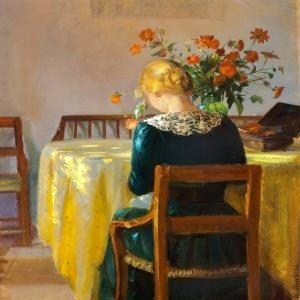
That’s Skagen in a sentence. It’s a working fishing port at the northernmost tip of Jutland that, in the 1880s, also became the most consequential artist colony in Scandinavia. The geography (Grenen, where the Skagerrak and the Kattegat meet at a single sandbar) and the art history (Krøyer, the Anchers, Drachmann, Tuxen, Marie Krøyer) sit on top of each other in the same square kilometre, and you can do both in two days without rushing.
I’ve come up here three times now. Once on a midsummer weekend with the Sankt Hans bonfires lit on the beach, once in late October when the dunes had turned the colour of bone, and once in February for the brittle blue light. I’ll tell you which version is best at the end. First, the practical bones of a Skagen trip and the things every guide above this one keeps missing.
In This Article
- Where Skagen actually is, and how to get there
- Grenen: where two seas don’t quite mix
- The bunkers nobody bothers to explain
- The painters: why Skagen actually matters
- Skagens Museum (the must-do)
- Anchers Hus, Markvej 2
- Drachmanns Hus and Marie Krøyer
- The yellow houses, and what “Skagen yellow” actually is
- Den Tilsandede Kirke: the church the dunes ate
- Råbjerg Mile: the dune that walks
- The harbour, and the cruise-ship problem
- The lighthouses (yes, there are three)
- Where to stay
- Brøndums Hotel, the painters’ hotel
- Ruths Hotel, Gammel Skagen
- Color Hotel Skagen: pool, families, parking
- Hotel Strandly Skagen: the value pick
- Foldens Hotel: old-school in the centre
- Hotel Marie: budget central
- Skagen Hotel (Clausens): by the station
- Danhostel Skagen: backpacker option
- If you can’t find a room: base in Frederikshavn
- Eating in Skagen
- Beaches and the seal colony
- The painters’ beach: Sankt Hans and the bonfire night
- When to go
- One day, two days, three days
- Things nobody else says
- Chaining Skagen with the rest of a Denmark trip
- What to read before you come
- The northernmost point
Where Skagen actually is, and how to get there
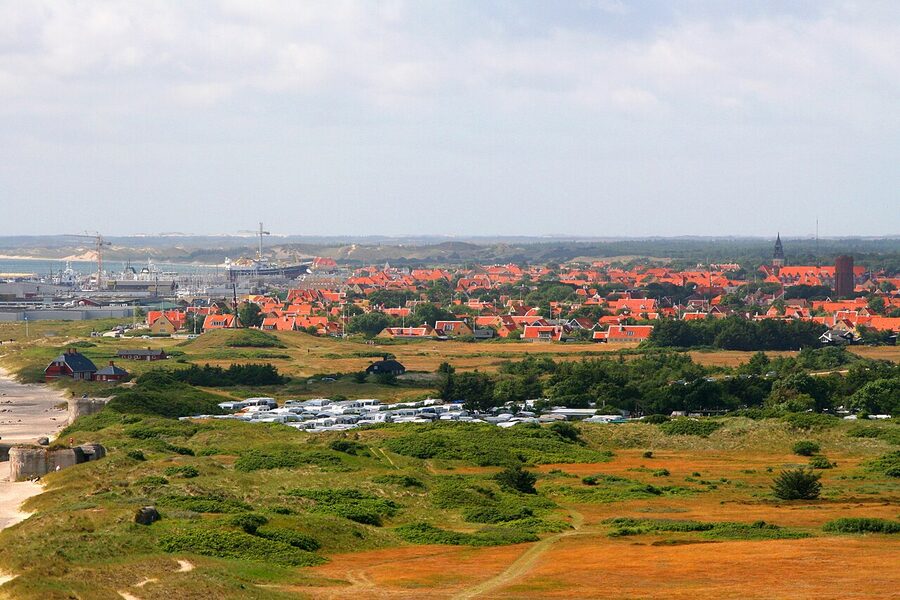
Skagen sits at the very tip of the Jutland peninsula, 41 kilometres north of Frederikshavn and 108 kilometres northeast of Aalborg. It’s not on the way to anything. You don’t pass through Skagen; you commit to it. That’s part of why it works.
From Copenhagen, the train is the obvious answer. Take a DSB intercity to Aalborg (about three hours), change for Frederikshavn, change again at Frederikshavn for the little Skagensbanen line that has been running since 1890. Total: about five hours, around 450 DKK (~€60) for a standard fare booked the day before, less if you book a week ahead. The DSB app is the easiest place to do it. The Frederikshavn-to-Skagen leg is one of those quietly perfect Nordic train journeys, all gorse and dune-grass and the occasional yellow-roofed station.
Driving is faster from south Denmark or from Hamburg. If you’re already on a Jutland road trip, Skagen is the natural endpoint. If you’ve come over the Skagerrak by ferry from Norway (Color Line and Fjord Line both run Oslofjord crossings to Hirtshals or Frederikshavn), you’ll arrive on this coast already, and Skagen is an obvious 30-to-45-minute drive from either port. There’s a piece on this site about Oslo if you’re starting from there, and the Oslofjord-out option is genuinely scenic.
The decision worth making before you book is Skagen versus Frederikshavn as a base. Skagen wins on atmosphere by a wide margin. Frederikshavn wins if you’re chaining a multi-day Jutland trip and want a full-service rail hub with cheaper hotels. Most people should base in Skagen for at least two nights and absorb the price premium. It’s why you came.
Grenen: where two seas don’t quite mix
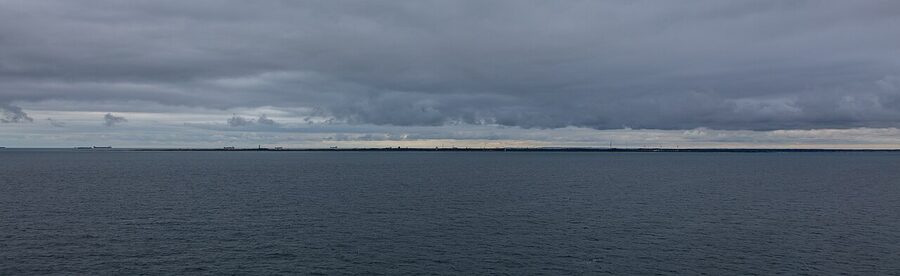
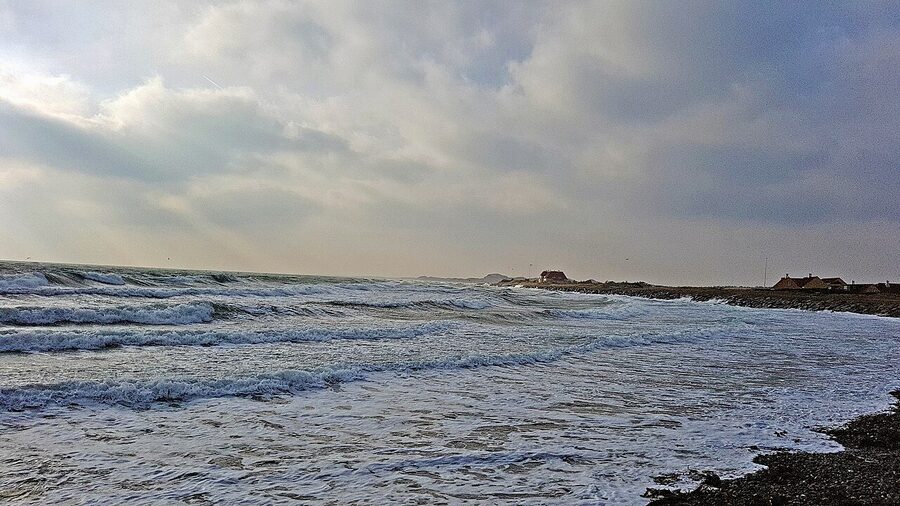
Three kilometres northeast of Skagen town, the land tapers off into a curving sandbar called Grenen. To one side: the Skagerrak, the arm of the North Sea that comes down off Norway. To the other: the Kattegat, the inlet that opens onto the Baltic. They meet at the tip. Different temperatures, different salinities, different swell directions. Stand at the very point and the two seas crash at each other from opposite angles. You can see the meeting line as a thin foamy ribbon running northeast into the open water.
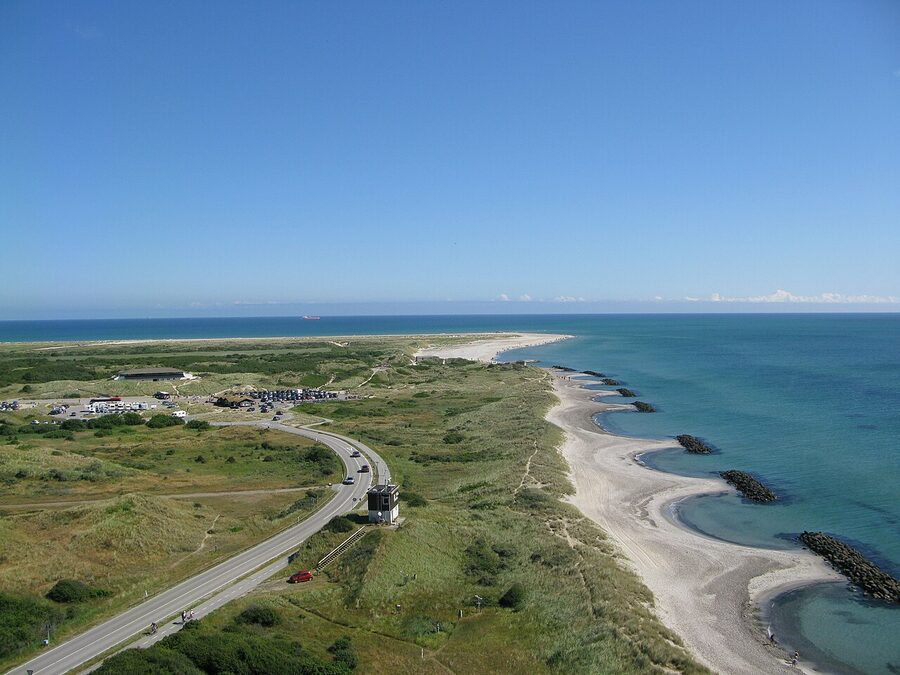
Two practical points nobody puts up front. First: do not swim. The currents at Grenen are powerful and the meeting of the seas is exactly the kind of place where they go genuinely wrong. There are signs, but every summer somebody decides the signs are for other people. They are not. Second: from the parking lot at the road’s end, it’s roughly 1.5 kilometres of beach walk to the actual tip. In soft sand, with wind, this is more tiring than it sounds. Allow 25 to 30 minutes each way at a steady pace.
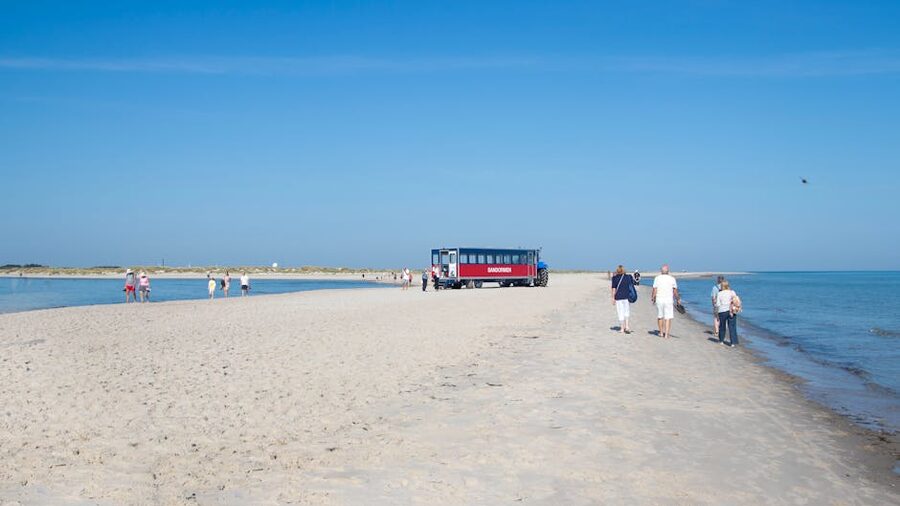
If you don’t want to walk, the alternative is the Sandormen, which translates as “the sandworm”. It’s a bright blue tractor pulling a couple of long open carriages, and it shuttles between the parking lot and the tip from roughly the start of April to the end of October. The current adult fare is 35 DKK (~€5) one way, around 60 DKK (~€8) return; children pay roughly half. It runs on demand rather than to a strict timetable, and on busy summer days you may queue 20 minutes for a seat. It does not run in winter, and it does not run when the sand is too soft after heavy rain.
Walk if you can. The whole point of Grenen is the slow approach: the dunes thinning out, the bunkers crumbling on your left, and the moment you realise the strip of land you’re walking on has narrowed to about thirty paces wide with a different sea on each shoulder. The Sandormen takes that away.
The bunkers nobody bothers to explain
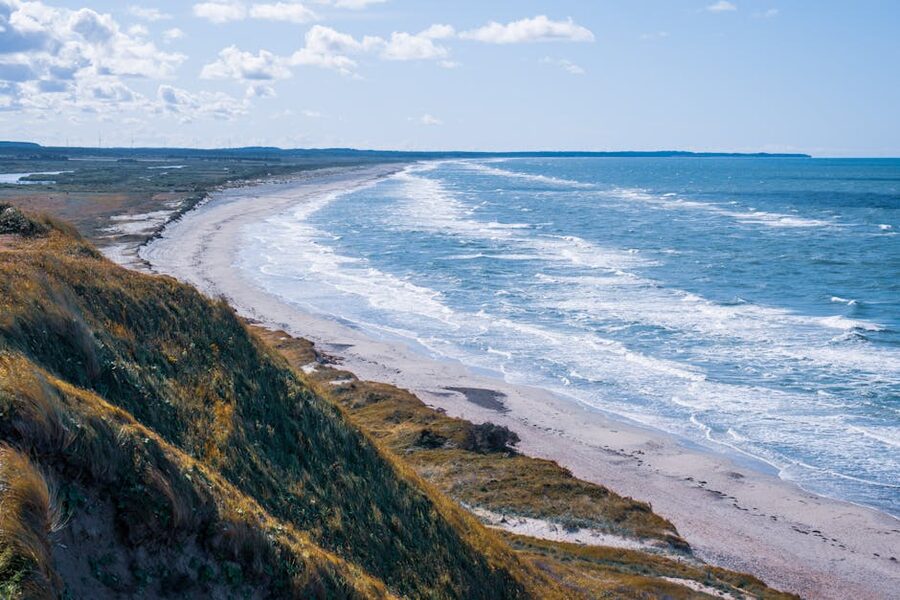
Walking from town to Grenen along the beach, you’ll pass a string of crumbling concrete bunkers. They’re not signposted as a stop, and most articles dismiss them in a sentence. They deserve more. These are the Skagen end of the Atlantenvolden, the German Atlantic Wall, built between 1942 and 1944 as a defence line that ran from northern Norway to the Spanish border. Around 7,000 bunkers went up in Denmark alone, 1,800 of them large heavy types. At Grenen there were once 61 large bunkers; the dune has eaten most of them. Some now sit half-submerged at high tide.
If you want the inside view, the small Skagen Bunker Museum sits near the Grenen parking lot inside an old Regelbau 638 bunker that served as a German field hospital. Admission is around 65 DKK (~€9). Check the opening days before you go: it’s closed entirely from late October to early April, then runs roughly 11:00 to 16:00 in shoulder season and 10:00 to 17:00 in peak summer.
The painters: why Skagen actually matters
Skip this section if you came for the dunes. If you came for any other reason, slow down here.
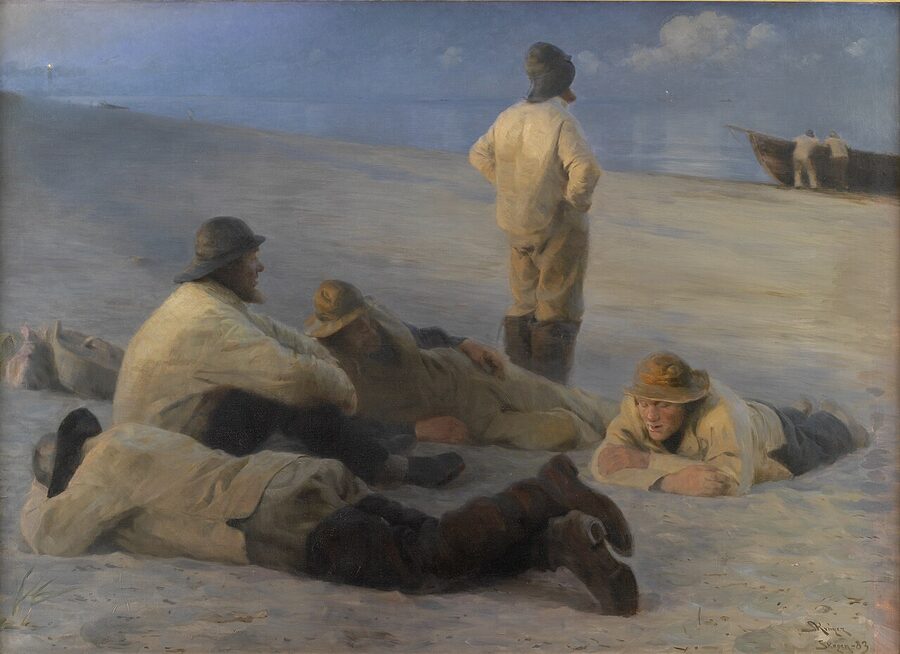
From the late 1870s into the 1900s, Skagen was the most important artist colony in Scandinavia. A loose group of Danish, Swedish and Norwegian painters started spending summers in this then-tiny fishing village because the light was unlike anywhere else in northern Europe. Two seas, no high ground, no industry, and that strange evening “blue hour” when the sky and the water become a single washed-out gradient. They worked outside, in the French Impressionist manner. They lived cheaply at Brøndums, the village’s only hotel. They drew each other constantly.
The names worth knowing are Peder Severin Krøyer, who was the most famous in his lifetime; Anna Ancher (born Anna Brøndum, daughter of the hotel’s owner, the only one of the group who actually grew up here); her husband Michael Ancher; the poet-painter-libertine Holger Drachmann; the Swedish-born Marie Triepcke who married Krøyer in 1889 and divorced him sixteen years later; and Laurits Tuxen, who lived nearby. There were others. They were all painting the same fifteen hundred square metres of beach and the same six pubs.
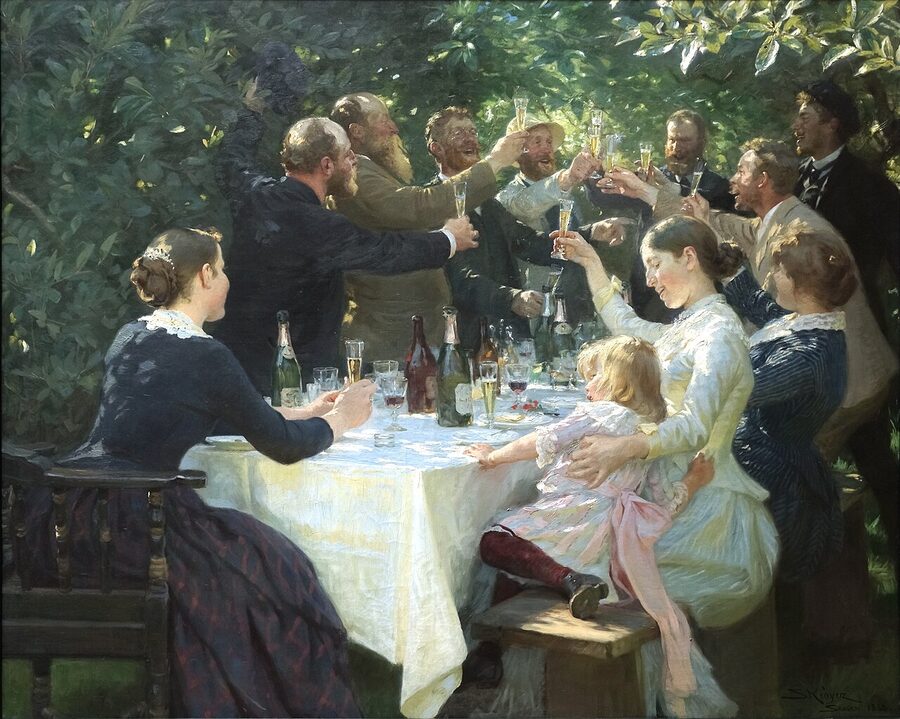
Krøyer’s Hip, Hip, Hurra! Kunstnerfest på Skagen is the one most travellers half-remember without knowing it. The 1888 oil that fills a big wall in Gothenburg’s Konstmuseum: ten of the colony at long lunch in a sun-spattered garden, raising glasses, Helga Ancher just visible on her mother’s lap. The garden is the Anchers’. The house is on Markvej, ten minutes’ walk from the harbour. You can visit it. The garden’s still there. The painting hangs in Sweden because a Swedish collector called Pontus Fürstenberg bought it before it was finished, but Skagens Museum keeps a smaller 1888 study, and the Anchers’ garden gives you the fact that the rest of the journey to see the original makes more sense.
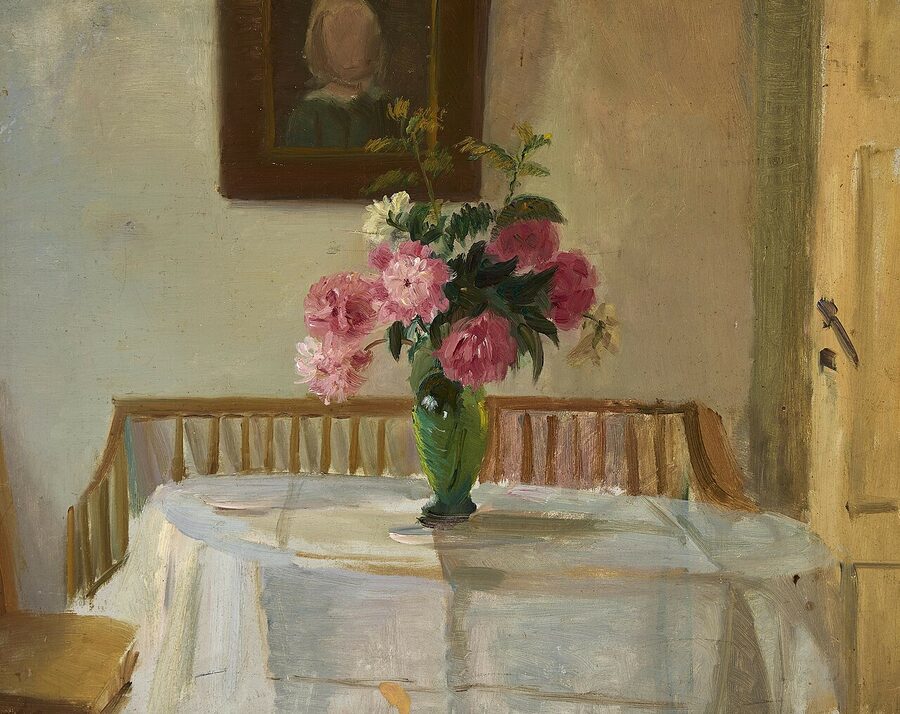
Anna Ancher is the one I keep going back to. She was the only Skagen painter who lived in Skagen permanently, the only one who painted interiors as seriously as the others painted beaches, and the only one who’s now considered one of the great Danish artists of any century, full stop. Her work is small, careful, deeply specific. Sunlight in the Blue Room (1891), her best-known piece, is a flat domestic scene that turned out to be one of those paintings the rest of the room arranges itself around. You’ll see it. The reason you’ll feel it is that you’ll have just walked through the actual blue room.
Skagens Museum (the must-do)
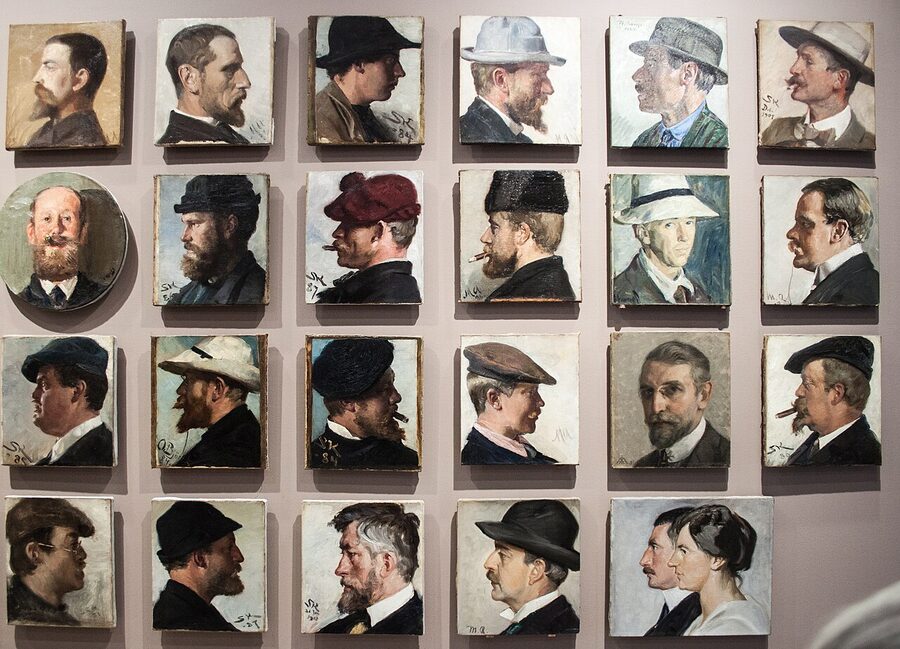
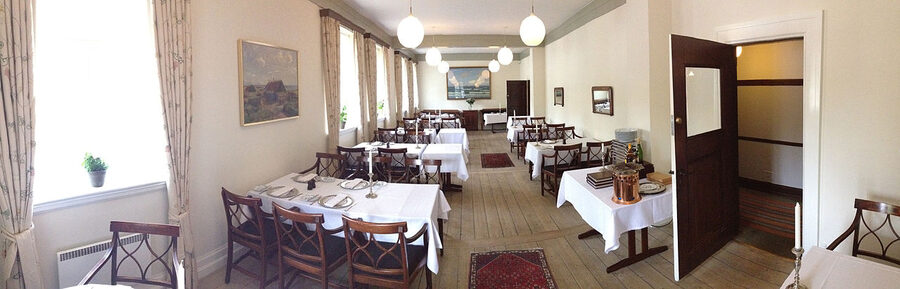
Brøndumsvej 4, two minutes’ walk from the railway station. The collection: roughly 2,000 works by Krøyer, the Anchers, Drachmann, Tuxen, Locher, Johansen, Marie Krøyer, Krohg, Björck, the lot. Highlights to look for include Krøyer’s Summer Evening on Skagen Beach with Marie and Anna walking the foreshore (the famous “blue hour” painting), the 1888 study for Hip, Hip, Hurra!, Anna Ancher’s Sunlight in the Blue Room, and the room of mutual portraits where the painters drew each other. There’s also the original Brøndums Hotel dining room, which the museum rescued in 1946 and rebuilt on site, panelled with the painters’ self-portraits and friend-portraits exactly as they had it. This is the room of famous Nordic dinner parties; eating there is no longer possible, but standing in it is.
Practicalities. Adult ticket: 140 DKK (~€19) for Skagens Museum on its own; 200 DKK (~€27) for the combined ticket including Anchers Hus and Drachmanns Hus, which is what you should buy. Hours: in high summer (June–August) daily 10:00 to 17:00; April–May and September–October Tuesday–Sunday 10:00 to 17:00, closed Mondays; in winter Tuesday–Sunday 10:00 to 16:00, closed Mondays, and closed entirely from 1 January to early February (the museum’s website has the dates).
The Mondays trap. Skagens Museum, Anchers Hus and Drachmanns Hus are all closed on Mondays outside of peak July and August. If you’re doing a two-day trip and Monday falls in the middle, plan around it. Half the other Skagen guides online got caught by it; one of them shipped a “guide to Skagen” article based on a Monday visit and admits, several paragraphs in, that they didn’t see any of the museums. Don’t be that person.
Anchers Hus, Markvej 2
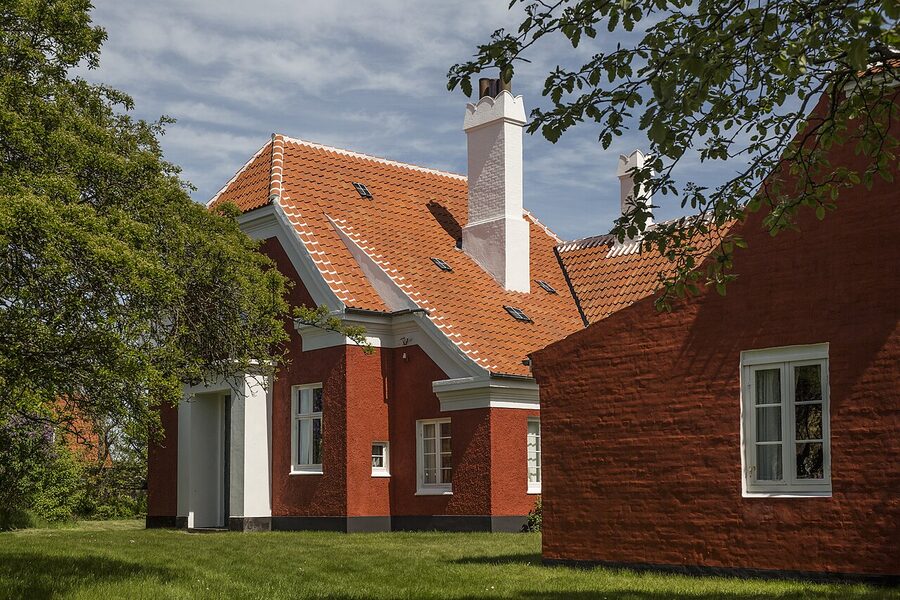
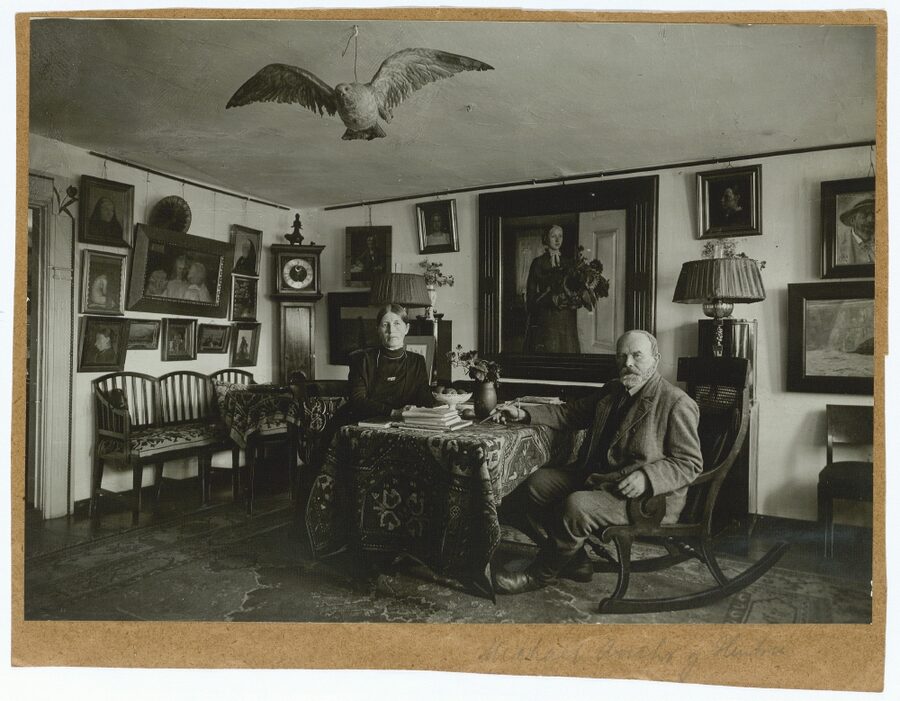
Anna and Michael Ancher moved into this red-and-white house on Markvej in 1884 with their daughter Helga. Anna stayed until her death in 1935, Michael until his in 1927. It’s preserved as it was: their furniture, their walls, their unfinished canvases on the easels, the kitchen smelling faintly of damp the way old Jutland houses do. Around 250 of their works hang on the walls, in the actual rooms where Anna painted them. Walk into the blue parlour. Look at the window. Look at the floor. Then walk back to the museum and see the painting.
It’s the closest you can get in any country I’ve visited to the place where a major painter actually worked, in the actual rooms, with most of the actual stuff intact. The contrast with, say, the Van Gogh Museum (which has the paintings but a hundred and fifty miles from any room he lived in) is total.
Drachmanns Hus and Marie Krøyer
Holger Drachmann was the colony’s poet, libertine and all-round complication. He wrote sea-shanties that Danish schoolchildren still half-know, painted decent marine pieces, married three times, and ended up living and dying in a small house at Hans Baghs Vej 21 (the eastern edge of Skagen, a 15-minute walk from the centre). The house is now Drachmanns Hus, a small museum mostly of his belongings and 150-odd of his paintings. It’s worth an hour if you’ve bought the combined ticket. Skip it if you haven’t, unless you read Danish poetry.
Marie Krøyer lived through what’s now considered the most famous personal saga in Danish art. She was a painter herself, married Krøyer in 1889, was painted by him constantly, fell in love with the composer Hugo Alfvén, divorced Krøyer in 1905, and the whole thing became the 2012 film Marie Krøyer which most Danes have seen. Skagens Museum has a permanent display.
The yellow houses, and what “Skagen yellow” actually is
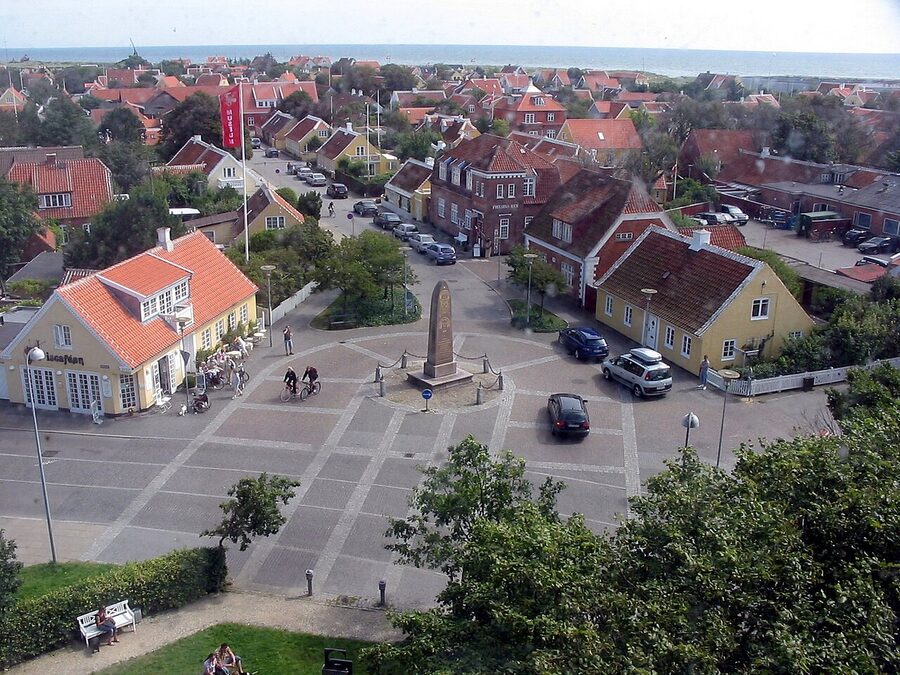
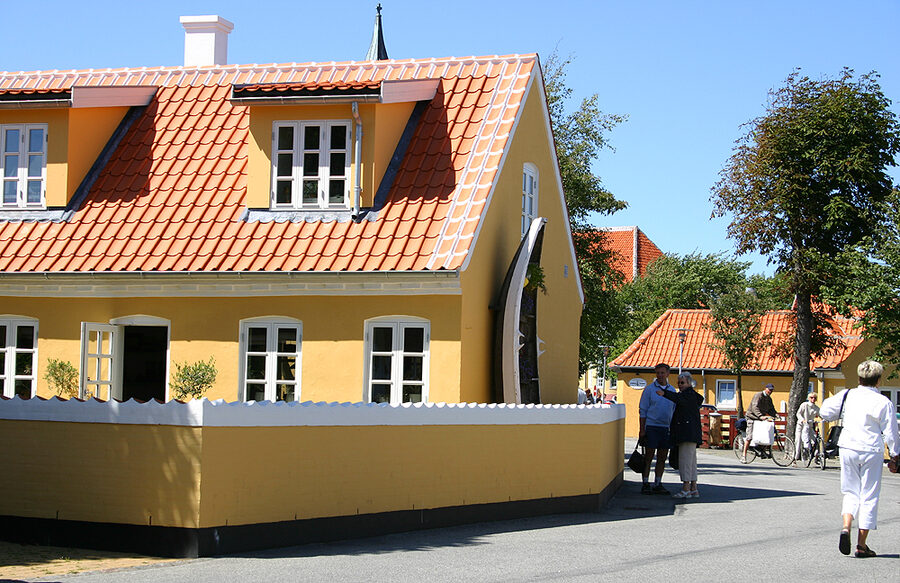
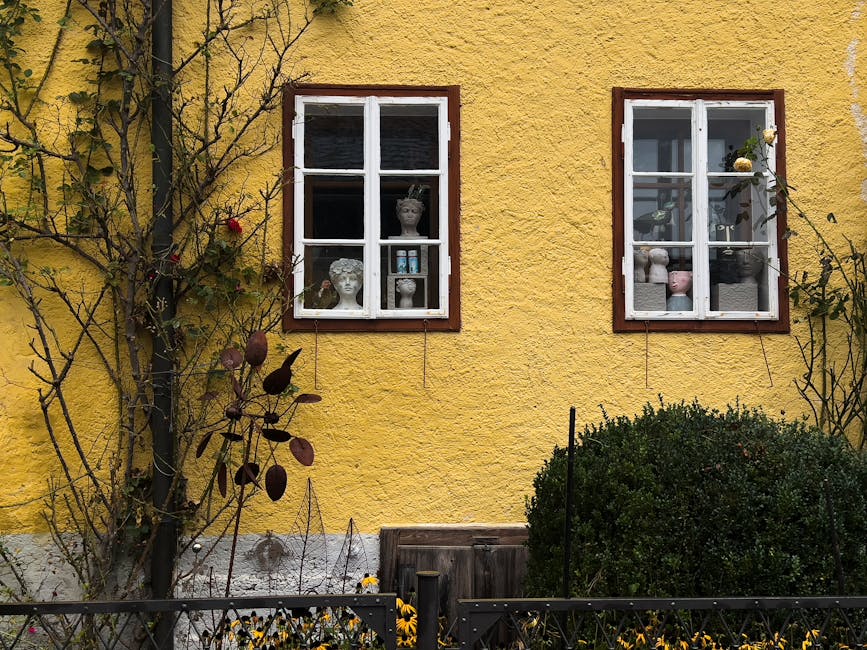
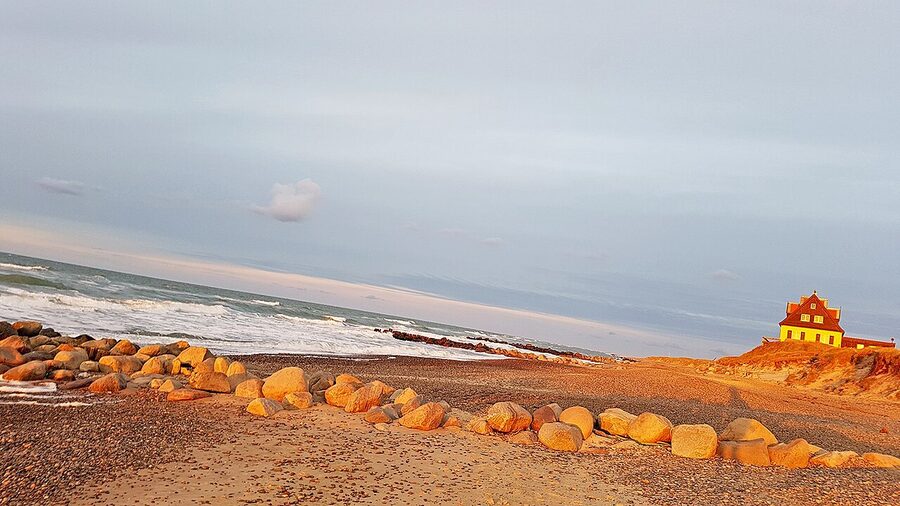
Most of Skagen’s older houses are painted the same colour. It’s called Skagen gul (Skagen yellow) or Skagensgult, and it’s a specific ochre tone made by mixing yellow earth pigment into linseed oil. The roofs are red tile with a white-painted strip between every other tile course (the hvidkalkede tagskæg, or whitewashed eaves). When you see the combination on six houses in a row in late afternoon light, it’s actually the colour the painters were chasing.
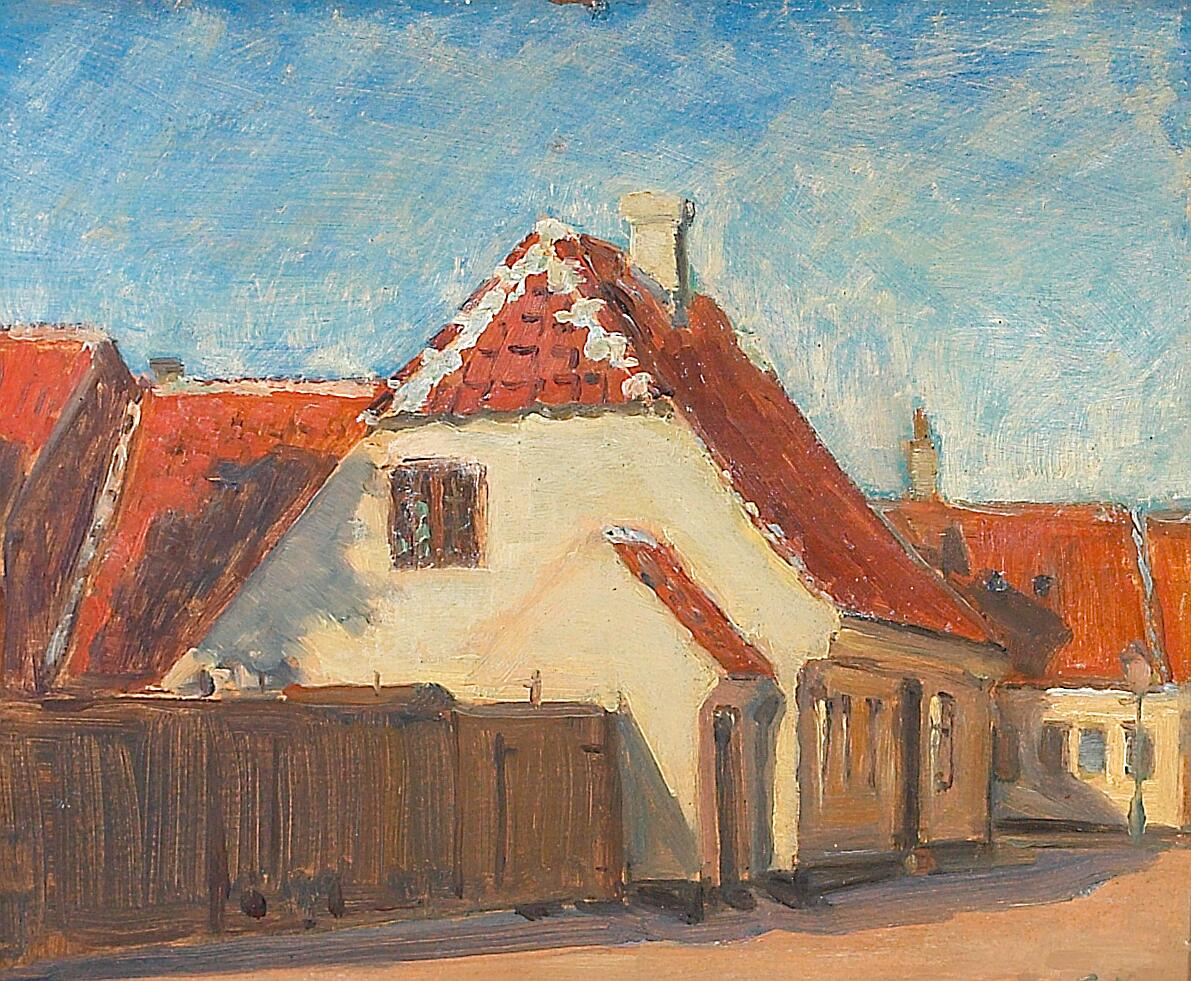
The unromantic version: it started cheap. Pre-Painters Skagen was a poor fishing village; ochre and linseed oil were what locals could afford, and the yellow happened to weather well in salt wind. The painters arrived, fell for the colour, painted it constantly, and the village leaned into it. Today the local council protects it via building regulations. New houses in the historic core have to use it. The town as a whole is, deliberately, still inside the painting.
Den Tilsandede Kirke: the church the dunes ate
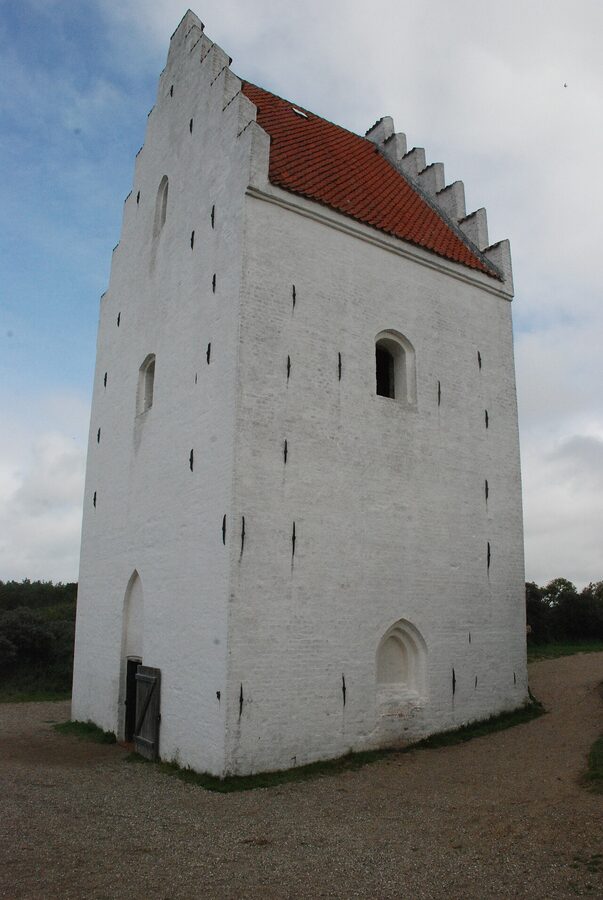
About a kilometre south of the town centre, in a low pine-and-heather nature reserve, there’s a small white church tower standing alone in the dunes. That’s all that’s left of Skt. Laurentii Kirke, built in the late 14th century, once the largest church in the area, sixty metres long, dedicated to the patron saint of sailors. From the early 1700s onward, the same dune system that shifts northeast across this whole peninsula began to bury the building. By 1775 parishioners were having to dig out the entrance to hold a Sunday service. In 1795 the local authorities gave up, deconsecrated the church, demolished everything except the tower, and built a replacement somewhere safer. The tower stayed because it was a critical seamark for ships rounding Skagen.
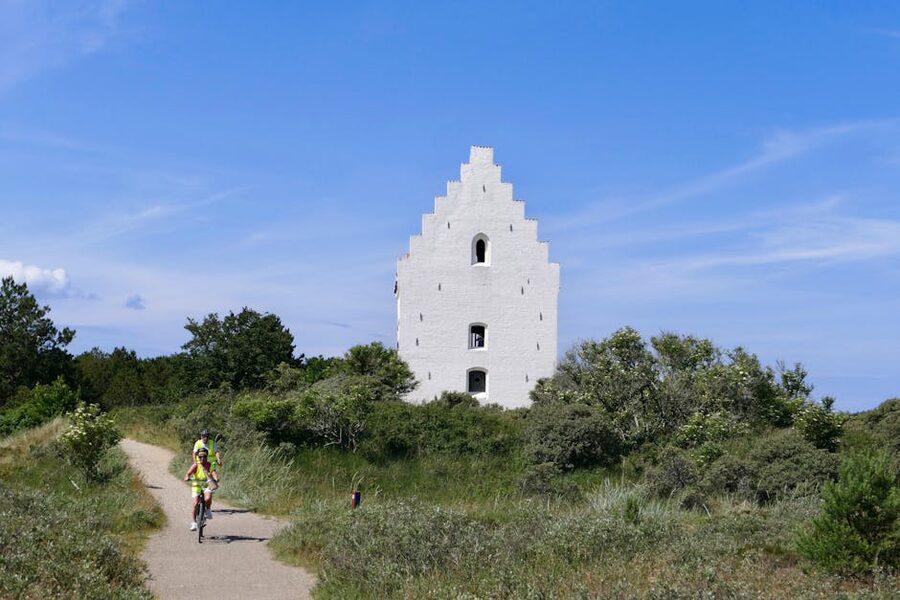
It’s about a 25-minute walk from town and you go on foot or by bike. There’s no car access right up to the church. The tower itself can be climbed in summer (small fee, around 30 DKK / ~€4); the rest of the year you admire it from the outside. It’s one of the few places in Skagen where you can walk for an hour without seeing anyone, particularly in shoulder season. Bring a wind layer; the dunes funnel air.
Råbjerg Mile: the dune that walks
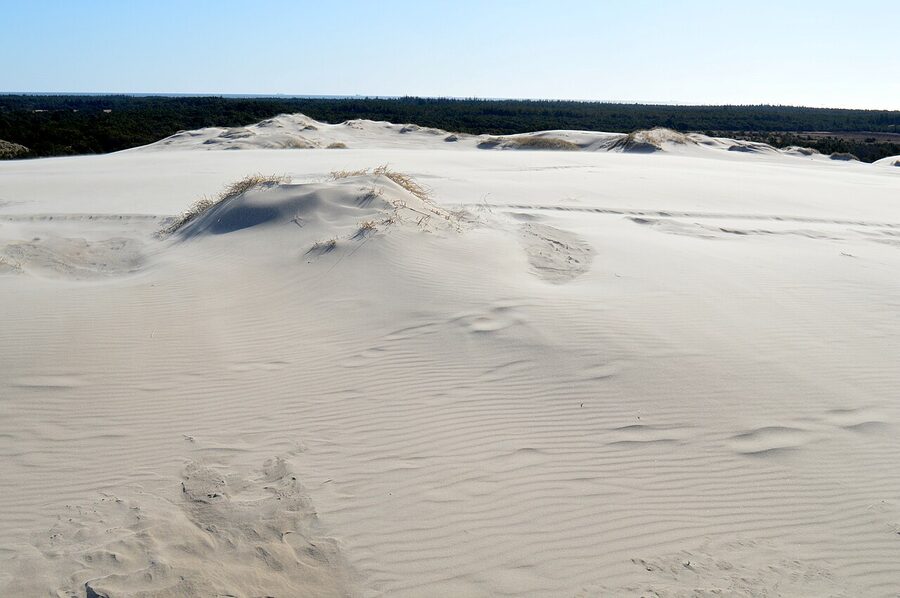
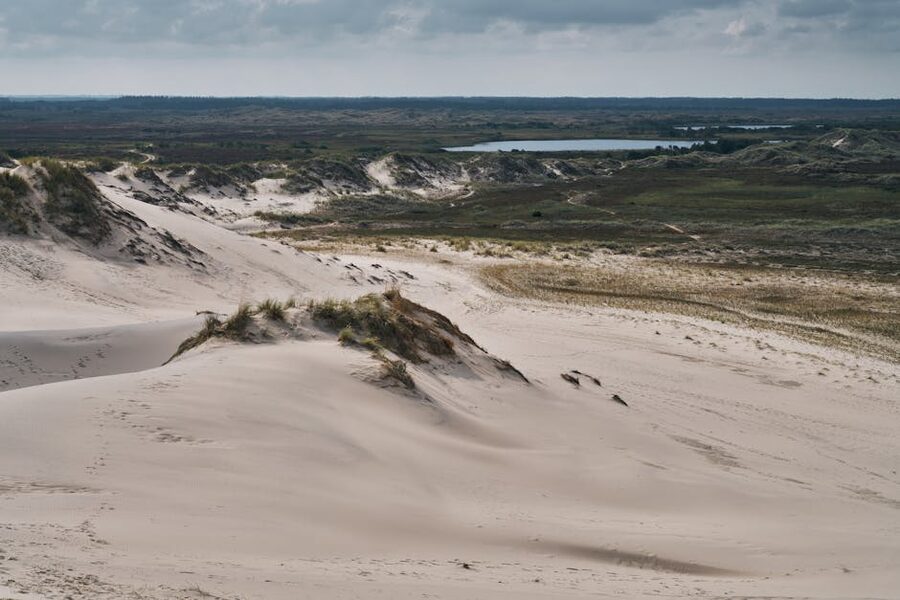
Sixteen kilometres south of Skagen on the road to Aalbæk, just past the small village of Kandestederne, there’s a 40-metre-high pile of sand sitting on top of a flat country. Råbjerg Mile is the largest migrating coastal dune in Northern Europe, two square kilometres of it, four million cubic metres of sand, and it’s moving northeast at roughly 15 metres a year. (That’s the rate that buried Skt. Laurentii Kirke a few centuries ago.) Some Danish geographers think it’ll reach the road in the next 80 years.
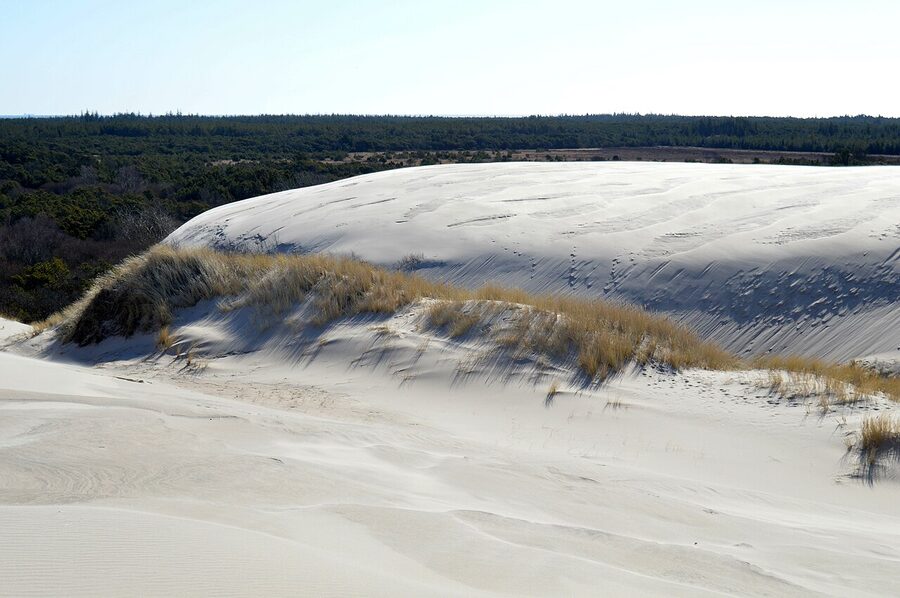
By car: free parking lot at the eastern edge, walk-up access from there, no entrance fee. By bus: Nordjyllands Trafikselskab line 99 from Skagen station, dropping you about a kilometre from the dune. By bike: roughly 50 minutes each way from town if the wind is on your side, more if it’s against you. By train: get off at Bunken Klitplantage station, walk a kilometre. The dune itself: climb it. The view from the top is the closest thing Denmark gives you to a desert horizon, and on a clear day you can see down the Kattegat coast for fifteen kilometres.
The harbour, and the cruise-ship problem
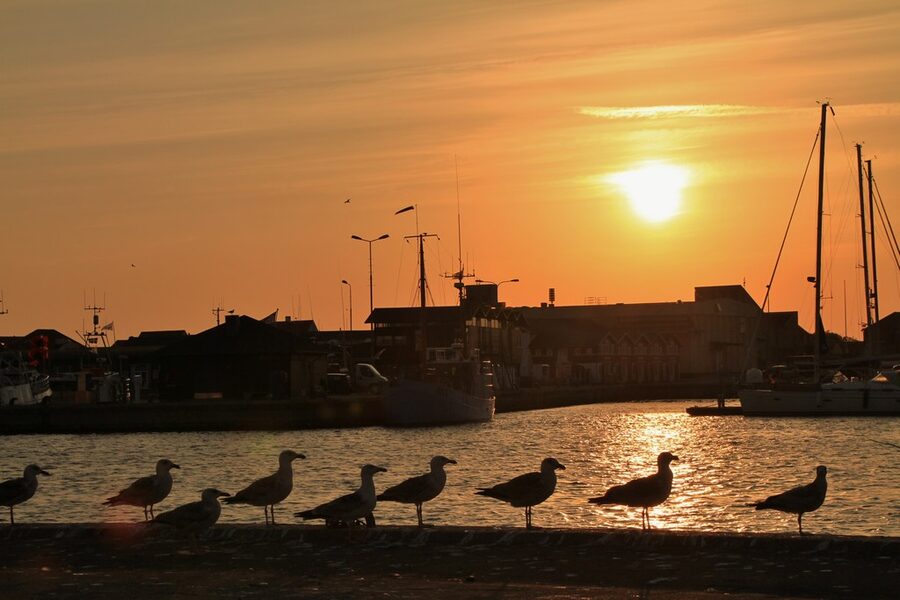
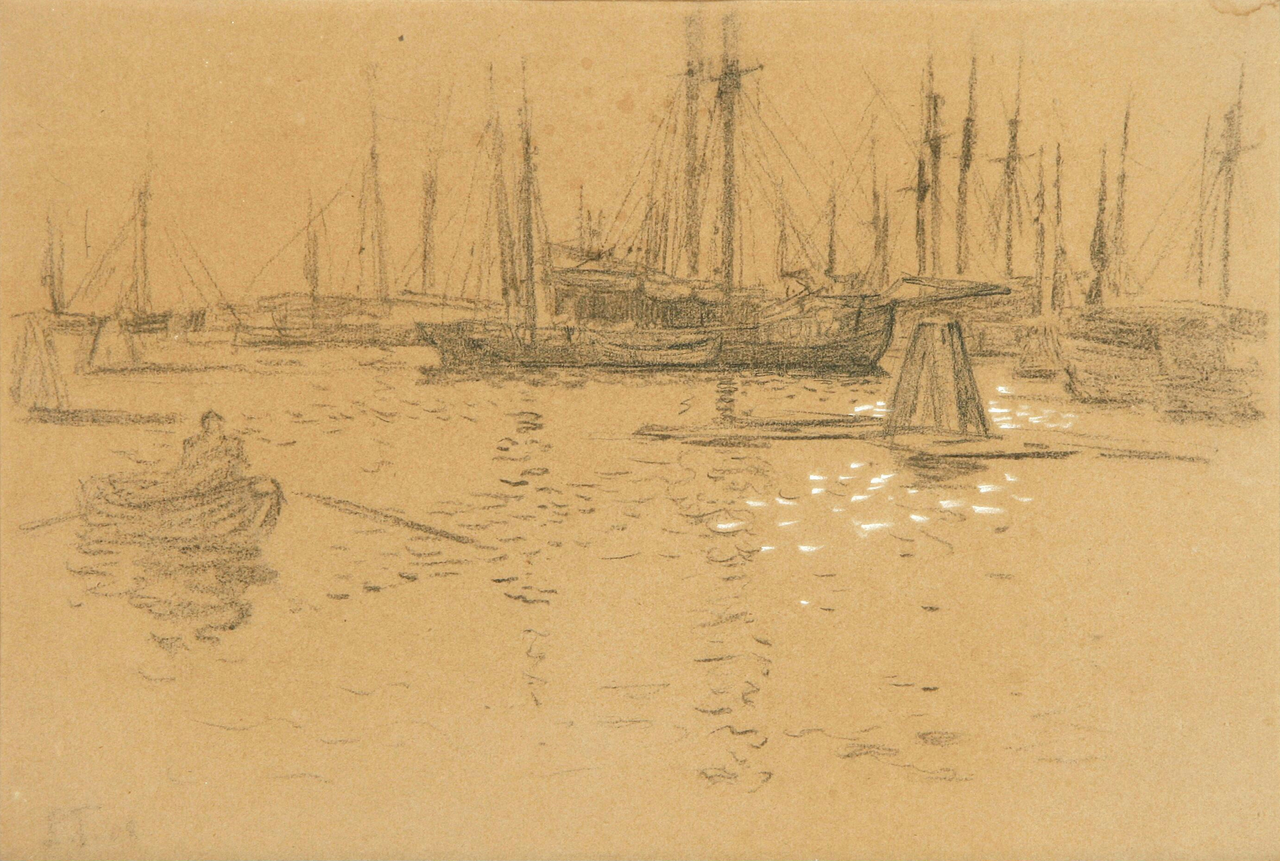
Skagen Havn is a working harbour, not a cleaned-up tourist version. It’s Denmark’s largest fishing port by landed tonnage and it smells like one, particularly downwind of the smokehouses. The painters spent a lot of their lives on these quays, painting fishermen who couldn’t quite figure out why painters wanted to paint fishermen.
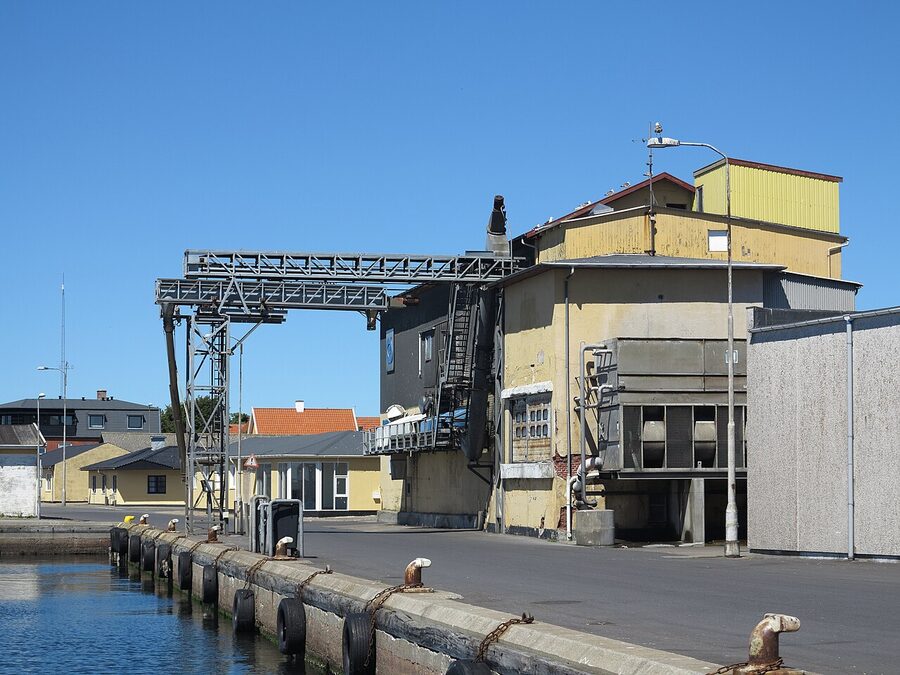
Important practical detail. Skagen has, in the last decade, become a regular call for mid-size cruise ships. The terminal is at Pier 8, on the eastern side of the harbour. When a ship of 1,500 to 2,500 passengers is in port (Aurora, Norwegian Star, Viking ships, sometimes the bigger Costa or MSC), the town fills with day-trip groups in 60-person coach loads. Brøndums goes from quiet to queue-out-the-door in twenty minutes. Skagens Museum’s lobby fills up. The Sandormen wait for Grenen doubles.
The cruise calendar is published well in advance at skagenhavn.dk (the harbour’s own site). Check it before you book. Avoid the days with two ships in port. If you can’t avoid it, do museums and town in the morning before 11:00 (cruise tours arrive at the museum at 11:30 on the dot most days), then walk Grenen in the late afternoon after they’ve all gone back to ship. Coaches usually leave by 16:30; the harbour empties of tour groups by 17:00.
The lighthouses (yes, there are three)
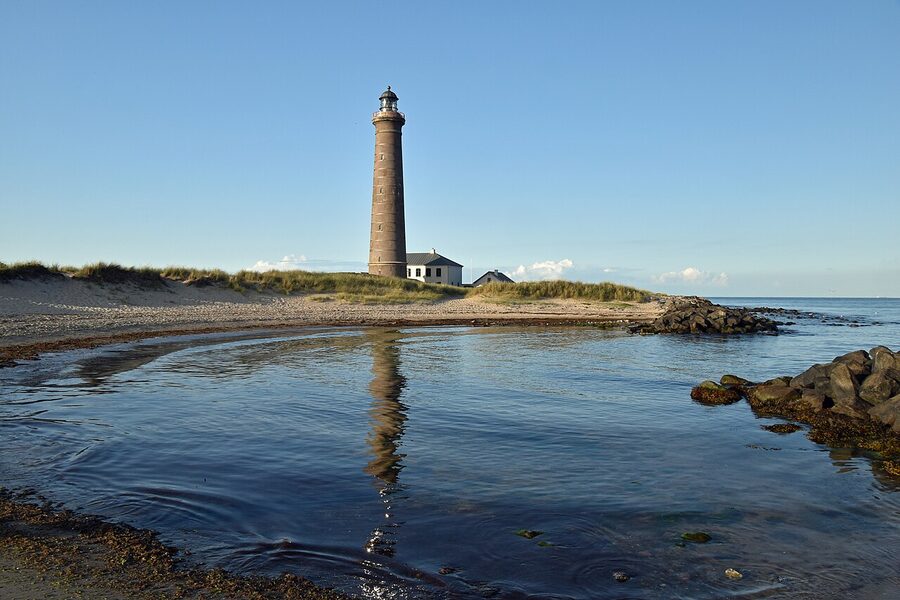
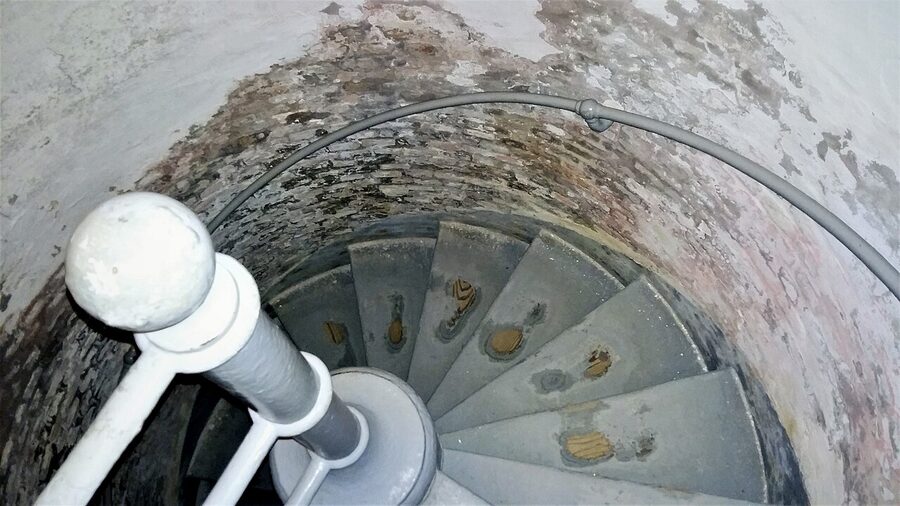
Det Grå Fyr (the Grey Lighthouse, 1858) is the working one. Forty-six metres tall, built of red brick under grey lime render, and home since 2017 to a bird-migration centre with an interactive exhibition. You can climb it. The 210-step ascent is worth it for the view of Grenen and the line where the seas meet. Adult ticket around 95 DKK (~€13); open daily April through October, weekends only in winter, closed when the wind makes the open lantern-room dangerous.
Det Hvide Fyr (the White Lighthouse, 1747) is the older one, replaced in 1858 when Grenen had migrated too far east for it to function. Twenty-one metres, sits closer to the town, no longer climbable but pretty as a photographic subject and useful as a halfway marker on the walk to Grenen.
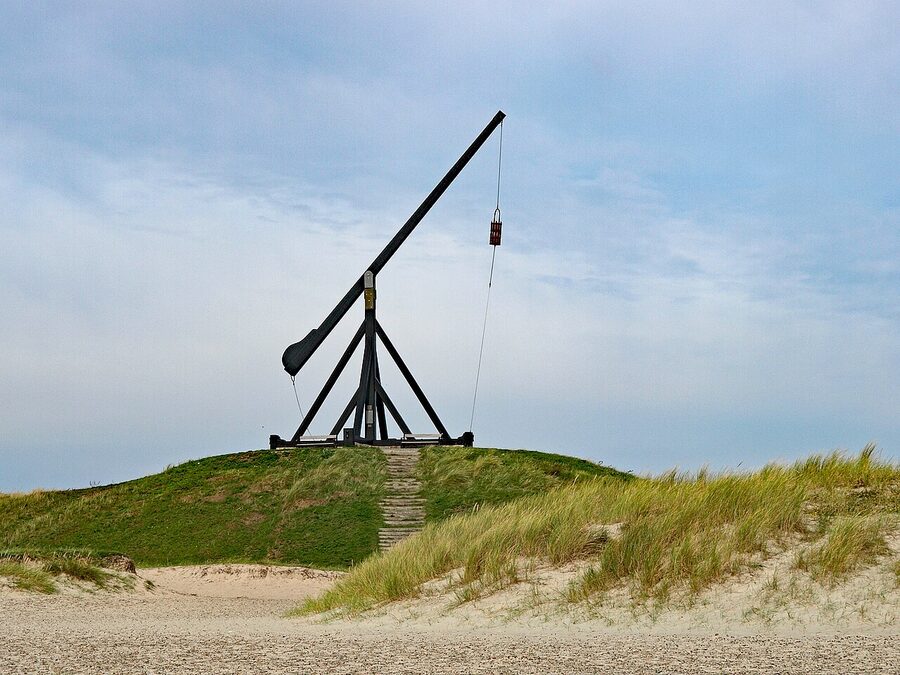
Vippefyret (the Tipping Light, originally 1627) is the oldest type of navigational light: an iron basket of burning coal at the end of a counterweighted pole, tipped up to the sky by a sailor on the ground. The current structure is a 1958 replica of the original, set on a high dune just outside town near the start of the Grenen path. Free to visit. Light it on midsummer (Sankt Hans, 23 June) and it actually works. The walk up the dune to it gives one of the better town-and-coast panoramas in Skagen, especially in late afternoon.
Where to stay
All Booking links here are plain URLs. Confirm room rates against your dates; the prices below are summer-2026 reference rates from the booking pages, and Skagen has a strong shoulder season discount.
Brøndums Hotel, the painters’ hotel
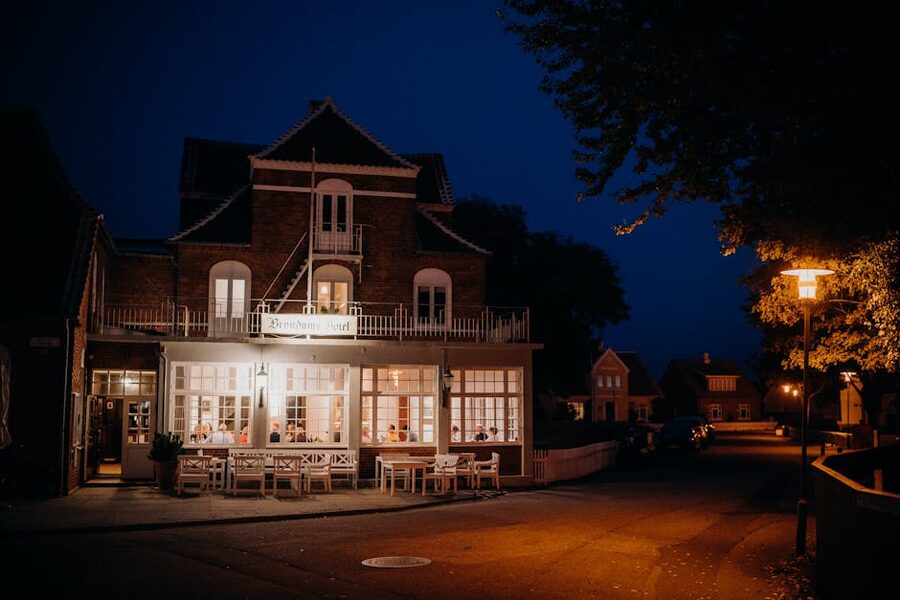
Anchersvej 3, two minutes’ walk from Skagens Museum. This is the hotel where the painters lived and ate, where they ran up unpaid bills and settled them by giving Degn Brøndum (Anna Ancher’s brother, who ran it from the 1880s) portraits that now hang at the museum. It’s still operating. Rooms are plain, slightly creaky, with antique wardrobes and a view of the garden. The breakfast is good. The restaurant is a destination meal in summer (book ahead). Around 1,495 to 2,400 DKK (~€200–325) a double in season. Out-of-season can drop below 1,200 DKK (~€160). Worth it once for the experience; not the place to stay if you want a modern bathroom. Brøndums Hotel on Booking.com.
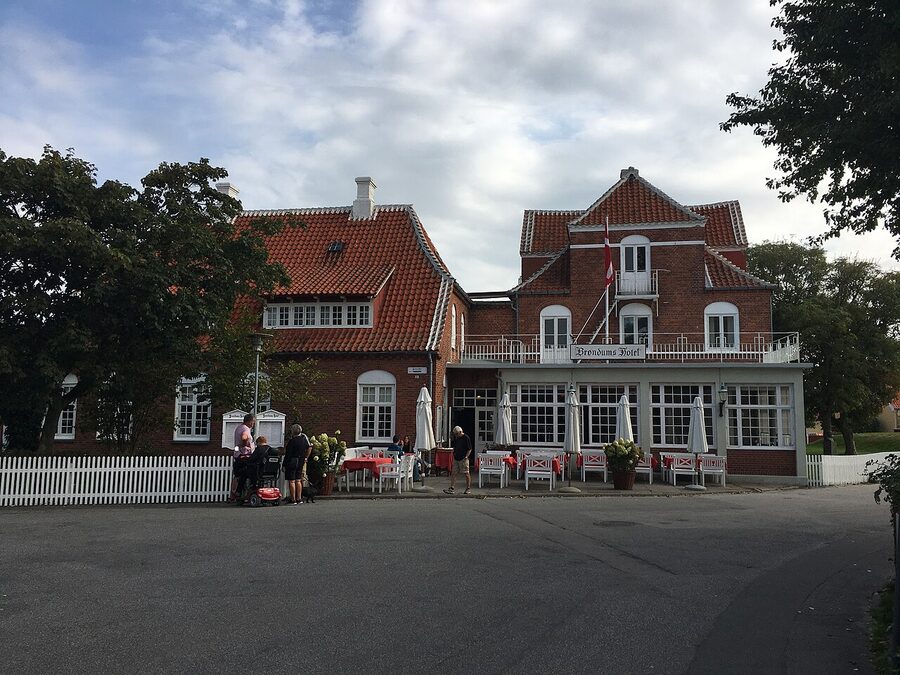
Ruths Hotel, Gammel Skagen
Hans Ruths Vej 1, Gammel Skagen (Old Skagen), about 4 km west of the centre. A 1903 seaside hotel with the best dining room in town, Ruth’s Gourmet, plus a brasserie, a spa, and an atmosphere that’s halfway between a Brittany manor and a Skagen fishing inn. Doubles run 1,950 to 3,900 DKK (~€260–525) in summer; gourmet packages double that. It’s a destination in itself, especially in low season when the rate drops and the dining room loses the queue. Ruths Hotel on Booking.com.
Color Hotel Skagen: pool, families, parking
Gl Landevej 39, on the western edge of town. Built in 1980, refurbished, with an indoor pool, a 200-seat restaurant, and an enormous free car park. It’s not glamorous; it’s the practical choice if you have kids or want a hotel that functions as a hotel. Doubles 1,300 to 2,200 DKK (~€175–295) in season. Ten minutes’ walk to the centre, twenty to the harbour. Color Hotel Skagen on Booking.com.
Hotel Strandly Skagen: the value pick
Sct Laurentii Vej 84, on the southwestern edge of town, walking distance of both the centre and Den Tilsandede Kirke. Plain, well-kept, family-run, free parking, decent breakfast. Doubles around 950 to 1,450 DKK (~€127–195) and even less in shoulder season. The 2025 LaidBackTrip review (a popular Skagen guide that crops up often) says this is where they crashed after a long drive and were happily surprised; my read tracks. Best value in town. Hotel Strandly Skagen on Booking.com.
Foldens Hotel: old-school in the centre
Sct Laurentii Vej 41. A small 1908 hotel right on the high street, recently part-refurbished. Restaurant downstairs (good Sunday lunch), 14 rooms, doubles 1,100 to 1,800 DKK (~€148–242). The annex across the street has cheaper rooms. Foldens Hotel on Booking.com.
Hotel Marie: budget central
Sct Laurentii Vej 42, on the same street as Foldens. Family-run, small, parking around the back, several rooms with shared bathrooms (cheaper) plus en-suite options. Doubles 750 to 1,400 DKK (~€100–188). The shared-bathroom rooms in shoulder season are the cheapest acceptable beds in town. Hotel Marie Skagen on Booking.com.
Skagen Hotel (Clausens): by the station
Sankt Laurentii Vej 35. Stylish independent hotel right by the railway station. Modern rooms, decent restaurant, slightly noisy on the train side; ask for a courtyard room. Doubles 1,150 to 1,950 DKK (~€155–263). The Booking listing technically uses the slug clausens rather than skagen-hotel, which catches out a lot of writers. Skagen Hotel (Clausens) on Booking.com.
Danhostel Skagen: backpacker option
Rolighedsvej 2, fifteen minutes’ walk west of the centre. Family rooms, dorm beds, kitchen. Cheapest beds in town in summer; bookings tight, book early. Danhostel Skagen on Booking.com.
If you can’t find a room: base in Frederikshavn
If Skagen is fully booked (likely on July weekends, midsummer week, and any weekend with a major cruise call), Frederikshavn 41 km south has plenty of capacity, easy parking, and a 35-minute commuter train to Skagen. The drawback is that you lose the evening atmosphere and the early-morning quiet at Grenen, both of which are part of why you came. Go this route only if Skagen genuinely has nothing.
Eating in Skagen
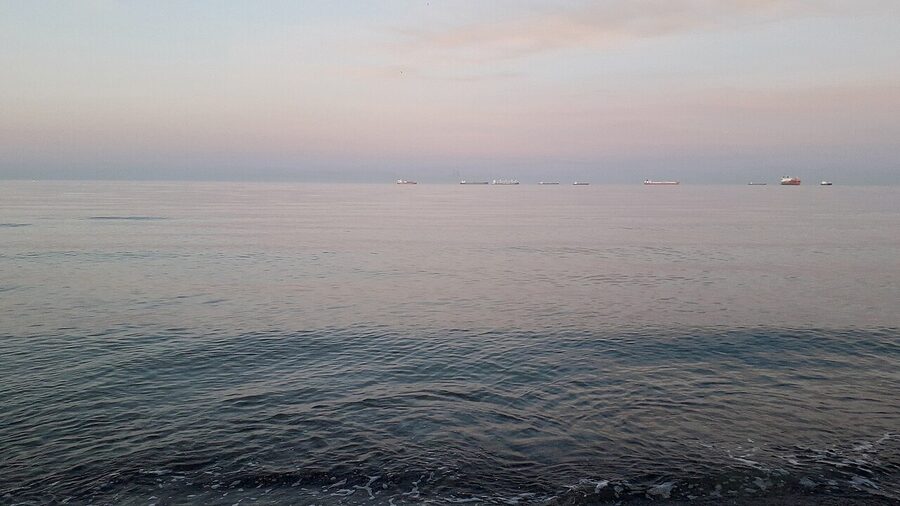
Pakhuset on the harbour. White paper tablecloths, Danish brasserie classics, an outdoor terrace that fills up the moment the wind drops. Mains 195 to 320 DKK (~€26–43). Open seasonally, roughly April through October. Book ahead in summer.
Skagen Bryghus, Kirkevej 10. The town’s microbrewery, opened 2005, with a serviceable pub menu (beer-braised mussels, fish-and-chips, smoked herring plates) and a respectable house range. The dark Skawskum Mørk Lager is the one to order. Mains 165 to 245 DKK (~€22–33). Tour of the brewery, around 95 DKK (~€13), runs Saturdays in season.
Restaurant K, Sct Laurentii Vej 19. The town’s high-end seasonal-tasting room. Single five-course menu around 695 DKK (~€93), wine pairing extra. It’s expensive but it’s the only kitchen in Skagen genuinely competing with capital-city Copenhagen. Reserve a week ahead. Closed Mondays.
Buddy Holly Café, Havnevej. The unlikely Skagen institution; rockabilly playlist, weathered nautical interior, big breakfast plates and a respectable burger. Mains around 145 to 195 DKK (~€19–26). Walk-in, casual.
Hyttefadet, Fiskergangen 6. Working-class harbour pub. Smoked herring, fishermen’s stew, bottled beer, no-nonsense. Lunch 95 to 165 DKK (~€13–22). The locals’ alternative when Pakhuset’s terrace is full.
Skagen Bageri & Café, Skt Laurentii Vej 35-37. The bakery you queue at in the morning. The breakfast offer (roll, cheese, soft-boiled egg, jam, butter) sits at 79 DKK (~€11) and is the best cheap meal in town. Get there before 11:30; after that, the queue is out the door and they switch the menu.
The smokehouses. Skagen’s eastern harbour edge has a row of working smokehouses where they smoke herring, mackerel, eel and prawns the same way they always did. The most famous is Skagen Fiskerøgeri on Fiskehuskaj. Buy a smoked-herring plate over the counter for 85 to 145 DKK (~€11–19) and eat at the wooden tables on the quay. This is the cheapest authentic Skagen meal and the one I’d recommend over almost any restaurant in town.
Beaches and the seal colony
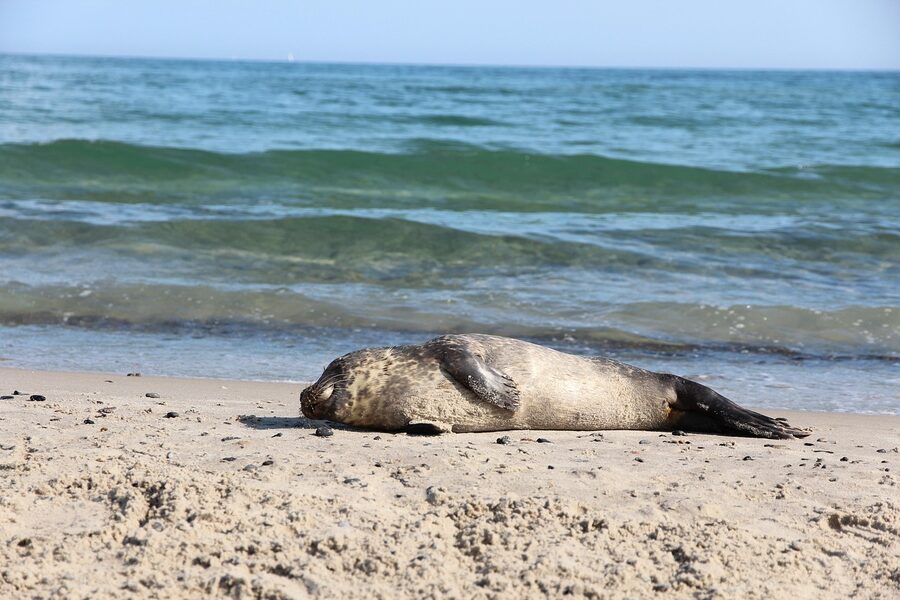
Sixty kilometres of white-sand beach surrounds Skagen. The signpost favourites are Sønderstrand (south, broad, walkable from town in 15 minutes), Damstederne (north of Grenen, quiet), Nordstrand (around the corner from Det Grå Fyr) and Kandestederne (south on the Råbjerg Mile road, with a good summer kiosk). Swimming is fine at all of these except Grenen itself.
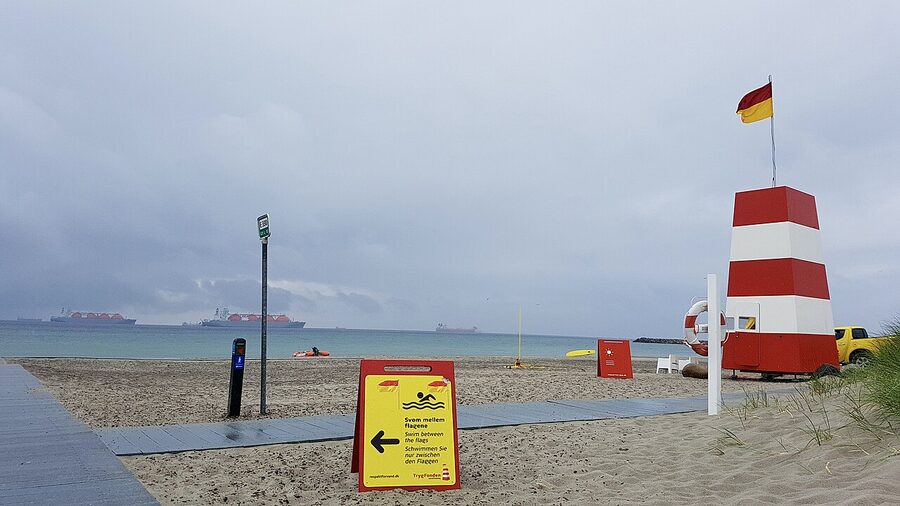
Grey seals haul out on the eastern side of Grenen all year. Don’t approach them. The colony is genuinely wild and a flushed colony can lose pups; the signs around the dunes spell it out. Bring binoculars and stand back. Porpoises and harbour seals are common in the same water; if you’re patient, you’ll see one. Birding is exceptional: this is the best place in Denmark for migratory species (Skagen Fuglestation runs the official ringing station). The second weekend in May is the Skagen Bird Festival, when the town fills up with people in fleeces holding spotting scopes.
The painters’ beach: Sankt Hans and the bonfire night
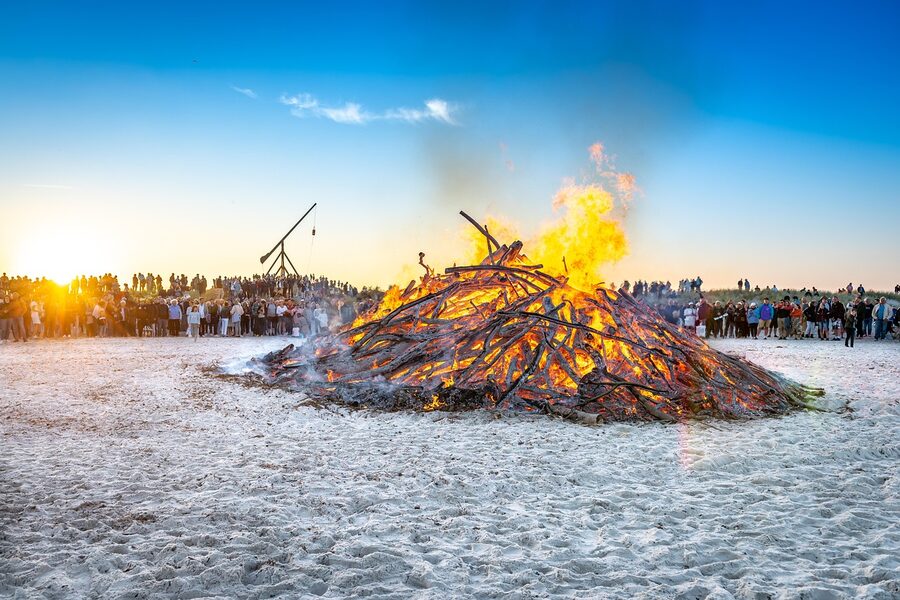
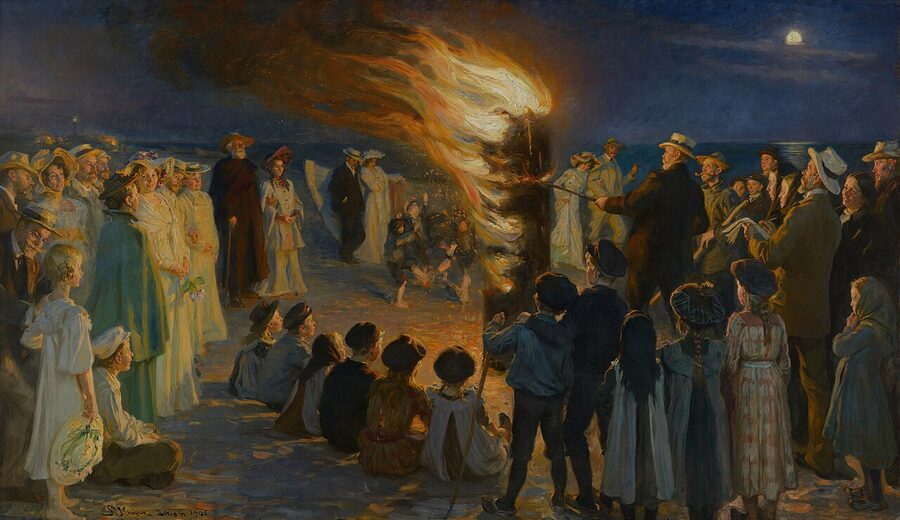
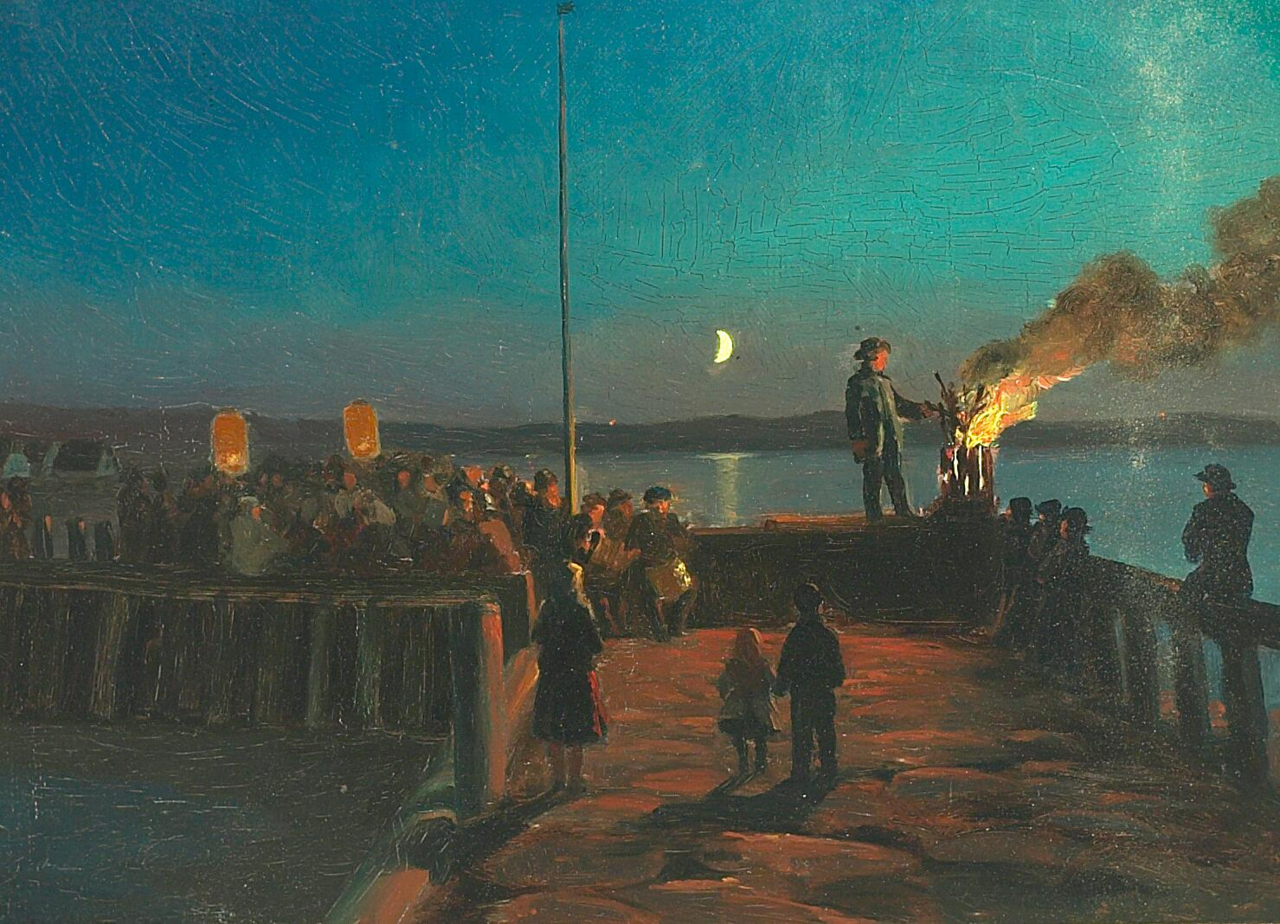
Sankt Hans Aften (St John’s Eve), 23 June, is the Danish midsummer. Across the country, towns light bonfires on the beach, and Skagen does it on Sønderstrand. There’s a singalong (the same song in every town: Vi elsker vort land), a cardboard witch on top of the pyre (a folk tradition: she’s “sent to Bloksbjerg”, a Danish equivalent of the Brocken), and a respectable amount of beer. The Vippefyret gets lit at the same time. Krøyer painted this exact scene in 1903 with the painters and their wives in long pale dresses around the pyre. The painting is at Skagens Museum. The night is more or less the same.
If you only get one summer night in Skagen, make it 23 June.
When to go
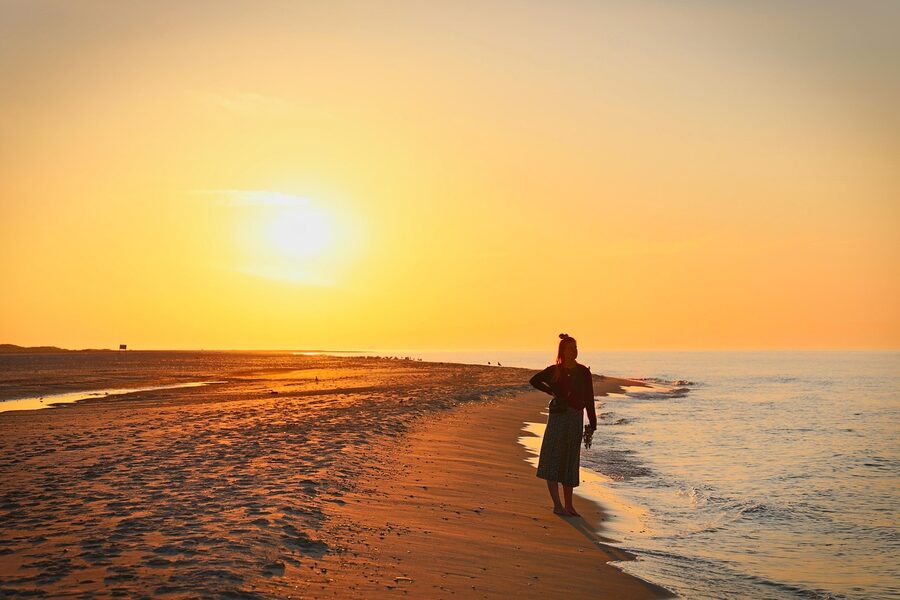
I’ve been three times and I’d rank the seasons:
Late May to mid-June. Best overall. Long daylight (sunset 22:30 around midsummer), all museums open seven days, no cruise-ship traffic yet, water still cold but air mild, and the Bird Festival (second weekend of May) brings life without crowds. Hotel rates are still in shoulder season.
Late August to mid-September. Second-best. Crowds clearing, light still long, water at its warmest (the Kattegat in early September is properly swimmable), restaurants quietly excellent. This is when most Danes go.
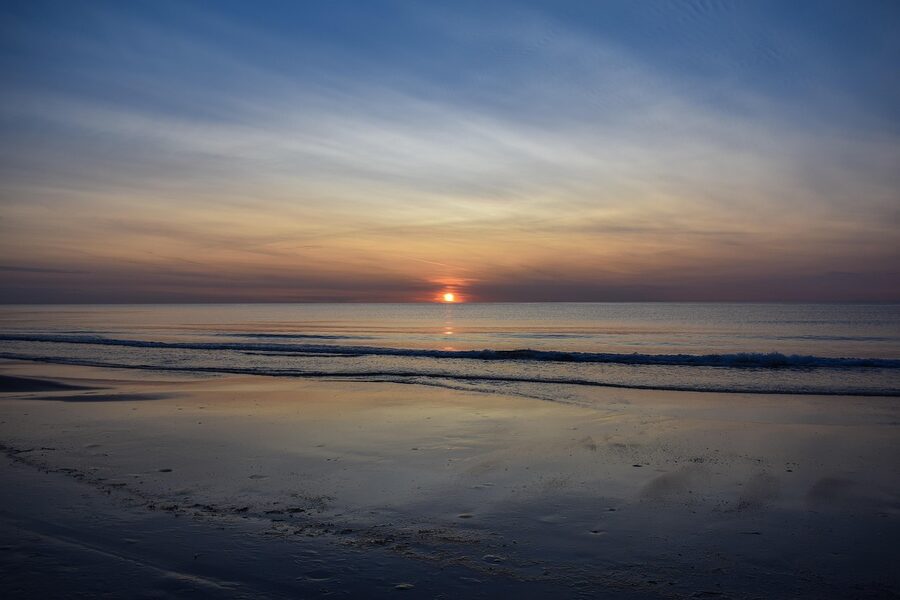
Late October. The light goes amber, the dunes turn the colour of bone, the wind picks up. Atmospheric, photogenic, but Drachmanns Hus and Anchers Hus may already have switched to winter hours. Bring a windproof.
February. Severe and beautiful in equal measure. Half the museums are shut for the new-year break. The Skagens Museum is open. The light, on a clear day, is genuinely the painterly blue you’ve been told about. I’d go again. Roads to Råbjerg Mile may be closed in heavy snow.
July. The verdict: skip July if you can. The town is full, the cruise ships are most frequent, hotel rates peak, the queue at Brøndums dining room is real, and you’ll see Grenen with three hundred other people. If July is the only time you can come, base in Frederikshavn and day-trip in early.
One day, two days, three days
One day from a cruise or a passing road trip. 09:00 train or arrival, walk to Skagens Museum (open 10:00). 11:30 lunch at the bakery or Pakhuset. 12:30 walk to Anchers Hus. 14:00 walk or Sandormen to Grenen. 16:00 climb Det Grå Fyr if it’s still open. 18:00 dinner. 20:00 last train back, or hotel.
Two days. Day one as above but slower. Day two: morning bike or bus to Råbjerg Mile, climb the dune, return mid-afternoon. Den Tilsandede Kirke walk in the late afternoon (the light at 16:30 is the photo). Drachmanns Hus or harbour wander. Smokehouse for dinner.
Three days. Add Gammel Skagen for sunset (the Solnedgangspladsen is the official sunset square; Sosial Skagen has signs), Hollanderhuset (an old yellow guesthouse there), and a longer beach walk down Sønderstrand. Add the bird-station museum if you have any interest. Eat at Ruth’s Gourmet one evening if the budget allows. The third day is the one where Skagen stops being a tour and starts being a place.
Things nobody else says
The harbour smells. It’s a working fishing port; sometimes it’s a strong working fishing port. Don’t book a window room directly over the smokehouses if you have a sensitive nose.
The mosquitoes near Råbjerg Mile in late June and July are real. The dunes themselves are fine; the pine plantation around the parking lot is not. Bring repellent.
The Sandormen does not run in winter. The Bunker Museum does not run in winter. Anchers Hus and Drachmanns Hus have shorter winter hours and may be entirely shut in January. Skagens Museum is the only major site you can be sure of in deep winter.
Some of the cafés on Sankt Laurentii Vej charge cruise-ship-tier prices for ordinary coffee in July. The bakery and the harbour cafés don’t. Walk one street back from the centre.
The Wi-Fi at Brøndums and a couple of the older hotels is poor. If you need to work, pick Color Hotel or one of the apartment rentals.
The road north out of Aalborg is dull. The drive south from Skagen back toward central Jutland is much more interesting via the coastal road through Aalbæk and Hirtshals. If you’re chaining south to Aarhus, take the slow road for the first hour.
Chaining Skagen with the rest of a Denmark trip
Skagen is the natural endpoint or starting point of a Denmark trip, never the middle. The two obvious chains:
Copenhagen first, then north. Two or three days in Copenhagen, train to Aarhus for two nights (the second-city is good), then up to Skagen for two. Total: a week. The cleanest version of a first-time Denmark trip.
Norway first, then west across. Two days in Oslo, ferry to Hirtshals or Frederikshavn (Color Line and Fjord Line both run; rough crossing, plan light meals), then drive or train to Skagen. The ferry crossing of the Skagerrak is the same water Krøyer painted; it’s a useful frame for the colony.
If you’re treating this as part of a wider Scandinavian rail trip, the slow logic of the Bergen Line or the slow ferry routes pairs well: Skagen is the kind of place that rewards arriving slowly.
What to read before you come
Two short ones. Tom Lubbock’s piece on Krøyer’s Summer Evening on Skagen Beach in The Independent is the best 700-word read on the colony’s atmosphere. The Skagens Museum’s own catalogue (around 295 DKK / ~€40, in English) is the single best take-home; you’ll re-read it three times after you get back. If you read Danish, Lise Svanholm’s Skagensmalerne i lyset is the standard.
The northernmost point
The thing I keep coming back to about Skagen is that it’s a place where you can stand inside a painting. Most artist towns are tourist versions of themselves now: the studios are gift shops, the inns are restaurants, the views are still there but everything between them has been redone. Skagen is the rare exception. Anchers Hus is the actual house. Brøndums is the actual hotel. The dining room sits in the museum exactly as the painters left it. The yellow on the walls outside is the same ochre the painters chose.
Even Grenen, where the brief might tempt me to a sweeping line about geography making the painters possible, isn’t really the point. The point is that two hundred fifty kilometres north of Copenhagen, in a town of seven thousand people that you have to actively decide to visit, fifteen artists worked together for twenty years and made the most important Scandinavian paintings of their century, and the rooms they did it in are still standing. Walk into the blue parlour on a quiet Tuesday in October. Look out the window. The light is the same.


.jpg)


.jpg)
.jpg)


