The 09:14 Re3 from Copenhagen H to Roskilde takes 25 minutes and costs 60 DKK (~€8) one way. For that you get a UNESCO cathedral with the bones of 40 Danish monarchs in it, five Viking ships pulled from the bottom of a fjord in 1962, and the harbour town that used to be the Danish capital. It is the best day trip out of Copenhagen, and the answer to “is it worth it” is yes, with one caveat I’ll get to about late June.
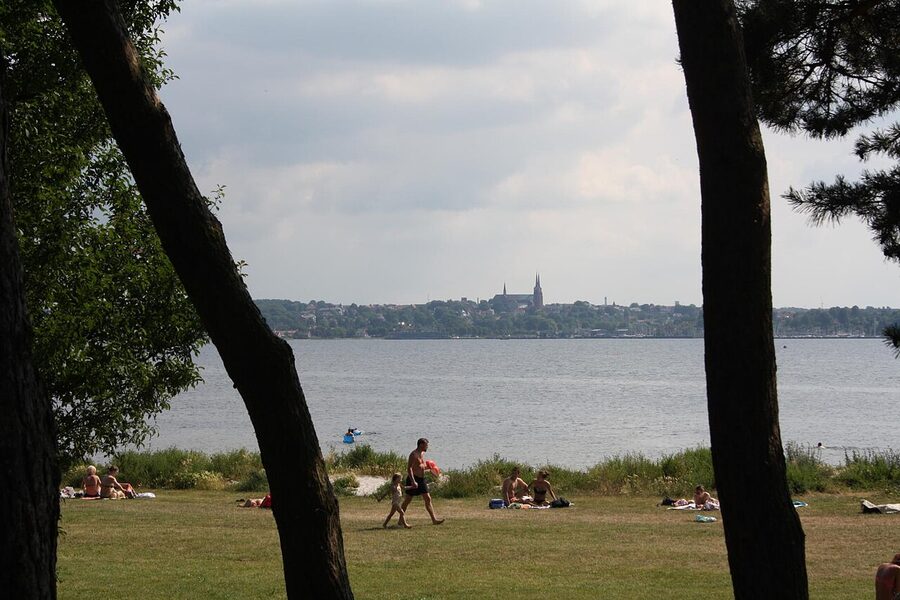
I’ve done this trip four times now, in different seasons. Once in February when the cathedral was almost empty and the light through the high windows did everything I wanted from a Gothic interior. Once in early July, when the festival site was being built east of town and a few hundred extra trains were running. Once in October, when the fjord was already closed for sailing. And once last summer, on a normal Tuesday, which is the calendar slot I’d recommend if you have the choice. This is the practical guide I wish someone had given me before the first one.
In This Article
- The train
- What this is, and why it ranks above Helsingør
- Roskilde Cathedral: the Danish Westminster Abbey
- The kings and queens
- Christian IV’s chapel
- The Frederik V chapel and the small ones
- The choir, the organ, the Sankt Birgitta altarpiece
- Margrethespiret and the yellow palace
- How long inside the cathedral?
- Lunch in the old town
- The Viking Ship Museum: five ships, six decades, one boatyard
- The 1962 Skuldelev excavation
- What each of the five ships actually was
- The Sea Stallion: a 30-metre warship that sailed to Dublin
- The boatyard, the smithy, and the ropewalk
- How long inside the museum?
- The harbour and the fjord
- The Roskilde Festival, and why I keep recommending against late June
- Ragnarock: the museum the festival built
- The other Roskilde things, ranked
- Where to base yourself
- The best time to do this
- The day plan I’d actually use
- If Roskilde sets you off on a wider Viking thread
The train
Trains run every ten minutes from Copenhagen Central Station (København H) to Roskilde, on three lines: the Re3 to Holbæk, the IC long-distance services towards Funen and Jutland, and the Re4. The fastest IC services do it in 19 minutes. The Re3 stopper does it in 25, with two intermediate stops at Hvidovre and Glostrup. Both are fine. Look at the departure board for the next train labelled Roskilde, Holbæk, Kalundborg, Slagelse, Korsør, Odense, or Århus, and get on it.
Tickets are easiest through the DOT app on your phone or the red DSB ticket machines at the station. A standard one-way is 60 DKK (~€8). Return is 120 DKK. There is no day-trip cap unless you have a Copenhagen Card, in which case Roskilde is included in the zone coverage and you don’t need a separate ticket at all. If you’re already on a Copenhagen Card for the museums in town, this works out to a free trip.
Roskilde station sits on the south side of the old town. From the platforms you walk out onto Jernbanegade, head north uphill for 600 metres past the chemist and the Føtex supermarket, and the cathedral spires appear above the rooftops on Stændertorvet, the market square. It’s a seven-minute walk. There is no need for a bus, a taxi, or a tour, and any guide that tries to sell you one is upselling for the sake of it.
What this is, and why it ranks above Helsingør
Roskilde was the capital of Denmark from the 11th century until 1443, founded by Harald Bluetooth around 980. (The same Harald Bluetooth whose runestones at Jelling, three hours west, started the Christian conversion of the country, and whose initials live on as the Bluetooth logo on your phone.) Once Copenhagen took the capital role, Roskilde stayed important because of the cathedral. From Margrete I in 1412 onward, every Danish monarch except one has been buried here. That’s six centuries of kings and queens in one building.
And then there’s the harbour, where the Viking Ship Museum sits on the water with five 11th-century ships inside it and a working boatyard outside that builds replicas with hand tools. Two world-class sites, ten minutes apart on foot, in a town of 50,000 people that’s a 25-minute train from your hotel. That is a strong day trip by any standard.
The other obvious day trip from Copenhagen is Helsingør for Kronborg, the castle Shakespeare used as Hamlet’s Elsinore. I’d argue that’s a different kind of trip. Kronborg is one big thing in a slightly dull port town. Roskilde is two big things in a small old town with a market square and a fjord at the bottom of it. If you have one day, do Roskilde. If you have two, do both, and do Roskilde first because it sets up the Danish royal-and-Viking story that Kronborg then sits inside. Frederiksborg Castle at Hillerød is a third option, and a beautiful one, but it’s more of a Danish-Versailles experience than a working historical day, and you’ve already got plenty of palaces in Copenhagen.
Roskilde Cathedral: the Danish Westminster Abbey
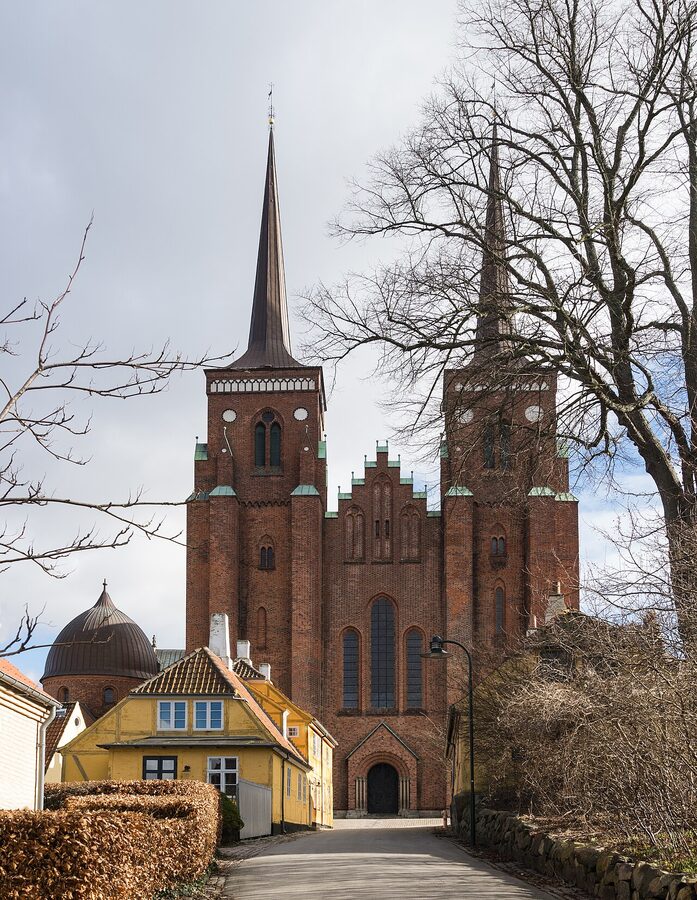
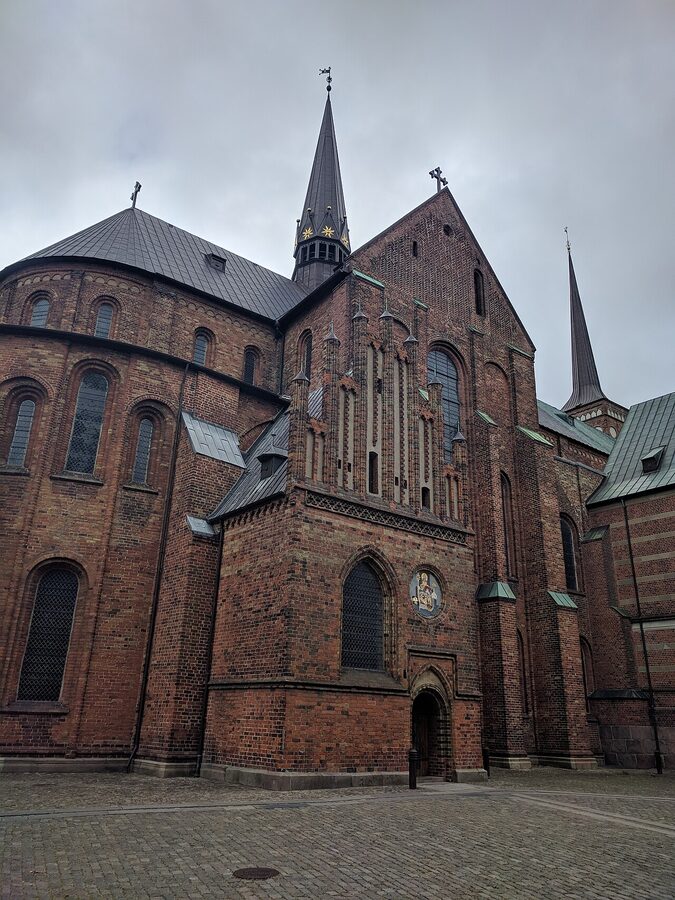
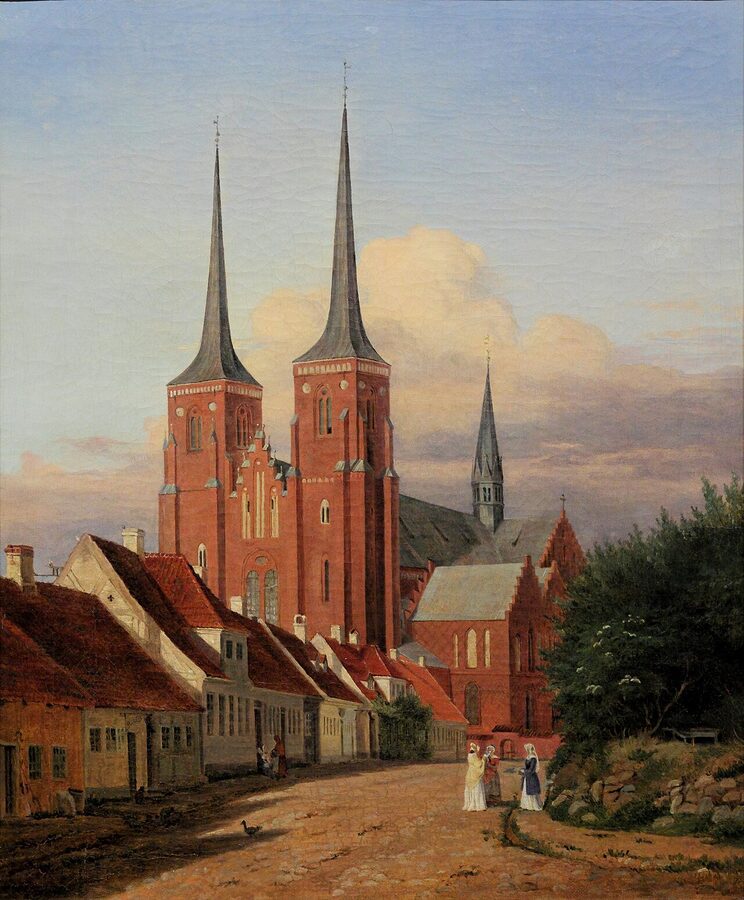
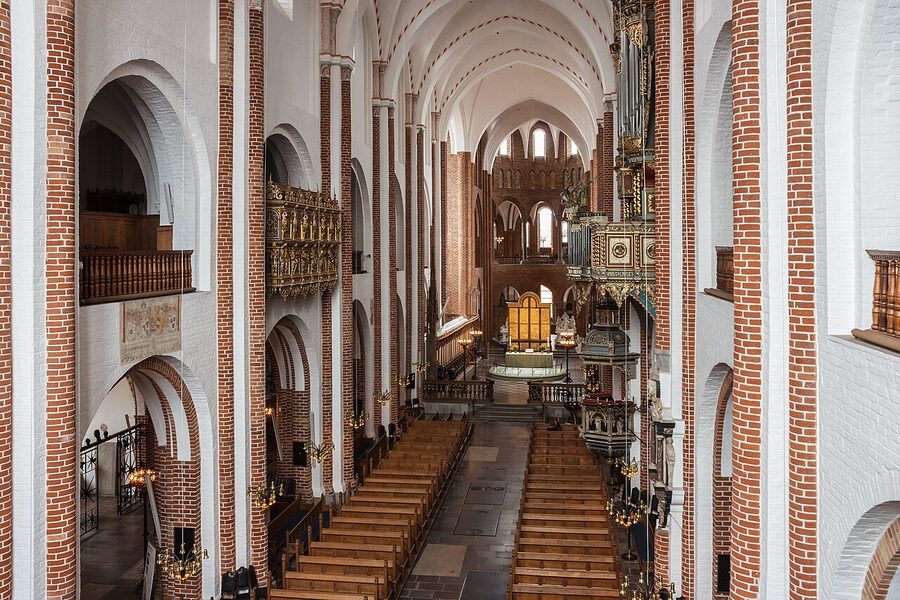
Roskilde Cathedral, or Roskilde Domkirke if you want the Danish, is on UNESCO’s World Heritage list and has been since 1995. It’s the first all-brick Gothic cathedral in Scandinavia, consecrated in 1225 on the foundations of two earlier wooden churches that burned. It’s also the burial church of the Danish monarchy, and that is the part you came for.
The standard adult ticket is 70 DKK (~€9). Seniors over 67 and students with ID pay 50 DKK (~€7). It’s free with the Copenhagen Card. Children under 18 are free. The cathedral is open Monday to Saturday 10:00 to 17:00 in summer (1 April to 30 September) and 10:00 to 16:00 in winter, with Sunday hours of 13:00 to 16:00 year-round to allow morning services. It closes for weddings, funerals, and royal services, which happen often enough that you should check roskildedomkirke.dk the day before. I’ve turned up to a closed door once. It was a Saturday wedding, which I should have anticipated.
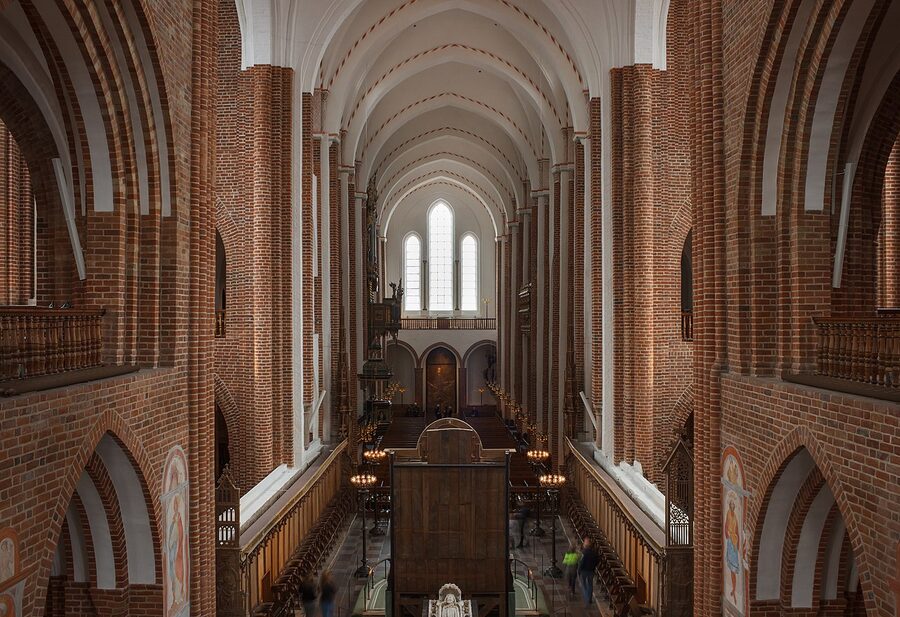
The kings and queens
Forty Danish monarchs are buried inside the cathedral. The full list runs from Margrete I, who died in 1412, through Frederik IX, who died in 1972. Margrete II, who reigned from 1972 to 2024 and abdicated to her son Frederik X on 14 January 2024, has a sarcophagus in commission but is not yet interred; she was the first monarch in living memory to step down rather than die in office, and the design and timing of her future tomb is its own minor architectural story. Harald Bluetooth himself is rumoured to be under the cathedral somewhere, but that has never been proved and the eleventh-century church he was probably buried in burned down twice before the brick one went up.
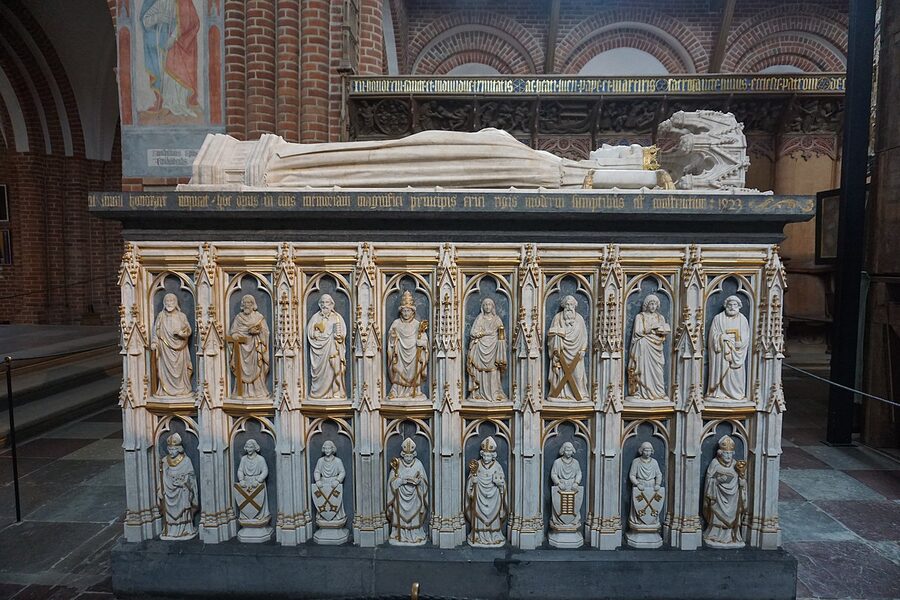
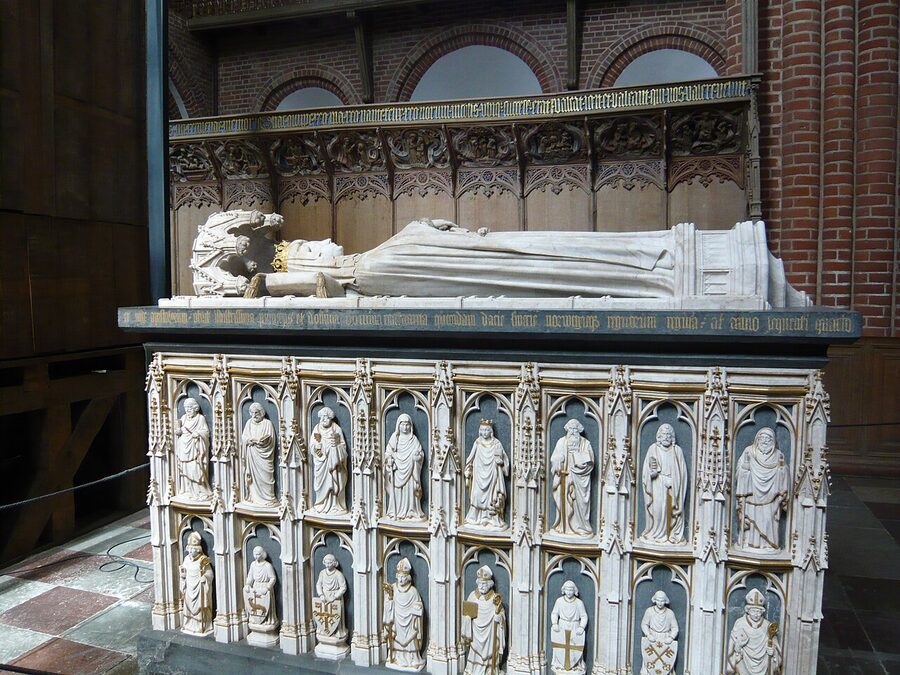
You enter near the back of the nave and walk forward toward the altar. Margrete’s tomb is behind the altar, in the apse, raised on a black marble plinth with her alabaster effigy on top. She united Denmark, Norway, and Sweden in the Kalmar Union of 1397, an act that made her the most consequential ruler in Scandinavian medieval history and the reason her father, Valdemar IV, also rests here. Stand at her tomb for a minute. The carving is fifteenth-century work, restored after an organ-loft fire in the eighteenth century, and the lions at her feet are the closest thing to original.
Christian IV’s chapel
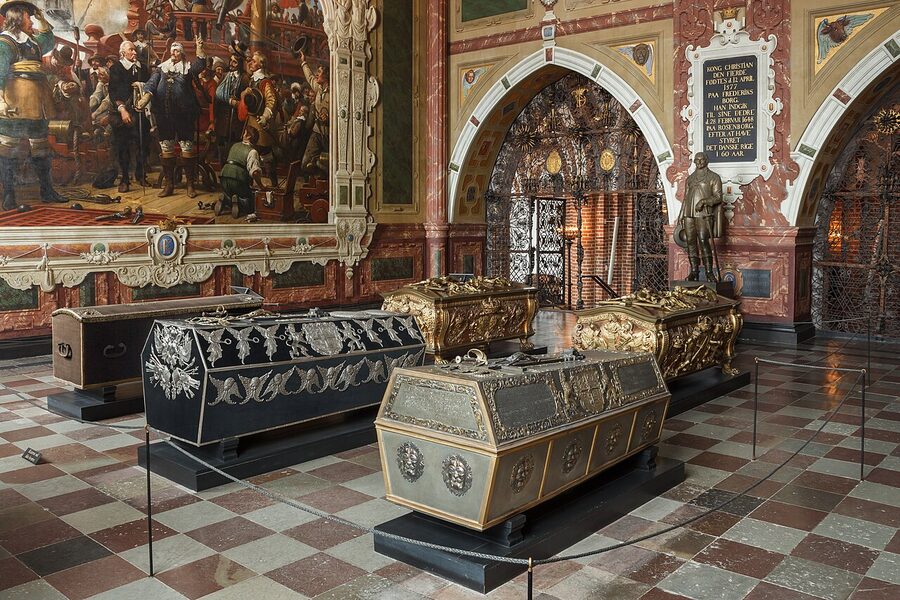
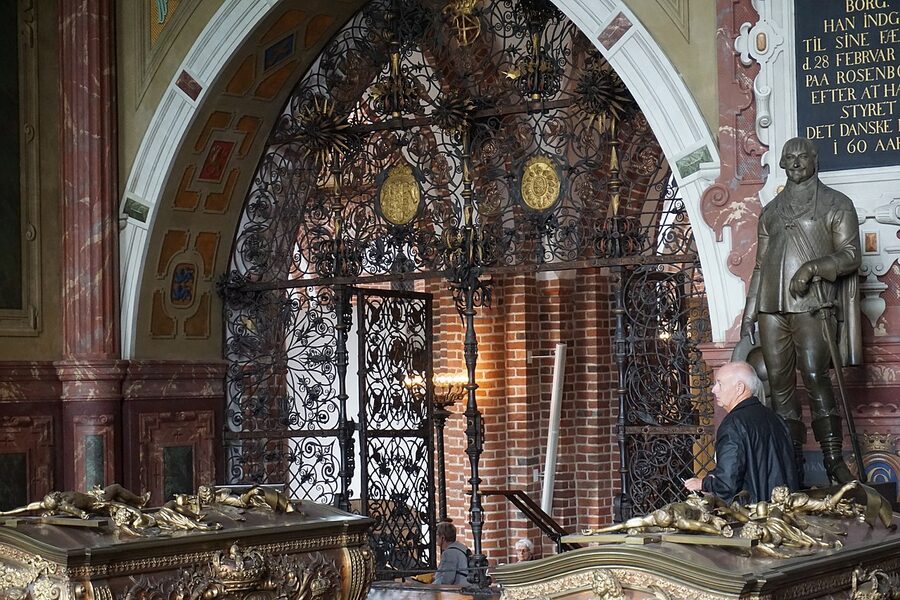
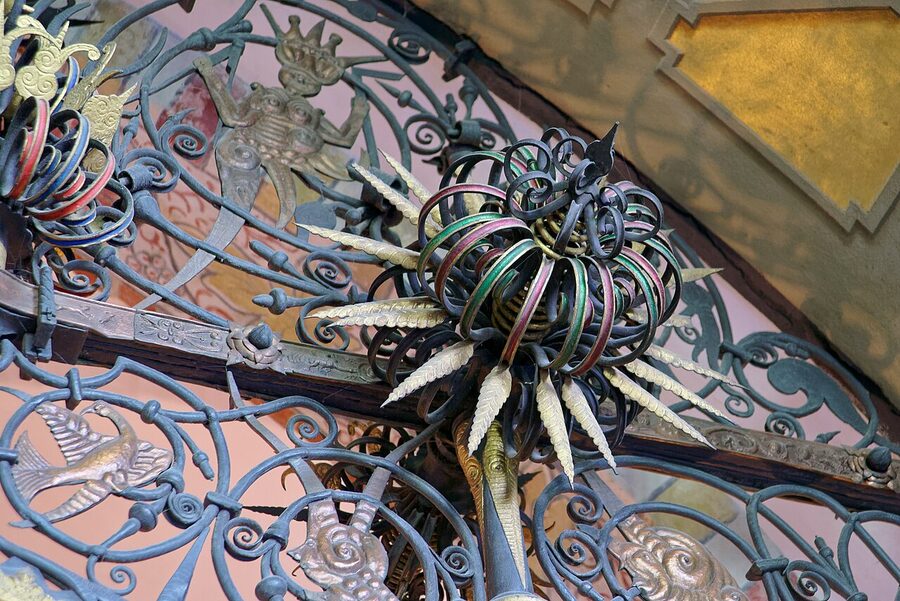
Christian IV reigned from 1588 to 1648. He’s the king who built half of present-day Copenhagen, including Rosenborg Castle, the round tower at Rundetårn, and the harbour at Christianshavn. He is also the king most Danes will name first if you ask them to pick one. His chapel here is on the north side of the nave, behind a wrought-iron grille made by Caspar Fincke, the royal blacksmith. The grille alone is worth the entry fee. Inside, Christian IV’s tomb is in black marble, with a Bertel Thorvaldsen statue of him in armour added in the 1840s. Frederik II, his father, is in the same chapel; so is the Danish-American Christian IV’s wife, Anne Catherine of Brandenburg.
The Frederik V chapel and the small ones
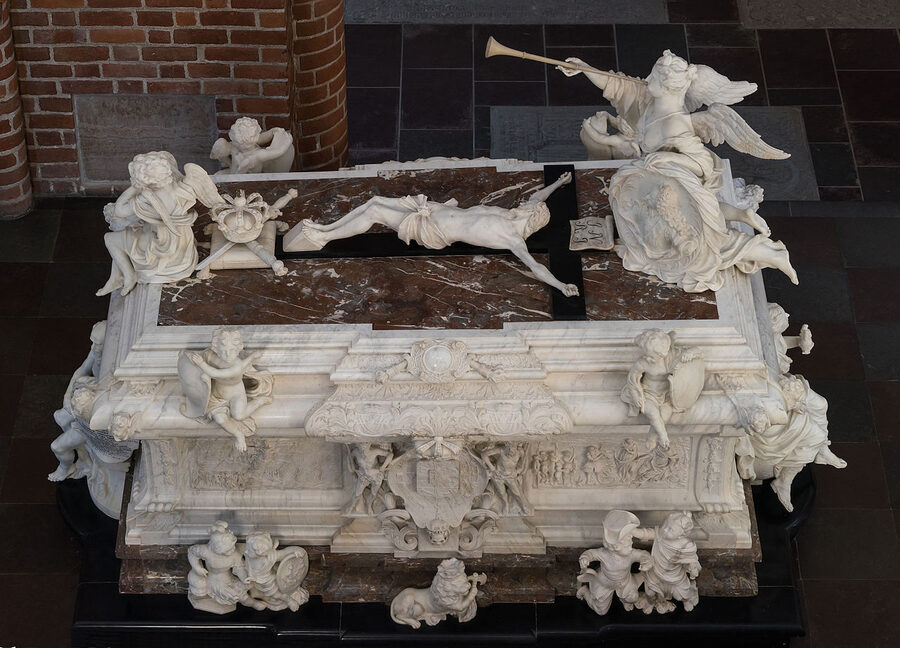
The cathedral has eight side chapels, each one pretty much its own piece of architectural fashion. The Magi Chapel is late Gothic, holds Frederik IV and Christian VI among others, and is colder than the nave because of the floor stone. The Frederik V chapel, completed in 1825, is neoclassical and holds Frederik V himself, Christian VII, and the unfortunate Caroline Mathilde. The Christian IX chapel, completed in 1924, is Art Nouveau, with mosaic walls and a dome that catches light from a hidden lantern. It feels like the inside of a Lalique bottle, which is not a sentence I expected to write about a cathedral.

The choir, the organ, the Sankt Birgitta altarpiece
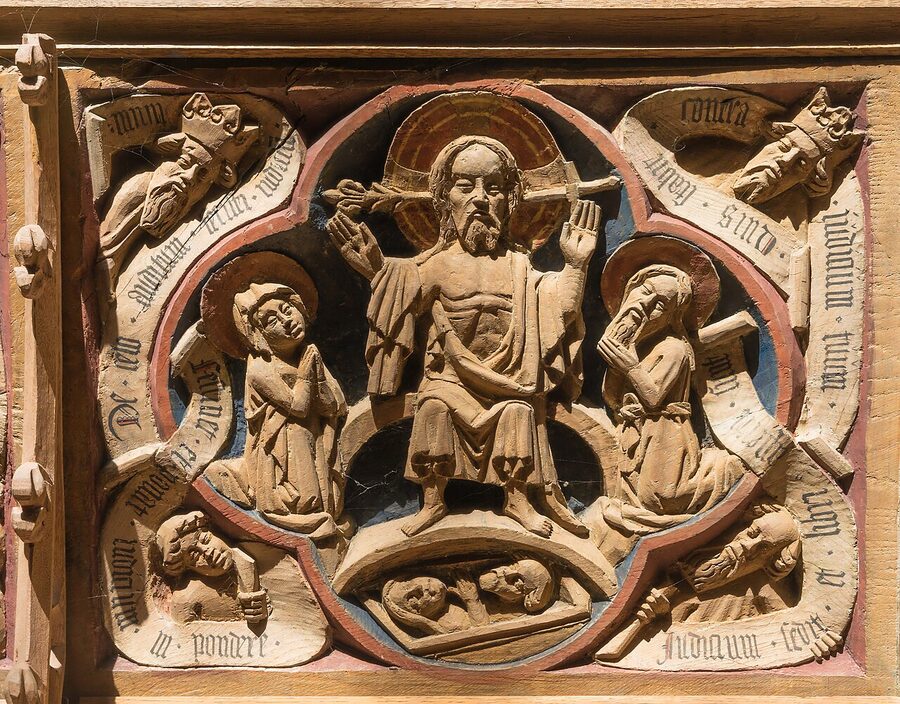
Three things to look at that aren’t tombs. The choir stalls, mid-fourteenth century, with a carved canopy of biblical scenes that runs the length of both sides. The Sankt Birgitta altarpiece, an Antwerp work from 1560 with three painted panels and a carved central scene; the painted panels open and close depending on the church season, so what you see is partly luck. And the organ, originally built by Herman Raphaëlis in 1554, repeatedly rebuilt, currently a 4,000-pipe instrument behind a Renaissance carved case. There are concerts on Thursday evenings in summer; the Tuesday lunch organ recital at 12:00 is free with cathedral entry and lasts about half an hour. If your timing works for the Tuesday recital, that’s the visit.
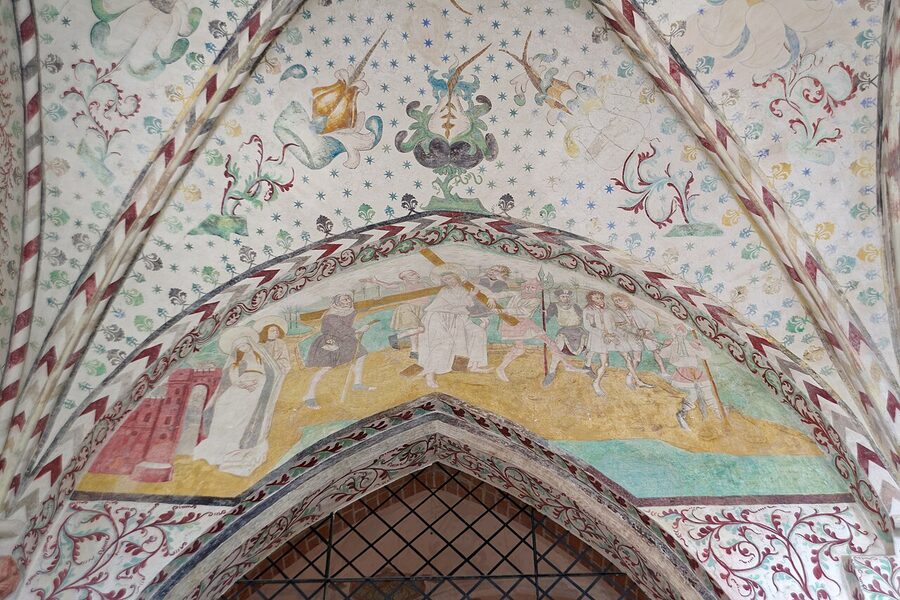
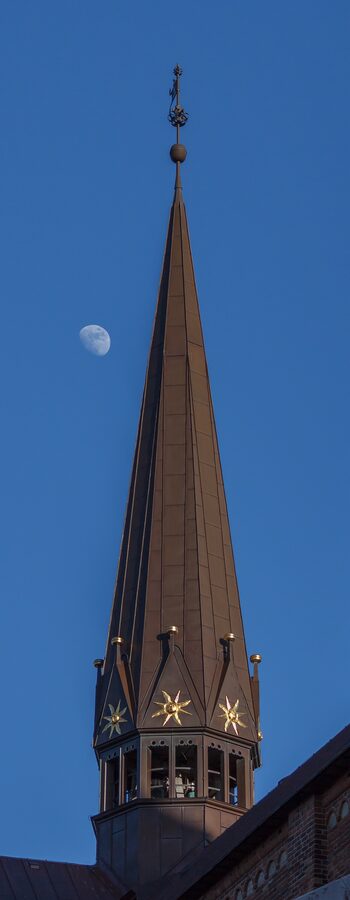
Margrethespiret and the yellow palace
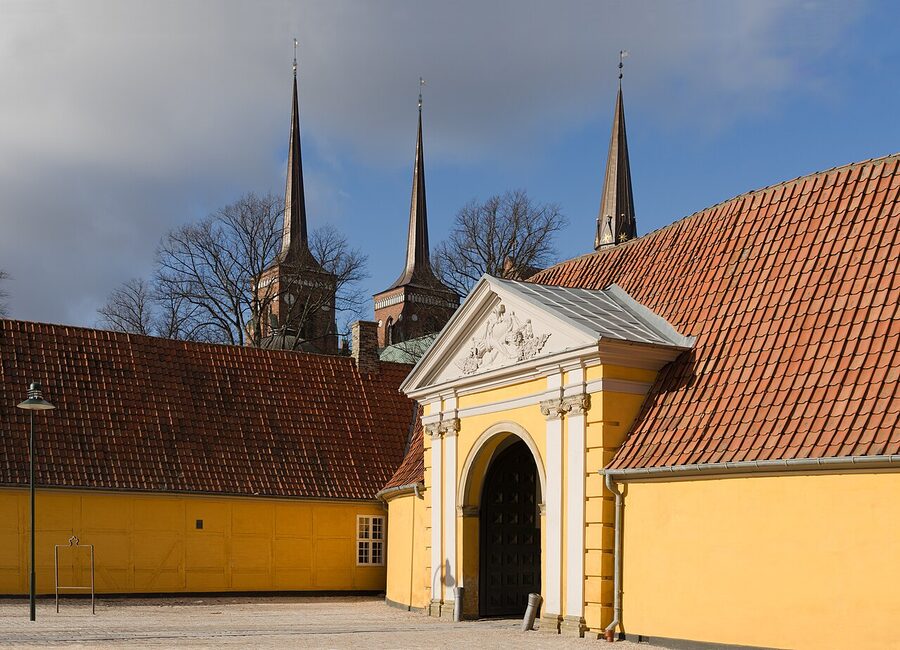
On the way out, walk around the cathedral exterior. The yellow building right next to the south side, Roskilde Palace, looks more important than it is. It was a bishop’s residence built in the 1730s on the foundations of the old royal palace, used by visiting royals when they came for funerals, and is now the Museum of Contemporary Art (Museet for Samtidskunst). Worth a look if contemporary art is your thing; the building is the more interesting part either way. Free entry, closed Mondays, open 11:00 to 17:00 Tuesday to Sunday.
How long inside the cathedral?
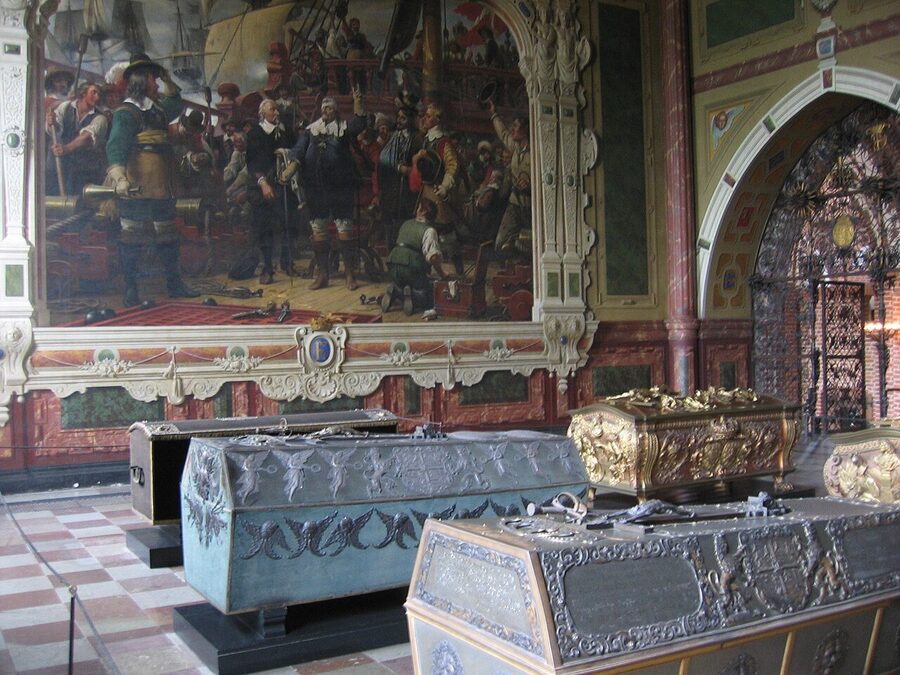
Allow 90 minutes if you read the chapel signage and walk slowly. Allow 45 if you don’t. The free booklet at the entrance covers the chapels in the order you’ll naturally walk them, which is the south side first then back along the north. There’s a small museum upstairs in the south transept with vestments, plate, and the mechanical clock figures (an iron rooster and a Saint George that move on the hour); the clock is now an electronic recreation but the original 15th-century mechanism is in the museum cases. Worth ten minutes if you’ve already paid the ticket.
Lunch in the old town
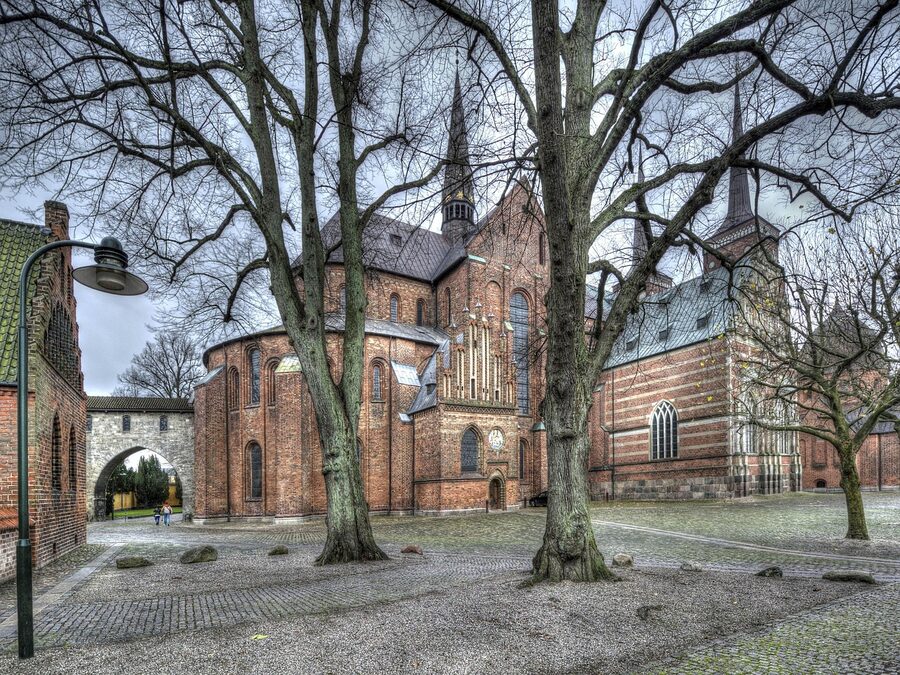
Stændertorvet, the market square south of the cathedral, has the obvious cafés. Café Vivaldi has reasonable open sandwiches at 95 to 130 DKK and a view of the cathedral wall, which is the version of “view of the cathedral” Roskilde sells. Mumm is the better Danish option two streets down on Karen Olsdatters Stræde, in a 16th-century building, lunch around 200 DKK and you should book ahead on weekends. Snekken, on the harbour about 200 metres past the Viking Ship Museum on the way to the boatyard, does a smørrebrød lunch with the fjord in front of you and a view back to the cathedral spires; expect 250 to 350 DKK for two pieces and a beer.
The budget answer is the Føtex on Algade has a salad bar, a bakery, and a small hot section. You can build a perfectly good 80 DKK lunch and eat it on a bench in Byparken on the way down to the museum. I’ve done this both ways and Snekken is worth the price the first time and the budget version is fine the second.
Skip the restaurant inside the Viking Ship Museum unless you’re in a hurry. It does a pickled-herring buffet at lunchtime, which sounds great in theory and is decent enough, but you’re paying 195 DKK for cafeteria-line buffet rather than something cooked. Use it if your train timing makes Snekken impossible. Otherwise eat in town.
The Viking Ship Museum: five ships, six decades, one boatyard
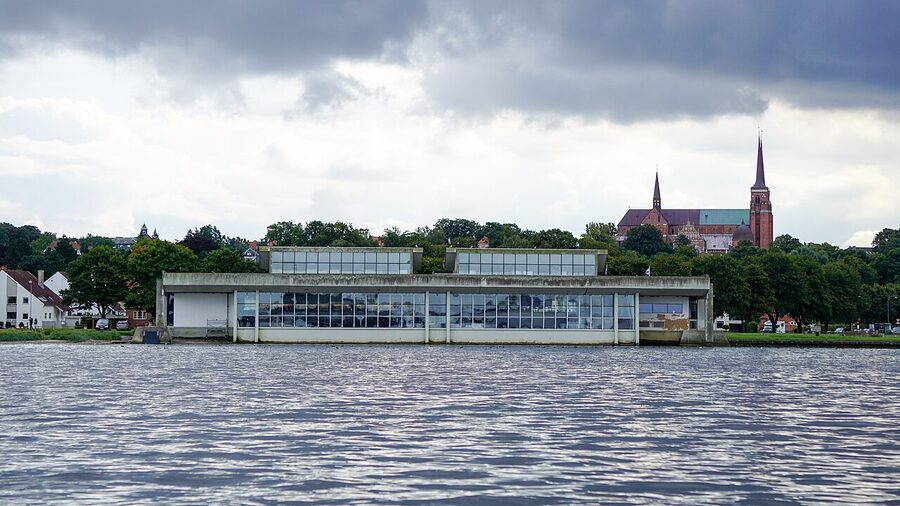
Walk down from the cathedral on Algade, then turn left at Skomagergade and follow Sankt Ols Stræde down through Byparken, the old town park. Twelve minutes downhill, with the fjord opening up in front of you. The Viking Ship Museum (Vikingeskibsmuseet) sits right on the water, a low concrete shed at the end of a small harbour with a working boatyard beside it.
Tickets in summer (April to October): 160 DKK adult, 105 DKK student, free under 18. In winter (November to March): 125 DKK adult, 80 DKK student. Family ticket (two adults, up to four children) 300 DKK summer, 230 DKK winter. Open daily 10:00 to 17:00 in summer, 10:00 to 16:00 in winter, closed 24 and 25 December. The Copenhagen Card includes the basic ticket but not the boat trip. Booking ahead through vikingeskibsmuseet.dk is sensible in July and August; you’ll save the queue.
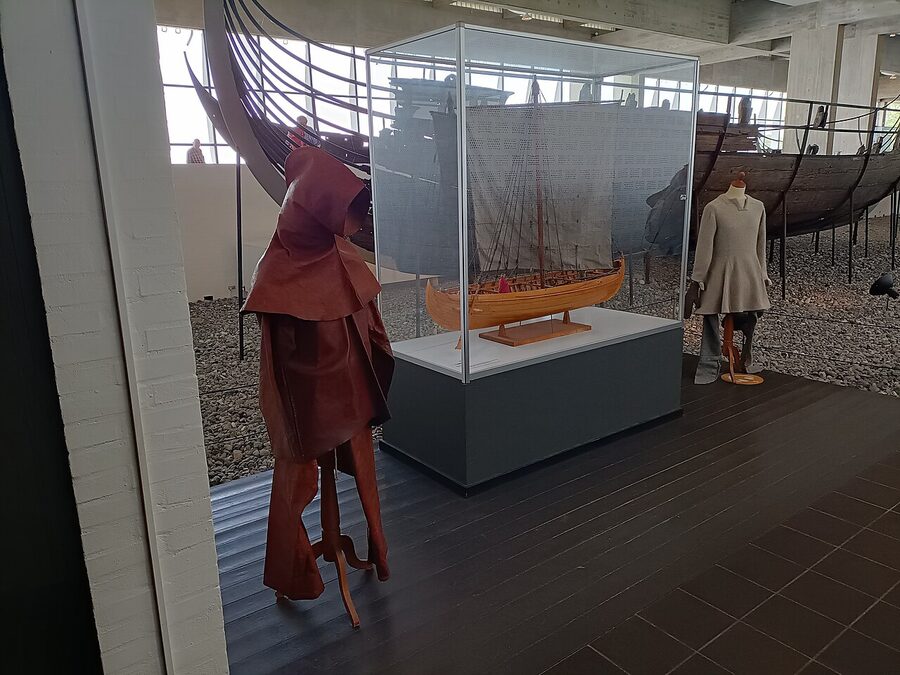
The 1962 Skuldelev excavation
In the summer of 1962, a coffer dam was built across one of the Roskilde Fjord channels at Skuldelev, twenty kilometres north of town. The dam pumped out 50,000 cubic metres of water and exposed a deliberately scuttled blockade of five Viking ships. The blockade had been laid in roughly 1070 to defend the entrance to Roskilde, which was then the Danish royal seat, against Norwegian and Swedish raiders. The ships were stripped of their gear, filled with stones, and sunk in the channel. They had then been forgotten about for 900 years.
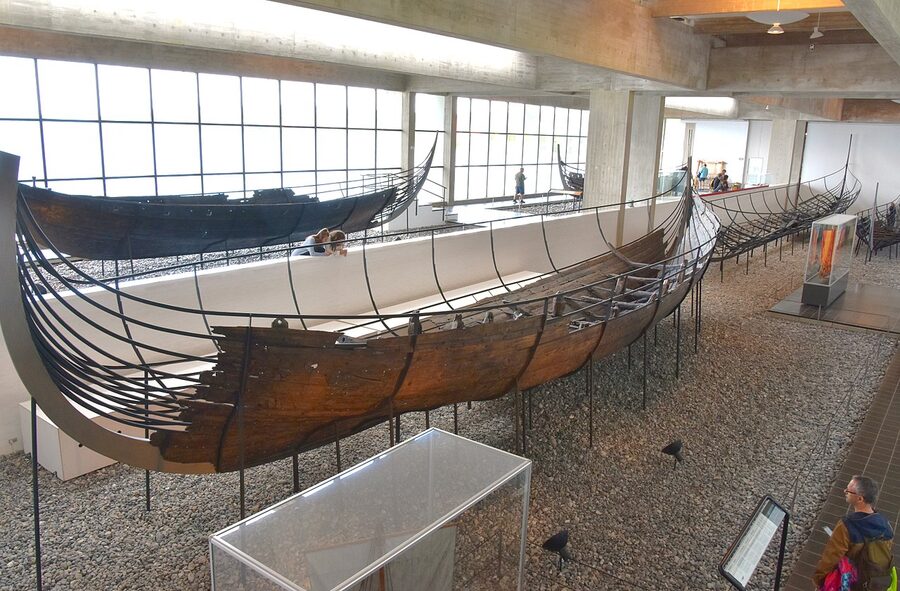
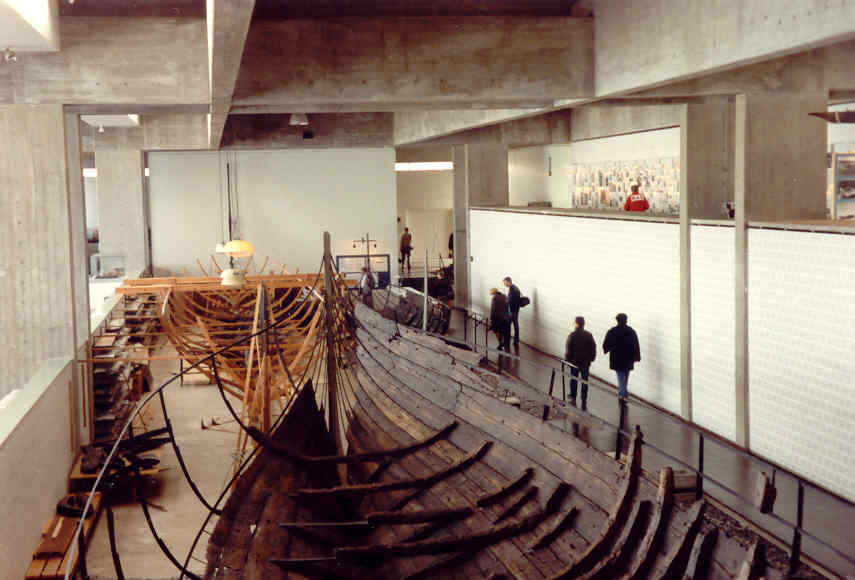
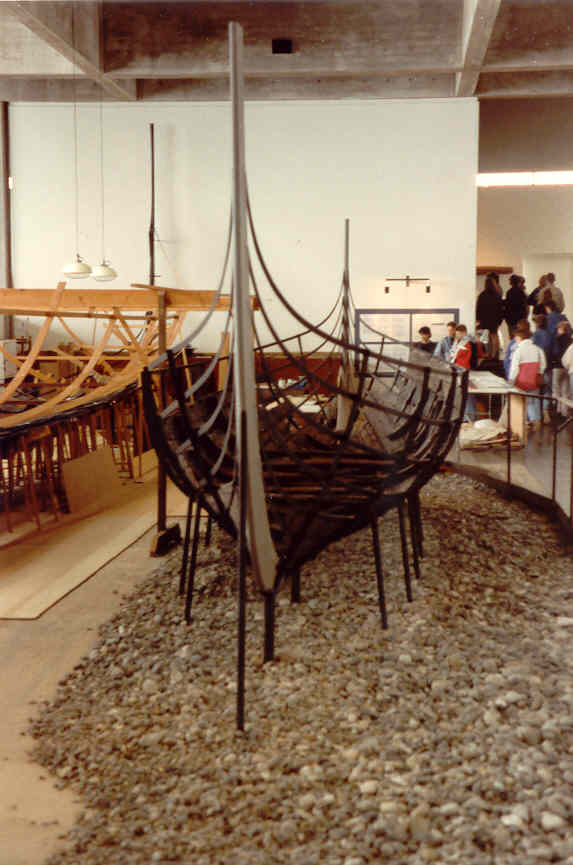
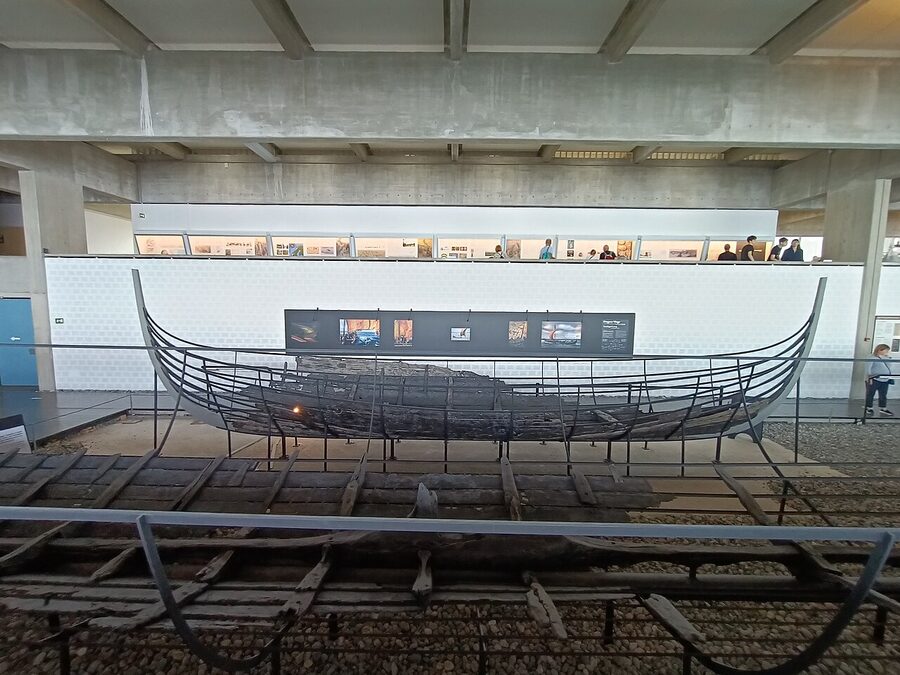
What was actually pulled out wasn’t five ships in any complete sense. It was thousands of timber fragments. Once the conservation team at the National Museum had freeze-dried the wood with polyethylene glycol, a process that took eight years, the fragments were reassembled on steel scaffolding in the rough shape of the original hulls. The museum building, designed by Erik Christian Sørensen and opened in 1969, was built specifically around the five reconstructed shapes. They’ve been there ever since.
You walk into the dark hall and they’re laid out in a half-circle in front of you, lit from above. It is the most impressive single-room museum experience I know in northern Europe.
What each of the five ships actually was
The five Skuldelev ships are numbered 1, 2, 3, 5, and 6, because what was originally classified as Skuldelev 4 turned out, on reassembly, to be more pieces of Skuldelev 2. Each one tells you something different about the late Viking world.
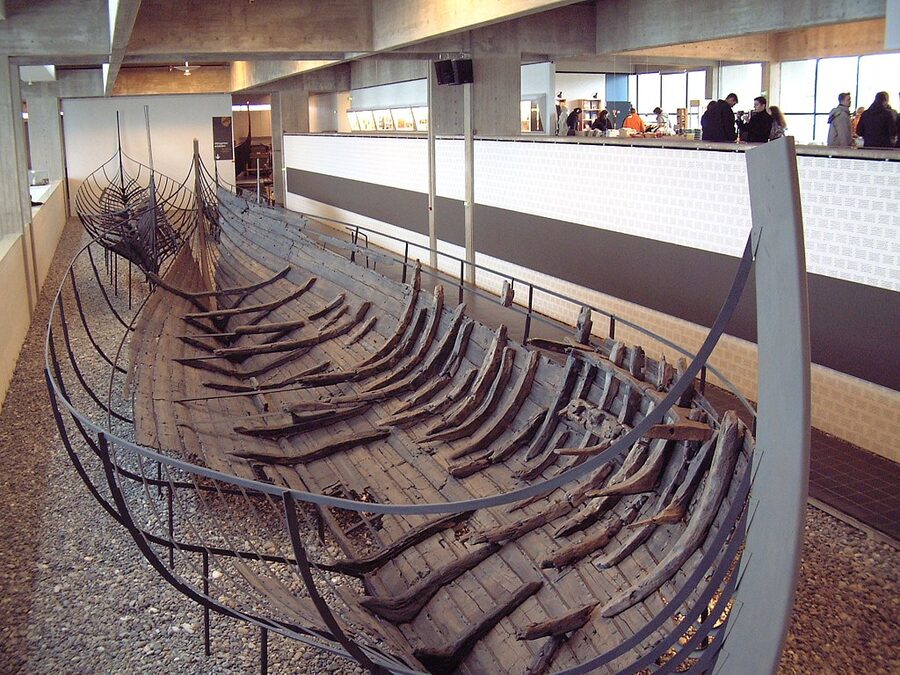
Skuldelev 1 is the ocean trader. Sixteen metres long, built around 1030 in western Norway from pine, designed for the open Atlantic. It would have carried six to eight tonnes of cargo and crew, and the same kind of ship would have made the runs between Bergen, the Faroes, Iceland, and the Greenland Norse colonies. It’s the only one of the five that’s substantially preserved as wood; about 75% of the original timber survives.
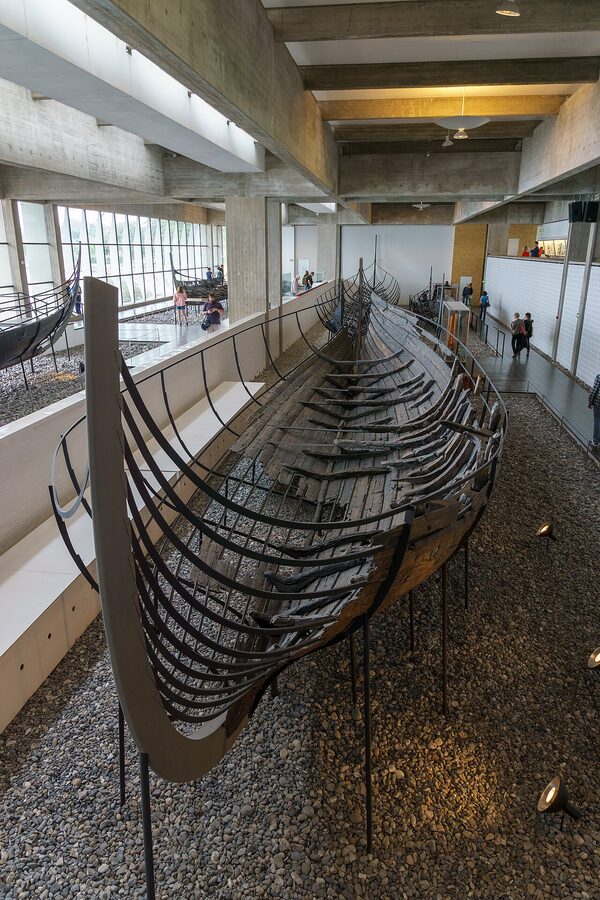
Skuldelev 2 is the warship. The big one. Thirty metres long, oak, built in Dublin in 1042, capable of carrying around 70 fighting men plus crew. The wood-tracing analysis on it is the part that makes the hairs on my neck stand up: by examining the rings in the surviving timbers, scientists located the exact woodland in eastern Ireland where the trees were felled. The ship was built in the longphort of Dublin, then a Norse trading colony, by Hiberno-Norse shipwrights. It served for around twenty-five years, was repaired multiple times, and ended its life in the Skuldelev blockade. Less of the original wood survives than Skuldelev 1, but the surviving pieces are enough to fully reconstruct the dimensions, and they did.
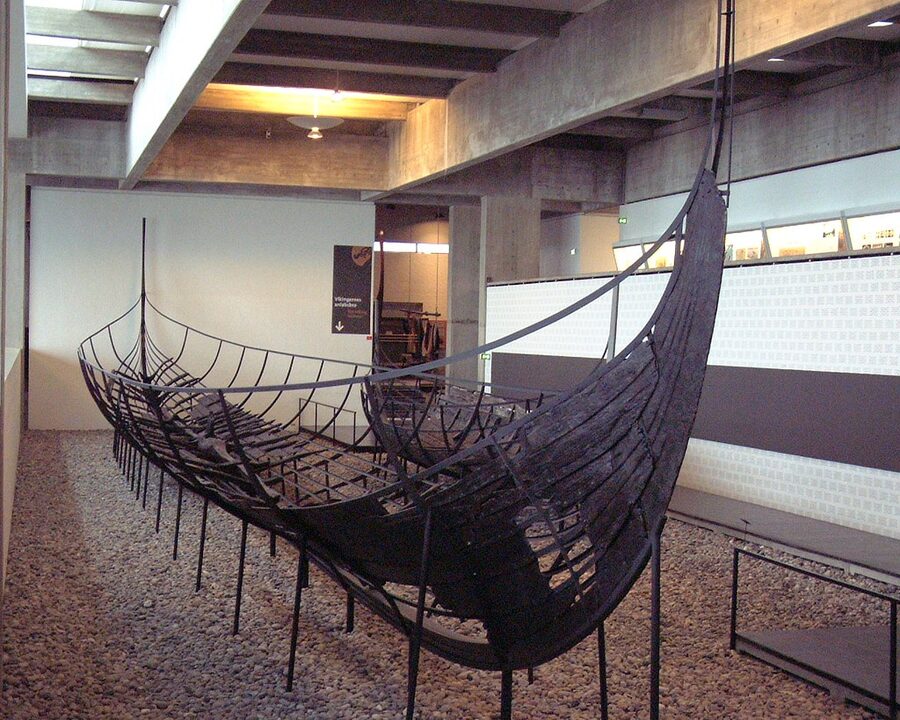
Skuldelev 3 is the small coastal trader, fourteen metres of oak, built around 1040 in Denmark. The kind of ship that did the day-runs between Roskilde and the other fjord-side towns, carrying everything from grain to building stone. It’s one of the most complete preservations and is the basis for the everyday picture of a Viking knarr.
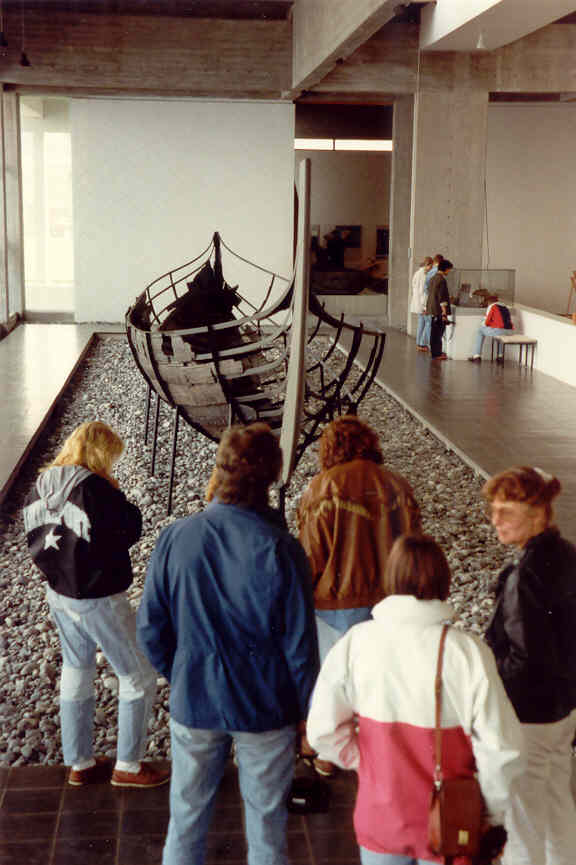
Skuldelev 5 is the small warship. Seventeen metres, oak, Danish-built around 1030, capable of carrying around 30 fighters. The ship had been heavily repaired before it was sunk; you can read the ring data in the museum signage and trace each repair to a different patch of forest. By the time it went into the blockade it was already old.
Skuldelev 6 is the small fishing or coastal-fishing boat. Eleven metres of pine, built around 1030 in western Norway. The only completely civilian ship in the five, and the smallest by some way. Stand at this one and read the panel; it’s the most Viking-Age-everyday object in the room.
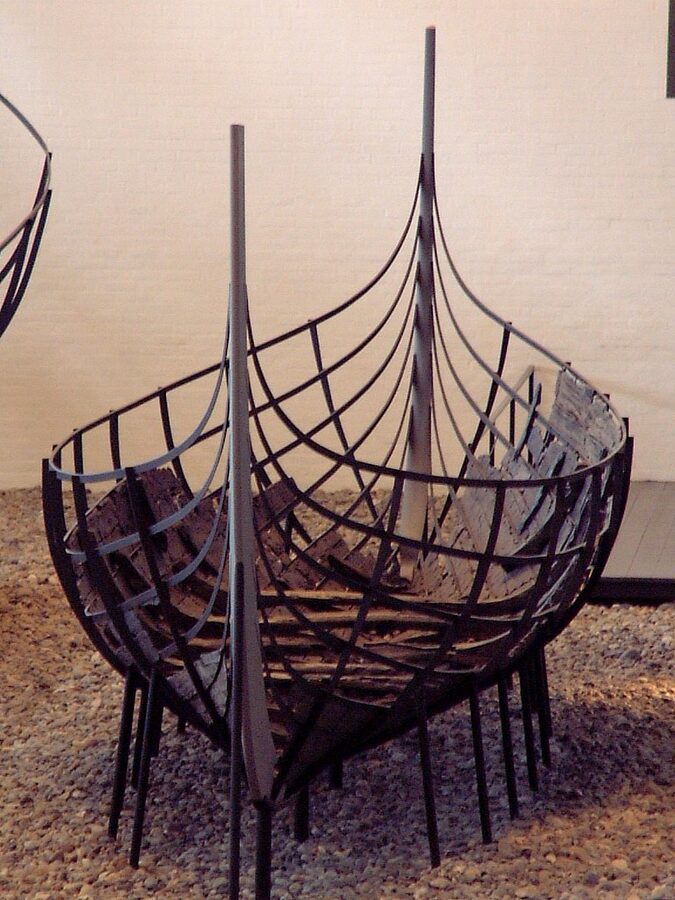
The Sea Stallion: a 30-metre warship that sailed to Dublin
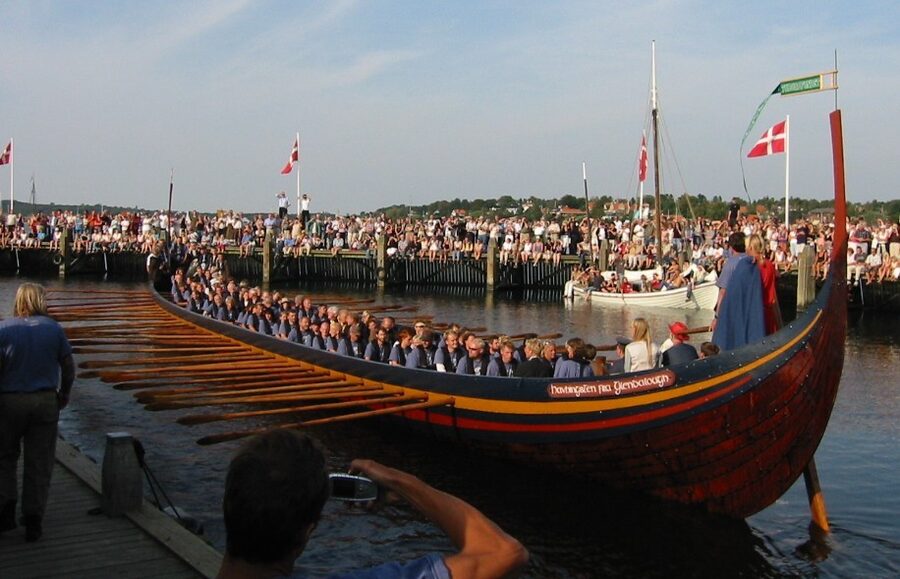
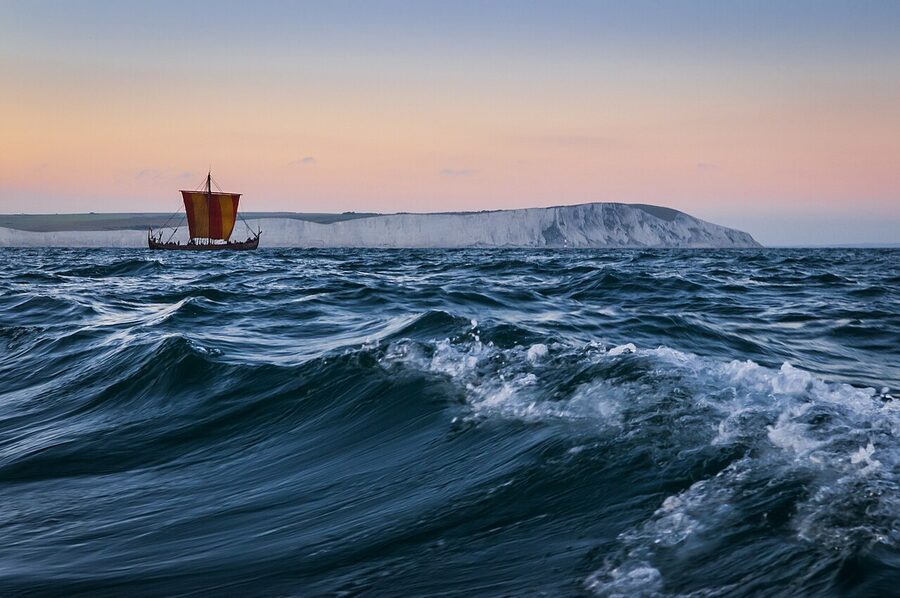
Outside the main hall, in the harbour, is the second part of the museum. The boatyard. Roskilde has been building Viking-ship replicas using traditional methods since the 1960s, and the headline result is the Havhingsten fra Glendalough, the Sea Stallion of Glendalough. A full-scale, 30-metre, 60-tonne reconstruction of Skuldelev 2, built in the boatyard between 2000 and 2004 and named after the Wicklow valley where the original Skuldelev 2 oaks would have come from.
In the summer of 2007, the Sea Stallion sailed from Roskilde to Dublin. Forty-four miles a day, average. Six weeks of weather, sail and oar power, twenty-five days at sea and twenty-six days in port for repairs, with a crew of around 65. The voyage proved that a 30-metre Viking warship could make the crossing under realistic conditions, which is the kind of historical knowledge you can only generate by actually doing it. The ship arrived in Dublin on 14 August 2007, was lifted ashore for a Viking-ship exhibition at the National Museum of Ireland, then sailed home the following summer.
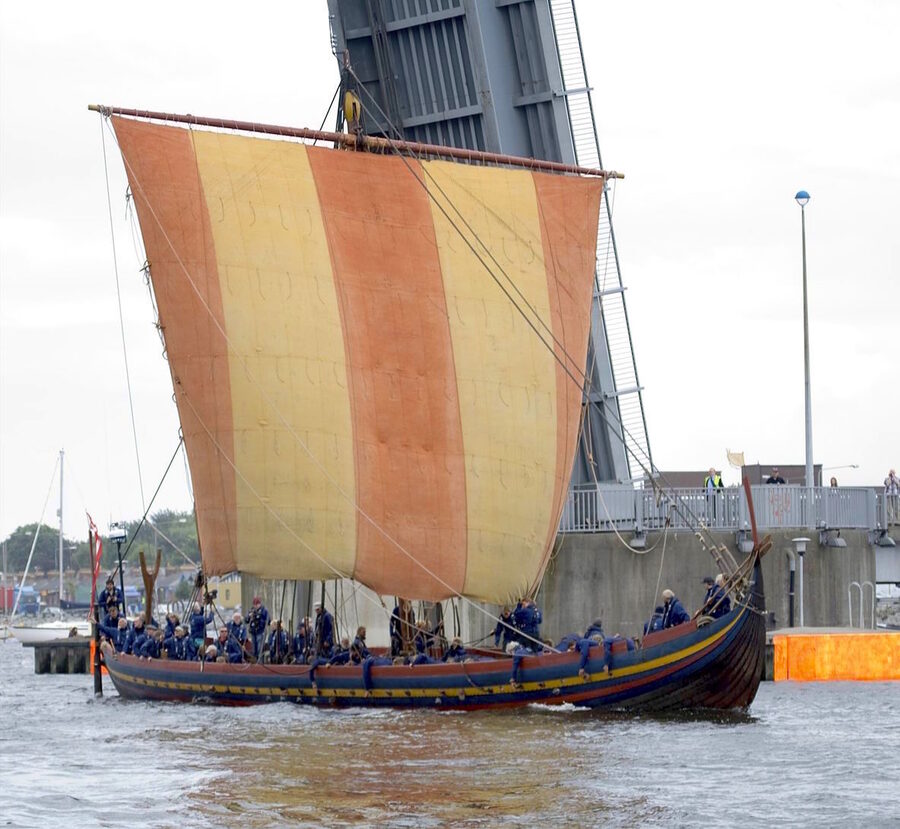
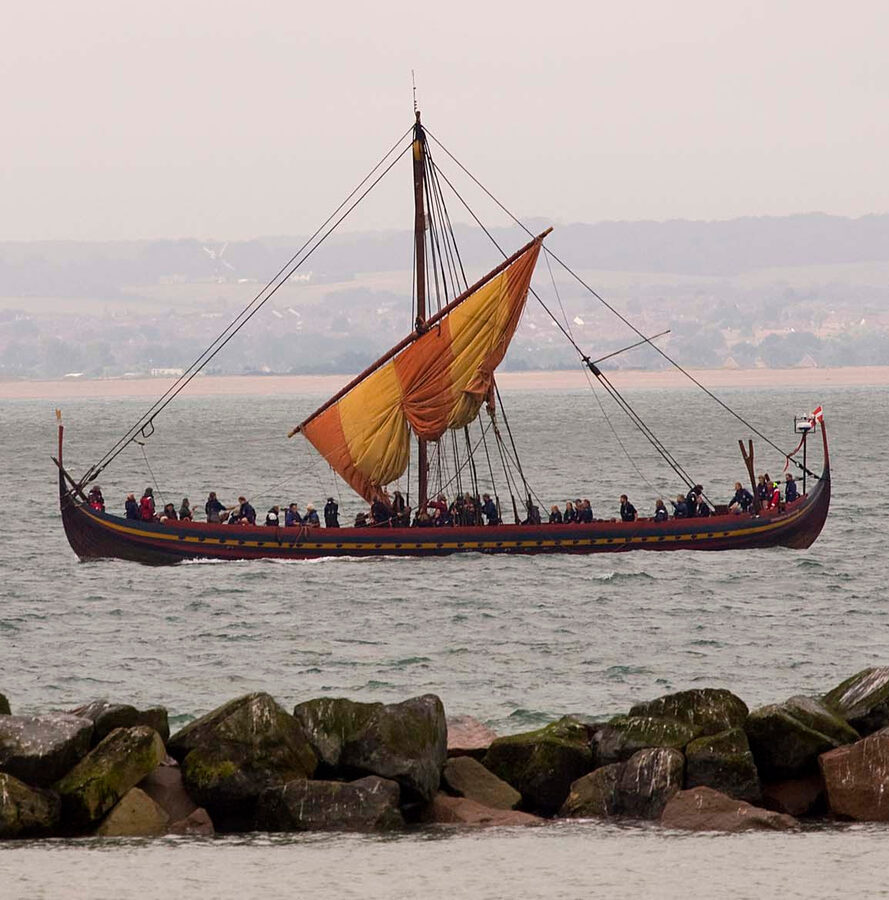
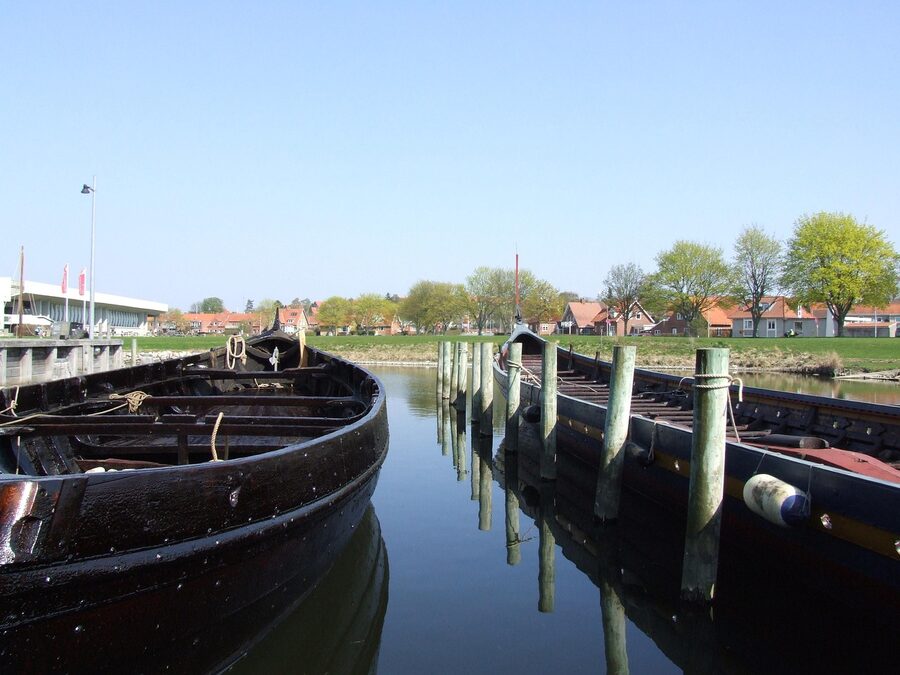
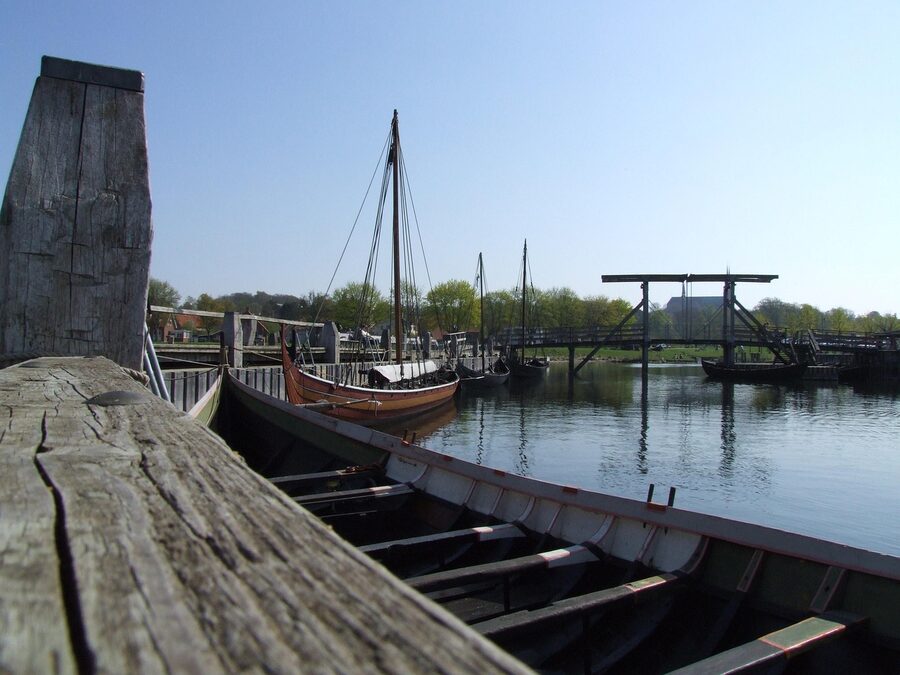
The Sea Stallion now lives back in Roskilde. In summer she’s tied up in the harbour, often with the sail furled along the yard, and the museum runs guided sailings on her in good weather. The 50-minute trip on one of the smaller replicas costs 150 DKK and runs daily May to September, weather permitting; the longer trip on the Sea Stallion herself runs less often and you need to book through the museum site. If you want a Viking-ship sailing experience, the smaller boats are the practical choice and the experience is essentially the same: clinker-built oak, square sail, no engine, the same hull shape that crossed the North Sea a thousand years ago.
The boatyard, the smithy, and the ropewalk
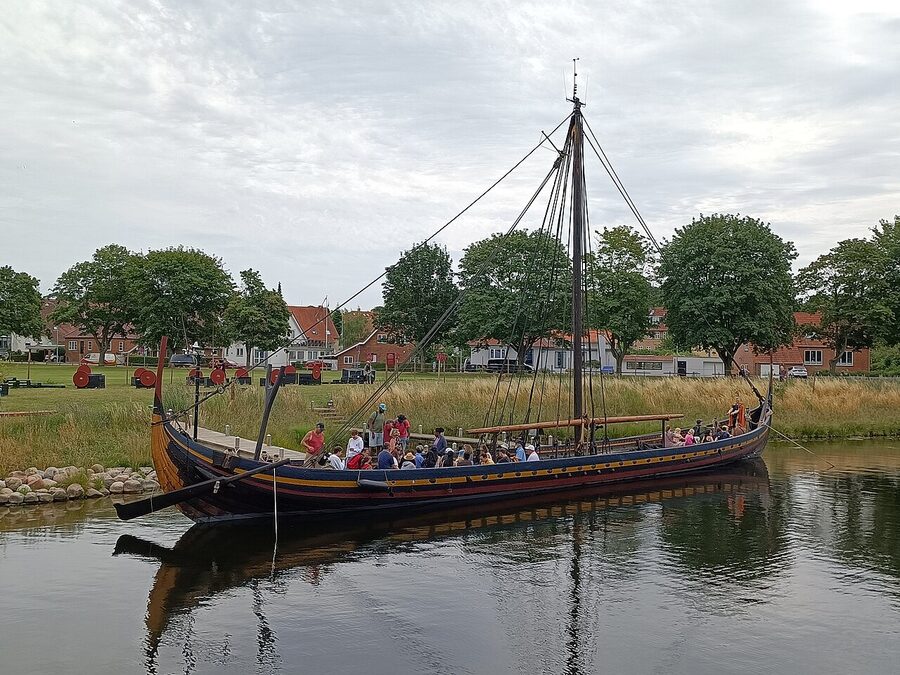
The most underrated part of the museum is the boatyard. Six full-scale reconstructions float in the harbour at any time. Inside the boatyard sheds, you can watch the shipwrights working on the next one with adzes, broadaxes, and hand-augers. There is a smithy where wrought-iron rivets are made by hand, a ropewalk where they twist hemp into the right kind of three-strand cordage, and a sail-making tent where the woollen sailcloth is sewn. Everything done from primary sources. Everything reproducible. Everything in actual use on the boats outside.
I spent forty minutes at the boatyard on my second visit and another half-hour on my third, and I’d happily go back again. It is the rarest kind of museum: one where the artefact is being made in front of you, with the same tools that made the original. There’s no extra fee and the staff are open to questions. If you have a child with you, this is the part that they’ll talk about on the train back.
How long inside the museum?
Two hours absolute minimum, three hours if you’re properly interested. An hour for the main hall and the five ships, half an hour for the boatyard and the harbour boats, half an hour for the upstairs exhibition and the film. Add an hour for a sailing trip if you booked one. If you want to do both the cathedral and the museum in a single day-trip without rushing, leave Copenhagen by 09:30 latest, do the cathedral 10:30 to 12:30, lunch 12:30 to 13:30, museum 13:30 to 16:30, train back at 17:00. That’s the version I’d plan.
The harbour and the fjord
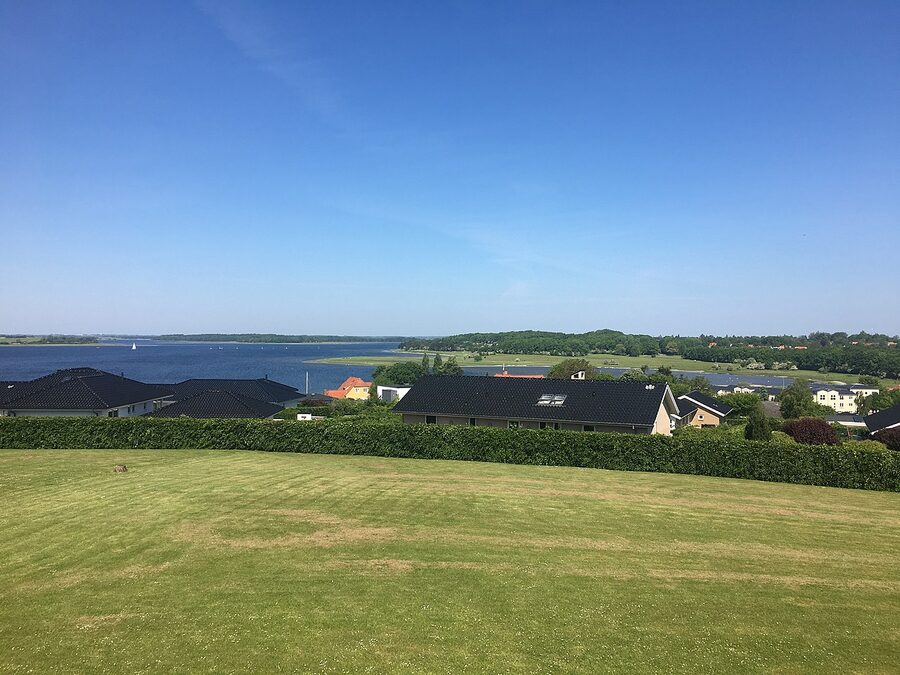
Outside the museum, walk along the harbour for five minutes in either direction. There’s a stone breakwater that takes you out into the fjord with the cathedral spires behind you and the open water in front. On a clear afternoon you can see the salmon-pink houses of the Vindeboder, the small rowing boats, and the modern yacht jetty further along.
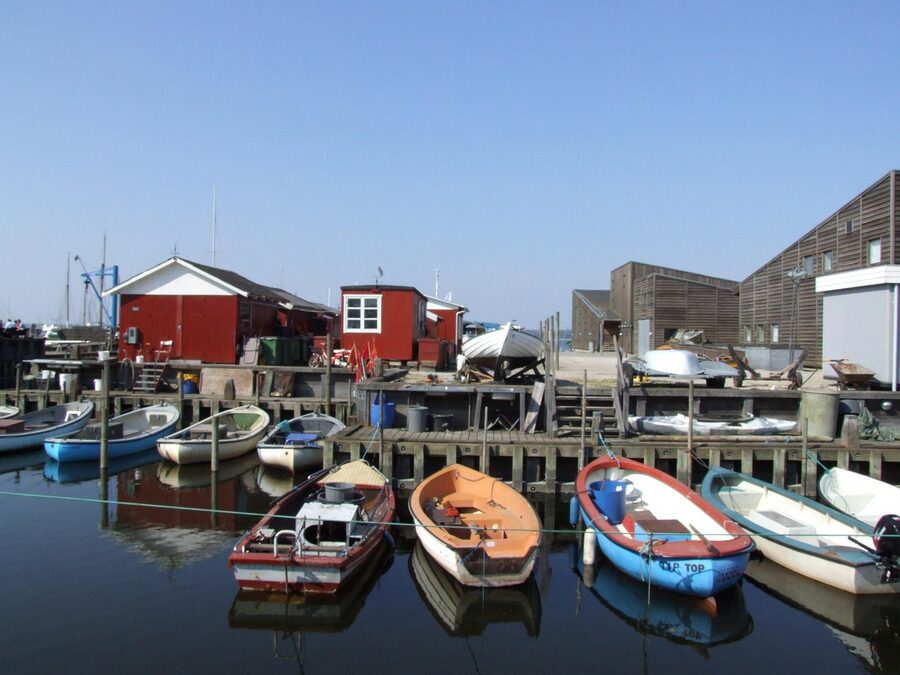
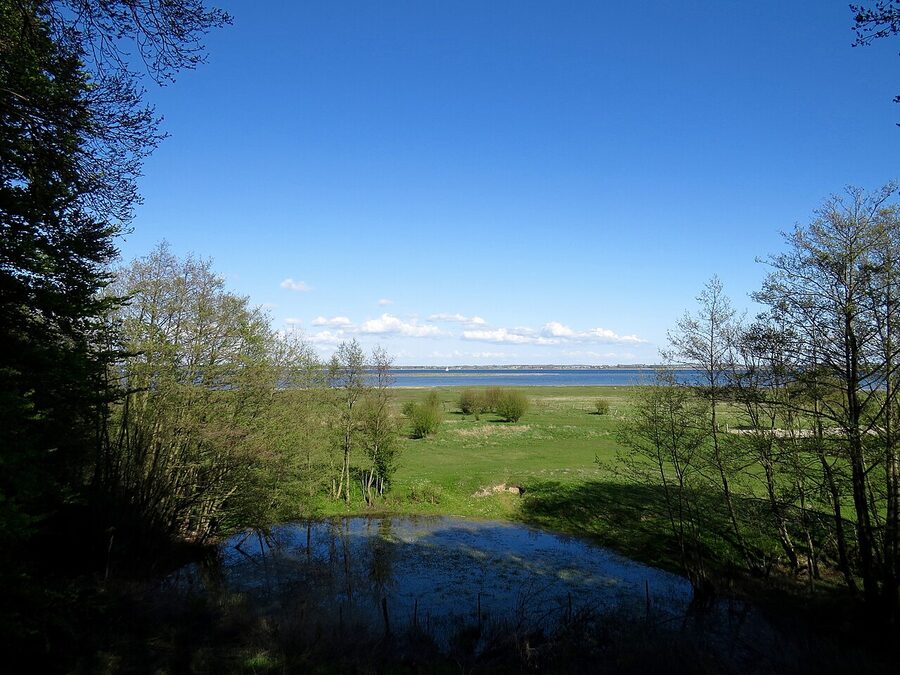
The fjord is a glacial inlet, around 40 kilometres long and shallow enough that the entry channels are narrow and easily defended. Which is why the Skuldelev blockade was put there. Today the fjord is a national park (Nationalpark Skjoldungernes Land), with seal colonies on the islets, breeding sea eagles, and around 800 grey-and-spotted herons. There’s a small visitor centre at the harbour with binoculars to borrow if you want to do twenty minutes of bird-spotting.
The Roskilde Festival, and why I keep recommending against late June
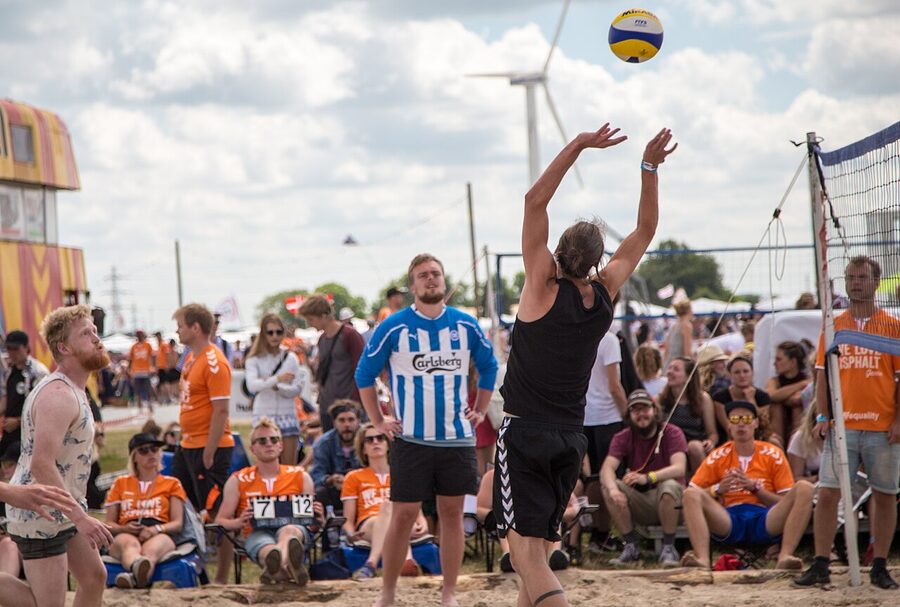
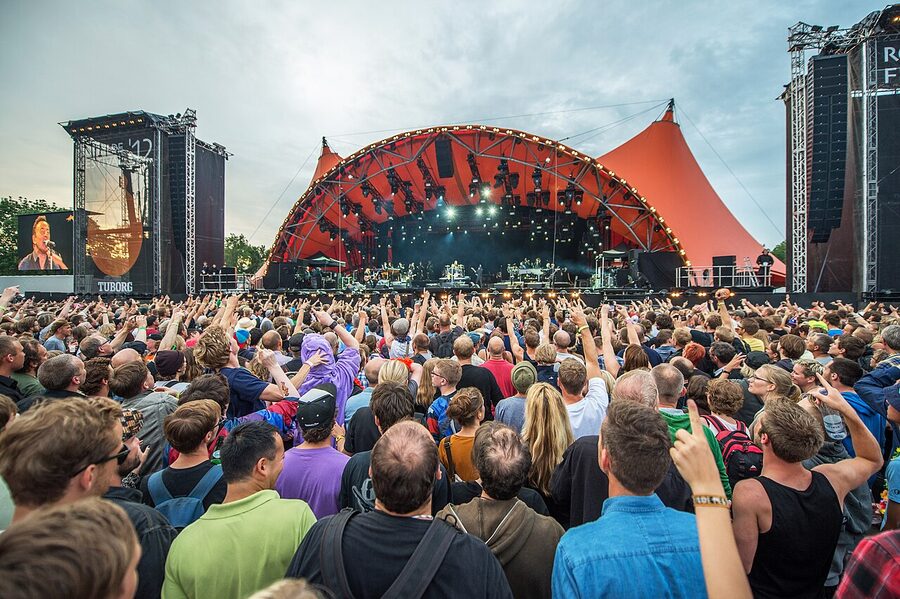
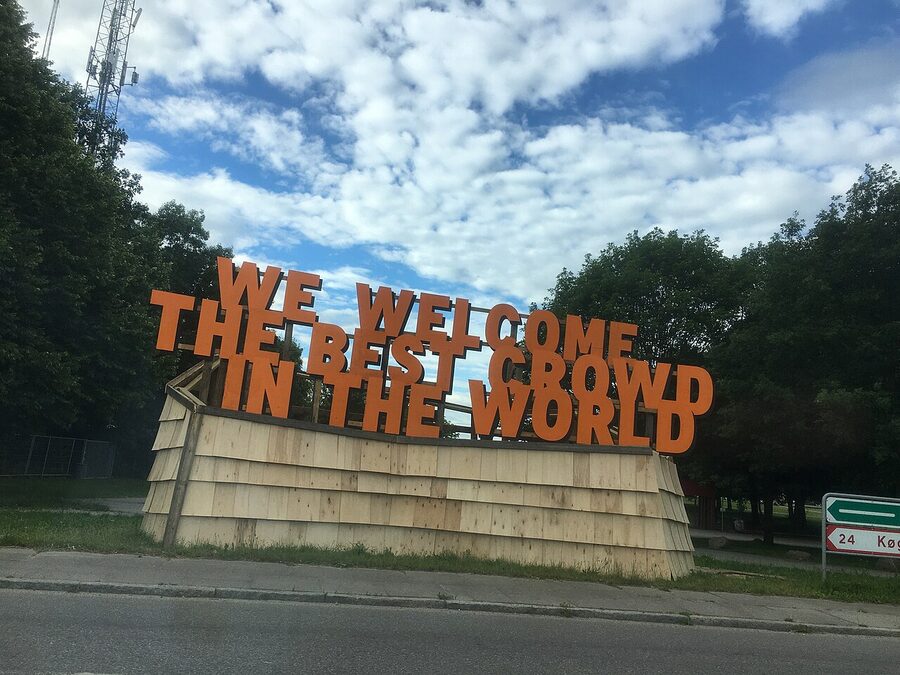
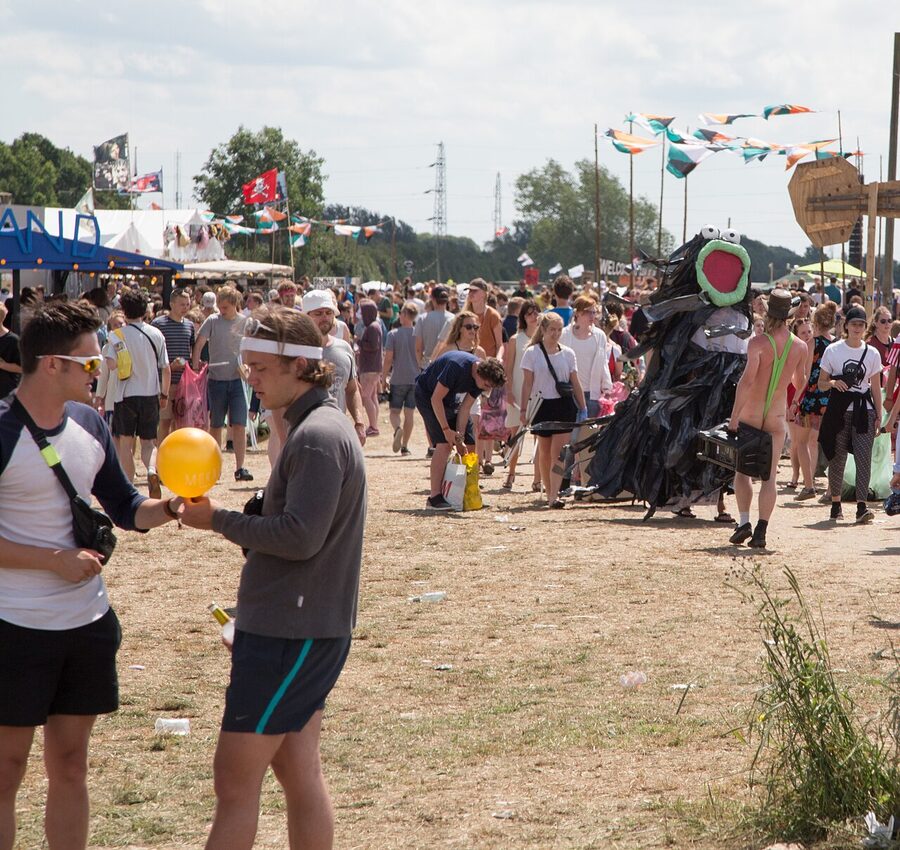
The Roskilde Festival is the biggest music festival in northern Europe and the second-biggest in continental Europe after Sziget. Eight days, 130,000 ticketed attendees, 175,000 including staff and volunteers, the festival’s Orange Stage canvas roof one of the iconic festival images of the last fifty years. It runs from the last Saturday in June through the first Saturday in July. In 2026 that means 27 June to 4 July. The full programme is up at roskilde-festival.dk usually from January.
The festival is held on a flat field at Darupvej, three kilometres south-southwest of Roskilde station. It is genuinely good. Bruce Springsteen, Bob Dylan, Pearl Jam, Radiohead, Beyoncé, Kendrick Lamar, Rihanna, Kanye West have all played the Orange Stage. All profits from the festival go to charity, including major UNICEF and Doctors Without Borders campaigns; the festival foundation gave away 41 million DKK in 2024.
The reason I tell people to avoid Roskilde for a day-trip in late June is the obvious one. The town is full. The cathedral is busier than any other week of the year. The Vikingeskibsmuseet is busy. The cafés on Stændertorvet have hour-long queues. The trains from Copenhagen run heavier than usual but are also fuller than usual. And if your plan was a quiet historical day, this is the wrong week. If your plan was the festival itself, you don’t need this article and you should book accommodation by January.
The shoulder week before the festival (so roughly 20 to 26 June) is often the worst-of-both-worlds: the festival site is being built, the warm-up crowds are already in town, but the music hasn’t started. I’d avoid this week particularly. Mid-July onwards is fine again.
Ragnarock: the museum the festival built
If you do find yourself in Roskilde during festival week and you’ve made it as far as the cathedral and museum, there is one extra stop worth considering. Ragnarock, the Museum of Pop, Rock and Youth Culture, opened in 2016 in Musicon, the old concrete-factory district that’s been redeveloped as a creative quarter on the south side of town. It’s a 1.5-kilometre walk south from the train station or a five-minute taxi.
The museum is genuinely fun. Permanent exhibitions on the history of pop and rock since the 1950s, with strong sections on the Roskilde Festival itself, plus rotating shows that have included a David Bowie retrospective and a Danish punk overview. The building is an angular gold-clad block by Cobe and MVRDV that you’ll see on Google Maps from a kilometre away. Adult ticket 110 DKK, students 80 DKK, under-26s 70 DKK, free under 18. Open Tuesday to Sunday 10:00 to 17:00. Half a day if you’re a music head, an hour if you’re not. It pairs better with a non-festival visit than you’d expect.
The other Roskilde things, ranked
You probably won’t need any of these on a day trip. They’re listed in the order I’d add them in if you find yourself with extra time.
Stændertorvet market. Saturday morning, 09:00 to 14:00, the cobbled square south of the cathedral fills with stalls. Cheese, sausage, bread, smoked fish, jam. The bakery stall closest to the cathedral wall sells excellent kanelsnegle (cinnamon swirls) for 25 DKK. Worth thirty minutes if your timing matches.
Roskilde Museum. The town’s social-history museum at Sankt Olsgade 18. Local archaeology, urban history, and a small exhibition on the Roskilde Festival’s first decade. 70 DKK adults, free under 18. Open Tuesday to Sunday 11:00 to 16:00. Skip if you’re choosing between this and the cathedral; do if you have a wet afternoon.
Lejre Land of Legends. Twelve kilometres west of Roskilde, an open-air archaeological park where Iron-Age and Viking-Age life is reconstructed in a longhouse, a Stone-Age camp, and a working farm. 150 DKK adults, open May to October only. Brilliant if you have kids and a car. Awkward if you’re using public transport (about 45 minutes by bus 233 from Roskilde).
The Cathedral School. Allegedly the oldest school in Denmark, founded in 1020 by King Knud (Canute the Great) to train priests for the cathedral. The school is still working today; you can see the building on Frederiksborgvej from the outside. Worth a sentence in a guidebook, not a stop.
The Maglemose Burial Mounds. A small Bronze-Age cemetery on the eastern edge of town. Free, always open, about a 25-minute walk from the centre. Worth doing only if you’ve already done everything else and want a quiet outdoor twenty minutes. The burial mounds themselves are unlabelled grass humps; bring a phone with a map.
Where to base yourself
If your plan is a day trip from Copenhagen, you don’t need a Roskilde hotel. Keep your bag at your Copenhagen base, do the day trip with a small daypack, train back in the evening. The Roskilde overnight only makes sense if you’re coming through on a longer route to Aarhus, or if you have festival tickets.
If you do want to stay, the practical Roskilde options are limited and they sell out for festival week. The mid-range chain choice is Scandic Roskilde, a few minutes east of the cathedral on a quieter stretch, around 900 to 1,400 DKK per night for a standard double. Comwell Roskilde sits south of the centre near the festival site and is the larger conference-style option, around 1,000 to 1,500 DKK. Danhostel Roskilde (the youth hostel, with private rooms as well as dorms) is the value option from around 600 DKK and a five-minute walk from the harbour. If your dates touch festival week (last Saturday of June through the first Saturday of July), book from January or earlier.
The best time to do this
October to early June for the empty cathedral and the boatyard. The museum boatyard is most active April to October but the cathedral is at its best in winter, when the morning light comes through the high windows at the right angle and there are sometimes two or three other people inside the whole nave. If I had to pick a single best week, late February. Cold, quiet, the Christian IV chapel mosaics catching what light there is, the brick interior just warm enough.
July (after the festival) and August work fine but are busy. May, June (until the 20th), and September are the obvious good-weather choices. November to February the museum stops running boat trips but everything else stays open. December has a small Christmas market on Stændertorvet and the cathedral runs evening Advent concerts that are free; check the cathedral website mid-November for the dates.
The day plan I’d actually use
Take the 09:14 Re3 from Copenhagen H. Arrive 09:39. Walk to the cathedral. In the door at 10:00 when it opens. Allow 90 minutes inside, including the museum upstairs. Out at 11:30. Walk down to Stændertorvet, photograph the cathedral facade from the south side of the square, then walk south on Algade and turn down toward the harbour through Byparken. At Snekken or the Føtex, depending on budget, by 12:30. Eat. Walk to the Viking Ship Museum by 13:30. Two and a half hours inside and at the boatyard. Out at 16:00, fjord breakwater walk, photograph the cathedral from the harbour with the spires lined up. Train back at 17:01 (Re3) or 17:13 (IC), in Copenhagen by 17:30. Dinner in Vesterbro.
That’s a 7-hour day. You can do it in 6 by skipping the boatyard, but the boatyard is the bit nobody else writes about and the bit I’d most regret missing. Don’t skip it.
If Roskilde sets you off on a wider Viking thread
The shipbuilding traditions on display in Roskilde fed directly into the wider Norse world. The Skuldelev 1 was built in the same Sogn region of Norway as the boats that took the Norse to the Faroes, Iceland, and Greenland. If the Viking material catches you, the obvious follow-on is the Lofoten road trip in northern Norway, where the Lofotr Viking Museum at Borg has a full-scale longhouse reconstruction and a working ship. The Oslo to Bergen rail journey takes you through the same fjord landscapes the Skuldelev 1 timber came from. And on the Danish side, the obvious cross-link is to Aarhus, where the Moesgaard Museum holds the Grauballe Man (an Iron-Age bog body with intact skin) and runs strong Viking-Age galleries that pair well with what you’ve just seen at Roskilde.
For a wider Copenhagen day-trip cluster, Roskilde works best as the historical-depth choice. Helsingør for Hamlet is the literary one. Frederiksborg at Hillerød is the palace one. Louisiana at Humlebæk is the modernist art one. Different days, different reasons. Roskilde is the one I’d send a thoughtful first-time visitor on, every time.