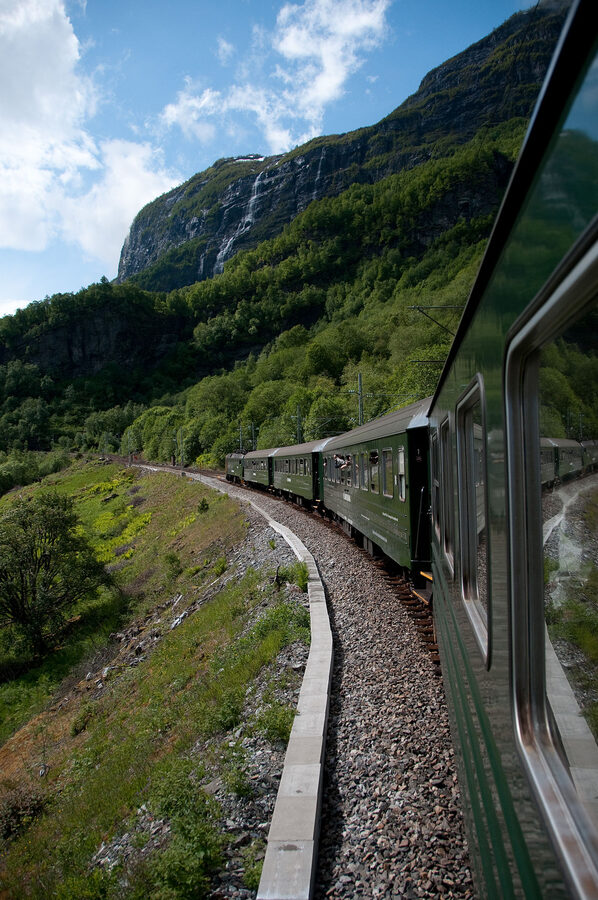
The Flåmsbana drops 866 metres in twenty kilometres. The gradient touches one in eighteen for most of that descent, which makes it the steepest standard-gauge railway in Northern Europe and one of the steepest in the world. The line has twenty tunnels. Eighteen of them were carved by hand between 1923 and 1940, at a rate of about one metre per worker-month. None of that is what most people remember. What you remember is the five minutes the train pauses at the Kjosfossen waterfall halfway down, the spray hitting the carriage windows, and a woman in a red dress emerging out of the mist on a rock to dance for ninety seconds while a flute plays from a hidden speaker. That’s the Flåm Railway. It’s also a piece of working infrastructure, the highest-volume scenic-train search in Norway after the Bergen Line itself, and the single biggest decision-point on any Oslo-to-Bergen rail trip. I’ve ridden it in three seasons and I’d ride it again. This is the version I’d give a friend.
In This Article
- What the Flåm Railway actually is
- The hand-built tunnels and the 1923 start
- The ride, station by station, top to bottom
- The first ten minutes, Vatnahalsen and the spirals
- The Kjosfossen halt and the Huldra
- Berekvam, the passing loop
- The last fifteen minutes, Flåm Valley unrolling
- Where to sit, when to ride, what to bring
- Season by season
- Tickets, the maths, and Norway in a Nutshell
- Quick verdict
- The Nærøyfjord cruise, the side-quest worth taking
- Flåm village: what’s there, what to skip
- The cruise-ship problem (and what to do about it)
- Where to stay in Flåm and Aurland
- The full Bergen-to-Oslo round trip via Flåm
- Children, accessibility, and the practical fine print
- Is it worth it?
What the Flåm Railway actually is
The Flåmsbana is a 20.2-kilometre branch line. It runs from Myrdal, a tiny mountain station on the Bergen Line at 866 metres above sea level, down to Flåm, a village at the head of the Aurlandsfjord. There is no road between them. The valley is too steep for one. So if you’re at Myrdal and want to reach Flåm without a four-hour walk, you take this train.
The Bergen Line itself is the trunk line. Oslo to Bergen, 496 kilometres, seven hours, the highest mainline railway in Northern Europe. The Flåmsbana hangs off it at Myrdal like a tributary off a river. If you’ve already taken the Oslo-to-Bergen train all the way through, you’ve passed the Flåm junction; you didn’t ride it. My full piece on the Bergen Line covers what you need to know about the parent route. This article is the side-quest.
The numbers everyone quotes are: 20 kilometres, 50 to 55 minutes, 866 metres of altitude change, 1:18 gradient (5.5%) for about 80% of the line, 20 tunnels, 18 of them hand-cut. Five-minute photo stop at the Kjosfossen waterfall on the way down. Carriage capacity around 500. Four to nine departures a day depending on season. Tickets from roughly 370 to 510 NOK (~€32 to €44) one-way for adults, depending on the season. Winter is cheaper than summer, and Eurail or Interrail pass holders get 30% off, but only on one-way tickets and only if you book in person at a Norwegian station.
That’s the spec sheet. Below is the texture.
The hand-built tunnels and the 1923 start
The line opened for cargo on 1 August 1940. Passengers followed in February 1941. Seventeen years of construction came before that, started in 1923 with somewhere between 80 and 280 workers depending on which year and which contract. Eighteen of the twenty tunnels were dug without machinery. Pickaxes, hand drills, dynamite. The going rate was somewhere around 116 to 180 worker-hours per metre of tunnel. That’s a rough month of full-time labour for one metre of granite, multiplied across 6,381 metres of total tunnel length. Then the tunnels had to be electrified by 1944, which is when the line went fully electric and the original steam locomotives retired.
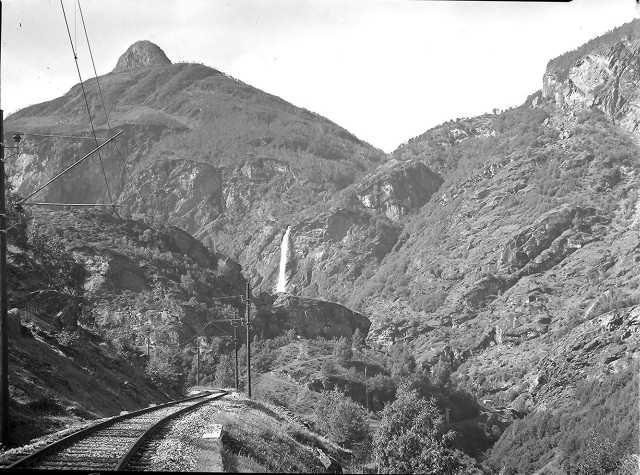
The most ambitious tunnel is the Nåli Tunnel, 1,320 metres long, which spirals through the mountain to keep the gradient inside the design limit. You enter it and the Flåm Valley is on your right. You exit it and the same valley is on your left. The train has rotated 180 degrees inside the rock without you feeling much of anything. Seven of the twenty tunnels are spirals or curves like this. The engineering is legitimately interesting; it’s not a marketing claim. If you’re the kind of traveller who reads about the construction of the Gotthard Base or the Channel Tunnel for fun, the Flåmsbana Museum at Flåm station is free, open all year, and earns the half-hour.
The line carried 115,000 passengers a year by 1951. Half a million by 2010. By the late 2010s it cleared 800,000 a year, with another 297,000 arriving on cruise ships in the April to October window. Flåm went from a farming village of mostly farmers in the 1980s to a tourist port where roughly 400 of the residents now work in tourism. That transformation isn’t subtle, and it shows up in some of the choices below.
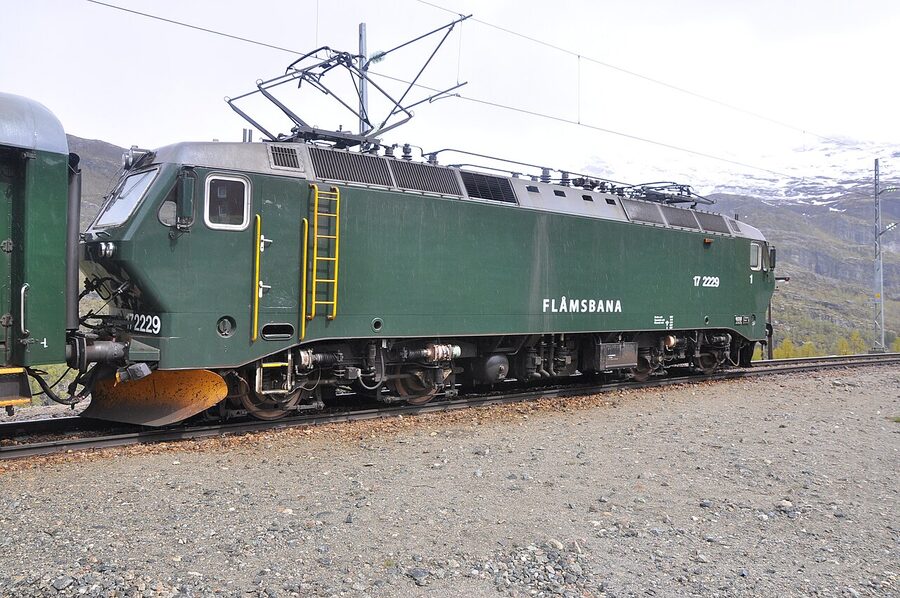
The ride, station by station, top to bottom
The Flåmsbana runs as a return journey for most travellers. You can book a one-way ticket if you’re chaining north or south on the Bergen Line, or a return if you’re staying in Flåm. I’m describing the trip downhill, Myrdal to Flåm, because that’s the more dramatic direction; the spirals reveal themselves better when you’re descending into them. Going up, the same scenery appears in reverse and the train works harder, which has its own pleasure.
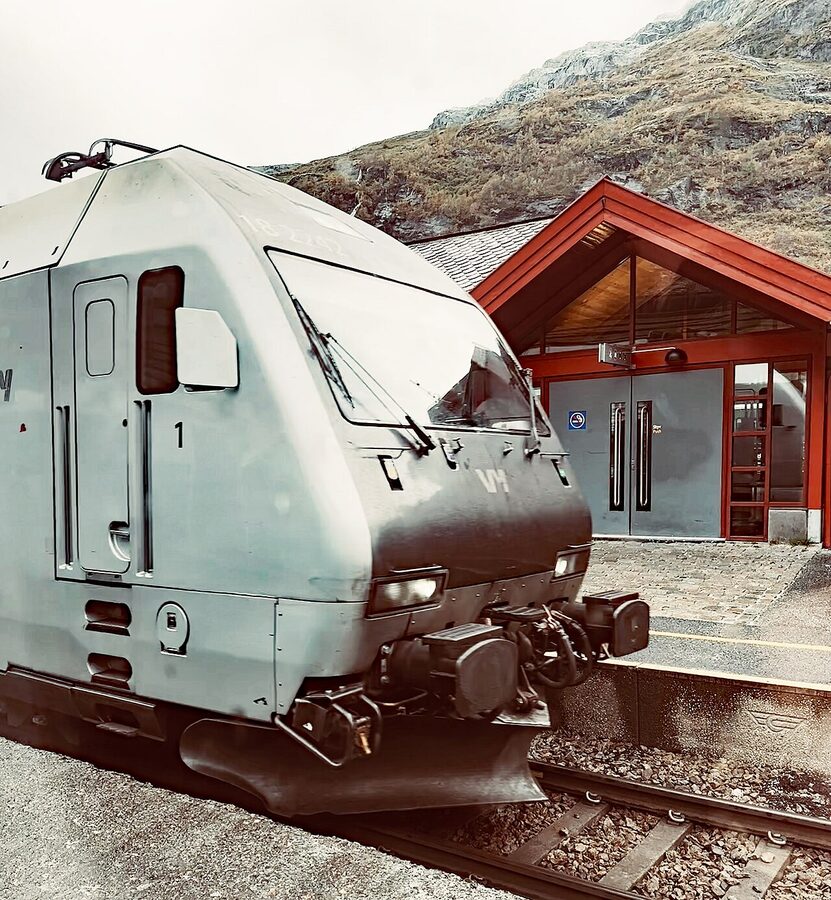
Myrdal sits at 866 metres on a windswept saddle on the Bergen Line. There is nothing in Myrdal. I mean that literally. The station building has a small café with a coffee machine, a vending tray of waffles, and a gift shop the size of a phone box. There are some private cabins owned by Norwegians who hike or ski here in summer and winter. The first writer who really put this in print was Lisa at flamtravelguide.com, who used to work the Flåm ticket office and spent most of her shifts talking travellers out of booking long Myrdal layovers. Don’t book a Myrdal layover. The Flåmsbana waits five to twelve minutes for the Bergen Line connection, you board, you go.
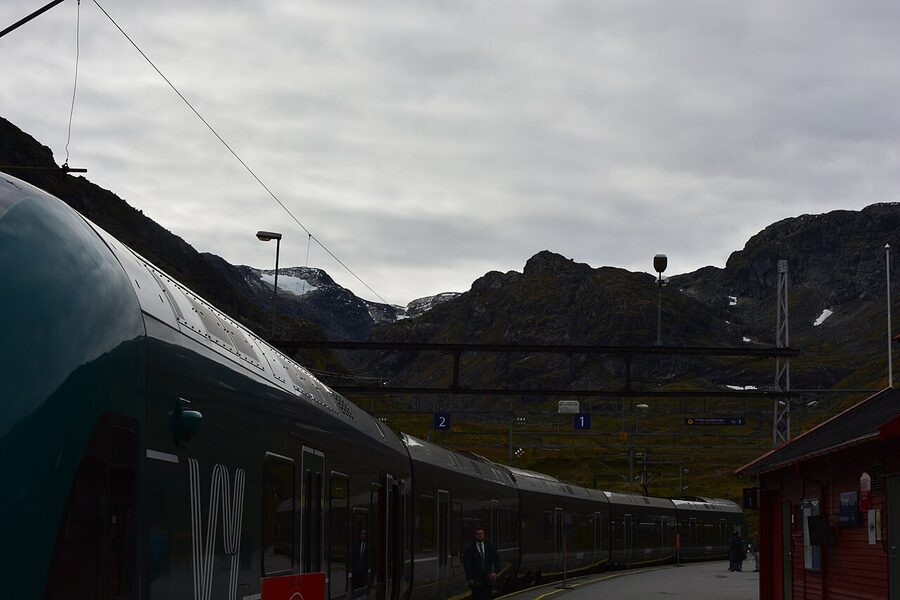
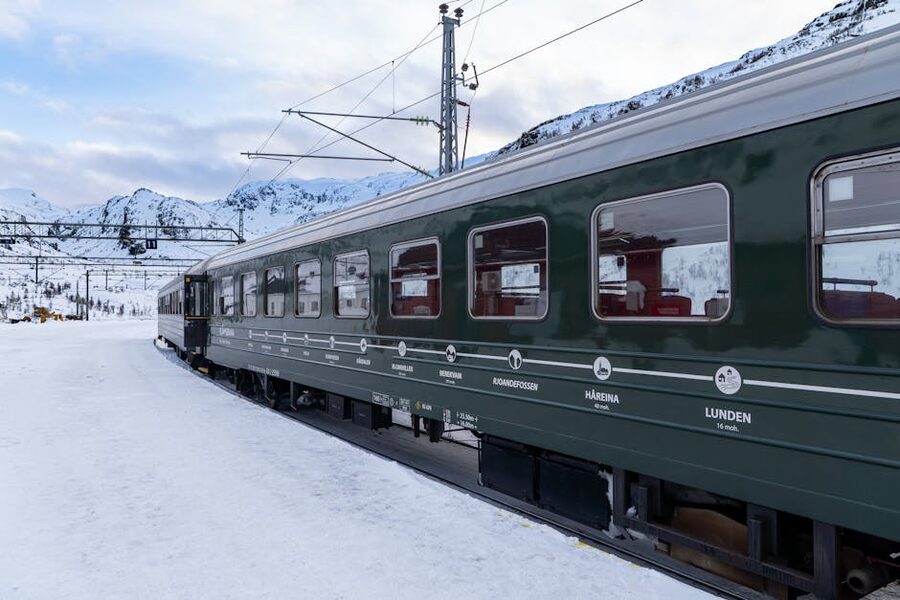
From Myrdal, the descending stations are: Vatnahalsen, Reinunga, Kjosfossen (a halt, not a station), Kårdal, Blomheller, Berekvam, Dalsbotn, Håreina, Lunden, and Flåm. Of those, the ones to know about are Vatnahalsen (where you alight if you’re staying at the historic mountain hotel of the same name or doing the Flåm Zipline), Kjosfossen (the photo stop), and Berekvam (the passing loop). The rest are request stops. Tell the conductor before departure if you want to get off at one to walk the rest of the way down on the old Rallarvegen construction road; the train won’t stop unless asked.
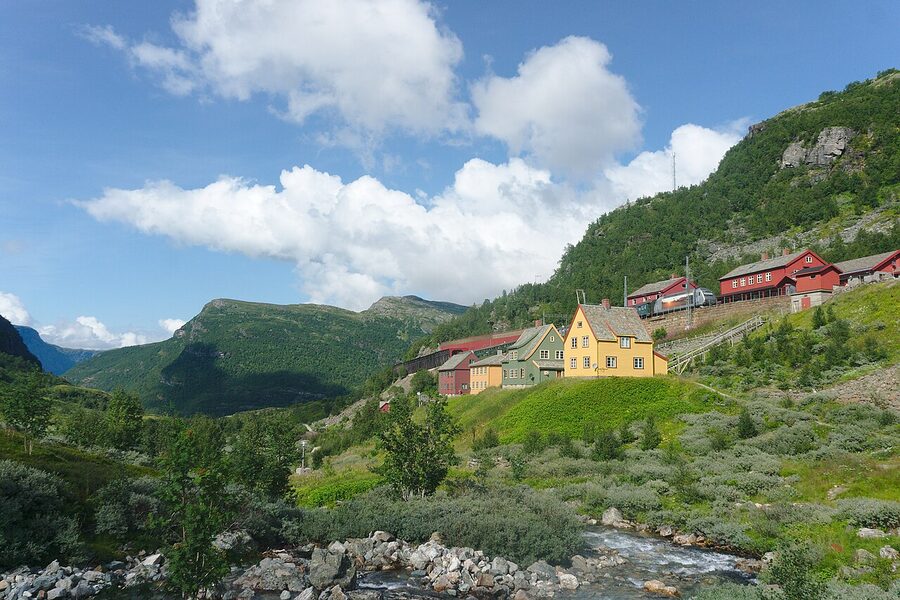
The first ten minutes, Vatnahalsen and the spirals
Out of Myrdal, the train begins climbing. Wait, no. It begins descending, hard, immediately. You feel the brakes the second the doors close. Within four minutes you’re at Vatnahalsen at 811 metres. Vatnahalsen Høyfjellshotell is here, a wooden mountain hotel that’s been operating in some form since 1898. People stay here for cross-country skiing in winter and to ride the Flåm Zipline in summer. From the platform, look back up to Myrdal. You can already see how much altitude the train has shed in four minutes. You’ll do that view-trick repeatedly on this line.
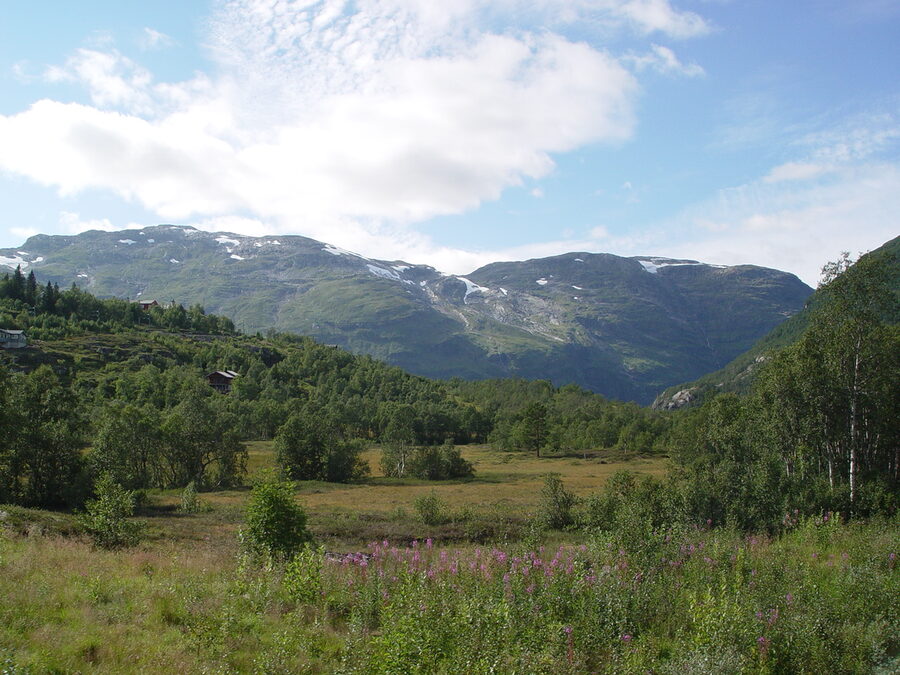
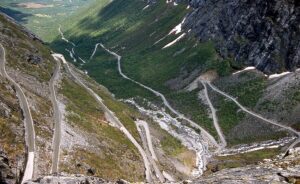
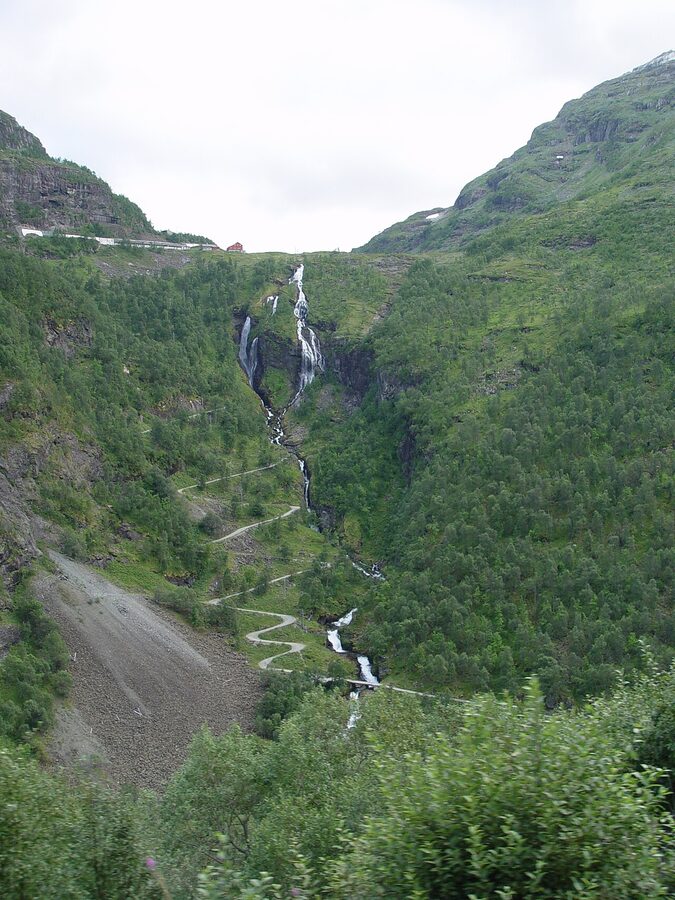
Then comes the Nåli spiral, the long tunnel I described above. After that the line emerges to one of the most photographed views on the trip: the Rallarvegen, the original construction road, with twenty-one hairpin bends visible all at once below you. That road is now a bicycle track in summer; many travellers ride from Myrdal to Flåm on rented bikes if they don’t want the train both ways. It’s a pleasant downhill ride if your knees are good and your brakes are better.
The Kjosfossen halt and the Huldra
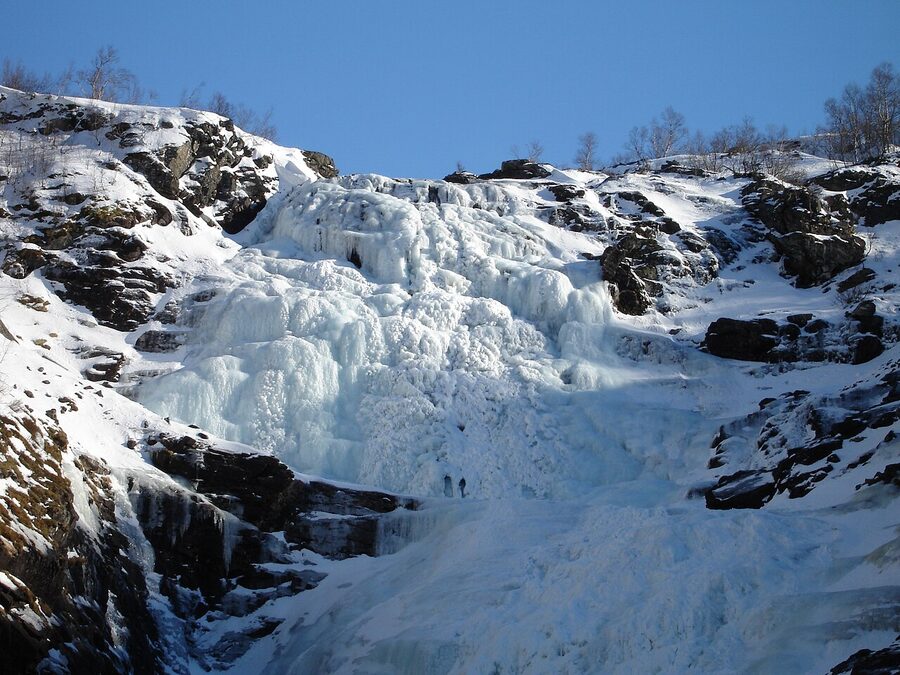
Roughly twenty-five minutes after Myrdal, the train slows, pulls into a small concrete halt with no station building, and stops. This is Kjosfossen. The waterfall drops 225 metres in two main steps, fed by Reinunga lake just up the line. In spring and early summer the volume is enormous. You can feel the spray on your face from the platform, and your phone camera will have water on the lens within thirty seconds. In winter it freezes and the cliff is sheathed in blue-white ice.
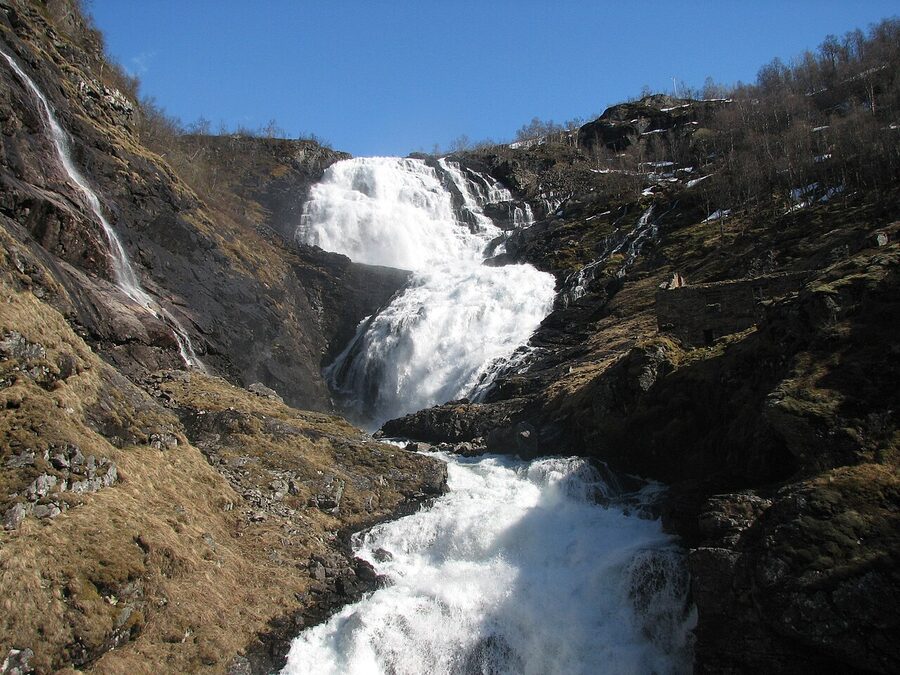
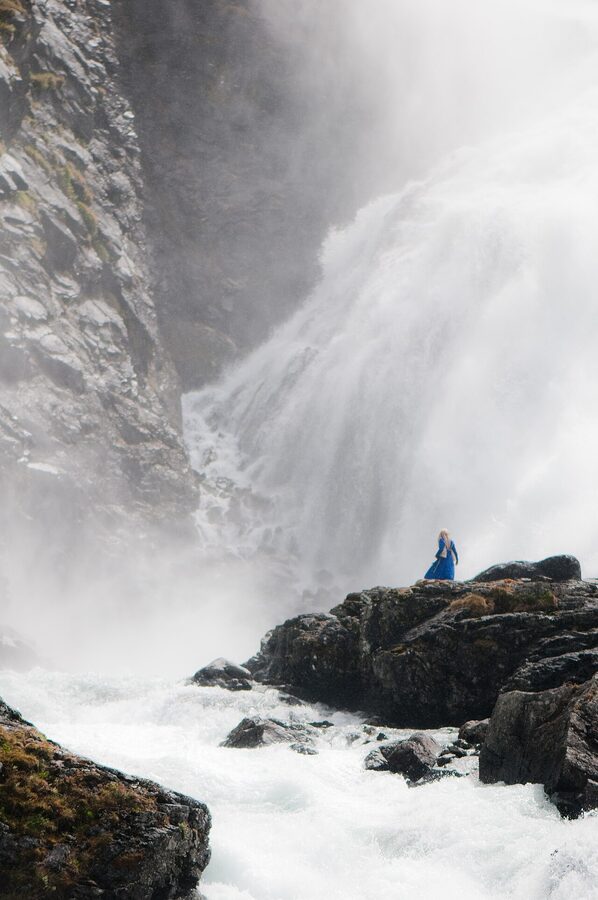
From late May to mid-September, on most departures, you also get the Huldra. Music starts from a hidden speaker. A woman in a red dress appears on a rock above the waterfall. She dances. Sometimes a second one appears further down. The whole performance lasts about ninety seconds. Then she disappears back into the moss. The Huldra in Nordic folklore is a forest spirit who lures men into the mountains and never lets them out. She has a cow’s tail under her dress in the older stories. She does not, in this version, but the gesture is the same. It is profoundly corny. It is also, for what it is, perfectly judged: the actor commits to the bit, the choreography uses the cliff geography well, and a six-year-old will think about it for a week. If you find yourself rolling your eyes during it, ride the line out of season and skip the show. If you want to see it, go between 1 June and 31 August on a midday departure when there are enough cruise passengers on board to justify the call.
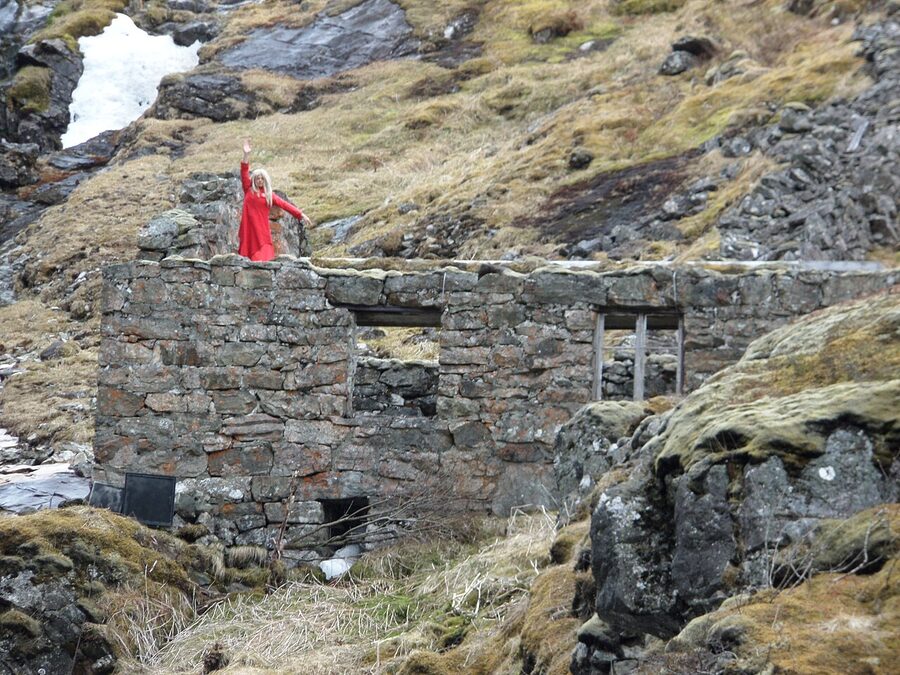
The stop runs five minutes. The conductor blows a whistle when boarding ends. The platform is wet, mossy, and crowded; if photography is the point of the trip for you, get out of your seat and head for the carriage door before the train stops, because the polite British couple ahead of you will not. Position yourself near the small stone hut on the platform. That’s the spot the Huldra appears beside, not in front of, and you’ll have the cleanest line of sight without somebody’s iPad in your shot.
Berekvam, the passing loop
Below Kjosfossen the line passes Kårdal and Blomheller. Then it reaches Berekvam, the only point on the entire 20-kilometre line where there is a second track. Both Flåmsbana trains run continuously up and down the valley. They have to pass somewhere. Berekvam is where they do it. If you’re descending and your driver is on schedule, you’ll meet the train going up here, both stop briefly, and you can wave at the people who twenty-five minutes ago were where you are now.
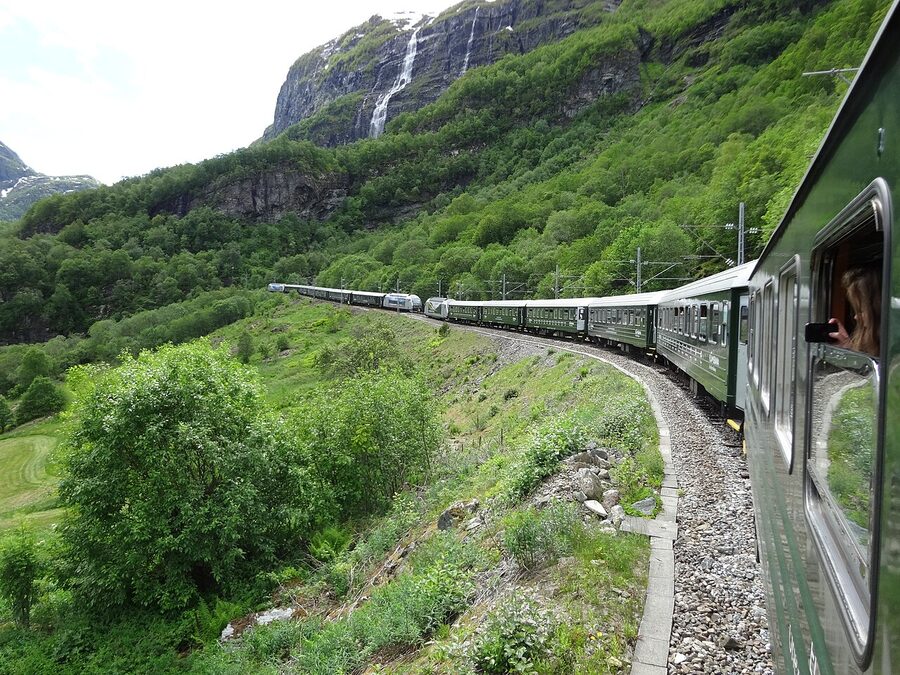
This is also where the engineering trick I find most charming on the line happens: instead of building bridges over the Flåm river, the original engineers ran the river through tunnels under the railway. The line crosses the river three times in a few hundred metres without putting up a single bridge. When you spot the gap in the rock and realise the water is going through the mountain rather than over it, you’ll forgive the cheesy folklore performance from earlier.
The last fifteen minutes, Flåm Valley unrolling
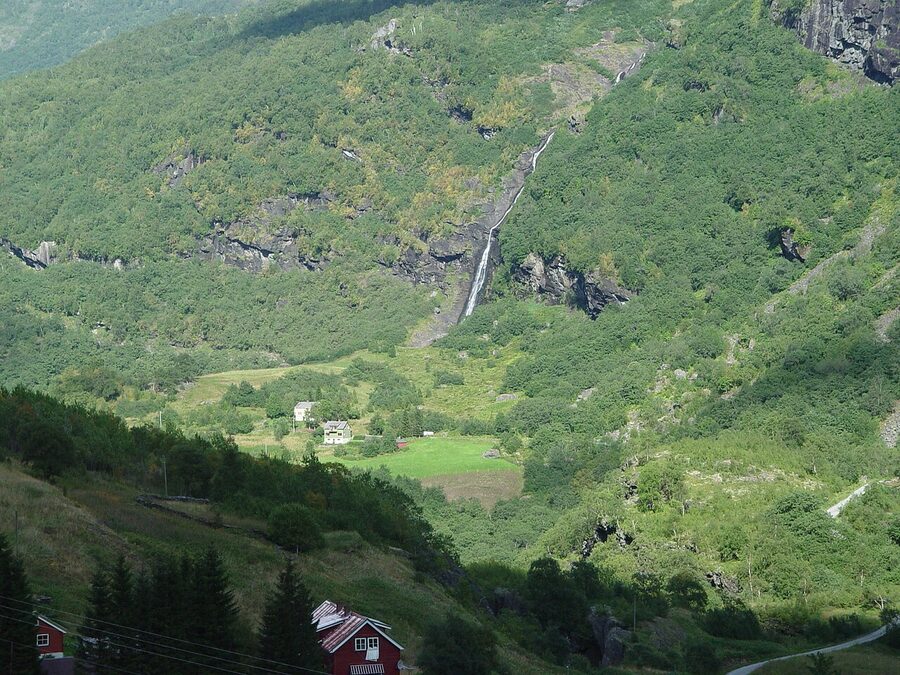
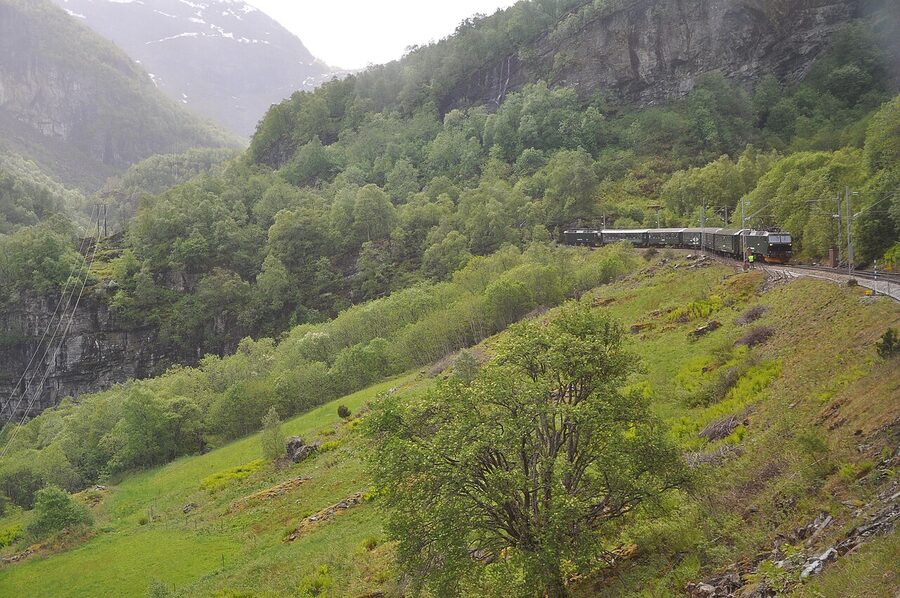
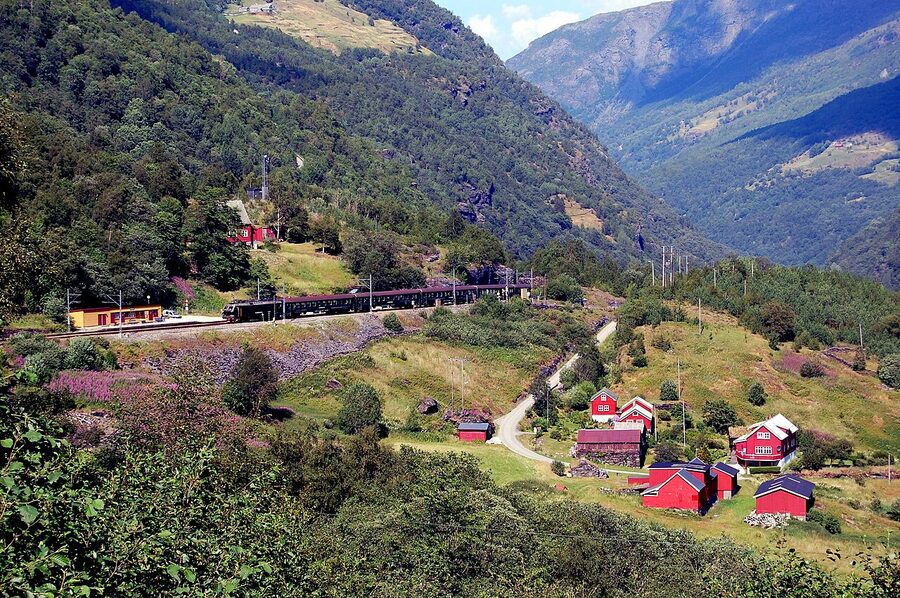
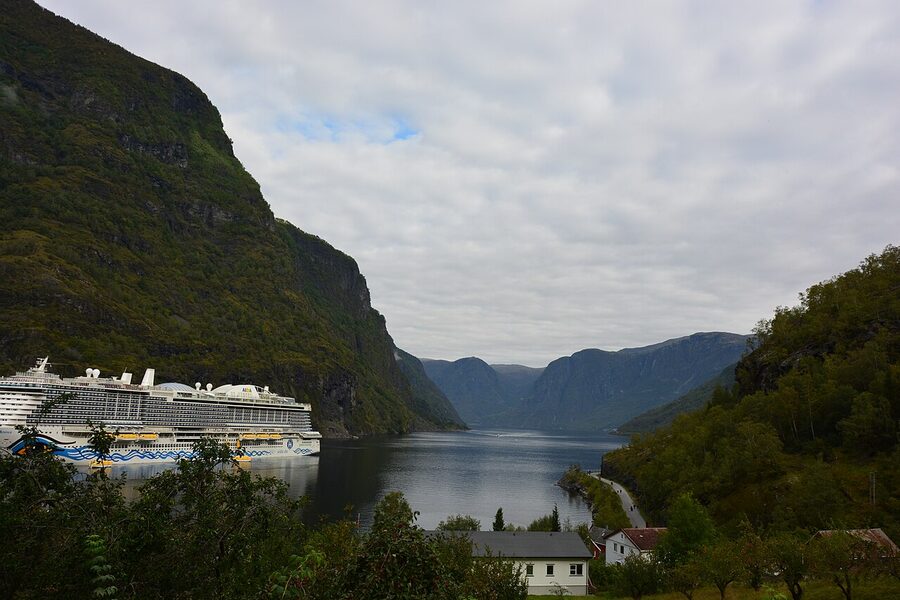
Below Berekvam, the line straightens out, the gradient eases, and the valley opens. You drop past Dalsbotn and Håreina, and then through farmland that’s been worked since the medieval period. Wooden cabins, hayfields, and the white-walled Flåm church (built in 1670, dark-stained pine inside, painted ceiling boards visible from the train if you know which window to look out) slip past on the right. The Aurlandsfjord appears at the head of the valley. If you’ve travelled in from Bergen and the Aurlandsfjord is your first Norwegian fjord, that two minutes is the moment the trip pays off.
Where to sit, when to ride, what to bring
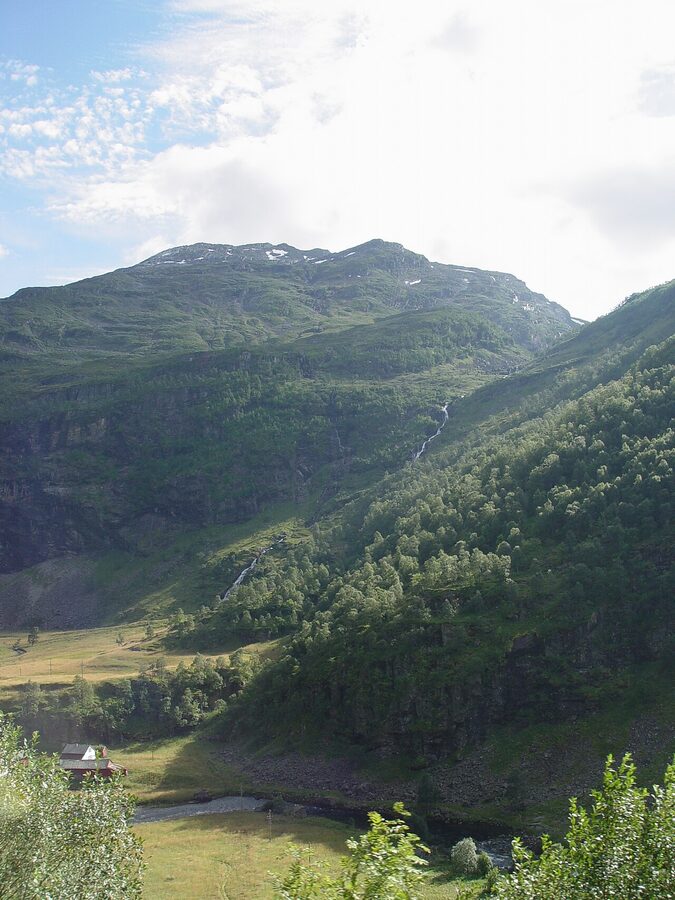
Right side coming down from Myrdal. Left side going up. This is consensus across every editorial source I read and every ride I’ve made; there isn’t really a debate to be had. The right side coming down catches the Rjoandefossen waterfall, the Rallarvegen hairpin view, Berekvam’s river-and-track shot, and the Aurlandsfjord first. Going up, the same scenery appears on the opposite side because the train is now heading uphill, so the seats flip.
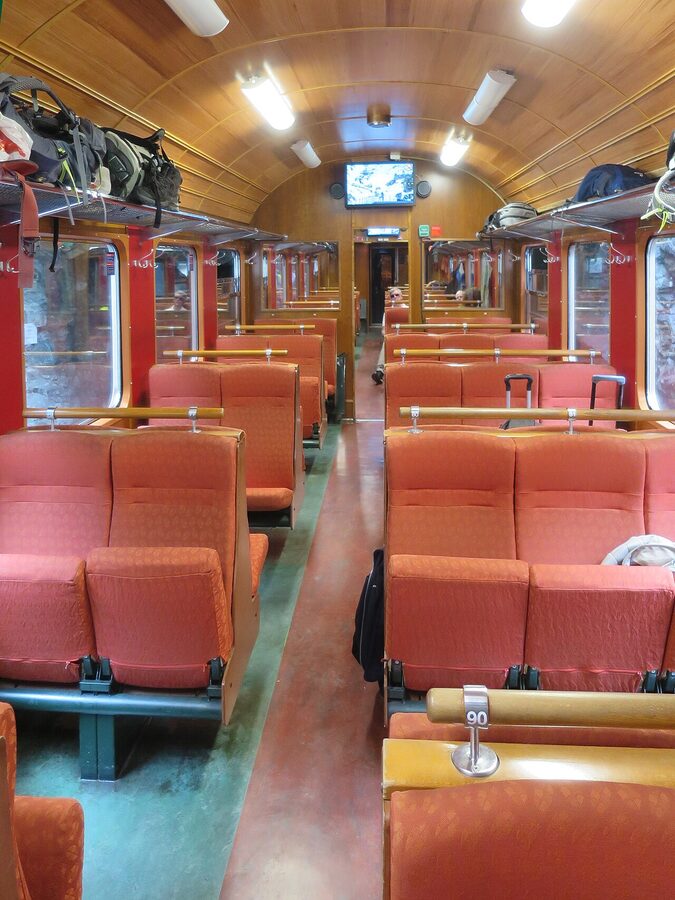
Tickets are unreserved on most services, including the dedicated Flåmsbana tourist trains. That means seats are first-come, first-served. Show up at the platform fifteen to twenty minutes before departure if you want a window. If you’re a couple or solo, accept that you may end up in the middle of a row of three with a window two seats away. The trick I’ve seen work is to team up with another pair and take a four-seat block facing each other; both pairs get the window once each on a return trip. Alternatively, drop a coat on a seat the moment you board, walk over to the other side of the train, take the photos, and come back.
Some of the windows open at the top, every third one roughly. The opening windows are gold for photography because the laminated glass throws a green tint and reflections of internal lights at every angle. They’re also the loudest in the tunnels, where the train screeches against the curve like an arc-welder gone wrong, so close them when you see a tunnel coming.
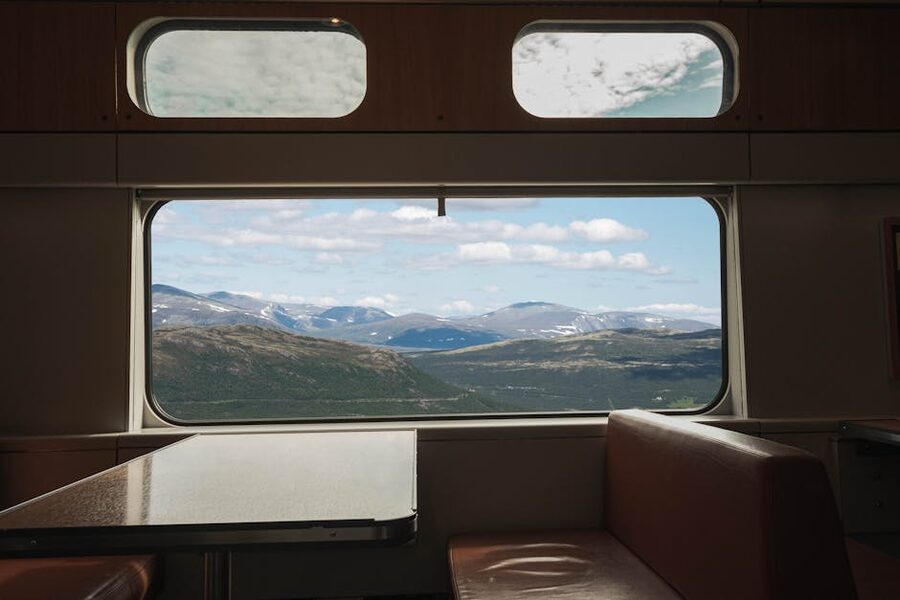
There is no Wi-Fi on board. There is no mobile signal for most of the route. There is no air-conditioning in summer and the heating in winter is, charitably, indicative. There is no food, no coffee cart, no toilet you’d want to use until you reach Flåm or Myrdal. Eat first, layer up, accept that the social media post can wait an hour, and bring the kind of book that fits one hand.
Season by season
I’ve ridden the Flåmsbana in May, late September, and February. They’re three different trips.
Late spring and early summer (May to early July) is the maximum-meltwater window. Every waterfall on the line is at full volume. Kjosfossen will soak you. The valleys are bright green from snowmelt. Daylight is long. By mid-June, the last train at 18:25 still leaves you with two hours of light. Crowds are heavy from late May. Cruise ships ramp up after 1 June.
High summer (July to mid-August) is the worst time to ride this railway, and I’d say the same about Flåm village. Every cruise day brings 2,000 to 4,000 day-trippers off the ships docking in the morning. The 11:00 to 14:30 window is when the ships disgorge passengers onto every Flåm-departure train. If you can’t avoid summer, take the first morning departure (around 08:25) before the cruise tide arrives, or the last evening one (around 18:25) after they’re back on board.
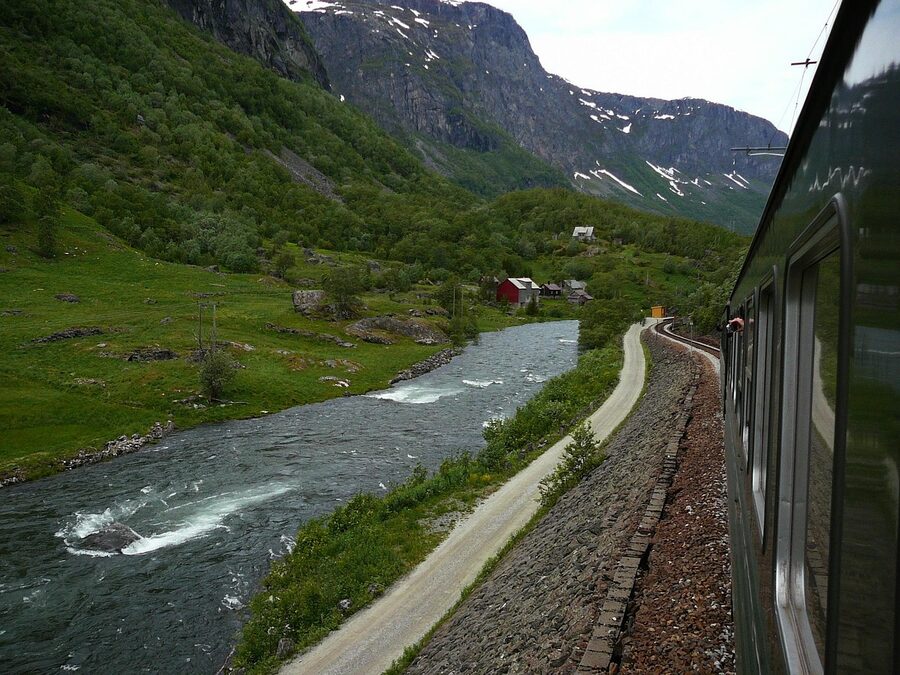
Late summer to autumn (mid-August to early October) is, in my view, the best window. Crowds thin out from the second week of September. The valley turns a colour I’ve not seen anywhere else. Bright lemon birches against grey rock and dark spruce, on every photograph it looks oversaturated, in person it doesn’t. Cruise traffic is still running but reduced. Ticket prices drop to the shoulder rate (about 440 NOK ~€38 one-way) on 1 October.
Winter (November to March) runs four daily departures instead of nine. The valley is white. Kjosfossen freezes solid. The Huldra doesn’t perform (they pull her for the season), but the ice cathedral that replaces her is, frankly, the better show. The Bergen Line above Myrdal becomes one of the most reliably snowy mainline rail rides in Europe. If I could only ride the Flåmsbana once, I’d ride it on a clear day in mid-February.
Tickets, the maths, and Norway in a Nutshell
There are two ways to buy your seat, and the choice depends on whether you want to ride one-way or return.
One-way tickets are sold by Vy, the Norwegian state operator. vy.no is the place. You can book the Flåmsbana on the same booking as the Bergen Line if you’re chaining north-south, whether that’s Oslo to Flåm or Bergen to Flåm or onward in any combination. Eurail and Interrail pass holders get a 30% discount on one-way fares; this discount is only sold at staffed Norwegian train stations or via Vy’s customer-service phone, never online. If you have the pass, take the small detour to a manned counter when you arrive at Oslo Sentralstasjon or Bergen station and book then.
Return tickets are sold separately by Norway’s Best, the Vy subsidiary that runs the dedicated Flåmsbana tourist trains. If you’re staying in Flåm and just want a return ride, this is your booking. If you’re chaining onto a fjord cruise package, this is also your booking. The site is slow and the layout has not aged well, but the booking goes through.
Adult fares for 2026 sit roughly at: 370 NOK one-way (~€32) in winter, 440 NOK (~€38) in shoulder April and October, and 510 NOK (~€44) from May to September. Returns add 50 to 80 NOK on top. Children aged 6 to 17 pay half. Under-6s ride free.
Then there’s Norway in a Nutshell, which is what most non-Scandinavian travellers actually buy. It’s a registered tour brand owned by Fjord Tours, and it’s not really a tour. There’s no guide. What you get is a packaged ticket booklet covering the segments of a self-guided round trip from Oslo or Bergen. Typically Oslo or Bergen to Voss by train, Voss to Gudvangen by bus, Gudvangen to Flåm by fjord ferry, Flåm to Myrdal on the Flåmsbana, and Myrdal back to Oslo or Bergen on the Bergen Line. You travel on exactly the same trains and ferries as DIY ticket-holders. There is no priority boarding, no separate carriage, no anything. The brand name simply bundles the booking.
The price difference is real. From Oslo, a Norway in a Nutshell day trip in summer 2026 sells for around 2,800 to 3,200 NOK depending on date (~€241 to €276). The same itinerary booked DIY through Vy plus a Flåmsbana return plus a Nærøyfjord cruise ticket on Norway’s Best comes to about 1,950 to 2,150 NOK (~€168 to €185). That’s a saving of 800 to 1,100 NOK per person, which is roughly 30 to 40%. For two travellers, you’re looking at 1,600 to 2,200 NOK saved per round trip. Two nights in Flåm pay for themselves in tickets alone.
The trade-off is logistical. With NiaN, your bookings are linked. If a connection is delayed, the next one waits, in theory. With DIY, if your Bergen Line train arrives late at Myrdal and you miss the Flåmsbana, you’re rebooking yourself. In practice the Bergen Line is reliable to within five minutes 95% of the time, and the Flåmsbana waits for it explicitly because the connecting passengers are most of its load. I have done the trip both ways. DIY works fine if you book everything 90 days out and don’t pick the very last train of the day.
Quick verdict
If you’re booking 90 days ahead and can read a Vy timetable: book DIY, save the 800 NOK, treat yourself to a night at the Fretheim Hotel with the difference. If you’re booking last-minute, want one transaction, or are travelling with three children and a parent who lost their phone in the airport, book Norway in a Nutshell, accept the markup, and stop worrying.
The Nærøyfjord cruise, the side-quest worth taking
Most readers I’ve met booked the Flåmsbana for the train. They left talking about the boat that came after. The Nærøyfjord cruise from Flåm to Gudvangen is the trip the train is the appetiser for, and most guides bury it. Here’s why it matters.
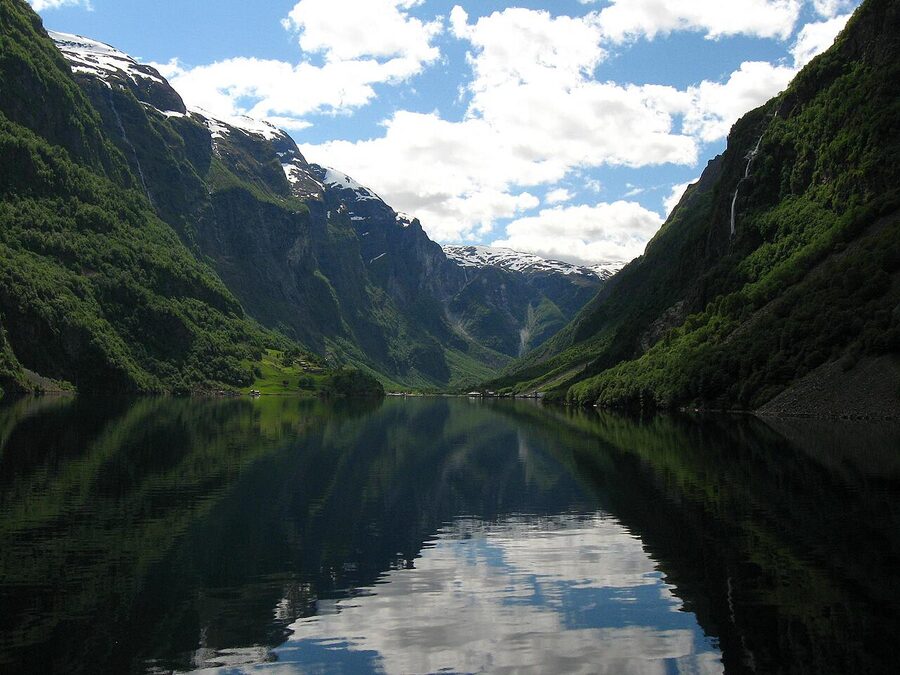
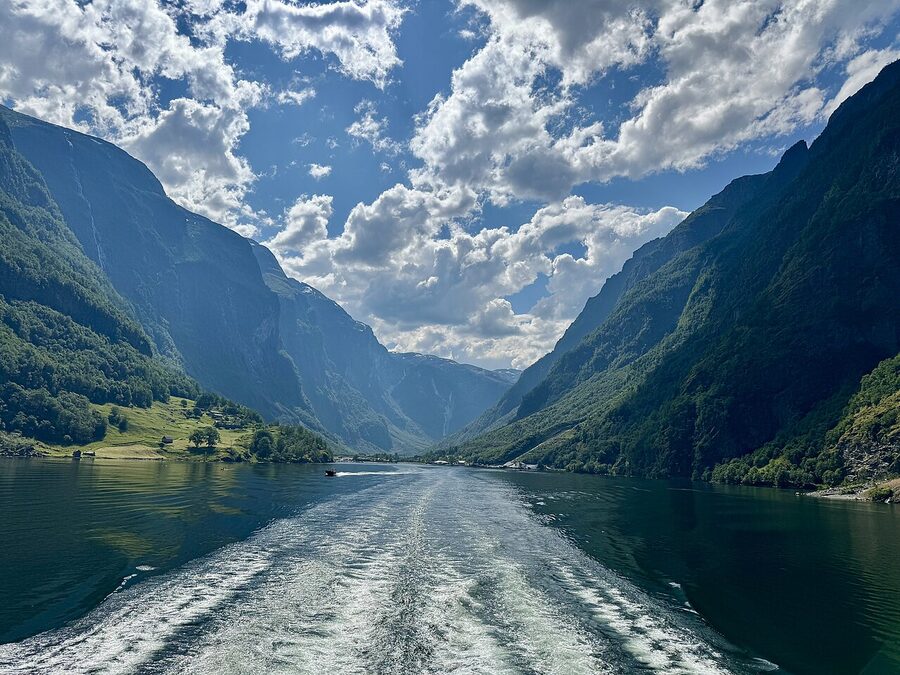
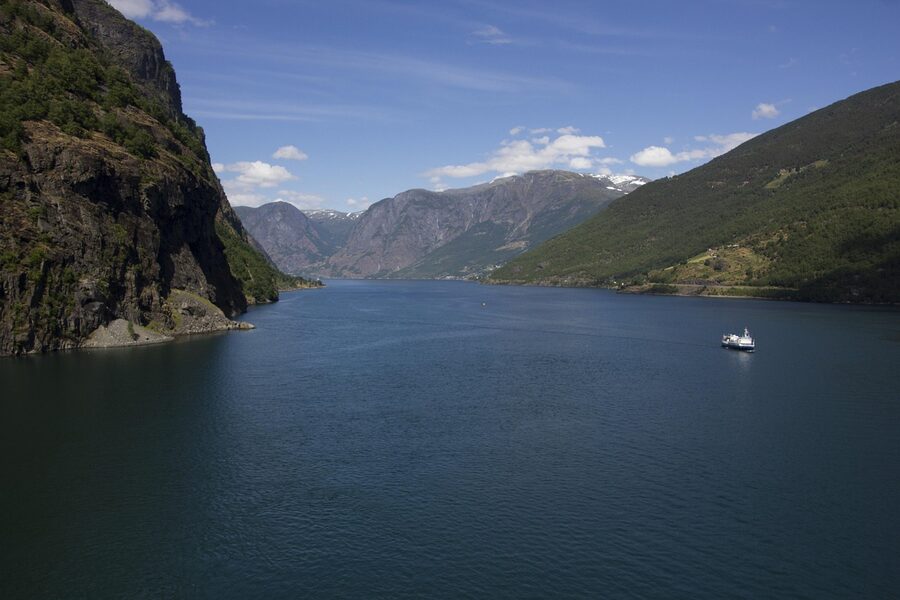
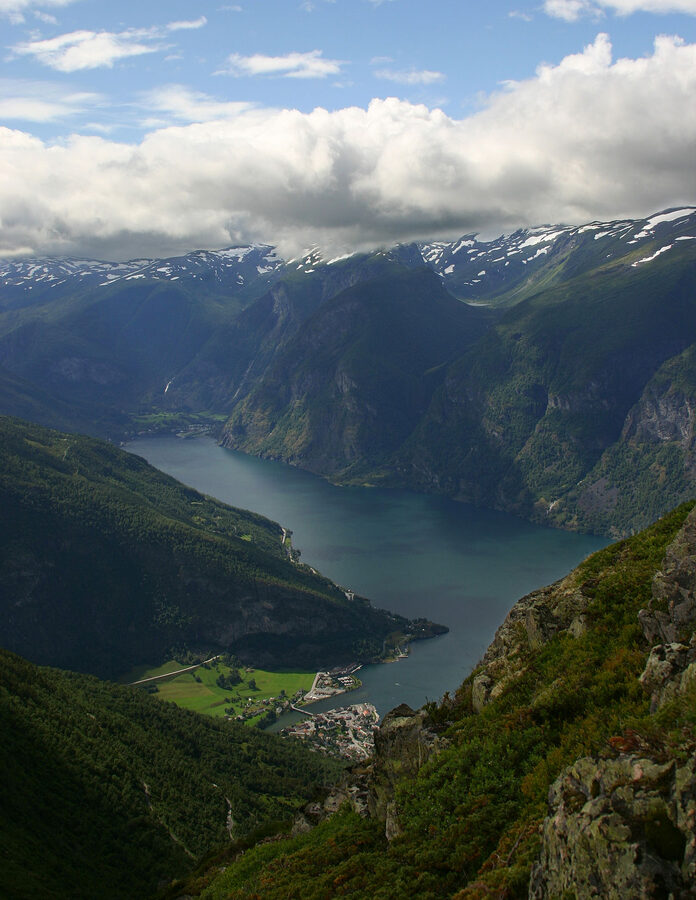
The Nærøyfjord is a tributary of the Sognefjord. It branches off the Aurlandsfjord at Beitelen, where the water bends west, and runs 17 kilometres inland to Gudvangen. At its narrowest the fjord is 250 metres across and the cliffs above are 1,800 metres high. That’s a width-to-height ratio of about 1:7, which is what UNESCO listed as a textbook fjord landscape in 2005. There aren’t many fjords this narrow with cliffs this high. The light gets thin and angled. The cliffs streak with waterfalls every few hundred metres. There are three farms still working on the fjord that you can only reach by boat, and you’ll see them.
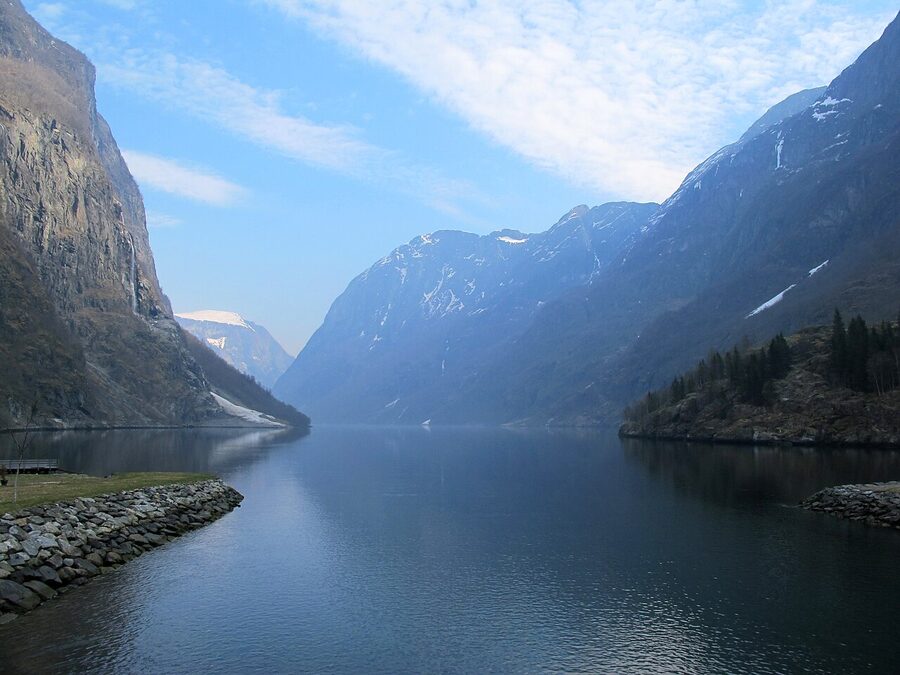
The cruise from Flåm to Gudvangen takes about two hours, and the boat that does it is itself worth a paragraph. The MS Future of the Fjords entered service in 2018 and is fully battery-electric. The hull is built of carbon fibre to keep displacement low; the propulsion is silent. Standing on the open upper deck as the boat slides past a cliff, you can hear water slapping fibreglass and waterfalls falling from a thousand metres up, and that’s it. No engine note. The older Vision of the Fjords (2016) is hybrid; the rest of the regular passenger boats on this route are now mostly diesel-electric or fully electric. The contrast with the cruise ships docking in Flåm itself is brutal and it’s deliberate.
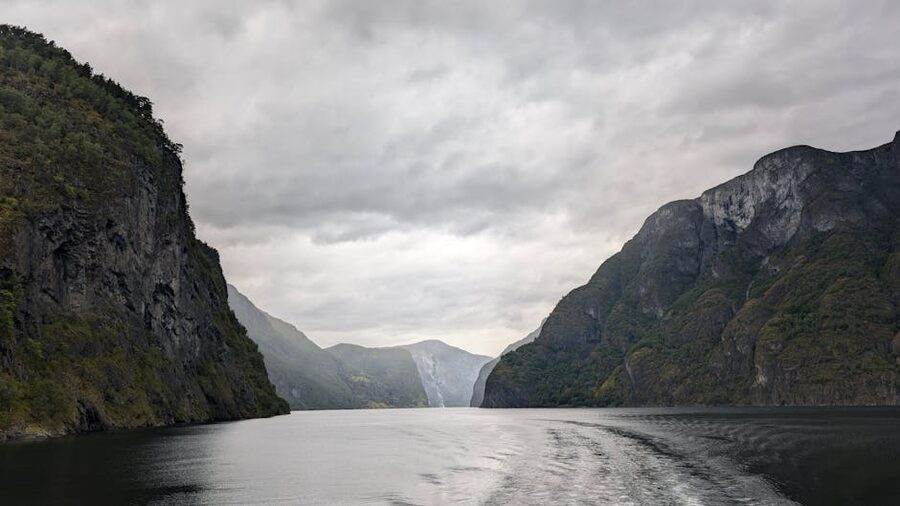
From Gudvangen, you connect onward by bus over the mountain to Voss (90 minutes), or you can take a return cruise straight back to Flåm if you’ve got a hotel here. The two-hour one-way fare is around 580 NOK (~€50); the return is closer to 990 NOK (~€85). For a Norway in a Nutshell connection, the cruise is included in the package. That’s the segment Norway in a Nutshell does add real value on, because the bus-to-Voss link is otherwise a pain to book separately.
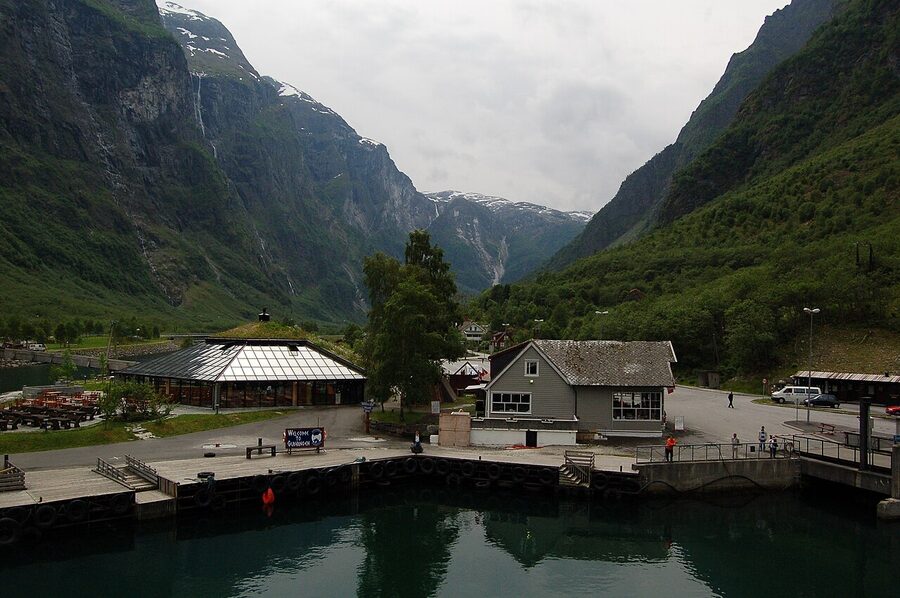
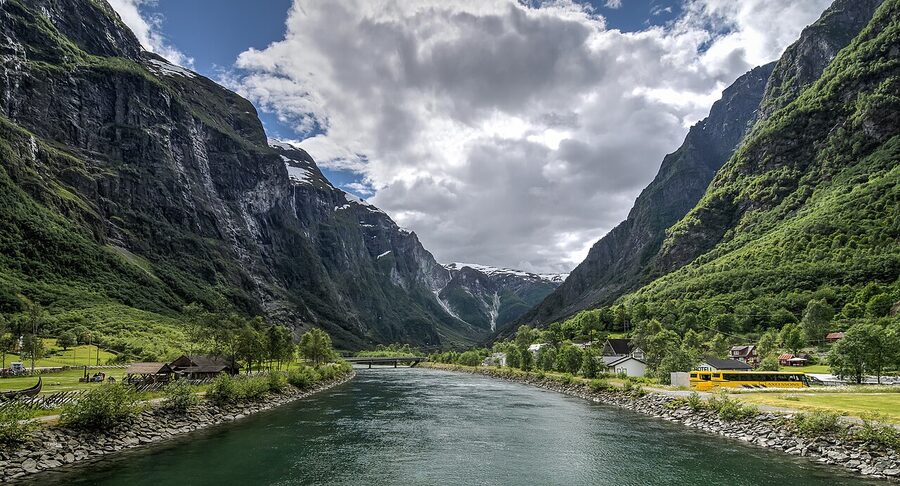
If you only have time for either the Flåmsbana or the Nærøyfjord cruise, take the cruise. The fjord is the reason the railway exists. The railway connects the village to the Bergen Line; the boat connects the fjord to itself. If you have time for both, and most travellers do, the optimum order is train down from Myrdal in the morning, cruise out from Flåm at 13:00, return cruise from Gudvangen back to Flåm at 16:30, sleep in Flåm. Or if you only have a day from Bergen, take the train to Voss, the bus to Gudvangen, the cruise to Flåm, the Flåmsbana up to Myrdal, the Bergen Line back. That’s the Norway in a Nutshell day trip in reverse, and it’s the better direction because the fjord cruise comes first when your eyes are fresh.
Flåm village: what’s there, what to skip
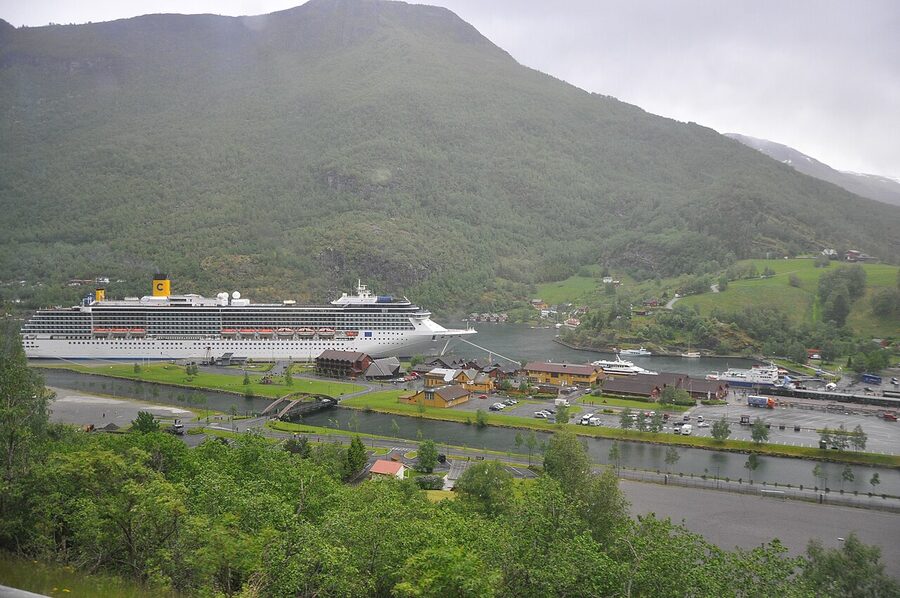
Flåm is small. About 350 permanent residents in winter; up to 2,000 beds in summer. The village is essentially a 600-metre strip from the train station to the cruise quay. You can walk the lot in fifteen minutes. Half of it is gift shops and trolling-fishing rental kiosks aimed at cruise day-trippers. The other half is genuinely worth a half-day.
Worth the time:
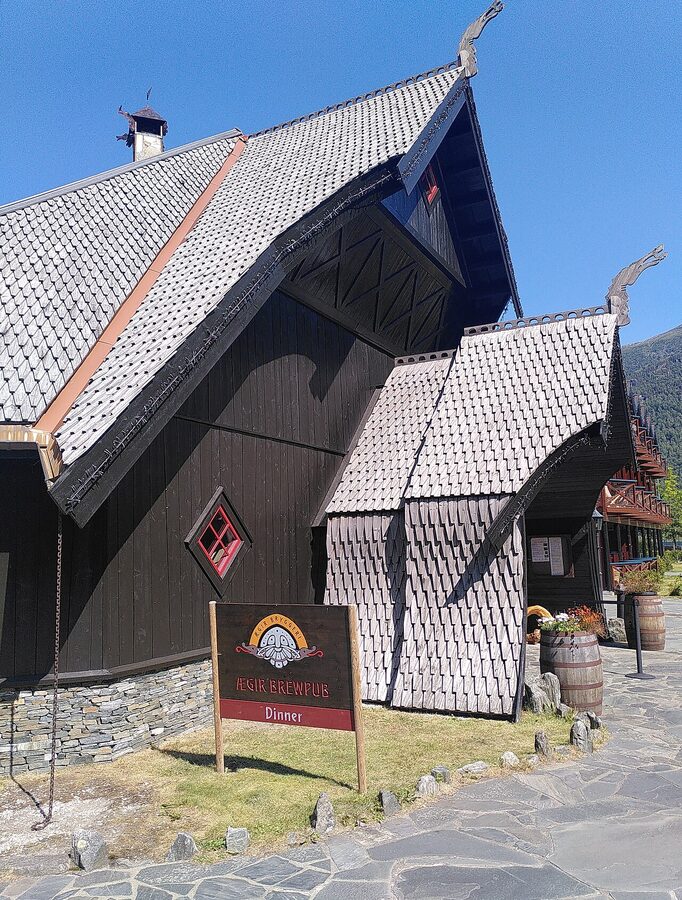
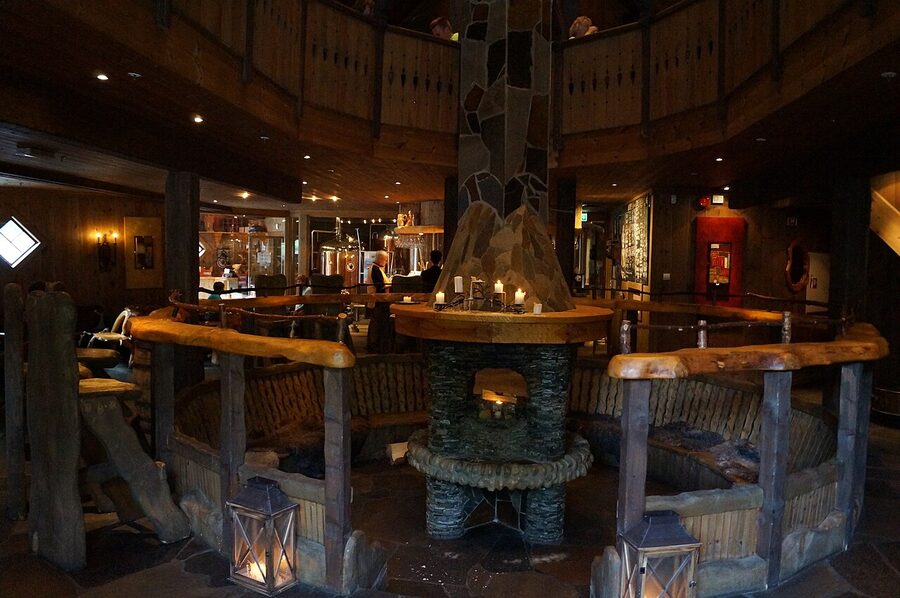
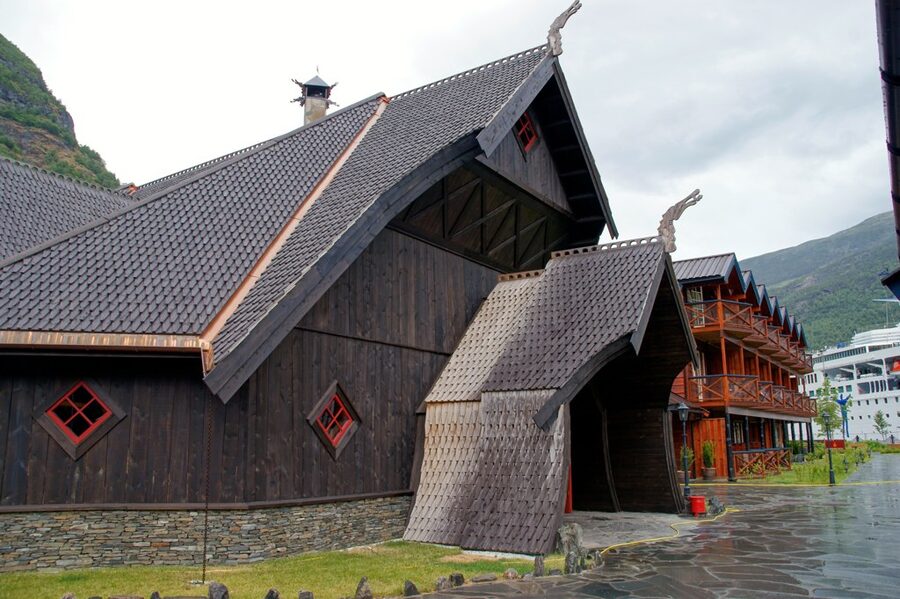
Ægir Bryggeri. The Flåm brewery sits in a hall styled after a stave church. Pitched roof, dark wood, dragon heads on the gables. From inside it works better than that description sounds. The brewery has been producing seriously good beers since 2007 (the Tors Hammer barleywine has been on the World Beer Cup short list more than once). There’s a tasting menu of five beers paired with five Norwegian small plates that runs about 750 NOK (~€65) and is the best dinner in Flåm. Walk-ins work in shoulder season; book in summer.
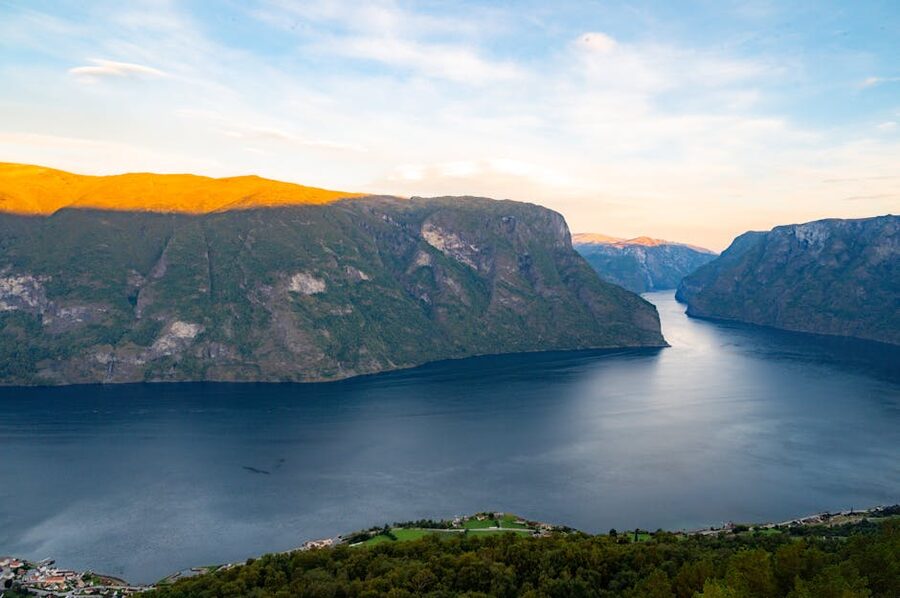
The Stegastein viewpoint. Stegastein is a 30-metre wooden viewing platform sticking out from the Aurland mountainside, 650 metres above the fjord, with no railing on the seaward end other than the curve of the deck itself. It opened in 2006. From the deck, the view down the Aurlandsfjord is unobstructed by anything except a sheet of glass set into the platform’s tip. You can see all the way south to where the Nærøyfjord branches off. This is the best photograph in the entire Flåm-Aurland region, and you don’t see it from the train. Get there from Flåm by Skylift bus (45 minutes return, 360 NOK ~€31) or by taxi from Aurland village (200 NOK ~€17 one-way). Best at sunrise in summer or late afternoon in winter when the fjord goes black and the sky pinks.
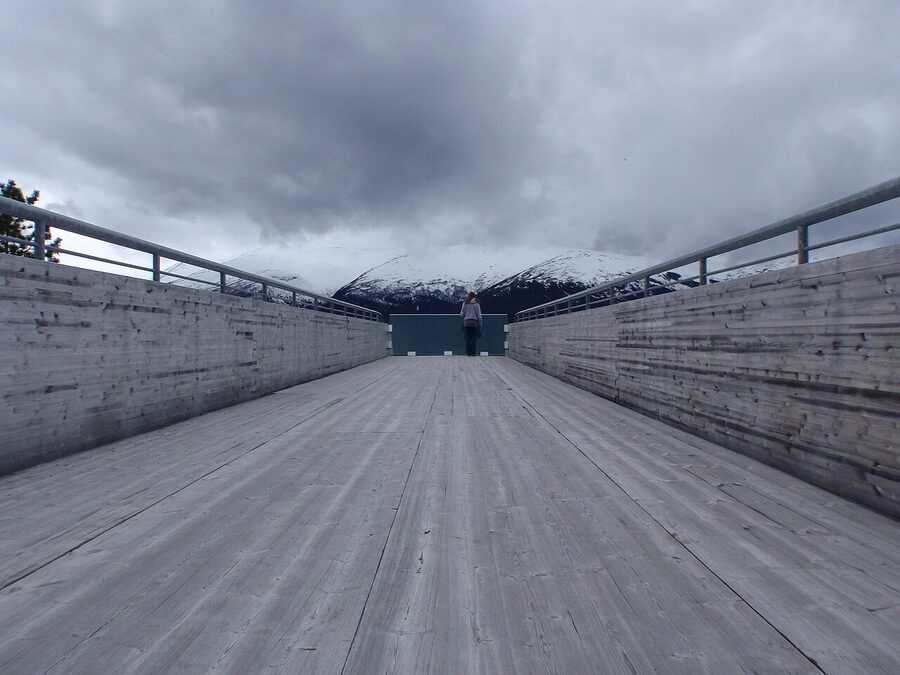
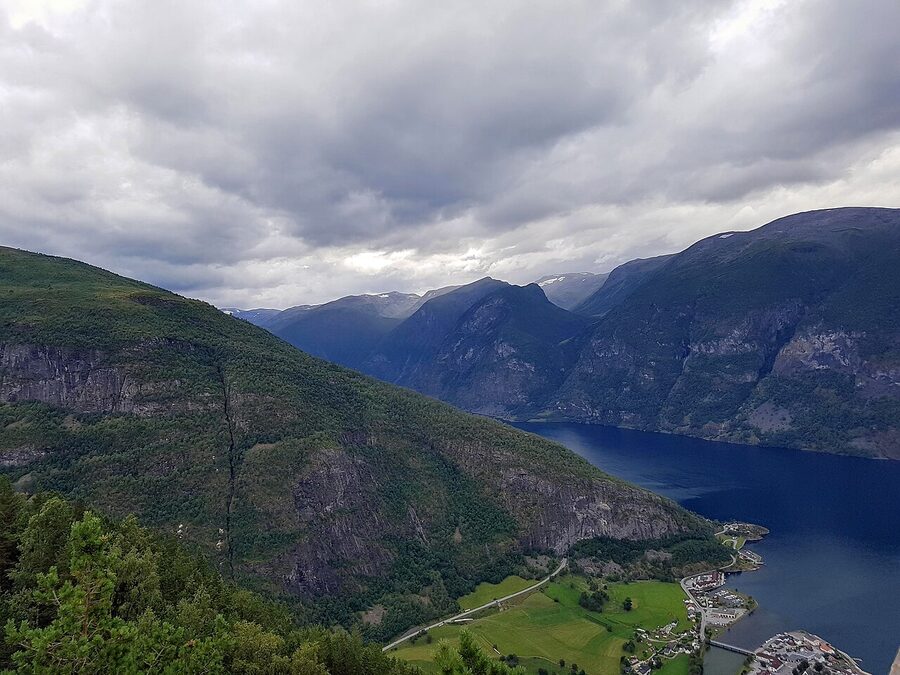
The Brekkefossen waterfall walk. Twenty minutes uphill from Flåm village, on the same valley road. A 60-metre waterfall in summer flow. The walk is steep but short and gives you the best view back over Flåm. Free. No bus needed. Bring waterproof shoes if it rained yesterday.
The Flåmsbana Museum. Inside the old Flåm station building, free entry, open all year. The exhibition covers the construction story plainly: original photographs from the 1920s and 1930s, the surveying maps, a section of original hand-drilled rock face, and a recreation of a 1940s carriage interior. Half an hour, an hour if you read the captions. Directly next to the modern station; you literally cannot miss it on the way back from your train.
Worth the time if you have a half-day spare:
The Flåm Zipline. Scandinavia’s longest at 1,381 metres, drops 305 metres in altitude, you reach 100 km/h. Runs from Vatnahalsen station back down to Kårdal station; you board the Flåmsbana up, harness up at Vatnahalsen, fly down, board the train again at Kårdal to continue back to Flåm. Adult tickets sit around 950 NOK (~€82). It’s a serious zipline, not a circus ride.
Skip:
The Stave Church Museum (Borgund) is genuinely worth seeing, but Borgund is 90 minutes by car from Flåm, not a half-day trip from a base in the village. If you don’t have a car, leave it for a different itinerary or visit on the way to Geiranger. The Aurland village is pretty enough but doesn’t reward a dedicated trip; it’s the bus stop on the way to Stegastein, see it as you pass through. The Viking village at Gudvangen is a costume-and-craft theme park; if that’s your thing, fine, otherwise don’t make a special trip. The fishing-trip kiosks on the Flåm quay are aggressively oversold; I’ve been on two and got nothing both times.
The cruise-ship problem (and what to do about it)
Flåm gets between 159 and 175 cruise-ship calls a year. In the April-to-October window, 297,000 cruise passengers come through. That’s nearly 1,000 per day in peak season, on top of the ferry, train, and bus arrivals. The village population multiplies by roughly thirty between 09:30 and 14:30. Every restaurant queue trebles. The walking strip is shoulder-to-shoulder. The Flåmsbana ticket office can sell out the next departure within five minutes of opening.
I’m not going to pretend there’s a clever way around this. There isn’t. There are three honest moves:
One: Stay in Flåm overnight and ride the first Flåmsbana out at 08:25, before the first cruise ship docks at 09:30. The valley is empty. Kjosfossen is yours. The Bergen Line connection at Myrdal is at 10:25 if you want to chain north or south. Or stay on board and come back down at 11:25 for an early lunch in Flåm before the village fills.
Two: Stay overnight and ride the last Flåmsbana of the day, around 18:25 in summer. Cruise passengers are back on board their ships by 16:00. The village from 17:00 to 21:00 belongs to overnight visitors. Eat at Ægir, walk the quay, watch the cruise ship pull out at 19:30, and ride down on the empty 21:30 if there’s a late departure that day (there usually is).
Three: Go in the second week of September or the first week of October. The cruise traffic falls off a cliff after the season ends on roughly 15 September. The valley is at autumn peak, the Flåmsbana ticket prices have dropped, and you can walk into Ægir without a booking. This is the genuine answer. If you have flexibility and you’re picking the dates of your trip from scratch, pick this.
You can check the Flåm cruise schedule yourself at aurlandhavn.no. The website is in Norwegian but the calendar table is universally readable.
Where to stay in Flåm and Aurland
Booking.com URLs below are plain links; affiliate parameters get added later by my system.
Fretheim Hotel. The grand old Flåm hotel, a 200-bed property with a 19th-century farmhouse core and a 1930s wing in white timber. It’s the most central (directly between the station and the cruise quay) and the most comfortable. The dining room is one of the better hotel restaurants in the region. Around 2,400 to 3,200 NOK (~€207 to €276) for a double in summer; nearly half that in winter. Booking.com listing.
Flåmsbrygga Hotel. The Ægir brewery’s own boutique hotel, 41 rooms in dark-stained pine right on the harbour. Smaller, more atmospheric, and you walk twenty steps to dinner at the brewpub. Around 2,200 to 3,000 NOK in summer (~€190 to €259). Best for travellers who treat dinner as the day’s anchor and don’t need the swimming pool. Booking.com listing.
Vatnahalsen Høyfjellshotell. Up the line at Vatnahalsen station. Yes, the train stops there and you walk forty seconds to the door. Operating since 1898 in some form. Cabin-style, modest, with the best access to the high-country ski trails in winter and the Flåm Zipline in summer. Around 1,800 to 2,400 NOK (~€155 to €207) for a double. This is where I’d stay for a night or two in February. Booking.com listing.
Brekke Gard Hostel. Family-run hostel on a working farm 200 metres up the road from Flåm village. Mixed dorms, private rooms, the kind of place where breakfast is included and the host will tell you what their daughter’s school project is. From around 700 NOK (~€60) per bed in a dorm, 1,400 NOK (~€121) for a private. The budget pick. Booking.com listing.
Flåm Camping og Vandrarheim. Cabins and a campsite ten minutes’ walk from the station along the river. Cabins from around 1,200 NOK (~€103) sleep four. Useful if you have a car and a sleeping-bag mindset. Booking.com listing.
Heimely Pensjonat. Old Norwegian guesthouse 200 metres from the station, simple rooms, breakfast in the kitchen. Around 1,400 to 1,800 NOK (~€121 to €155) for a double. Booking.com listing.
Flåm Marina Apartments. Two-bedroom self-catering apartments on the marina, useful for groups of four to six. From around 2,400 NOK (~€207) per night for a four-bed apartment. Booking.com listing.
Flåm Ferdaminne. Mid-range guesthouse and small apartments. Cleaner-feeling than the older pensions, with private bathrooms throughout. Booking.com listing.
Flåm Station Apartments. Two-bedroom and three-bedroom self-catering apartments built directly above the railway station. Convenient for early morning departures, surprisingly quiet. Booking.com listing.
If Flåm is fully booked in peak July or you want a quieter base, sleep in Aurland village, 10 km up the fjord. The Aurland Fjordhotel is a 30-room property on the water with the better view, and you can take the Skylift bus to Stegastein from your front door. Around 2,000 to 2,800 NOK (~€172 to €241). Booking.com listing. Or the Wangen Apartments for a kitchenette option in Aurland.
The full Bergen-to-Oslo round trip via Flåm
The cleanest itinerary that uses the Flåmsbana properly looks like this. I’d plan three nights minimum.
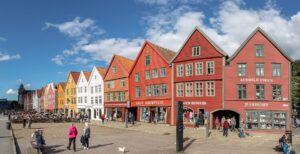
Day 1. Fly into Bergen. Spend the day in Bergen: Bryggen, Fløibanen up, Sherpa-built path back down. Sleep in Bergen. (My Oslo guide covers the eastern alternative if you fly into Oslo first; either bookend works.)
Day 2. Bergen Line train at 08:25 to Voss (1h25), bus from Voss to Gudvangen (1h15), Nærøyfjord cruise to Flåm (2h). You arrive Flåm at around 14:30 having seen the fjord from the water before the railway from the rails. Check in. Walk to Ægir for an early dinner. Sleep in Flåm.
Day 3. First Flåmsbana of the day at 08:25. Empty carriage, Kjosfossen with no Huldra (too early in the day), 35 minutes of pure descending light. Spend an hour at Myrdal walking the Rallarvegen back down (or jump back on the next train). Lunch in Flåm. Stegastein viewpoint by Skylift bus in the afternoon. Sleep in Flåm.
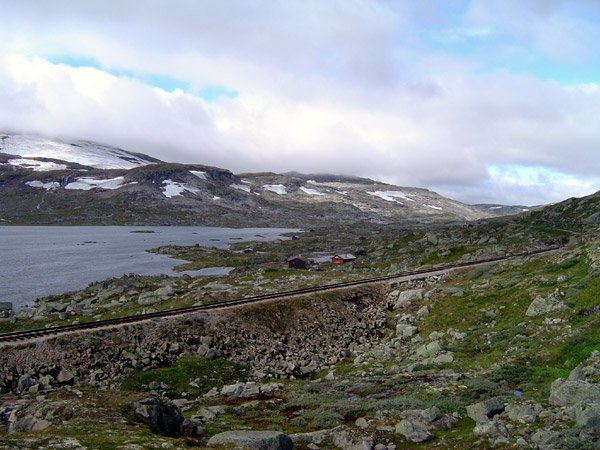
Day 4. Flåmsbana up to Myrdal at 08:25, Bergen Line to Oslo (5h), arriving Oslo around 15:30 in time to drop bags and walk Karl Johans gate. The Bergen Line crosses the Hardangervidda at 1,222 metres above sea level near Finse, which is the highest mainline station in Northern Europe. In summer, the plateau is reindeer country; in winter it’s snow country, exactly the same view either way, just different colours.
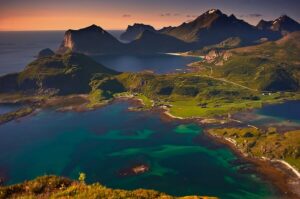
If you only have two nights, drop the Day 3 Stegastein add-on and combine it into a same-day Flåmsbana-and-Stegastein loop on Day 2. If you have four nights, add a night in Aurland or Vatnahalsen for the high-country pause. If you’re doing the wider Lofoten road trip next, the easiest connection is to fly Bergen to Bodø and pick up the Lofoten loop from there.
Children, accessibility, and the practical fine print
Children love the Flåmsbana. The Huldra performance is pitched at six-year-olds and reliably hits. The Kjosfossen platform is wet but railed and short. The carriages have facing pairs of seats that work for a family of four. Strollers fit in the luggage area at the end of each car. Both stations have step-free access to the platform. Boarding the train itself involves three steep, narrow steps at each carriage door, not great with a wheelchair or a heavy suitcase, but conductors will help if asked.
Bags. Onboard luggage space is genuinely limited. If you’re chaining the Flåmsbana into a Bergen-Line journey with full suitcases, the porter service that runs between Bergen, Oslo, and Flåm will move your luggage from hotel to hotel for you (around 200 to 350 NOK per bag depending on the leg). Worth it for the day you do the Nærøyfjord cruise. You do not want a 25kg case on a fjord boat.
Tickets in advance. Yes, always. The Flåmsbana sells out on most peak summer departures. Norway’s Best releases bookings 90 days out for tourist services and at the start of the calendar year for the broader summer season. Check at the start of January for July dates; check 90 days out for everything else.
The seasonal Norwegian-summer fact people keep getting wrong: in June and early July at this latitude, the sky never goes properly dark. The 21:30 Flåmsbana descent shows you the valley in low golden light at 22:00. It’s the best photography window of the year. Plan for it specifically.
Is it worth it?
Yes. Cleanly yes. The Flåmsbana is one of the genuine pieces of Norwegian engineering history that’s also a working railway you can ride for the price of a hotel breakfast. The view-window through the back third of the descent is real and it earns the price. Kjosfossen is a five-minute set piece that no other railway in the world has quite duplicated.
It’s worth it less if you’re on a four-day Norway trip and trying to fit Oslo, Bergen, and a fjord into the schedule. At that point the Flåmsbana is competing with too many other things and the day becomes a transit-blur. If you have less than five days, take the Bergen Line, ride the Flåmsbana as a same-day side from Bergen, skip the cruise, and don’t try to do Oslo. If you have a week or more, the version above is the one.
It’s worth it more in late September than in late July, in winter than in midsummer for atmosphere though not for waterfalls, and as a return ride from Flåm than as a one-way tag onto a long Bergen Line transit. It’s most worth it as the trigger for the Nærøyfjord cruise that follows it; the train without the boat is a 90-minute novelty, the train with the boat is a fjord experience that justifies the trip to Norway in the first place.
Do the maths on Norway in a Nutshell against booking direct, save the 800 NOK if you can, give that money to a long lunch at Ægir and a sunset bus to Stegastein. Then come back in February and do the whole line in the snow.